In his latest in a series of columns, FaulknerBrowns Architects' Mike Hall explores the importance of sustainable, carefully considered sports facilities and how they can contribute to healthy, active cities
By Mike Hall | Published in Sports Management 2014 issue 4
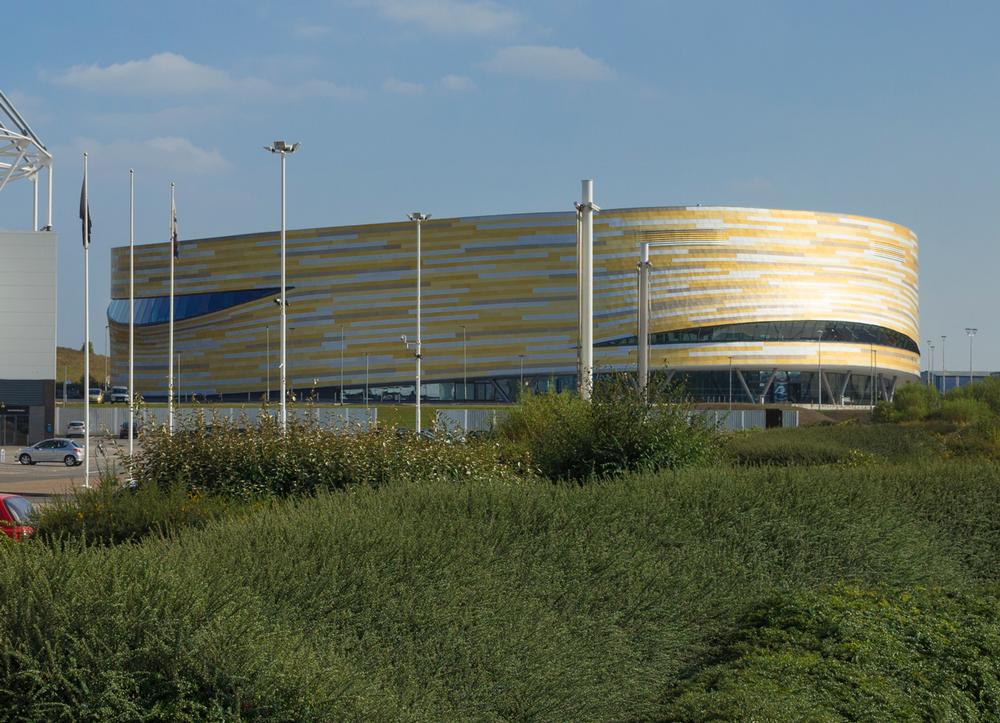
The Derby Arena – playing a part in plans to make Derby the most active city in the UK
You may have blinked and missed it, but 6 October 2014 was World Architecture Day. This year's theme was Healthy Cities – Happy Cities and underlining it was the role good design can play in creating health and happy environments for people.
In terms of activity and participation, there are a number of cities in England which may rightly lay claim to the top participation honours. Sheffield frequently comes out as one of the top performing cities. Major landmark facilities such as Ponds Forge International Sports Centre and the English Institute for Sport have played a key role in contributing to community participation and elite training.
Manchester, UK can also boast its place as one of the highest performing cities, especially when the efficient cost of delivering these services is factored in. Manchester Aquatics, built to host all of the water-based disciplines for the 2002 Commonwealth Games, is still one of the world’s most flexible pool complexes. Its central arterial location on Oxford Road also means that it is at the heart of one of the most sought after student locations in the country. This contributes to a healthy balance of community, student and high performance usage with a staggering 750,000 users through the turnstiles each year. Manchester City Council has consistently targeted a number of key sports development programs through to national and international events.
Manchester’s National Cycling Centre has just celebrated its twentieth birthday and is still the world’s most well used indoor cycling facility, having provided the bedrock for Britain’s cycling success on the track for the last three Olympic Games.
There is, however, a new kid on the block. Derby City Council has a vision to be ‘the most active city in the UK’. FaulknerBrowns were involved in the early stages of implementing Derby's leisure strategy, which included a technical review of wet and dry hub facilities as well as a series of satellite locations.
Building on lessons learnt from projects in Sheffield and Manchester, the recently completed Derby Arena – which incorporates a cycle track – is one of the most innovative facilities of its type in the world. Designed by FaulknerBrowns to break down barriers, the internal 250m track was lifted up one storey in height to create a stronger, more active connection to the Arena’s interior.
These connections are expressed on the outside of the building, literally lifting the skin of the building to define a clear entrance sequence, welcoming all members of the community into the building. This approach has driven improved access to a range of activities, including court sports and health and fitness, in addition to cycling. Importantly, the building is also flexible enough to accommodate revenue producing concerts and non-sports events.
In line with the aspiration of World Architecture Day, we share a strong belief in the role which carefully considered, sustainable and quality sports facilities play in contributing to healthy, active cities.
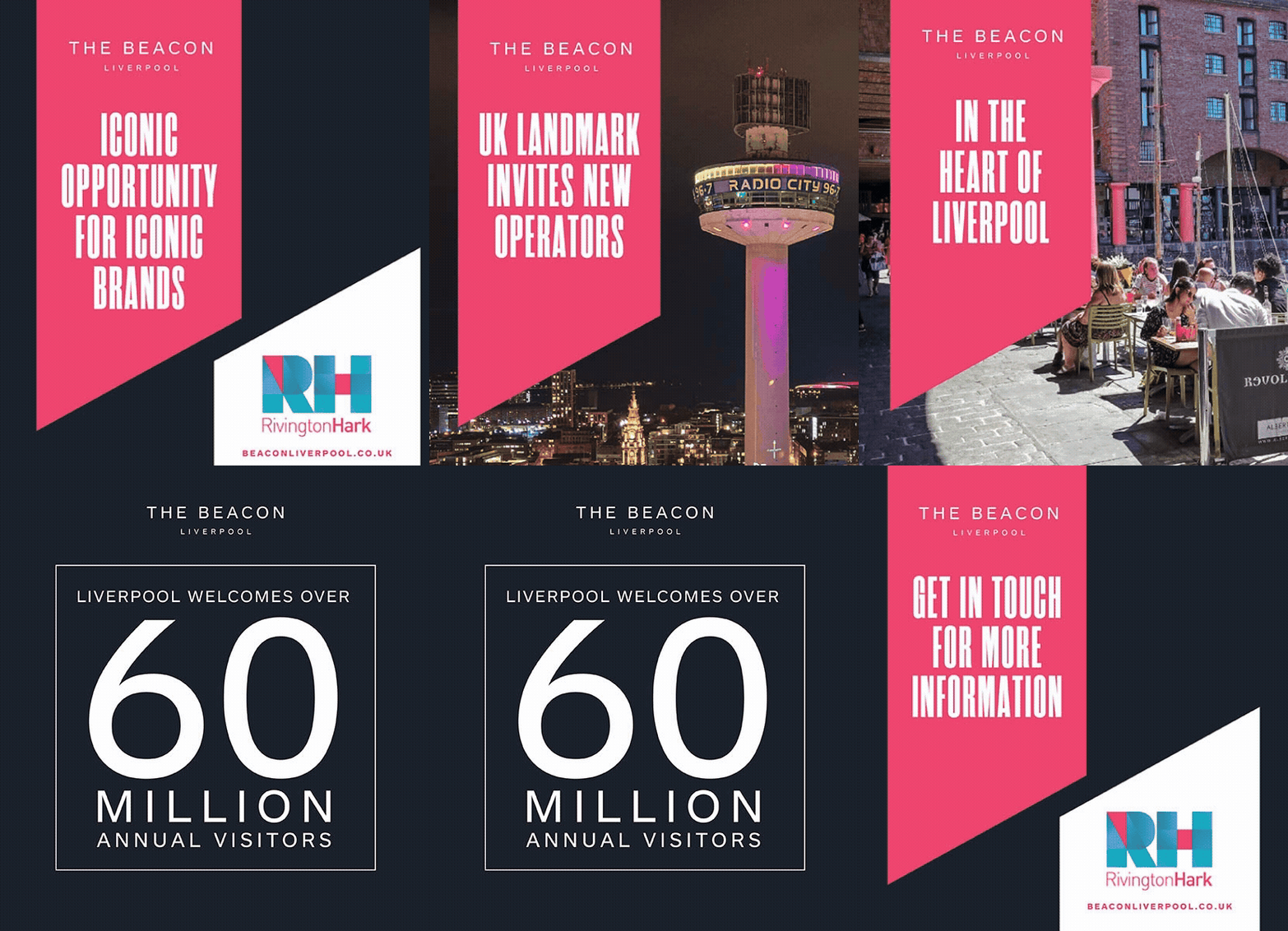
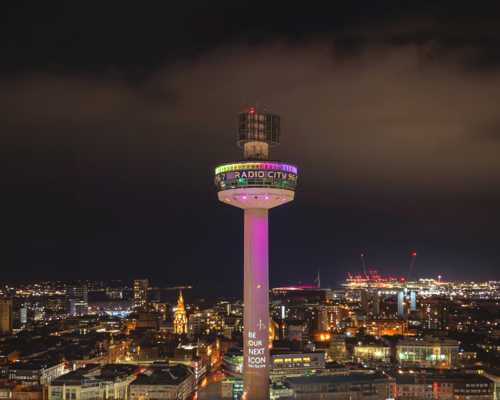
An opportunity to reimagine one of the UK’s most recognisable towers has been formally
opened by Rivington Hark, as St Johns Beacon invites operators and partners to shape its
next phase. [more...]
In his latest in a series of columns, FaulknerBrowns Architects' Mike Hall explores the importance of sustainable, carefully considered sports facilities and how they can contribute to healthy, active cities
By Mike Hall | Published in Sports Management 2014 issue 4
The Derby Arena – playing a part in plans to make Derby the most active city in the UK
You may have blinked and missed it, but 6 October 2014 was World Architecture Day. This year's theme was Healthy Cities – Happy Cities and underlining it was the role good design can play in creating health and happy environments for people.
In terms of activity and participation, there are a number of cities in England which may rightly lay claim to the top participation honours. Sheffield frequently comes out as one of the top performing cities. Major landmark facilities such as Ponds Forge International Sports Centre and the English Institute for Sport have played a key role in contributing to community participation and elite training.
Manchester, UK can also boast its place as one of the highest performing cities, especially when the efficient cost of delivering these services is factored in. Manchester Aquatics, built to host all of the water-based disciplines for the 2002 Commonwealth Games, is still one of the world’s most flexible pool complexes. Its central arterial location on Oxford Road also means that it is at the heart of one of the most sought after student locations in the country. This contributes to a healthy balance of community, student and high performance usage with a staggering 750,000 users through the turnstiles each year. Manchester City Council has consistently targeted a number of key sports development programs through to national and international events.
Manchester’s National Cycling Centre has just celebrated its twentieth birthday and is still the world’s most well used indoor cycling facility, having provided the bedrock for Britain’s cycling success on the track for the last three Olympic Games.
There is, however, a new kid on the block. Derby City Council has a vision to be ‘the most active city in the UK’. FaulknerBrowns were involved in the early stages of implementing Derby's leisure strategy, which included a technical review of wet and dry hub facilities as well as a series of satellite locations.
Building on lessons learnt from projects in Sheffield and Manchester, the recently completed Derby Arena – which incorporates a cycle track – is one of the most innovative facilities of its type in the world. Designed by FaulknerBrowns to break down barriers, the internal 250m track was lifted up one storey in height to create a stronger, more active connection to the Arena’s interior.
These connections are expressed on the outside of the building, literally lifting the skin of the building to define a clear entrance sequence, welcoming all members of the community into the building. This approach has driven improved access to a range of activities, including court sports and health and fitness, in addition to cycling. Importantly, the building is also flexible enough to accommodate revenue producing concerts and non-sports events.
In line with the aspiration of World Architecture Day, we share a strong belief in the role which carefully considered, sustainable and quality sports facilities play in contributing to healthy, active cities.
Hotel de France, located on the British Isle of Jersey, has created a wellness retreat package
that includes a hot yoga session that will take place in Jersey Zoo’s butterfly sanctuary.
A new immersive attraction designed to transport visitors into the final hours of ancient Pompeii
is preparing to open near the world-famous archaeological site in southern Italy.
Experience design company, BRC Imagination Arts, has completed a transition that sees founder
Bob Rogers pass ownership of the business to four long-serving senior executives, while
remaining actively involved with the company.
Movie Park Germany has opened a new Paramount Pictures-themed attraction as part of its 30th
anniversary celebrations, using immersive storytelling and adaptive reuse to reinforce the park’s
longstanding “Hollywood in Germany” positioning.
Therme Manchester’s 28-acre development, which will include interconnected glass pavilions
that measure 65,000sq m, will be the largest bathing and wellbeing attraction in the world once
complete, according to prof David Russell, CEO of Therme UK.
Efteling has opened Hooghmoed, a new family drop tower designed to broaden the appeal of its
recently launched Sirene Island themed area and introduce younger visitors to thrill attractions.
A proposed Puy du Fou development near Bicester and Universal Destinations and Experiences’
planned resort in Bedford are emerging as part of a wider transformation of the Oxford–
Cambridge Growth Corridor into a major centre for UK leisure and tourism inv
Shedd Aquarium has opened the Immersion Theater developed in partnership with SimEx-
Iwerks, as part of a wider strategy to enhance the guest experience and create additional
revenue opportunities.
The UK government has announced a temporary reduction in VAT on visitor attractions and
children’s meals as part of a summer cost-of-living support package designed to stimulate the
visitor economy and encourage family days out.
As designer Yinka Ilori prepares for his first solo gallery show in London, he speaks exclusively
to CLADmag about his mission to spread joy, the power of play, and his bold approach to using
colour (including the colours you won’t see in his work).
The government of Thailand is exploring plans for a THB300bn (£6.3bn, US$8.3bn)
entertainment complex in the country’s Eastern Economic Corridor (EEC), with officials
proposing a large-scale theme park and sports destination as part of a broader tourism and
economic development strategy.
+ More news
COMPANY PROFILES
TechnoAlpin Indoor TechnoAlpin is the world leader for snowmaking systems. With the Indoor snow division, TechnoAlpin c [more...]
Alterface Alterface’s Creative Division team is
seasoned in concept and ride development,
as well as storyte [more...]
Holovis Holovis is a privately owned company
established in 2004 by CEO Stuart
Hetherington. [more...]
QubicaAMF UK QubicaAMF is the largest and most
innovative bowling equipment provider with
600 employees worldwi [more...]
An opportunity to reimagine one of the UK’s most recognisable towers has been formally
opened by Rivington Hark, as St Johns Beacon invites operators and partners to shape its
next phase. [more...]