Using your attraction as a stage set and building the momentum before a big reveal can help to increase the wow factor, says the UK National Trust’s Ben Cowell
By Ben Cowell | Published in Attractions Management 2014 issue 4
Many new visitor attractions are highly theatrical in their design, so that guests experience plenty of wow factor. This is true, for example, of somewhere like the Warner Bros Studio Tour London, where visitors begin their tour of the making of Harry Potter by entering the doors onto the set of Hogwarts’ Great Hall. Similarly, the Turbine Hall at Tate Modern in London is filled regularly by contemporary art installations, conceived on a grand scale. Experiences of these places often hinge around the reveal – the moment where the metaphorical stage curtains are drawn back and the set design is displayed for the first time.
Read more from this issue of Attractions Management magazine
View contents of Attractions Management 2014 issue 4
Editor’s letter: Access for all
We ask whether enough is being done to ensure access for all to
attractions and what practical steps can be taken to improve things
Interview: Tim Smit
The Eden Project was groundbreaking
when it opened in 2001. Now the
attraction’s founder Tim Smit is taking
the concept to a global audience,
and he’s starting with China
Interview: Jonathan Gottschall
Literary scholar and author of The
Storytelling Animal explains why we’re
all addicted to story, and how attractions
can capitalise on our love of narrative
Heritage: Actions Speak Louder
The National Trust’s Ben Cowell
describes how landscaping can build up
to a reveal, and ways the organisation
is using actors to bring history to life
Conference Report: SATE 2014
TEA president Christine Kerr presents
the hot topics from the annual design
conference devoted to Storytelling,
Architecture, Technology, Experience
Story Centres: Tell Me A Story
The popularity of story centres shows
the youngest generation – dubbed
digital natives – are thirsty for
children’s literature and illustration
Technology: Reinventing the Nerd
Meet carnival-inspired Two Bit
Circus, created from its founders’
passion for engineering, video games
and the newest technologies
Promotional feature: BARCO
Barco offers state-of-the-art visualisation technology and
a holistic solution uniquely tailored to suit any attraction
Rides: The Ride Makers
In the first of a new series,
industry-leading manufacturers
tell us about the latest trends and
innovations in thrill coasters
Theme Parks: Kooza Came to Town
PortAventura’s general manager
on the Spanish park’s partnership
with celebrated circus troupe Cirque
du Soleil and its Kooza show
Planetariums: Tom Falvey
A new planetarium, capable of live
streaming to 14,000 schools, opens
as a new addition to the South
Carolina State Museum in the US
Show Preview: IAAPA EXPO
IAAPA returns to the Orange County Convention Center in Orlando,
Florida, from 18-21 November, with more than 1,000 exhibitors
and an expected 27,000 attendees
Multimedia: Art Project
State-of-the-art projectors and
world-class artists combine to
create inspiring installations
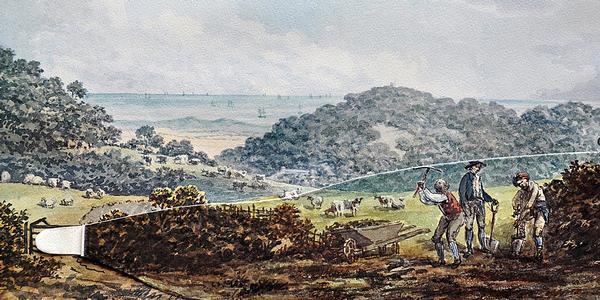
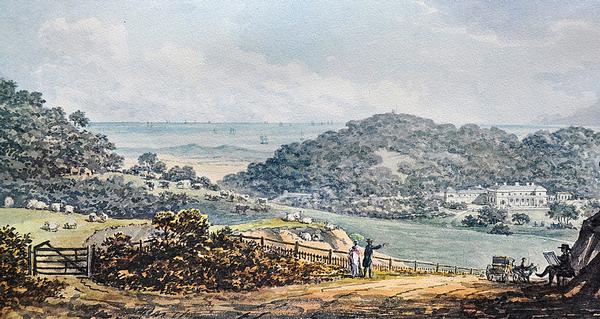
LANDSCAPE DRAMA But there’s nothing new about this. Artists and architects have long integrated theatrical elements into their work. Indeed, many famous 18th-century garden designers worked on the stage. Landscape designer Humphry Repton (1752-1818) had a fascination with the theatre, a narrative apparent in many of his plans for the grounds of country houses. Repton developed a unique method of illustrating his designs by means of paper flaps in the pages of his famous Red Books. The flaps showed “before and after” views of the landscapes he was commissioned to work on, so that landowners could visualise the changes he was proposing.
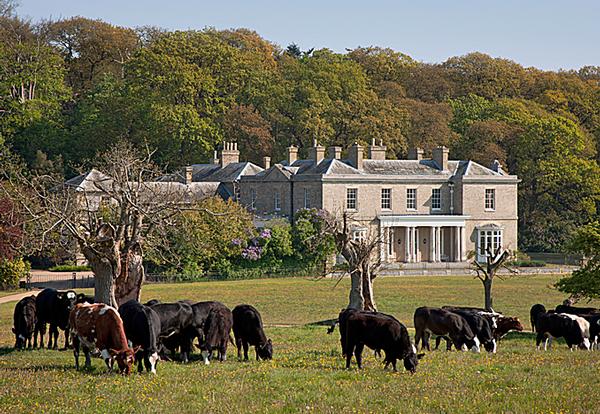
Sheringham Park, on England’s North Norfolk coast, was one of Repton’s favourite designs. Subtle planting schemes gave a sense of depth and vitality to the views, seen from a long drive towards the house at the centre. The drive travels along a high ridge before turning dramatically to reveal the house at Sheringham, designed by Repton’s son.
This point in the park, the sudden turn in the path, is still called the reveal, and it continues to delight thousands of visitors each year, long since the idea was first conceived in 1812. Explaining the meaning of landscapes in this way is not at all easy. At Sheringham, we’ve done it with an exhibition placing Repton’s design in its context. It is located in a converted barn at the visitor reception, and the theatrical influences on Repton’s work are evident in the layout of the exhibition itself.
Humphry Repton’s design shows the Sheringham Park landscape before
his work and, by peeling back the flap, how it would look when completed
Humphry Repton’s design shows the Sheringham Park landscape before
his work and, by peeling back the flap, how it would look when completed
A view of Sheringham Park in Norfolk
LIVING DRAMA Heritage is such big business because it’s a principal driver for tourism around the world. Millions of people visit heritage sites every year and they do so to connect with authentic experiences of past lives.
The National Trust has been on a mission in recent years to reinvent its properties by breathing life back into them. No more are our properties mere relics of yesteryear, frozen and lifeless. Instead, we’re growing the appeal of our places by introducing much more interactivity and engagement. Fires are being lit, pianos are being played and visitors are encouraged to interact with what they see far more than they ever were before.
In our larger country houses, we’re trying to make people feel as though they’re house guests, able to sit on the furniture and read facsimiles of old newspapers and books – sometimes the real thing, if conservation standards allow. Sometimes actors help recreate scenes from the past.
At Ickworth House in Suffolk, UK, we’ve invested in a visitor experience that brings the basement rooms back to life. Ickworth Lives is an innovative hands-on experience that focuses on the period between 1911 and World War II – a time which saw huge changes in society, marking the start of the gradual decline of life in service and the role of the country house.
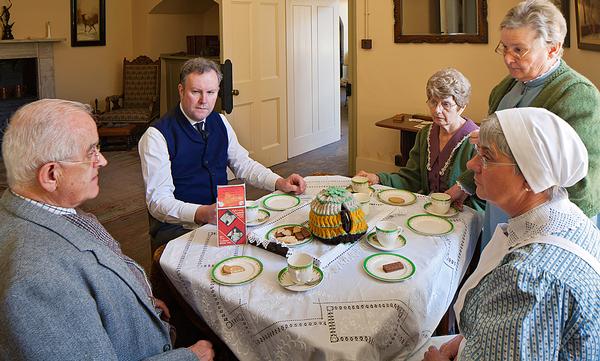
Visitors have the chance to explore and experience what life would have been like for the servants at this magnificent country house, home to the Bristol family for centuries. They can explore the maze of corridors and rooms, the living quarters and the kitchen where the luxurious meals were prepared for the marquess and marchioness. During Living Histories, a monthly event, actors portray servants to give visitors a taste of working life in the kitchen and basement rooms.
As the National Trust’s chair, Simon Jenkins, puts it: “The point is that you’re using the place not as a house but as a stage set for explaining history.”
Actors recreate servants’ daily lives during a Living Histories event the National Trust’s Ickworth House in Suffolk, UK
The National Trust uses actors to create a more engaging experience for its visitors
COMPANY PROFILES
Simworx Ltd
The company was initially established
in 1997. Terry Monkton and Andrew
Roberts are the key stakeh [more...]
RMA Ltd
RMA Ltd is a one-stop global company
that can design, build and produce from a
greenfield site upw [more...]
An opportunity to reimagine one of the UK’s most recognisable towers has been formally
opened by Rivington Hark, as St Johns Beacon invites operators and partners to shape its
next phase. [more...]
Using your attraction as a stage set and building the momentum before a big reveal can help to increase the wow factor, says the UK National Trust’s Ben Cowell
By Ben Cowell | Published in Attractions Management 2014 issue 4
Many new visitor attractions are highly theatrical in their design, so that guests experience plenty of wow factor. This is true, for example, of somewhere like the Warner Bros Studio Tour London, where visitors begin their tour of the making of Harry Potter by entering the doors onto the set of Hogwarts’ Great Hall. Similarly, the Turbine Hall at Tate Modern in London is filled regularly by contemporary art installations, conceived on a grand scale. Experiences of these places often hinge around the reveal – the moment where the metaphorical stage curtains are drawn back and the set design is displayed for the first time.
Read more from this issue of Attractions Management magazine
View contents of Attractions Management 2014 issue 4
Editor’s letter: Access for all
We ask whether enough is being done to ensure access for all to
attractions and what practical steps can be taken to improve things
Interview: Tim Smit
The Eden Project was groundbreaking
when it opened in 2001. Now the
attraction’s founder Tim Smit is taking
the concept to a global audience,
and he’s starting with China
Interview: Jonathan Gottschall
Literary scholar and author of The
Storytelling Animal explains why we’re
all addicted to story, and how attractions
can capitalise on our love of narrative
Heritage: Actions Speak Louder
The National Trust’s Ben Cowell
describes how landscaping can build up
to a reveal, and ways the organisation
is using actors to bring history to life
Conference Report: SATE 2014
TEA president Christine Kerr presents
the hot topics from the annual design
conference devoted to Storytelling,
Architecture, Technology, Experience
Story Centres: Tell Me A Story
The popularity of story centres shows
the youngest generation – dubbed
digital natives – are thirsty for
children’s literature and illustration
Technology: Reinventing the Nerd
Meet carnival-inspired Two Bit
Circus, created from its founders’
passion for engineering, video games
and the newest technologies
Promotional feature: BARCO
Barco offers state-of-the-art visualisation technology and
a holistic solution uniquely tailored to suit any attraction
Rides: The Ride Makers
In the first of a new series,
industry-leading manufacturers
tell us about the latest trends and
innovations in thrill coasters
Theme Parks: Kooza Came to Town
PortAventura’s general manager
on the Spanish park’s partnership
with celebrated circus troupe Cirque
du Soleil and its Kooza show
Planetariums: Tom Falvey
A new planetarium, capable of live
streaming to 14,000 schools, opens
as a new addition to the South
Carolina State Museum in the US
Show Preview: IAAPA EXPO
IAAPA returns to the Orange County Convention Center in Orlando,
Florida, from 18-21 November, with more than 1,000 exhibitors
and an expected 27,000 attendees
Multimedia: Art Project
State-of-the-art projectors and
world-class artists combine to
create inspiring installations
LANDSCAPE DRAMA But there’s nothing new about this. Artists and architects have long integrated theatrical elements into their work. Indeed, many famous 18th-century garden designers worked on the stage. Landscape designer Humphry Repton (1752-1818) had a fascination with the theatre, a narrative apparent in many of his plans for the grounds of country houses. Repton developed a unique method of illustrating his designs by means of paper flaps in the pages of his famous Red Books. The flaps showed “before and after” views of the landscapes he was commissioned to work on, so that landowners could visualise the changes he was proposing.
Sheringham Park, on England’s North Norfolk coast, was one of Repton’s favourite designs. Subtle planting schemes gave a sense of depth and vitality to the views, seen from a long drive towards the house at the centre. The drive travels along a high ridge before turning dramatically to reveal the house at Sheringham, designed by Repton’s son.
This point in the park, the sudden turn in the path, is still called the reveal, and it continues to delight thousands of visitors each year, long since the idea was first conceived in 1812. Explaining the meaning of landscapes in this way is not at all easy. At Sheringham, we’ve done it with an exhibition placing Repton’s design in its context. It is located in a converted barn at the visitor reception, and the theatrical influences on Repton’s work are evident in the layout of the exhibition itself.
Humphry Repton’s design shows the Sheringham Park landscape before
his work and, by peeling back the flap, how it would look when completed
Humphry Repton’s design shows the Sheringham Park landscape before
his work and, by peeling back the flap, how it would look when completed
A view of Sheringham Park in Norfolk
LIVING DRAMA Heritage is such big business because it’s a principal driver for tourism around the world. Millions of people visit heritage sites every year and they do so to connect with authentic experiences of past lives.
The National Trust has been on a mission in recent years to reinvent its properties by breathing life back into them. No more are our properties mere relics of yesteryear, frozen and lifeless. Instead, we’re growing the appeal of our places by introducing much more interactivity and engagement. Fires are being lit, pianos are being played and visitors are encouraged to interact with what they see far more than they ever were before.
In our larger country houses, we’re trying to make people feel as though they’re house guests, able to sit on the furniture and read facsimiles of old newspapers and books – sometimes the real thing, if conservation standards allow. Sometimes actors help recreate scenes from the past.
At Ickworth House in Suffolk, UK, we’ve invested in a visitor experience that brings the basement rooms back to life. Ickworth Lives is an innovative hands-on experience that focuses on the period between 1911 and World War II – a time which saw huge changes in society, marking the start of the gradual decline of life in service and the role of the country house.
Visitors have the chance to explore and experience what life would have been like for the servants at this magnificent country house, home to the Bristol family for centuries. They can explore the maze of corridors and rooms, the living quarters and the kitchen where the luxurious meals were prepared for the marquess and marchioness. During Living Histories, a monthly event, actors portray servants to give visitors a taste of working life in the kitchen and basement rooms.
As the National Trust’s chair, Simon Jenkins, puts it: “The point is that you’re using the place not as a house but as a stage set for explaining history.”
Actors recreate servants’ daily lives during a Living Histories event the National Trust’s Ickworth House in Suffolk, UK
The National Trust uses actors to create a more engaging experience for its visitors
Experience design company, BRC Imagination Arts, has completed a transition that sees founder
Bob Rogers pass ownership of the business to four long-serving senior executives, while
remaining actively involved with the company.
Movie Park Germany has opened a new Paramount Pictures-themed attraction as part of its 30th
anniversary celebrations, using immersive storytelling and adaptive reuse to reinforce the park’s
longstanding “Hollywood in Germany” positioning.
Therme Manchester’s 28-acre development, which will include interconnected glass pavilions
that measure 65,000sq m, will be the largest bathing and wellbeing attraction in the world once
complete, according to prof David Russell, CEO of Therme UK.
Efteling has opened Hooghmoed, a new family drop tower designed to broaden the appeal of its
recently launched Sirene Island themed area and introduce younger visitors to thrill attractions.
A proposed Puy du Fou development near Bicester and Universal Destinations and Experiences’
planned resort in Bedford are emerging as part of a wider transformation of the Oxford–
Cambridge Growth Corridor into a major centre for UK leisure and tourism inv
Shedd Aquarium has opened the Immersion Theater developed in partnership with SimEx-
Iwerks, as part of a wider strategy to enhance the guest experience and create additional
revenue opportunities.
The UK government has announced a temporary reduction in VAT on visitor attractions and
children’s meals as part of a summer cost-of-living support package designed to stimulate the
visitor economy and encourage family days out.
As designer Yinka Ilori prepares for his first solo gallery show in London, he speaks exclusively
to CLADmag about his mission to spread joy, the power of play, and his bold approach to using
colour (including the colours you won’t see in his work).
The government of Thailand is exploring plans for a THB300bn (£6.3bn, US$8.3bn)
entertainment complex in the country’s Eastern Economic Corridor (EEC), with officials
proposing a large-scale theme park and sports destination as part of a broader tourism and
economic development strategy.
Royal Caribbean has revealed its Hero of the Seas cruise ship, home to the most pools at sea
(nine), and a record-breaking 28 dining venues, as well as attractions including a waterpark
with two new family raft slides.
+ More news
COMPANY PROFILES
Simworx Ltd The company was initially established
in 1997. Terry Monkton and Andrew
Roberts are the key stakeh [more...]
RMA Ltd RMA Ltd is a one-stop global company
that can design, build and produce from a
greenfield site upw [more...]
An opportunity to reimagine one of the UK’s most recognisable towers has been formally
opened by Rivington Hark, as St Johns Beacon invites operators and partners to shape its
next phase. [more...]