With a huge new immersive art space under construction on Abu Dhabi’s Saadiyat Island and a permanent museum taking shape in Jeddah, teamLab is changing the face of immersive digital art. Magali Robathan speaks
to the team behind the magic
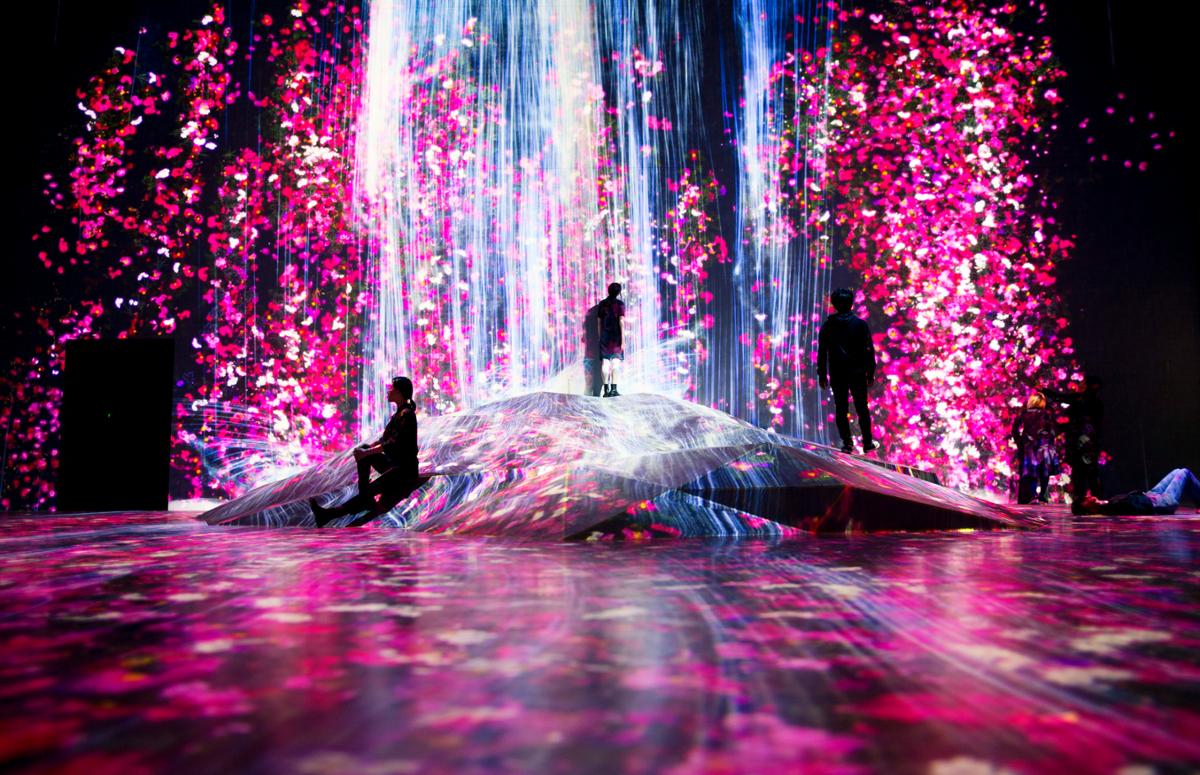
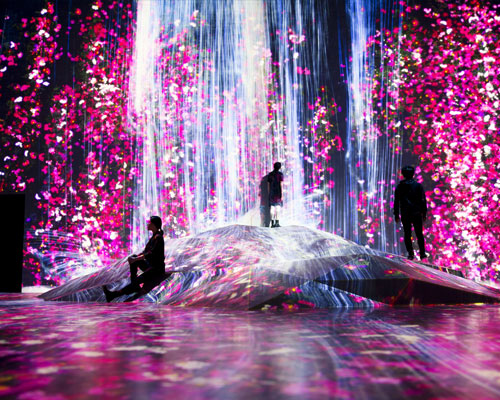
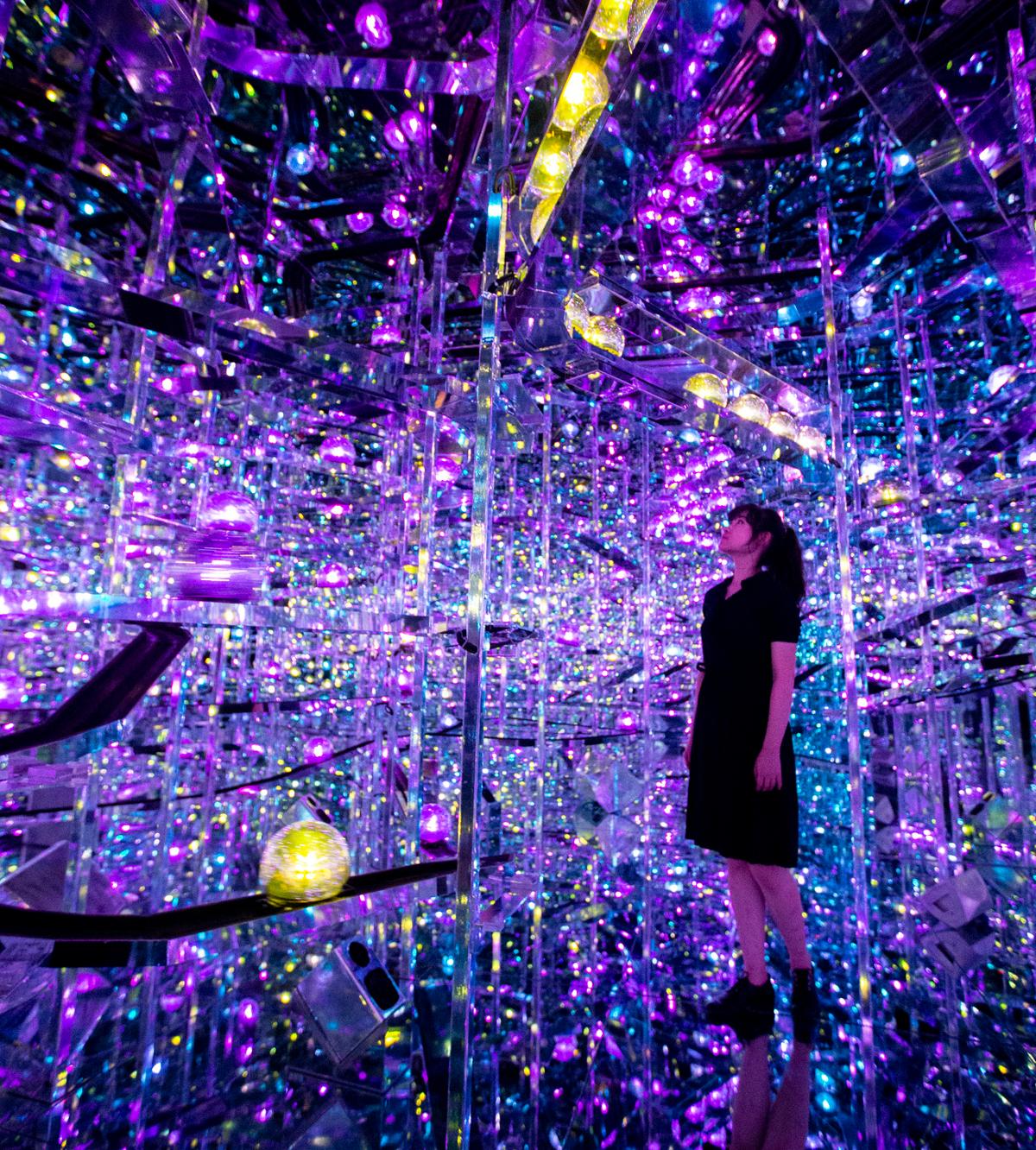
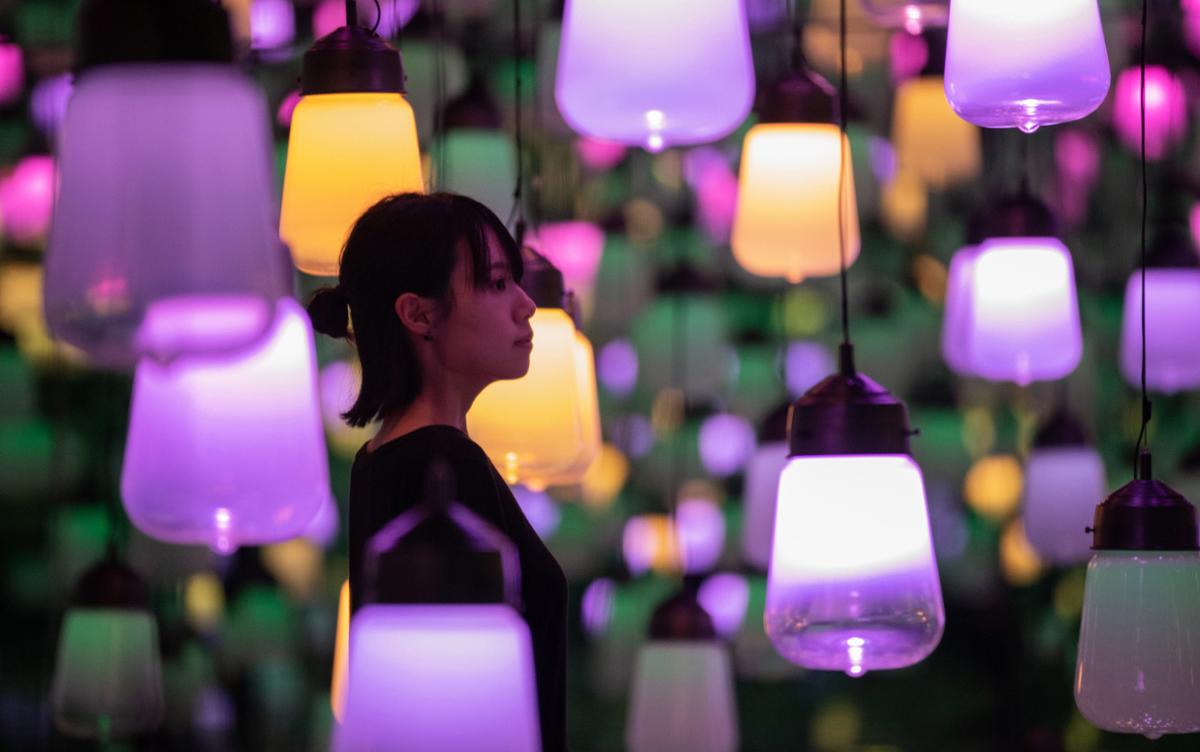
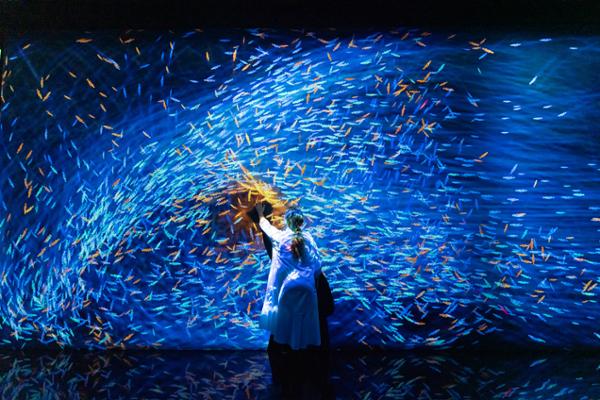
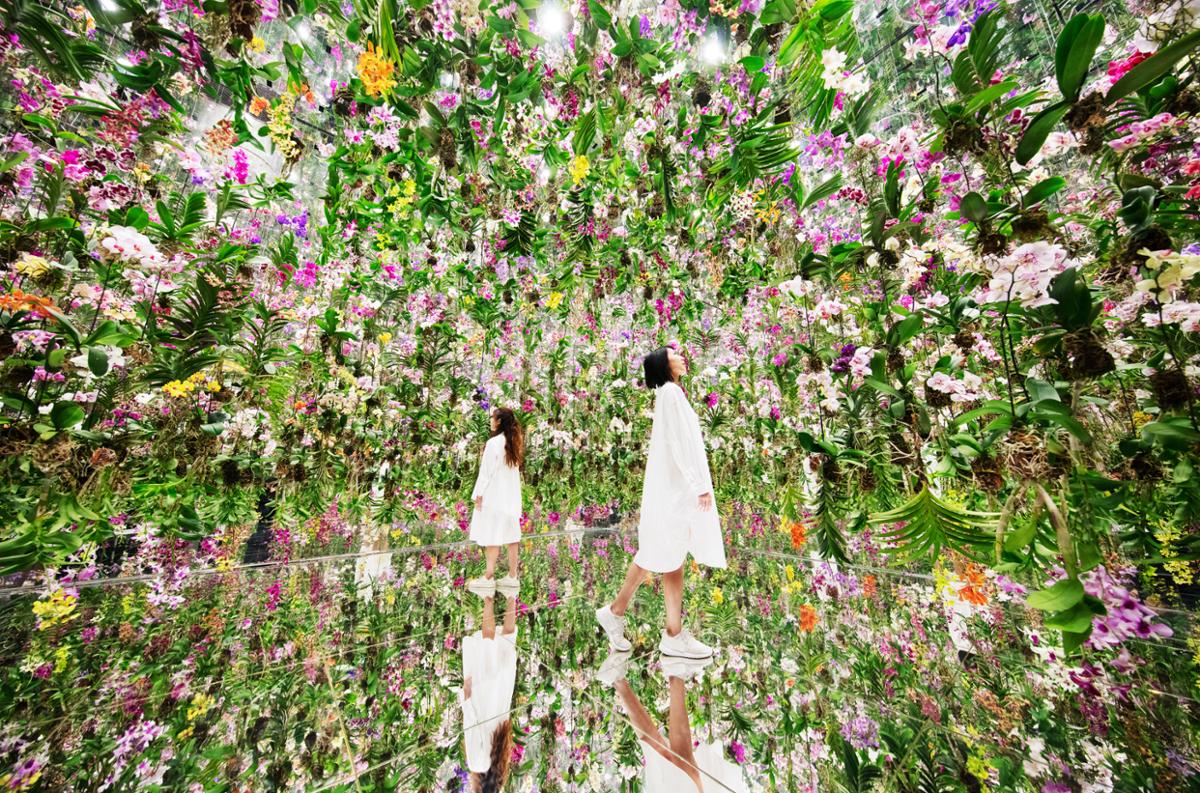
Since 2001, art collective teamLab has been creating jaw-dropping digital art installations. Their interactive exhibitions involve the viewer in the artworks – over the years visitors worldwide have watched waterfalls part at their feet, birds fly from their dinner plates and flowers bloom and then wither as they pass.
While the early years saw teamLab create art in relative obscurity, the past decade has seen the collective become increasingly well known, with major exhibitions around the world. In 2021, teamLab Borderless Tokyo was announced as the most visited single-artist museum in the world. The collective now has permanent exhibition spaces in Beijing, Shanghai, Singapore and Macau, with their teamLab Borderless Tokyo museum relocating to Azabudai Hills in central Tokyo – due to open next year.
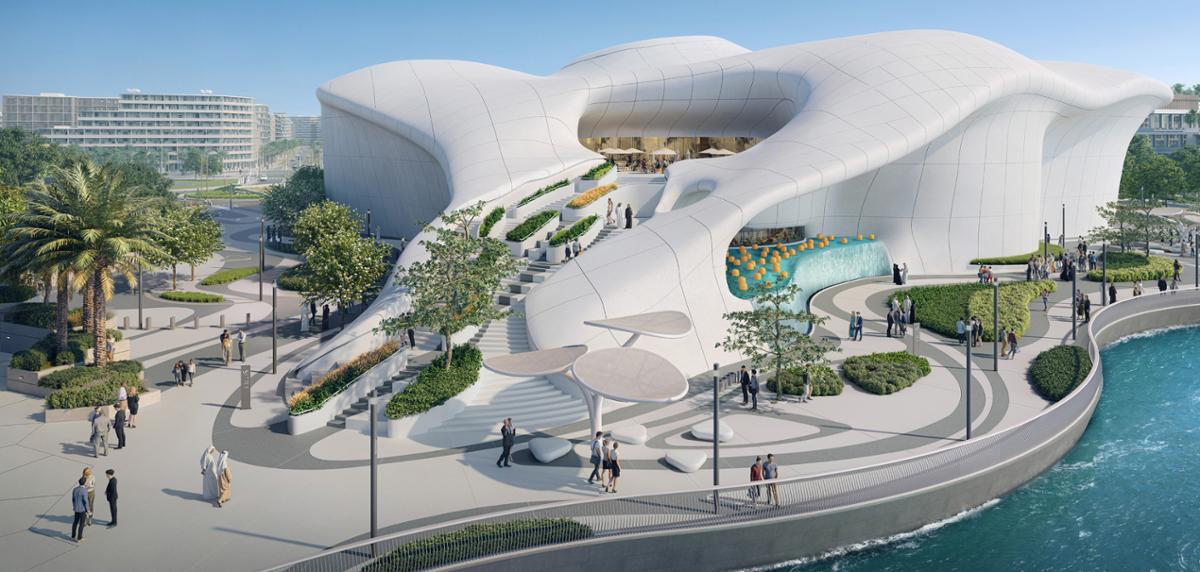
teamlab Phenomena Abu Dhabi – a huge 17,000sq m multisensory art space on Saadiyat Island – is set to complete construction in 2024, and will sit alongside the Louvre Abu Dhabi and Guggenheim Abu Dhabi.
A further permanent teamLab museum is being constructed in Jeddah, Saudi Arabia as part of a collaboration with the Saudi Ministry of Culture. teamLab Borderless Jeddah will be located on the Al Arbaeen Lagoon overlooking the old town, and will feature more than 50 artworks, with a brand new installation created for Jeddah.
Here the collective answer our questions.
How would you sum up teamLab and what you do? teamLab is an international art collective that seeks to navigate the confluence of art, science, technology, and the natural world. Through art, our interdisciplinary group of specialists – including artists, programmers, engineers, CG animators, mathematicians, and architects – aims to explore the relationship between the self and the world, and new forms of perception.
teamLab seeks to transcend boundaries in our perceptions of the world, of the relationship between the self and the world, and of the continuity of time. We believe that everything exists in a long, fragile yet miraculous, borderless continuity.
In the interactive artworks created by teamLab, the presence and movement of visitors transforms the art – visitors become a part of the work. This changes the relationship between an artwork and an individual into a relationship between an artwork and a group of individuals. Suddenly the way the person standing next to you behaves becomes important. We wanted to create a space where you can feel that you’re connected with other people in the world.
What’s the history of teamLab? teamLab was founded in 2001 by Toshiyuki Inoko and several of his friends to create a ‘laboratory to experiment in collaborative creation’. Through art, teamLab was (and is) interested in creating new experiences to explore what the world is for humans.
The collective has been creating art ever since, with the aim of contributing to societal progress.
You’ve gone from relative obscurity to huge success. How has this changed what you do? In the beginning, teamLab didn’t have the opportunity to present its work, nor could we work out how to financially sustain our art creation. However, we believed in the power of digital technology and creativity, and kept creating.
As time went on, while teamLab gained passionate followers, we were still ignored by the art world. Our breakthrough came in 2011 at the Kaikai Kiki Gallery in Taipei, to which the collective was invited by the artist Takashi Murakami. Since then, teamLab has gained opportunities to join major contemporary art exhibitions in cosmopolitan cities starting with the Singapore Biennale 2013.
In 2014, New York PACE Gallery started to help promote teamLab artworks, enabling us to expand rapidly, and in 2015, the collective was finally able to organise its own exhibition for the first time in Tokyo.
These events led to opportunities to exhibit internationally, in New York, London, Paris, Singapore, Silicon Valley, Beijing, Taipei, and Melbourne among others. As of today, teamLab has welcomed more than 35 million visitors to our art exhibitions.
All we do is create artworks that we believe in – our hope is that our work reaches people’s hearts and changes their behaviour and ways of thinking. Popularity is just a by-product of that.
What can people expect from teamLab Borderless Jeddah? teamLab Borderless Jeddah is the first-ever permanent teamLab Borderless museum to open in the Middle East.
Located in the Red Sea coastal city of Jeddah, it’s currently being built on the shores of Al-Arbaeen Lagoon overlooking the UNESCO World Heritage Site, Historic Jeddah.
This immersive museum will comprise over 50 artworks spread across its labyrinthine spaces, including Borderless World, Athletics Forest and Future Park. It will also feature an entirely new installation created exclusively for Jeddah.
teamLab Borderless is based on the concept that everything exists in a borderless continuity.
In order to comprehend the world, people separate it into parts, creating boundaries in between. Through this exhibition, teamLab aims to create a place in which various artworks are connected with one other without boundaries, giving visitors an opportunity to rethink their perception of the world, and discover that continuity itself is beautiful.
At teamLab Borderless Jeddah, the artworks leave rooms, move through the halls and influence other artworks. For instance, the ‘crows’ flying in a given space initially came from a different room to enter that space. As they fly about, they affect other artworks, causing ‘flowers’ to scatter and fall.
The artworks are also affected and changed by the presence of people – when visitors stand still in a space, the flow of the waterfall will change around their feet, and flowers will begin to bloom in their wake.
What can you tell us about teamLab Phenomena Abu Dhabi? Housed in a 17,000sq m venue within the Saadiyat Culture District, teamLab Phenomena Abu Dhabi will offer a completely new art experience based on teamLab’s new concept, Environmental Phenomena.
This experience will consist of a selection of dynamic works by teamLab. Visitors will be immersed into a world that organically changes and evolves through the participation and actions of the people in it.
A key characteristic of the experience is the environment and the various phenomena created by it. Unlike stones or man-made creations that can maintain a stable structure on their own, the artworks at teamLab Phenomena don’t exist independently, but are dependent on their environment.
Elements like air, water, and light are transformed by their environment into unique phenomena that become works of art. The boundaries of their existence are ambiguous and continuous. Even if people destroy the work, the work will remain in existence as long as its environment is maintained – and will disappear, if it’s not maintained.
The venue is set to complete construction in 2024, and will sit alongside the Louvre Abu Dhabi and the Guggenheim Abu Dhabi.
teamLab Borderless Tokyo was announced as the most visited single artist museum in 2021. Why was it so popular? All we can say is that teamLab believes that digital technology can expand art and that art made in this way can create new relationships between people, as well as between viewers and the artwork.
Digital technology enables complex detail and freedom for change. Before people started accepting digital technology, information and artistic expression had to be presented in some physical form.
Creative expression has existed through static media for most of human history, often using physical objects such as canvas and paint. The advent of digital technology allows human expression to become free from these physical constraints, enabling it to exist independently and evolve freely.
No longer limited to physical media, digital technology has made it possible for artworks to expand physically. Since art created using digital technology can easily expand, it provides us with a greater degree of autonomy within the space. We are now able to manipulate and use much larger spaces, and viewers are able to experience the artwork more directly.
The characteristics of digital technology allow artworks to express the capacity for change much more freely. Viewers, in interaction with their environment, can instigate perpetual change in an artwork. Through an interactive relationship between the viewers and the artwork, viewers become an intrinsic part of that artwork.
teamLab exhibitions
Permanent exhibitions:
• teamLab SuperNature Macao
Soft opened June 2020 at the Venetian Macao
• teamLab Massless Beijing
Opened in Chaoyang Joy City, Beijing in December 2022
• teamLab Botanical Gardens Osaka
Opened in July 2022, this open air museum features teamLab’s artworks at the Nagai Botanical Garden in Osaka
• Future World: Where Art Meets Science, Art Science Museum, Singapore
Opened in March 2016
Upcoming exhibitions:
• Upcoming exhibitions:
No opening date has yet been released for this permanent new teamLab museum, set to be located on Culture Square in Jeddah
• teamLab Phenomena Abu Dhabi
With construction due for completion in 2024, this new 17,000sq m art museum will be housed in a curved organically-shaped building on the waterfront on Saadiyat Island
• teamLab Borderless: MORI Building Digital Art Museum, Tokyo
Scheduled to re-open in early 2024, in Toyko’s Azabudai Hills, this museum replaces teamLab Borderless in Odaiba, which closed in August 2022. In 2021, the museum in Odaiba was announced as the world’s most visited single art group museum
Read more from this issue of Attractions Management magazine
View contents of Attractions Management 2023 issue 4
People: Clara Rice
The director of global marketing for Adirondack Studios shares her plans
Interview: Delphine Pons
As Parc Asterix launches a new themed land and celebrates record attendance figures, its CEO tells us what’s next for the much-loved French park
First person: The power of play
Can the power of play help heal divides in our world? Can art and attractions bring people closer? Meow Wolf’s founder is sure that it can
Museum: Lighting the way
With major new museums taking shape in Jeddah and Abu Dhabi, digital art sensation teamLab are riding high. We speak to the team
Opinion: We need a revolution
It’s time for radical thinking to address the staffing crisis in our industry, argues Margreet Papamichael
Tourism: On the road
With its Scenic Routes project, Norway has turned the road trip into an attraction, and boosted tourism in a huge way. Terry Stevens gets behind the wheel
Museums: Mark Cutmore
What’s the future of immersive technology in museums? The head of commercial experiences at the Science Museum Group shares his thoughts
Research: Joined up thinking
Natural history museums around the world are sharing details of their collections to help find solutions to some of the most urgent issues of our time
The arts: Show time
As the UK’s biggest cultural venue for decades opens, we hear from the team behind Aviva Studios
Research: Making memories
The link between the emotions of visitors and their memories of an experience helps shape their reactions. Researcher Wim Strijbosch explores his findings
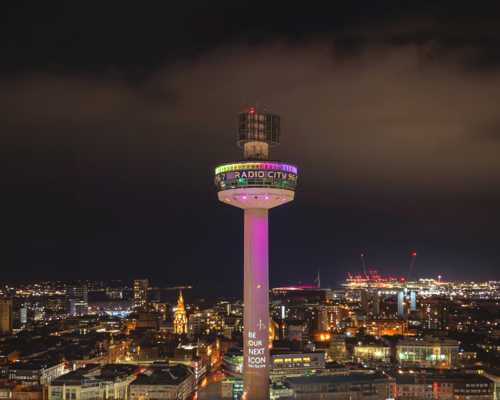
An opportunity to reimagine one of the UK’s most recognisable towers has been formally
opened by Rivington Hark, as St Johns Beacon invites operators and partners to shape its
next phase. [more...]
With a huge new immersive art space under construction on Abu Dhabi’s Saadiyat Island and a permanent museum taking shape in Jeddah, teamLab is changing the face of immersive digital art. Magali Robathan speaks
to the team behind the magic
Since 2001, art collective teamLab has been creating jaw-dropping digital art installations. Their interactive exhibitions involve the viewer in the artworks – over the years visitors worldwide have watched waterfalls part at their feet, birds fly from their dinner plates and flowers bloom and then wither as they pass.
While the early years saw teamLab create art in relative obscurity, the past decade has seen the collective become increasingly well known, with major exhibitions around the world. In 2021, teamLab Borderless Tokyo was announced as the most visited single-artist museum in the world. The collective now has permanent exhibition spaces in Beijing, Shanghai, Singapore and Macau, with their teamLab Borderless Tokyo museum relocating to Azabudai Hills in central Tokyo – due to open next year.
teamlab Phenomena Abu Dhabi – a huge 17,000sq m multisensory art space on Saadiyat Island – is set to complete construction in 2024, and will sit alongside the Louvre Abu Dhabi and Guggenheim Abu Dhabi.
A further permanent teamLab museum is being constructed in Jeddah, Saudi Arabia as part of a collaboration with the Saudi Ministry of Culture. teamLab Borderless Jeddah will be located on the Al Arbaeen Lagoon overlooking the old town, and will feature more than 50 artworks, with a brand new installation created for Jeddah.
Here the collective answer our questions.
How would you sum up teamLab and what you do? teamLab is an international art collective that seeks to navigate the confluence of art, science, technology, and the natural world. Through art, our interdisciplinary group of specialists – including artists, programmers, engineers, CG animators, mathematicians, and architects – aims to explore the relationship between the self and the world, and new forms of perception.
teamLab seeks to transcend boundaries in our perceptions of the world, of the relationship between the self and the world, and of the continuity of time. We believe that everything exists in a long, fragile yet miraculous, borderless continuity.
In the interactive artworks created by teamLab, the presence and movement of visitors transforms the art – visitors become a part of the work. This changes the relationship between an artwork and an individual into a relationship between an artwork and a group of individuals. Suddenly the way the person standing next to you behaves becomes important. We wanted to create a space where you can feel that you’re connected with other people in the world.
What’s the history of teamLab? teamLab was founded in 2001 by Toshiyuki Inoko and several of his friends to create a ‘laboratory to experiment in collaborative creation’. Through art, teamLab was (and is) interested in creating new experiences to explore what the world is for humans.
The collective has been creating art ever since, with the aim of contributing to societal progress.
You’ve gone from relative obscurity to huge success. How has this changed what you do? In the beginning, teamLab didn’t have the opportunity to present its work, nor could we work out how to financially sustain our art creation. However, we believed in the power of digital technology and creativity, and kept creating.
As time went on, while teamLab gained passionate followers, we were still ignored by the art world. Our breakthrough came in 2011 at the Kaikai Kiki Gallery in Taipei, to which the collective was invited by the artist Takashi Murakami. Since then, teamLab has gained opportunities to join major contemporary art exhibitions in cosmopolitan cities starting with the Singapore Biennale 2013.
In 2014, New York PACE Gallery started to help promote teamLab artworks, enabling us to expand rapidly, and in 2015, the collective was finally able to organise its own exhibition for the first time in Tokyo.
These events led to opportunities to exhibit internationally, in New York, London, Paris, Singapore, Silicon Valley, Beijing, Taipei, and Melbourne among others. As of today, teamLab has welcomed more than 35 million visitors to our art exhibitions.
All we do is create artworks that we believe in – our hope is that our work reaches people’s hearts and changes their behaviour and ways of thinking. Popularity is just a by-product of that.
What can people expect from teamLab Borderless Jeddah? teamLab Borderless Jeddah is the first-ever permanent teamLab Borderless museum to open in the Middle East.
Located in the Red Sea coastal city of Jeddah, it’s currently being built on the shores of Al-Arbaeen Lagoon overlooking the UNESCO World Heritage Site, Historic Jeddah.
This immersive museum will comprise over 50 artworks spread across its labyrinthine spaces, including Borderless World, Athletics Forest and Future Park. It will also feature an entirely new installation created exclusively for Jeddah.
teamLab Borderless is based on the concept that everything exists in a borderless continuity.
In order to comprehend the world, people separate it into parts, creating boundaries in between. Through this exhibition, teamLab aims to create a place in which various artworks are connected with one other without boundaries, giving visitors an opportunity to rethink their perception of the world, and discover that continuity itself is beautiful.
At teamLab Borderless Jeddah, the artworks leave rooms, move through the halls and influence other artworks. For instance, the ‘crows’ flying in a given space initially came from a different room to enter that space. As they fly about, they affect other artworks, causing ‘flowers’ to scatter and fall.
The artworks are also affected and changed by the presence of people – when visitors stand still in a space, the flow of the waterfall will change around their feet, and flowers will begin to bloom in their wake.
What can you tell us about teamLab Phenomena Abu Dhabi? Housed in a 17,000sq m venue within the Saadiyat Culture District, teamLab Phenomena Abu Dhabi will offer a completely new art experience based on teamLab’s new concept, Environmental Phenomena.
This experience will consist of a selection of dynamic works by teamLab. Visitors will be immersed into a world that organically changes and evolves through the participation and actions of the people in it.
A key characteristic of the experience is the environment and the various phenomena created by it. Unlike stones or man-made creations that can maintain a stable structure on their own, the artworks at teamLab Phenomena don’t exist independently, but are dependent on their environment.
Elements like air, water, and light are transformed by their environment into unique phenomena that become works of art. The boundaries of their existence are ambiguous and continuous. Even if people destroy the work, the work will remain in existence as long as its environment is maintained – and will disappear, if it’s not maintained.
The venue is set to complete construction in 2024, and will sit alongside the Louvre Abu Dhabi and the Guggenheim Abu Dhabi.
teamLab Borderless Tokyo was announced as the most visited single artist museum in 2021. Why was it so popular? All we can say is that teamLab believes that digital technology can expand art and that art made in this way can create new relationships between people, as well as between viewers and the artwork.
Digital technology enables complex detail and freedom for change. Before people started accepting digital technology, information and artistic expression had to be presented in some physical form.
Creative expression has existed through static media for most of human history, often using physical objects such as canvas and paint. The advent of digital technology allows human expression to become free from these physical constraints, enabling it to exist independently and evolve freely.
No longer limited to physical media, digital technology has made it possible for artworks to expand physically. Since art created using digital technology can easily expand, it provides us with a greater degree of autonomy within the space. We are now able to manipulate and use much larger spaces, and viewers are able to experience the artwork more directly.
The characteristics of digital technology allow artworks to express the capacity for change much more freely. Viewers, in interaction with their environment, can instigate perpetual change in an artwork. Through an interactive relationship between the viewers and the artwork, viewers become an intrinsic part of that artwork.
teamLab exhibitions
Permanent exhibitions:
• teamLab SuperNature Macao
Soft opened June 2020 at the Venetian Macao
• teamLab Massless Beijing
Opened in Chaoyang Joy City, Beijing in December 2022
• teamLab Botanical Gardens Osaka
Opened in July 2022, this open air museum features teamLab’s artworks at the Nagai Botanical Garden in Osaka
• Future World: Where Art Meets Science, Art Science Museum, Singapore
Opened in March 2016
Upcoming exhibitions:
• Upcoming exhibitions:
No opening date has yet been released for this permanent new teamLab museum, set to be located on Culture Square in Jeddah
• teamLab Phenomena Abu Dhabi
With construction due for completion in 2024, this new 17,000sq m art museum will be housed in a curved organically-shaped building on the waterfront on Saadiyat Island
• teamLab Borderless: MORI Building Digital Art Museum, Tokyo
Scheduled to re-open in early 2024, in Toyko’s Azabudai Hills, this museum replaces teamLab Borderless in Odaiba, which closed in August 2022. In 2021, the museum in Odaiba was announced as the world’s most visited single art group museum
Read more from this issue of Attractions Management magazine
View contents of Attractions Management 2023 issue 4
People: Clara Rice
The director of global marketing for Adirondack Studios shares her plans
Interview: Delphine Pons
As Parc Asterix launches a new themed land and celebrates record attendance figures, its CEO tells us what’s next for the much-loved French park
First person: The power of play
Can the power of play help heal divides in our world? Can art and attractions bring people closer? Meow Wolf’s founder is sure that it can
Museum: Lighting the way
With major new museums taking shape in Jeddah and Abu Dhabi, digital art sensation teamLab are riding high. We speak to the team
Opinion: We need a revolution
It’s time for radical thinking to address the staffing crisis in our industry, argues Margreet Papamichael
Tourism: On the road
With its Scenic Routes project, Norway has turned the road trip into an attraction, and boosted tourism in a huge way. Terry Stevens gets behind the wheel
Museums: Mark Cutmore
What’s the future of immersive technology in museums? The head of commercial experiences at the Science Museum Group shares his thoughts
Research: Joined up thinking
Natural history museums around the world are sharing details of their collections to help find solutions to some of the most urgent issues of our time
The arts: Show time
As the UK’s biggest cultural venue for decades opens, we hear from the team behind Aviva Studios
Research: Making memories
The link between the emotions of visitors and their memories of an experience helps shape their reactions. Researcher Wim Strijbosch explores his findings
Experience design company, BRC Imagination Arts, has completed a transition that sees founder
Bob Rogers pass ownership of the business to four long-serving senior executives, while
remaining actively involved with the company.
Movie Park Germany has opened a new Paramount Pictures-themed attraction as part of its 30th
anniversary celebrations, using immersive storytelling and adaptive reuse to reinforce the park’s
longstanding “Hollywood in Germany” positioning.
Therme Manchester’s 28-acre development, which will include interconnected glass pavilions
that measure 65,000sq m, will be the largest bathing and wellbeing attraction in the world once
complete, according to prof David Russell, CEO of Therme UK.
Efteling has opened Hooghmoed, a new family drop tower designed to broaden the appeal of its
recently launched Sirene Island themed area and introduce younger visitors to thrill attractions.
A proposed Puy du Fou development near Bicester and Universal Destinations and Experiences’
planned resort in Bedford are emerging as part of a wider transformation of the Oxford–
Cambridge Growth Corridor into a major centre for UK leisure and tourism inv
Shedd Aquarium has opened the Immersion Theater developed in partnership with SimEx-
Iwerks, as part of a wider strategy to enhance the guest experience and create additional
revenue opportunities.
The UK government has announced a temporary reduction in VAT on visitor attractions and
children’s meals as part of a summer cost-of-living support package designed to stimulate the
visitor economy and encourage family days out.
As designer Yinka Ilori prepares for his first solo gallery show in London, he speaks exclusively
to CLADmag about his mission to spread joy, the power of play, and his bold approach to using
colour (including the colours you won’t see in his work).
The government of Thailand is exploring plans for a THB300bn (£6.3bn, US$8.3bn)
entertainment complex in the country’s Eastern Economic Corridor (EEC), with officials
proposing a large-scale theme park and sports destination as part of a broader tourism and
economic development strategy.
Royal Caribbean has revealed its Hero of the Seas cruise ship, home to the most pools at sea
(nine), and a record-breaking 28 dining venues, as well as attractions including a waterpark
with two new family raft slides.
+ More news
COMPANY PROFILES
QubicaAMF UK QubicaAMF is the largest and most
innovative bowling equipment provider with
600 employees worldwi [more...]
An opportunity to reimagine one of the UK’s most recognisable towers has been formally
opened by Rivington Hark, as St Johns Beacon invites operators and partners to shape its
next phase. [more...]