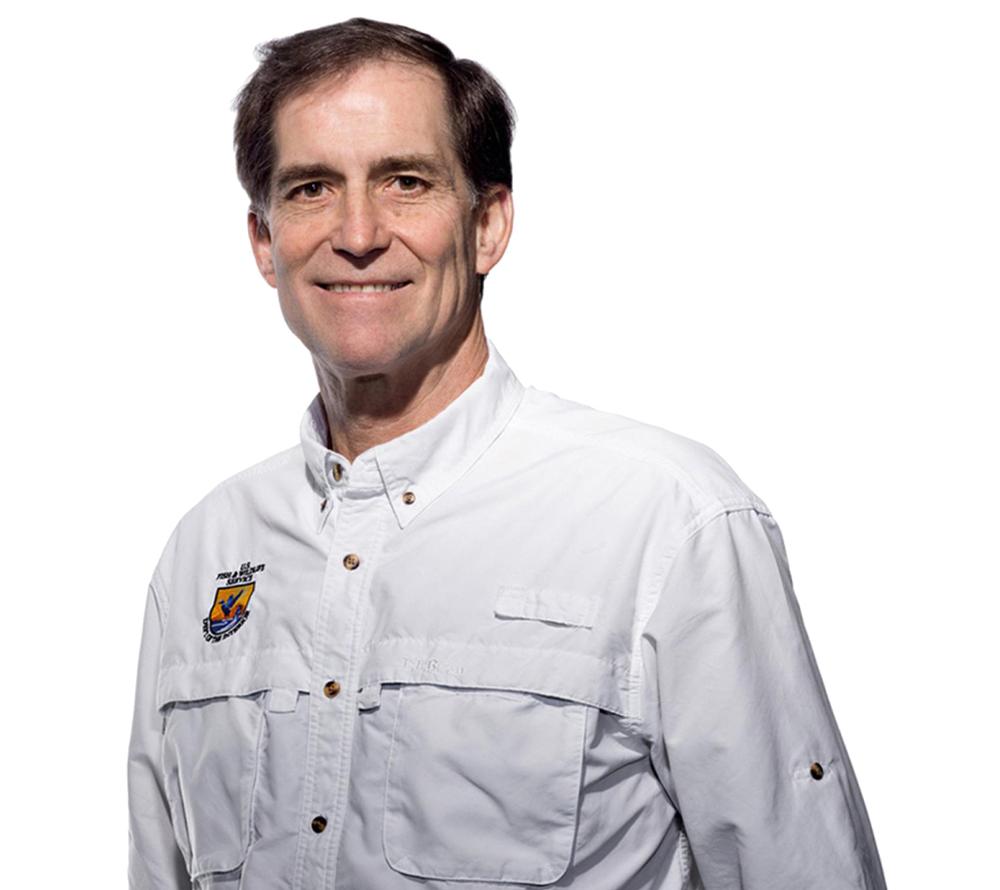
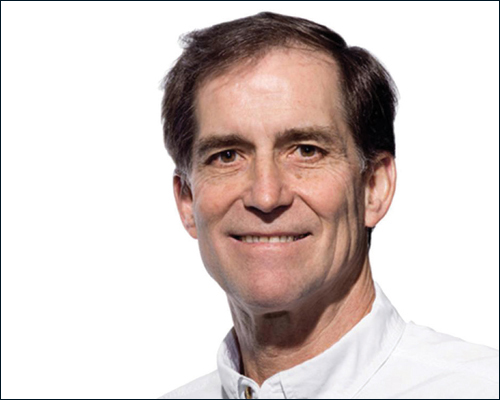
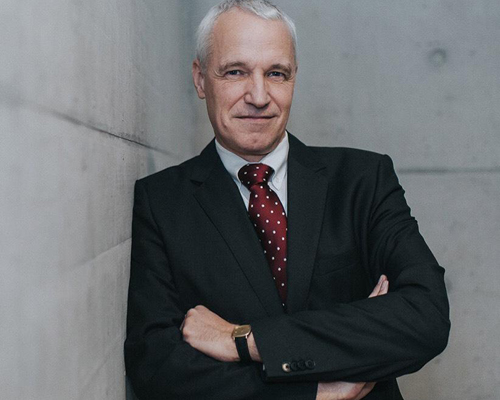
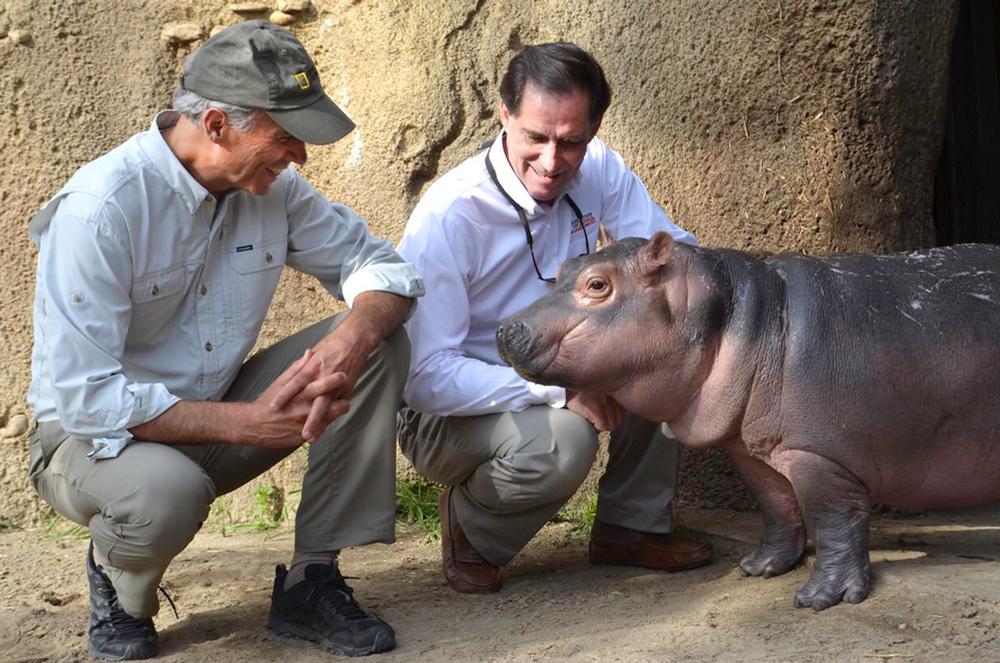
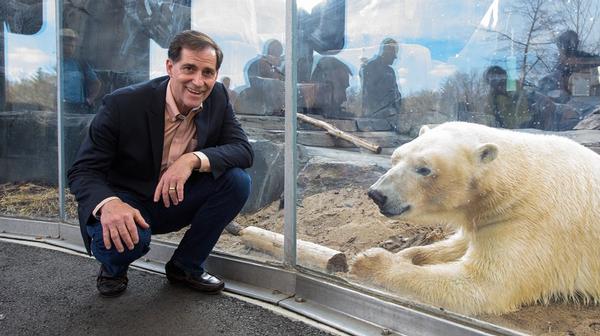
Ashe is responsible for 233 facility and more than 6,000 individual AZA members
In the last two years, the Association of Zoos and Aquariums (AZA) has undergone significant changes.
By adopting a member-driven model, the organisation has enjoyed significant growth, which has included the expansion of its primary conservation initiative, resulting in investments of more than US$200m a year by its members.
The AZA also enhanced its already rigorous accreditation standards to reflect the latest in scientific research and animal welfare assessments, as well as acquiring the Wildlife Trafficking Alliance, which works to reduce the purchase and sale of illegal wildlife and wildlife products.
The association additionally embarked on a national campaign, which aims to tell powerful stories about the animal care taking place in our facilities every day. It also swelled its own ranks, welcoming ten newly accredited and certified facilities and hosting four conferences with record-breaking attendance.
It’s a lengthy list of achievements and behind these successes is the AZA’s president and CEO, Dan Ashe. Taking up his position in January 2017, Ashe, the former director of the US Fish and Wildlife Service (USFWS), has taken the organisation to new heights, using his experience in government to help advocate for change, while also driving the AZA with a number of new initiatives.
“In my role, I’m charged with advancing AZA’s vision, mission and strategic priorities,” says Ashe. “No day is the same in this role; one day I may be representing our association at an international conservation conference, and the next, I may be testifying before Congress advocating for the protection of wildlife.”
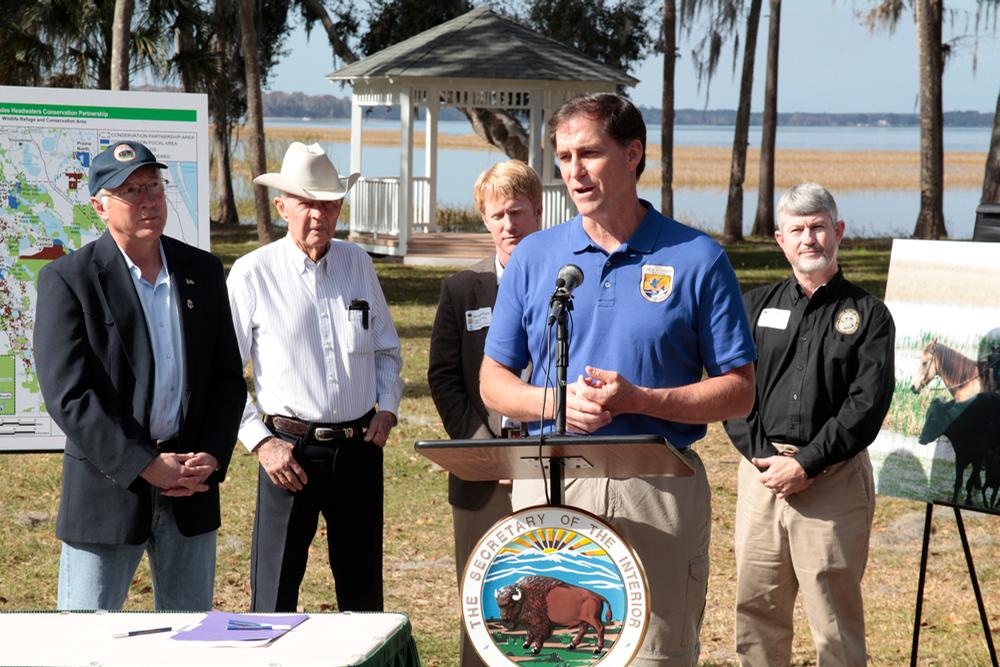
Government ties Prior to joining the AZA, Ashe spent more than a decade working within and leading the USFWS, an important conservation partner of AZA and its members.
Named the 16th USFWS director by the US Senate in June 2011, he led the agency through a number of challenges. Spanning the course of 13 years, he held roles of increasing responsibility within USFWS, including assistant director for external affairs, chief of the National Wildlife Refuge System, science advisor to the director, and deputy director.
“Performance is the measure and I think my experience managing complex and controversial issues, leading people and building relationships has been key to success,” says Ashe.
“Hardly a day goes by where I don’t draw on the lessons I learned during my 35 years in government. I still understand science, the scientific method and can frame good critical questions about scientific information. That ability has always been an asset and is in this position.”
Billion dollar baby Having taken these strides in his first two years in the role, Ashe still has grand plans for the AZA, which are intended to help provide the best possible services to AZA members and to help advance the zoological profession.
“We’re planning to expand our services and adapt – based on the changing needs of our members – in light of the latest technology,” he says. “We’ll also engage the public to grow confidence in the AZA-accredited community and we’ll help our animal programmes increase the long-term sustainability of a wide range of species.”
In September last year, the AZA revealed that it was on target to spend US$1bn on conservation efforts within the next five years, reporting record-breaking contributions from its members which are benefitting multiple initiatives worldwide.
For 2017, its members funded a record-breaking US$220m for field conservation initiatives. Included within that figure, AZA members contributed US$15.7m towards the organisation’s SAFE (Saving Animals From Extinction) programme – a scheme that prioritises strategic planning for field conservation within the AZA community and builds on existing recovery plans for the world’s most threatened species.
“While the AZA and its members have always invested in conservation, 2016 was the first time we exceeded the $200 million mark, which put us on track to contribute more than US$1bn by 2021,” says Ashe. “These funds benefit more than 860 species and sub-species worldwide, hundreds of which are endangered or extremely endangered. AZA-sponsored projects took place in over 120 countries around the world and engaged more than 1,000 conservation partners.
“Collectively, the most important efforts are animal care and welfare, fighting extinction and assuring our animal populations are sustainable. Personally, I have a passion for butterfly conservation, particularly the Monarch butterfly and I’m hoping to see the Mariposa Monarch added as a SAFE species.”
Public pressure While most members of the public support and see the necessity and benefit of zoos for wildlife and conservation, others oppose it, calling the practice of keeping animals in captivity unethical. This is a regular challenge faced by Ashe.
Based on the words of former US Secretary of Defense, Donald Rumsfeld, who said: “Politics is human beings; it’s an addition rather than subtraction” – Ashe says he practices “the politics of addition,” believing we become stronger as we add others to our community or coalition and weaker when we exclude participants.
“When we develop a more positive relationship with diverse audiences – even if they disagree with us on some things – we increase their awareness and understanding of what we do and reduce the potential for them to treat us as adversaries. Recently, we saw the benefits of this approach, when PETA supported the Cincinnati Zoo in efforts to rescue a gorilla being held in a solitary ‘sanctuary’.
“In that instance, with PETA’s backing, the zoo has filed a lawsuit in the federal district court in San Francisco seeking to compel the Gorilla Foundation in California to release the gorilla – Ndume – a gorilla isolated from its own species following the death of his companion Koko. If transferred back to the zoo, he could live in a multigenerational group. The outcome of the case is still to be determined, but it shows a rare collaboration between an anti-zoo group such as PETA with a zoo, with shared interests for the greater good.
“It’s in our best interest to work with other organisations on issues in which we both agree, using opportunity and allies to advocate for our work,” Ashe says.
Future endeavours “Challenge and opportunity represent two sides of a coin – where you have one, you have the other,” says Ashe.
“We’re a member organisation, but to be a member, a facility must be accredited by our independent accreditation commission.
“AZA’s accreditation standards are widely accepted as the gold standard for a modern aquarium or zoo. This presents the opportunity for us to set and reset the high bar for member performance, as we learn more about things like animal care and welfare, sustainability, education, guest experience, finance and safety.
While accreditation as an AZA zoo can be very beneficial, Ashe says it still needs to be appealing to its members.
“We have to find a balance where accreditation is viewed as a benefit and not a disadvantage,” he says.
“I think we’re finding that balance. We’ve adopted new standards in areas such as elephant and cetacean care, welfare assessment and conservation. We’ve also expanded our membership, and we currently have a record number of institutions in our pipeline for accreditation.”
Read more from this issue of Attractions Management magazine
View contents of Attractions Management 2019 issue 2
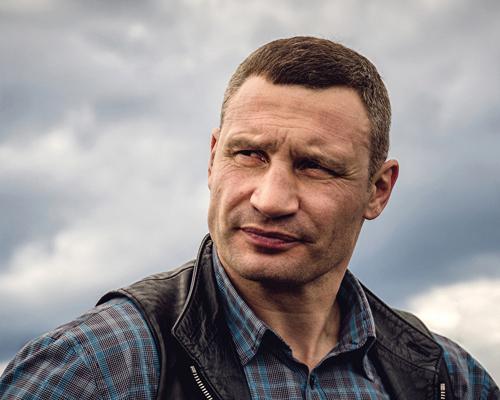
People profile: Vitali Klitschko
With the help of Europa Park, the multi-time boxing champion turned politician dreams up theme park plan for Kyiv, Ukraine
Rides: Art Attack
We look at major ride openings at
visitor attractions across the globe
Top team: Made in China
The birthplace of William
Shakespeare will be recreated at
the home of China’s most famous
playwright. We speak to the team
behind the ambitious project
Promotional feature: Animalive - Lights, camera, action!
Animalive is a premier manufacturer of interactive animation products.
Its founder, Ali Kord, explains how its recent joint venture will
take the company’s award-winning products to the next level
Museums: Day out at the museum
The Network of European Museum
Organisations has launched a Political
Internships scheme. We speak to
the programme’s creator about what
this could mean for museums
Promotional feature: Red Raion - Building a new IP
Red Raion, the CGI studio specialised in media based attractions, has
collaborated with Unlimited Leisure Holdings to create a new 4D movie, which
will be presented at Unlimited Snow’s newest park
Show report: Global Appeal
TEA Summit and SATE Europe
Christine Kerr reports from the TEA’s
Summit, Thea Awards and SATE Europe
Interview: Pure Imagication
Adlabs Imagica is India’s largest
theme park destination. Its joint
CEO speaks to Kath Hudson
Ashe is responsible for 233 facility and more than 6,000 individual AZA members
In the last two years, the Association of Zoos and Aquariums (AZA) has undergone significant changes.
By adopting a member-driven model, the organisation has enjoyed significant growth, which has included the expansion of its primary conservation initiative, resulting in investments of more than US$200m a year by its members.
The AZA also enhanced its already rigorous accreditation standards to reflect the latest in scientific research and animal welfare assessments, as well as acquiring the Wildlife Trafficking Alliance, which works to reduce the purchase and sale of illegal wildlife and wildlife products.
The association additionally embarked on a national campaign, which aims to tell powerful stories about the animal care taking place in our facilities every day. It also swelled its own ranks, welcoming ten newly accredited and certified facilities and hosting four conferences with record-breaking attendance.
It’s a lengthy list of achievements and behind these successes is the AZA’s president and CEO, Dan Ashe. Taking up his position in January 2017, Ashe, the former director of the US Fish and Wildlife Service (USFWS), has taken the organisation to new heights, using his experience in government to help advocate for change, while also driving the AZA with a number of new initiatives.
“In my role, I’m charged with advancing AZA’s vision, mission and strategic priorities,” says Ashe. “No day is the same in this role; one day I may be representing our association at an international conservation conference, and the next, I may be testifying before Congress advocating for the protection of wildlife.”
Government ties Prior to joining the AZA, Ashe spent more than a decade working within and leading the USFWS, an important conservation partner of AZA and its members.
Named the 16th USFWS director by the US Senate in June 2011, he led the agency through a number of challenges. Spanning the course of 13 years, he held roles of increasing responsibility within USFWS, including assistant director for external affairs, chief of the National Wildlife Refuge System, science advisor to the director, and deputy director.
“Performance is the measure and I think my experience managing complex and controversial issues, leading people and building relationships has been key to success,” says Ashe.
“Hardly a day goes by where I don’t draw on the lessons I learned during my 35 years in government. I still understand science, the scientific method and can frame good critical questions about scientific information. That ability has always been an asset and is in this position.”
Billion dollar baby Having taken these strides in his first two years in the role, Ashe still has grand plans for the AZA, which are intended to help provide the best possible services to AZA members and to help advance the zoological profession.
“We’re planning to expand our services and adapt – based on the changing needs of our members – in light of the latest technology,” he says. “We’ll also engage the public to grow confidence in the AZA-accredited community and we’ll help our animal programmes increase the long-term sustainability of a wide range of species.”
In September last year, the AZA revealed that it was on target to spend US$1bn on conservation efforts within the next five years, reporting record-breaking contributions from its members which are benefitting multiple initiatives worldwide.
For 2017, its members funded a record-breaking US$220m for field conservation initiatives. Included within that figure, AZA members contributed US$15.7m towards the organisation’s SAFE (Saving Animals From Extinction) programme – a scheme that prioritises strategic planning for field conservation within the AZA community and builds on existing recovery plans for the world’s most threatened species.
“While the AZA and its members have always invested in conservation, 2016 was the first time we exceeded the $200 million mark, which put us on track to contribute more than US$1bn by 2021,” says Ashe. “These funds benefit more than 860 species and sub-species worldwide, hundreds of which are endangered or extremely endangered. AZA-sponsored projects took place in over 120 countries around the world and engaged more than 1,000 conservation partners.
“Collectively, the most important efforts are animal care and welfare, fighting extinction and assuring our animal populations are sustainable. Personally, I have a passion for butterfly conservation, particularly the Monarch butterfly and I’m hoping to see the Mariposa Monarch added as a SAFE species.”
Public pressure While most members of the public support and see the necessity and benefit of zoos for wildlife and conservation, others oppose it, calling the practice of keeping animals in captivity unethical. This is a regular challenge faced by Ashe.
Based on the words of former US Secretary of Defense, Donald Rumsfeld, who said: “Politics is human beings; it’s an addition rather than subtraction” – Ashe says he practices “the politics of addition,” believing we become stronger as we add others to our community or coalition and weaker when we exclude participants.
“When we develop a more positive relationship with diverse audiences – even if they disagree with us on some things – we increase their awareness and understanding of what we do and reduce the potential for them to treat us as adversaries. Recently, we saw the benefits of this approach, when PETA supported the Cincinnati Zoo in efforts to rescue a gorilla being held in a solitary ‘sanctuary’.
“In that instance, with PETA’s backing, the zoo has filed a lawsuit in the federal district court in San Francisco seeking to compel the Gorilla Foundation in California to release the gorilla – Ndume – a gorilla isolated from its own species following the death of his companion Koko. If transferred back to the zoo, he could live in a multigenerational group. The outcome of the case is still to be determined, but it shows a rare collaboration between an anti-zoo group such as PETA with a zoo, with shared interests for the greater good.
“It’s in our best interest to work with other organisations on issues in which we both agree, using opportunity and allies to advocate for our work,” Ashe says.
Future endeavours “Challenge and opportunity represent two sides of a coin – where you have one, you have the other,” says Ashe.
“We’re a member organisation, but to be a member, a facility must be accredited by our independent accreditation commission.
“AZA’s accreditation standards are widely accepted as the gold standard for a modern aquarium or zoo. This presents the opportunity for us to set and reset the high bar for member performance, as we learn more about things like animal care and welfare, sustainability, education, guest experience, finance and safety.
While accreditation as an AZA zoo can be very beneficial, Ashe says it still needs to be appealing to its members.
“We have to find a balance where accreditation is viewed as a benefit and not a disadvantage,” he says.
“I think we’re finding that balance. We’ve adopted new standards in areas such as elephant and cetacean care, welfare assessment and conservation. We’ve also expanded our membership, and we currently have a record number of institutions in our pipeline for accreditation.”
Read more from this issue of Attractions Management magazine
View contents of Attractions Management 2019 issue 2
People profile: Vitali Klitschko
With the help of Europa Park, the multi-time boxing champion turned politician dreams up theme park plan for Kyiv, Ukraine
Rides: Art Attack
We look at major ride openings at
visitor attractions across the globe
Top team: Made in China
The birthplace of William
Shakespeare will be recreated at
the home of China’s most famous
playwright. We speak to the team
behind the ambitious project
Promotional feature: Animalive - Lights, camera, action!
Animalive is a premier manufacturer of interactive animation products.
Its founder, Ali Kord, explains how its recent joint venture will
take the company’s award-winning products to the next level
Museums: Day out at the museum
The Network of European Museum
Organisations has launched a Political
Internships scheme. We speak to
the programme’s creator about what
this could mean for museums
Promotional feature: Red Raion - Building a new IP
Red Raion, the CGI studio specialised in media based attractions, has
collaborated with Unlimited Leisure Holdings to create a new 4D movie, which
will be presented at Unlimited Snow’s newest park
Show report: Global Appeal
TEA Summit and SATE Europe
Christine Kerr reports from the TEA’s
Summit, Thea Awards and SATE Europe
Interview: Pure Imagication
Adlabs Imagica is India’s largest
theme park destination. Its joint
CEO speaks to Kath Hudson
Expo 2030 Riyadh is being planned as a permanent visitor destination, with organisers
confirming the six-million-square-metre site will become a Global Village after the event closes.
The owner of one of Australia's best-known waterparks has acquired a major competitor,
creating a new attractions business spanning two of the country's largest visitor destinations.
The Toverland theme park in the Netherlands has announced a €98m expansion programme
that will add a resort, new attractions and staff facilities as it pursues plans to become a multi-
day destination.
Hotel de France, located on the British Isle of Jersey, has created a wellness retreat package
that includes a hot yoga session that will take place in Jersey Zoo’s butterfly sanctuary.
A new immersive attraction designed to transport visitors into the final hours of ancient Pompeii
is preparing to open near the world-famous archaeological site in southern Italy.
Experience design company, BRC Imagination Arts, has completed a transition that sees founder
Bob Rogers pass ownership of the business to four long-serving senior executives, while
remaining actively involved with the company.
Movie Park Germany has opened a new Paramount Pictures-themed attraction as part of its 30th
anniversary celebrations, using immersive storytelling and adaptive reuse to reinforce the park’s
longstanding “Hollywood in Germany” positioning.
Therme Manchester’s 28-acre development, which will include interconnected glass pavilions
that measure 65,000sq m, will be the largest bathing and wellbeing attraction in the world once
complete, according to prof David Russell, CEO of Therme UK.
Efteling has opened Hooghmoed, a new family drop tower designed to broaden the appeal of its
recently launched Sirene Island themed area and introduce younger visitors to thrill attractions.
A proposed Puy du Fou development near Bicester and Universal Destinations and Experiences’
planned resort in Bedford are emerging as part of a wider transformation of the Oxford–
Cambridge Growth Corridor into a major centre for UK leisure and tourism inv
+ More news
COMPANY PROFILES
Clip 'n Climb Clip ‘n Climb currently offers facility owners and
investors more than 40 colourful and unique
Cha [more...]
IDEATTACK IDEATTACK is a full-service planning and
design company with headquarters in
Los Angeles. [more...]
QubicaAMF UK QubicaAMF is the largest and most
innovative bowling equipment provider with
600 employees worldwi [more...]
Alterface Alterface’s Creative Division team is
seasoned in concept and ride development,
as well as storyte [more...]