A spate of exciting museum design has set pulses racing, with new projects embracing the outside world, and renovations eyeing a perfect balance between modern and original architecture. Here’s a round-up
By Julie Cramer | Published in Attractions Management 2014 issue 3
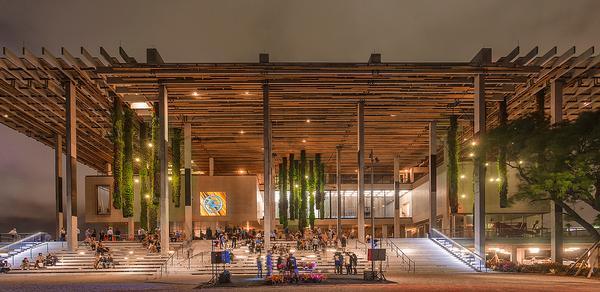
Perez Art Museum Miami, designed by Herzog & de Meuron
Read more from this issue of Attractions Management magazine
View contents of Attractions Management 2014 issue 3
Editor’s letter: Here comes China
As China opens up to the West, the nation’s attractions are
booming, with existing attractions reporting record attendances and
new museums, theme parks and science centres planned
Teamworking: The Art of Collaboration
Merlin’s Mark Fisher talks about working
with Hollywood studio DreamWorks on
the upcoming Shrek-themed midways,
how to spot a winning IP and the
importance of creative collaboration
Talking Point: Whose Museum Is It Anyway?
Five experts debate how museums
can tackle the controversial issue
of balancing the needs of the visitor
with their curatorial responsibilities
Analysis: TEA/AECOM Enduring Appeal
Theme park attendance for 2013
reached an all-time high, and museums
worldwide performed well. AECOM’s
economics experts crunch the numbers
Theme Parks: Oceans of Fun
Chimelong International Ocean Resort
is a big development on a small island.
Will its proximity to the gambling haven
of Macau be a help or a hindrance?
Museums: Virtual Visits
Europe’s biggest museum conference
looks at how technology and the digital
revolution can enhance the attraction. We
report from the event in Newcastle, UK
Technology: Face Reality
As Facebook’s Mark Zuckerberg buys
Oculus VR and its Rift device, we look at
how far VR has come, and ask whether
it has a place in the attractions industry
Profile: Sarah Maltby
As Jorvik turns 30, director Sarah
Maltby talks about keeping archaeology
at the heart of what the Viking centre
does, and moving with the times
Storytelling: Inside Story
Abu Dhabi’s Yas Waterworld draws on
the local culture to create a narrative
journey for its visitors. Atkins Global
tells us about an innovative approach
Interview: Rick Schwartz
San Diego Zoo Global ambassador on the
Tiger Trail and conservation initiatives
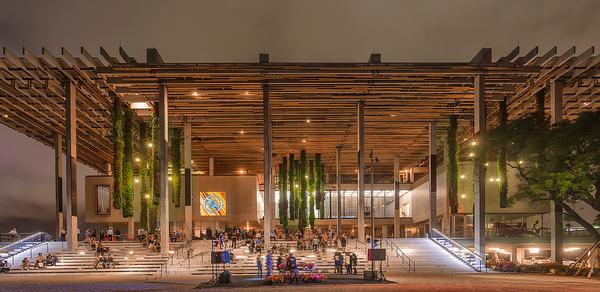
Pérez Art Museum Miami, Florida, US Architects Herzog & de Meuron The new Pérez Art Museum Miami (PAMM) reflects both the natural and urban landscapes of this Florida city. Designed by Swiss architects Herzog & de Meuron, the museum plays a key role in Miami’s bid to become an important arts and culture destination.
The museum’s front façade is oriented toward the bay area, making it a highly visible landmark in Miami’s cityscape. PAMM includes 3,000sqm (32,000sq ft) of gallery space with educational facilities, a shop and waterfront café spread over three storeys. Extensive plazas and gardens make the most of the favourable climate. The building offers a threefold increase in programmable space compared to the facility – the Miami Art Museum – that it replaced.
Within the contemporary art museum, different modes of display have been used in a non-linear sequence, allowing visitors to map their own routes through the collection and space. The permanent collection galleries are on the first and second levels. Benefitting from natural light and views of the surrounding park and bay, outward-facing exhibition spaces alternate with enclosed, intimate galleries with a focus on single subjects. Art is displayed throughout the mueseum, including the garden and the parking garage.
The museum sits on a platform below a canopy, both of which extend far beyond the facility’s walls to create a comfortable shaded veranda. Wide stairways connect the platform to the bay and a waterfront promenade, creating a continuous, open civic space that integrates community, nature, architecture and art.
Herzog & de Meuron co-founder and senior partner, Jacques Herzog says: “Miami is known for its iconic art deco district – in fact art deco was about decorated boxes with no great relationship and exchange between inside and outside.”
“The greatest thing, however, that makes Miami so extraordinary is its amazing climate, lush vegetation and cultural diversity. How can these assets be fully exploited and translated into architecture? That’s the way we tried to go with our design for the new art museum in Miami.”
Photo by Armando/MannyofMiami.com
A view of the east facade of the Perez Art Museum Miami, designed by Swiss artchitecture firm Herzog & de Meuron
Museo Maya de América guatemala city, guatemala
Architects Harry Gugger Studio The Museo Maya de América is due to open in Guatemala City in 2017 and its developers say it will represent one of the most ambitious cultural development projects ever undertaken in Central America.
Designed by Swiss architects Harry Gugger Studio in collaboration with Boston-based design firm Over Under, the new museum will be home to one of the world’s most important collections of artefacts, artworks and textiles from the sophisticated Mayan civilisation.
The museum will offer 60,000sqm (646,000sq ft) of programmable space, and has a budget of $60m (£35m, €44m). The building design draws inspiration from traditional Mayan temple architecture.
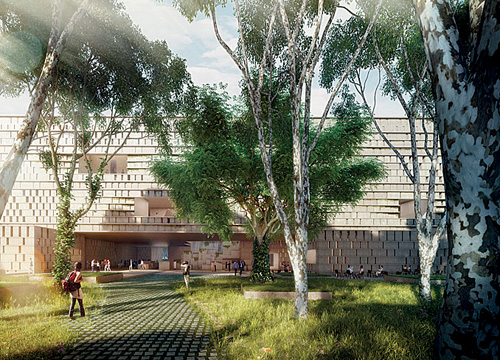
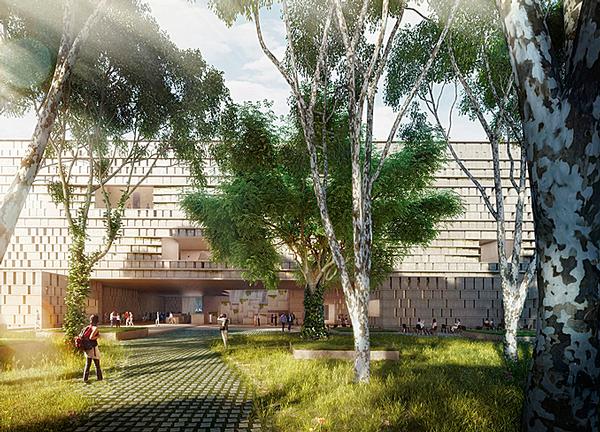
Harry Gugger, principal of Harry Gugger Studio, says the building will form “a monolithic box perched atop blocks of stone, as if floating above the ground. On closer inspection, a pattern of staggered stone screens is punctuated by over-scaled loggias that draw light into the building and offer glimpses inside.”
Organised for maximum public interaction with the site, the ground floor will be almost entirely open space. The galleries will reside within the floating box, connected to the lower levels by stairs that climb around a central courtyard.
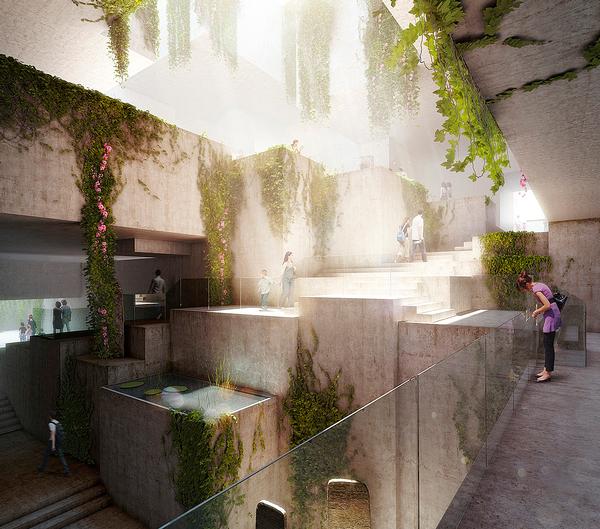
This courtyard evokes the cenote, a type of natural sinkhole characteristic of the Yucatan and held sacred by the Maya. Open to the sky and lushly planted, the eight-storey cenote will be the heart of the museum. The large roof surface will collect rainwater and filter it through the cenote in a method recalling traditional Mayan practices of channelling water.
Situated at a prominent location on the edge of L’Aurora Park, the new museum will be visible when exiting Guatemala City’s international airport, and is expected to become the capstone to a series of museums, including the Children’s Museum and the Museum of Contemporary Art. This new cultural nexus – located in what will be the largest recreational open space in the city – will provide a new destination for tourists and residents alike.
Photos by Harry Gugger Studio
A rendering of the courtyard of the Museo Maya de America. The cenote-inspired waterfall
is the focal point
A park and lush greenery will frame the architecture, based on the motifs of the traditional Mayan temple
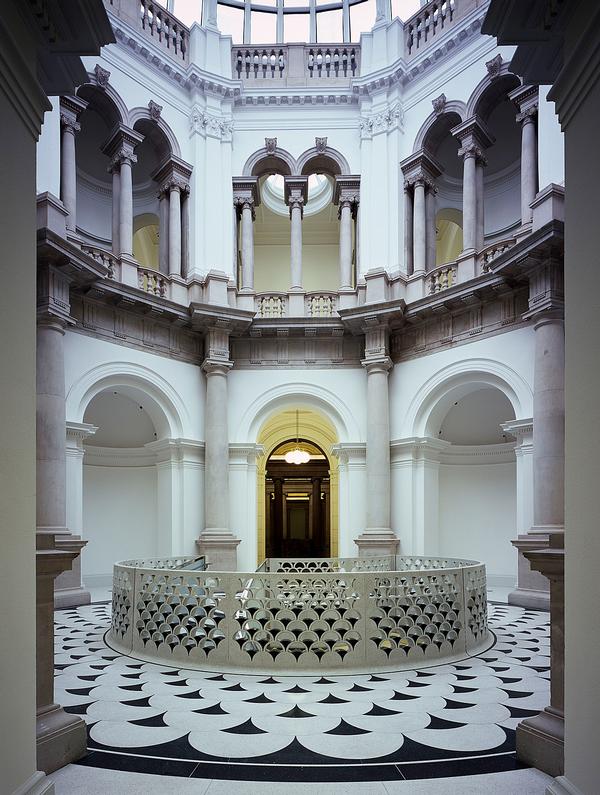
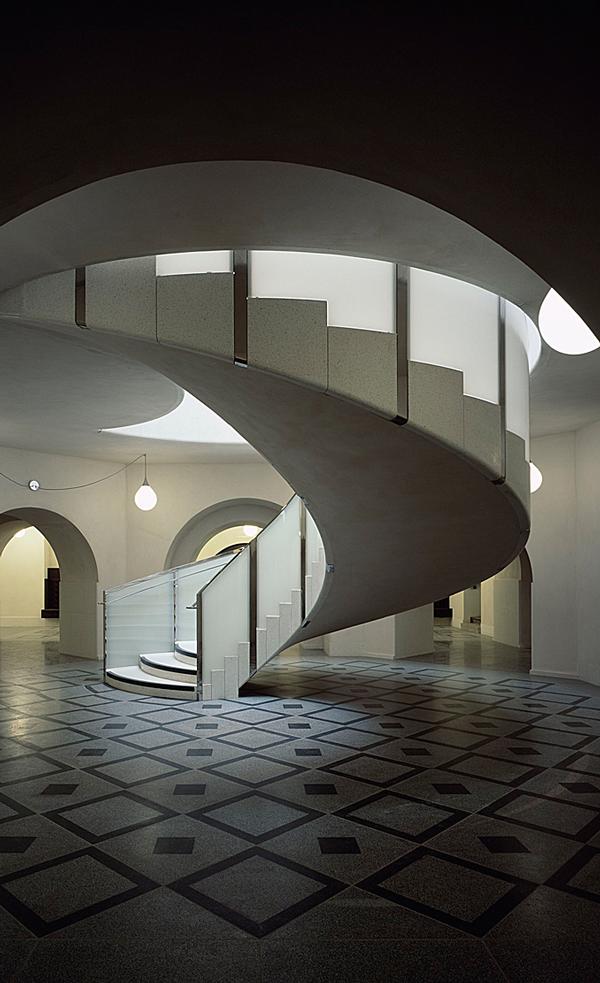
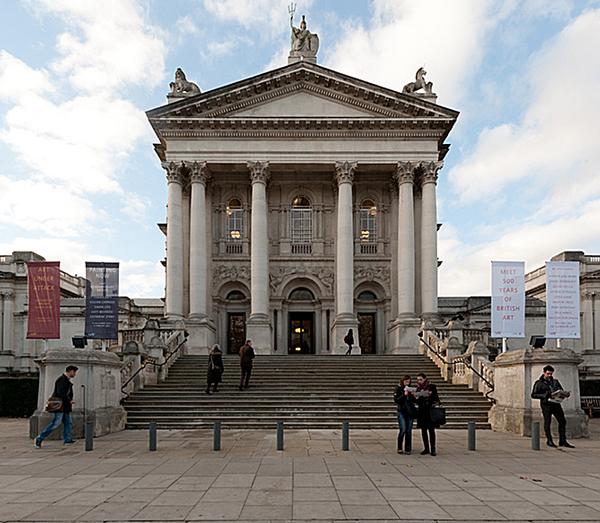
Tate Britain London, UK Architects: Caruso St John Anew-look Tate Britain, comprising an ambitious transformation of the oldest part of the Grade II-listed London building, has been completed by architects Caruso St John. The £45m ($77m, €57m) project included the reopening of the main entrance on Millbank, combining new features with the excavation of the building’s original architectural elements. The changes included a striking new spiral staircase inside the entrance in the Rotunda, which opens up access to new public spaces below.
The floor of the Rotunda was remade in terrazzo in a pattern that recalls the original marble mosaic floor. The Rotunda niches have once again become locations for the display of art. New learning studios are located throughout the gallery, including a dedicated schools’ entrance and reception, and a new archive gallery, presenting temporary displays from Tate’s extensive archive of artists’ letters and ephemera.
The museum’s food and beverage outlets have also been extensively remodelled. The Whistler Restaurant has been reopened, with its famous Rex Whistler mural, The Expedition in Pursuit of Rare Meats (1926-7), fully restored. Originally opened in 1927, the restaurant was once, owing to its mural, described in a newspaper as “the most amusing room in Europe” and it’s been a site of political and social intrigue ever since.
The redevelopment included the opening of the circular balcony of the Rotunda’s domed atrium, which had been closed to visitors since the 1920s. The space is now an elegant café for Tate members complete with a 14-metre-long (46-foot) bar, while the Grand Saloon, overlooking the Thames, offers a light-filled space for seminars and events.
The central spiral staircase in the rotunda of the Tate Britain
Lower level rotunda
Tate Britain’s exterior
Philadelphia Museum of Art Philadelphia, Pennsylvania, US
Architects: Gehry partners Frank Gehry and the Philadelphia Museum of Art (PMoA) have unveiled a master plan for the 90-year-old museum. Known for the Guggenheim Museum in Bilbao, Spain, Gehry’s latest designs for PMoA were revealed in an exhibition this summer entitled Making a Classic Modern: Frank Gehry’s Master Plan for the Philadelphia Museum of Art.
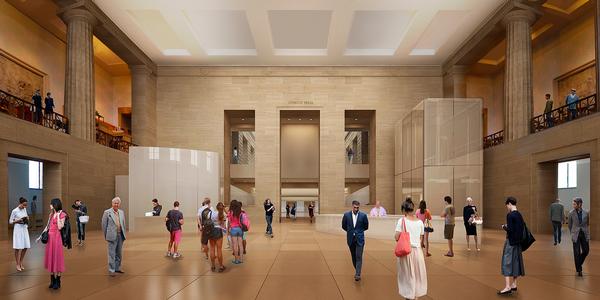
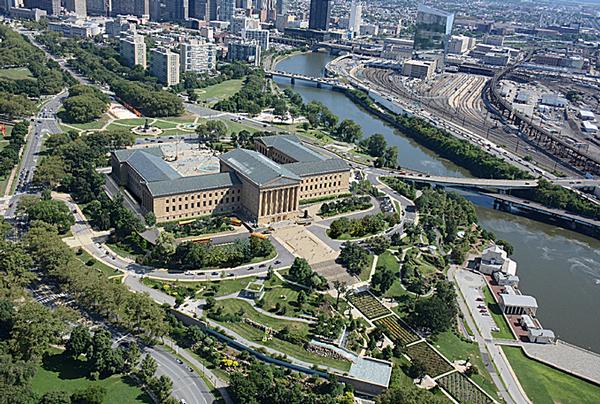
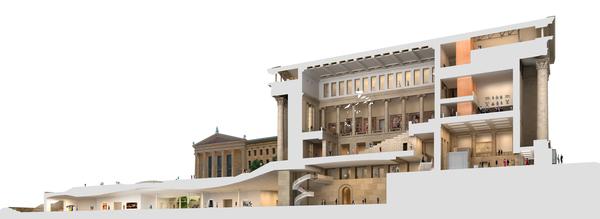
Gehry’s plans to extend and renovate are unlike any of his previous works, “dramatically different and virtually unique,” according to the museum. The architect’s plans include opening up the space at the centre of the museum, creating subterranean galleries lit by a skylight in the East Terrace, and re-opening a vaulted underground walkway long closed to the public. The plans are undeniably modern, yet sympathetic to the historic building. The most daring aspect of the $352m (£205m, €257m) scheme appears to be the proposed creation of a 7-metre (23-foot) opening in the “Rocky steps” that lead up to the east entrance of the museum. The steps became a tourist attraction in their own right following their appearance in Rocky in 1976. Visitors often climb the steps to recreate a famous Sylvester Stallone scene. The opening in the steps would provide access to several underground galleries.
The project has a completion date of 2028, says Gail Harrity, the museum’s president and chief operating officer. “Given the ambitious scope of the plan, it has been designed in separate phases that can be implemented as funds become available,” she says.
Ultimately, the expansion and renovation would be time-consuming and costly undertaking, but with a predicted increase of almost 16,000sqm (170,000sq ft) of gallery space, the interior of the building would be completely transformed.
Lenfest Hall rendering
An aerial mock-up of the west wing with a view of the msuem’s west
A cross-section view showing the changes to existing interior spaces and the new underground galleries
COMPANY PROFILES
QubicaAMF UK
QubicaAMF is the largest and most
innovative bowling equipment provider with
600 employees worldwi [more...]
Taylor Made Designs
Founded in 1993, Taylor Made
Designs supply corporate clothing
and brand-enhancing merchandise
to [more...]
An opportunity to reimagine one of the UK’s most recognisable towers has been formally
opened by Rivington Hark, as St Johns Beacon invites operators and partners to shape its
next phase. [more...]
A spate of exciting museum design has set pulses racing, with new projects embracing the outside world, and renovations eyeing a perfect balance between modern and original architecture. Here’s a round-up
By Julie Cramer | Published in Attractions Management 2014 issue 3
Perez Art Museum Miami, designed by Herzog & de Meuron
Read more from this issue of Attractions Management magazine
View contents of Attractions Management 2014 issue 3
Editor’s letter: Here comes China
As China opens up to the West, the nation’s attractions are
booming, with existing attractions reporting record attendances and
new museums, theme parks and science centres planned
Teamworking: The Art of Collaboration
Merlin’s Mark Fisher talks about working
with Hollywood studio DreamWorks on
the upcoming Shrek-themed midways,
how to spot a winning IP and the
importance of creative collaboration
Talking Point: Whose Museum Is It Anyway?
Five experts debate how museums
can tackle the controversial issue
of balancing the needs of the visitor
with their curatorial responsibilities
Analysis: TEA/AECOM Enduring Appeal
Theme park attendance for 2013
reached an all-time high, and museums
worldwide performed well. AECOM’s
economics experts crunch the numbers
Theme Parks: Oceans of Fun
Chimelong International Ocean Resort
is a big development on a small island.
Will its proximity to the gambling haven
of Macau be a help or a hindrance?
Museums: Virtual Visits
Europe’s biggest museum conference
looks at how technology and the digital
revolution can enhance the attraction. We
report from the event in Newcastle, UK
Technology: Face Reality
As Facebook’s Mark Zuckerberg buys
Oculus VR and its Rift device, we look at
how far VR has come, and ask whether
it has a place in the attractions industry
Profile: Sarah Maltby
As Jorvik turns 30, director Sarah
Maltby talks about keeping archaeology
at the heart of what the Viking centre
does, and moving with the times
Storytelling: Inside Story
Abu Dhabi’s Yas Waterworld draws on
the local culture to create a narrative
journey for its visitors. Atkins Global
tells us about an innovative approach
Interview: Rick Schwartz
San Diego Zoo Global ambassador on the
Tiger Trail and conservation initiatives
Pérez Art Museum Miami, Florida, US Architects Herzog & de Meuron The new Pérez Art Museum Miami (PAMM) reflects both the natural and urban landscapes of this Florida city. Designed by Swiss architects Herzog & de Meuron, the museum plays a key role in Miami’s bid to become an important arts and culture destination.
The museum’s front façade is oriented toward the bay area, making it a highly visible landmark in Miami’s cityscape. PAMM includes 3,000sqm (32,000sq ft) of gallery space with educational facilities, a shop and waterfront café spread over three storeys. Extensive plazas and gardens make the most of the favourable climate. The building offers a threefold increase in programmable space compared to the facility – the Miami Art Museum – that it replaced.
Within the contemporary art museum, different modes of display have been used in a non-linear sequence, allowing visitors to map their own routes through the collection and space. The permanent collection galleries are on the first and second levels. Benefitting from natural light and views of the surrounding park and bay, outward-facing exhibition spaces alternate with enclosed, intimate galleries with a focus on single subjects. Art is displayed throughout the mueseum, including the garden and the parking garage.
The museum sits on a platform below a canopy, both of which extend far beyond the facility’s walls to create a comfortable shaded veranda. Wide stairways connect the platform to the bay and a waterfront promenade, creating a continuous, open civic space that integrates community, nature, architecture and art.
Herzog & de Meuron co-founder and senior partner, Jacques Herzog says: “Miami is known for its iconic art deco district – in fact art deco was about decorated boxes with no great relationship and exchange between inside and outside.”
“The greatest thing, however, that makes Miami so extraordinary is its amazing climate, lush vegetation and cultural diversity. How can these assets be fully exploited and translated into architecture? That’s the way we tried to go with our design for the new art museum in Miami.”
Photo by Armando/MannyofMiami.com
A view of the east facade of the Perez Art Museum Miami, designed by Swiss artchitecture firm Herzog & de Meuron
Museo Maya de América guatemala city, guatemala
Architects Harry Gugger Studio The Museo Maya de América is due to open in Guatemala City in 2017 and its developers say it will represent one of the most ambitious cultural development projects ever undertaken in Central America.
Designed by Swiss architects Harry Gugger Studio in collaboration with Boston-based design firm Over Under, the new museum will be home to one of the world’s most important collections of artefacts, artworks and textiles from the sophisticated Mayan civilisation.
The museum will offer 60,000sqm (646,000sq ft) of programmable space, and has a budget of $60m (£35m, €44m). The building design draws inspiration from traditional Mayan temple architecture.
Harry Gugger, principal of Harry Gugger Studio, says the building will form “a monolithic box perched atop blocks of stone, as if floating above the ground. On closer inspection, a pattern of staggered stone screens is punctuated by over-scaled loggias that draw light into the building and offer glimpses inside.”
Organised for maximum public interaction with the site, the ground floor will be almost entirely open space. The galleries will reside within the floating box, connected to the lower levels by stairs that climb around a central courtyard.
This courtyard evokes the cenote, a type of natural sinkhole characteristic of the Yucatan and held sacred by the Maya. Open to the sky and lushly planted, the eight-storey cenote will be the heart of the museum. The large roof surface will collect rainwater and filter it through the cenote in a method recalling traditional Mayan practices of channelling water.
Situated at a prominent location on the edge of L’Aurora Park, the new museum will be visible when exiting Guatemala City’s international airport, and is expected to become the capstone to a series of museums, including the Children’s Museum and the Museum of Contemporary Art. This new cultural nexus – located in what will be the largest recreational open space in the city – will provide a new destination for tourists and residents alike.
Photos by Harry Gugger Studio
A rendering of the courtyard of the Museo Maya de America. The cenote-inspired waterfall
is the focal point
A park and lush greenery will frame the architecture, based on the motifs of the traditional Mayan temple
Tate Britain London, UK Architects: Caruso St John Anew-look Tate Britain, comprising an ambitious transformation of the oldest part of the Grade II-listed London building, has been completed by architects Caruso St John. The £45m ($77m, €57m) project included the reopening of the main entrance on Millbank, combining new features with the excavation of the building’s original architectural elements. The changes included a striking new spiral staircase inside the entrance in the Rotunda, which opens up access to new public spaces below.
The floor of the Rotunda was remade in terrazzo in a pattern that recalls the original marble mosaic floor. The Rotunda niches have once again become locations for the display of art. New learning studios are located throughout the gallery, including a dedicated schools’ entrance and reception, and a new archive gallery, presenting temporary displays from Tate’s extensive archive of artists’ letters and ephemera.
The museum’s food and beverage outlets have also been extensively remodelled. The Whistler Restaurant has been reopened, with its famous Rex Whistler mural, The Expedition in Pursuit of Rare Meats (1926-7), fully restored. Originally opened in 1927, the restaurant was once, owing to its mural, described in a newspaper as “the most amusing room in Europe” and it’s been a site of political and social intrigue ever since.
The redevelopment included the opening of the circular balcony of the Rotunda’s domed atrium, which had been closed to visitors since the 1920s. The space is now an elegant café for Tate members complete with a 14-metre-long (46-foot) bar, while the Grand Saloon, overlooking the Thames, offers a light-filled space for seminars and events.
The central spiral staircase in the rotunda of the Tate Britain
Lower level rotunda
Tate Britain’s exterior
Philadelphia Museum of Art Philadelphia, Pennsylvania, US
Architects: Gehry partners Frank Gehry and the Philadelphia Museum of Art (PMoA) have unveiled a master plan for the 90-year-old museum. Known for the Guggenheim Museum in Bilbao, Spain, Gehry’s latest designs for PMoA were revealed in an exhibition this summer entitled Making a Classic Modern: Frank Gehry’s Master Plan for the Philadelphia Museum of Art.
Gehry’s plans to extend and renovate are unlike any of his previous works, “dramatically different and virtually unique,” according to the museum. The architect’s plans include opening up the space at the centre of the museum, creating subterranean galleries lit by a skylight in the East Terrace, and re-opening a vaulted underground walkway long closed to the public. The plans are undeniably modern, yet sympathetic to the historic building. The most daring aspect of the $352m (£205m, €257m) scheme appears to be the proposed creation of a 7-metre (23-foot) opening in the “Rocky steps” that lead up to the east entrance of the museum. The steps became a tourist attraction in their own right following their appearance in Rocky in 1976. Visitors often climb the steps to recreate a famous Sylvester Stallone scene. The opening in the steps would provide access to several underground galleries.
The project has a completion date of 2028, says Gail Harrity, the museum’s president and chief operating officer. “Given the ambitious scope of the plan, it has been designed in separate phases that can be implemented as funds become available,” she says.
Ultimately, the expansion and renovation would be time-consuming and costly undertaking, but with a predicted increase of almost 16,000sqm (170,000sq ft) of gallery space, the interior of the building would be completely transformed.
Lenfest Hall rendering
An aerial mock-up of the west wing with a view of the msuem’s west
A cross-section view showing the changes to existing interior spaces and the new underground galleries
A new immersive attraction designed to transport visitors into the final hours of ancient Pompeii
is preparing to open near the world-famous archaeological site in southern Italy.
Experience design company, BRC Imagination Arts, has completed a transition that sees founder
Bob Rogers pass ownership of the business to four long-serving senior executives, while
remaining actively involved with the company.
Movie Park Germany has opened a new Paramount Pictures-themed attraction as part of its 30th
anniversary celebrations, using immersive storytelling and adaptive reuse to reinforce the park’s
longstanding “Hollywood in Germany” positioning.
Therme Manchester’s 28-acre development, which will include interconnected glass pavilions
that measure 65,000sq m, will be the largest bathing and wellbeing attraction in the world once
complete, according to prof David Russell, CEO of Therme UK.
Efteling has opened Hooghmoed, a new family drop tower designed to broaden the appeal of its
recently launched Sirene Island themed area and introduce younger visitors to thrill attractions.
A proposed Puy du Fou development near Bicester and Universal Destinations and Experiences’
planned resort in Bedford are emerging as part of a wider transformation of the Oxford–
Cambridge Growth Corridor into a major centre for UK leisure and tourism inv
Shedd Aquarium has opened the Immersion Theater developed in partnership with SimEx-
Iwerks, as part of a wider strategy to enhance the guest experience and create additional
revenue opportunities.
The UK government has announced a temporary reduction in VAT on visitor attractions and
children’s meals as part of a summer cost-of-living support package designed to stimulate the
visitor economy and encourage family days out.
As designer Yinka Ilori prepares for his first solo gallery show in London, he speaks exclusively
to CLADmag about his mission to spread joy, the power of play, and his bold approach to using
colour (including the colours you won’t see in his work).
The government of Thailand is exploring plans for a THB300bn (£6.3bn, US$8.3bn)
entertainment complex in the country’s Eastern Economic Corridor (EEC), with officials
proposing a large-scale theme park and sports destination as part of a broader tourism and
economic development strategy.
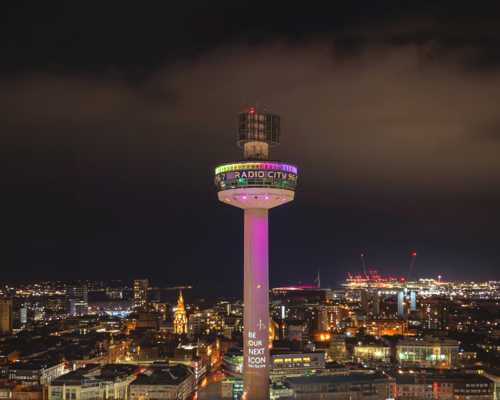
An opportunity to reimagine one of the UK’s most recognisable towers has been formally
opened by Rivington Hark, as St Johns Beacon invites operators and partners to shape its
next phase. [more...]