Your members are more likely to stick with their exercise routines and remain in membership if they have tangible, immediate reasons for being physically active.
This is the conclusion of a year-long study into the exercise habits of 226 healthy women aged 40–60, which found that activity levels were notably different depending on why they claimed to be exercising. Led by Michelle Segar (michellesegar.com), the study was published in the International Journal of Behavioral Nutrition and Physical Activity.
Even though all research subjects equally valued their own personal goals, some exercised far more than others. The most exciting finding was that those whose goals related to enhanced quality of daily life – lower stress, better sleep, increased vitality and so on – exercised 34 per cent more than those with weight/appearance goals. They also exercised 25 per cent more than those with ‘current health’ goals such as lowering cholesterol, and 15 per cent more than those with healthy ageing goals.
“Immediate payoffs motivate behaviour better than distant goals,” concludes the report. Although some members might be willing to delay gratification in pursuit of a longer-term goal, for many people behaviour change will be brought about most effectively by more instant reward.
While the goals studied in the report were specific to that group of mid-life women, the principles are transferable: there are many reasons to exercise, and those most often quoted won’t necessarily be the ones that translate into sustained activity. The key question is: do you spend enough time investigating what really drives behaviour change among your members, and are you using these insights to inform your decision-making and marketing?
Weight loss remains a key message for many gyms, for example, while the fitness sector as a whole is increasingly promoting a health agenda. But although both these goals featured strongly in the study, Segar believes this is because the women had been ‘socialised’ into it by the media: they perceived them to be the key benefits of exercise simply because they had been repeatedly told they were. The problem was that these goals didn’t translate into sustained participation.
Segar suggests that, if members can be ‘socialised’ into valuing more immediate goals, it could lead to a significant uplift in activity. She therefore proposes that exercise be ‘rebranded’ to focus on the goals that inspire more regular participation.
For this to happen, we need more information about what motivates a wider range of people – something Segar and her colleagues are looking into. The next step will be changing the way we market exercise, so we ‘socialise’ existing and potential members with different perceptions of what it delivers and encourage them to adopt goals that have been proven to drive more regular, sustained participation. We’ll also need to measure and analyse the impact of these changes.
This is a huge project, but if – as Segar’s initial research suggests – the difference in activity levels can be as much as 34 per cent, it’s a venture worth undertaking.
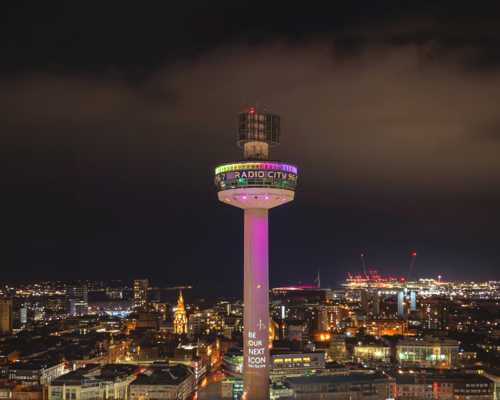
An opportunity to reimagine one of the UK’s most recognisable towers has been formally
opened by Rivington Hark, as St Johns Beacon invites operators and partners to shape its
next phase. [more...]
Your members are more likely to stick with their exercise routines and remain in membership if they have tangible, immediate reasons for being physically active.
This is the conclusion of a year-long study into the exercise habits of 226 healthy women aged 40–60, which found that activity levels were notably different depending on why they claimed to be exercising. Led by Michelle Segar (michellesegar.com), the study was published in the International Journal of Behavioral Nutrition and Physical Activity.
Even though all research subjects equally valued their own personal goals, some exercised far more than others. The most exciting finding was that those whose goals related to enhanced quality of daily life – lower stress, better sleep, increased vitality and so on – exercised 34 per cent more than those with weight/appearance goals. They also exercised 25 per cent more than those with ‘current health’ goals such as lowering cholesterol, and 15 per cent more than those with healthy ageing goals.
“Immediate payoffs motivate behaviour better than distant goals,” concludes the report. Although some members might be willing to delay gratification in pursuit of a longer-term goal, for many people behaviour change will be brought about most effectively by more instant reward.
While the goals studied in the report were specific to that group of mid-life women, the principles are transferable: there are many reasons to exercise, and those most often quoted won’t necessarily be the ones that translate into sustained activity. The key question is: do you spend enough time investigating what really drives behaviour change among your members, and are you using these insights to inform your decision-making and marketing?
Weight loss remains a key message for many gyms, for example, while the fitness sector as a whole is increasingly promoting a health agenda. But although both these goals featured strongly in the study, Segar believes this is because the women had been ‘socialised’ into it by the media: they perceived them to be the key benefits of exercise simply because they had been repeatedly told they were. The problem was that these goals didn’t translate into sustained participation.
Segar suggests that, if members can be ‘socialised’ into valuing more immediate goals, it could lead to a significant uplift in activity. She therefore proposes that exercise be ‘rebranded’ to focus on the goals that inspire more regular participation.
For this to happen, we need more information about what motivates a wider range of people – something Segar and her colleagues are looking into. The next step will be changing the way we market exercise, so we ‘socialise’ existing and potential members with different perceptions of what it delivers and encourage them to adopt goals that have been proven to drive more regular, sustained participation. We’ll also need to measure and analyse the impact of these changes.
This is a huge project, but if – as Segar’s initial research suggests – the difference in activity levels can be as much as 34 per cent, it’s a venture worth undertaking.
Hotel de France, located on the British Isle of Jersey, has created a wellness retreat package
that includes a hot yoga session that will take place in Jersey Zoo’s butterfly sanctuary.
A new immersive attraction designed to transport visitors into the final hours of ancient Pompeii
is preparing to open near the world-famous archaeological site in southern Italy.
Experience design company, BRC Imagination Arts, has completed a transition that sees founder
Bob Rogers pass ownership of the business to four long-serving senior executives, while
remaining actively involved with the company.
Movie Park Germany has opened a new Paramount Pictures-themed attraction as part of its 30th
anniversary celebrations, using immersive storytelling and adaptive reuse to reinforce the park’s
longstanding “Hollywood in Germany” positioning.
Therme Manchester’s 28-acre development, which will include interconnected glass pavilions
that measure 65,000sq m, will be the largest bathing and wellbeing attraction in the world once
complete, according to prof David Russell, CEO of Therme UK.
Efteling has opened Hooghmoed, a new family drop tower designed to broaden the appeal of its
recently launched Sirene Island themed area and introduce younger visitors to thrill attractions.
A proposed Puy du Fou development near Bicester and Universal Destinations and Experiences’
planned resort in Bedford are emerging as part of a wider transformation of the Oxford–
Cambridge Growth Corridor into a major centre for UK leisure and tourism inv
Shedd Aquarium has opened the Immersion Theater developed in partnership with SimEx-
Iwerks, as part of a wider strategy to enhance the guest experience and create additional
revenue opportunities.
The UK government has announced a temporary reduction in VAT on visitor attractions and
children’s meals as part of a summer cost-of-living support package designed to stimulate the
visitor economy and encourage family days out.
As designer Yinka Ilori prepares for his first solo gallery show in London, he speaks exclusively
to CLADmag about his mission to spread joy, the power of play, and his bold approach to using
colour (including the colours you won’t see in his work).
The government of Thailand is exploring plans for a THB300bn (£6.3bn, US$8.3bn)
entertainment complex in the country’s Eastern Economic Corridor (EEC), with officials
proposing a large-scale theme park and sports destination as part of a broader tourism and
economic development strategy.
+ More news
COMPANY PROFILES
Painting With Light By combining lighting, video, scenic and architectural elements, sound and special effects we tell s [more...]
IDEATTACK IDEATTACK is a full-service planning and
design company with headquarters in
Los Angeles. [more...]
Taylor Made Designs Founded in 1993, Taylor Made
Designs supply corporate clothing
and brand-enhancing merchandise
to [more...]
Clip 'n Climb Clip ‘n Climb currently offers facility owners and
investors more than 40 colourful and unique
Cha [more...]
An opportunity to reimagine one of the UK’s most recognisable towers has been formally
opened by Rivington Hark, as St Johns Beacon invites operators and partners to shape its
next phase. [more...]