Van Gogh masterpiece turned into VR explorable 3D piece
POSTED 19 May 2015 . BY Tom Anstey
Animator Mackenzie Cauley used certain features in Van Gogh’s piece to maintain the art style as seen in the original piece, but he has added a third dimension
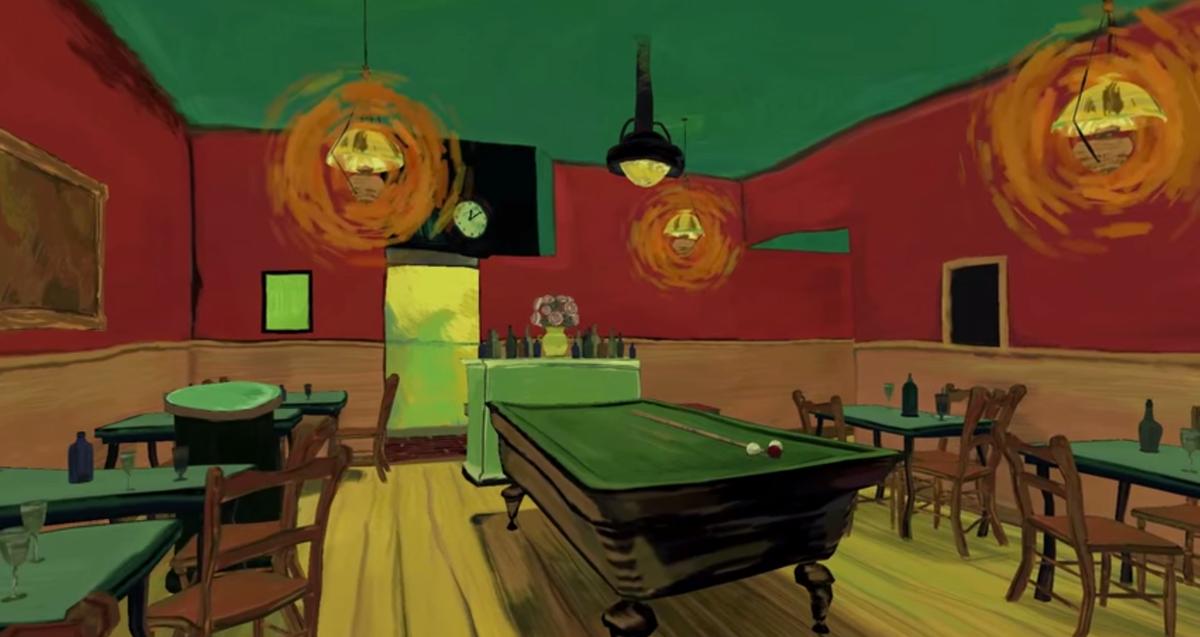
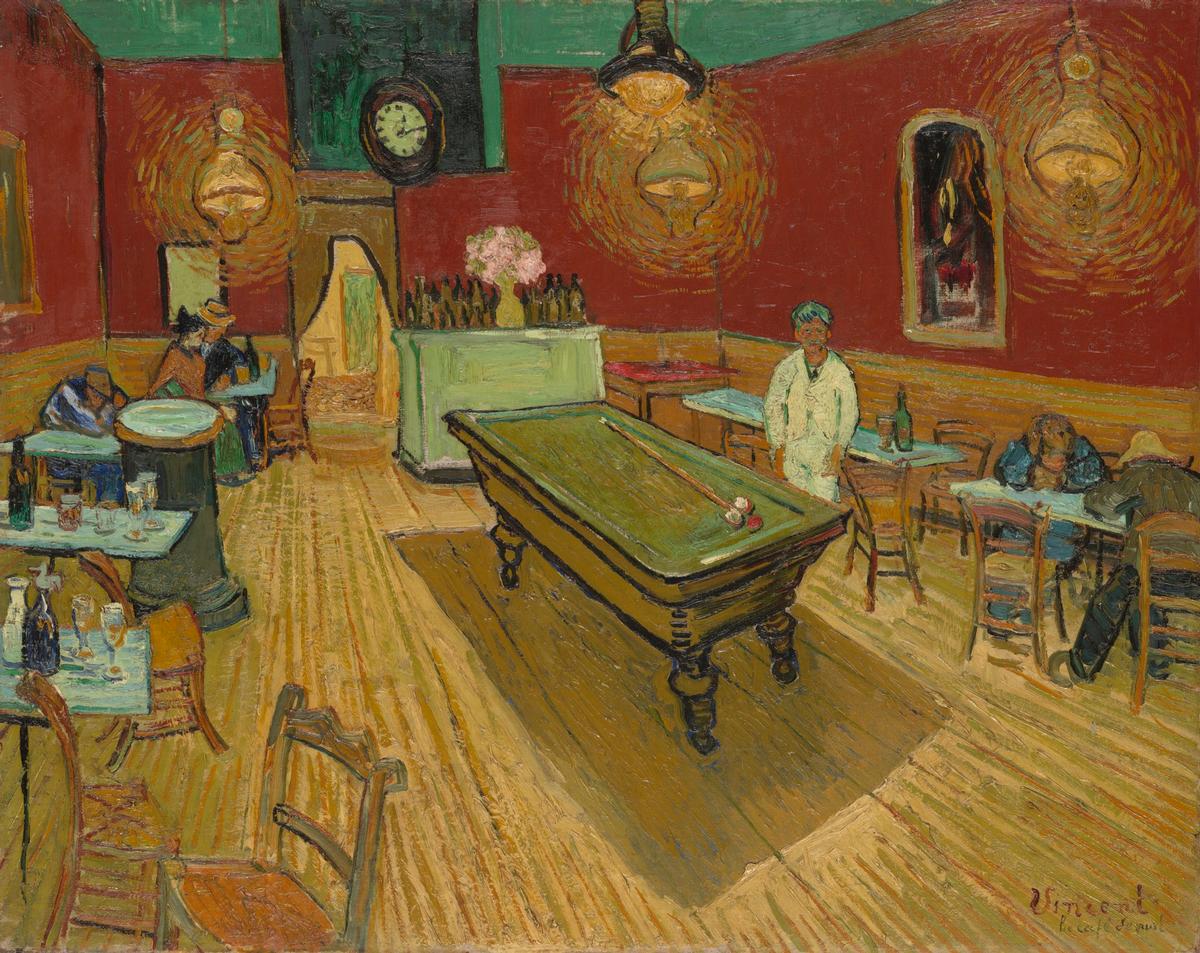
A Brooklyn-based animator has taken Vincent Van Gogh’s classic masterpiece The Night Café and recreated the work as an explorable three-dimensional piece via a virtual reality headset.
Animator Mackenzie Cauley used certain features in Van Gogh’s piece to maintain the art style as seen in the original piece, but he has added a third dimension, opening up the possibility for use on other famous art works.
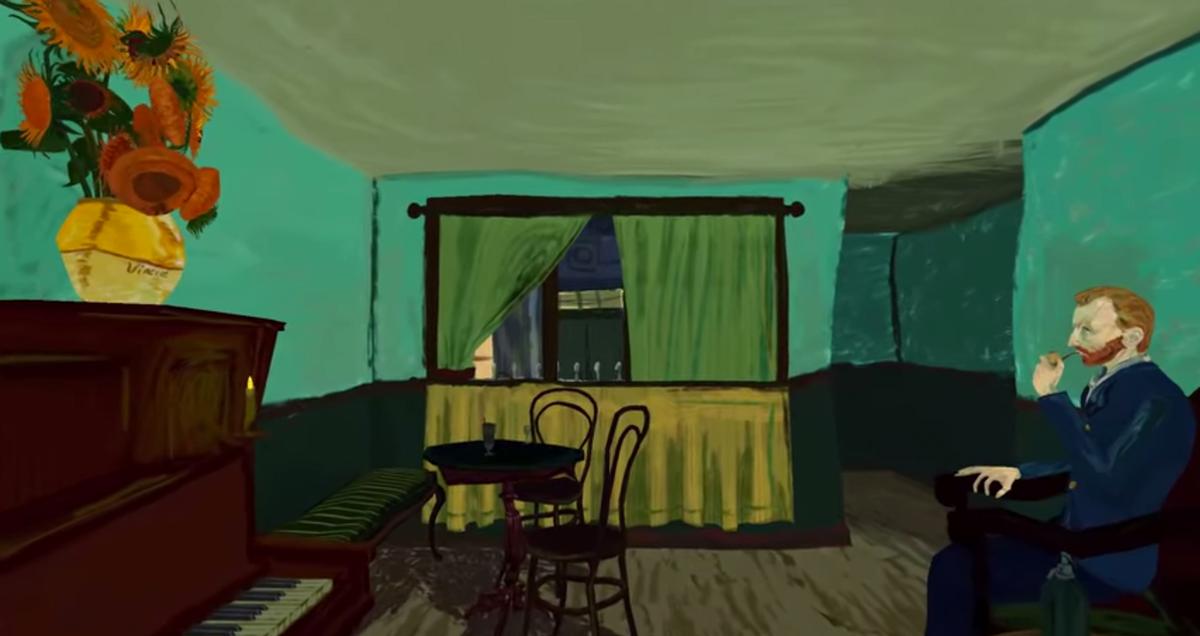
The 3D world was created over the course of 400 hours by taking specific elements of The Night Café and digitising them using 3D software. Some parts of the room which aren’t seen in the picture have also been added. The design also softens the distorted perspective of the piece so as to prevent users from feeling nauseous and it also includes visual and sound effects.
"The initial idea came from a film project I had started that centred around a fictional painter that was heavily inspired by Van Gogh's life," said Cauley speaking to AM2. "Over the course of the film I wanted to begin to transform the world around the character to a painted world. At the same time I was beginning to explore VR and I quickly realised how incredible it would be to see Van Gogh's paintings from this intimate first person perspective.
"I began work on taking some of my favourite paintings of Van Gogh's and drawing them in rough sketches. From these sketches I modelled all of the objects using Autodesk Maya and then digitally hand-painted each one in Mudbox. As much as possible I used his paintings as reference, trying to incorporate details such as brush strokes and the variety of colors he used with each stroke.
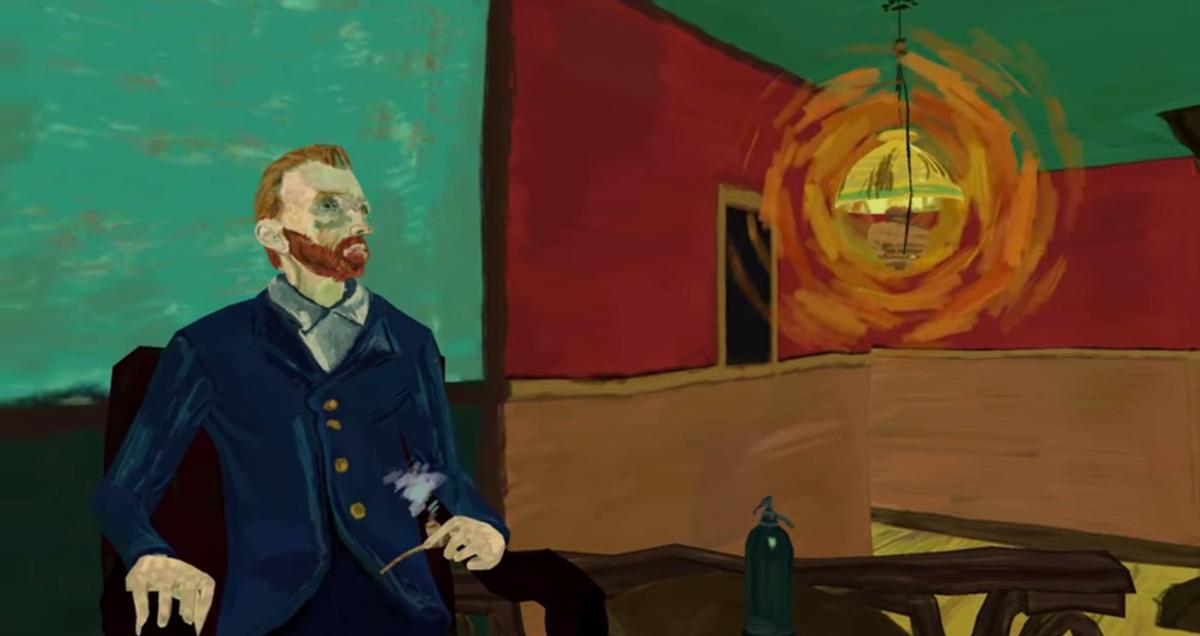
“While creating the environments of these paintings in 3D, I've had to expand on areas that can't be seen – rooms behind doors, objects hidden from view and people turned away from the viewer. It's been an interesting process in using reference material from Van Gogh and other expressionist painters, but also imagining what might have been there, just off the edges of the canvas.
"It was important to me that the space didn't feel static; so with the addition of people, Van Gogh being one of them, as well as the billowing smoke from his pipe and blooming lights, it would give a sense of the environment being alive."
After unveiling his Van Gogh work, Cauley revealed exclusively to AM2 that he has further plans in the works for other VR paintings and expressed his eagerness to work with galleries and institutions in the future.
"I could definitely imagine other paintings coming to life in three dimensions like this," added Cauley. "There is also the possibility of making more traditional gallery experiences that allow viewers to virtually walk through any museum in the world, or even fictional museum's with entirely impossible art collections.
"I'm really excited with VR as a medium and the response to this project has been great so I am definitely encouraged by that."
Study shows virtual reality has significant effect on brain function POSTED 26 Nov 2014. BY Tom Anstey Neurophysicists have discovered that the space-mapping neurons in the brain
react differently when exposed to virtual reality (VR), with a study on rats showing VR
makes a significant impact on the brain, though it is not yet known what effects this will
have in future.
OMA has completed a major transformation of New York's New Museum, creating a larger
cultural campus that combines expanded exhibition spaces with learning, performance,
hospitality and public programming.
A US$50 million (£44.2 million, €51.2 million) transformation of Chicago's historic McCormick
Mansion has created a new destination that combines live magic, immersive theatre, dining and
private membership under one roof.
The Montana Historical Society has officially celebrated the opening of its new Montana
Heritage
Center, a US$107 million (£79 million, €92 million) destination that combines immersive
storytelling with cutting-edge audiovisual technology to bring the sta
Van Gogh masterpiece turned into VR explorable 3D piece
POSTED 19 May 2015 . BY Tom Anstey
Animator Mackenzie Cauley used certain features in Van Gogh’s piece to maintain the art style as seen in the original piece, but he has added a third dimension
A Brooklyn-based animator has taken Vincent Van Gogh’s classic masterpiece The Night Café and recreated the work as an explorable three-dimensional piece via a virtual reality headset.
Animator Mackenzie Cauley used certain features in Van Gogh’s piece to maintain the art style as seen in the original piece, but he has added a third dimension, opening up the possibility for use on other famous art works.
The 3D world was created over the course of 400 hours by taking specific elements of The Night Café and digitising them using 3D software. Some parts of the room which aren’t seen in the picture have also been added. The design also softens the distorted perspective of the piece so as to prevent users from feeling nauseous and it also includes visual and sound effects.
"The initial idea came from a film project I had started that centred around a fictional painter that was heavily inspired by Van Gogh's life," said Cauley speaking to AM2. "Over the course of the film I wanted to begin to transform the world around the character to a painted world. At the same time I was beginning to explore VR and I quickly realised how incredible it would be to see Van Gogh's paintings from this intimate first person perspective.
"I began work on taking some of my favourite paintings of Van Gogh's and drawing them in rough sketches. From these sketches I modelled all of the objects using Autodesk Maya and then digitally hand-painted each one in Mudbox. As much as possible I used his paintings as reference, trying to incorporate details such as brush strokes and the variety of colors he used with each stroke.
“While creating the environments of these paintings in 3D, I've had to expand on areas that can't be seen – rooms behind doors, objects hidden from view and people turned away from the viewer. It's been an interesting process in using reference material from Van Gogh and other expressionist painters, but also imagining what might have been there, just off the edges of the canvas.
"It was important to me that the space didn't feel static; so with the addition of people, Van Gogh being one of them, as well as the billowing smoke from his pipe and blooming lights, it would give a sense of the environment being alive."
After unveiling his Van Gogh work, Cauley revealed exclusively to AM2 that he has further plans in the works for other VR paintings and expressed his eagerness to work with galleries and institutions in the future.
"I could definitely imagine other paintings coming to life in three dimensions like this," added Cauley. "There is also the possibility of making more traditional gallery experiences that allow viewers to virtually walk through any museum in the world, or even fictional museum's with entirely impossible art collections.
"I'm really excited with VR as a medium and the response to this project has been great so I am definitely encouraged by that."
Study shows virtual reality has significant effect on brain function POSTED 26 Nov 2014. BY Tom Anstey Neurophysicists have discovered that the space-mapping neurons in the brain
react differently when exposed to virtual reality (VR), with a study on rats showing VR
makes a significant impact on the brain, though it is not yet known what effects this will
have in future.
OMA has completed a major transformation of New York's New Museum, creating a larger
cultural campus that combines expanded exhibition spaces with learning, performance,
hospitality and public programming.
A US$50 million (£44.2 million, €51.2 million) transformation of Chicago's historic McCormick
Mansion has created a new destination that combines live magic, immersive theatre, dining and
private membership under one roof.
The Montana Historical Society has officially celebrated the opening of its new Montana
Heritage
Center, a US$107 million (£79 million, €92 million) destination that combines immersive
storytelling with cutting-edge audiovisual technology to bring the sta
San Antonio Zoo has reported a US$283 million economic impact for 2025, following a decade-
long transformation programme that has seen almost US$200 million invested into the Texas
attraction.
Plans for the AU$180 million redevelopment of Reef HQ Aquarium in Townsville, Australia, are
progressing, with the project set to transform the attraction into a global centre for reef
education and conservation.
+ More news
COMPANY PROFILES
Clip 'n Climb Clip ‘n Climb currently offers facility owners and
investors more than 40 colourful and unique
Cha [more...]
Holovis Holovis is a privately owned company
established in 2004 by CEO Stuart
Hetherington. [more...]
Polin Waterparks Polin was founded in Istanbul in 1976. Polin
has since grown into a leading company in
the waterpa [more...]
RMA Ltd RMA Ltd is a one-stop global company
that can design, build and produce from a
greenfield site upw [more...]