NASA pioneers leisure space for astronauts with launch of expandable habitats
POSTED 05 Apr 2016 . BY Kim Megson
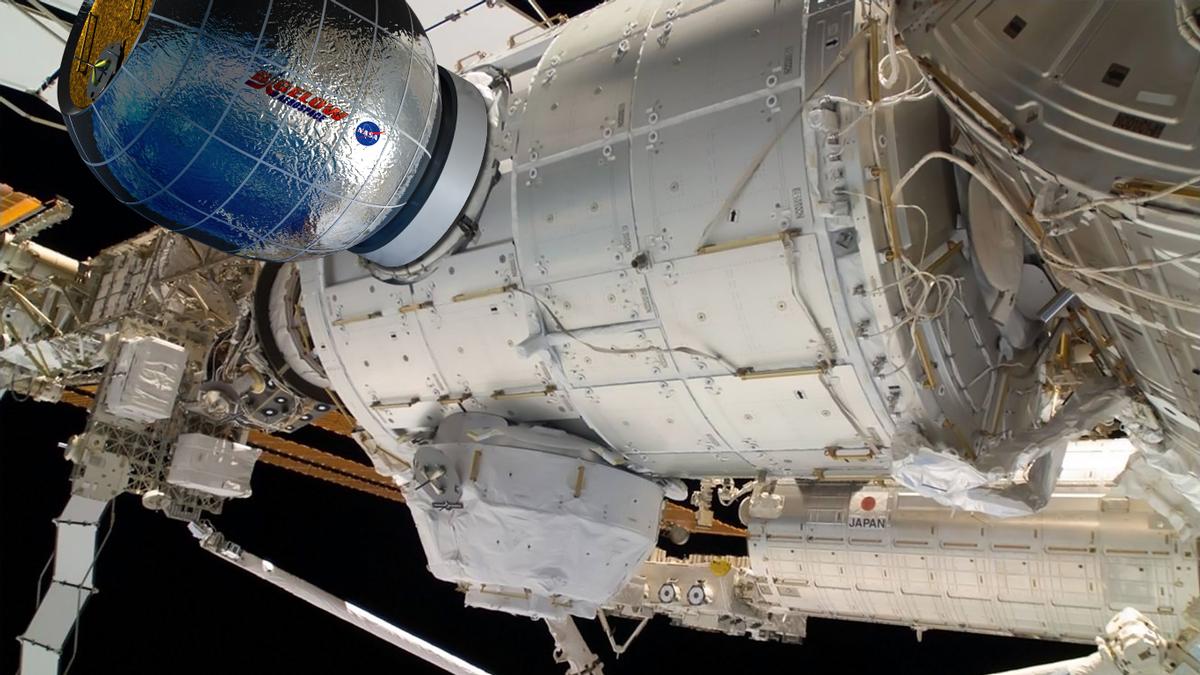
The inflatable Bigelow Expandable Activity Module (BEAM) will be attached to the International Space Station for testing, and could be the leisure space of the future Credit: Bigelow Aerospace
US space agency NASA is preparing to explore the feasibility of expandable habitats, or inflatable ‘space houses’, in a new mission that launches this Friday (8 April).
A spacecraft supplying the International Space Station (ISS) will take off at 4.43pm ET from Cape Canaveral Air Force Station in Florida, loaded with research, hardware, supplies and a Bigelow Expandable Activity Module (BEAM), which will be thoroughly tested over the coming years.
The module – which will be filled with air and attached to ISS for a two-year test period – could be a means of providing valuable extra space for astronauts to kick back, relax and enjoy some leisure time during missions which take them further into space than ever before.
Expandable habitats greatly decrease the amount of transport volume for future space missions, as they are lightweight and require minimal payload volume on a rocket. Once they are deployed they can create a comfortable areas protected from solar and cosmic radiation, space debris, atomic oxygen, ultraviolet radiation and other elements of the harsh space environment.
The technology is likely to play an important role in future missions to Mars, as NASA seeks cost-effective and sustainable ways to bring an astronaut onto the surface of the Red Planet.
In a statement, the agency said: “NASA is looking at expandable habitats as one of the potential concepts for habitation capability in cis-lunar space. A successful BEAM demonstration on ISS will certainly be a giant stepping stone to understanding the role expandable structures could have for future space habitats.”
The concept has been funded through public-private partnerships with US industry and is co-sponsored by NASA's Advanced Exploration Systems (AES) Division and Bigelow Aerospace, which pioneers innovative approaches to develop prototype systems for future human exploration missions.
If testing is successful, the BEAM could catch the interest of designers and developers determined to bring the leisure realm to the final frontier.
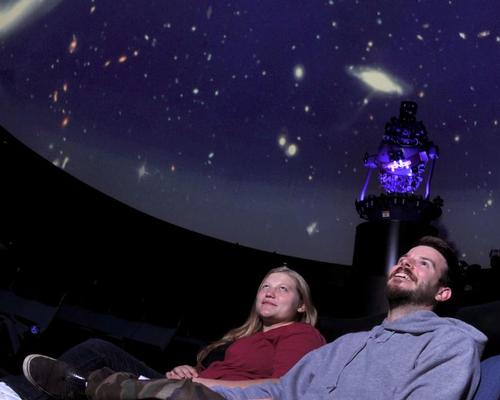
Ohio planetarium gets NASA funding to develop free-to-share content for planetariums worldwide POSTED 01 Apr 2016. BY Tom Anstey The Ward Beecher Planetarium at Youngstown State
University (YSU) in Ohio, US, has
been awarded US$650,000 (€584,600, £455,300) in
funding by NASA to support
development of 3D animation and fulldome visual
materials to be distributed for free to
planetariums worldwide.
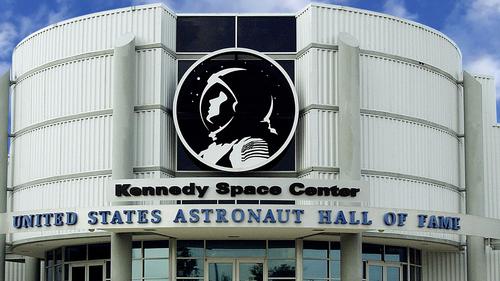
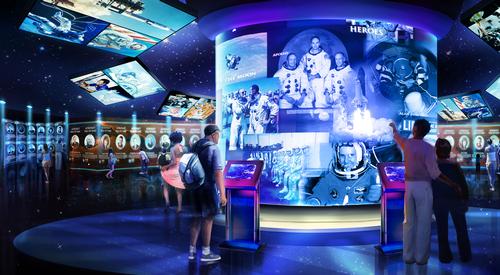
US Astronaut Hall of Fame closes ahead of move to Kennedy Space Center POSTED 02 Nov 2015. BY Tom Anstey The Astronaut Hall of Fame at the Kennedy Space Center in Florida, US, has closed its
doors 25 years after it first opened to the public, with the standalone attraction being
incorporated into the new Heroes and Legends exhibit.
Russian Space Agency plans on sending tourists to ISS by 2018 POSTED 26 Mar 2015. BY Tom Anstey The Russian Space Agency is planning on taking tourists to the International Space
Station (ISS) to cover a funding deficit, which will be made when Nasa stops paying
Russia to carry astronauts to the orbiting satellite.
OMA has completed a major transformation of New York's New Museum, creating a larger
cultural campus that combines expanded exhibition spaces with learning, performance,
hospitality and public programming.
A US$50 million (£44.2 million, €51.2 million) transformation of Chicago's historic McCormick
Mansion has created a new destination that combines live magic, immersive theatre, dining and
private membership under one roof.
The Montana Historical Society has officially celebrated the opening of its new Montana
Heritage
Center, a US$107 million (£79 million, €92 million) destination that combines immersive
storytelling with cutting-edge audiovisual technology to bring the sta
NASA pioneers leisure space for astronauts with launch of expandable habitats
POSTED 05 Apr 2016 . BY Kim Megson
The inflatable Bigelow Expandable Activity Module (BEAM) will be attached to the International Space Station for testing, and could be the leisure space of the future Credit: Bigelow Aerospace
US space agency NASA is preparing to explore the feasibility of expandable habitats, or inflatable ‘space houses’, in a new mission that launches this Friday (8 April).
A spacecraft supplying the International Space Station (ISS) will take off at 4.43pm ET from Cape Canaveral Air Force Station in Florida, loaded with research, hardware, supplies and a Bigelow Expandable Activity Module (BEAM), which will be thoroughly tested over the coming years.
The module – which will be filled with air and attached to ISS for a two-year test period – could be a means of providing valuable extra space for astronauts to kick back, relax and enjoy some leisure time during missions which take them further into space than ever before.
Expandable habitats greatly decrease the amount of transport volume for future space missions, as they are lightweight and require minimal payload volume on a rocket. Once they are deployed they can create a comfortable areas protected from solar and cosmic radiation, space debris, atomic oxygen, ultraviolet radiation and other elements of the harsh space environment.
The technology is likely to play an important role in future missions to Mars, as NASA seeks cost-effective and sustainable ways to bring an astronaut onto the surface of the Red Planet.
In a statement, the agency said: “NASA is looking at expandable habitats as one of the potential concepts for habitation capability in cis-lunar space. A successful BEAM demonstration on ISS will certainly be a giant stepping stone to understanding the role expandable structures could have for future space habitats.”
The concept has been funded through public-private partnerships with US industry and is co-sponsored by NASA's Advanced Exploration Systems (AES) Division and Bigelow Aerospace, which pioneers innovative approaches to develop prototype systems for future human exploration missions.
If testing is successful, the BEAM could catch the interest of designers and developers determined to bring the leisure realm to the final frontier.
Ohio planetarium gets NASA funding to develop free-to-share content for planetariums worldwide POSTED 01 Apr 2016. BY Tom Anstey The Ward Beecher Planetarium at Youngstown State
University (YSU) in Ohio, US, has
been awarded US$650,000 (€584,600, £455,300) in
funding by NASA to support
development of 3D animation and fulldome visual
materials to be distributed for free to
planetariums worldwide.
US Astronaut Hall of Fame closes ahead of move to Kennedy Space Center POSTED 02 Nov 2015. BY Tom Anstey The Astronaut Hall of Fame at the Kennedy Space Center in Florida, US, has closed its
doors 25 years after it first opened to the public, with the standalone attraction being
incorporated into the new Heroes and Legends exhibit.
Russian Space Agency plans on sending tourists to ISS by 2018 POSTED 26 Mar 2015. BY Tom Anstey The Russian Space Agency is planning on taking tourists to the International Space
Station (ISS) to cover a funding deficit, which will be made when Nasa stops paying
Russia to carry astronauts to the orbiting satellite.
OMA has completed a major transformation of New York's New Museum, creating a larger
cultural campus that combines expanded exhibition spaces with learning, performance,
hospitality and public programming.
A US$50 million (£44.2 million, €51.2 million) transformation of Chicago's historic McCormick
Mansion has created a new destination that combines live magic, immersive theatre, dining and
private membership under one roof.
The Montana Historical Society has officially celebrated the opening of its new Montana
Heritage
Center, a US$107 million (£79 million, €92 million) destination that combines immersive
storytelling with cutting-edge audiovisual technology to bring the sta
San Antonio Zoo has reported a US$283 million economic impact for 2025, following a decade-
long transformation programme that has seen almost US$200 million invested into the Texas
attraction.
Plans for the AU$180 million redevelopment of Reef HQ Aquarium in Townsville, Australia, are
progressing, with the project set to transform the attraction into a global centre for reef
education and conservation.
+ More news
COMPANY PROFILES
Clip 'n Climb Clip ‘n Climb currently offers facility owners and
investors more than 40 colourful and unique
Cha [more...]
Painting With Light By combining lighting, video, scenic and architectural elements, sound and special effects we tell s [more...]
QubicaAMF UK QubicaAMF is the largest and most
innovative bowling equipment provider with
600 employees worldwi [more...]
Holovis Holovis is a privately owned company
established in 2004 by CEO Stuart
Hetherington. [more...]