From world
renowned art
galleries to quirky
farm attractions,
creative visionaries are
reimagining visitor attractions
in rural South Somerset.
Terry Stevens pays a visit
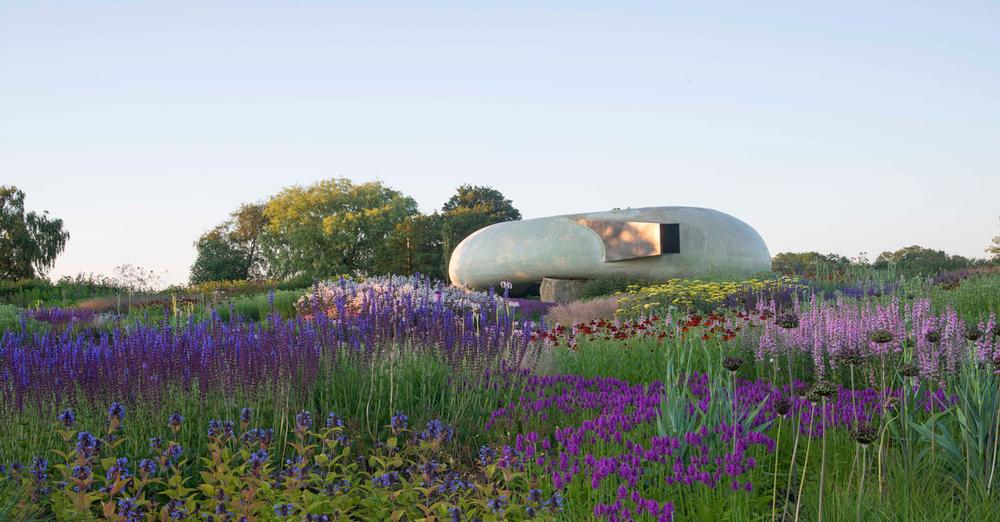
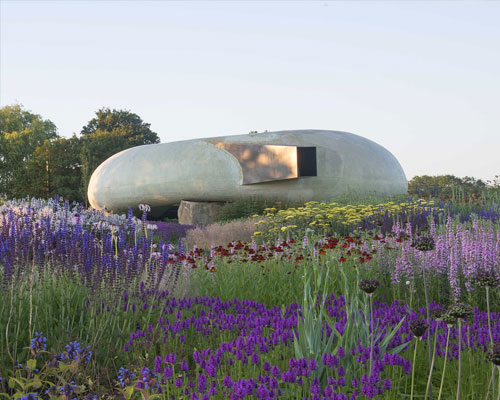
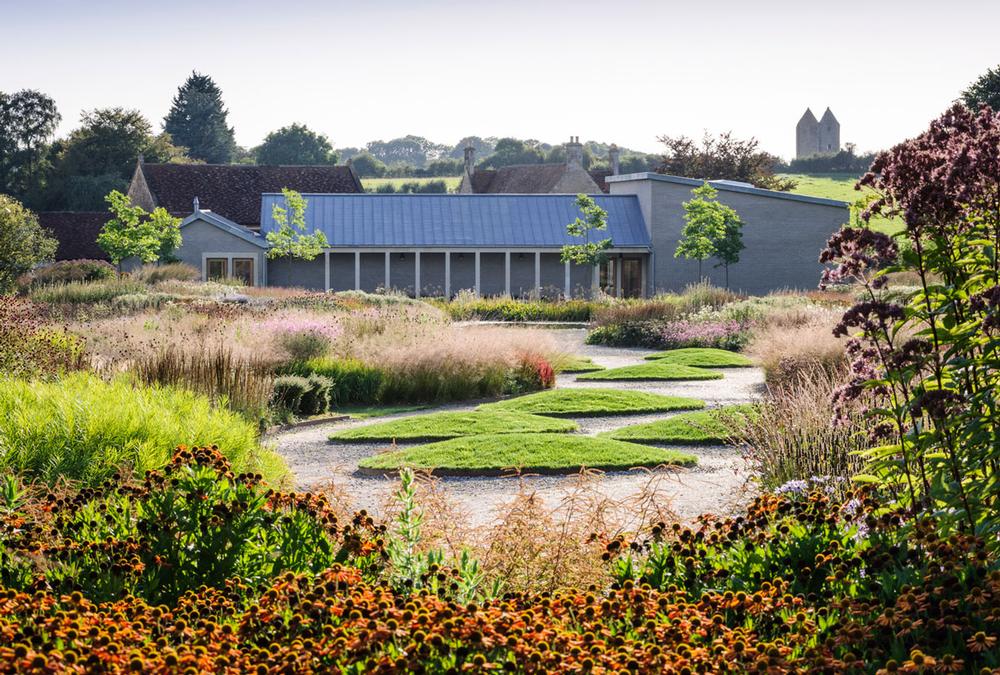
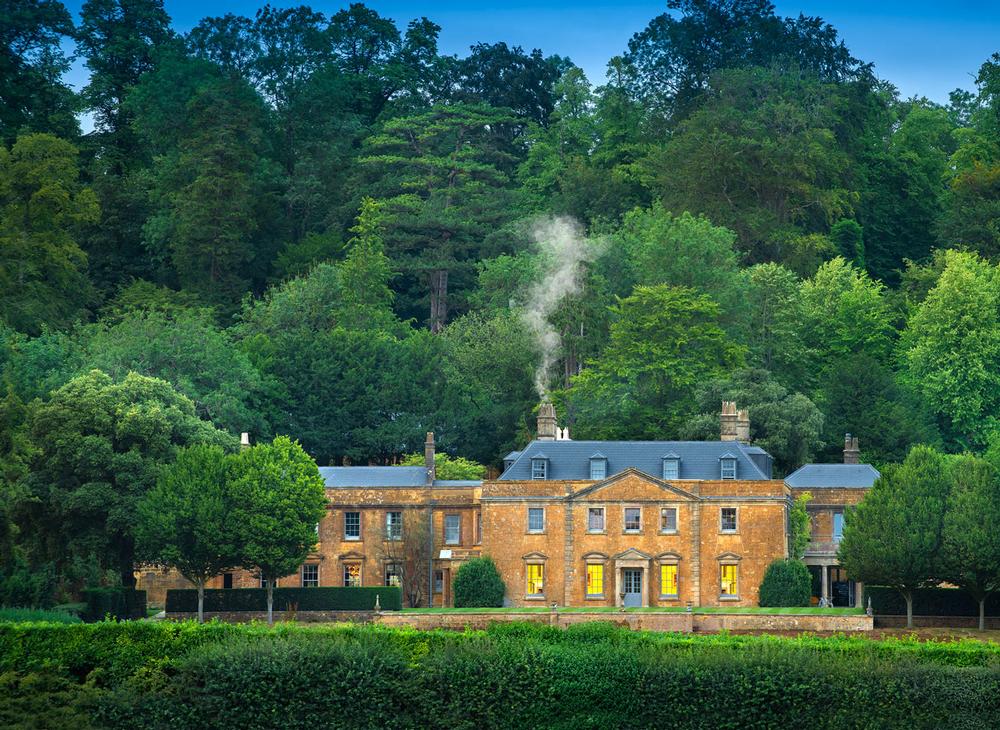
Hauser & Wirth Somerset was launched in 2014 / photo: Jason Ingram / Courtesy Hauser & Wirth
Something special has been stirring in rural South Somerset, UK in recent years. COVID-19 has failed to dent the momentum, stifle the enthusiasm, or contain the ingenuity of a new breed of visionaries who are re-imagining the world of visitor attractions.
Longstanding local heroes rub shoulders with global nomads in a place regarded by John Steinbeck, winner of the 1962 Nobel Prize for Literature, as his favourite in the world. He was drawn to the area in search of the Arthurian legends cemented within the landscape of Cadbury Castle, Glastonbury Tor, and the Vale of Avalon. This is part of Thomas Hardy’s Wessex and T S Eliot’s eponymous poem, East Coker, the anchor of his Four Quartets. It is a delightfully gentle landscape of folded hills, attractive thatched villages, cider orchards and deep heritage.
For millions of tourists over the past 50 years this was a place to pass through as quickly as possible on the A303 and A30 en route to Devon and Cornwall, or on the A37 heading to Dorset’s UNESCO World Heritage Jurassic Coast.
Today, this corner of Somerset, squeezed between Dorset and Devon, has become a much sought-after destination with a sophisticated array of unexpectedly rich, and internationally significant, contemporary cultural and heritage attractions.
South Somerset fully deserves its growing reputation as a great destination. It remains relatively undiscovered by domestic and international tourists, but a new breed of discerning travellers is recognising the breath-taking opportunities, provided by the emergence of world-class experiences that now exists.
Although much has altered, little has changed since a promotional guidebook from the 1960s described the area as a romantic and historic corner of ideal England: a land of soft hills, peace, stillness, blossom in springtime and deep thatch. There is still an underlying independence about the place that comes from being side-lined and by-passed for centuries. The recent tourism developments have been led by a quirky mix of, on one hand, a band of slightly anarchic, interestingly eccentric, locals and, recently, the arrival of an inspirational group of global visionaries. There is now a deep sense of the ancient sitting, very comfortably, with the modern – especially in terms of the, often extravagant, but never out-of-place, new generation of tourism investments.
BEAUTIFUL BRUTON Nowhere is this better exhibited than in the medieval market town of Bruton. Today a thriving centre for stylish art, design and craft galleries, family enterprises selling local produce and a slew of antique shops where even the local charity shops have recognised the power of curated content to match the interests of high-value visitors.
For many observers, Hauser & Wirth’s arrival in Bruton was the catalyst for this change in perception of the destination, for others it was the cherry on the cake: an endorsement of 20 years of hard work, selfless investment, and visionary projects across several villages by a cohort of local heroes.
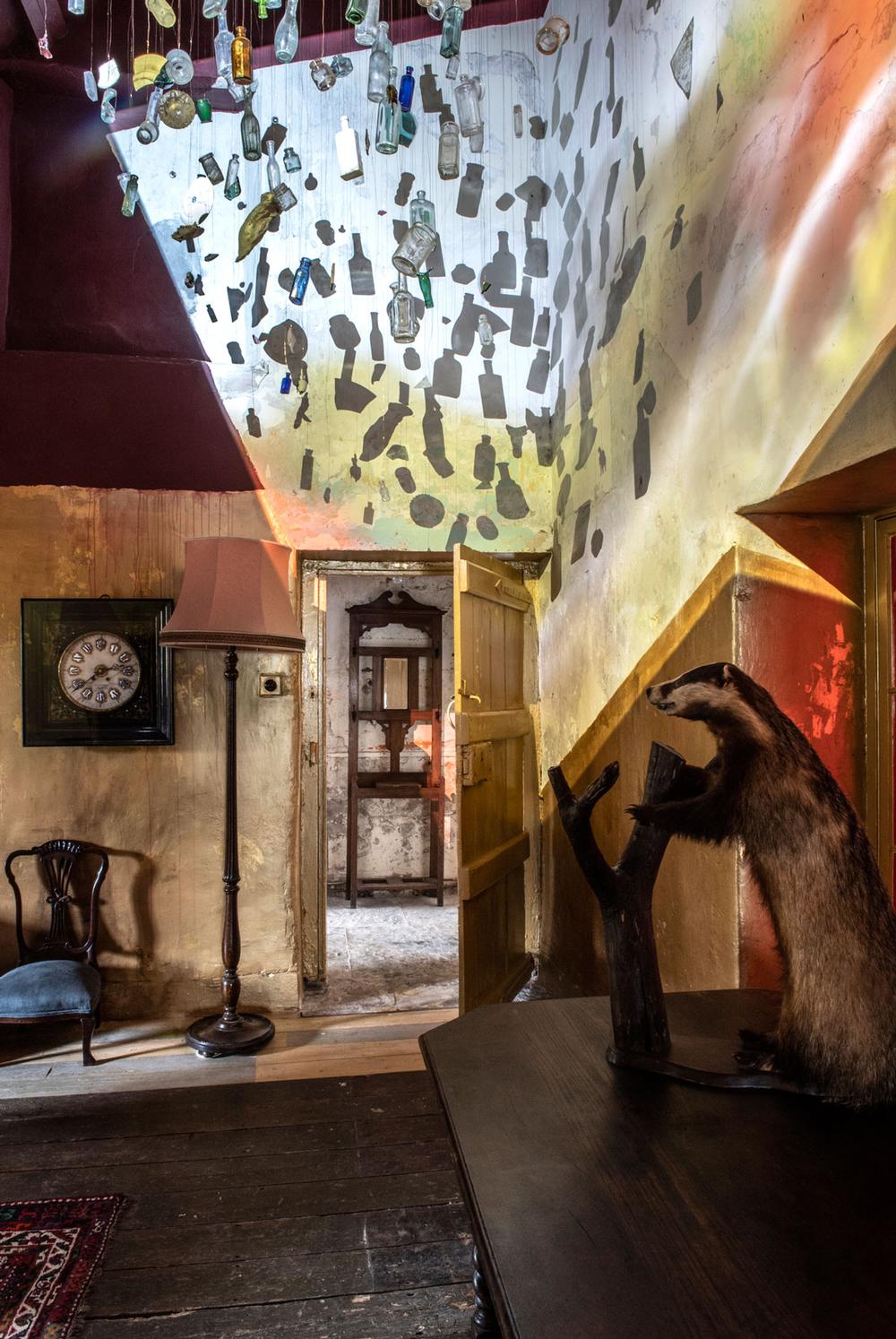
In Bruton, the Mill on The Brue adventure centre (opened in 1982) pioneered activity tourism in Britain whilst the remarkable conversion and re-modelling of a Grade II Listed 18th century house and 19th century congregational chapel into At the Chapel is a clever hybrid (comprising a restaurant, bedrooms, wine shop, bakery, terrace, and clubroom) that challenges all tourist board definitions of what it is.
Following a visit to Bruton by Iwan and Manuela Wirth, Durslade Farm was chosen as location for the globally renowned art dealership Hauser & Wirth to create a new type of art gallery that opened in 2014. The Swiss-born couple saw the potential to bring the derelict medieval buildings back to life, conserving them for future generations by creating a world-class gallery and arts centre, complete with The Roth Bar & Grill – regarded as being one of the finest and most unusual cocktail bars outside London.
Early in 2021, they also opened the Durslade Farm Shop as an outlet for the sustainable produce from the estate and local producers.
So, what exactly is Hauser & Wirth Somerset? A visitor attraction? Yes, it pulls in 130,000 visitors a year. An art gallery? Of course! A sustainable farming operation? Certainly – and it now has a fine farm shop. A wonderful garden? Absolutely. A place for community events? Yes.
A wedding venue? Of course. A brilliant cocktail bar with high quality restaurant – one of the best outside the M25. It’s a hybrid that’s impossible to pigeon-hole. That is what makes it so appealing.
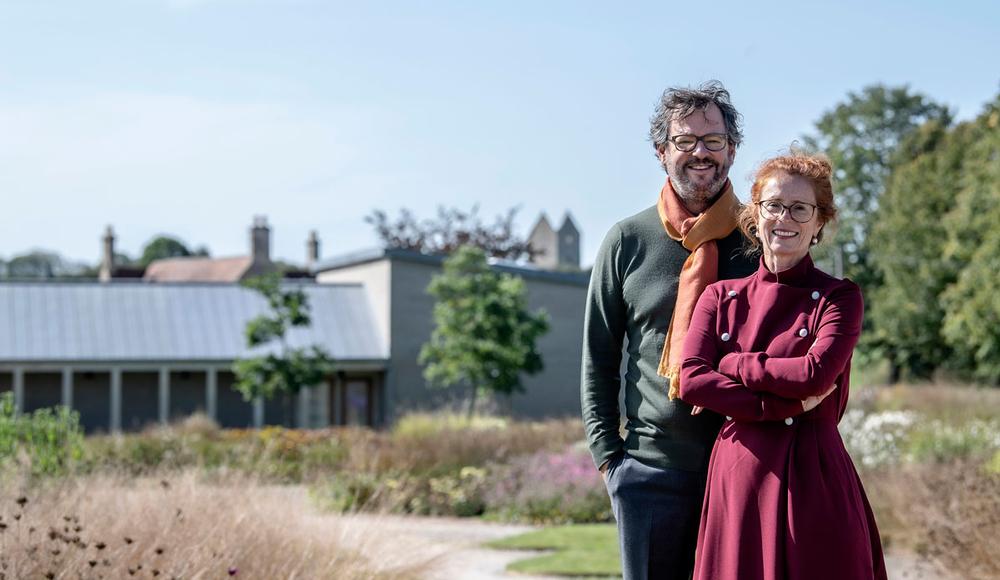
Of their decision to open an outpost in Bruton, Iwan and Manuela Wirth said: “Somerset changed our lives profoundly and I think it’s fair to say that we found a home away from our original home. We knew that in South Somerset we had found a place where we could bring all our interests together: art, architecture, landscape, conservation, garden, food, education, community, and family. We were inspired by the enthusiasm and encouraged by the support of the local community as we embarked upon this ambitious project.”
Today, Bruton’s story of transformation continues apace. There is a very tangible positive vibe throughout the community. There is a new sense of civic pride and confidence with the positive impacts recognised by local people with this chemistry now attracting other global players who know a special place when they see it. These are a kind of new generation of pirates – driven by creativity and a desire to make a difference, with investments formulated by philanthropy and personal interest, such as David Roberts and his artist wife, Indré Šerptyté, who have bought a farm in the village of Charlton Musgrove ‘as a great space to show our art collection’.
The most prominent of these ‘new pirates’ arrived in 2013 and has now curated the extraordinary conversion of the Emily Estate and Hadspen House just a few miles from Bruton. Behind this project are the visionary South African couple Koos Bekker and Karen Roos – the creators of the wonderfully re-imagined, Western Cape garden estate, Babylonstoren which has turned heads in the Franschhoek Valley for over 10 years.
Created in the 1680s, the Emily Estate has been home to seven generations of the Liberal Hobhouse family, including Arthur Hobhouse, a founder of the national parks system in England and Wales and Emily Hobhouse (1850 – 1926) – the pacifist, feminist and welfare campaigner who is revered in South Africa where she worked courageously to save the lives of thousands of women and children interned in camps set up by British forces during the Anglo-Boer War.
HYBRID SOLUTIONS Open in 2019, The Newt in Somerset, as they have renamed the property, brings together, as Roos says, “The most beautiful parts of what we found – ancient woodlands, a walled garden, the pretty gardener’s cottage – with new designs that will hopefully allow visitors to explore different eras of gardening history. And, of course, celebrate the apple, which is what Somerset is all about. People in South Somerset have been so positive about it. It helps that this instantly felt like home, So, moving here and creating this has been a wonderful, and very natural, progression.”
The Newt is another hybrid. Claus Sendlinger, the founder of Design Hotels, once challenged us by saying that the tourism industry lacked the creativity and innovation to survive. He advocated that the industry embraced hybrid thinkers with hybrid solutions. Hybridity is not just evidenced in Bruton, it is everywhere down here.
Local heroes in villages across South Somerset have been leading the charge with a wealth of interesting, community-centric projects for the past 10 years or more. Michael and Emily Eavis invented what we love as the concept of a contemporary music festival and are now curating the 2021 Glastonbury Abbey Festival. Nearby is Roger Saul, founder of the Mulberry luxury fashion label, with his pioneering organic farm at Sharpham Park and, until recently, the Kilver Court shopping complex and gardens. In South Petherton, Nick and Claire Bragg have re-invented Frogmary Green Farm to be an exemplar visitor attraction dedicated to sustainable agriculture. In Dowlish Wake, the Perry Family have created a delightfully modest cider experience that is authentic, honest, and real, combining a local produce shop with cider tasting and a small museum.
So, the story continues. The late John Haynes, founder of eponymous Motor Manuals developed the Haynes International Motor Museum in Sparkford. At Kingsbury Episcopi Burrow Hill Cider Farm offers tours, tasting and shopping for its Somerset Cider Brandy by Julian Temperley.
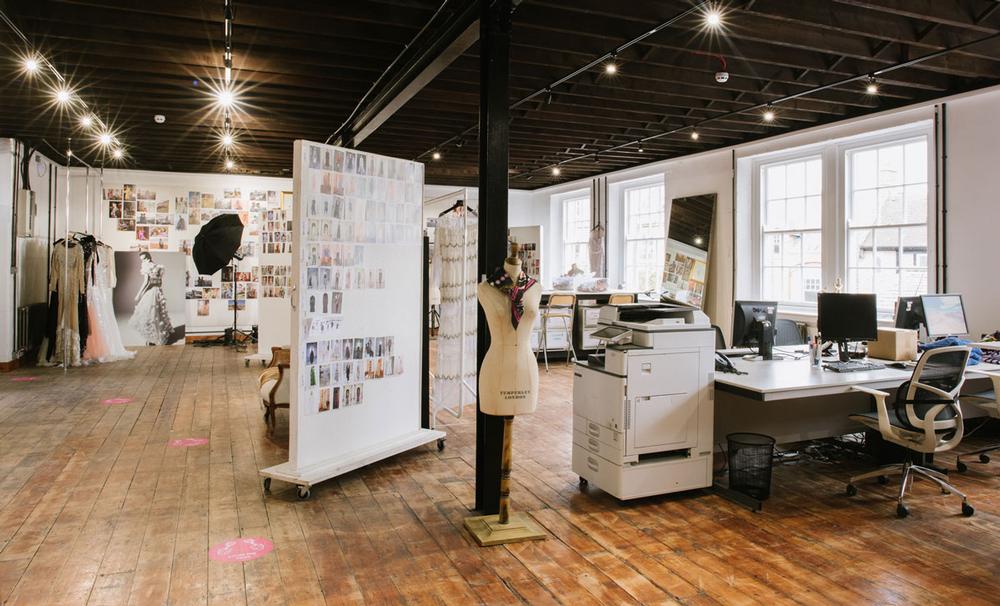
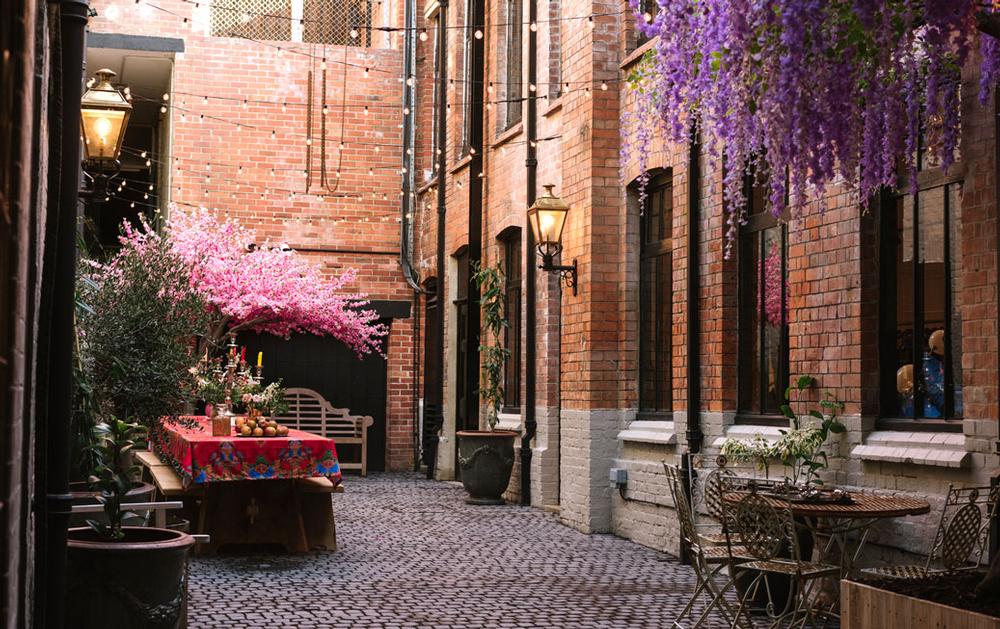
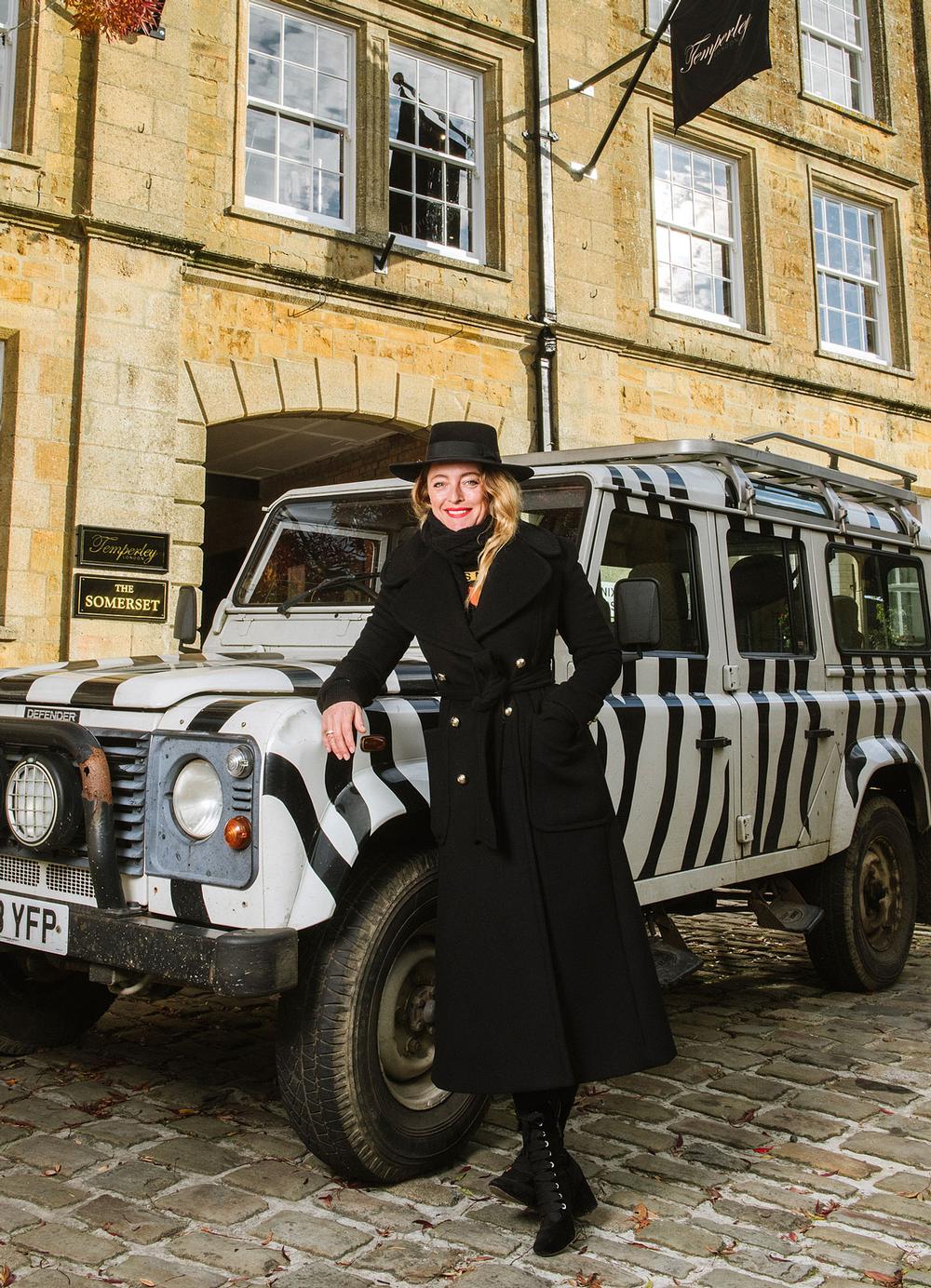
Julian’s daughter, Alice Temperley MBE, the highly respected international fashion designer, has recently opened The Phoenix Studios, a breath-taking collective of buildings sitting right in the heart of the historic market town of Ilminster. Formally home to the Gooch and Housego factory, it has laid derelict and forgotten for over 13 years but has now been brought back to life creating The World of Temperley atelier to house Alice’s new shops, design and textile studios, and offices, which opened in October 2020. In May 2021 the second phase launched with a coffee barista and cocktail wine bar ‘The Somerset’, a bakery outlet run by Ben and Vanessa Crofton of Somerton’s ‘28 Market Place’ and a pop-up shop space for all things artesian, all set within a mews style courtyard - a public space to be enjoyed by all for anything from morning yoga sessions to evening dance classes, book launches and talks to photo shoots and small community event gatherings. Alice and her partner, Mark Cresswell refer to this enterprise ‘as a lifestyle, a community, and an evoked spirit for life.’
Two other initiatives deserve praise for highlighting ingenuity, innovation, and hybridity. Both projects are gems in the true sense of the word.
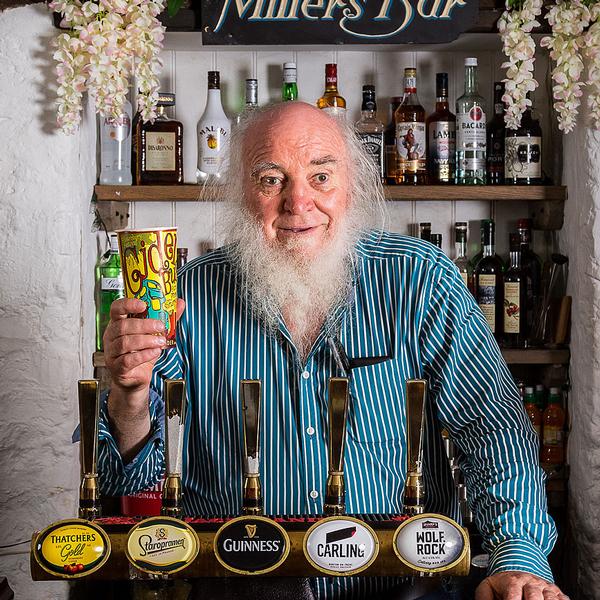
The first of these is Haselbury Mill with its highly crafted faux Medieval tithe barn, the dream of Roger Bastable. Roger first made headlines in the motor trade in the 1970s with his novel adventures involving car imports and logistics. He is a special character.
Forthright, brave, cup half full. A pioneer, an intuitive business brain and the lead singer in a rock and roll band. His tourism business is an amalgam of a country house hotel, a village pub, a restaurant, an events venue and, opening in September 2021, will be a thought-provoking new visitor attraction called The Memory Palace. In Roger’s words, “This will stir memories of post-war village life. The daily work, social life, and the characters of this area. I want our visitors to be the story tellers. Grandparents telling their grandkids that they used to have a car like that one, or your grandmother used to hand-stitch leather gloves in our front room using a machine like that.”
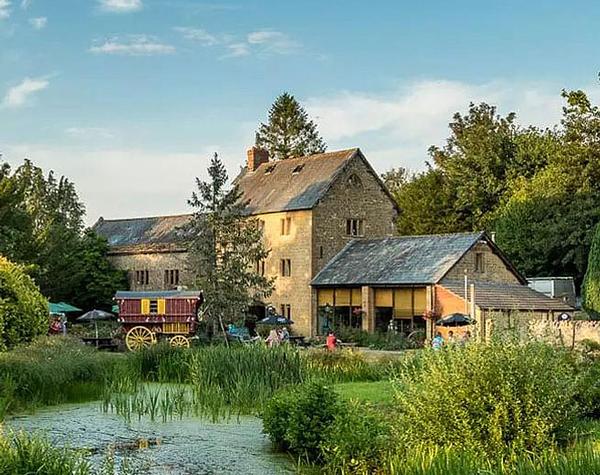
Haselbury Mill is a collection of historic buildings sitting astride the River Parrett. It already has the feel of a South Somerset village. It exudes the values of community and heritage. But what is it? An hotel, a visitor attraction, or a restaurant? Does it really matter? It is another hybrid that meets the interests and the demands of a wide mix of guests. Definitions are becoming irrelevant.
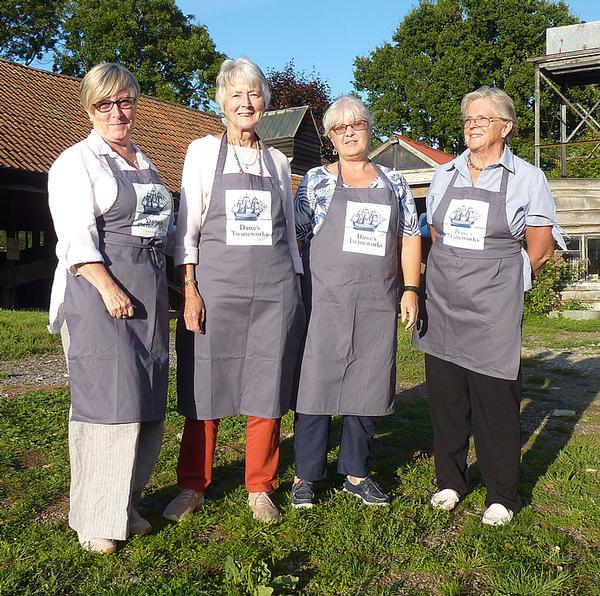
The same is true of the second example of attraction innovation in South Somerset – the successful restoration of The Dawes Twine Works in the village of West Coker. This is a community-led project that has culminated in being Britain’s only working Victorian ropeworks.
The Dawes Twineworks, with funds from Heritage Lottery, The Prince’s Trust, and Sir Andrew Lloyd Webber’s Foundation, now boasts a visitor centre, a community café, art gallery, and an archive. Cider is made on-site, themed dining evenings take place; local bands play live under the roof of the 100 yard-long ropewalk; the site hosts artists in residence and an annual arts festival. It is an educational resource, a conference venue, and a living museum.
Hybridity thrives. Hybrid solutions by hybrid thinkers. Is this the new model for post-COVID-19 visitor attractions? The shift is likely to create all kinds of challenges for planners and tourist boards who have traditionally tried to categorise visitor attractions into neat boxes to give them accreditation. Today’s visitor does not really care how the places they visit are defined if they deliver extraordinary, value-for-money, honest experiences.
Read more from this issue of Attractions Management magazine
View contents of Attractions Management 2021 issue 3
Editor's letter: Time for action
With COP26 upcoming, now’s the time for attractions leaders to commit to carbon reduction, says Liz Terry
AM People: Daniel Hemsley
Immersive entertainment company Swamp Motel is launching a new live show. AM finds out more
AM People: Kengo Kuma
The H.C. Andersen House has opened in Denmark. Designed by Kengo Kuma, it celebrates storytelling
New opening: The deepest dive
Featuring post-apocalyptic underwater environments and the world’s deepest pool, Deep Dive Dubai is making waves
Sustainability: A brighter future
With a zero-emission hotel and plans for a huge photovoltaic plant, PortAventura World is moving towards a new energy model
Museums: Play on
Using emotion, technology and special effects, Ravinia Music Box is bringing the music of Leonard Bernstein to new audiences
Tourism: Local heroes and global nomads
From globally-renowned art galleries to community-run attractions, a new breed of visionaries are reimagining tourism in this rural idyll
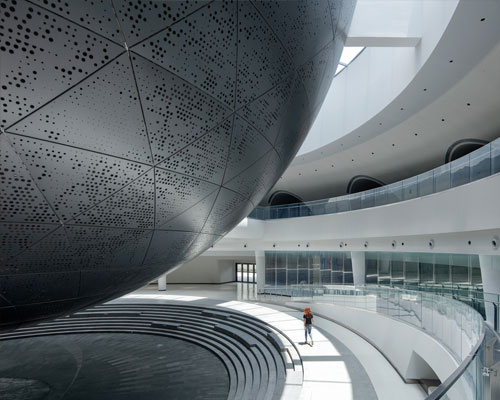
Planetariums: Thomas J Wong
As the world’s largest museum of astronomy opens in Shanghai, we speak to the architect who helped make the vision a reality
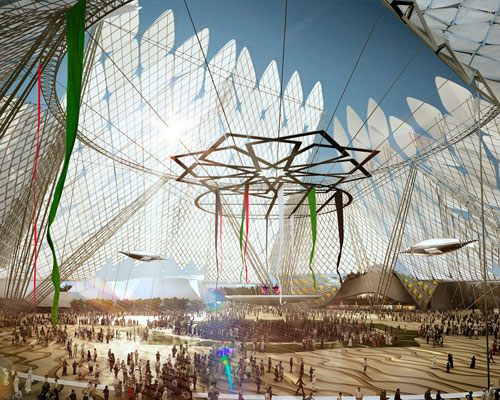
World Expo: Expo 2020 Dubai launches
It was delayed by a year due to COVID-19, but the Expo has now opened with more than 200 exhibitors and a masterplan designed by HOK, Arup and Populous
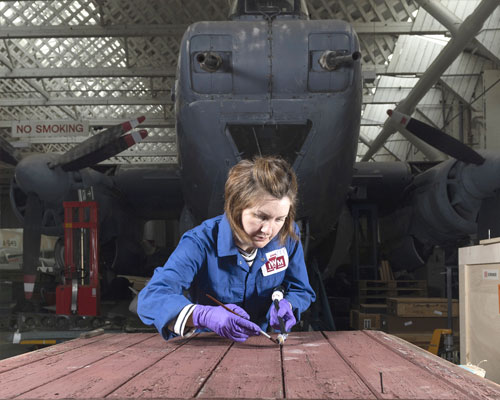
Museums: Phillip Tefft
The Imperial War Museum is bringing untold stories to life with its Second World War and Holocaust Galleries. Exhibition designer Phillip Tefft shares the journey
An opportunity to reimagine one of the UK’s most recognisable towers has been formally
opened by Rivington Hark, as St Johns Beacon invites operators and partners to shape its
next phase. [more...]
From world
renowned art
galleries to quirky
farm attractions,
creative visionaries are
reimagining visitor attractions
in rural South Somerset.
Terry Stevens pays a visit
Hauser & Wirth Somerset was launched in 2014 / photo: Jason Ingram / Courtesy Hauser & Wirth
Something special has been stirring in rural South Somerset, UK in recent years. COVID-19 has failed to dent the momentum, stifle the enthusiasm, or contain the ingenuity of a new breed of visionaries who are re-imagining the world of visitor attractions.
Longstanding local heroes rub shoulders with global nomads in a place regarded by John Steinbeck, winner of the 1962 Nobel Prize for Literature, as his favourite in the world. He was drawn to the area in search of the Arthurian legends cemented within the landscape of Cadbury Castle, Glastonbury Tor, and the Vale of Avalon. This is part of Thomas Hardy’s Wessex and T S Eliot’s eponymous poem, East Coker, the anchor of his Four Quartets. It is a delightfully gentle landscape of folded hills, attractive thatched villages, cider orchards and deep heritage.
For millions of tourists over the past 50 years this was a place to pass through as quickly as possible on the A303 and A30 en route to Devon and Cornwall, or on the A37 heading to Dorset’s UNESCO World Heritage Jurassic Coast.
Today, this corner of Somerset, squeezed between Dorset and Devon, has become a much sought-after destination with a sophisticated array of unexpectedly rich, and internationally significant, contemporary cultural and heritage attractions.
South Somerset fully deserves its growing reputation as a great destination. It remains relatively undiscovered by domestic and international tourists, but a new breed of discerning travellers is recognising the breath-taking opportunities, provided by the emergence of world-class experiences that now exists.
Although much has altered, little has changed since a promotional guidebook from the 1960s described the area as a romantic and historic corner of ideal England: a land of soft hills, peace, stillness, blossom in springtime and deep thatch. There is still an underlying independence about the place that comes from being side-lined and by-passed for centuries. The recent tourism developments have been led by a quirky mix of, on one hand, a band of slightly anarchic, interestingly eccentric, locals and, recently, the arrival of an inspirational group of global visionaries. There is now a deep sense of the ancient sitting, very comfortably, with the modern – especially in terms of the, often extravagant, but never out-of-place, new generation of tourism investments.
BEAUTIFUL BRUTON Nowhere is this better exhibited than in the medieval market town of Bruton. Today a thriving centre for stylish art, design and craft galleries, family enterprises selling local produce and a slew of antique shops where even the local charity shops have recognised the power of curated content to match the interests of high-value visitors.
For many observers, Hauser & Wirth’s arrival in Bruton was the catalyst for this change in perception of the destination, for others it was the cherry on the cake: an endorsement of 20 years of hard work, selfless investment, and visionary projects across several villages by a cohort of local heroes.
In Bruton, the Mill on The Brue adventure centre (opened in 1982) pioneered activity tourism in Britain whilst the remarkable conversion and re-modelling of a Grade II Listed 18th century house and 19th century congregational chapel into At the Chapel is a clever hybrid (comprising a restaurant, bedrooms, wine shop, bakery, terrace, and clubroom) that challenges all tourist board definitions of what it is.
Following a visit to Bruton by Iwan and Manuela Wirth, Durslade Farm was chosen as location for the globally renowned art dealership Hauser & Wirth to create a new type of art gallery that opened in 2014. The Swiss-born couple saw the potential to bring the derelict medieval buildings back to life, conserving them for future generations by creating a world-class gallery and arts centre, complete with The Roth Bar & Grill – regarded as being one of the finest and most unusual cocktail bars outside London.
Early in 2021, they also opened the Durslade Farm Shop as an outlet for the sustainable produce from the estate and local producers.
So, what exactly is Hauser & Wirth Somerset? A visitor attraction? Yes, it pulls in 130,000 visitors a year. An art gallery? Of course! A sustainable farming operation? Certainly – and it now has a fine farm shop. A wonderful garden? Absolutely. A place for community events? Yes.
A wedding venue? Of course. A brilliant cocktail bar with high quality restaurant – one of the best outside the M25. It’s a hybrid that’s impossible to pigeon-hole. That is what makes it so appealing.
Of their decision to open an outpost in Bruton, Iwan and Manuela Wirth said: “Somerset changed our lives profoundly and I think it’s fair to say that we found a home away from our original home. We knew that in South Somerset we had found a place where we could bring all our interests together: art, architecture, landscape, conservation, garden, food, education, community, and family. We were inspired by the enthusiasm and encouraged by the support of the local community as we embarked upon this ambitious project.”
Today, Bruton’s story of transformation continues apace. There is a very tangible positive vibe throughout the community. There is a new sense of civic pride and confidence with the positive impacts recognised by local people with this chemistry now attracting other global players who know a special place when they see it. These are a kind of new generation of pirates – driven by creativity and a desire to make a difference, with investments formulated by philanthropy and personal interest, such as David Roberts and his artist wife, Indré Šerptyté, who have bought a farm in the village of Charlton Musgrove ‘as a great space to show our art collection’.
The most prominent of these ‘new pirates’ arrived in 2013 and has now curated the extraordinary conversion of the Emily Estate and Hadspen House just a few miles from Bruton. Behind this project are the visionary South African couple Koos Bekker and Karen Roos – the creators of the wonderfully re-imagined, Western Cape garden estate, Babylonstoren which has turned heads in the Franschhoek Valley for over 10 years.
Created in the 1680s, the Emily Estate has been home to seven generations of the Liberal Hobhouse family, including Arthur Hobhouse, a founder of the national parks system in England and Wales and Emily Hobhouse (1850 – 1926) – the pacifist, feminist and welfare campaigner who is revered in South Africa where she worked courageously to save the lives of thousands of women and children interned in camps set up by British forces during the Anglo-Boer War.
HYBRID SOLUTIONS Open in 2019, The Newt in Somerset, as they have renamed the property, brings together, as Roos says, “The most beautiful parts of what we found – ancient woodlands, a walled garden, the pretty gardener’s cottage – with new designs that will hopefully allow visitors to explore different eras of gardening history. And, of course, celebrate the apple, which is what Somerset is all about. People in South Somerset have been so positive about it. It helps that this instantly felt like home, So, moving here and creating this has been a wonderful, and very natural, progression.”
The Newt is another hybrid. Claus Sendlinger, the founder of Design Hotels, once challenged us by saying that the tourism industry lacked the creativity and innovation to survive. He advocated that the industry embraced hybrid thinkers with hybrid solutions. Hybridity is not just evidenced in Bruton, it is everywhere down here.
Local heroes in villages across South Somerset have been leading the charge with a wealth of interesting, community-centric projects for the past 10 years or more. Michael and Emily Eavis invented what we love as the concept of a contemporary music festival and are now curating the 2021 Glastonbury Abbey Festival. Nearby is Roger Saul, founder of the Mulberry luxury fashion label, with his pioneering organic farm at Sharpham Park and, until recently, the Kilver Court shopping complex and gardens. In South Petherton, Nick and Claire Bragg have re-invented Frogmary Green Farm to be an exemplar visitor attraction dedicated to sustainable agriculture. In Dowlish Wake, the Perry Family have created a delightfully modest cider experience that is authentic, honest, and real, combining a local produce shop with cider tasting and a small museum.
So, the story continues. The late John Haynes, founder of eponymous Motor Manuals developed the Haynes International Motor Museum in Sparkford. At Kingsbury Episcopi Burrow Hill Cider Farm offers tours, tasting and shopping for its Somerset Cider Brandy by Julian Temperley.
Julian’s daughter, Alice Temperley MBE, the highly respected international fashion designer, has recently opened The Phoenix Studios, a breath-taking collective of buildings sitting right in the heart of the historic market town of Ilminster. Formally home to the Gooch and Housego factory, it has laid derelict and forgotten for over 13 years but has now been brought back to life creating The World of Temperley atelier to house Alice’s new shops, design and textile studios, and offices, which opened in October 2020. In May 2021 the second phase launched with a coffee barista and cocktail wine bar ‘The Somerset’, a bakery outlet run by Ben and Vanessa Crofton of Somerton’s ‘28 Market Place’ and a pop-up shop space for all things artesian, all set within a mews style courtyard - a public space to be enjoyed by all for anything from morning yoga sessions to evening dance classes, book launches and talks to photo shoots and small community event gatherings. Alice and her partner, Mark Cresswell refer to this enterprise ‘as a lifestyle, a community, and an evoked spirit for life.’
Two other initiatives deserve praise for highlighting ingenuity, innovation, and hybridity. Both projects are gems in the true sense of the word.
The first of these is Haselbury Mill with its highly crafted faux Medieval tithe barn, the dream of Roger Bastable. Roger first made headlines in the motor trade in the 1970s with his novel adventures involving car imports and logistics. He is a special character.
Forthright, brave, cup half full. A pioneer, an intuitive business brain and the lead singer in a rock and roll band. His tourism business is an amalgam of a country house hotel, a village pub, a restaurant, an events venue and, opening in September 2021, will be a thought-provoking new visitor attraction called The Memory Palace. In Roger’s words, “This will stir memories of post-war village life. The daily work, social life, and the characters of this area. I want our visitors to be the story tellers. Grandparents telling their grandkids that they used to have a car like that one, or your grandmother used to hand-stitch leather gloves in our front room using a machine like that.”
Haselbury Mill is a collection of historic buildings sitting astride the River Parrett. It already has the feel of a South Somerset village. It exudes the values of community and heritage. But what is it? An hotel, a visitor attraction, or a restaurant? Does it really matter? It is another hybrid that meets the interests and the demands of a wide mix of guests. Definitions are becoming irrelevant.
The same is true of the second example of attraction innovation in South Somerset – the successful restoration of The Dawes Twine Works in the village of West Coker. This is a community-led project that has culminated in being Britain’s only working Victorian ropeworks.
The Dawes Twineworks, with funds from Heritage Lottery, The Prince’s Trust, and Sir Andrew Lloyd Webber’s Foundation, now boasts a visitor centre, a community café, art gallery, and an archive. Cider is made on-site, themed dining evenings take place; local bands play live under the roof of the 100 yard-long ropewalk; the site hosts artists in residence and an annual arts festival. It is an educational resource, a conference venue, and a living museum.
Hybridity thrives. Hybrid solutions by hybrid thinkers. Is this the new model for post-COVID-19 visitor attractions? The shift is likely to create all kinds of challenges for planners and tourist boards who have traditionally tried to categorise visitor attractions into neat boxes to give them accreditation. Today’s visitor does not really care how the places they visit are defined if they deliver extraordinary, value-for-money, honest experiences.
Read more from this issue of Attractions Management magazine
View contents of Attractions Management 2021 issue 3
Editor's letter: Time for action
With COP26 upcoming, now’s the time for attractions leaders to commit to carbon reduction, says Liz Terry
AM People: Daniel Hemsley
Immersive entertainment company Swamp Motel is launching a new live show. AM finds out more
AM People: Kengo Kuma
The H.C. Andersen House has opened in Denmark. Designed by Kengo Kuma, it celebrates storytelling
New opening: The deepest dive
Featuring post-apocalyptic underwater environments and the world’s deepest pool, Deep Dive Dubai is making waves
Sustainability: A brighter future
With a zero-emission hotel and plans for a huge photovoltaic plant, PortAventura World is moving towards a new energy model
Museums: Play on
Using emotion, technology and special effects, Ravinia Music Box is bringing the music of Leonard Bernstein to new audiences
Tourism: Local heroes and global nomads
From globally-renowned art galleries to community-run attractions, a new breed of visionaries are reimagining tourism in this rural idyll
Planetariums: Thomas J Wong
As the world’s largest museum of astronomy opens in Shanghai, we speak to the architect who helped make the vision a reality
World Expo: Expo 2020 Dubai launches
It was delayed by a year due to COVID-19, but the Expo has now opened with more than 200 exhibitors and a masterplan designed by HOK, Arup and Populous
Museums: Phillip Tefft
The Imperial War Museum is bringing untold stories to life with its Second World War and Holocaust Galleries. Exhibition designer Phillip Tefft shares the journey
Hotel de France, located on the British Isle of Jersey, has created a wellness retreat package
that includes a hot yoga session that will take place in Jersey Zoo’s butterfly sanctuary.
A new immersive attraction designed to transport visitors into the final hours of ancient Pompeii
is preparing to open near the world-famous archaeological site in southern Italy.
Experience design company, BRC Imagination Arts, has completed a transition that sees founder
Bob Rogers pass ownership of the business to four long-serving senior executives, while
remaining actively involved with the company.
Movie Park Germany has opened a new Paramount Pictures-themed attraction as part of its 30th
anniversary celebrations, using immersive storytelling and adaptive reuse to reinforce the park’s
longstanding “Hollywood in Germany” positioning.
Therme Manchester’s 28-acre development, which will include interconnected glass pavilions
that measure 65,000sq m, will be the largest bathing and wellbeing attraction in the world once
complete, according to prof David Russell, CEO of Therme UK.
Efteling has opened Hooghmoed, a new family drop tower designed to broaden the appeal of its
recently launched Sirene Island themed area and introduce younger visitors to thrill attractions.
A proposed Puy du Fou development near Bicester and Universal Destinations and Experiences’
planned resort in Bedford are emerging as part of a wider transformation of the Oxford–
Cambridge Growth Corridor into a major centre for UK leisure and tourism inv
Shedd Aquarium has opened the Immersion Theater developed in partnership with SimEx-
Iwerks, as part of a wider strategy to enhance the guest experience and create additional
revenue opportunities.
The UK government has announced a temporary reduction in VAT on visitor attractions and
children’s meals as part of a summer cost-of-living support package designed to stimulate the
visitor economy and encourage family days out.
As designer Yinka Ilori prepares for his first solo gallery show in London, he speaks exclusively
to CLADmag about his mission to spread joy, the power of play, and his bold approach to using
colour (including the colours you won’t see in his work).
The government of Thailand is exploring plans for a THB300bn (£6.3bn, US$8.3bn)
entertainment complex in the country’s Eastern Economic Corridor (EEC), with officials
proposing a large-scale theme park and sports destination as part of a broader tourism and
economic development strategy.
+ More news
COMPANY PROFILES
QubicaAMF UK QubicaAMF is the largest and most
innovative bowling equipment provider with
600 employees worldwi [more...]
An opportunity to reimagine one of the UK’s most recognisable towers has been formally
opened by Rivington Hark, as St Johns Beacon invites operators and partners to shape its
next phase. [more...]