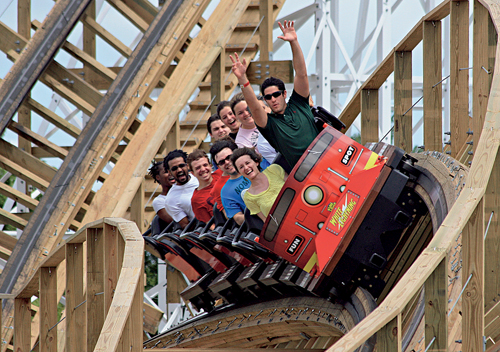
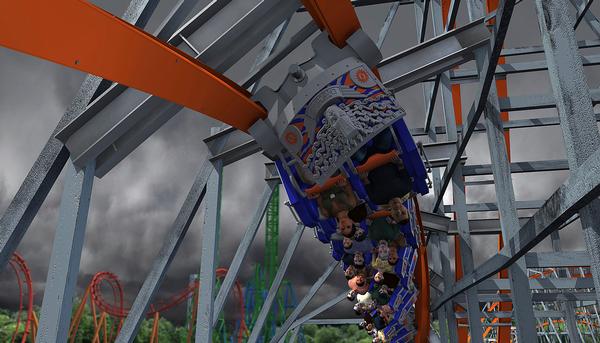
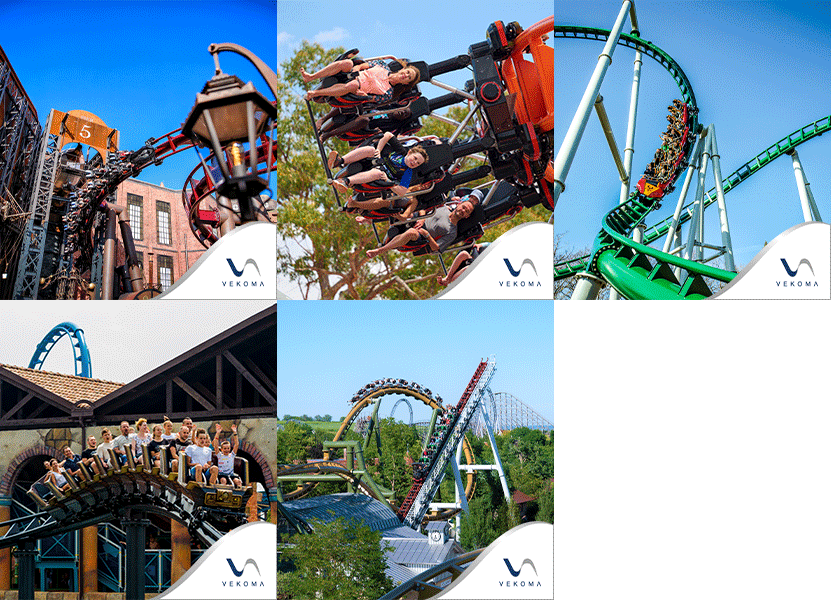
The charm of the wooden coaster is well known. The traditional look, the sheer size and the unmistakable sound of the ride make a special addition to any theme park
By Alice Davis | Published in Attractions Management 2015 issue 2
Interview: Marty Sklar
Retired Disney Legend Marty Sklar
reveals the secrets of Imagineering,
the legacy of the 1964 World’s Fair
and the lessons he learned as
Walt Disney’s “keeper of the keys”
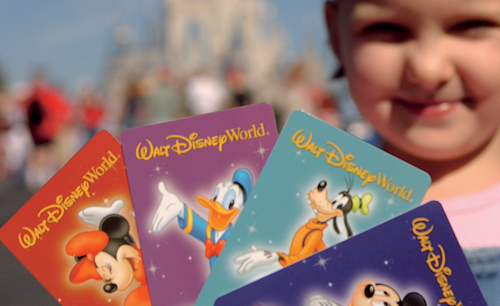
Talking Point: The $100 Barrier
As a Walt Disney World day ticket
enters three-digit territory for
the first time, we ask what this
means for pricing in the sector
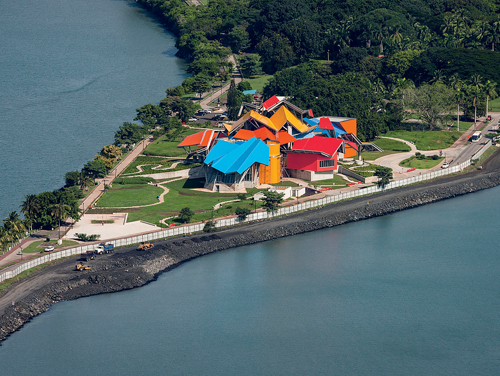
Museums: Biomuseo
Panama has opened the world’s first
museum of biodiversity, an ambitious
building by architect Frank Gehry. We
meet the team behind the project
Expos: Food for Thought
Expo Milano 2015 launches in Italy,
aiming to bring the planet’s most
pressing problems to the fore, not least
how to provide food for everybody
Zoos & Aquariums: On the SAFE Side
AZA chair Dennis Pate explains a new
initiative designed to help endangered
animals, and offers some tips from
his world-class Henry Doorly zoo
Promotional feature: IDEATTACK
IDEATTACK is a creative maverick with a
new perspective, bringing custom-made
one-of-a-kind attractions typologies to
a world that needs something di�fferent
Rides: The Ride Makers
In the third part of our series, we look at
the enduring appeal of wooden coasters
Ticketing: Dream Tickets
Ticketing systems are advancing to
improve the guest’s experience and the
operator’s profit. We investigate the
sector’s current and upcoming trends
Adam House Lead Design EngineerGreat Coasters International
What’s the appeal of a wooden coaster? Wooden rollercoasters hold a special place in the hearts of many. Many people have fond memories of a classic wooden coaster when they think back to their first rollercoaster ride. At Great Coasters International Inc (GCII), we create today’s modern, yet classic, wooden coaster and keep this tradition alive. We want to create a ride that’s thrilling, but still family friendly.
A wooden coaster can be an iconic centrepiece. People think of amusement parks and they think about carousels, cotton candy and wooden roller coasters.
At GCII, our rides’ signature elements include super twisted ride layouts and our own articulating Millennium Flyer trains.
What are you working on now? GCII is currently building the largest wooden rollercoaster in China, called Viper. Located at Wanda (Nanchang) Culture Tourism City, Viper is our largest undertaking for any coaster in our history. At 160 feet (49 metres) tall and 5,111 feet (1,558 metres) long, this ride is our golden standard in wooden roller coasters.
What’s the difference between designing, building and installing a wooden coaster and a steel coaster? Wooden rollercoasters require a very specialised team on the building and installation side. The entire ride is built by our team on-site. Unlike steel coasters, we cannot fabricate everything prior to delivery and then assemble it. Each individual piece is cut, bolted and stood by our construction team.
From the design aspect, we try to achieve two main objectives which are different from steel coasters. The first one is that we want the ride to be a “work of art”. We want the ride to be an icon for generations to come, and one of the iconic staples of the park.
The second difference would be the feel of the ride. We know that the feel and the sound of a wooden coaster differs greatly from its steel coaster counterpart, so we play to this. We want the ride to shake you around – but not too much! We want guests to hear the sound of the coaster and for that to cause some hesitation about riding. Again, this plays back to making the ride thrilling, but still family friendly.
Is it difficult to maintain a wooden rollercoaster? Wooden rollercoaster maintenance isn’t any more difficult than a steel rollercoaster, but it does take a very specialised team to maintain the ride. Many of our customers have an incredible group of maintenance personnel and carpenters who are extremely talented at what they do.
One key advantage of wooden coasters is that they can literally last forever.
Think of it like this: if one board or section on a wooden coaster goes bad, it’s fairly inexpensive to replace the board and keep the ride running. Compare this to a steel coaster, where if a section of the ride begins to deteriorate, it’s extremely costly to make the repairs.
This is something that we’re currently seeing for steel rollercoasters from the 1980s and early 1990s. Some theme parks are removing the rides because of costly maintenance and upkeep.
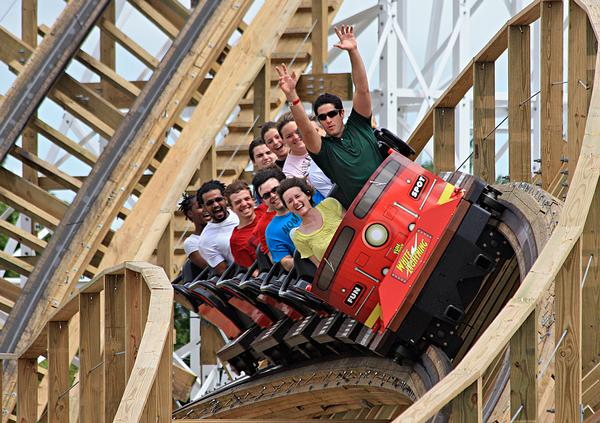
White Lightning, designed by GCII for Fun Spot America in Orlando, Florida, opened in 2013
Intamin
Intamin’s Sascha N. Czibulka
Sascha N. CzibulkaExecutive Vice PresidentIntamin
What’s the appeal of wooden coasters? It’s the natural look of the wood, to some extent the ride experience and, at least for older park visitors, a sense of nostalgia.
Wooden coasters seem to be popular right now. Would you agree? Wooden rollercoasters are an integral part of a good ride mix, at least for larger parks. Yes, there’s currently a slightly stronger demand than usual. However, this is normal as demand works in cycles.
Ten years ago, demand was also high, and suddenly it dropped and then it comes back. It’s normal in our industry and doesn’t apply just to wooden coasters. We’ve recently seen the same phenomenon with giant wheels and observation towers.
What boundary-pushing things you can do? Really exciting layouts, resulting in rather high speeds and a lot of air-time.
Are there many differences between designing and installing Intamin’s wooden coaster and its steel coaster? It depends on the system used by the wooden coaster. With Intamin’s pre-fabricated track system – New Track Technology (NTT) — there are only small differences when it comes to designing, building and installing the two types.
In terms of engineering and design, what breakthroughs have you seen lately? NTT is our pre-fabricated track based on Kerto technology. As well as being a fully treated and sealed wooden support structure, it’s also possible to establish highly dynamic layouts and especially keep the costs of ownership, such as maintenance and replacement, at a very low level, similar to those of steel coasters.
Lately, the hybrid versions, with a steel track and a wooden support structure, have gained in popularity. However, some experts question if this is then a true “Woodie”.
Is it difficult to maintain a wooden coaster? Does this make them harder to sell? This depends on the system of wooden coasters. For the traditional ones, the cost and efforts are pretty high, to say the least. In the case of Intamin, feedback from parks operating an NTT wooden coaster for a number of years now demonstrates that the costs are very similar to those for a steel coaster.
Can you describe the current market climate? Is business fast or slow? How do you stay ahead of the competition? The climate is good and business is indeed fast. We try hard to constantly invest in new products and technologies and push the envelope.
Hybrid versions, with a steel track and a wooden support structure, have gained in popularity, but some experts question if this is a true “Woodie”
Balder, at Liseberg, Sweden, was the first coaster to use Intamin’s prefabricated New Track Technology (NTT)
Rocky Mountain Construction
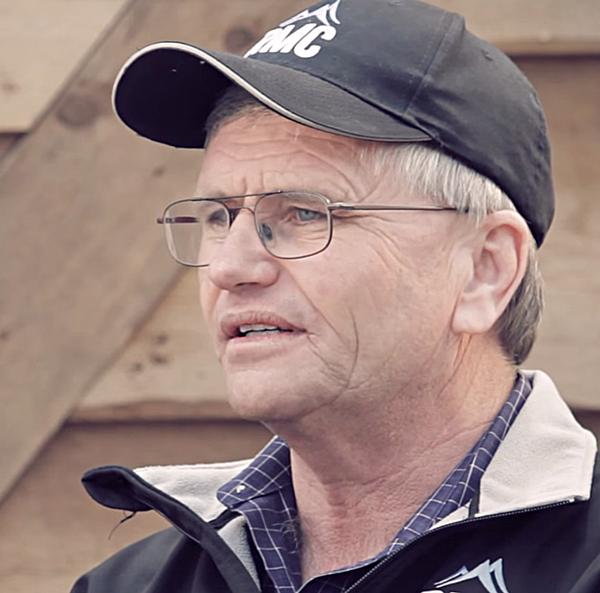
Fred Grubb founded Rocky Mountain in 2001
Fred GrubbOwnerRocky Mountain Construction
What are you working on right now? We’re working on three projects right now. Wicked Cyclone at Six Flags New England and Twisted Colossus at Six Flags Magic Mountain are both opening this summer. Wildfire at Kolmården in Sweden is opens in 2016. We have three unannounced projects that will open summer 2016 as well.
In terms of engineering and design, what breakthroughs have you seen? After repairing wooden tracks year after year, I thought that there had to be a better track system. I introduced the idea of the IBox Track to world-renowned coaster engineer Alan Schilke and the IBox Track system was born.
It’s an all-steel track system, which eliminates the need for a wood stack as the new track sits on all steel ledgers. This new track allows you to add new thrilling elements to the coaster that traditional wood tracks do not allow.
Schilke is the genius designer behind our creations. We are constantly thinking of new ideas that have never been done before.
What are the differences between a wooden coaster and a steel coaster? All our coasters are unique and custom made. The track and parts are manufactured at our facilities in Hayden, Idaho, but the structure is built on-site by our crew. The structure isn’t pre-made – each board is cut on-site to plan.
Steel coasters are all pre-manufactured and then installed on-site. Steel coasters are typically easier and quicker to install as there are fewer components and they don’t need to be custom built on-site.
In terms of design, many steel coasters are “cookie cutter” and mass-produced. Typically, wooden rollercoasters are tailored to the terrain and the design process is ongoing as the coaster is being built.
In terms of engineering and design, what breakthroughs have you seen lately? Our two track technologies, IBox and Topper Track – a steel track that overlays the wood to reduce the maintenance required and provide a smoother ride – allow us to take an existing wooden coaster and re-profile it to create a new state-of-the-art ride. We can also design and build a coaster from the ground up, as we did with Outlaw Run at Silver Dollar City. Our track technologies allow us to incorporate inversions, steeper drops, high banking turns and so on, that traditional wood coaster tracks do not allow.
What boundary-pushing things you can do? Our coasters continue to push the boundaries. Inversions, “high five” elements and extreme drops are all boundary-pushing as they have never been successfully done on wooden coasters.
Is it very difficult to maintain a wooden coaster? Does this make them harder to sell? Traditional wood tracks are difficult and costly to maintain, but our coasters are popular as our tracks require very minimal maintenance. We also offer a five year warranty, which is unheard of in the industry. That makes them easier to sell.
Can you describe the current market climate? How’s business? Since we’ve offered these new track technologies, we’re extremely busy. We stay ahead of the competition by offering unique products. We have built up a great reputation in the industry as we stick to our motto of quality, service and innovation.
What’s on the horizon for Rocky Mountain Construction? We have two new state-of-the-art coaster products that will be introduced to the market in 2016 and 2017.
Rocky Mountain updates wood coasters by turning them into wood-steel hybrids, like the triple-inversion Wicked Cyclone
COMPANY PROFILES
Painting With Light
By combining lighting, video, scenic and architectural elements, sound and special effects we tell s [more...]
DJW
David & Lynn Willrich started the Company
over thirty years ago, from the Audio Visual
Department [more...]
TechnoAlpin Indoor
TechnoAlpin is the world leader for snowmaking systems. With the Indoor snow division, TechnoAlpin c [more...]
instantprint
We’re a Yorkshire-based online printer, founded
in 2009 by Adam Carnell and James Kinsella. [more...]
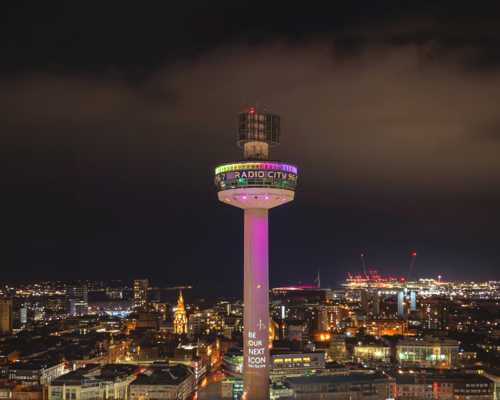
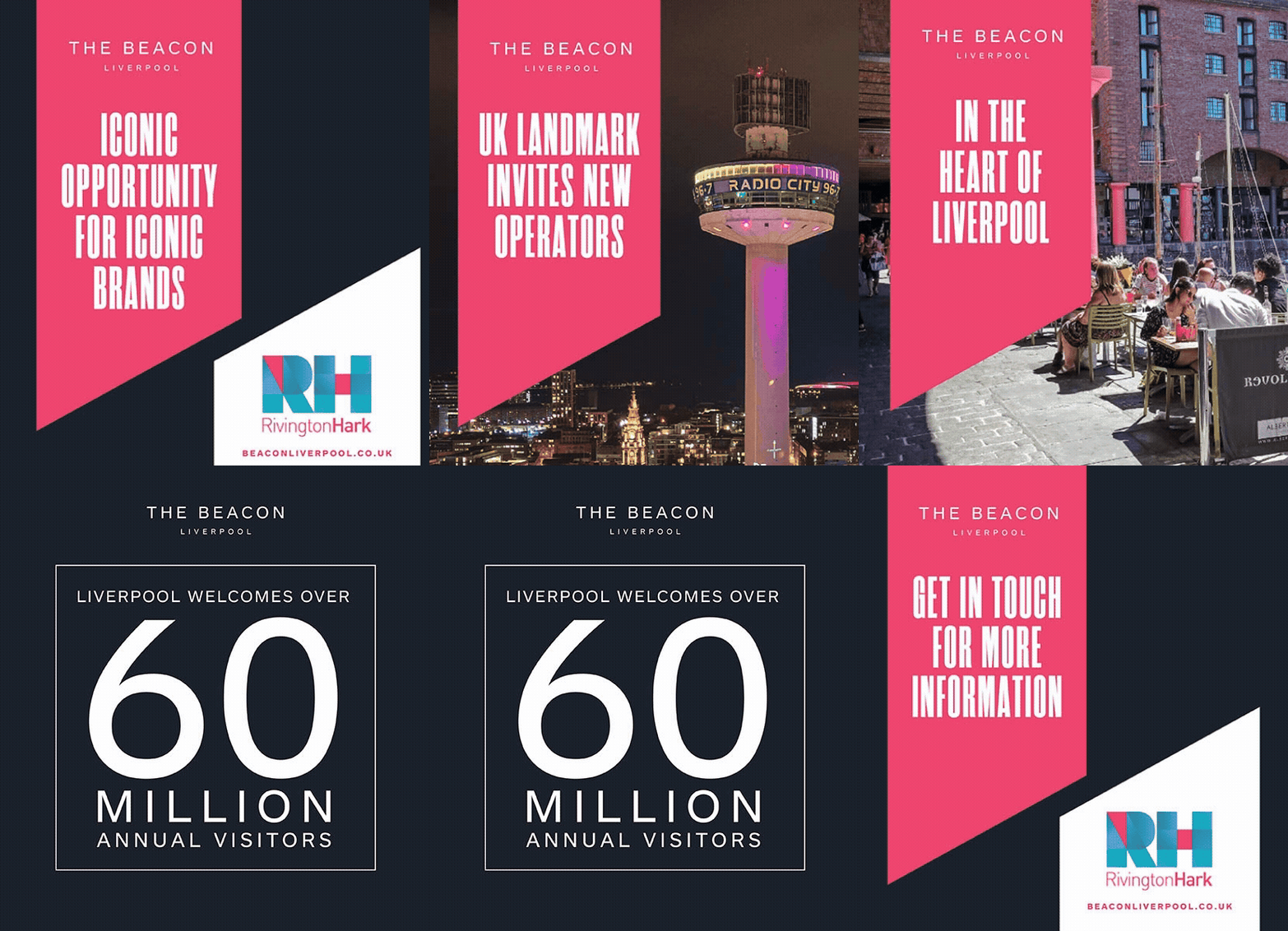
An opportunity to reimagine one of the UK’s most recognisable towers has been formally
opened by Rivington Hark, as St Johns Beacon invites operators and partners to shape its
next phase. [more...]
The charm of the wooden coaster is well known. The traditional look, the sheer size and the unmistakable sound of the ride make a special addition to any theme park
By Alice Davis | Published in Attractions Management 2015 issue 2
Interview: Marty Sklar
Retired Disney Legend Marty Sklar
reveals the secrets of Imagineering,
the legacy of the 1964 World’s Fair
and the lessons he learned as
Walt Disney’s “keeper of the keys”
Talking Point: The $100 Barrier
As a Walt Disney World day ticket
enters three-digit territory for
the first time, we ask what this
means for pricing in the sector
Museums: Biomuseo
Panama has opened the world’s first
museum of biodiversity, an ambitious
building by architect Frank Gehry. We
meet the team behind the project
Expos: Food for Thought
Expo Milano 2015 launches in Italy,
aiming to bring the planet’s most
pressing problems to the fore, not least
how to provide food for everybody
Zoos & Aquariums: On the SAFE Side
AZA chair Dennis Pate explains a new
initiative designed to help endangered
animals, and offers some tips from
his world-class Henry Doorly zoo
Promotional feature: IDEATTACK
IDEATTACK is a creative maverick with a
new perspective, bringing custom-made
one-of-a-kind attractions typologies to
a world that needs something di�fferent
Rides: The Ride Makers
In the third part of our series, we look at
the enduring appeal of wooden coasters
Ticketing: Dream Tickets
Ticketing systems are advancing to
improve the guest’s experience and the
operator’s profit. We investigate the
sector’s current and upcoming trends
Adam House Lead Design EngineerGreat Coasters International
What’s the appeal of a wooden coaster? Wooden rollercoasters hold a special place in the hearts of many. Many people have fond memories of a classic wooden coaster when they think back to their first rollercoaster ride. At Great Coasters International Inc (GCII), we create today’s modern, yet classic, wooden coaster and keep this tradition alive. We want to create a ride that’s thrilling, but still family friendly.
A wooden coaster can be an iconic centrepiece. People think of amusement parks and they think about carousels, cotton candy and wooden roller coasters.
At GCII, our rides’ signature elements include super twisted ride layouts and our own articulating Millennium Flyer trains.
What are you working on now? GCII is currently building the largest wooden rollercoaster in China, called Viper. Located at Wanda (Nanchang) Culture Tourism City, Viper is our largest undertaking for any coaster in our history. At 160 feet (49 metres) tall and 5,111 feet (1,558 metres) long, this ride is our golden standard in wooden roller coasters.
What’s the difference between designing, building and installing a wooden coaster and a steel coaster? Wooden rollercoasters require a very specialised team on the building and installation side. The entire ride is built by our team on-site. Unlike steel coasters, we cannot fabricate everything prior to delivery and then assemble it. Each individual piece is cut, bolted and stood by our construction team.
From the design aspect, we try to achieve two main objectives which are different from steel coasters. The first one is that we want the ride to be a “work of art”. We want the ride to be an icon for generations to come, and one of the iconic staples of the park.
The second difference would be the feel of the ride. We know that the feel and the sound of a wooden coaster differs greatly from its steel coaster counterpart, so we play to this. We want the ride to shake you around – but not too much! We want guests to hear the sound of the coaster and for that to cause some hesitation about riding. Again, this plays back to making the ride thrilling, but still family friendly.
Is it difficult to maintain a wooden rollercoaster? Wooden rollercoaster maintenance isn’t any more difficult than a steel rollercoaster, but it does take a very specialised team to maintain the ride. Many of our customers have an incredible group of maintenance personnel and carpenters who are extremely talented at what they do.
One key advantage of wooden coasters is that they can literally last forever.
Think of it like this: if one board or section on a wooden coaster goes bad, it’s fairly inexpensive to replace the board and keep the ride running. Compare this to a steel coaster, where if a section of the ride begins to deteriorate, it’s extremely costly to make the repairs.
This is something that we’re currently seeing for steel rollercoasters from the 1980s and early 1990s. Some theme parks are removing the rides because of costly maintenance and upkeep.
White Lightning, designed by GCII for Fun Spot America in Orlando, Florida, opened in 2013
Intamin
Intamin’s Sascha N. Czibulka
Sascha N. CzibulkaExecutive Vice PresidentIntamin
What’s the appeal of wooden coasters? It’s the natural look of the wood, to some extent the ride experience and, at least for older park visitors, a sense of nostalgia.
Wooden coasters seem to be popular right now. Would you agree? Wooden rollercoasters are an integral part of a good ride mix, at least for larger parks. Yes, there’s currently a slightly stronger demand than usual. However, this is normal as demand works in cycles.
Ten years ago, demand was also high, and suddenly it dropped and then it comes back. It’s normal in our industry and doesn’t apply just to wooden coasters. We’ve recently seen the same phenomenon with giant wheels and observation towers.
What boundary-pushing things you can do? Really exciting layouts, resulting in rather high speeds and a lot of air-time.
Are there many differences between designing and installing Intamin’s wooden coaster and its steel coaster? It depends on the system used by the wooden coaster. With Intamin’s pre-fabricated track system – New Track Technology (NTT) — there are only small differences when it comes to designing, building and installing the two types.
In terms of engineering and design, what breakthroughs have you seen lately? NTT is our pre-fabricated track based on Kerto technology. As well as being a fully treated and sealed wooden support structure, it’s also possible to establish highly dynamic layouts and especially keep the costs of ownership, such as maintenance and replacement, at a very low level, similar to those of steel coasters.
Lately, the hybrid versions, with a steel track and a wooden support structure, have gained in popularity. However, some experts question if this is then a true “Woodie”.
Is it difficult to maintain a wooden coaster? Does this make them harder to sell? This depends on the system of wooden coasters. For the traditional ones, the cost and efforts are pretty high, to say the least. In the case of Intamin, feedback from parks operating an NTT wooden coaster for a number of years now demonstrates that the costs are very similar to those for a steel coaster.
Can you describe the current market climate? Is business fast or slow? How do you stay ahead of the competition? The climate is good and business is indeed fast. We try hard to constantly invest in new products and technologies and push the envelope.
Hybrid versions, with a steel track and a wooden support structure, have gained in popularity, but some experts question if this is a true “Woodie”
Balder, at Liseberg, Sweden, was the first coaster to use Intamin’s prefabricated New Track Technology (NTT)
Rocky Mountain Construction
Fred Grubb founded Rocky Mountain in 2001
Fred GrubbOwnerRocky Mountain Construction
What are you working on right now? We’re working on three projects right now. Wicked Cyclone at Six Flags New England and Twisted Colossus at Six Flags Magic Mountain are both opening this summer. Wildfire at Kolmården in Sweden is opens in 2016. We have three unannounced projects that will open summer 2016 as well.
In terms of engineering and design, what breakthroughs have you seen? After repairing wooden tracks year after year, I thought that there had to be a better track system. I introduced the idea of the IBox Track to world-renowned coaster engineer Alan Schilke and the IBox Track system was born.
It’s an all-steel track system, which eliminates the need for a wood stack as the new track sits on all steel ledgers. This new track allows you to add new thrilling elements to the coaster that traditional wood tracks do not allow.
Schilke is the genius designer behind our creations. We are constantly thinking of new ideas that have never been done before.
What are the differences between a wooden coaster and a steel coaster? All our coasters are unique and custom made. The track and parts are manufactured at our facilities in Hayden, Idaho, but the structure is built on-site by our crew. The structure isn’t pre-made – each board is cut on-site to plan.
Steel coasters are all pre-manufactured and then installed on-site. Steel coasters are typically easier and quicker to install as there are fewer components and they don’t need to be custom built on-site.
In terms of design, many steel coasters are “cookie cutter” and mass-produced. Typically, wooden rollercoasters are tailored to the terrain and the design process is ongoing as the coaster is being built.
In terms of engineering and design, what breakthroughs have you seen lately? Our two track technologies, IBox and Topper Track – a steel track that overlays the wood to reduce the maintenance required and provide a smoother ride – allow us to take an existing wooden coaster and re-profile it to create a new state-of-the-art ride. We can also design and build a coaster from the ground up, as we did with Outlaw Run at Silver Dollar City. Our track technologies allow us to incorporate inversions, steeper drops, high banking turns and so on, that traditional wood coaster tracks do not allow.
What boundary-pushing things you can do? Our coasters continue to push the boundaries. Inversions, “high five” elements and extreme drops are all boundary-pushing as they have never been successfully done on wooden coasters.
Is it very difficult to maintain a wooden coaster? Does this make them harder to sell? Traditional wood tracks are difficult and costly to maintain, but our coasters are popular as our tracks require very minimal maintenance. We also offer a five year warranty, which is unheard of in the industry. That makes them easier to sell.
Can you describe the current market climate? How’s business? Since we’ve offered these new track technologies, we’re extremely busy. We stay ahead of the competition by offering unique products. We have built up a great reputation in the industry as we stick to our motto of quality, service and innovation.
What’s on the horizon for Rocky Mountain Construction? We have two new state-of-the-art coaster products that will be introduced to the market in 2016 and 2017.
Rocky Mountain updates wood coasters by turning them into wood-steel hybrids, like the triple-inversion Wicked Cyclone
Hotel de France, located on the British Isle of Jersey, has created a wellness retreat package
that includes a hot yoga session that will take place in Jersey Zoo’s butterfly sanctuary.
A new immersive attraction designed to transport visitors into the final hours of ancient Pompeii
is preparing to open near the world-famous archaeological site in southern Italy.
Experience design company, BRC Imagination Arts, has completed a transition that sees founder
Bob Rogers pass ownership of the business to four long-serving senior executives, while
remaining actively involved with the company.
Movie Park Germany has opened a new Paramount Pictures-themed attraction as part of its 30th
anniversary celebrations, using immersive storytelling and adaptive reuse to reinforce the park’s
longstanding “Hollywood in Germany” positioning.
Therme Manchester’s 28-acre development, which will include interconnected glass pavilions
that measure 65,000sq m, will be the largest bathing and wellbeing attraction in the world once
complete, according to prof David Russell, CEO of Therme UK.
Efteling has opened Hooghmoed, a new family drop tower designed to broaden the appeal of its
recently launched Sirene Island themed area and introduce younger visitors to thrill attractions.
A proposed Puy du Fou development near Bicester and Universal Destinations and Experiences’
planned resort in Bedford are emerging as part of a wider transformation of the Oxford–
Cambridge Growth Corridor into a major centre for UK leisure and tourism inv
Shedd Aquarium has opened the Immersion Theater developed in partnership with SimEx-
Iwerks, as part of a wider strategy to enhance the guest experience and create additional
revenue opportunities.
The UK government has announced a temporary reduction in VAT on visitor attractions and
children’s meals as part of a summer cost-of-living support package designed to stimulate the
visitor economy and encourage family days out.
As designer Yinka Ilori prepares for his first solo gallery show in London, he speaks exclusively
to CLADmag about his mission to spread joy, the power of play, and his bold approach to using
colour (including the colours you won’t see in his work).
The government of Thailand is exploring plans for a THB300bn (£6.3bn, US$8.3bn)
entertainment complex in the country’s Eastern Economic Corridor (EEC), with officials
proposing a large-scale theme park and sports destination as part of a broader tourism and
economic development strategy.
+ More news
COMPANY PROFILES
Painting With Light By combining lighting, video, scenic and architectural elements, sound and special effects we tell s [more...]
DJW David & Lynn Willrich started the Company
over thirty years ago, from the Audio Visual
Department [more...]
TechnoAlpin Indoor TechnoAlpin is the world leader for snowmaking systems. With the Indoor snow division, TechnoAlpin c [more...]
instantprint We’re a Yorkshire-based online printer, founded
in 2009 by Adam Carnell and James Kinsella. [more...]
An opportunity to reimagine one of the UK’s most recognisable towers has been formally
opened by Rivington Hark, as St Johns Beacon invites operators and partners to shape its
next phase. [more...]