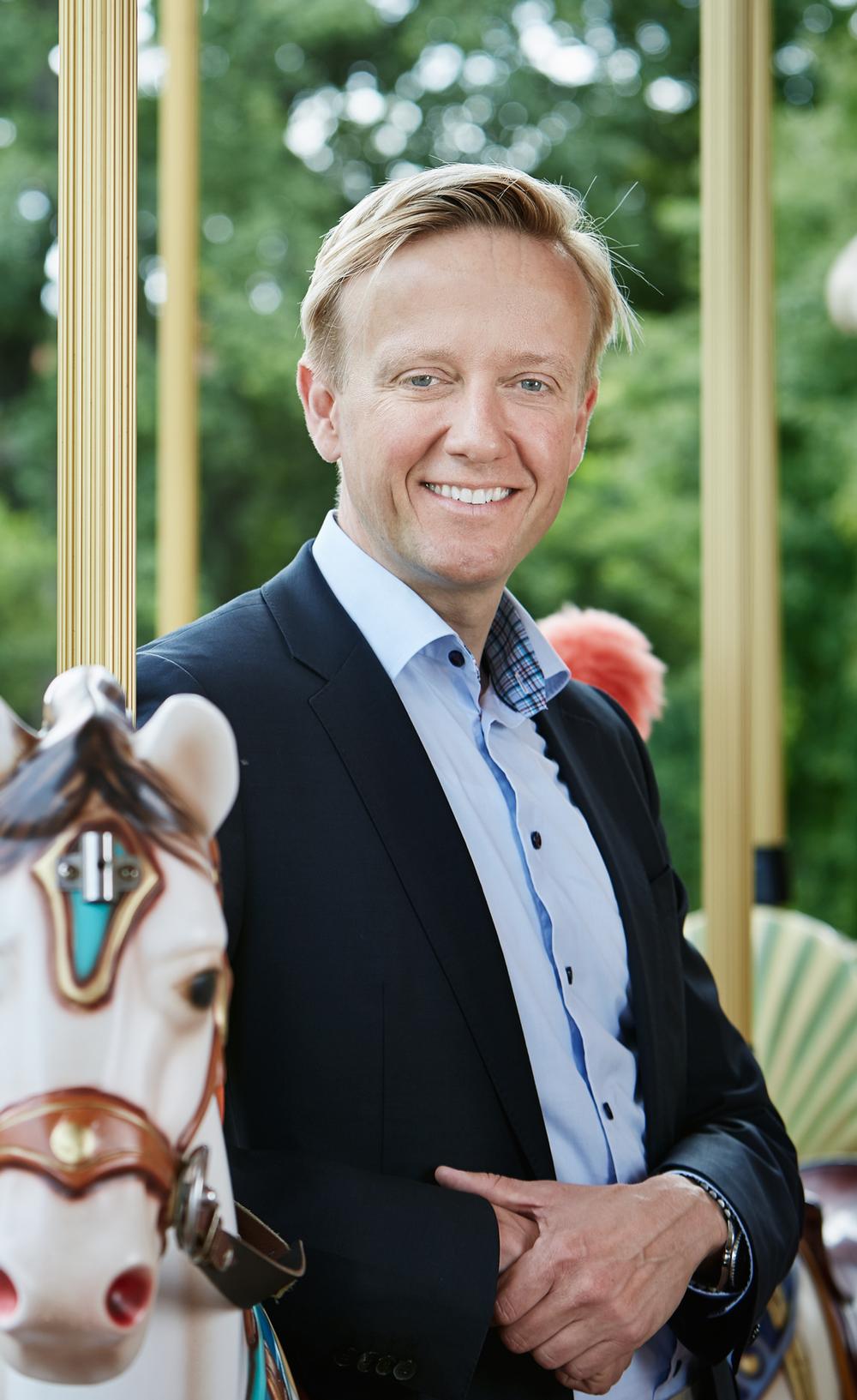
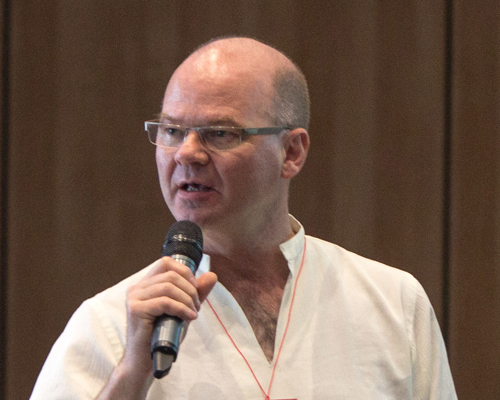
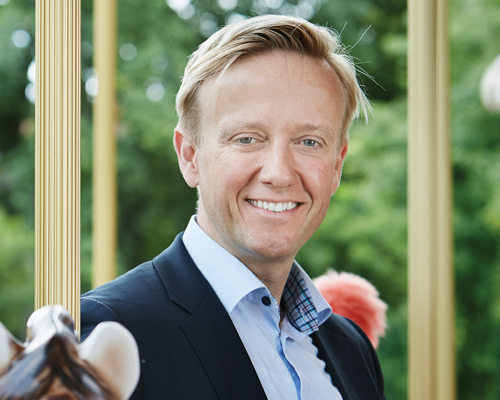
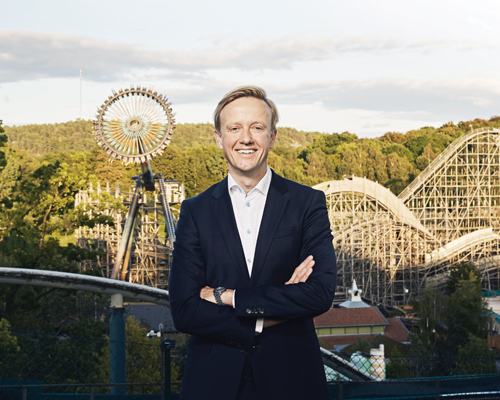
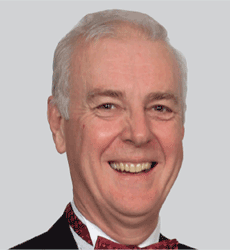
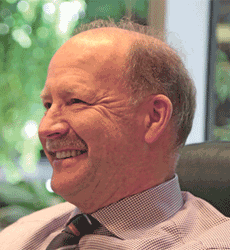
Andreas Andersen started in the industry as a company lawyer at Tivoli
An IAAPA Attractions Expo marks the start of the tenure of a fresh IAAPA chair. In 2018, the global attractions body has turned to Sweden for leadership, with Liseberg CEO Andreas Andersen taking on the role in what could prove to be a big year for IAAPA as it continues to grow.
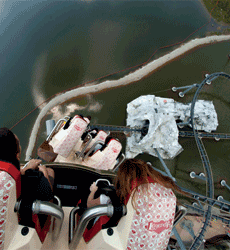
What’s your background? I originally have a background in law. I used to work at the Danish ministry of finance and then in 2000 I became a company lawyer for Tivoli in Copenhagen, Denmark. I didn’t hold the job for very long as I soon got into the operations side of things. I was COO there and then in 2008 I transitioned into a role with IAAPA, where I helped to relaunch the European regional office in Brussels. Two years prior, we had taken over EAS. In 2011, I came to Liseberg, where I am today. I’m a very enthusiastic rollercoaster rider, so that’s really why I love the industry.
You have one year as chair. What do you want to achieve? It’s not about what I want to achieve, rather what we as a team at IAAPA would like to achieve. It’s about how we can benefit the members because that’s what it’s all about.
There are a few things I care a lot about. Safety is one of them. The work that has been done over many years and also the great focus on safety and security during the past year is something I will continue.
I care a lot about the internationalisation of IAAPA so we can become a truly global body. We’re on that path. We have strong regional offices and more and more members outside North America.
The third thing is sustainability. It’s one of the things that our industry will have to face on a much more structured level in the years to come. It’s one of the things that I would like to put on the agenda.
You take over from Greg Hale. What kind of a legacy is he leaving you? What has he built over the past year? Greg has been an integral part of everything we, as an association, have achieved when it comes to safety over the past three decades. When it comes to standards, reporting, legislative achievements and lifting the general knowledge in the industry, I don't think you can underestimate the impact he’s had for IAAPA and Disney. He is a champion of safety for our industry.
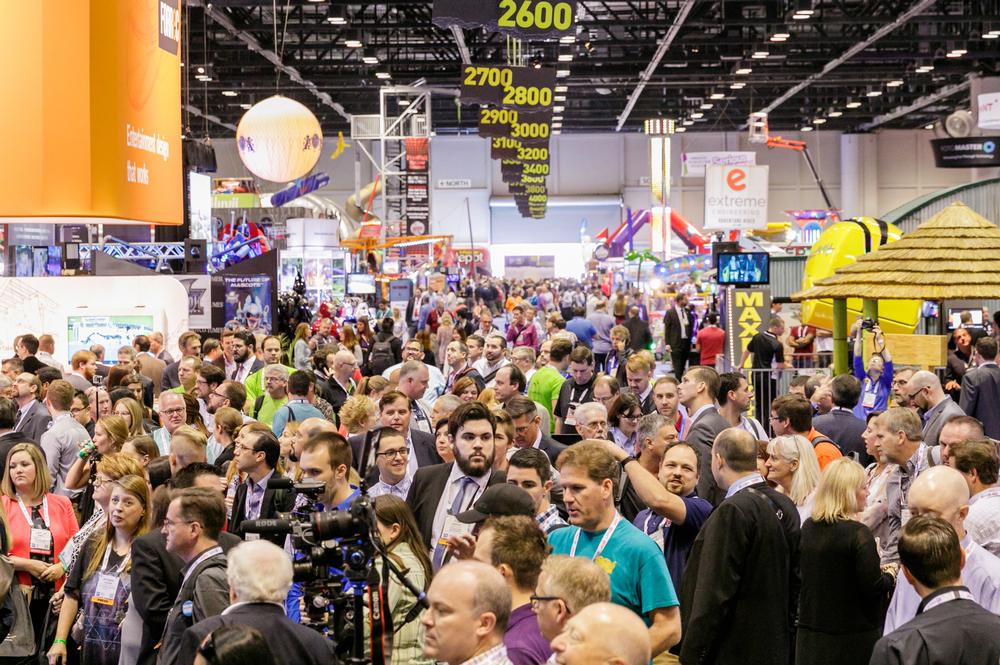
What’s exciting you most about the industry? One of the things I think a lot about is how the digital world is affecting our industry. If you take a look at the IAAPA Attractions Expo show floor, you’re seeing much more digital innovation. Whether it’s distribution, marketing, CRM or digital solutions for navigating attractions, the digital world influences how we communicate, develop and sell our product. It also influences the whole competitive situation we’re in. That’s one thing I really think a lot about. It’s something we discuss a lot at an IAAPA level and in my day-to-day work at Liseberg. Nobody wants to end up like Blockbuster. We want to make sure we’re relevant in the future digital marketplace.
Where are you seeing growth in the industry? The axis of the industry remains to some extent in the East, with development in China, India and the Middle East. It gives both the industry in general – but especially the manufacturers and suppliers – a lot of tailwind. I think that Latin America is an area where we’re going to see growth in the coming years as well. It’s very much to do with the overall economic situation, as well as legislation, so hopefully we’ll see more there.
What are the current strengths of the attractions industry and what can be improved on? It’s interesting if you look at the industry from a historical perspective. It’s a very resilient industry in the sense that in times when you see a downturn in the general economy, people tend to visit regional parks instead of travelling. When people have money to spend, they tend to go to the destination parks. Its resiliency has to do with the fact that what we are providing is a very fundamental thing. It’s an escape from everyday life, it’s memories, it’s expectations, it’s experiences. I think that that’s fundamental – even in a digital world. That’s the strength of visitor attractions. It’s something that family or friends do together and you do it in real life. It’s something that will always provide a very strong foundation to build on.
What can we do better? I think the sustainability agenda is knocking on the door. It’s an area where we can do better as an industry. We also have to be very aware of the fact that change is happening faster and faster. As an industry, we have to be very nimble and be able to adapt at a much higher pace.
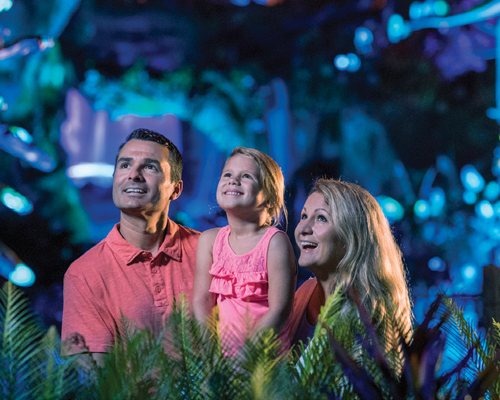
Queueing is something to think about too. Today we don’t queue in the bank, we don’t queue in the supermarket, everything is online and accessible. We don’t queue, but we expect people to stand in line when they come to a theme park. It’s one of those areas which is a real threat. If we don’t figure it out, it’s one that could become a problem in the future. Tapu Tapu at Volcano Bay, Universal Orlando Resorts, is a good example of innovation, but it’s an area where most of us have to adapt. We have to be quick on our feet and able to change to meet guests’ expectations.
Where do you see the sector expanding? Twenty years ago, you could categorise an attraction. There were zoos, aquariums, amusement parks and so on. Today, we’re all becoming hybrids. There are two main tracts when it comes to this type of development. The first is this hybridisation: Chimelong Ocean Kingdom, for example, is it a theme park or is it a zoo? The other tract is resortification. Everyone wants to add a hotel. We’ll see continued development in those directions.
Read more from this issue of Attractions Management magazine
View contents of Attractions Management 2018 issue 1
Industry Opinion: Waterparks
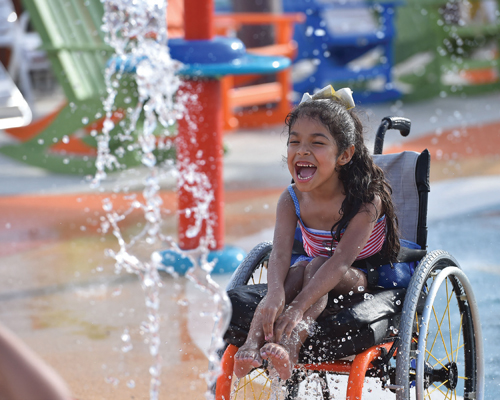
More water leisure operators are investing in becoming more accessible, writes WWA's Aleatha Ezra
Industry Opinion: Zoos & Aquariums
Species survival expert Bill Robichaud shares the trials of the saola and what zoos are doing to save this near-extinct creature
Interview: Bob White
Bob White, COO of Village Roadshow, on
weathering a dip in attendance and keeping
his eyes on investment and expansion
Inclusivity: Open to All
Kath Hudson reports on some inspiring
initiatives to help include people who
face physical, social or economic
obstacles to visiting attractions
Heritage: Lofty Ideals
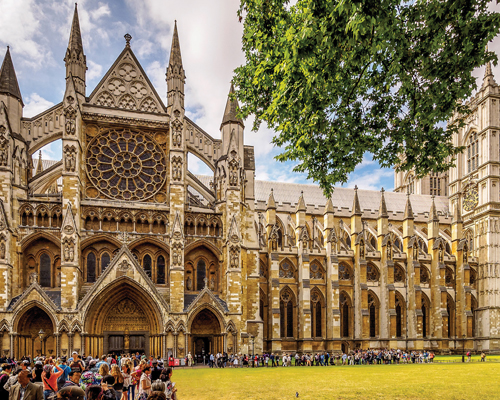
Westminster Abbey is getting an attic
conversion of sorts. We found out more
Waterparks: Under the Weather
Meet the team who helped bring
Epic Waters to fruition – an undercover
Texas waterpark on an epic scale
Profile: Andreas Andersen
IAAPA’s new chair Andreas Andersen sat
down with Tom Anstey to talk about industry
growth, sustainability – and queueing
Theme Parks: Think Big
Liseberg CEO Andreas Andersen reveals
details of the park’s €200m expansion
Themed design: The Story Builders
Disney’s Joe Rohde and Scott Trowbridge
and Universal’s Thierry Coup reveal the
secrets of their trade – well, some of them!
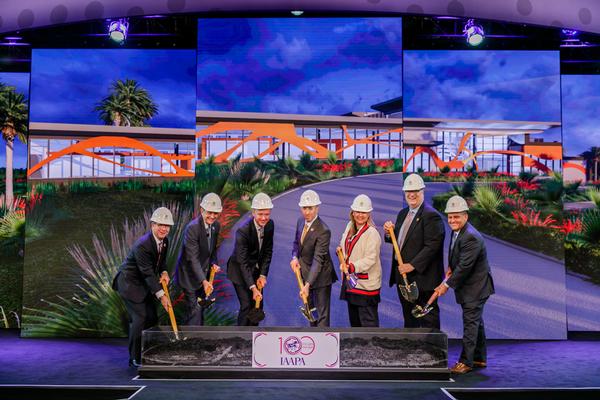
100 Years of IAAPA This year, 2018, IAAPA celebrates its 100th birthday. Marking the success of the global attractions body, IAAPA is relocating its headquarters from Washington, DC, to brand new offices in Orlando, Florida. The organisation also invites all its members and industry professionals to join the festivities during this year’s events:
• IAAPA Leadership Conference 6-9 March, 2018 - Tokyo and Osaka, Japan
• Asian Attractions Expo 5-8 June, 2018 - Hong Kong
• Euro Attractions Show 23-27 September, 2018 - Amsterdam, The Netherlands
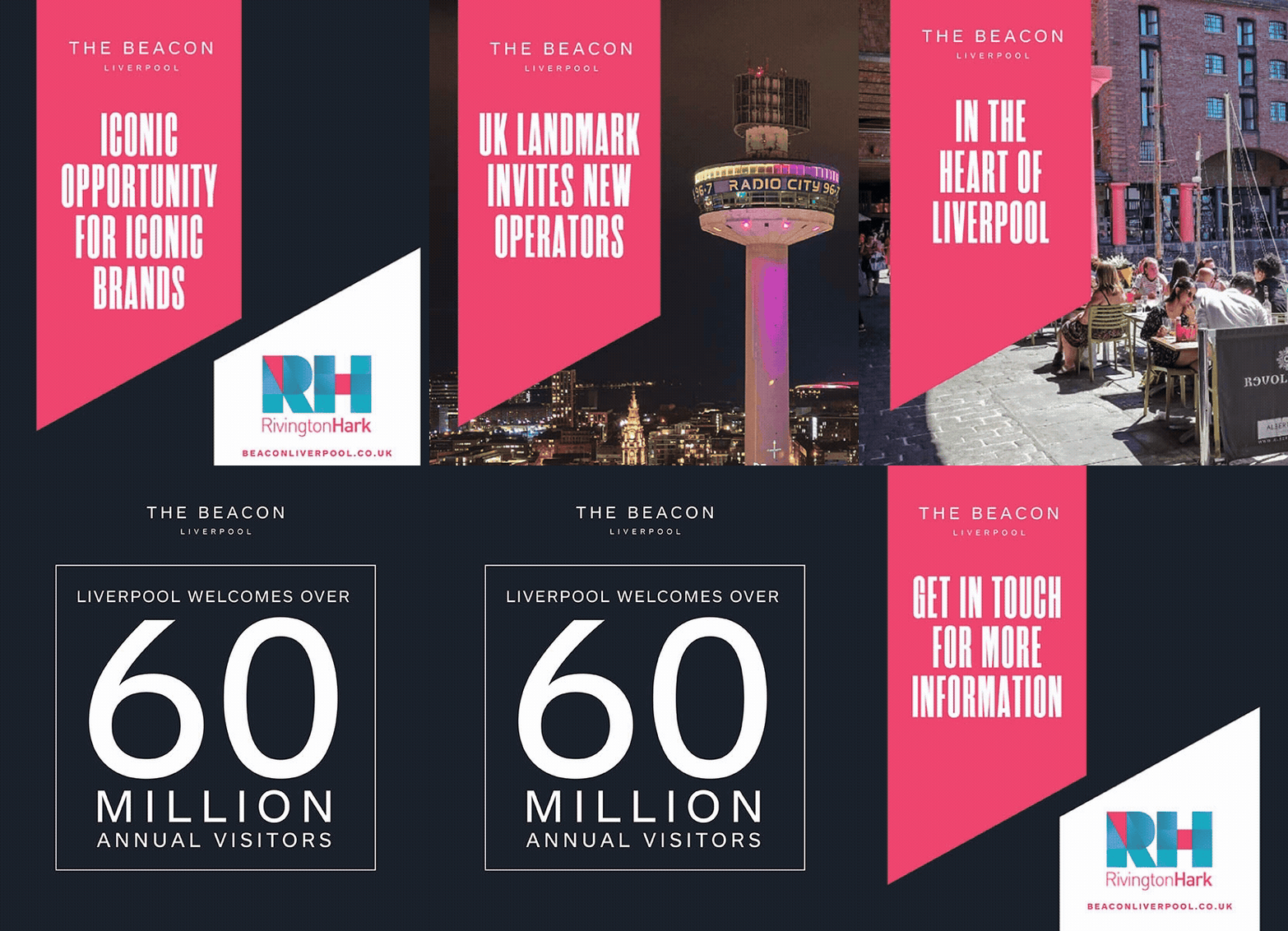
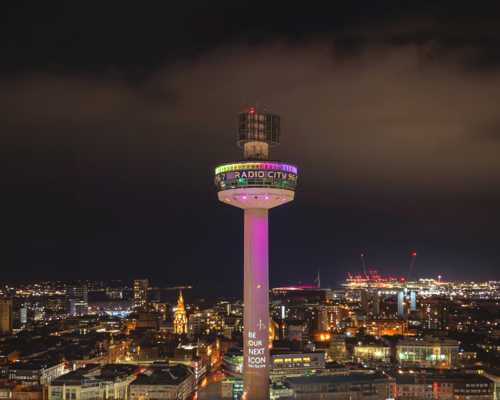
An opportunity to reimagine one of the UK’s most recognisable towers has been formally
opened by Rivington Hark, as St Johns Beacon invites operators and partners to shape its
next phase. [more...]
Andreas Andersen started in the industry as a company lawyer at Tivoli
An IAAPA Attractions Expo marks the start of the tenure of a fresh IAAPA chair. In 2018, the global attractions body has turned to Sweden for leadership, with Liseberg CEO Andreas Andersen taking on the role in what could prove to be a big year for IAAPA as it continues to grow.
What’s your background? I originally have a background in law. I used to work at the Danish ministry of finance and then in 2000 I became a company lawyer for Tivoli in Copenhagen, Denmark. I didn’t hold the job for very long as I soon got into the operations side of things. I was COO there and then in 2008 I transitioned into a role with IAAPA, where I helped to relaunch the European regional office in Brussels. Two years prior, we had taken over EAS. In 2011, I came to Liseberg, where I am today. I’m a very enthusiastic rollercoaster rider, so that’s really why I love the industry.
You have one year as chair. What do you want to achieve? It’s not about what I want to achieve, rather what we as a team at IAAPA would like to achieve. It’s about how we can benefit the members because that’s what it’s all about.
There are a few things I care a lot about. Safety is one of them. The work that has been done over many years and also the great focus on safety and security during the past year is something I will continue.
I care a lot about the internationalisation of IAAPA so we can become a truly global body. We’re on that path. We have strong regional offices and more and more members outside North America.
The third thing is sustainability. It’s one of the things that our industry will have to face on a much more structured level in the years to come. It’s one of the things that I would like to put on the agenda.
You take over from Greg Hale. What kind of a legacy is he leaving you? What has he built over the past year? Greg has been an integral part of everything we, as an association, have achieved when it comes to safety over the past three decades. When it comes to standards, reporting, legislative achievements and lifting the general knowledge in the industry, I don't think you can underestimate the impact he’s had for IAAPA and Disney. He is a champion of safety for our industry.
What’s exciting you most about the industry? One of the things I think a lot about is how the digital world is affecting our industry. If you take a look at the IAAPA Attractions Expo show floor, you’re seeing much more digital innovation. Whether it’s distribution, marketing, CRM or digital solutions for navigating attractions, the digital world influences how we communicate, develop and sell our product. It also influences the whole competitive situation we’re in. That’s one thing I really think a lot about. It’s something we discuss a lot at an IAAPA level and in my day-to-day work at Liseberg. Nobody wants to end up like Blockbuster. We want to make sure we’re relevant in the future digital marketplace.
Where are you seeing growth in the industry? The axis of the industry remains to some extent in the East, with development in China, India and the Middle East. It gives both the industry in general – but especially the manufacturers and suppliers – a lot of tailwind. I think that Latin America is an area where we’re going to see growth in the coming years as well. It’s very much to do with the overall economic situation, as well as legislation, so hopefully we’ll see more there.
What are the current strengths of the attractions industry and what can be improved on? It’s interesting if you look at the industry from a historical perspective. It’s a very resilient industry in the sense that in times when you see a downturn in the general economy, people tend to visit regional parks instead of travelling. When people have money to spend, they tend to go to the destination parks. Its resiliency has to do with the fact that what we are providing is a very fundamental thing. It’s an escape from everyday life, it’s memories, it’s expectations, it’s experiences. I think that that’s fundamental – even in a digital world. That’s the strength of visitor attractions. It’s something that family or friends do together and you do it in real life. It’s something that will always provide a very strong foundation to build on.
What can we do better? I think the sustainability agenda is knocking on the door. It’s an area where we can do better as an industry. We also have to be very aware of the fact that change is happening faster and faster. As an industry, we have to be very nimble and be able to adapt at a much higher pace.
Queueing is something to think about too. Today we don’t queue in the bank, we don’t queue in the supermarket, everything is online and accessible. We don’t queue, but we expect people to stand in line when they come to a theme park. It’s one of those areas which is a real threat. If we don’t figure it out, it’s one that could become a problem in the future. Tapu Tapu at Volcano Bay, Universal Orlando Resorts, is a good example of innovation, but it’s an area where most of us have to adapt. We have to be quick on our feet and able to change to meet guests’ expectations.
Where do you see the sector expanding? Twenty years ago, you could categorise an attraction. There were zoos, aquariums, amusement parks and so on. Today, we’re all becoming hybrids. There are two main tracts when it comes to this type of development. The first is this hybridisation: Chimelong Ocean Kingdom, for example, is it a theme park or is it a zoo? The other tract is resortification. Everyone wants to add a hotel. We’ll see continued development in those directions.
Read more from this issue of Attractions Management magazine
View contents of Attractions Management 2018 issue 1
Industry Opinion: Waterparks
More water leisure operators are investing in becoming more accessible, writes WWA's Aleatha Ezra
Industry Opinion: Zoos & Aquariums
Species survival expert Bill Robichaud shares the trials of the saola and what zoos are doing to save this near-extinct creature
Interview: Bob White
Bob White, COO of Village Roadshow, on
weathering a dip in attendance and keeping
his eyes on investment and expansion
Inclusivity: Open to All
Kath Hudson reports on some inspiring
initiatives to help include people who
face physical, social or economic
obstacles to visiting attractions
Heritage: Lofty Ideals
Westminster Abbey is getting an attic
conversion of sorts. We found out more
Waterparks: Under the Weather
Meet the team who helped bring
Epic Waters to fruition – an undercover
Texas waterpark on an epic scale
Profile: Andreas Andersen
IAAPA’s new chair Andreas Andersen sat
down with Tom Anstey to talk about industry
growth, sustainability – and queueing
Theme Parks: Think Big
Liseberg CEO Andreas Andersen reveals
details of the park’s €200m expansion
Themed design: The Story Builders
Disney’s Joe Rohde and Scott Trowbridge
and Universal’s Thierry Coup reveal the
secrets of their trade – well, some of them!
100 Years of IAAPA This year, 2018, IAAPA celebrates its 100th birthday. Marking the success of the global attractions body, IAAPA is relocating its headquarters from Washington, DC, to brand new offices in Orlando, Florida. The organisation also invites all its members and industry professionals to join the festivities during this year’s events:
• IAAPA Leadership Conference 6-9 March, 2018 - Tokyo and Osaka, Japan
• Asian Attractions Expo 5-8 June, 2018 - Hong Kong
• Euro Attractions Show 23-27 September, 2018 - Amsterdam, The Netherlands
A new immersive attraction designed to transport visitors into the final hours of ancient Pompeii
is preparing to open near the world-famous archaeological site in southern Italy.
Experience design company, BRC Imagination Arts, has completed a transition that sees founder
Bob Rogers pass ownership of the business to four long-serving senior executives, while
remaining actively involved with the company.
Movie Park Germany has opened a new Paramount Pictures-themed attraction as part of its 30th
anniversary celebrations, using immersive storytelling and adaptive reuse to reinforce the park’s
longstanding “Hollywood in Germany” positioning.
Therme Manchester’s 28-acre development, which will include interconnected glass pavilions
that measure 65,000sq m, will be the largest bathing and wellbeing attraction in the world once
complete, according to prof David Russell, CEO of Therme UK.
Efteling has opened Hooghmoed, a new family drop tower designed to broaden the appeal of its
recently launched Sirene Island themed area and introduce younger visitors to thrill attractions.
A proposed Puy du Fou development near Bicester and Universal Destinations and Experiences’
planned resort in Bedford are emerging as part of a wider transformation of the Oxford–
Cambridge Growth Corridor into a major centre for UK leisure and tourism inv
Shedd Aquarium has opened the Immersion Theater developed in partnership with SimEx-
Iwerks, as part of a wider strategy to enhance the guest experience and create additional
revenue opportunities.
The UK government has announced a temporary reduction in VAT on visitor attractions and
children’s meals as part of a summer cost-of-living support package designed to stimulate the
visitor economy and encourage family days out.
As designer Yinka Ilori prepares for his first solo gallery show in London, he speaks exclusively
to CLADmag about his mission to spread joy, the power of play, and his bold approach to using
colour (including the colours you won’t see in his work).
The government of Thailand is exploring plans for a THB300bn (£6.3bn, US$8.3bn)
entertainment complex in the country’s Eastern Economic Corridor (EEC), with officials
proposing a large-scale theme park and sports destination as part of a broader tourism and
economic development strategy.
An opportunity to reimagine one of the UK’s most recognisable towers has been formally
opened by Rivington Hark, as St Johns Beacon invites operators and partners to shape its
next phase. [more...]