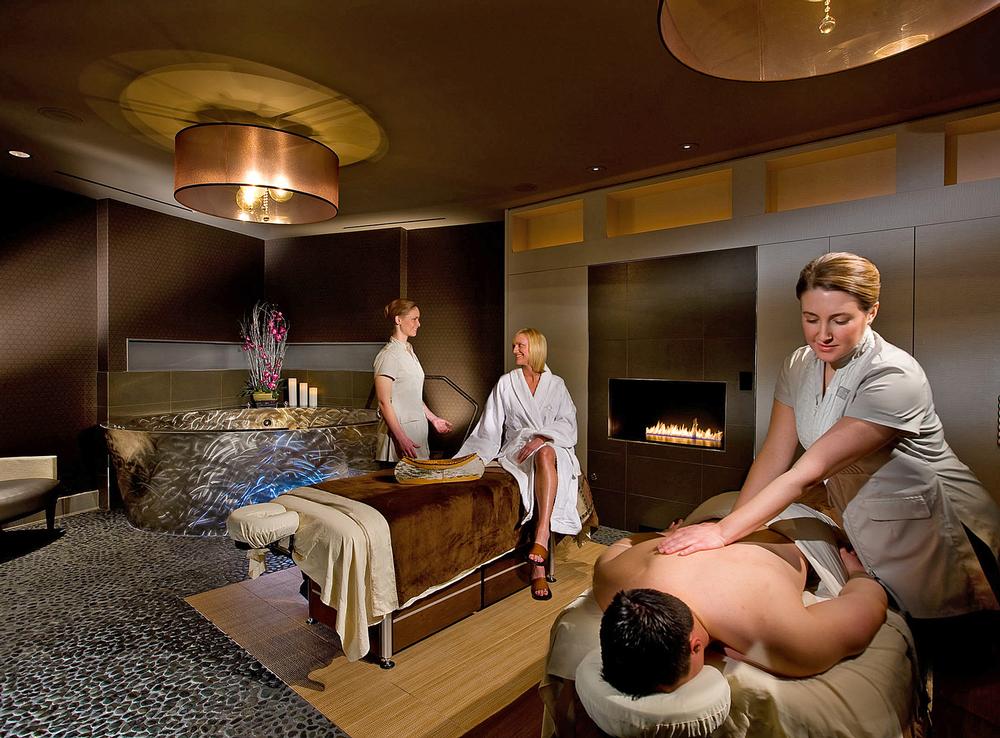
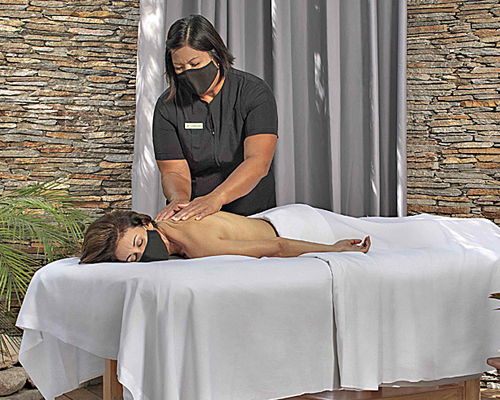
Northern Quest Resort has maintained revenues by only offering high profit services
As restrictions limiting travel and gatherings slowly ease, businesses – including spas – are beginning to reopen. Likewise, consumers are returning to the routines that COVID-19 disrupted. However, to what extent and at what pace consumers will return to spas is less certain.
After all, many reopened facilities will only be able to serve a limited number of guests, and stringent sanitation and physical distancing protocols will likely remain in place for a while. Will at-home treatments replace the spa-going experience for some? Will guests baulk at the idea of receiving treatments where distancing isn’t possible? How attentive will they be to spa sanitation and hygiene policies?
Those are just a few of the questions that a recent International Spa Association (ISPA) Consumer Snapshot study attempted to answer. Conducted in tandem with PricewaterhouseCoopers, the study, which surveyed more than a thousand people in the US, highlights consumer attitudes toward visiting reopened spas (75 per cent of respondents were spa-goers and 25 per cent were non-spa-goers). It also looked at their broader expectations for and concerns about returning to “normal life” after pandemic-related restrictions are lifted.
HEIGHTENED WELLBEING When the study was conducted in April, 90 per cent of respondents said they were only leaving the house to perform vital tasks such as grocery shopping. During this period of isolation, substantial portions of those surveyed said they were eating more healthily (41 per cent), getting more exercise (40 per cent) and doing more to look after their mental wellbeing (55 per cent). Given the many stresses of life during the COVID-19 crisis, it may be unsurprising that respondents reported increased attention to their own wellbeing.
When it came to approximating their spa routines at home, however, spa-goers revealed a mix of habits. While 58 per cent claimed that they were maintaining at-home skincare regimens and 50 per cent were performing nail services themselves, only 22 per cent were attempting massage (74 per cent said they were going without). Just 31 per cent were undertaking their own hair services (63 per cent said they were going without).
For some consumers, purchasing habits related to personal care also shifted during the pandemic. Twenty-two per cent of respondents, for example, noted that they were spending less money on skincare products and 31 per cent were spending less on nail polish.
PENT-UP DEMAND This combination of a heightened attention to physical and mental wellbeing and some attempts to keep up with spa routines suggests that these services remained in high demand, regardless of whether respondents had access to professional service providers. As spas in the US have begun to reopen in recent months, the suspicion that this pent-up demand would result in a bookings boom has been borne out, at least anecdotally. Respondents to ISPA’s June Snapshot Survey (a more informal trends survey collecting real-time feedback) noted that consumer response to their reopening efforts has been positive. Ninety-three per cent of those questioned labelled guest response to reopening as “favourable” or “highly favourable,” while 76 per cent reported that the volume of bookings at their spas had fallen into one of those two categories.
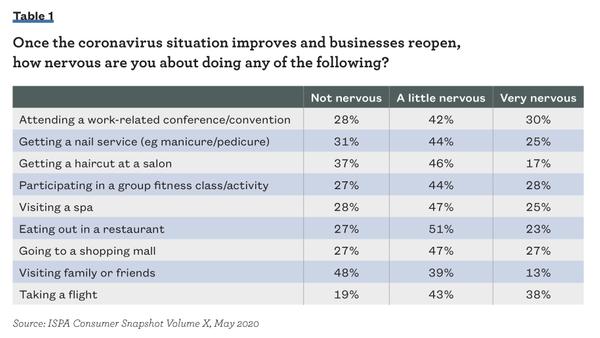
Concerns remain, however, that this high demand for services could give way to more modest demand following an initial surge of especially eager guests. When respondents were asked how nervous they would be to visit a spa once they reopen, 28 per cent said they would not be nervous at all and nearly half (47 per cent) said they would be a little nervous (see Graph 1). A quarter of respondents, meanwhile, claimed that they would be very nervous to visit a spa. These totals compare favourably to the nervousness respondents expressed regarding other public activities. For example, 38 per cent of respondents said they would be very nervous to take a flight, while 27 per cent would be very nervous to go to a shopping mall and 23 per cent very nervous to eat at a restaurant.
Though it’s impossible to know exactly how those attitudes will translate to real-world behaviours, the balanced responses suggest that lingering concerns about COVID-19 may delay the return of a significant portion of spa-goers beyond the earliest stages of reopening. However, because of occupancy restrictions and the resultant reduction of available appointments at many spas, such a delay may not be readily apparent for some time, if it occurs at all.
REOPENING ADVICE Unfortunately for spas attempting to forecast revenues and set budgets, this sort of uncertainty may well linger for the foreseeable future. In part, that’s because the behaviours consumers anticipate adopting and the behaviours they ultimately exhibit are not likely to align perfectly. The extraordinary steps – including heightened sanitation standards and extensive use of PPE – that many spas have taken to reassure their guests may prove key in reducing the nervousness mentioned above. To that end, spas should be prepared to educate guests on any new policies or operating procedures and to answer their questions.
According to ISPA’s study, this information will almost certainly be in high demand: only 15 per cent of spa-goers said they would be unlikely to ask about or seek out a spa’s sanitation and hygiene practices, while 60 per cent said they would be likely to do so. During a series of virtual Town Hall events hosted by ISPA in June and July, panellist Katlyn Hatcher of Nemacolin Woodlands Resort in Pennsylvania noted that reservation calls often “became an education session on COVID-19 and [our] new processes.” While other operators said “average call times went from three to nine minutes”, suggesting spas should consider hiring or assigning additional staff to field calls.
The Town Hall series also highlighted the benefits of technology partners (see p86 for more in-depth examples) and some key advice on getting creative to keep up revenues. Mario Tricoci salons took pressure off its call systems, for example, by first guiding guests towards its app developed by Zenoti, while Shane Bird from Turning Stone says online forms, created in collaboration with Book4time, helped ease physical check-in pressures.
To help keep revenues up while operating at reduced capacity, Yvonne Smith from Northern Quest Resort used ResortSuite’s yielding tool to work out which treatments offered the highest profits – by only offering those services the spa has managed 80 per cent of revenues for the same period a year ago. Garrett Mersberger at Blue Harbor Resort says a number of its therapists have been more flexible with working hours which has helped it to treat more guests than expected in its restrictive Thursday to Sunday opening period.
In other advice, Brennan Evans of Trilogy Spa Holdings says it’s had good results with group deal sites such as Groupon (while paying strict attention to yield) and by leveraging relationships with vendors such as Naturopathica, FarmHouse Fresh, NuFace and Babor which enabled it to make retail sales even when those spas were closed.
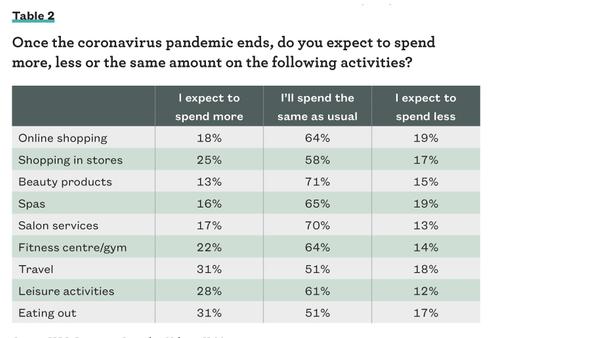
Also encouraging for spas is this final piece of data from ISPA’s Consumer Snapshot: when spa-goers return, about two-thirds plan to spend at least the same amount of money as usual on spa services, while 16 per cent actually expect to spend more than they did prior to the pandemic’s arrival (see Graph 2). For an industry eager to rebound from such a financially uncertain and trying time, hopes will be high that those figures bear out once the doors are open again.
• To download a full copy of ISPA’s Consumer Snapshot Volume X study, visit www.experienceispa.com
Josh Corman is a director of education and research at ISPA
| [email protected]
Read more from this issue of Attractions Management magazine
View contents of Attractions Management 2020 issue 3
Editor's letter: The fight ahead
There’s a huge job of work to do to build our reputation and win support in the corridors of power, says Katie Barnes
Spa people: Patrick Huey
The vice-president of spa and retail at Montage talks about his new role as ISPA chair, Black Lives Matter and how his spas are fighting back against COVID-19
Spa people: Rianna Riego
Wellness consultant Rianna Riego speaks out about racial discrimination in the global spa industry
Spa people: Anna Teal
The CEO of Aromatherapy Associates outlines the online innovations it's using to connect with customers in exciting new ways
Spa programmes: On the menu
How are spas changing their treatments and services now they’re staring to reopen again?
Interview: Lee Woon Hoe
Banyan Tree’s executive director of wellbeing tells Spa Business magazine why now is the right time for the group to launch its new wellness concept
Ask an expert: Spa design 2030
Spa Business magazine asks leading designers and architects to give their predictions about pandemic-proof spa models
Promotion: Trendsetting
Design specialists, The Wellness, worked with in-house engineers for Jumeirah to create a state-of-the-art gym for Talise Fitness at the Jumeirah Al Naseem in Dubai
Research: Manner of speaking
ISPA’s latest study reveals consumer attitudes in the aftermath of COVID-19. Josh Corman picks out the key details
Research: New perspectives
Two surveys in the UK highlight both spa operator and spa-goer insights as facilities across the country begin to welcome guests back
Promotion: The power of touchless
Spa and wellness innovator, Sammy Gharieni, reveals how his on-trend products are perfect for delivering high-value touchless treatments
Country focus: Best of British
We take a look at the standout concepts offered in the world-class spas that have opened in the UK over the last three years
Promotion: Sustain and regenerate
Sustainable skincare brand, Comfort Zone, has radically reinvented its entire Sacred Nature line, driven by the ambition to create some of the world’s first carbon-negative products
Interview: Emma Darby
Despite closing during in lockdown, some Resense spas still hit revenue targets. Its COO tells Spa Business magazine how
Promotion: Redefining the snowroom
Italian snowroom expert, TechnoAlpin, has collaborated with groundbreaking architectural practice, Snøhetta, to create a snowroom like no other
Medi-wellness: On good termes
Italy’s Long Life clinic, which offers anti-ageing science alongside water cures, is gaining greater attention post-lockdown. Sophie Benge pays a visit
Supplier showcase: Premium Fitness
Dormy House has partnered with Matrix Fitness to create two fully-connected fitness suites to take its offering to a new and more sophisticated level @DormyHouse @MatrixFitnessUK
Promotion: Sothys
Sothys’ beauty treatment designer, Séverine Monjanel, and training director, Isabelle Villey, talk to Spa Business about the company’s new authentic ancestral Indonesian treatment
An opportunity to reimagine one of the UK’s most recognisable towers has been formally
opened by Rivington Hark, as St Johns Beacon invites operators and partners to shape its
next phase. [more...]
Northern Quest Resort has maintained revenues by only offering high profit services
As restrictions limiting travel and gatherings slowly ease, businesses – including spas – are beginning to reopen. Likewise, consumers are returning to the routines that COVID-19 disrupted. However, to what extent and at what pace consumers will return to spas is less certain.
After all, many reopened facilities will only be able to serve a limited number of guests, and stringent sanitation and physical distancing protocols will likely remain in place for a while. Will at-home treatments replace the spa-going experience for some? Will guests baulk at the idea of receiving treatments where distancing isn’t possible? How attentive will they be to spa sanitation and hygiene policies?
Those are just a few of the questions that a recent International Spa Association (ISPA) Consumer Snapshot study attempted to answer. Conducted in tandem with PricewaterhouseCoopers, the study, which surveyed more than a thousand people in the US, highlights consumer attitudes toward visiting reopened spas (75 per cent of respondents were spa-goers and 25 per cent were non-spa-goers). It also looked at their broader expectations for and concerns about returning to “normal life” after pandemic-related restrictions are lifted.
HEIGHTENED WELLBEING When the study was conducted in April, 90 per cent of respondents said they were only leaving the house to perform vital tasks such as grocery shopping. During this period of isolation, substantial portions of those surveyed said they were eating more healthily (41 per cent), getting more exercise (40 per cent) and doing more to look after their mental wellbeing (55 per cent). Given the many stresses of life during the COVID-19 crisis, it may be unsurprising that respondents reported increased attention to their own wellbeing.
When it came to approximating their spa routines at home, however, spa-goers revealed a mix of habits. While 58 per cent claimed that they were maintaining at-home skincare regimens and 50 per cent were performing nail services themselves, only 22 per cent were attempting massage (74 per cent said they were going without). Just 31 per cent were undertaking their own hair services (63 per cent said they were going without).
For some consumers, purchasing habits related to personal care also shifted during the pandemic. Twenty-two per cent of respondents, for example, noted that they were spending less money on skincare products and 31 per cent were spending less on nail polish.
PENT-UP DEMAND This combination of a heightened attention to physical and mental wellbeing and some attempts to keep up with spa routines suggests that these services remained in high demand, regardless of whether respondents had access to professional service providers. As spas in the US have begun to reopen in recent months, the suspicion that this pent-up demand would result in a bookings boom has been borne out, at least anecdotally. Respondents to ISPA’s June Snapshot Survey (a more informal trends survey collecting real-time feedback) noted that consumer response to their reopening efforts has been positive. Ninety-three per cent of those questioned labelled guest response to reopening as “favourable” or “highly favourable,” while 76 per cent reported that the volume of bookings at their spas had fallen into one of those two categories.
Concerns remain, however, that this high demand for services could give way to more modest demand following an initial surge of especially eager guests. When respondents were asked how nervous they would be to visit a spa once they reopen, 28 per cent said they would not be nervous at all and nearly half (47 per cent) said they would be a little nervous (see Graph 1). A quarter of respondents, meanwhile, claimed that they would be very nervous to visit a spa. These totals compare favourably to the nervousness respondents expressed regarding other public activities. For example, 38 per cent of respondents said they would be very nervous to take a flight, while 27 per cent would be very nervous to go to a shopping mall and 23 per cent very nervous to eat at a restaurant.
Though it’s impossible to know exactly how those attitudes will translate to real-world behaviours, the balanced responses suggest that lingering concerns about COVID-19 may delay the return of a significant portion of spa-goers beyond the earliest stages of reopening. However, because of occupancy restrictions and the resultant reduction of available appointments at many spas, such a delay may not be readily apparent for some time, if it occurs at all.
REOPENING ADVICE Unfortunately for spas attempting to forecast revenues and set budgets, this sort of uncertainty may well linger for the foreseeable future. In part, that’s because the behaviours consumers anticipate adopting and the behaviours they ultimately exhibit are not likely to align perfectly. The extraordinary steps – including heightened sanitation standards and extensive use of PPE – that many spas have taken to reassure their guests may prove key in reducing the nervousness mentioned above. To that end, spas should be prepared to educate guests on any new policies or operating procedures and to answer their questions.
According to ISPA’s study, this information will almost certainly be in high demand: only 15 per cent of spa-goers said they would be unlikely to ask about or seek out a spa’s sanitation and hygiene practices, while 60 per cent said they would be likely to do so. During a series of virtual Town Hall events hosted by ISPA in June and July, panellist Katlyn Hatcher of Nemacolin Woodlands Resort in Pennsylvania noted that reservation calls often “became an education session on COVID-19 and [our] new processes.” While other operators said “average call times went from three to nine minutes”, suggesting spas should consider hiring or assigning additional staff to field calls.
The Town Hall series also highlighted the benefits of technology partners (see p86 for more in-depth examples) and some key advice on getting creative to keep up revenues. Mario Tricoci salons took pressure off its call systems, for example, by first guiding guests towards its app developed by Zenoti, while Shane Bird from Turning Stone says online forms, created in collaboration with Book4time, helped ease physical check-in pressures.
To help keep revenues up while operating at reduced capacity, Yvonne Smith from Northern Quest Resort used ResortSuite’s yielding tool to work out which treatments offered the highest profits – by only offering those services the spa has managed 80 per cent of revenues for the same period a year ago. Garrett Mersberger at Blue Harbor Resort says a number of its therapists have been more flexible with working hours which has helped it to treat more guests than expected in its restrictive Thursday to Sunday opening period.
In other advice, Brennan Evans of Trilogy Spa Holdings says it’s had good results with group deal sites such as Groupon (while paying strict attention to yield) and by leveraging relationships with vendors such as Naturopathica, FarmHouse Fresh, NuFace and Babor which enabled it to make retail sales even when those spas were closed.
Also encouraging for spas is this final piece of data from ISPA’s Consumer Snapshot: when spa-goers return, about two-thirds plan to spend at least the same amount of money as usual on spa services, while 16 per cent actually expect to spend more than they did prior to the pandemic’s arrival (see Graph 2). For an industry eager to rebound from such a financially uncertain and trying time, hopes will be high that those figures bear out once the doors are open again.
• To download a full copy of ISPA’s Consumer Snapshot Volume X study, visit www.experienceispa.com
Josh Corman is a director of education and research at ISPA
| [email protected]
Read more from this issue of Attractions Management magazine
View contents of Attractions Management 2020 issue 3
Editor's letter: The fight ahead
There’s a huge job of work to do to build our reputation and win support in the corridors of power, says Katie Barnes
Spa people: Patrick Huey
The vice-president of spa and retail at Montage talks about his new role as ISPA chair, Black Lives Matter and how his spas are fighting back against COVID-19
Spa people: Rianna Riego
Wellness consultant Rianna Riego speaks out about racial discrimination in the global spa industry
Spa people: Anna Teal
The CEO of Aromatherapy Associates outlines the online innovations it's using to connect with customers in exciting new ways
Spa programmes: On the menu
How are spas changing their treatments and services now they’re staring to reopen again?
Interview: Lee Woon Hoe
Banyan Tree’s executive director of wellbeing tells Spa Business magazine why now is the right time for the group to launch its new wellness concept
Ask an expert: Spa design 2030
Spa Business magazine asks leading designers and architects to give their predictions about pandemic-proof spa models
Promotion: Trendsetting
Design specialists, The Wellness, worked with in-house engineers for Jumeirah to create a state-of-the-art gym for Talise Fitness at the Jumeirah Al Naseem in Dubai
Research: Manner of speaking
ISPA’s latest study reveals consumer attitudes in the aftermath of COVID-19. Josh Corman picks out the key details
Research: New perspectives
Two surveys in the UK highlight both spa operator and spa-goer insights as facilities across the country begin to welcome guests back
Promotion: The power of touchless
Spa and wellness innovator, Sammy Gharieni, reveals how his on-trend products are perfect for delivering high-value touchless treatments
Country focus: Best of British
We take a look at the standout concepts offered in the world-class spas that have opened in the UK over the last three years
Promotion: Sustain and regenerate
Sustainable skincare brand, Comfort Zone, has radically reinvented its entire Sacred Nature line, driven by the ambition to create some of the world’s first carbon-negative products
Interview: Emma Darby
Despite closing during in lockdown, some Resense spas still hit revenue targets. Its COO tells Spa Business magazine how
Promotion: Redefining the snowroom
Italian snowroom expert, TechnoAlpin, has collaborated with groundbreaking architectural practice, Snøhetta, to create a snowroom like no other
Medi-wellness: On good termes
Italy’s Long Life clinic, which offers anti-ageing science alongside water cures, is gaining greater attention post-lockdown. Sophie Benge pays a visit
Supplier showcase: Premium Fitness
Dormy House has partnered with Matrix Fitness to create two fully-connected fitness suites to take its offering to a new and more sophisticated level @DormyHouse @MatrixFitnessUK
Promotion: Sothys
Sothys’ beauty treatment designer, Séverine Monjanel, and training director, Isabelle Villey, talk to Spa Business about the company’s new authentic ancestral Indonesian treatment
Hotel de France, located on the British Isle of Jersey, has created a wellness retreat package
that includes a hot yoga session that will take place in Jersey Zoo’s butterfly sanctuary.
A new immersive attraction designed to transport visitors into the final hours of ancient Pompeii
is preparing to open near the world-famous archaeological site in southern Italy.
Experience design company, BRC Imagination Arts, has completed a transition that sees founder
Bob Rogers pass ownership of the business to four long-serving senior executives, while
remaining actively involved with the company.
Movie Park Germany has opened a new Paramount Pictures-themed attraction as part of its 30th
anniversary celebrations, using immersive storytelling and adaptive reuse to reinforce the park’s
longstanding “Hollywood in Germany” positioning.
Therme Manchester’s 28-acre development, which will include interconnected glass pavilions
that measure 65,000sq m, will be the largest bathing and wellbeing attraction in the world once
complete, according to prof David Russell, CEO of Therme UK.
Efteling has opened Hooghmoed, a new family drop tower designed to broaden the appeal of its
recently launched Sirene Island themed area and introduce younger visitors to thrill attractions.
A proposed Puy du Fou development near Bicester and Universal Destinations and Experiences’
planned resort in Bedford are emerging as part of a wider transformation of the Oxford–
Cambridge Growth Corridor into a major centre for UK leisure and tourism inv
Shedd Aquarium has opened the Immersion Theater developed in partnership with SimEx-
Iwerks, as part of a wider strategy to enhance the guest experience and create additional
revenue opportunities.
The UK government has announced a temporary reduction in VAT on visitor attractions and
children’s meals as part of a summer cost-of-living support package designed to stimulate the
visitor economy and encourage family days out.
As designer Yinka Ilori prepares for his first solo gallery show in London, he speaks exclusively
to CLADmag about his mission to spread joy, the power of play, and his bold approach to using
colour (including the colours you won’t see in his work).
The government of Thailand is exploring plans for a THB300bn (£6.3bn, US$8.3bn)
entertainment complex in the country’s Eastern Economic Corridor (EEC), with officials
proposing a large-scale theme park and sports destination as part of a broader tourism and
economic development strategy.
+ More news
COMPANY PROFILES
Sally Corporation Our services include: Dark ride design & build; Redevelopment of existing attractions; High-quality [more...]
DJW David & Lynn Willrich started the Company
over thirty years ago, from the Audio Visual
Department [more...]
An opportunity to reimagine one of the UK’s most recognisable towers has been formally
opened by Rivington Hark, as St Johns Beacon invites operators and partners to shape its
next phase. [more...]