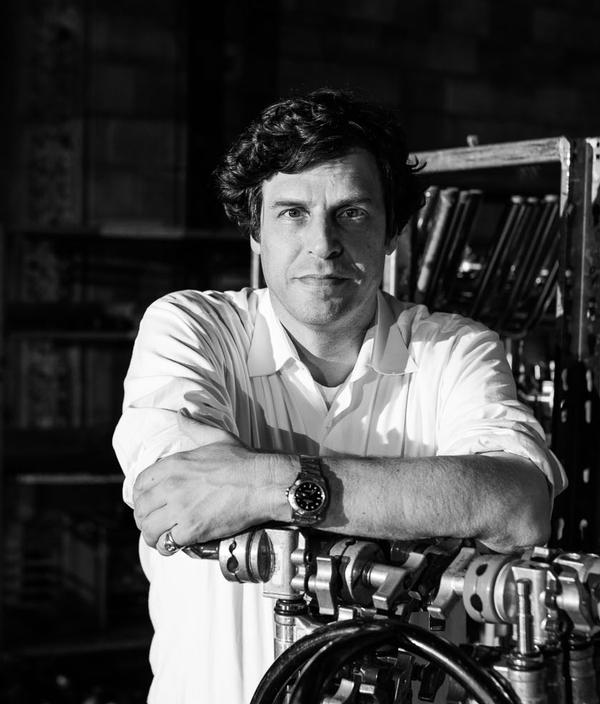
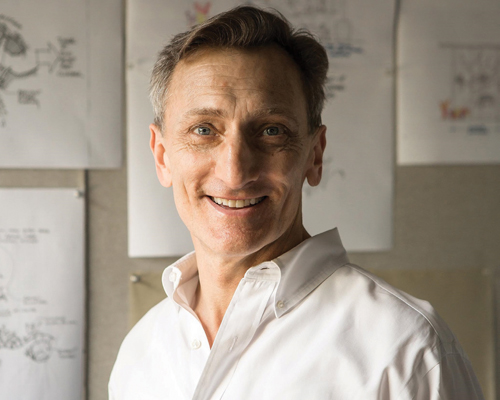
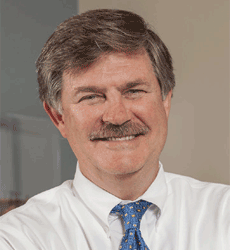
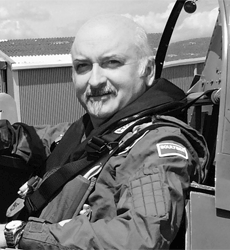
Anthony Geffen
CEO and creative director,
Atlantic Productions
Sir David Attenborough, Stephen Hawking, Dame Judy Dench and even Her Majesty, Queen Elizabeth II. These are just a few of the people renowned documentarian and filmmaker Anthony Geffen has worked with over the course of a glittering career, creating stunning works of art for television, the big screen and the museum sector in a multitude of astonishing mediums.
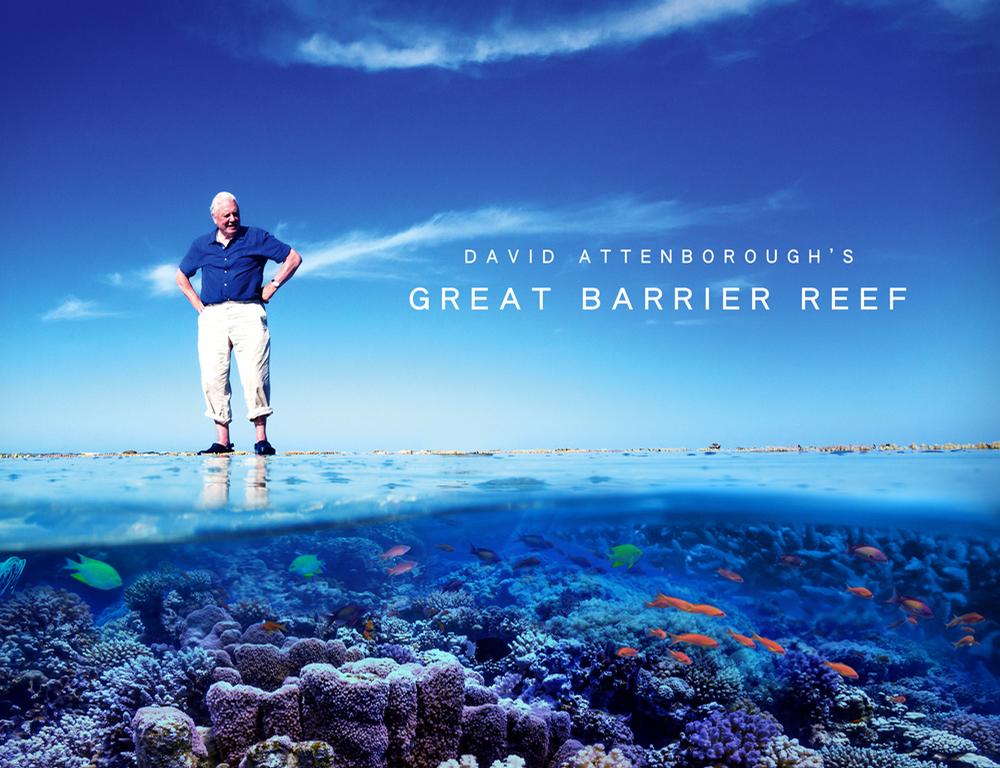
On the cutting edge of storytelling and immersive technologies, Geffen’s company, Atlantic Productions, has produced some of the world’s most-watched documentary series, including the award-winning Great Barrier Reef, Galapagos and The Wildest Dream. His works have been recognised with more than 50 international accolades, including multiple British Academy Awards (BAFTAs) and Emmy Awards.
“Atlantic Productions grew out of a period where I had been at the BBC for 10 years, making some of their major documentaries and dramas,” Geffen tells Attractions Management.
“While working in Hollywood, I saw studios like Pixar and the kind of things they were doing in the fictional world.
I was interested in working out how we could use tools such as animation to look at the past and into the future.
“I wanted to put under one roof a multitude of skills to do what I considered to be at that time the next stage of immersive storytelling.”
Free spirit Geffen founded Atlantic Productions in 1992, quickly establishing a diverse output which included history, science, natural history, current affairs, music and the arts.
Over the next 27 years, Atlantic’s creations would go on to be seen by hundreds of millions of people in more than 150 countries worldwide. During that period, Geffen would establish several more companies under the Atlantic umbrella. These included Zoo for CGI, Colossus for 3D, Atlantic Digital for App creation and Alchemy VR, which in 2017 was recognised with the first ever British Academy award for virtual storytelling.
“Big organisations at times lose the essence of storytelling because there’s a lot of politics involved in managing an organisation like that. The early days of the BBC had this free spirit and, in a way, I wanted to recreate that,” says Geffen.
“We developed a company which offered all sorts of complementary abilities. That’s how we grew it and attracted a lot of talent. David Attenborough was fascinated by what we were doing here and worked with us, creating films with entirely new ideas using our technology.”
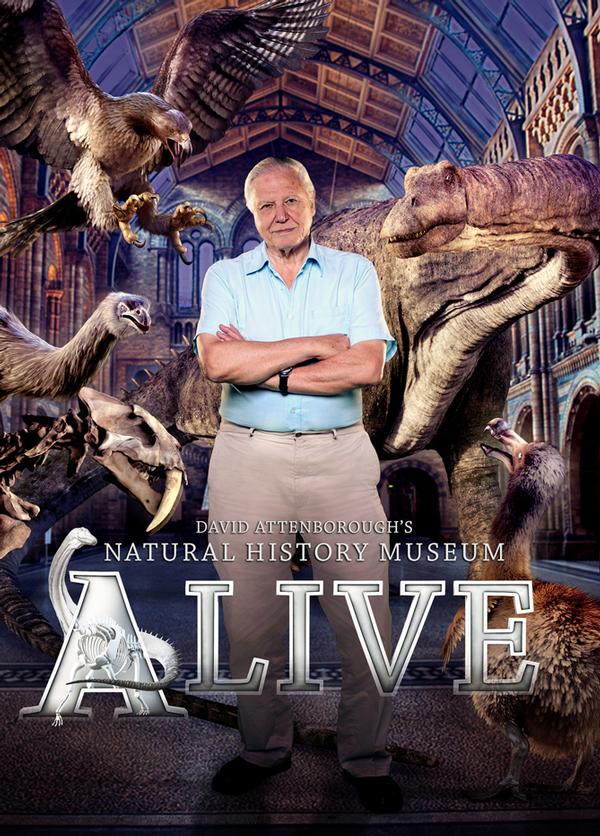
Marvelous creations Known for his jaw-dropping documentaries, Geffen has also carved out a significant path in the museum sector. Among its projects, last year Atlantic Production produced a VR experience with astronaut Tim Peake and the London Science Museum. Other projects included an adaptation of Great Barrier Reef and First Life with David Attenborough. These major projects have been showcased globally, with productions from Geffen in museums in locations worldwide.
“We believe museums are a really important space for us,” he says. “We love to work with them, with the challenge being how to take content to a younger audience in a more interactive way.”
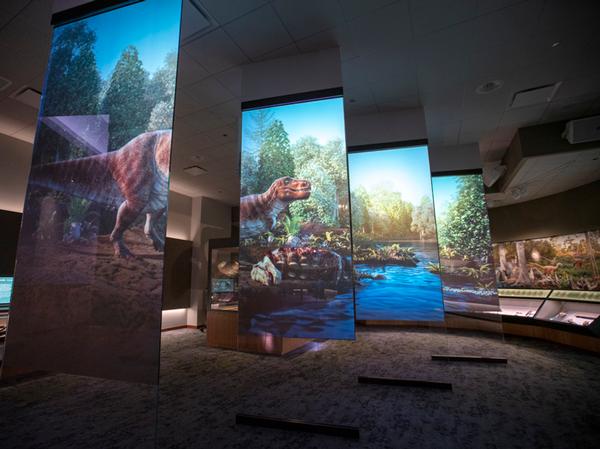
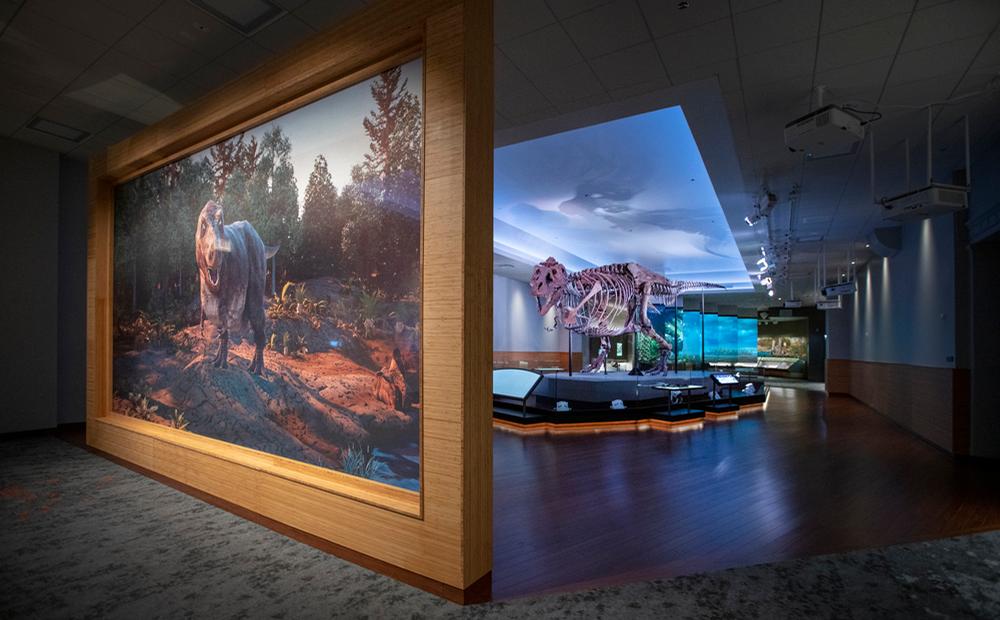
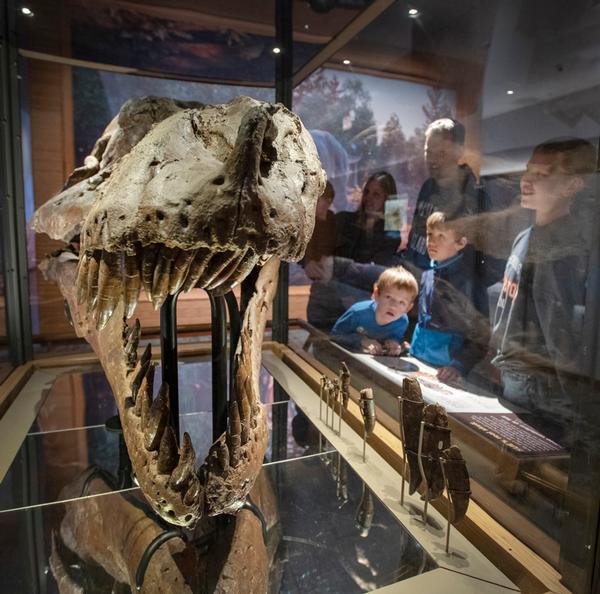
A prime example of this was a recent project at the Field Museum in Chicago, US. Based on the tyrannosaurus rex housed as part of the museum’s collection, a 5,100sq ft (475sq m) experience opened its doors on 21 December, combining the real with the virtual as a side-by-side experience.
“We put these giant screens next to these bones, which we felt was very important,” Geffen explains. “The narrative of the experience is something that immerses you both in the bones and the story at the same time.
“It was a collaboration with the museum’s palaeontologists. We made sure what we created was as scientifically accurate as possible.”
Working with an icon Geffen is currently working on a major VR project, soon to be distributed worldwide and straight from the great mind of the late Stephen Hawking as a 20-minute virtual tour of the universe.
Hawking, who died in March last year, was fascinated by Geffen’s work in immersive storytelling. His work with David Attenborough particularly caught his eye, so Hawking struck up a relationship with the director as they worked together to create a legacy project for the iconic physicist.
“Before his death, he recorded the narration of his journey,” says Geffen. “In this experience, he’s going to take you through space, sharing his thoughts as you explore. To me, that’s extraordinary. It’s like being able to get into Da Vinci’s head.”
The experience, which is due to launch in early 2020, will be delivered through a series of pop-ups across Britain in very accessible spaces such as London’s South Bank. Following this, it will be distributed to museums all over the world.
“Once you’re immersed in the experience, you’ll feel like you’re flying through space and can actually choose where you want to go,” says Geffen. “This whole thing is from Hawking’s mind and it’s incredibly exciting.”
Looking forward Working with any new technology can present challenges and through his near 30 years at Atlantic Productions, Geffen has seen both the successes and the failures.
“Some people say VR hasn’t worked,” he says. “I think that’s because they’re seeing this very low-resolution production. For me, 90 per cent of all the VR experiences I’ve ever seen aren’t great, but when someone gets it right, it’s like nothing else.
“It’s vital that these sort of storytelling techniques are driven by storytellers. Until now, a lot of the stuff is dealt with by the technical people. They want to tell stories but they aren’t storytellers. What will take this to the next level is having outstanding storytellers, which is what we’re trying to encourage and what we’re doing. Bringing them to this extraordinary medium and using things like smell and sound on top of this will be incredible.
“In a professional setting for VR, you have things like haptics and an incredible environment. As an experience, that’s where the sweet spot is.”
“In a few years, we may get to a point where we can take off the headset and be actually in a virtual environment, with the space you’re in changing around you.
“We’re going to see a breakaway from AR, VR, whatever realities there are. The visitor won’t care what it is, they’ll just want it to be entertaining.”
While this new medium is certainly exciting for the museum and wider attractions sector, a primary challenge, says Geffen, is making these grand experiences economically viable for these institutions: “You need experiences where literally hundreds of people can come through at the same time.
“The only way we can do that is with dedicated spaces. You come in, do it, it’s all very magical and then you leave that space.
“For museums, there are lots of ways to work. The Field Museum is great because what’s built there is incredibly exciting and dynamic and yet hundreds of people can go through. We need to find other ways of doing that. To meet expectation, it can’t be just a few headsets anymore.”
Artificial advances Something that could be a potential game-changer when it comes to immersive storytelling is the work Atlantic Productions has been doing with Harvard Medical School in Boston, Massachusetts.
Currently in its testing phase, artificial intelligence tracks a user’s reactions to a scene, working out from their facial reaction, exactly how the user is experiencing the story, and adapting the story accordingly.
“It allows us to give every single person a different experience,” says Geffen. “It’s a new kind of storytelling, where you can tell what the audience is thinking – so you can change the plot.”
“In a teaching environment, we can tell how a child has reacted to something. We can see if they’ve understood something or whether it needs to be expressed differently for the child to understand it.
“In the educational storytelling space, it’s a way of knowing whether every child in the class has, or hasn’t, learnt something. In the medical world, we’re working out how things like autism work, and how it can be mitigated.
“Immersive storytelling is going to be a big part of the future. If you take these technologies with smells, sounds and everything else added in, you can create extraordinary life-changing experiences.”
Read more from this issue of Attractions Management magazine
View contents of Attractions Management 2019 issue 1
Anthony Geffen
CEO and creative director,
Atlantic Productions
Sir David Attenborough, Stephen Hawking, Dame Judy Dench and even Her Majesty, Queen Elizabeth II. These are just a few of the people renowned documentarian and filmmaker Anthony Geffen has worked with over the course of a glittering career, creating stunning works of art for television, the big screen and the museum sector in a multitude of astonishing mediums.
On the cutting edge of storytelling and immersive technologies, Geffen’s company, Atlantic Productions, has produced some of the world’s most-watched documentary series, including the award-winning Great Barrier Reef, Galapagos and The Wildest Dream. His works have been recognised with more than 50 international accolades, including multiple British Academy Awards (BAFTAs) and Emmy Awards.
“Atlantic Productions grew out of a period where I had been at the BBC for 10 years, making some of their major documentaries and dramas,” Geffen tells Attractions Management.
“While working in Hollywood, I saw studios like Pixar and the kind of things they were doing in the fictional world.
I was interested in working out how we could use tools such as animation to look at the past and into the future.
“I wanted to put under one roof a multitude of skills to do what I considered to be at that time the next stage of immersive storytelling.”
Free spirit Geffen founded Atlantic Productions in 1992, quickly establishing a diverse output which included history, science, natural history, current affairs, music and the arts.
Over the next 27 years, Atlantic’s creations would go on to be seen by hundreds of millions of people in more than 150 countries worldwide. During that period, Geffen would establish several more companies under the Atlantic umbrella. These included Zoo for CGI, Colossus for 3D, Atlantic Digital for App creation and Alchemy VR, which in 2017 was recognised with the first ever British Academy award for virtual storytelling.
“Big organisations at times lose the essence of storytelling because there’s a lot of politics involved in managing an organisation like that. The early days of the BBC had this free spirit and, in a way, I wanted to recreate that,” says Geffen.
“We developed a company which offered all sorts of complementary abilities. That’s how we grew it and attracted a lot of talent. David Attenborough was fascinated by what we were doing here and worked with us, creating films with entirely new ideas using our technology.”
Marvelous creations Known for his jaw-dropping documentaries, Geffen has also carved out a significant path in the museum sector. Among its projects, last year Atlantic Production produced a VR experience with astronaut Tim Peake and the London Science Museum. Other projects included an adaptation of Great Barrier Reef and First Life with David Attenborough. These major projects have been showcased globally, with productions from Geffen in museums in locations worldwide.
“We believe museums are a really important space for us,” he says. “We love to work with them, with the challenge being how to take content to a younger audience in a more interactive way.”
A prime example of this was a recent project at the Field Museum in Chicago, US. Based on the tyrannosaurus rex housed as part of the museum’s collection, a 5,100sq ft (475sq m) experience opened its doors on 21 December, combining the real with the virtual as a side-by-side experience.
“We put these giant screens next to these bones, which we felt was very important,” Geffen explains. “The narrative of the experience is something that immerses you both in the bones and the story at the same time.
“It was a collaboration with the museum’s palaeontologists. We made sure what we created was as scientifically accurate as possible.”
Working with an icon Geffen is currently working on a major VR project, soon to be distributed worldwide and straight from the great mind of the late Stephen Hawking as a 20-minute virtual tour of the universe.
Hawking, who died in March last year, was fascinated by Geffen’s work in immersive storytelling. His work with David Attenborough particularly caught his eye, so Hawking struck up a relationship with the director as they worked together to create a legacy project for the iconic physicist.
“Before his death, he recorded the narration of his journey,” says Geffen. “In this experience, he’s going to take you through space, sharing his thoughts as you explore. To me, that’s extraordinary. It’s like being able to get into Da Vinci’s head.”
The experience, which is due to launch in early 2020, will be delivered through a series of pop-ups across Britain in very accessible spaces such as London’s South Bank. Following this, it will be distributed to museums all over the world.
“Once you’re immersed in the experience, you’ll feel like you’re flying through space and can actually choose where you want to go,” says Geffen. “This whole thing is from Hawking’s mind and it’s incredibly exciting.”
Looking forward Working with any new technology can present challenges and through his near 30 years at Atlantic Productions, Geffen has seen both the successes and the failures.
“Some people say VR hasn’t worked,” he says. “I think that’s because they’re seeing this very low-resolution production. For me, 90 per cent of all the VR experiences I’ve ever seen aren’t great, but when someone gets it right, it’s like nothing else.
“It’s vital that these sort of storytelling techniques are driven by storytellers. Until now, a lot of the stuff is dealt with by the technical people. They want to tell stories but they aren’t storytellers. What will take this to the next level is having outstanding storytellers, which is what we’re trying to encourage and what we’re doing. Bringing them to this extraordinary medium and using things like smell and sound on top of this will be incredible.
“In a professional setting for VR, you have things like haptics and an incredible environment. As an experience, that’s where the sweet spot is.”
“In a few years, we may get to a point where we can take off the headset and be actually in a virtual environment, with the space you’re in changing around you.
“We’re going to see a breakaway from AR, VR, whatever realities there are. The visitor won’t care what it is, they’ll just want it to be entertaining.”
While this new medium is certainly exciting for the museum and wider attractions sector, a primary challenge, says Geffen, is making these grand experiences economically viable for these institutions: “You need experiences where literally hundreds of people can come through at the same time.
“The only way we can do that is with dedicated spaces. You come in, do it, it’s all very magical and then you leave that space.
“For museums, there are lots of ways to work. The Field Museum is great because what’s built there is incredibly exciting and dynamic and yet hundreds of people can go through. We need to find other ways of doing that. To meet expectation, it can’t be just a few headsets anymore.”
Artificial advances Something that could be a potential game-changer when it comes to immersive storytelling is the work Atlantic Productions has been doing with Harvard Medical School in Boston, Massachusetts.
Currently in its testing phase, artificial intelligence tracks a user’s reactions to a scene, working out from their facial reaction, exactly how the user is experiencing the story, and adapting the story accordingly.
“It allows us to give every single person a different experience,” says Geffen. “It’s a new kind of storytelling, where you can tell what the audience is thinking – so you can change the plot.”
“In a teaching environment, we can tell how a child has reacted to something. We can see if they’ve understood something or whether it needs to be expressed differently for the child to understand it.
“In the educational storytelling space, it’s a way of knowing whether every child in the class has, or hasn’t, learnt something. In the medical world, we’re working out how things like autism work, and how it can be mitigated.
“Immersive storytelling is going to be a big part of the future. If you take these technologies with smells, sounds and everything else added in, you can create extraordinary life-changing experiences.”
Read more from this issue of Attractions Management magazine
View contents of Attractions Management 2019 issue 1
OMA has completed a major transformation of New York's New Museum, creating a larger
cultural campus that combines expanded exhibition spaces with learning, performance,
hospitality and public programming.
A US$50 million (£44.2 million, €51.2 million) transformation of Chicago's historic McCormick
Mansion has created a new destination that combines live magic, immersive theatre, dining and
private membership under one roof.
The Montana Historical Society has officially celebrated the opening of its new Montana
Heritage
Center, a US$107 million (£79 million, €92 million) destination that combines immersive
storytelling with cutting-edge audiovisual technology to bring the sta
San Antonio Zoo has reported a US$283 million economic impact for 2025, following a decade-
long transformation programme that has seen almost US$200 million invested into the Texas
attraction.
Plans for the AU$180 million redevelopment of Reef HQ Aquarium in Townsville, Australia, are
progressing, with the project set to transform the attraction into a global centre for reef
education and conservation.
Abu Dhabi-based investment firm Mubadala Capital has made a binding, fully financed
€1 billion
offer to acquire Pierre and Vacances SA, the European holiday resort operator behind the
continental European Center Parcs business.
Disney has reaffirmed its commitment to investing US$30 billion in its US parks and cruise
business by 2033, using new America250 celebrations to underline the role its attractions play
in supporting jobs, tourism and economic growth.
Expo 2030 Riyadh is being planned as a permanent visitor destination, with organisers
confirming the six-million-square-metre site will become a Global Village after the event closes.
The owner of one of Australia's best-known waterparks has acquired a major competitor,
creating a new attractions business spanning two of the country's largest visitor destinations.
The Toverland theme park in the Netherlands has announced a €98m expansion programme
that will add a resort, new attractions and staff facilities as it pursues plans to become a multi-
day destination.
+ More news
COMPANY PROFILES
Sally Corporation Our services include: Dark ride design & build; Redevelopment of existing attractions; High-quality [more...]