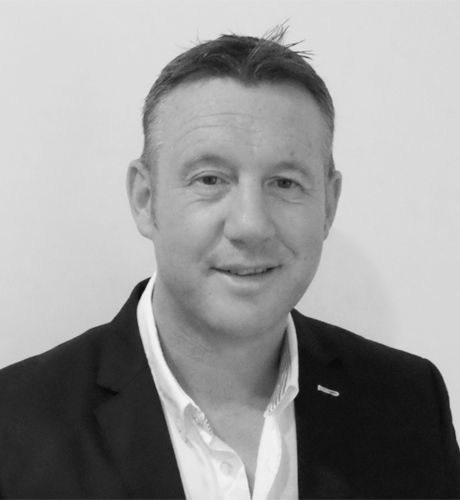
Conlon was awarded an OBE for services to science education / The Bigger Picture
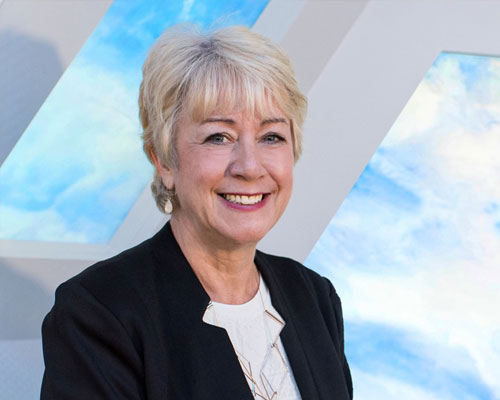
Operating under an innovative model that combines visitor attraction, public health services and cutting-edge research, Newcastle’s Life Science Centre has welcomed millions of visitors and seen major medical breakthroughs since its launch. As the centre celebrates its 25th birthday, we speak to CEO Linda Conlon about how the original vision has evolved.
Back in the 1990s, leading geneticist Professor John Burn, Linda Conlon and the former Tyne and Wear development corporation chief executive Alastair Balls drew up plans for the Centre for Life.
The vision was for a science hub combining research facilities, medical treatment and a visitor attraction with a focus on integrating education, research, and public engagement with science and technology. The vision became a reality when the Centre for Life was opened in 2000 by the late Queen of England in a building designed by architect Sir Terry Farrell.
Since then, the centre has seen numerous breakthroughs in medical research, notably becoming the first place in the UK to produce human embryonic stem cells. More than 6,000 babies have been born through the NHS facility clinic based there, and the sight of more than 30 people has been restored. The visitor attraction, meanwhile, welcomes around half a million people per year, and features exhibits, a planetarium, a play area and hands on making studios, and hosts a variety of live shows.
As part of the 25 years celebrations, Life has launched a new £1.5m exhibition exploring sound, colour and light. Lightbox is the result of two years development and features 14 hands-on interactive exhibits created by artists and specialists. At the centre of the exhibition is an eight-metre-high moving string sculpture created by kinetic artist Paul Friedlander.
Here Linda Conlon discusses the highs and lows of the past 25 years, as well as the future for the Centre for Life.
What do you see as the biggest achievements of Life and the Life Science Centre? After 25 years, I think we are stitched into the fabric of the city and dare I say, a much-loved part of life in Newcastle. We reckon about half a million people every year access our services and activities. It’s an exciting, imaginative and eclectic mix: from clinics to a science centre and from cutting edge medical research to a vibrant programme of events in our outdoor space, rather grandly called Times Square. Life has impacted the lives of many, and is a source of great regional pride. I think it has also ‘normalised’ science, as it’s situated right in the middle of the city and not tucked out of sight in some out of town, anonymous business park. Maybe if Life was a band, it could be the Beatles. The whole is greater than the sum of the parts. I think that describes us rather well!
What have been the highest and lowest moments since launching? Thankfully, there have been more highs than lows. I still remember with great fondness meeting the Queen and showing her round when she formally opened Life in 2000. And, in 2005, scientists at Life were the first in the world to achieve therapeutic cloning to create human stem cells. The global media descended, and it was a frantic, exciting time.
From what looked and felt like a very low point initially, the pandemic forced us to rethink how we engaged with our visitors. I was so proud of the way we reinforced our relationship with the North East autistic community, at a particularly challenging time for them, and to this day the bonds remain strong. Another unexpected bonus was working with our on-site NHS colleagues to repurpose the visitor attraction as a large vaccination centre. It was good to play a small part in the fight against COVID-19.
What do you see as the role of science centres? Has that changed since the Life Science Centre launched? We live in a world that is driven by developments in science and technology, and the pace of change has accelerated hugely since Life opened in 2000. There is a real need to engage more actively and effectively with people, to explore science in a non-threatening environment and to encourage debate on a whole host of critical subjects that affect the lives of us all. Science is for everyone, and it’s people from poorer backgrounds, and those with special needs that are often left behind.
In tandem with this, social media has grown to the point where everyone is now able to communicate and share information at the touch of a button. That information isn’t always accurate, nuanced or checked. Science centres, therefore, have an important role to play in helping people of all ages and backgrounds to think critically, by asking questions and checking facts before sending information flying around the world.
What are the biggest challenges facing science centres right now? The external landscape has never been more challenging: ongoing cost of living worries, shifts in leisure habits post-pandemic, global uncertainty and a glut of alternative experiences to choose from. It’s a long list. But one thing stays the same: people are still looking for memorable experiences in memorable places with family and friends, so we must up our game and respond to that.
One thing that does bug me, and has done so for many years, is how science centres do not have a natural champion in government. Unlike cultural institutions that have regular access to public funds for both capital and revenue support, science centres are not even eligible to apply for this money. Seems crazy to me, when it’s science and technology that is shaping the world we live in and is so important to the prosperity and future growth of this country.
Life is financially self-sustaining. How is the money raised and has that changed since the early days? How much of a challenge is it to fund the attraction? The basic business model has stood the test of time. In a nutshell, we raise money from commercial sources, including property rental, and that helps to keep the science centre going. It gets harder as time goes by, because buildings get older and nothing stays the same forever. I remember a wise person telling me that property is an asset until it becomes a liability. That’s very true.
How are you celebrating the 25th anniversary? Big time! We aimed to do it on our 20th, but Covid got in the way and ditto for 2021. We had to wait for the 25th, so it’s extra special for the Life team. We’ve launched Lightbox, a collection of fantastic exhibits created by recognised artists and specialists and a smaller exhibition charting Life, its history and achievements. We’ve held great debates on where genetic medicine might take us in the future and, as a special thank you to the people of the North East, we’ve discounted all our ticket prices by 25 per cent. We even got a birthday message from Ant and Dec who so generously fronted our TV ad free of charge back in 2000.
But for me the best bit was asking people to share their stories about Life and how it had impacted their lives. The stories were incredible, and many brought a tear to the eye. Some reported that the treatment they’d received at Life literally saved their lives, while others talked about how we’d ignited a spark of interest in science that had never left them. One of my favourites was about a young woman called Ella Joy, born in 2000, following treatment her parents received at our IVF clinic. She is now a midwife, helping to deliver other IVF babies.
What will the next five years bring? I have absolutely no idea! For me personally, I will hang up my boots during that time and take with me fantastic memories of a place that I was in on from the very beginning. The centre, I have no doubt, will go from strength to strength. It’s as relevant today as it was 25 years ago.
Accessibility and Life
Newcastle’s Life Science Centre has been recognised for its work supporting and welcoming neurodivergent visitors with a number of awards, including Ecsite’s Mariano Gago Responsible and Responsive Award and the Gold Standard Autism Acceptance Award by the North East Autism Society.
These awards recognised the innovative three-year partnership between Life and NEAS which has led to improvements in the visitor experience for autistic people, as well as increasing staff’s understanding of autism and neurodiversity through on-going specialist training.
The partnership began in 2018, with families from NEAS’s community forming an advisory group to ensure that the Life Science Centre experience, from its exhibitions to its cafes, is accessible and welcoming to autistic people. The partnership has received widespread recognition and attention and has been hailed as an example of best practice by the science centre community globally and other attractions.
Linda Conlon, chief executive at Life, said: “This partnership is a great example of what can be achieved when two organisations work together. It’s been a real two-way street in terms of collaboration and learning.
Read more from this issue of Attractions Management magazine
View contents of Attractions Management 2025 issue 2
Editor's letter: Betting on horror
Year-round horror experiences are a fast-growing trend, but will the companies betting big see their investments pay off?
People: Thelma Golden
As the Studio Museum in Harlem prepares to reopen, its CEO explains why the institution is more important than ever
People: Linda Conlon
A driving force behind the creation of the International Centre for Life, CEO Linda Conlon has seen massive change over the past 25 years. So what’s next for the science centre?
People: Fiona Eastwood
With a passion for the industry, the new CEO of Merlin Entertainments says she is ready to lead the company to a new era of expansion and growth
Design & fabrication: Making a scene
As Adirondack Studios celebrates its 50th birthday, we speak to co-founders Michael Blau and Tom Lloyd, and production art director Lara Brunelle
Theme parks: Out of this world
The first major US theme park to open in almost 25 years, Universal Epic Universe is big news for the industry. We hear from the creative team that made it happen
Immersive experiences: One love
The creators of new Vegas immersive experience Hope Road have partnered with Bob Marley’s children to tell the story of his life and music
Zoos: Into the wild
Billed as Asia’s first adventure-based zoo park, Rainforest Wild Asia lets visitors experience animals in a whole new way. We find out more
Theme parks: Sleeping beauty
Fairytale magic meets traditional grand hotel at Efteling’s newest accommodation offering. Its designer shares the vision
Immersive attractions: Lost in music
As immersive music and hospitality company the Lost Estate announces its latest production, co-founder Eddy Hackett shares its global expansion plans
Immersive: Virginie Valastro
A dramatic ancient canyon made for an amazing starting place for the creation of a spectacular new scare attraction, says its creator
Museums: Roman Vinoly
The recently-opened National Medal of Honor Museum in Arlington, Texas, was one of architect’s Rafael Vinoly’s final projects. His son tells us what the project meant to his father, and how he intends to continue his legacy
Conlon was awarded an OBE for services to science education / The Bigger Picture
Operating under an innovative model that combines visitor attraction, public health services and cutting-edge research, Newcastle’s Life Science Centre has welcomed millions of visitors and seen major medical breakthroughs since its launch. As the centre celebrates its 25th birthday, we speak to CEO Linda Conlon about how the original vision has evolved.
Back in the 1990s, leading geneticist Professor John Burn, Linda Conlon and the former Tyne and Wear development corporation chief executive Alastair Balls drew up plans for the Centre for Life.
The vision was for a science hub combining research facilities, medical treatment and a visitor attraction with a focus on integrating education, research, and public engagement with science and technology. The vision became a reality when the Centre for Life was opened in 2000 by the late Queen of England in a building designed by architect Sir Terry Farrell.
Since then, the centre has seen numerous breakthroughs in medical research, notably becoming the first place in the UK to produce human embryonic stem cells. More than 6,000 babies have been born through the NHS facility clinic based there, and the sight of more than 30 people has been restored. The visitor attraction, meanwhile, welcomes around half a million people per year, and features exhibits, a planetarium, a play area and hands on making studios, and hosts a variety of live shows.
As part of the 25 years celebrations, Life has launched a new £1.5m exhibition exploring sound, colour and light. Lightbox is the result of two years development and features 14 hands-on interactive exhibits created by artists and specialists. At the centre of the exhibition is an eight-metre-high moving string sculpture created by kinetic artist Paul Friedlander.
Here Linda Conlon discusses the highs and lows of the past 25 years, as well as the future for the Centre for Life.
What do you see as the biggest achievements of Life and the Life Science Centre? After 25 years, I think we are stitched into the fabric of the city and dare I say, a much-loved part of life in Newcastle. We reckon about half a million people every year access our services and activities. It’s an exciting, imaginative and eclectic mix: from clinics to a science centre and from cutting edge medical research to a vibrant programme of events in our outdoor space, rather grandly called Times Square. Life has impacted the lives of many, and is a source of great regional pride. I think it has also ‘normalised’ science, as it’s situated right in the middle of the city and not tucked out of sight in some out of town, anonymous business park. Maybe if Life was a band, it could be the Beatles. The whole is greater than the sum of the parts. I think that describes us rather well!
What have been the highest and lowest moments since launching? Thankfully, there have been more highs than lows. I still remember with great fondness meeting the Queen and showing her round when she formally opened Life in 2000. And, in 2005, scientists at Life were the first in the world to achieve therapeutic cloning to create human stem cells. The global media descended, and it was a frantic, exciting time.
From what looked and felt like a very low point initially, the pandemic forced us to rethink how we engaged with our visitors. I was so proud of the way we reinforced our relationship with the North East autistic community, at a particularly challenging time for them, and to this day the bonds remain strong. Another unexpected bonus was working with our on-site NHS colleagues to repurpose the visitor attraction as a large vaccination centre. It was good to play a small part in the fight against COVID-19.
What do you see as the role of science centres? Has that changed since the Life Science Centre launched? We live in a world that is driven by developments in science and technology, and the pace of change has accelerated hugely since Life opened in 2000. There is a real need to engage more actively and effectively with people, to explore science in a non-threatening environment and to encourage debate on a whole host of critical subjects that affect the lives of us all. Science is for everyone, and it’s people from poorer backgrounds, and those with special needs that are often left behind.
In tandem with this, social media has grown to the point where everyone is now able to communicate and share information at the touch of a button. That information isn’t always accurate, nuanced or checked. Science centres, therefore, have an important role to play in helping people of all ages and backgrounds to think critically, by asking questions and checking facts before sending information flying around the world.
What are the biggest challenges facing science centres right now? The external landscape has never been more challenging: ongoing cost of living worries, shifts in leisure habits post-pandemic, global uncertainty and a glut of alternative experiences to choose from. It’s a long list. But one thing stays the same: people are still looking for memorable experiences in memorable places with family and friends, so we must up our game and respond to that.
One thing that does bug me, and has done so for many years, is how science centres do not have a natural champion in government. Unlike cultural institutions that have regular access to public funds for both capital and revenue support, science centres are not even eligible to apply for this money. Seems crazy to me, when it’s science and technology that is shaping the world we live in and is so important to the prosperity and future growth of this country.
Life is financially self-sustaining. How is the money raised and has that changed since the early days? How much of a challenge is it to fund the attraction? The basic business model has stood the test of time. In a nutshell, we raise money from commercial sources, including property rental, and that helps to keep the science centre going. It gets harder as time goes by, because buildings get older and nothing stays the same forever. I remember a wise person telling me that property is an asset until it becomes a liability. That’s very true.
How are you celebrating the 25th anniversary? Big time! We aimed to do it on our 20th, but Covid got in the way and ditto for 2021. We had to wait for the 25th, so it’s extra special for the Life team. We’ve launched Lightbox, a collection of fantastic exhibits created by recognised artists and specialists and a smaller exhibition charting Life, its history and achievements. We’ve held great debates on where genetic medicine might take us in the future and, as a special thank you to the people of the North East, we’ve discounted all our ticket prices by 25 per cent. We even got a birthday message from Ant and Dec who so generously fronted our TV ad free of charge back in 2000.
But for me the best bit was asking people to share their stories about Life and how it had impacted their lives. The stories were incredible, and many brought a tear to the eye. Some reported that the treatment they’d received at Life literally saved their lives, while others talked about how we’d ignited a spark of interest in science that had never left them. One of my favourites was about a young woman called Ella Joy, born in 2000, following treatment her parents received at our IVF clinic. She is now a midwife, helping to deliver other IVF babies.
What will the next five years bring? I have absolutely no idea! For me personally, I will hang up my boots during that time and take with me fantastic memories of a place that I was in on from the very beginning. The centre, I have no doubt, will go from strength to strength. It’s as relevant today as it was 25 years ago.
Accessibility and Life
Newcastle’s Life Science Centre has been recognised for its work supporting and welcoming neurodivergent visitors with a number of awards, including Ecsite’s Mariano Gago Responsible and Responsive Award and the Gold Standard Autism Acceptance Award by the North East Autism Society.
These awards recognised the innovative three-year partnership between Life and NEAS which has led to improvements in the visitor experience for autistic people, as well as increasing staff’s understanding of autism and neurodiversity through on-going specialist training.
The partnership began in 2018, with families from NEAS’s community forming an advisory group to ensure that the Life Science Centre experience, from its exhibitions to its cafes, is accessible and welcoming to autistic people. The partnership has received widespread recognition and attention and has been hailed as an example of best practice by the science centre community globally and other attractions.
Linda Conlon, chief executive at Life, said: “This partnership is a great example of what can be achieved when two organisations work together. It’s been a real two-way street in terms of collaboration and learning.
Read more from this issue of Attractions Management magazine
View contents of Attractions Management 2025 issue 2
Editor's letter: Betting on horror
Year-round horror experiences are a fast-growing trend, but will the companies betting big see their investments pay off?
People: Thelma Golden
As the Studio Museum in Harlem prepares to reopen, its CEO explains why the institution is more important than ever
People: Linda Conlon
A driving force behind the creation of the International Centre for Life, CEO Linda Conlon has seen massive change over the past 25 years. So what’s next for the science centre?
People: Fiona Eastwood
With a passion for the industry, the new CEO of Merlin Entertainments says she is ready to lead the company to a new era of expansion and growth
Design & fabrication: Making a scene
As Adirondack Studios celebrates its 50th birthday, we speak to co-founders Michael Blau and Tom Lloyd, and production art director Lara Brunelle
Theme parks: Out of this world
The first major US theme park to open in almost 25 years, Universal Epic Universe is big news for the industry. We hear from the creative team that made it happen
Immersive experiences: One love
The creators of new Vegas immersive experience Hope Road have partnered with Bob Marley’s children to tell the story of his life and music
Zoos: Into the wild
Billed as Asia’s first adventure-based zoo park, Rainforest Wild Asia lets visitors experience animals in a whole new way. We find out more
Theme parks: Sleeping beauty
Fairytale magic meets traditional grand hotel at Efteling’s newest accommodation offering. Its designer shares the vision
Immersive attractions: Lost in music
As immersive music and hospitality company the Lost Estate announces its latest production, co-founder Eddy Hackett shares its global expansion plans
Immersive: Virginie Valastro
A dramatic ancient canyon made for an amazing starting place for the creation of a spectacular new scare attraction, says its creator
Museums: Roman Vinoly
The recently-opened National Medal of Honor Museum in Arlington, Texas, was one of architect’s Rafael Vinoly’s final projects. His son tells us what the project meant to his father, and how he intends to continue his legacy
A US$50 million (£44.2 million, €51.2 million) transformation of Chicago's historic McCormick
Mansion has created a new destination that combines live magic, immersive theatre, dining and
private membership under one roof.
The Montana Historical Society has officially celebrated the opening of its new Montana
Heritage
Center, a US$107 million (£79 million, €92 million) destination that combines immersive
storytelling with cutting-edge audiovisual technology to bring the sta
San Antonio Zoo has reported a US$283 million economic impact for 2025, following a decade-
long transformation programme that has seen almost US$200 million invested into the Texas
attraction.
Plans for the AU$180 million redevelopment of Reef HQ Aquarium in Townsville, Australia, are
progressing, with the project set to transform the attraction into a global centre for reef
education and conservation.
Abu Dhabi-based investment firm Mubadala Capital has made a binding, fully financed
€1 billion
offer to acquire Pierre and Vacances SA, the European holiday resort operator behind the
continental European Center Parcs business.
Disney has reaffirmed its commitment to investing US$30 billion in its US parks and cruise
business by 2033, using new America250 celebrations to underline the role its attractions play
in supporting jobs, tourism and economic growth.
Expo 2030 Riyadh is being planned as a permanent visitor destination, with organisers
confirming the six-million-square-metre site will become a Global Village after the event closes.
The owner of one of Australia's best-known waterparks has acquired a major competitor,
creating a new attractions business spanning two of the country's largest visitor destinations.
The Toverland theme park in the Netherlands has announced a €98m expansion programme
that will add a resort, new attractions and staff facilities as it pursues plans to become a multi-
day destination.
Hotel de France, located on the British Isle of Jersey, has created a wellness retreat package
that includes a hot yoga session that will take place in Jersey Zoo’s butterfly sanctuary.
+ More news
COMPANY PROFILES
Simworx Ltd The company was initially established
in 1997. Terry Monkton and Andrew
Roberts are the key stakeh [more...]
instantprint We’re a Yorkshire-based online printer, founded
in 2009 by Adam Carnell and James Kinsella. [more...]
RMA Ltd RMA Ltd is a one-stop global company
that can design, build and produce from a
greenfield site upw [more...]
Clip 'n Climb Clip ‘n Climb currently offers facility owners and
investors more than 40 colourful and unique
Cha [more...]