The brainchild of the ‘grandmother of Juneteenth’
Opal Lee, the National Juneteenth Museum has been
a long time coming. Architect Douglass Alligood
speaks to Magali Robathan about the responsibility
and privilege of creating a fitting celebration
of the freedom of enslaved people in the US
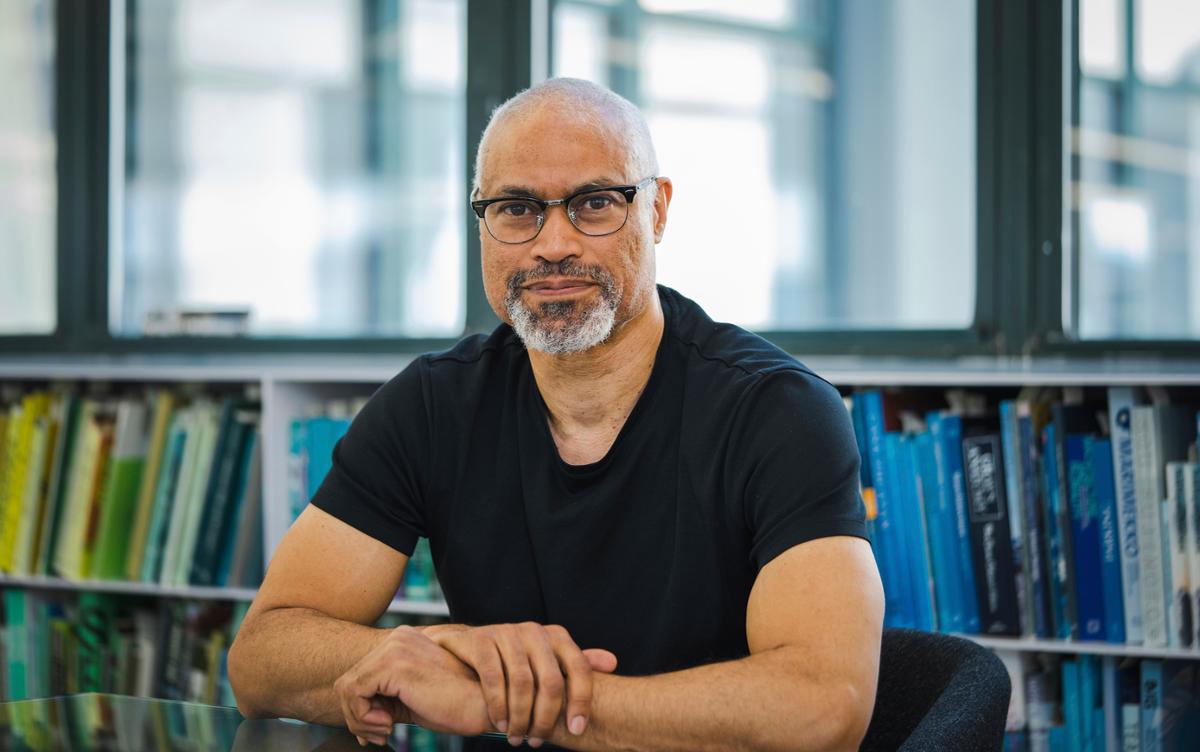
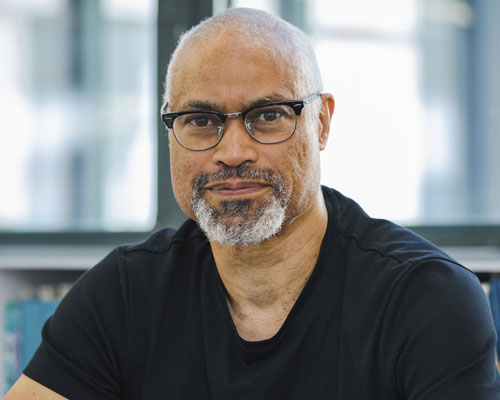
Architect Douglass Alligood has described the project as one of the most rewarding of his career / Photo: Marcus Moerk
On 19 June, 1865, enslaved African Americans in Galveston, Texas, received the news that slavery had been abolished, and they were free. Since then, 19 June – or Juneteenth – has been celebrated across the US to commemorate the end of slavery, but it took decades of campaigning for it to finally be declared a federal holiday in 2021.
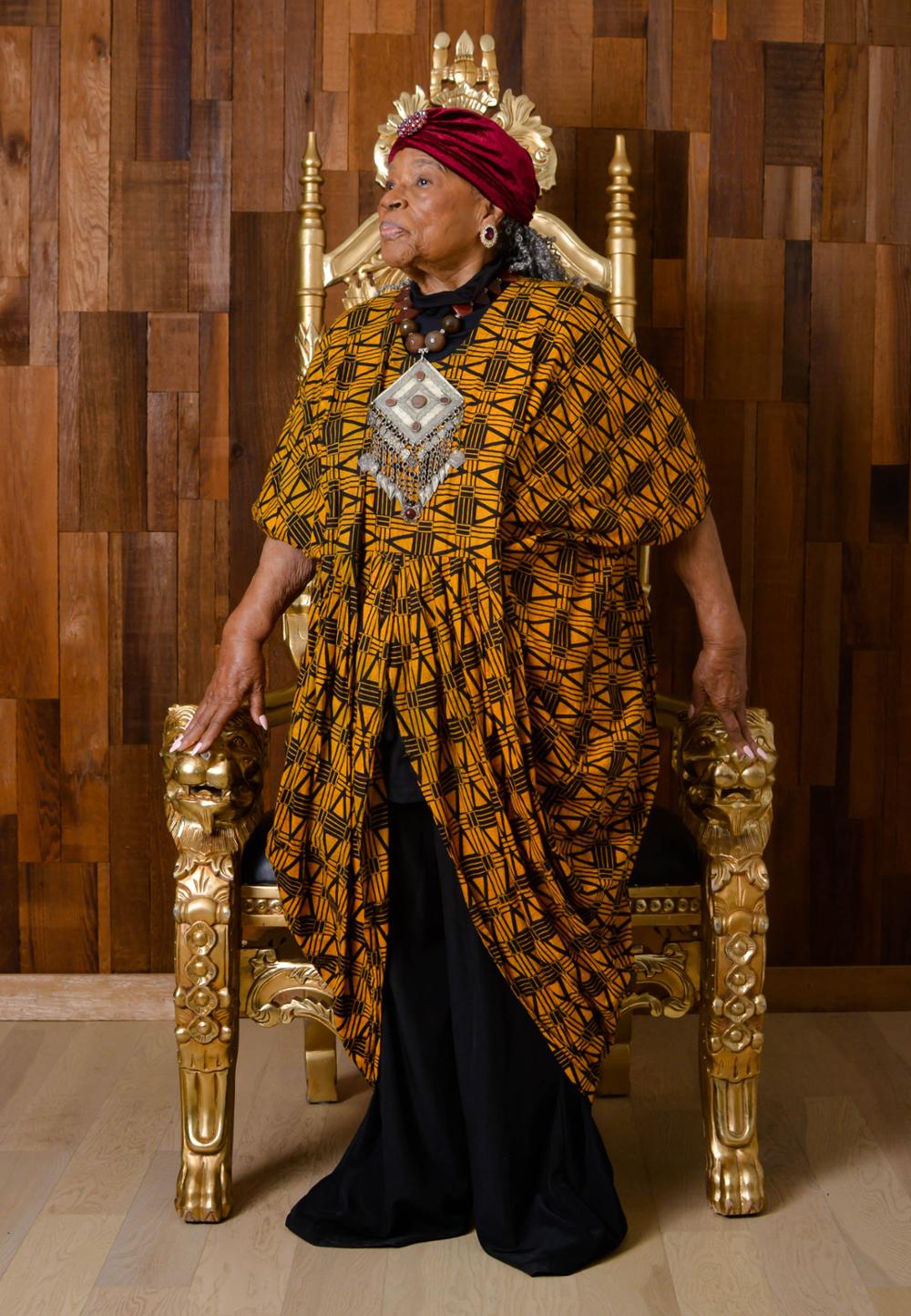
Activist and former teacher Opal Lee – known as the Grandmother of Juneteenth – spearheaded the movement to make June 19 a national holiday, leading 2.5 mile walks each year to raise the profile of the campaign (representing the two and a half years it took for news of the abolition of slavery to reach Texas). In 2016, at the age of 89, she rose to national prominence when she announced plans to walk 1,400 miles to Washington DC to plead her case.
When President Joe Biden signed the bill making Juneteenth a federal holiday on June 17 2021, he said, “Over the course of decades, [Opal Lee] has made it her mission to see that this day came. She’s walked miles and miles, literally and figuratively, to bring attention to Juneteenth.”
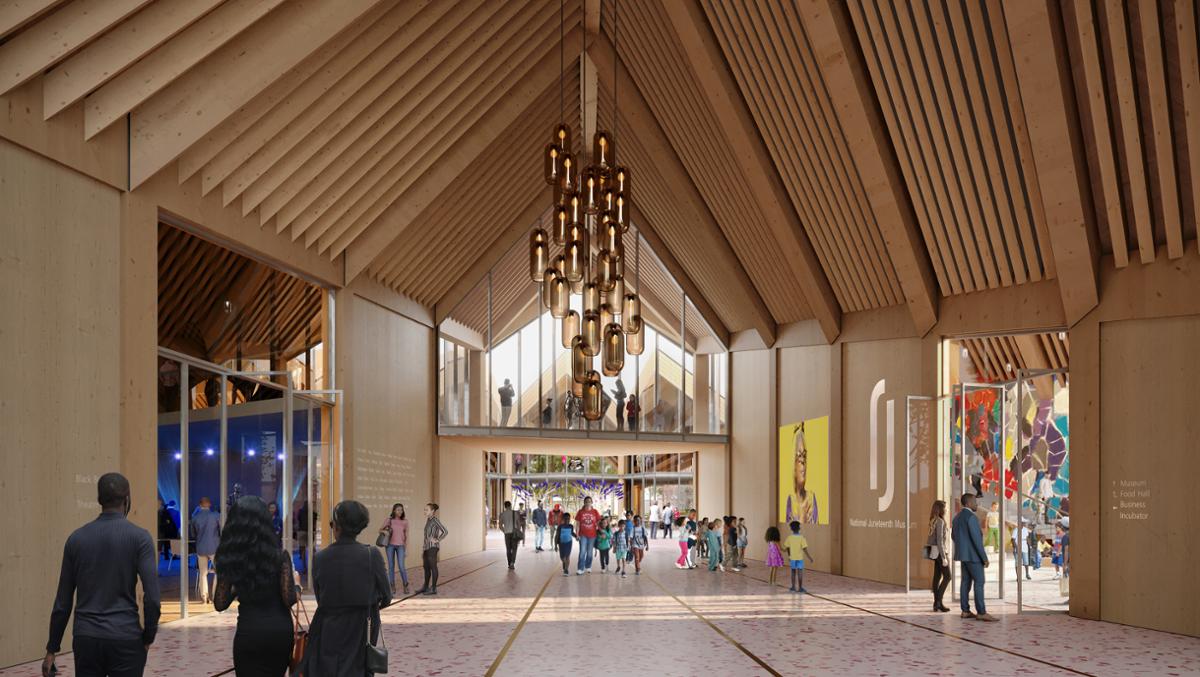
Now another of Opal Lee’s dreams is becoming a reality, with details released of the National Juneteenth Museum in Fort Worth Texas. The museum will celebrate the legacy of freedom announced on 19 June 1965 with immersive galleries, a theatre, a black box flex space, a food hall for local vendors and a business incubator.
Located in Fort Worth’s Southside neighbourhood in Texas, the museum is being designed by architecture studio BIG, with Black-owned architecture studio KAI Enterprises acting as the architect of record.
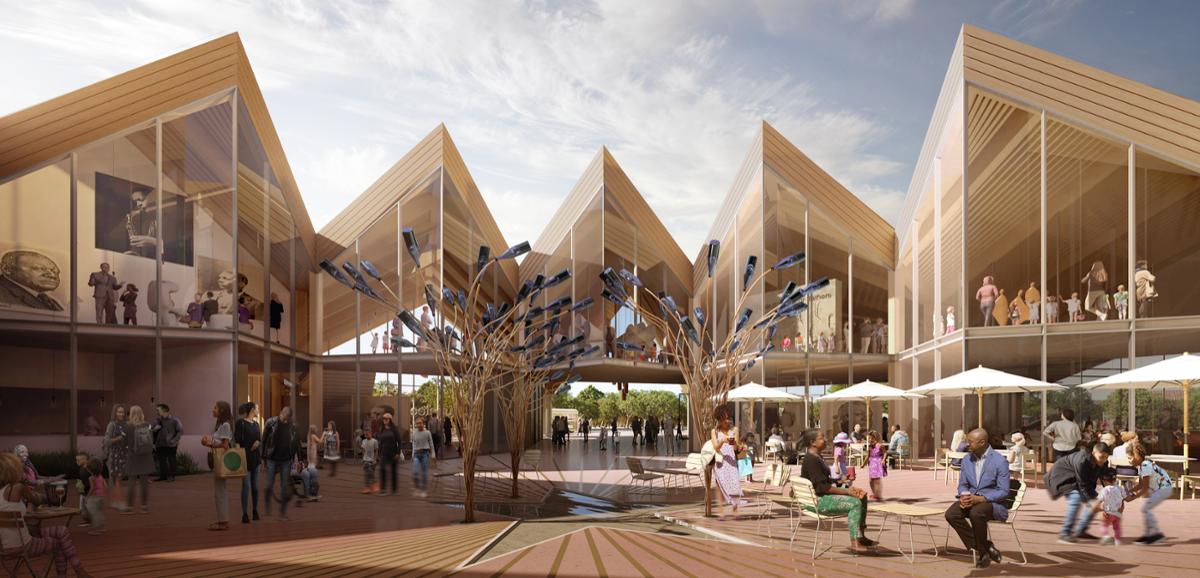
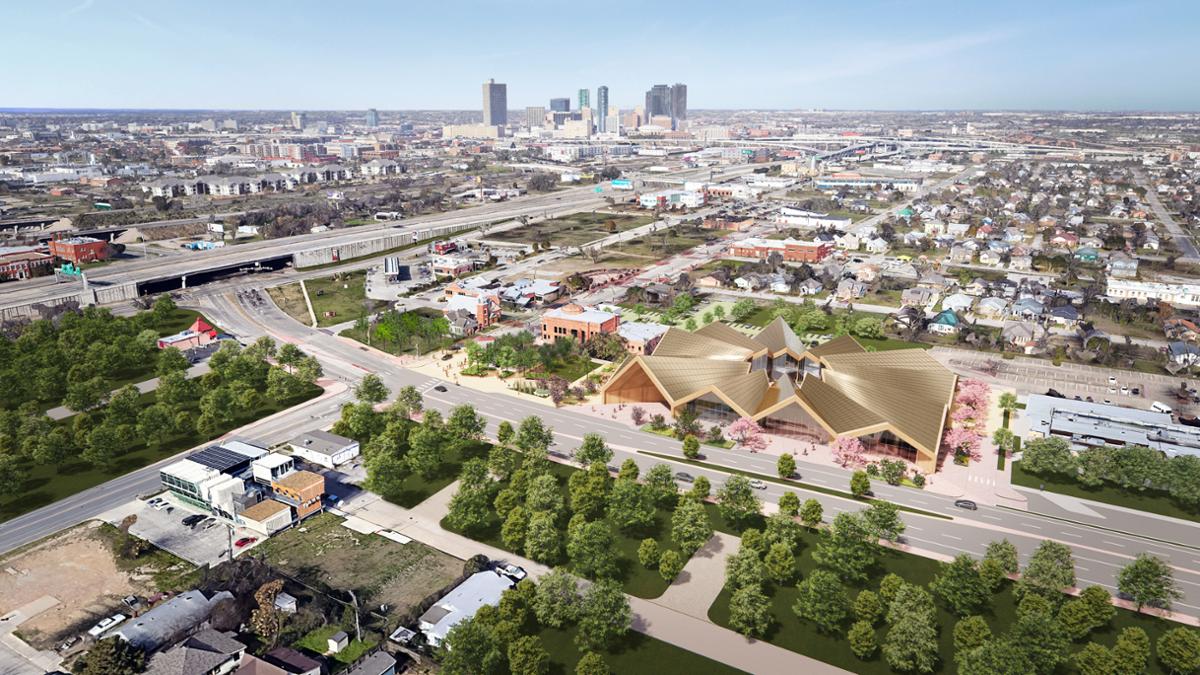
The 4,645sq m (50,000sq ft) mass timber museum is arranged around a nova star-shaped central courtyard with a five point star engraved in gold into the ground to represent Texas – the last state to acknowledge the freedom of enslaved peoples across America and to celebrate the freedom of African American people across the US.
Here Douglass Alligood, partner at BIG, talks to Attractions Management about this significant project.
What are the aims of the National Juneteenth Museum? The museum will be dedicated to preserving the history of Juneteenth and the legacy of freedom. Working alongside the architect-of-record, African American-owned design and build firm, KAI Enterprises – and with Ms Opal Lee, the ‘Grandmother of Juneteenth’ at the helm – we’re designing the museum to be the epicentre for the education, preservation and celebration of Juneteenth nationally and globally, hosting exhibitions, discussions, and events about the significance of African American freedom.
The location is really important in the larger context of the museum. The Historic Southside of Fort Worth, Texas is one of the South’s most underserved communities. The Fort Worth area was divided by the I-35W highway in the 1960s – a time when major infrastructure projects slashed through neighbourhoods of predominantly low-income communities of colour across the country. The museum seeks to provide a cultural and economic anchor for this neighbourhood and act as a catalyst for ensuring its future vitality.
What is special about this project? Juneteenth is about freedom, which in many ways is a universally understood concept. What makes this project special is that it has the possibility of speaking to people from many different perspectives on the value of freedom.
The most unique aspect of this project is the concept of creating much needed space for community activities and economic empowerment. The business incubator will provide a launching pad for entrepreneurs as well as educational opportunities. The food court will also provide an opportunity for local restaurant owners to get a start or increase their profile in the community. Each element of the project will be geared toward enhancing community participation and activation while organised around the central spirit of empowerment.
What does this project mean to you personally? I have worked on a variety of project types in my nearly 40 year career. Each project is special in its own way, but it is rare enough for me to have a black client – and even rarer to have a black client proposing a project focused on the black experience. As a black person in a predominately white industry, it is rare to work on a project where research on the project engages a black person’s perspective on space-making.
This project is about black history, and by saying that, I mean that this project is about a part of American history that is coming under increasing challenge to erasure from the history books. The history of Southside is reflected in many black communities over the past century where a highway is driven directly through a once thriving neighbourhood. After years of economic neglect and lack of follow-through on investment, this privately-funded project holds the promise of development without displacement.
How will the architecture support the aims of the museum? Opal Lee always reminds us that the museum is about freedom. The museum will have a permanent exhibit dedicated to the 12 freedoms gained after slavery. For us, the 12 pointed nova star on the Juneteenth Flag was the perfect form to reinforce that vision.
In our meetings with community leaders, they specifically asked for a design with a wow factor. They wanted a building with prominence, but of a scale that is relatable to the neighbourhood. We feel that the rising peaks of each segment of the nova star, articulated by the exposed timber framing, will create a forced perspective and resolve into a spiritually uplifting moment at the communal central courtyard.
What was the starting point for the design? The design was driven by the goals of the entire campus to create a spirit around Juneteenth. Each of the five programmes – immersive galleries, a business incubator, food hall for local vendors, black box flex space, and a theatre – wants to have its own identity, yet clearly be part of the greater whole. As such, we gravitated towards a massing organised around a central courtyard.
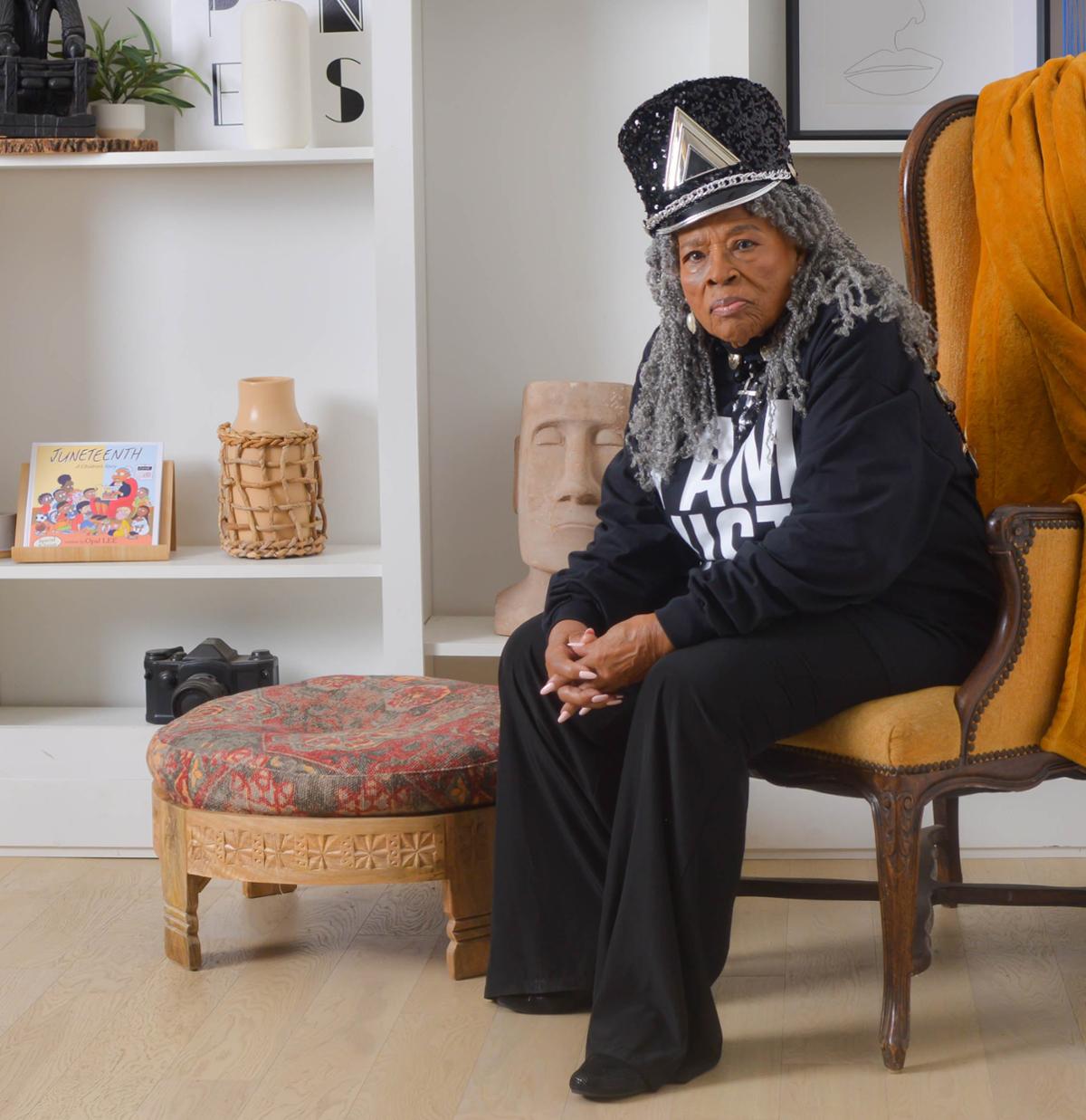
How closely have you worked with Opal Lee? We were brought into the project by Jarred Howard who introduced us to Opal Lee at our first meeting in December 2021. She is incredibly charismatic and clear about her vision. We have worked with Opal Lee through multiple meetings where she set forth her vision for the museum. She was adamant that the museum is not about her, noting that ‘it’s about all of those whose backs we came up on.’ Every surface should be for art, every space should be for performance.
Can you talk through the five point star at the centre of the courtyard? The museum’s undulating roof creates a series of ridges, peaks, and valleys of varying heights that combine to create a nova star-shaped courtyard in the middle of the museum. Meaning ‘new star,’ the nova star represents a new chapter for African Americans looking ahead towards a more just future.
At the centre of the courtyard, this ‘five point’ star is engraved into the terrazzo pavement in gold, featuring ‘starbursts’ of varying warm concrete colours.
In addition to representing Texas, the last state to adopt and acknowledge the freedom of African American slaves – the star nods to the American flag’s 50 stars that represent all 50 US states, representing the freedom of African Americans across the country.
Some architects are criticised for creating buildings that look amazing, but don’t function well from an operational standpoint. How do you prevent that from happening? We created a detailed programme for every functional area support space and then used these requirements to develop our layouts. The programme was developed during several sessions reviewing benchmarks of other museums. This study is what we used with the client to help us develop an understanding of the experiential, operational, and functional goals.
Museums do change over time; what we have done here is to create a community centre with interpretive and multifunctional spaces to provide a flexibility that isn’t centred around the one exhibition that you may visit once. It’s about a dynamism of programmatic qualities that you come back to, time and time again. It’s as much about the exhibits as it is about the gathering of people.
It wasn’t obvious to the BIG team initially, but it was of critical importance to the client and Opal Lee that this museum is built in the African American community of the Historic Southside, as opposed to being in the museum district. This project is for a community that might not have enough representation within the museum world – thus, we are increasing the community it can serve. People who want to see the great museums in Fort Worth will make the trip to the Historic Southside to visit the National Juneteenth Museum.
Read more from this issue of Attractions Management magazine
View contents of Attractions Management 2022 issue 3
Profile: Bernard Donoghue
When COVID-19 hit, ALVA’s CEO stepped up. He talks us through lobbying government, getting results and supporting the sector through incredibly tough times
Museums: Long walk for freedom
As architects BIG unveil their designs for the National Juneteenth Museum in Texas, partner Douglass Alligood tells us why it’s one of the most important projects of his career
Theme Parks: Lotte World – on a roll
More than 30 years on from the opening of the highly successful Lotte World theme park in Seoul, we take a look at its new sister park
Show review: IAAPA Expo Europe
The industry came together in London to meet, celebrate and plan. We round up some of the show’s highlights
Museums: Going global
Taking a museum or attraction’s retail offer international can have profound and sometimes surprising results, says retail design expert Callum Lumsden
Immersive experience: Stranger & Stranger
Netflix has partnered with live entertainment discovery platform Fever to launch a Stranger Things immersive experience, and it’s proving popular
Research: Time to celebrate
Are celebration and special events worth the investment for attractions? Kathleen LeClair looks at the numbers
Theme Parks: Creating the magic
Disney Imagineers have shared some of the secrets that went into creating the long-awaited Guardians of the Galaxy: Cosmic Rewind attraction at EPCOT
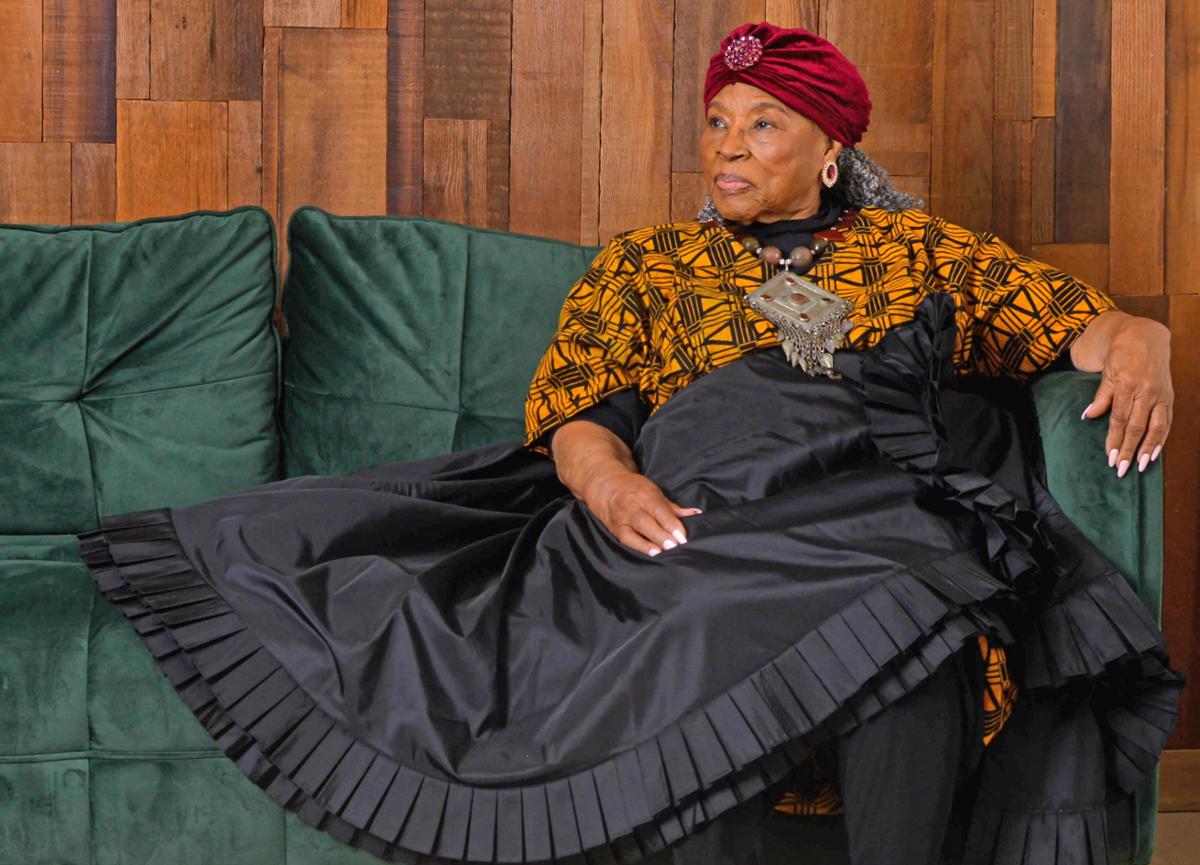
The museum is the brainchild of activist Opal Lee, known as the Grandmother of Juneteenth / Photo: Rachel Montgomery-clifton
The museum is arranged around a nova star-shaped courtyard space / Photo: BIG, KAI Enterprises and The National Juneteenth Museum
The architecture team worked closely with Opal Lee on the design of the museum / Photo: Rachel Montgomery-clifton
It’s hoped the museum will act as a catalyst for development for Fort Worth’s Southside / Photo: BIG, KAI Enterprises and The National Juneteenth Museum
The museum has been designed as a flexible space that can change over time / IMAGE: BIG, KAI Enterprises and The National Juneteenth Museum
Opal Lee insisted that the museum be built in Fort Worth’s Southside / Photo: Rachel Montgomery-clifton
COMPANY PROFILES
IAAPA EMEA
IAAPA Expo Europe was established in 2006 and has grown to the largest international conference and [more...]
Simworx Ltd
The company was initially established
in 1997. Terry Monkton and Andrew
Roberts are the key stakeh [more...]
Polin Waterparks
Polin was founded in Istanbul in 1976. Polin
has since grown into a leading company in
the waterpa [more...]
The brainchild of the ‘grandmother of Juneteenth’
Opal Lee, the National Juneteenth Museum has been
a long time coming. Architect Douglass Alligood
speaks to Magali Robathan about the responsibility
and privilege of creating a fitting celebration
of the freedom of enslaved people in the US
Architect Douglass Alligood has described the project as one of the most rewarding of his career / Photo: Marcus Moerk
On 19 June, 1865, enslaved African Americans in Galveston, Texas, received the news that slavery had been abolished, and they were free. Since then, 19 June – or Juneteenth – has been celebrated across the US to commemorate the end of slavery, but it took decades of campaigning for it to finally be declared a federal holiday in 2021.
Activist and former teacher Opal Lee – known as the Grandmother of Juneteenth – spearheaded the movement to make June 19 a national holiday, leading 2.5 mile walks each year to raise the profile of the campaign (representing the two and a half years it took for news of the abolition of slavery to reach Texas). In 2016, at the age of 89, she rose to national prominence when she announced plans to walk 1,400 miles to Washington DC to plead her case.
When President Joe Biden signed the bill making Juneteenth a federal holiday on June 17 2021, he said, “Over the course of decades, [Opal Lee] has made it her mission to see that this day came. She’s walked miles and miles, literally and figuratively, to bring attention to Juneteenth.”
Now another of Opal Lee’s dreams is becoming a reality, with details released of the National Juneteenth Museum in Fort Worth Texas. The museum will celebrate the legacy of freedom announced on 19 June 1965 with immersive galleries, a theatre, a black box flex space, a food hall for local vendors and a business incubator.
Located in Fort Worth’s Southside neighbourhood in Texas, the museum is being designed by architecture studio BIG, with Black-owned architecture studio KAI Enterprises acting as the architect of record.
The 4,645sq m (50,000sq ft) mass timber museum is arranged around a nova star-shaped central courtyard with a five point star engraved in gold into the ground to represent Texas – the last state to acknowledge the freedom of enslaved peoples across America and to celebrate the freedom of African American people across the US.
Here Douglass Alligood, partner at BIG, talks to Attractions Management about this significant project.
What are the aims of the National Juneteenth Museum? The museum will be dedicated to preserving the history of Juneteenth and the legacy of freedom. Working alongside the architect-of-record, African American-owned design and build firm, KAI Enterprises – and with Ms Opal Lee, the ‘Grandmother of Juneteenth’ at the helm – we’re designing the museum to be the epicentre for the education, preservation and celebration of Juneteenth nationally and globally, hosting exhibitions, discussions, and events about the significance of African American freedom.
The location is really important in the larger context of the museum. The Historic Southside of Fort Worth, Texas is one of the South’s most underserved communities. The Fort Worth area was divided by the I-35W highway in the 1960s – a time when major infrastructure projects slashed through neighbourhoods of predominantly low-income communities of colour across the country. The museum seeks to provide a cultural and economic anchor for this neighbourhood and act as a catalyst for ensuring its future vitality.
What is special about this project? Juneteenth is about freedom, which in many ways is a universally understood concept. What makes this project special is that it has the possibility of speaking to people from many different perspectives on the value of freedom.
The most unique aspect of this project is the concept of creating much needed space for community activities and economic empowerment. The business incubator will provide a launching pad for entrepreneurs as well as educational opportunities. The food court will also provide an opportunity for local restaurant owners to get a start or increase their profile in the community. Each element of the project will be geared toward enhancing community participation and activation while organised around the central spirit of empowerment.
What does this project mean to you personally? I have worked on a variety of project types in my nearly 40 year career. Each project is special in its own way, but it is rare enough for me to have a black client – and even rarer to have a black client proposing a project focused on the black experience. As a black person in a predominately white industry, it is rare to work on a project where research on the project engages a black person’s perspective on space-making.
This project is about black history, and by saying that, I mean that this project is about a part of American history that is coming under increasing challenge to erasure from the history books. The history of Southside is reflected in many black communities over the past century where a highway is driven directly through a once thriving neighbourhood. After years of economic neglect and lack of follow-through on investment, this privately-funded project holds the promise of development without displacement.
How will the architecture support the aims of the museum? Opal Lee always reminds us that the museum is about freedom. The museum will have a permanent exhibit dedicated to the 12 freedoms gained after slavery. For us, the 12 pointed nova star on the Juneteenth Flag was the perfect form to reinforce that vision.
In our meetings with community leaders, they specifically asked for a design with a wow factor. They wanted a building with prominence, but of a scale that is relatable to the neighbourhood. We feel that the rising peaks of each segment of the nova star, articulated by the exposed timber framing, will create a forced perspective and resolve into a spiritually uplifting moment at the communal central courtyard.
What was the starting point for the design? The design was driven by the goals of the entire campus to create a spirit around Juneteenth. Each of the five programmes – immersive galleries, a business incubator, food hall for local vendors, black box flex space, and a theatre – wants to have its own identity, yet clearly be part of the greater whole. As such, we gravitated towards a massing organised around a central courtyard.
How closely have you worked with Opal Lee? We were brought into the project by Jarred Howard who introduced us to Opal Lee at our first meeting in December 2021. She is incredibly charismatic and clear about her vision. We have worked with Opal Lee through multiple meetings where she set forth her vision for the museum. She was adamant that the museum is not about her, noting that ‘it’s about all of those whose backs we came up on.’ Every surface should be for art, every space should be for performance.
Can you talk through the five point star at the centre of the courtyard? The museum’s undulating roof creates a series of ridges, peaks, and valleys of varying heights that combine to create a nova star-shaped courtyard in the middle of the museum. Meaning ‘new star,’ the nova star represents a new chapter for African Americans looking ahead towards a more just future.
At the centre of the courtyard, this ‘five point’ star is engraved into the terrazzo pavement in gold, featuring ‘starbursts’ of varying warm concrete colours.
In addition to representing Texas, the last state to adopt and acknowledge the freedom of African American slaves – the star nods to the American flag’s 50 stars that represent all 50 US states, representing the freedom of African Americans across the country.
Some architects are criticised for creating buildings that look amazing, but don’t function well from an operational standpoint. How do you prevent that from happening? We created a detailed programme for every functional area support space and then used these requirements to develop our layouts. The programme was developed during several sessions reviewing benchmarks of other museums. This study is what we used with the client to help us develop an understanding of the experiential, operational, and functional goals.
Museums do change over time; what we have done here is to create a community centre with interpretive and multifunctional spaces to provide a flexibility that isn’t centred around the one exhibition that you may visit once. It’s about a dynamism of programmatic qualities that you come back to, time and time again. It’s as much about the exhibits as it is about the gathering of people.
It wasn’t obvious to the BIG team initially, but it was of critical importance to the client and Opal Lee that this museum is built in the African American community of the Historic Southside, as opposed to being in the museum district. This project is for a community that might not have enough representation within the museum world – thus, we are increasing the community it can serve. People who want to see the great museums in Fort Worth will make the trip to the Historic Southside to visit the National Juneteenth Museum.
Read more from this issue of Attractions Management magazine
View contents of Attractions Management 2022 issue 3
Profile: Bernard Donoghue
When COVID-19 hit, ALVA’s CEO stepped up. He talks us through lobbying government, getting results and supporting the sector through incredibly tough times
Museums: Long walk for freedom
As architects BIG unveil their designs for the National Juneteenth Museum in Texas, partner Douglass Alligood tells us why it’s one of the most important projects of his career
Theme Parks: Lotte World – on a roll
More than 30 years on from the opening of the highly successful Lotte World theme park in Seoul, we take a look at its new sister park
Show review: IAAPA Expo Europe
The industry came together in London to meet, celebrate and plan. We round up some of the show’s highlights
Museums: Going global
Taking a museum or attraction’s retail offer international can have profound and sometimes surprising results, says retail design expert Callum Lumsden
Immersive experience: Stranger & Stranger
Netflix has partnered with live entertainment discovery platform Fever to launch a Stranger Things immersive experience, and it’s proving popular
Research: Time to celebrate
Are celebration and special events worth the investment for attractions? Kathleen LeClair looks at the numbers
Theme Parks: Creating the magic
Disney Imagineers have shared some of the secrets that went into creating the long-awaited Guardians of the Galaxy: Cosmic Rewind attraction at EPCOT
The museum is the brainchild of activist Opal Lee, known as the Grandmother of Juneteenth / Photo: Rachel Montgomery-clifton
The museum is arranged around a nova star-shaped courtyard space / Photo: BIG, KAI Enterprises and The National Juneteenth Museum
The architecture team worked closely with Opal Lee on the design of the museum / Photo: Rachel Montgomery-clifton
It’s hoped the museum will act as a catalyst for development for Fort Worth’s Southside / Photo: BIG, KAI Enterprises and The National Juneteenth Museum
The museum has been designed as a flexible space that can change over time / IMAGE: BIG, KAI Enterprises and The National Juneteenth Museum
Opal Lee insisted that the museum be built in Fort Worth’s Southside / Photo: Rachel Montgomery-clifton
San Antonio Zoo has reported a US$283 million economic impact for 2025, following a decade-
long transformation programme that has seen almost US$200 million invested into the Texas
attraction.
Plans for the AU$180 million redevelopment of Reef HQ Aquarium in Townsville, Australia, are
progressing, with the project set to transform the attraction into a global centre for reef
education and conservation.
Abu Dhabi-based investment firm Mubadala Capital has made a binding, fully financed
€1 billion
offer to acquire Pierre and Vacances SA, the European holiday resort operator behind the
continental European Center Parcs business.
Disney has reaffirmed its commitment to investing US$30 billion in its US parks and cruise
business by 2033, using new America250 celebrations to underline the role its attractions play
in supporting jobs, tourism and economic growth.
Expo 2030 Riyadh is being planned as a permanent visitor destination, with organisers
confirming the six-million-square-metre site will become a Global Village after the event closes.
The owner of one of Australia's best-known waterparks has acquired a major competitor,
creating a new attractions business spanning two of the country's largest visitor destinations.
The Toverland theme park in the Netherlands has announced a €98m expansion programme
that will add a resort, new attractions and staff facilities as it pursues plans to become a multi-
day destination.
Hotel de France, located on the British Isle of Jersey, has created a wellness retreat package
that includes a hot yoga session that will take place in Jersey Zoo’s butterfly sanctuary.
A new immersive attraction designed to transport visitors into the final hours of ancient Pompeii
is preparing to open near the world-famous archaeological site in southern Italy.
Experience design company, BRC Imagination Arts, has completed a transition that sees founder
Bob Rogers pass ownership of the business to four long-serving senior executives, while
remaining actively involved with the company.