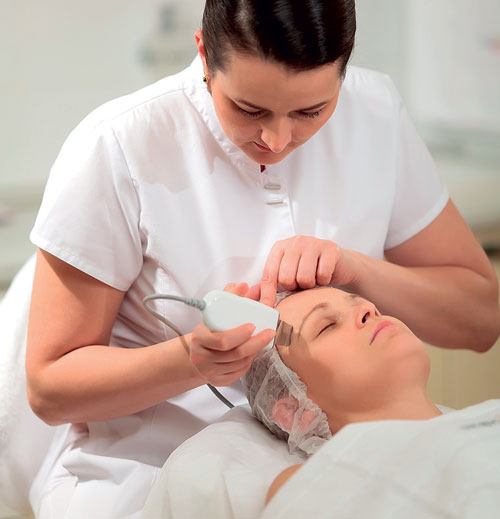
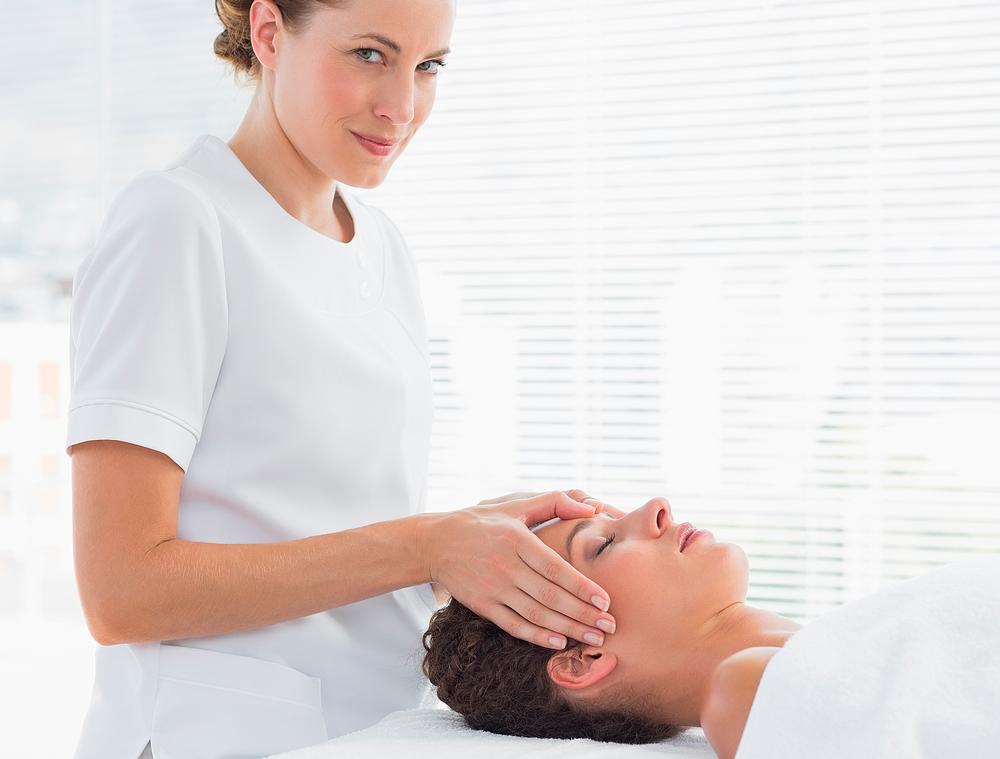
There are up to 10 different pay structures for therapists in the US / shutterstock.com/d13
It’s no secret that some spa operators find it hard to attract (and keep) high quality therapists. Many say the reason for this is because the sector is growing so quickly that there aren’t enough staff for the number of new openings. But could part of the reason for these problems also be down to the lack of consistency in therapist pay and pay packages?
An informal survey conducted by consultant Lisa Starr in April this year highlighted the disparities in therapist salaries, benefits and pay packages around the world (see Spa Business Handbook 2014 p88). The survey, which was based on 38 countries, showed that monthly salaries for therapists are as low as US$116 in Vietnam and as high as US$5,008 in Switzerland. Benefits differ greatly too. Beyond providing minimum wages, employers in most countries aren’t required to offer any kind of benefit such as sick pay or paid holidays. As there’s no single standard, does this give operators more power?
The variations are particularly noticeable in the US. The 2014 Spa & Wellness Compensation Trends Survey by the US Day Spa Association shows that there are up to 10 different pay structures for therapists in the country. They range from a straight salary to an hourly variable or commission on services where workers get up to 50 per cent of the price of the treatments they perform. Commission can be ‘creative’, with employers controlling the structure and offering more or less to those who reach set benchmarks, such as high levels of repeat customers.
The recession led to increases in the number of part-time employees, especially in the US and the UK. In the US, there’s been a marked shift from full-time employment, which is down 7.2 per cent, to part-time employment, which was up 13.2 per cent according to the 2013 ISPA US Spa Industry Study (see SB13/4 p48). A large number of therapists in the country are independent contractors, on a 1099 contract, meaning they pay full tax (rather than split this with an employer) and receive few benefits. Notably, the 2013 Trends® in the Hotel Spa Industry report by PKF (see SB14/1 p62) showed that expenses/benefits for therapists in US hotels is 6.8 per cent less than other hotel employees.
In the UK, 1.4 million workers are employed on zero-hour contracts. Under these agreements, employees are obliged to be available for work on an on call basis with no guarantee of hours or other benefits. This is useful for spa operators who can have a pool of therapists on standby to help with last-minute bookings and some therapists prefer the flexibility. Yet for workers with mortgages and a family to support, unpredictable hours and earnings offer little job security. It also makes it difficult for the operator to deliver a consistent service and does little to encourage staff loyalty, bringing the discussion back full circle.
We ask a number of industry representatives whether they think the non-structured way therapists are remunerated, and the rise in part-time/zero-hour employees, is cause for concern.
Read more from this issue of Attractions Management magazine
View contents of Attractions Management 2014 issue 3
Letters: Letters
Bill Bensley gives his opinion on where spa design is heading in the future
Luxury brands: The high life
We take a look at the spa concepts of luxury brands such as Dior, Guerlain, Armani and Versace
Country focus: The Maldives
Neena Dhillon takes a look around Cheval Blanc Randheli and Velaa Private Island – two of the hottest new spa destinations in the Maldives
Q&A: Morgan Lefrançois
The spa business development manager at Clarins on working with Velaa Private Island; plus a first-person account of the resort by Liz Terry
Therapy: Well seasoned
An underground salt mine offering subterraneotherapy and herb spas feature in this report by Sophie Benge
Holiday village spa: Full steam ahead
The unique hydrothermal spa concept at Center Parcs UK attracts 300,000 guests a year and brings in £15m in revenue. Katie Barnes visits its latest site
Marketing: Screen star
Professional spa brands are using TV shopping channel QVC to increase footfall in spas and can sell up to £4m of products in just one day
Mineral Spa: Mission accomplished
With 168 pools and 90 treatment rooms, Mission Hills Haikou has one of the world’s largest spa and mineral springs. Jennifer Harbottle finds out more
Fitness: Cool customer
We explain the science behind Vasper, a high-tech fitness system that’s being used by athletes and astronauts
Katie Barnes is the managing editor of Spa Business Email: [email protected] Tel: +44 (0)1462 471 925 Twitter: @SpaBusinessKB
Mary TabacchiProfessorCornell University, USA
Mary Tabacchi
There are two sides to the story here, as therapists do complain about wages, pay packages and working conditions – sometimes with validity, sometimes not.
There’s no standard wage or way to pay therapists in the US and fluctuations may occur depending on where a spa is located, variations in prices, cost of living and demand. I’m not bothered by inconsistencies, just as I’m not bothered by the fact that it costs more to get a service in New York City or LA versus other cities.
However, this probably does leave the system open for abuse and I think this effects new therapists just out of training more. Most often a wage is paid in addition to commission/a percentage of the treatment price, in this case newbies may be at risk as consumers don’t typically want an inexperienced therapist.
Some – but not all – cruise lines take on very young women right out of training and pay them little with the idea that they gain some experience and get to see the world. Few get see the world as time off the ship is limited. Yet many spa directors have cut their teeth on cruise lines and interns in most fields – medicine, hospitality, food and beverage – are quite rightly paid less compared to a senior person who looks for better pay and benefits and moves on if the conditions are not good.
Few therapists are truly captive in a work situation. They’re free to negotiate whether they want to be full-time or part-time employees, or whether they want to run their own business in addition to their full-time contract. Exact salary may not matter as much as proper benefits.
I’ve not seen the full PKF study which indicates that US hotel therapists receive poor benefits. In general, benefits may be low but I’d think that if a therapist takes home 40 per cent or more of the price a treatment, plus gratuity, then it’s hard to give them more – but you really need to hear the management side of this.
If employees sign a contract to work full-time and waive the right to run their own business, then they do deserve at least minimum healthcare and insurance. And if they’re truly going to stay with the company for a number of years then stock options could be offered too.
Do the lack of standards mean that operators take advantage of staff? It’s possible. But in all my years, I’ve never see a good therapist who’s not taken good care of.
Mary Tabacchi has been an active figure in the spa industry since the 1980s and created Cornell University’s first spa-specific course. Details: www.cornell.edu
"This probably does leave the system open for abuse and I think this effects new therapists just out of training more"
Liz Holmes Spa directorRockliffe Hall, UK
Liz Holmes
For most therapists, zero-hour contracts do not offer financial security or commitment from the employer and there’s little loyalty to ensure delivery of quality standards. They can, however, work for short-term cover provided it suits both parties.
On the rare occasion that we employ a person on a zero-hour contract – out of our 26 current therapists only one is on a zero-hour contract – it’s offered when we don’t have a guaranteed place in the team but want to give someone an opportunity to come on board. This can help the business in terms of sickness cover and last-minute bookings, but it’s not something that works as a long-term commitment.
As soon as a new therapist has proven their value in the team, it’s important they get all of our employee benefits and security of guaranteed hours.
We offer paid holiday, a pension where we match a therapists’ 5 per cent contribution and statutory sick pay – monies for when people are off for lengths at a time. We don’t pay for sporadic sick days, instead we reward therapists up to £100 a month for good attendance.
In terms of guaranteed hours, 40 hours a week is standard, but we’ve found that some therapists prefer flexible or shorter hours – anything from 24 to 32 hours – so we fit in with what suits the individual.
I’m not aware of staff exploitation in UK spas, but it’s interesting to look at it as part in terms of retention which is something that does need addressing. From an employers perspective, therapists tend to move round more than in other areas of hospitality. Our average therapist term is 15 months across both full-time and zero-hours and our strategy is to get that to two years. The goal is to focus on a giving them a sense of achievement. We’ll make sure they have the opportunity to train and will measure their progress so that we can give them recognition.
If employers want commitment, they need to commit themselves. Yes therapists are a transient group who only form a small part of the business, but if a company wants to be taken seriously, it needs a core group of dedicated people which it looks after too. It’s a two-way relationship and unfortunately you’re never going to get that with zero-hour contracts.
Liz Holmes manages a team of 60 staff at Rockliffe Hall. She’s worked in the UK spa and fitness sector for 10 years. Details: www.rockliffehall.com
Eric StephensonDirector of educationImassage, USA
Eric Stephenson
A recent Entry Level Analysis Project report shows that 40-50 per cent of massage school graduates leave the industry within two years of graduation. It says that: “Many factors contribute to this result including unrealistic expectations about the physical demands of massage work, compensation realities, and evolving life circumstances for 20-somethings”
Let’s pick up on compensation realities. It’s difficult to standardise pay in the US spa industry due to the broad scope of the spa category, the different price points and the experience of therapists required.
In addition, the way we pay therapists is all over the board. On the one extreme, employers may offer too little compensation and have a hard time retaining therapists, especially if the clientele is inconsistent. On the other hand, employers can actually commission themselves out of business by offering too much.
Historically, therapists have been independent contractors (on a 1099 contract) but in the last five years, some companies are converting them to employee status due to legal ramifications and IRS/tax pressure. Advantages of independent contractors are autonomy, scheduling, pricing and specialisation. A big obstacle, however, is the ability to attract enough clientele to sustain a high enough income.
Overall, I think the lack of standards surrounding therapist pay does mean that operators can potentially take advantage of staff and lack of opportunities may force therapists into lower paid positions. But it’s up to the individual practitioner to know their worth. A brand new therapist may not be able to command the same wage as a 10-year veteran. Yet a therapist with a long-view may choose to work in a spa at a lower compensation point if they’re receiving training and experience and making connections that might further their career down the road.
In 2014, therapists who have a keen knowledge of the soft-skills required to be a successful practitioner – in addition to excellent hands-on skills – will always be in high demand. Those who take an active role in attracting/retaining clientele will see increased financial compensation.
I do, however, think benefits need to be looked at in our country, because unless a therapist is working with a big corporation, most benefits are small-scale and only include things like free monthly spa services and product discounts. I’d like to see health/dental benefits, as well as a pension option, added. Currently, it’s difficult for many therapists to support themselves, much less their families with the added costs of healthcare and childcare.
Imassage is a continuing education organisation. Stephenson has been an industry educator for 15 years. Details: www.imassageinc.com
"I do think benefits need to be looked at in our country [the US]... I’d like to see health/dental benefits, as well as a pension option, added"
Olivia DaviesGeneral manager at PZ CussonsThe Sanctuary, UK
Olivia Davies
Although we’re now, sadly, in the closing phase of The Sanctuary, I feel I can provide some insight into employment standards – especially zero-hour contracts, having managed this famous UK destination spa and a team of up to 90 therapists for the last seven years.
At one stage we had around 30 therapists on zero-hour contracts. Having employees on call to come in only when necessary allows a spa to decrease salary to sales percentage and utilise therapist time effectively. It also gives therapists flexibility to work when it suits them, although we were also able to cancel shifts when bookings were lower than expected.
A year after I joined we began to phase out zero-hour contractors and opted for minimum contracts of at least one day a week. We did this for a number of reasons.
Firstly, we felt that as a number of staff would not book shifts for months at a time, they were missing out on training offered and vital communication. This also meant that there was inconsistency in our own treatment standards which – because of the possible lack of contact with those on zero-hours – was challenging to address.
Secondly, having employees on zero-hour contracts affected loyalty. Over the period that we phased out zero-hour contracts, our annual staff turnover in the therapy team reduced by half. Although there were obviously additional factors and improvements that affected this.
Do I think there’s a potential problem with staff exploitation in the UK concerning zero-hour contracts? Well, I think that there are many businesses out there which are constantly looking for good therapists and that’s the reason why there are alternative contracts. As long as businesses offer complete transparency on zero-hour terms of employment, therapists can make an informed decision on whether it’s right for them. So I hope that exploitation would not be an issue.
Olivia Davies has been working in the UK spa industry for 20 years, including seven years at The Sanctuary, London. The Sanctuary closed in May, after 36 years in operation, to focus on its retail skincare business.
The inconsistency in therapist pay and pay structures, as highlighted in our 2014 Spa & Wellness Compensation Survey, is cause for concern, especially since therapists move from facility to facility. What it comes down to is how does a spa owner pay fair and retain good people?
There are no written rules about fair pay, however, as it’s determined by many factors such as market conditions, location – a therapist in Boston may be paid 10-30 per cent more than in Minneapolis, for example, and therapist experience – do they bring clients with them?
Is it fair to rely on commissions for pay? Sometimes life is not fair! I love commission structures and so do most spa owners. Great therapists sell a lot, make the most money and don’t mind being paid a lower hourly fee as they get higher commission. Yet new team members can actually cost the business money until they build a customer following.
I disagree that US therapists receive poor benefits. Our survey shows there are up to 13 types of benefits. More than 70 per cent of staff get free or discounted services and products, while 46.5 per cent get continuing education. Vacation/holiday benefit is received by 35.5 per cent of therapists and healthcare coverage by 31.2 per cent.
The biggest area for concern in light of the Obama Care programme – which impacts on healthcare costs and taxes – is that some companies are moving therapists off the payroll onto an independent employee contract (1099). This means they pay less labour costs as they only compensate employees for what they do. It also means they’re not eligible for taxes, as the therapist is effectively self-employed.
This can help facilities control costs but it doesn’t make sense in the long-term as they’ll lose loyalty to their business. The companies that pay a fair wage, have benefits and offer commission will have a healthier business in the long-run.
Share has been the president of the US Day Spa Association since 2010 and had been in the industry for more than 23 years.
There are up to 10 different pay structures for therapists in the US / shutterstock.com/d13
It’s no secret that some spa operators find it hard to attract (and keep) high quality therapists. Many say the reason for this is because the sector is growing so quickly that there aren’t enough staff for the number of new openings. But could part of the reason for these problems also be down to the lack of consistency in therapist pay and pay packages?
An informal survey conducted by consultant Lisa Starr in April this year highlighted the disparities in therapist salaries, benefits and pay packages around the world (see Spa Business Handbook 2014 p88). The survey, which was based on 38 countries, showed that monthly salaries for therapists are as low as US$116 in Vietnam and as high as US$5,008 in Switzerland. Benefits differ greatly too. Beyond providing minimum wages, employers in most countries aren’t required to offer any kind of benefit such as sick pay or paid holidays. As there’s no single standard, does this give operators more power?
The variations are particularly noticeable in the US. The 2014 Spa & Wellness Compensation Trends Survey by the US Day Spa Association shows that there are up to 10 different pay structures for therapists in the country. They range from a straight salary to an hourly variable or commission on services where workers get up to 50 per cent of the price of the treatments they perform. Commission can be ‘creative’, with employers controlling the structure and offering more or less to those who reach set benchmarks, such as high levels of repeat customers.
The recession led to increases in the number of part-time employees, especially in the US and the UK. In the US, there’s been a marked shift from full-time employment, which is down 7.2 per cent, to part-time employment, which was up 13.2 per cent according to the 2013 ISPA US Spa Industry Study (see SB13/4 p48). A large number of therapists in the country are independent contractors, on a 1099 contract, meaning they pay full tax (rather than split this with an employer) and receive few benefits. Notably, the 2013 Trends® in the Hotel Spa Industry report by PKF (see SB14/1 p62) showed that expenses/benefits for therapists in US hotels is 6.8 per cent less than other hotel employees.
In the UK, 1.4 million workers are employed on zero-hour contracts. Under these agreements, employees are obliged to be available for work on an on call basis with no guarantee of hours or other benefits. This is useful for spa operators who can have a pool of therapists on standby to help with last-minute bookings and some therapists prefer the flexibility. Yet for workers with mortgages and a family to support, unpredictable hours and earnings offer little job security. It also makes it difficult for the operator to deliver a consistent service and does little to encourage staff loyalty, bringing the discussion back full circle.
We ask a number of industry representatives whether they think the non-structured way therapists are remunerated, and the rise in part-time/zero-hour employees, is cause for concern.
Read more from this issue of Attractions Management magazine
View contents of Attractions Management 2014 issue 3
Letters: Letters
Bill Bensley gives his opinion on where spa design is heading in the future
Luxury brands: The high life
We take a look at the spa concepts of luxury brands such as Dior, Guerlain, Armani and Versace
Country focus: The Maldives
Neena Dhillon takes a look around Cheval Blanc Randheli and Velaa Private Island – two of the hottest new spa destinations in the Maldives
Q&A: Morgan Lefrançois
The spa business development manager at Clarins on working with Velaa Private Island; plus a first-person account of the resort by Liz Terry
Therapy: Well seasoned
An underground salt mine offering subterraneotherapy and herb spas feature in this report by Sophie Benge
Holiday village spa: Full steam ahead
The unique hydrothermal spa concept at Center Parcs UK attracts 300,000 guests a year and brings in £15m in revenue. Katie Barnes visits its latest site
Marketing: Screen star
Professional spa brands are using TV shopping channel QVC to increase footfall in spas and can sell up to £4m of products in just one day
Mineral Spa: Mission accomplished
With 168 pools and 90 treatment rooms, Mission Hills Haikou has one of the world’s largest spa and mineral springs. Jennifer Harbottle finds out more
Fitness: Cool customer
We explain the science behind Vasper, a high-tech fitness system that’s being used by athletes and astronauts
Katie Barnes is the managing editor of Spa Business Email: [email protected] Tel: +44 (0)1462 471 925 Twitter: @SpaBusinessKB
Mary TabacchiProfessorCornell University, USA
Mary Tabacchi
There are two sides to the story here, as therapists do complain about wages, pay packages and working conditions – sometimes with validity, sometimes not.
There’s no standard wage or way to pay therapists in the US and fluctuations may occur depending on where a spa is located, variations in prices, cost of living and demand. I’m not bothered by inconsistencies, just as I’m not bothered by the fact that it costs more to get a service in New York City or LA versus other cities.
However, this probably does leave the system open for abuse and I think this effects new therapists just out of training more. Most often a wage is paid in addition to commission/a percentage of the treatment price, in this case newbies may be at risk as consumers don’t typically want an inexperienced therapist.
Some – but not all – cruise lines take on very young women right out of training and pay them little with the idea that they gain some experience and get to see the world. Few get see the world as time off the ship is limited. Yet many spa directors have cut their teeth on cruise lines and interns in most fields – medicine, hospitality, food and beverage – are quite rightly paid less compared to a senior person who looks for better pay and benefits and moves on if the conditions are not good.
Few therapists are truly captive in a work situation. They’re free to negotiate whether they want to be full-time or part-time employees, or whether they want to run their own business in addition to their full-time contract. Exact salary may not matter as much as proper benefits.
I’ve not seen the full PKF study which indicates that US hotel therapists receive poor benefits. In general, benefits may be low but I’d think that if a therapist takes home 40 per cent or more of the price a treatment, plus gratuity, then it’s hard to give them more – but you really need to hear the management side of this.
If employees sign a contract to work full-time and waive the right to run their own business, then they do deserve at least minimum healthcare and insurance. And if they’re truly going to stay with the company for a number of years then stock options could be offered too.
Do the lack of standards mean that operators take advantage of staff? It’s possible. But in all my years, I’ve never see a good therapist who’s not taken good care of.
Mary Tabacchi has been an active figure in the spa industry since the 1980s and created Cornell University’s first spa-specific course. Details: www.cornell.edu
"This probably does leave the system open for abuse and I think this effects new therapists just out of training more"
Liz Holmes Spa directorRockliffe Hall, UK
Liz Holmes
For most therapists, zero-hour contracts do not offer financial security or commitment from the employer and there’s little loyalty to ensure delivery of quality standards. They can, however, work for short-term cover provided it suits both parties.
On the rare occasion that we employ a person on a zero-hour contract – out of our 26 current therapists only one is on a zero-hour contract – it’s offered when we don’t have a guaranteed place in the team but want to give someone an opportunity to come on board. This can help the business in terms of sickness cover and last-minute bookings, but it’s not something that works as a long-term commitment.
As soon as a new therapist has proven their value in the team, it’s important they get all of our employee benefits and security of guaranteed hours.
We offer paid holiday, a pension where we match a therapists’ 5 per cent contribution and statutory sick pay – monies for when people are off for lengths at a time. We don’t pay for sporadic sick days, instead we reward therapists up to £100 a month for good attendance.
In terms of guaranteed hours, 40 hours a week is standard, but we’ve found that some therapists prefer flexible or shorter hours – anything from 24 to 32 hours – so we fit in with what suits the individual.
I’m not aware of staff exploitation in UK spas, but it’s interesting to look at it as part in terms of retention which is something that does need addressing. From an employers perspective, therapists tend to move round more than in other areas of hospitality. Our average therapist term is 15 months across both full-time and zero-hours and our strategy is to get that to two years. The goal is to focus on a giving them a sense of achievement. We’ll make sure they have the opportunity to train and will measure their progress so that we can give them recognition.
If employers want commitment, they need to commit themselves. Yes therapists are a transient group who only form a small part of the business, but if a company wants to be taken seriously, it needs a core group of dedicated people which it looks after too. It’s a two-way relationship and unfortunately you’re never going to get that with zero-hour contracts.
Liz Holmes manages a team of 60 staff at Rockliffe Hall. She’s worked in the UK spa and fitness sector for 10 years. Details: www.rockliffehall.com
Eric StephensonDirector of educationImassage, USA
Eric Stephenson
A recent Entry Level Analysis Project report shows that 40-50 per cent of massage school graduates leave the industry within two years of graduation. It says that: “Many factors contribute to this result including unrealistic expectations about the physical demands of massage work, compensation realities, and evolving life circumstances for 20-somethings”
Let’s pick up on compensation realities. It’s difficult to standardise pay in the US spa industry due to the broad scope of the spa category, the different price points and the experience of therapists required.
In addition, the way we pay therapists is all over the board. On the one extreme, employers may offer too little compensation and have a hard time retaining therapists, especially if the clientele is inconsistent. On the other hand, employers can actually commission themselves out of business by offering too much.
Historically, therapists have been independent contractors (on a 1099 contract) but in the last five years, some companies are converting them to employee status due to legal ramifications and IRS/tax pressure. Advantages of independent contractors are autonomy, scheduling, pricing and specialisation. A big obstacle, however, is the ability to attract enough clientele to sustain a high enough income.
Overall, I think the lack of standards surrounding therapist pay does mean that operators can potentially take advantage of staff and lack of opportunities may force therapists into lower paid positions. But it’s up to the individual practitioner to know their worth. A brand new therapist may not be able to command the same wage as a 10-year veteran. Yet a therapist with a long-view may choose to work in a spa at a lower compensation point if they’re receiving training and experience and making connections that might further their career down the road.
In 2014, therapists who have a keen knowledge of the soft-skills required to be a successful practitioner – in addition to excellent hands-on skills – will always be in high demand. Those who take an active role in attracting/retaining clientele will see increased financial compensation.
I do, however, think benefits need to be looked at in our country, because unless a therapist is working with a big corporation, most benefits are small-scale and only include things like free monthly spa services and product discounts. I’d like to see health/dental benefits, as well as a pension option, added. Currently, it’s difficult for many therapists to support themselves, much less their families with the added costs of healthcare and childcare.
Imassage is a continuing education organisation. Stephenson has been an industry educator for 15 years. Details: www.imassageinc.com
"I do think benefits need to be looked at in our country [the US]... I’d like to see health/dental benefits, as well as a pension option, added"
Olivia DaviesGeneral manager at PZ CussonsThe Sanctuary, UK
Olivia Davies
Although we’re now, sadly, in the closing phase of The Sanctuary, I feel I can provide some insight into employment standards – especially zero-hour contracts, having managed this famous UK destination spa and a team of up to 90 therapists for the last seven years.
At one stage we had around 30 therapists on zero-hour contracts. Having employees on call to come in only when necessary allows a spa to decrease salary to sales percentage and utilise therapist time effectively. It also gives therapists flexibility to work when it suits them, although we were also able to cancel shifts when bookings were lower than expected.
A year after I joined we began to phase out zero-hour contractors and opted for minimum contracts of at least one day a week. We did this for a number of reasons.
Firstly, we felt that as a number of staff would not book shifts for months at a time, they were missing out on training offered and vital communication. This also meant that there was inconsistency in our own treatment standards which – because of the possible lack of contact with those on zero-hours – was challenging to address.
Secondly, having employees on zero-hour contracts affected loyalty. Over the period that we phased out zero-hour contracts, our annual staff turnover in the therapy team reduced by half. Although there were obviously additional factors and improvements that affected this.
Do I think there’s a potential problem with staff exploitation in the UK concerning zero-hour contracts? Well, I think that there are many businesses out there which are constantly looking for good therapists and that’s the reason why there are alternative contracts. As long as businesses offer complete transparency on zero-hour terms of employment, therapists can make an informed decision on whether it’s right for them. So I hope that exploitation would not be an issue.
Olivia Davies has been working in the UK spa industry for 20 years, including seven years at The Sanctuary, London. The Sanctuary closed in May, after 36 years in operation, to focus on its retail skincare business.
The inconsistency in therapist pay and pay structures, as highlighted in our 2014 Spa & Wellness Compensation Survey, is cause for concern, especially since therapists move from facility to facility. What it comes down to is how does a spa owner pay fair and retain good people?
There are no written rules about fair pay, however, as it’s determined by many factors such as market conditions, location – a therapist in Boston may be paid 10-30 per cent more than in Minneapolis, for example, and therapist experience – do they bring clients with them?
Is it fair to rely on commissions for pay? Sometimes life is not fair! I love commission structures and so do most spa owners. Great therapists sell a lot, make the most money and don’t mind being paid a lower hourly fee as they get higher commission. Yet new team members can actually cost the business money until they build a customer following.
I disagree that US therapists receive poor benefits. Our survey shows there are up to 13 types of benefits. More than 70 per cent of staff get free or discounted services and products, while 46.5 per cent get continuing education. Vacation/holiday benefit is received by 35.5 per cent of therapists and healthcare coverage by 31.2 per cent.
The biggest area for concern in light of the Obama Care programme – which impacts on healthcare costs and taxes – is that some companies are moving therapists off the payroll onto an independent employee contract (1099). This means they pay less labour costs as they only compensate employees for what they do. It also means they’re not eligible for taxes, as the therapist is effectively self-employed.
This can help facilities control costs but it doesn’t make sense in the long-term as they’ll lose loyalty to their business. The companies that pay a fair wage, have benefits and offer commission will have a healthier business in the long-run.
Share has been the president of the US Day Spa Association since 2010 and had been in the industry for more than 23 years.
San Antonio Zoo has reported a US$283 million economic impact for 2025, following a decade-
long transformation programme that has seen almost US$200 million invested into the Texas
attraction.
Plans for the AU$180 million redevelopment of Reef HQ Aquarium in Townsville, Australia, are
progressing, with the project set to transform the attraction into a global centre for reef
education and conservation.
Abu Dhabi-based investment firm Mubadala Capital has made a binding, fully financed
€1 billion
offer to acquire Pierre and Vacances SA, the European holiday resort operator behind the
continental European Center Parcs business.
Disney has reaffirmed its commitment to investing US$30 billion in its US parks and cruise
business by 2033, using new America250 celebrations to underline the role its attractions play
in supporting jobs, tourism and economic growth.
Expo 2030 Riyadh is being planned as a permanent visitor destination, with organisers
confirming the six-million-square-metre site will become a Global Village after the event closes.
The owner of one of Australia's best-known waterparks has acquired a major competitor,
creating a new attractions business spanning two of the country's largest visitor destinations.
The Toverland theme park in the Netherlands has announced a €98m expansion programme
that will add a resort, new attractions and staff facilities as it pursues plans to become a multi-
day destination.
Hotel de France, located on the British Isle of Jersey, has created a wellness retreat package
that includes a hot yoga session that will take place in Jersey Zoo’s butterfly sanctuary.
A new immersive attraction designed to transport visitors into the final hours of ancient Pompeii
is preparing to open near the world-famous archaeological site in southern Italy.
Experience design company, BRC Imagination Arts, has completed a transition that sees founder
Bob Rogers pass ownership of the business to four long-serving senior executives, while
remaining actively involved with the company.
+ More news
COMPANY PROFILES
IAAPA EMEA IAAPA Expo Europe was established in 2006 and has grown to the largest international conference and [more...]