In addition to championing the health benefits of activity, the sector must now start to emphasise its power to drive the economy if we are to gain the policy support we need
By Liz Terry | Published in Health Club Management 2021 issue 2
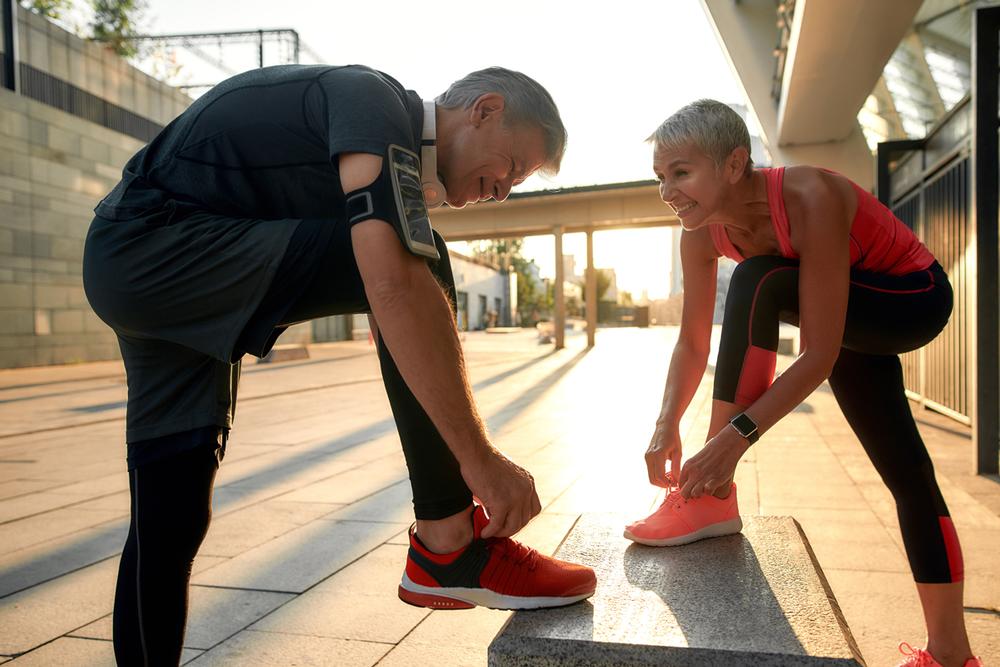
A fit workforce is needed to drive the economy / photo: shutterstock/ BAZA Production
Many of you will be aware that HCM has been driving a Parliamentary Petition with two demands – to get gyms open first after lockdown and for the government to fund a Work Out to Help Out scheme to get people back to fitness (if you’ve been supporting it, a huge thank you. The response has been tremendous).
And so my heart sank when UK prime minister Boris Johnson instead hinted at plans for the government to reduce taxation on beer, so people could get drunk more cheaply after lockdown.
If this kind of populism was accompanied by a commitment to rebooting the fitness of the nation, it would just about be bearable, but for the government to be considering pushing cheap beer, without there being sufficient focus on health and prevention, shows an appalling lack of leadership in the middle of a health crisis.
The mental and physical health impacts of lockdowns have been well documented – the increases in sedentary behaviour and obesity levels, reductions in fitness and escalation of mental health issues – but what lies behind these numbers is even more serious: a catastrophic rewiring of people’s behaviour patterns and a bedding in of sedentary routines that will be challenging to reverse.
It will require a huge effort to overcome the inertia of successive lockdowns and getting the nation moving again will be like restarting an oil tanker. A Work Out to Help Out subsidy would accelerate this process, enabling the fitness industry to deliver results far more quickly.
Tactically, we’ve made a very strong case as a sector for the health benefits of activity, with a £4 gain to the NHS for every £1 invested, but we think it’s now time to also start lobbying around the economic value of having a fit nation.
There are clearly vast economic challenges ahead as a result of the perfect storm of the pandemic and Brexit, meaning the health and vitality of the nation is critical to ensuring the workforce is ready and able to respond.
A sluggish workforce will not be able to compete effectively, so there’s a strong argument for the health and fitness sector in the UK to have a portfolio link to the Department for Business, Energy and Industrial Strategy, in addition to the connection which already exists with the Department for Digital, Culture, Media and Sport.
The hospitality sector has this two-ministry set-up and has achieved notable successes as a result of being thoroughly understood as a business sector. We should demand no less for the rapidly-expanding activity sector.
We provide mission-critical services which underpin the health of the nation, its happiness, vitality and economic prosperity and it’s time this was properly recognised.
To accelerate this process, we must now also produce evidence of the economic value of activity to the nation.
In addition to championing the health benefits of activity, the sector must now start to emphasise its power to drive the economy if we are to gain the policy support we need
By Liz Terry | Published in Health Club Management 2021 issue 2
A fit workforce is needed to drive the economy / photo: shutterstock/ BAZA Production
Many of you will be aware that HCM has been driving a Parliamentary Petition with two demands – to get gyms open first after lockdown and for the government to fund a Work Out to Help Out scheme to get people back to fitness (if you’ve been supporting it, a huge thank you. The response has been tremendous).
And so my heart sank when UK prime minister Boris Johnson instead hinted at plans for the government to reduce taxation on beer, so people could get drunk more cheaply after lockdown.
If this kind of populism was accompanied by a commitment to rebooting the fitness of the nation, it would just about be bearable, but for the government to be considering pushing cheap beer, without there being sufficient focus on health and prevention, shows an appalling lack of leadership in the middle of a health crisis.
The mental and physical health impacts of lockdowns have been well documented – the increases in sedentary behaviour and obesity levels, reductions in fitness and escalation of mental health issues – but what lies behind these numbers is even more serious: a catastrophic rewiring of people’s behaviour patterns and a bedding in of sedentary routines that will be challenging to reverse.
It will require a huge effort to overcome the inertia of successive lockdowns and getting the nation moving again will be like restarting an oil tanker. A Work Out to Help Out subsidy would accelerate this process, enabling the fitness industry to deliver results far more quickly.
Tactically, we’ve made a very strong case as a sector for the health benefits of activity, with a £4 gain to the NHS for every £1 invested, but we think it’s now time to also start lobbying around the economic value of having a fit nation.
There are clearly vast economic challenges ahead as a result of the perfect storm of the pandemic and Brexit, meaning the health and vitality of the nation is critical to ensuring the workforce is ready and able to respond.
A sluggish workforce will not be able to compete effectively, so there’s a strong argument for the health and fitness sector in the UK to have a portfolio link to the Department for Business, Energy and Industrial Strategy, in addition to the connection which already exists with the Department for Digital, Culture, Media and Sport.
The hospitality sector has this two-ministry set-up and has achieved notable successes as a result of being thoroughly understood as a business sector. We should demand no less for the rapidly-expanding activity sector.
We provide mission-critical services which underpin the health of the nation, its happiness, vitality and economic prosperity and it’s time this was properly recognised.
To accelerate this process, we must now also produce evidence of the economic value of activity to the nation.
OMA has completed a major transformation of New York's New Museum, creating a larger
cultural campus that combines expanded exhibition spaces with learning, performance,
hospitality and public programming.
A US$50 million (£44.2 million, €51.2 million) transformation of Chicago's historic McCormick
Mansion has created a new destination that combines live magic, immersive theatre, dining and
private membership under one roof.
The Montana Historical Society has officially celebrated the opening of its new Montana
Heritage
Center, a US$107 million (£79 million, €92 million) destination that combines immersive
storytelling with cutting-edge audiovisual technology to bring the sta
San Antonio Zoo has reported a US$283 million economic impact for 2025, following a decade-
long transformation programme that has seen almost US$200 million invested into the Texas
attraction.
Plans for the AU$180 million redevelopment of Reef HQ Aquarium in Townsville, Australia, are
progressing, with the project set to transform the attraction into a global centre for reef
education and conservation.
Abu Dhabi-based investment firm Mubadala Capital has made a binding, fully financed
€1 billion
offer to acquire Pierre and Vacances SA, the European holiday resort operator behind the
continental European Center Parcs business.
Disney has reaffirmed its commitment to investing US$30 billion in its US parks and cruise
business by 2033, using new America250 celebrations to underline the role its attractions play
in supporting jobs, tourism and economic growth.
Expo 2030 Riyadh is being planned as a permanent visitor destination, with organisers
confirming the six-million-square-metre site will become a Global Village after the event closes.
The owner of one of Australia's best-known waterparks has acquired a major competitor,
creating a new attractions business spanning two of the country's largest visitor destinations.
The Toverland theme park in the Netherlands has announced a €98m expansion programme
that will add a resort, new attractions and staff facilities as it pursues plans to become a multi-
day destination.