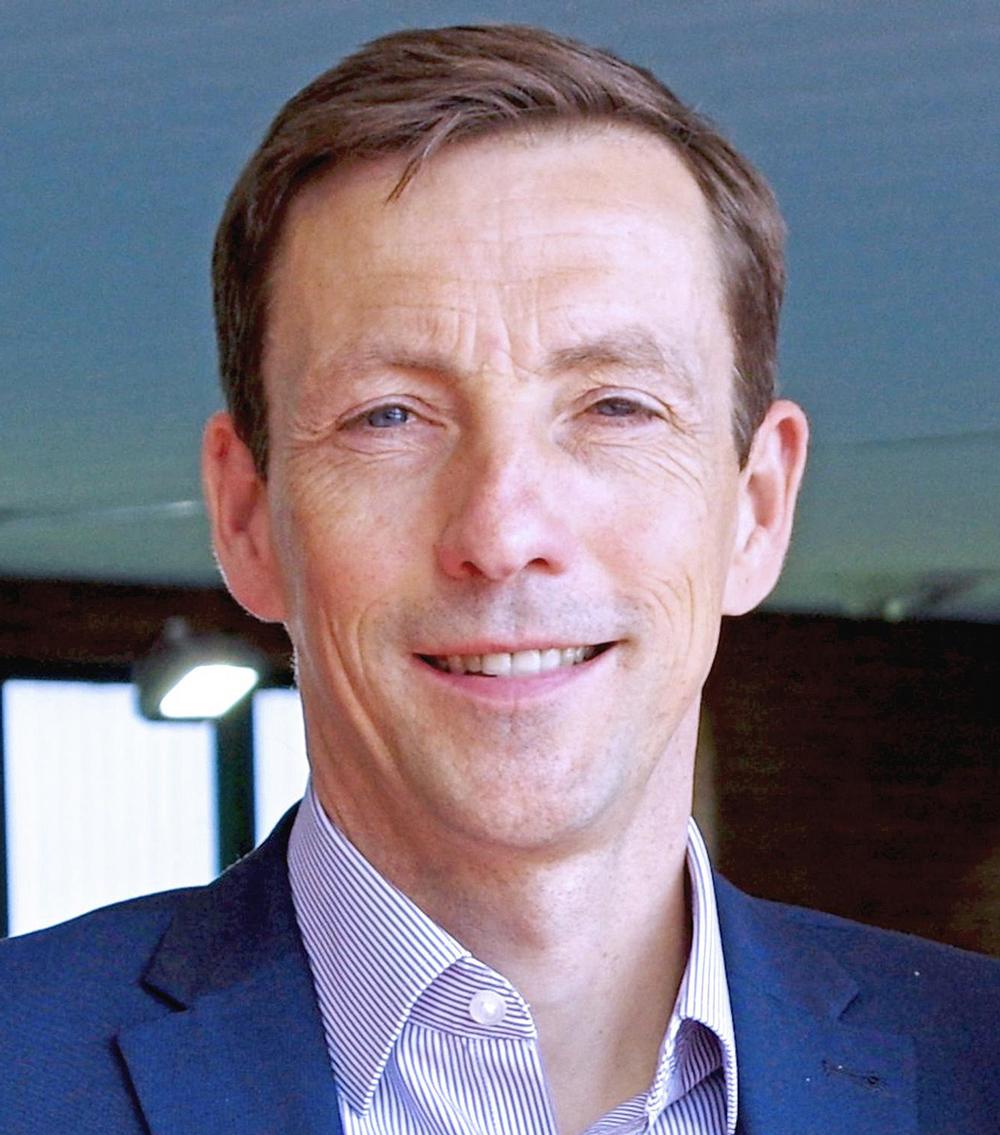
Mark Tweedie, who was named as the new CEO of Community Leisure UK (CLUK) recently, has called for essential UK government support for leisure facility operators and commissioned a report into the impact of the pandemic.
The report – Community Leisure UK COVID-19 Impact Report – published this month, is based on the latest survey data gathered by CLUK, which represents charitable trusts delivering public leisure services across the UK.
In presenting the findings, Tweedie said a significant proportion of leisure facilities in England have not reopened since lockdown measures were eased, and that a third of leisure trusts will face ‘unviability’ in the next six months, without financial support.
Other key headline figures indicate that nearly 7,000 jobs have already been lost in the trusts sector – and thousands more are set to follow unless financial support is given.
CLUK found the forced four-month closures – and subsequent limited capacities enforced since lockdown – have led to leisure trusts burning their financial reserves to prop up their businesses.
Tweedie told HCM that by March 2021 the leisure trust sector will collectively hold only 10 per cent of the financial reserves it had pre-lockdown: “Reducing reserves means increasing financial vulnerability and inability to deal with local lockdowns – or a second COVID-19 spike,” he said, “and once facilities are mothballed they are unlikely to reopen ever again.”
“If we lose our valuable leisure facilities it will have a negative impact on local economies and on people’s physical and mental health and wellbeing. This would be detrimental to current government policies, such as the new obesity strategy and efforts to help tackle diabetes and mental illness.
“Half the population use indoor facilities and leisure centres to undertake their regular exercise – including some of the most vulnerable people in our society.
“A DCMS Select Committee report has already highlighted the urgent need for funding and we know Sport England has made the government aware of the severe impact of the pandemic on public leisure provision – and is continuing to support our sector to secure the additional financial support necessary to avail these serious economic viability concerns.”
CLUK is calling for government intervention and has launched the #SaveLeisure campaign to rally the industry and stakeholders to support the sector.
Tweedie joins CLUK after 10 years as CEO of Active Tameside (2011 to 2018) and Active Northumberland (2018-2020). He began his career as a PE teacher before moving into sports development and leisure service management.
• About CLUK CLUK represents 3,700 facilities. Its 110 members operate 3,800 facilities, hosted 233m customers in 2019 and have a combined turnover of £2bn.
Mark Tweedie, who was named as the new CEO of Community Leisure UK (CLUK) recently, has called for essential UK government support for leisure facility operators and commissioned a report into the impact of the pandemic.
The report – Community Leisure UK COVID-19 Impact Report – published this month, is based on the latest survey data gathered by CLUK, which represents charitable trusts delivering public leisure services across the UK.
In presenting the findings, Tweedie said a significant proportion of leisure facilities in England have not reopened since lockdown measures were eased, and that a third of leisure trusts will face ‘unviability’ in the next six months, without financial support.
Other key headline figures indicate that nearly 7,000 jobs have already been lost in the trusts sector – and thousands more are set to follow unless financial support is given.
CLUK found the forced four-month closures – and subsequent limited capacities enforced since lockdown – have led to leisure trusts burning their financial reserves to prop up their businesses.
Tweedie told HCM that by March 2021 the leisure trust sector will collectively hold only 10 per cent of the financial reserves it had pre-lockdown: “Reducing reserves means increasing financial vulnerability and inability to deal with local lockdowns – or a second COVID-19 spike,” he said, “and once facilities are mothballed they are unlikely to reopen ever again.”
“If we lose our valuable leisure facilities it will have a negative impact on local economies and on people’s physical and mental health and wellbeing. This would be detrimental to current government policies, such as the new obesity strategy and efforts to help tackle diabetes and mental illness.
“Half the population use indoor facilities and leisure centres to undertake their regular exercise – including some of the most vulnerable people in our society.
“A DCMS Select Committee report has already highlighted the urgent need for funding and we know Sport England has made the government aware of the severe impact of the pandemic on public leisure provision – and is continuing to support our sector to secure the additional financial support necessary to avail these serious economic viability concerns.”
CLUK is calling for government intervention and has launched the #SaveLeisure campaign to rally the industry and stakeholders to support the sector.
Tweedie joins CLUK after 10 years as CEO of Active Tameside (2011 to 2018) and Active Northumberland (2018-2020). He began his career as a PE teacher before moving into sports development and leisure service management.
• About CLUK CLUK represents 3,700 facilities. Its 110 members operate 3,800 facilities, hosted 233m customers in 2019 and have a combined turnover of £2bn.
OMA has completed a major transformation of New York's New Museum, creating a larger
cultural campus that combines expanded exhibition spaces with learning, performance,
hospitality and public programming.
A US$50 million (£44.2 million, €51.2 million) transformation of Chicago's historic McCormick
Mansion has created a new destination that combines live magic, immersive theatre, dining and
private membership under one roof.
The Montana Historical Society has officially celebrated the opening of its new Montana
Heritage
Center, a US$107 million (£79 million, €92 million) destination that combines immersive
storytelling with cutting-edge audiovisual technology to bring the sta
San Antonio Zoo has reported a US$283 million economic impact for 2025, following a decade-
long transformation programme that has seen almost US$200 million invested into the Texas
attraction.
Plans for the AU$180 million redevelopment of Reef HQ Aquarium in Townsville, Australia, are
progressing, with the project set to transform the attraction into a global centre for reef
education and conservation.
Abu Dhabi-based investment firm Mubadala Capital has made a binding, fully financed
€1 billion
offer to acquire Pierre and Vacances SA, the European holiday resort operator behind the
continental European Center Parcs business.
Disney has reaffirmed its commitment to investing US$30 billion in its US parks and cruise
business by 2033, using new America250 celebrations to underline the role its attractions play
in supporting jobs, tourism and economic growth.
Expo 2030 Riyadh is being planned as a permanent visitor destination, with organisers
confirming the six-million-square-metre site will become a Global Village after the event closes.
The owner of one of Australia's best-known waterparks has acquired a major competitor,
creating a new attractions business spanning two of the country's largest visitor destinations.
The Toverland theme park in the Netherlands has announced a €98m expansion programme
that will add a resort, new attractions and staff facilities as it pursues plans to become a multi-
day destination.
+ More news
COMPANY PROFILES
Painting With Light By combining lighting, video, scenic and architectural elements, sound and special effects we tell s [more...]
IAAPA EMEA IAAPA Expo Europe was established in 2006 and has grown to the largest international conference and [more...]
DJW David & Lynn Willrich started the Company
over thirty years ago, from the Audio Visual
Department [more...]
Holovis Holovis is a privately owned company
established in 2004 by CEO Stuart
Hetherington. [more...]