Researchers say obesity ‘should be considered as premature ageing’, with some negative effects on the immune system being permanent and not reversible by weight loss
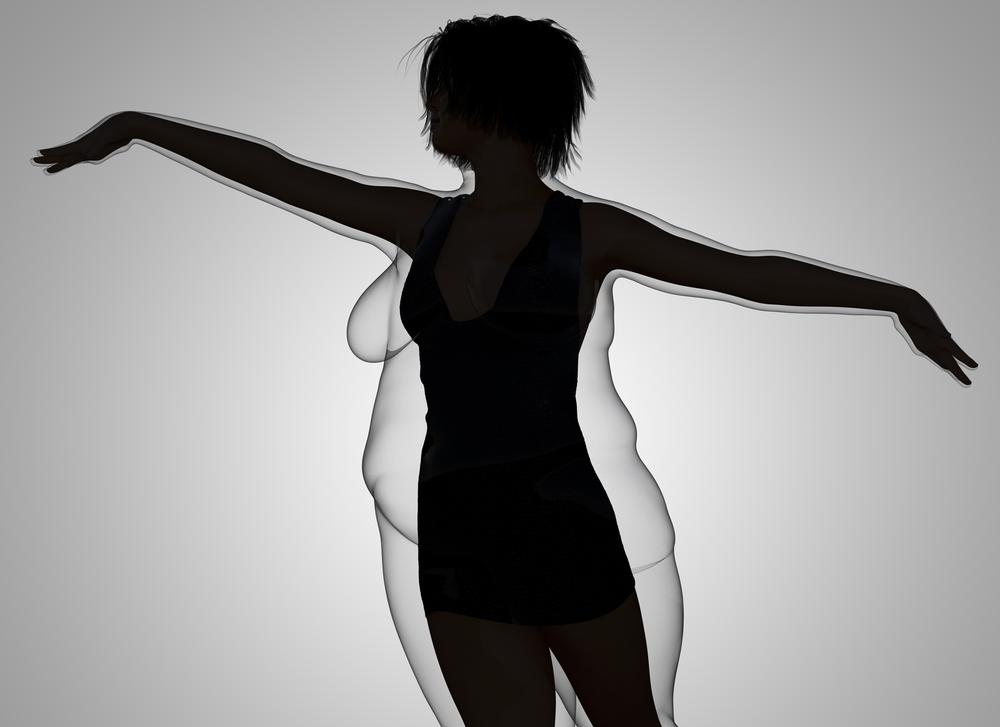
Obesity damages the immune system and changes tissue and body composition / photo: shutterstock.com
Obesity should be classed as a form of premature ageing, due to it predisposing people to acquiring life-altering diseases normally seen in older individuals.
Authors of a study called Obesity and ageing: Two sides of the same coin – by the Concordia University in Canada, reviewed more than 200 papers relating to obesity’s effects on human health.
Using the data from the papers, they looked at the ways obesity ages the body from a number of different perspectives – from the immune system to shifts in tissue and body composition.
The study was led by Sylvia Santosa, associate professor of health, kinesiology and applied physiology in the Concordia University’s Faculty of Arts and Science.
Santosa and her colleagues looked at the processes of cell death and the maintenance of healthy cells – apoptosis and autophagy, respectively – that are usually associated with ageing.
At the genetic level, the researchers found that obesity influences a number of alterations associated with ageing. These include the shortening of telomeres – the protective caps found on the ends of chromosomes.
The effect of obesity Telomeres in patients with obesity can be more than 25 per cent shorter than those seen in control patients.
The study also suggests that obesity’s effects on cognitive decline, mobility, hypertension and stress are all similar to those of ageing.
“The mechanisms by which the comorbidities of obesity and ageing develop are very similar,” Santosa said.
Researchers concluded that obesity speeds up the ageing of the immune system by targeting different immune cells, and that later weight reduction will not always reverse the process. The effects of obesity on the immune system, in turn, affect susceptibility to diseases like influenza, which can affect patients with obesity at a higher rate than normal-weight individuals.
Obese people are also at higher risk of sarcopenia, a disease associated with ageing, which features a progressive decline in muscle mass and strength.
Individuals with obesity are also more susceptible to diseases associated with later-life onset, such as type 2 diabetes, Alzheimer’s and various forms of cancer.
Santosa urges health authorities to rethink their approach to obesity, saying: “I’m hoping these observations will focus our approach to understanding obesity better, and allow us to think of it in different ways,” she added.
“We’re asking different types of questions than those which have traditionally been asked,” she concluded.
Obesity and ageing: two sides of the same coin was published in the Obesity Review
Researchers say obesity ‘should be considered as premature ageing’, with some negative effects on the immune system being permanent and not reversible by weight loss
Obesity damages the immune system and changes tissue and body composition / photo: shutterstock.com
Obesity should be classed as a form of premature ageing, due to it predisposing people to acquiring life-altering diseases normally seen in older individuals.
Authors of a study called Obesity and ageing: Two sides of the same coin – by the Concordia University in Canada, reviewed more than 200 papers relating to obesity’s effects on human health.
Using the data from the papers, they looked at the ways obesity ages the body from a number of different perspectives – from the immune system to shifts in tissue and body composition.
The study was led by Sylvia Santosa, associate professor of health, kinesiology and applied physiology in the Concordia University’s Faculty of Arts and Science.
Santosa and her colleagues looked at the processes of cell death and the maintenance of healthy cells – apoptosis and autophagy, respectively – that are usually associated with ageing.
At the genetic level, the researchers found that obesity influences a number of alterations associated with ageing. These include the shortening of telomeres – the protective caps found on the ends of chromosomes.
The effect of obesity Telomeres in patients with obesity can be more than 25 per cent shorter than those seen in control patients.
The study also suggests that obesity’s effects on cognitive decline, mobility, hypertension and stress are all similar to those of ageing.
“The mechanisms by which the comorbidities of obesity and ageing develop are very similar,” Santosa said.
Researchers concluded that obesity speeds up the ageing of the immune system by targeting different immune cells, and that later weight reduction will not always reverse the process. The effects of obesity on the immune system, in turn, affect susceptibility to diseases like influenza, which can affect patients with obesity at a higher rate than normal-weight individuals.
Obese people are also at higher risk of sarcopenia, a disease associated with ageing, which features a progressive decline in muscle mass and strength.
Individuals with obesity are also more susceptible to diseases associated with later-life onset, such as type 2 diabetes, Alzheimer’s and various forms of cancer.
Santosa urges health authorities to rethink their approach to obesity, saying: “I’m hoping these observations will focus our approach to understanding obesity better, and allow us to think of it in different ways,” she added.
“We’re asking different types of questions than those which have traditionally been asked,” she concluded.
Obesity and ageing: two sides of the same coin was published in the Obesity Review
Abu Dhabi-based investment firm Mubadala Capital has made a binding, fully financed
€1 billion
offer to acquire Pierre and Vacances SA, the European holiday resort operator behind the
continental European Center Parcs business.
Expo 2030 Riyadh is being planned as a permanent visitor destination, with organisers
confirming the six-million-square-metre site will become a Global Village after the event closes.
The owner of one of Australia's best-known waterparks has acquired a major competitor,
creating a new attractions business spanning two of the country's largest visitor destinations.
The Toverland theme park in the Netherlands has announced a €98m expansion programme
that will add a resort, new attractions and staff facilities as it pursues plans to become a multi-
day destination.
Hotel de France, located on the British Isle of Jersey, has created a wellness retreat package
that includes a hot yoga session that will take place in Jersey Zoo’s butterfly sanctuary.
A new immersive attraction designed to transport visitors into the final hours of ancient Pompeii
is preparing to open near the world-famous archaeological site in southern Italy.
Experience design company, BRC Imagination Arts, has completed a transition that sees founder
Bob Rogers pass ownership of the business to four long-serving senior executives, while
remaining actively involved with the company.
Movie Park Germany has opened a new Paramount Pictures-themed attraction as part of its 30th
anniversary celebrations, using immersive storytelling and adaptive reuse to reinforce the park’s
longstanding “Hollywood in Germany” positioning.
Therme Manchester’s 28-acre development, which will include interconnected glass pavilions
that measure 65,000sq m, will be the largest bathing and wellbeing attraction in the world once
complete, according to prof David Russell, CEO of Therme UK.
Efteling has opened Hooghmoed, a new family drop tower designed to broaden the appeal of its
recently launched Sirene Island themed area and introduce younger visitors to thrill attractions.
+ More news
COMPANY PROFILES
DJW David & Lynn Willrich started the Company
over thirty years ago, from the Audio Visual
Department [more...]
IDEATTACK IDEATTACK is a full-service planning and
design company with headquarters in
Los Angeles. [more...]
Taylor Made Designs Founded in 1993, Taylor Made
Designs supply corporate clothing
and brand-enhancing merchandise
to [more...]