Stormy seas make for great sailors.” This was the prescient theme of the presentation from my fellow speaker Christian Mason – MD of Virgin Active South East Asia – at the Fit Business Live event held at FIBO China in Shanghai last month.
The eloquent Australian was discussing the story of how Virgin Active quickly became a dominant player in the Singapore and Thailand markets from a standing start, but he could equally have been referring to the unlikely situation currently unfolding in the Chinese gym market.
As anyone who’s been to China will attest, the country is full of surprises. And two of the preconceptions I arrived with were well and truly scotched during the course of my week-long trip.
I’ll start with the good news. For all the headlines warning of smog, pollution and wastage, China (or Shanghai at least) is in the midst of an ecological epiphany. The country of red is determined to go green, with recycling bins now dominating every house, hotel and office, while legions of neighbourhood champions are being paid to ensure people play by the rules and diligently sort their rubbish. Single-use plastics are also off the menu as China seeks to cut down on waste and repair the impact that exponential growth has had on its environment.
Winter is coming The bad news – perhaps more relevant for this audience – is that all is not rosy in the Chinese gym market. Contrary to popular perceptions of endless double-digit growth, driven by a burgeoning middle class, the fitness industry has indeed hit stormy seas and is in the midst of a major slowdown. Aggressive overexpansion has led to a number of club chains going bust in recent months, while the fiscal headwinds slowing the wider economy have meant clubs are being starved of outside investment.
Reliable data is difficult to come by, but many of the operators in attendance at FIBO China were of the poetic view that “Spring has been, and winter is coming”, with suppliers also feeling the resultant pinch.
In some ways, the Chinese club market is following the path of the global fitness industry, but in others, it’s delightfully divergent. One of the main topics at the Fit Business Live event – hosted by Les Mills – was the need for clubs to shift from a sales-driven to service-driven approach in order to add value to members and shore up sky-high attrition rates: a topic familiar to many readers, I’m sure.
Conversely, another hot topic was the exciting opportunities afforded by the high-tech, low-touch business model being deployed to devastating effect by one of the rising stars of the Chinese club market: Super Monkey.
Set to reach 200 sites by the end of 2019, Super Monkey is a low-cost boutique, offering a mix of own-brand and Les Mills workouts. Users book classes via their phone (neatly, they can also book their friends in) and receive a passcode 10 minutes before the class, which they use to access the studio. The lack of staffing and the low square footage required (a small curtained-off area to change in is the only amenity other than the studio) means Super Monkey studios can open virtually anywhere. And they’ve been doing exactly that.
Tech savvy The online to offline business model – whereby businesses build an audience through a slick digital presence and then channel them towards physical sites – is highly popular in China and made possible by the ubiquity of WeChat.
Whether it’s speaking to friends, paying for a meal or applying for a loan, virtually all business in China is conducted via this app (which makes extensive use of QR codes), with the resultant integrated experience opening up a world of marketing opportunities for digitally-savvy clubs like Super Monkey to own the entire customer journey and a wealth of data.
Given the need for enhanced member experience and the boom in innovative boutiques, group fitness was another hot topic at the event, with its impact on retention and ability to offer quality and consistency to fast-scaling businesses held up as a key factor in its prominence across all segments of the Chinese club market.
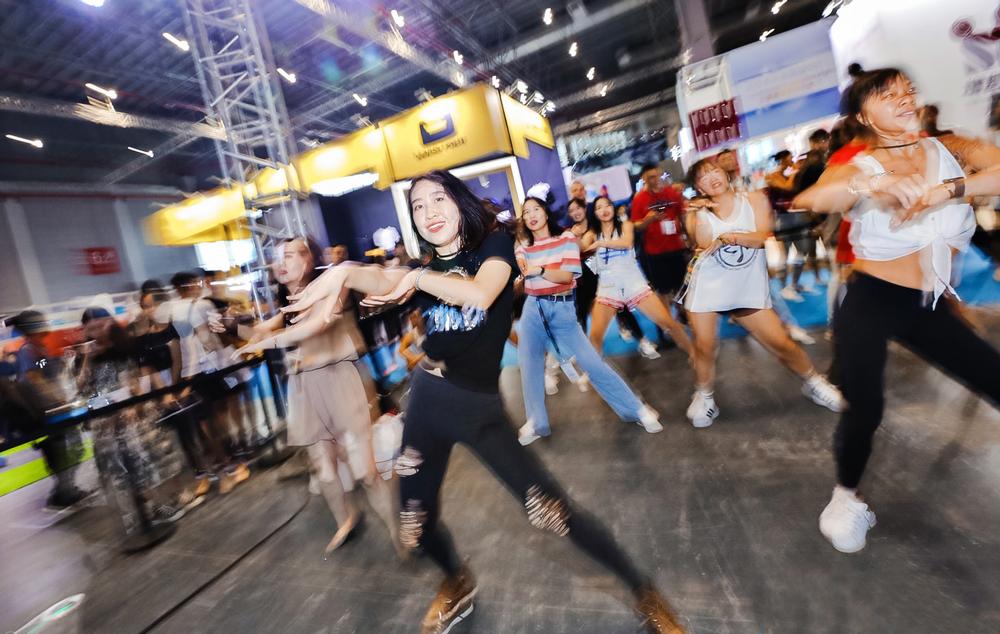
Elsewhere at the FIBO show, you continued to encounter a curious blend of the fresh and familiar. Aside from the usual mega-stands from all the big equipment suppliers (I always spare a thought for the poor presenters who have to work-out for the entire day and pretend they’re enjoying it) there were some interesting activation experiences, with Reebok-sponsored functional fitness competitions deftly blending the spectacle of an event with clothing retail opportunities.
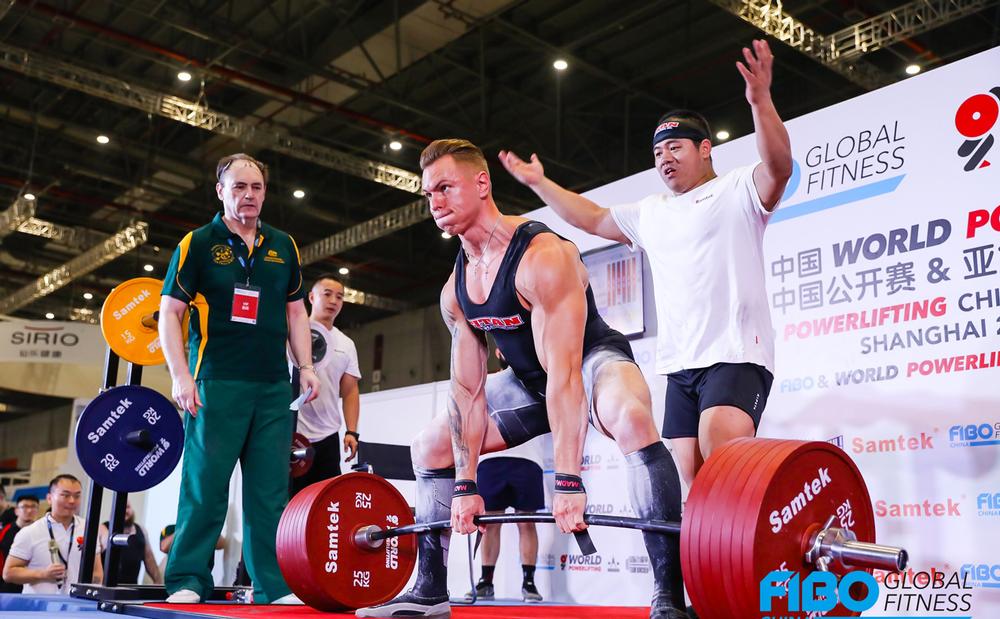
Looking ahead That said, there was also the unedifying sight of men and women in Speedos and oodles of fake tan competing in bodybuilding contests, surrounded by supplement stands where muscle-bound men flex their biceps on beat to German techno. Ours is a vital and professional industry, that’s come a long way since the 80s. So why do we continue to give a platform at our events to a niche sub-culture that for so long has brought mockery on us, scared people away from gyms and marred us with accusations of steroids and supplement abuse? I’ve got nothing against the sport of bodybuilding, but aren’t we’re shooting ourselves in the foot by continuing to willingly associate it with the modern physical activity sector?
Anyway, rant over. Aside from the trade show, FIBO China had a series of star speakers adding sparkle to the education stream on the Friday, including Rene Moos, Jonathan Fisher and Herman Rutgers. I had to leave by then, so I can’t recount what was said, but I’m sure most readers will be familiar with their work and wisdom already. Suffice to say, the calibre of industry professional FIBO China is able to attract is testament to the growing importance of the Chinese gym market. Stormy seas may currently be rocking the boat, but surely its long-term course is set fair to become the next fitness superpower.
Stormy seas make for great sailors.” This was the prescient theme of the presentation from my fellow speaker Christian Mason – MD of Virgin Active South East Asia – at the Fit Business Live event held at FIBO China in Shanghai last month.
The eloquent Australian was discussing the story of how Virgin Active quickly became a dominant player in the Singapore and Thailand markets from a standing start, but he could equally have been referring to the unlikely situation currently unfolding in the Chinese gym market.
As anyone who’s been to China will attest, the country is full of surprises. And two of the preconceptions I arrived with were well and truly scotched during the course of my week-long trip.
I’ll start with the good news. For all the headlines warning of smog, pollution and wastage, China (or Shanghai at least) is in the midst of an ecological epiphany. The country of red is determined to go green, with recycling bins now dominating every house, hotel and office, while legions of neighbourhood champions are being paid to ensure people play by the rules and diligently sort their rubbish. Single-use plastics are also off the menu as China seeks to cut down on waste and repair the impact that exponential growth has had on its environment.
Winter is coming The bad news – perhaps more relevant for this audience – is that all is not rosy in the Chinese gym market. Contrary to popular perceptions of endless double-digit growth, driven by a burgeoning middle class, the fitness industry has indeed hit stormy seas and is in the midst of a major slowdown. Aggressive overexpansion has led to a number of club chains going bust in recent months, while the fiscal headwinds slowing the wider economy have meant clubs are being starved of outside investment.
Reliable data is difficult to come by, but many of the operators in attendance at FIBO China were of the poetic view that “Spring has been, and winter is coming”, with suppliers also feeling the resultant pinch.
In some ways, the Chinese club market is following the path of the global fitness industry, but in others, it’s delightfully divergent. One of the main topics at the Fit Business Live event – hosted by Les Mills – was the need for clubs to shift from a sales-driven to service-driven approach in order to add value to members and shore up sky-high attrition rates: a topic familiar to many readers, I’m sure.
Conversely, another hot topic was the exciting opportunities afforded by the high-tech, low-touch business model being deployed to devastating effect by one of the rising stars of the Chinese club market: Super Monkey.
Set to reach 200 sites by the end of 2019, Super Monkey is a low-cost boutique, offering a mix of own-brand and Les Mills workouts. Users book classes via their phone (neatly, they can also book their friends in) and receive a passcode 10 minutes before the class, which they use to access the studio. The lack of staffing and the low square footage required (a small curtained-off area to change in is the only amenity other than the studio) means Super Monkey studios can open virtually anywhere. And they’ve been doing exactly that.
Tech savvy The online to offline business model – whereby businesses build an audience through a slick digital presence and then channel them towards physical sites – is highly popular in China and made possible by the ubiquity of WeChat.
Whether it’s speaking to friends, paying for a meal or applying for a loan, virtually all business in China is conducted via this app (which makes extensive use of QR codes), with the resultant integrated experience opening up a world of marketing opportunities for digitally-savvy clubs like Super Monkey to own the entire customer journey and a wealth of data.
Given the need for enhanced member experience and the boom in innovative boutiques, group fitness was another hot topic at the event, with its impact on retention and ability to offer quality and consistency to fast-scaling businesses held up as a key factor in its prominence across all segments of the Chinese club market.
Elsewhere at the FIBO show, you continued to encounter a curious blend of the fresh and familiar. Aside from the usual mega-stands from all the big equipment suppliers (I always spare a thought for the poor presenters who have to work-out for the entire day and pretend they’re enjoying it) there were some interesting activation experiences, with Reebok-sponsored functional fitness competitions deftly blending the spectacle of an event with clothing retail opportunities.
Looking ahead That said, there was also the unedifying sight of men and women in Speedos and oodles of fake tan competing in bodybuilding contests, surrounded by supplement stands where muscle-bound men flex their biceps on beat to German techno. Ours is a vital and professional industry, that’s come a long way since the 80s. So why do we continue to give a platform at our events to a niche sub-culture that for so long has brought mockery on us, scared people away from gyms and marred us with accusations of steroids and supplement abuse? I’ve got nothing against the sport of bodybuilding, but aren’t we’re shooting ourselves in the foot by continuing to willingly associate it with the modern physical activity sector?
Anyway, rant over. Aside from the trade show, FIBO China had a series of star speakers adding sparkle to the education stream on the Friday, including Rene Moos, Jonathan Fisher and Herman Rutgers. I had to leave by then, so I can’t recount what was said, but I’m sure most readers will be familiar with their work and wisdom already. Suffice to say, the calibre of industry professional FIBO China is able to attract is testament to the growing importance of the Chinese gym market. Stormy seas may currently be rocking the boat, but surely its long-term course is set fair to become the next fitness superpower.
London Museum will open four new food and drink destinations when it launches its new home
at Smithfield on 28 November, making hospitality a central part of the visitor experience at one
of the capital's biggest cultural openings of the year.
OMA has completed a major transformation of New York's New Museum, creating a larger
cultural campus that combines expanded exhibition spaces with learning, performance,
hospitality and public programming.
A US$50 million (£44.2 million, €51.2 million) transformation of Chicago's historic McCormick
Mansion has created a new destination that combines live magic, immersive theatre, dining and
private membership under one roof.
The Montana Historical Society has officially celebrated the opening of its new Montana
Heritage
Center, a US$107 million (£79 million, €92 million) destination that combines immersive
storytelling with cutting-edge audiovisual technology to bring the sta
San Antonio Zoo has reported a US$283 million economic impact for 2025, following a decade-
long transformation programme that has seen almost US$200 million invested into the Texas
attraction.
Plans for the AU$180 million redevelopment of Reef HQ Aquarium in Townsville, Australia, are
progressing, with the project set to transform the attraction into a global centre for reef
education and conservation.
Abu Dhabi-based investment firm Mubadala Capital has made a binding, fully financed
€1 billion
offer to acquire Pierre and Vacances SA, the European holiday resort operator behind the
continental European Center Parcs business.
Disney has reaffirmed its commitment to investing US$30 billion in its US parks and cruise
business by 2033, using new America250 celebrations to underline the role its attractions play
in supporting jobs, tourism and economic growth.
Expo 2030 Riyadh is being planned as a permanent visitor destination, with organisers
confirming the six-million-square-metre site will become a Global Village after the event closes.
The owner of one of Australia's best-known waterparks has acquired a major competitor,
creating a new attractions business spanning two of the country's largest visitor destinations.