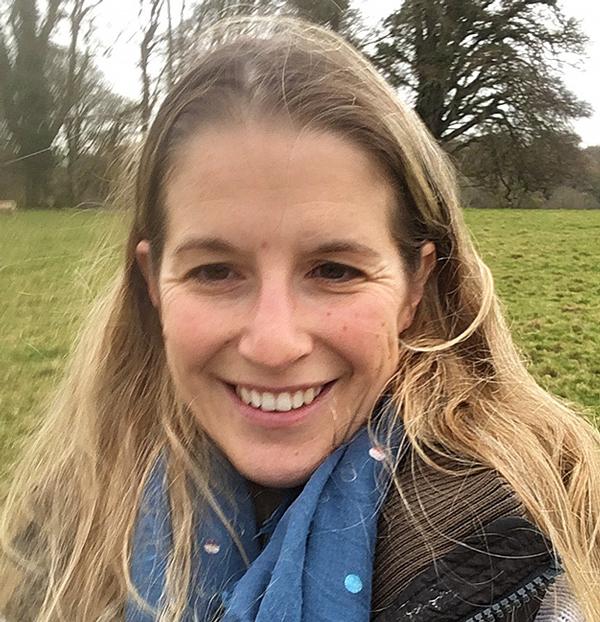
Melissa Handford says the National Trust offers a welcoming setting
When did the National Trust first realise it could use its estates to get people active? Some of our sporty staff identified that many of our properties – which were initially designed as pleasure gardens for the wealthy – are ideal locations for getting people active outdoors. However, we were lacking funding and strategic direction, which is what we looked to Sport England to provide.
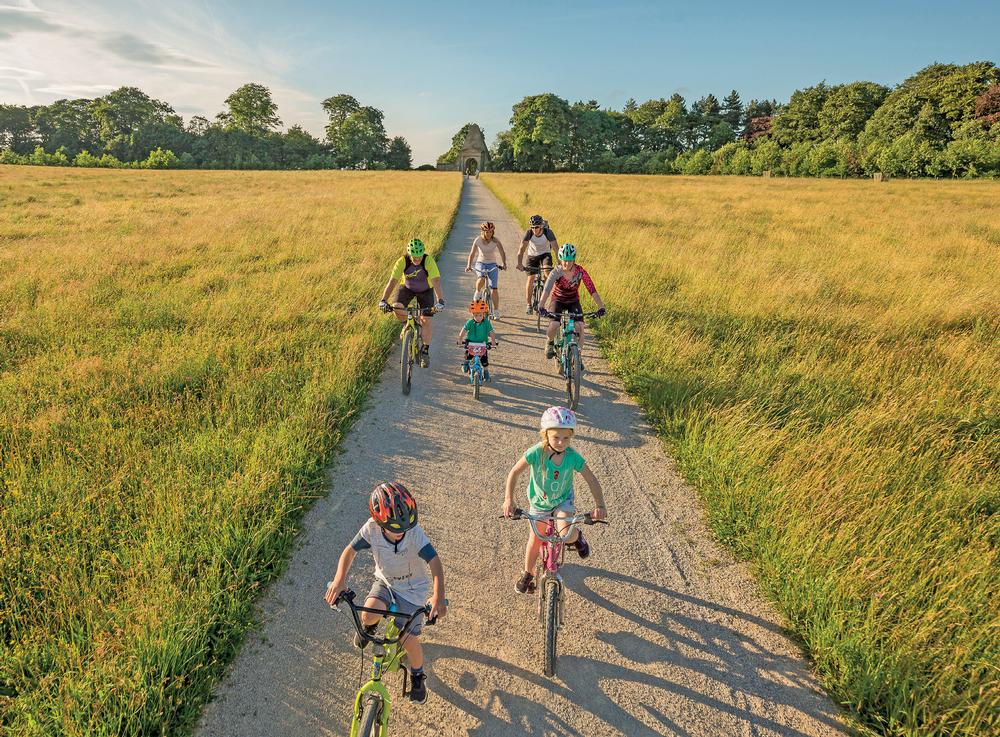
What does the Sport England partnership involve? We match all the funding from Sport England. The first round of funding was in 2012 and it was refreshed in April 2017 for another four-year partnership, until 2021. Over the entire period, we’ll receive £2.5m. Some of this has been used for capital projects, including the development of 10 cycle trails, and also a watersports complex at Fell Foot on Lake Windermere.
The rest has been used to fund the active outdoors programme team and active development officers at the 15 properties that were initially targeted, as well as the marketing of the programmes, the creation of a volunteering package to deliver them, technology development and data and insight gathering.
How did you go about getting activities up and running? Some properties were already providing sporting opportunities. But we have also struck up really valuable partnerships with many national governing bodies, including England Athletics, British Cycling, Archery GB, British Canoe, the LTA, Badminton England and Rounders England, which have all been key to helping us get the projects off the ground, frequently providing free equipment and seeing our work as a testing ground for different ways of delivering their sport to new audiences. Some of our delivery work has also been supported by local clubs, which has been invaluable.
Were there any challenges? Firstly, we needed to ensure all the activities were sensitive to the properties, their heritage and their ‘spirit of place’. It was also crucial to make sure they didn’t create problems for other users or get in the way of their enjoyment. For this reason, we try to organise activities around the shoulder season and quieter times, for example the parkruns happen before the properties are open to the public.
We also had to make sure nothing was visually jarring, for instance, we didn’t want lots of plastic around the properties. Sometimes this led to us creating our own equipment, such as tennis nets with wooden posts.
How do these sporting opportunities benefit the National Trust? One of the things we measure is how good an experience people have at our properties. Overall, 56 per cent of our visitors say they have a very enjoyable visit, but this is higher among our active visitors, with 76 per cent saying they had a very enjoyable visit. If we give people a great time, they’ll come back, develop a loyalty to the Trust, engage with our cause and hopefully make use of our cafés and retail outlets.
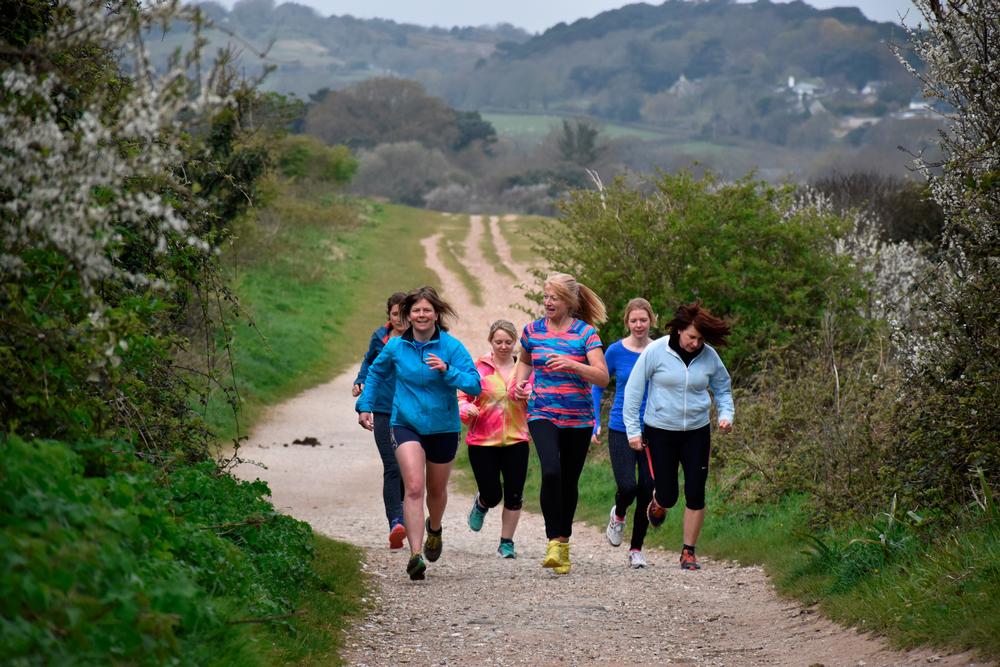
Parkrun now takes place at 29 of our properties each week, bringing 135,000 unique visits each year.
As well as sometimes becoming members, the runners spend, on average, between £10 and £15 per group at the property’s cafés and retail on each visit.
What has the response been like? From March to September 2017, the investment at our 15 properties attracted at least 250,000 people to be active.
In 2016, 31 per cent of our active visitors were new to exercise. Another heartening statistic is that 65 per cent were female, which bucks the trend of wider sports participation, identified in Sport England’s Active Nation survey. We believe this is because we offer a safe, secure and welcoming environment. Most of our runners are aged from 35- to 45-years-old.
Now funding has been secured for another four years, what are your plans? Both the National Trust and Sport England have shared goals of providing public benefits, engaging with the community to be more active and improving physical and mental wellbeing, so going forward we’ll be looking for more ways to extend our reach, by widening programmes, adding more activities and utilising more properties.
We’ve appointed national product leads for walking, running and cycling, and we’ll also be working with NGBs to look at how products can be adapted to attract more diverse audiences, such as seniors and people from more diverse backgrounds.
Another focus will be to make sure that what we offer becomes embedded within the property, so that it will be sustainable even when the funding ends, and that the National Trust will become well known for providing active outdoor opportunities.
Melissa Handford says the National Trust offers a welcoming setting
When did the National Trust first realise it could use its estates to get people active? Some of our sporty staff identified that many of our properties – which were initially designed as pleasure gardens for the wealthy – are ideal locations for getting people active outdoors. However, we were lacking funding and strategic direction, which is what we looked to Sport England to provide.
What does the Sport England partnership involve? We match all the funding from Sport England. The first round of funding was in 2012 and it was refreshed in April 2017 for another four-year partnership, until 2021. Over the entire period, we’ll receive £2.5m. Some of this has been used for capital projects, including the development of 10 cycle trails, and also a watersports complex at Fell Foot on Lake Windermere.
The rest has been used to fund the active outdoors programme team and active development officers at the 15 properties that were initially targeted, as well as the marketing of the programmes, the creation of a volunteering package to deliver them, technology development and data and insight gathering.
How did you go about getting activities up and running? Some properties were already providing sporting opportunities. But we have also struck up really valuable partnerships with many national governing bodies, including England Athletics, British Cycling, Archery GB, British Canoe, the LTA, Badminton England and Rounders England, which have all been key to helping us get the projects off the ground, frequently providing free equipment and seeing our work as a testing ground for different ways of delivering their sport to new audiences. Some of our delivery work has also been supported by local clubs, which has been invaluable.
Were there any challenges? Firstly, we needed to ensure all the activities were sensitive to the properties, their heritage and their ‘spirit of place’. It was also crucial to make sure they didn’t create problems for other users or get in the way of their enjoyment. For this reason, we try to organise activities around the shoulder season and quieter times, for example the parkruns happen before the properties are open to the public.
We also had to make sure nothing was visually jarring, for instance, we didn’t want lots of plastic around the properties. Sometimes this led to us creating our own equipment, such as tennis nets with wooden posts.
How do these sporting opportunities benefit the National Trust? One of the things we measure is how good an experience people have at our properties. Overall, 56 per cent of our visitors say they have a very enjoyable visit, but this is higher among our active visitors, with 76 per cent saying they had a very enjoyable visit. If we give people a great time, they’ll come back, develop a loyalty to the Trust, engage with our cause and hopefully make use of our cafés and retail outlets.
Parkrun now takes place at 29 of our properties each week, bringing 135,000 unique visits each year.
As well as sometimes becoming members, the runners spend, on average, between £10 and £15 per group at the property’s cafés and retail on each visit.
What has the response been like? From March to September 2017, the investment at our 15 properties attracted at least 250,000 people to be active.
In 2016, 31 per cent of our active visitors were new to exercise. Another heartening statistic is that 65 per cent were female, which bucks the trend of wider sports participation, identified in Sport England’s Active Nation survey. We believe this is because we offer a safe, secure and welcoming environment. Most of our runners are aged from 35- to 45-years-old.
Now funding has been secured for another four years, what are your plans? Both the National Trust and Sport England have shared goals of providing public benefits, engaging with the community to be more active and improving physical and mental wellbeing, so going forward we’ll be looking for more ways to extend our reach, by widening programmes, adding more activities and utilising more properties.
We’ve appointed national product leads for walking, running and cycling, and we’ll also be working with NGBs to look at how products can be adapted to attract more diverse audiences, such as seniors and people from more diverse backgrounds.
Another focus will be to make sure that what we offer becomes embedded within the property, so that it will be sustainable even when the funding ends, and that the National Trust will become well known for providing active outdoor opportunities.
Expo 2030 Riyadh is being planned as a permanent visitor destination, with organisers
confirming the six-million-square-metre site will become a Global Village after the event closes.
The owner of one of Australia's best-known waterparks has acquired a major competitor,
creating a new attractions business spanning two of the country's largest visitor destinations.
The Toverland theme park in the Netherlands has announced a €98m expansion programme
that will add a resort, new attractions and staff facilities as it pursues plans to become a multi-
day destination.
Hotel de France, located on the British Isle of Jersey, has created a wellness retreat package
that includes a hot yoga session that will take place in Jersey Zoo’s butterfly sanctuary.
A new immersive attraction designed to transport visitors into the final hours of ancient Pompeii
is preparing to open near the world-famous archaeological site in southern Italy.
Experience design company, BRC Imagination Arts, has completed a transition that sees founder
Bob Rogers pass ownership of the business to four long-serving senior executives, while
remaining actively involved with the company.
Movie Park Germany has opened a new Paramount Pictures-themed attraction as part of its 30th
anniversary celebrations, using immersive storytelling and adaptive reuse to reinforce the park’s
longstanding “Hollywood in Germany” positioning.
Therme Manchester’s 28-acre development, which will include interconnected glass pavilions
that measure 65,000sq m, will be the largest bathing and wellbeing attraction in the world once
complete, according to prof David Russell, CEO of Therme UK.
Efteling has opened Hooghmoed, a new family drop tower designed to broaden the appeal of its
recently launched Sirene Island themed area and introduce younger visitors to thrill attractions.
A proposed Puy du Fou development near Bicester and Universal Destinations and Experiences’
planned resort in Bedford are emerging as part of a wider transformation of the Oxford–
Cambridge Growth Corridor into a major centre for UK leisure and tourism inv
+ More news
COMPANY PROFILES
Taylor Made Designs Founded in 1993, Taylor Made
Designs supply corporate clothing
and brand-enhancing merchandise
to [more...]