Older people who exercise experience improvements in attention and mental speed / photo:www.shutterstock.com/Ruslan Guzov
Preliminary pieces of research presented at the Alzheimer’s Association International Conference in Washington DC in July highlight the positive impact of exercise on the disease. Results presented at conferences are typically considered to be part of a pilot study until published in peer-reviewed journals. Nevertheless, the initial findings still give some insight into the relationship between fitness in different stages of life and dementia.
Starting young One study presented at the event showed that people who fail to embrace a healthy lifestyle from the ages of 18 to 30 face a greater risk of cognitive decline – leading to Alzheimer’s and other forms of dementia – when they’re middle aged.
Study author Tina Hoang and colleagues at the Northern California Institute of Research and Education in the US investigated the association of long-term patterns of low physical activity and high TV viewing time over 25 years with cognitive function at mid-life.
Participants with low levels of physical activity over 25 years had significantly worse cognition in mid-life. Similarly, participants with high levels of TV watching over 25 years also had significantly worse mid-life cognitive function. Participants with both long-term low physical activity and high TV viewing were almost twice as likely to have poor cognitive function in mid-life.
This is one of the first studies to look at physical activity and dementia in early adulthood. Hoang says: “Sedentary behaviours, like TV viewing, could be especially relevant for future generations of adults due to the growing use of screen-based technologies.
“Because research indicates that Alzheimer’s and other dementias develop over several decades, increasing physical activity and reducing sedentary behaviour beginning in early adulthood may have a significant public health impact.”
Older adults Three other pilot studies highlighted at the Alzheimer’s conference championed regular exercise to help older adults facing dementia, with each study suggesting exercise can improve mood, memory and cognitive function.
The first – by neuroscientists at the Wake Forest School of Medicine in North Carolina, US – was based on 65 adults aged 55 to 89 with mild impairment issues who didn’t exercise.
Over six months, half of the people took part in 45-minute, high-intensity workouts four times a week. They worked at 75–85 per cent of their maximal heart rate for 30 minutes per session. Meanwhile, a control group took part in stretching exercises which did little to raise their heart rates.
MRI scans showed exercise improved blood flow to the parts of the brain associated with memory and thought processing, with other tests corroborating an increase in people’s attention span and aptitude to plan and organise things.
It also appeared that those in the exercise group had a reduction in tau protein tangles, which destroy vital cell transport systems and which are a primary marker for Alzheimer’s.
In another study, involving 200 people aged 50 to 90, Danish researchers discovered that anxiety, irritability and depression weren’t as prevalent in those who exercised. In the aerobics plan, participants exercised at 70–80 per cent of their maximal heart rate; those who worked out more frequently and vigorously experienced improvements in attention and mental speed.
The third study, by researchers in Canada, was based on 71 people aged 56 to 96. All had previously suffered mini strokes and found it difficult to process thoughts and remember things. Half of the participants attended regular aerobics classes, while the other half did nothing. The memory and selective attention was better in those who were physically active compared to those who were not.
While exercise was found to be beneficial, it was noted that older adults should seek advice from a doctor before embarking on a new routine.
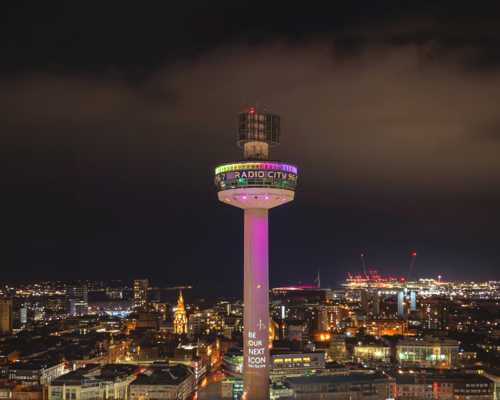
An opportunity to reimagine one of the UK’s most recognisable towers has been formally
opened by Rivington Hark, as St Johns Beacon invites operators and partners to shape its
next phase. [more...]
Older people who exercise experience improvements in attention and mental speed / photo:www.shutterstock.com/Ruslan Guzov
Preliminary pieces of research presented at the Alzheimer’s Association International Conference in Washington DC in July highlight the positive impact of exercise on the disease. Results presented at conferences are typically considered to be part of a pilot study until published in peer-reviewed journals. Nevertheless, the initial findings still give some insight into the relationship between fitness in different stages of life and dementia.
Starting young One study presented at the event showed that people who fail to embrace a healthy lifestyle from the ages of 18 to 30 face a greater risk of cognitive decline – leading to Alzheimer’s and other forms of dementia – when they’re middle aged.
Study author Tina Hoang and colleagues at the Northern California Institute of Research and Education in the US investigated the association of long-term patterns of low physical activity and high TV viewing time over 25 years with cognitive function at mid-life.
Participants with low levels of physical activity over 25 years had significantly worse cognition in mid-life. Similarly, participants with high levels of TV watching over 25 years also had significantly worse mid-life cognitive function. Participants with both long-term low physical activity and high TV viewing were almost twice as likely to have poor cognitive function in mid-life.
This is one of the first studies to look at physical activity and dementia in early adulthood. Hoang says: “Sedentary behaviours, like TV viewing, could be especially relevant for future generations of adults due to the growing use of screen-based technologies.
“Because research indicates that Alzheimer’s and other dementias develop over several decades, increasing physical activity and reducing sedentary behaviour beginning in early adulthood may have a significant public health impact.”
Older adults Three other pilot studies highlighted at the Alzheimer’s conference championed regular exercise to help older adults facing dementia, with each study suggesting exercise can improve mood, memory and cognitive function.
The first – by neuroscientists at the Wake Forest School of Medicine in North Carolina, US – was based on 65 adults aged 55 to 89 with mild impairment issues who didn’t exercise.
Over six months, half of the people took part in 45-minute, high-intensity workouts four times a week. They worked at 75–85 per cent of their maximal heart rate for 30 minutes per session. Meanwhile, a control group took part in stretching exercises which did little to raise their heart rates.
MRI scans showed exercise improved blood flow to the parts of the brain associated with memory and thought processing, with other tests corroborating an increase in people’s attention span and aptitude to plan and organise things.
It also appeared that those in the exercise group had a reduction in tau protein tangles, which destroy vital cell transport systems and which are a primary marker for Alzheimer’s.
In another study, involving 200 people aged 50 to 90, Danish researchers discovered that anxiety, irritability and depression weren’t as prevalent in those who exercised. In the aerobics plan, participants exercised at 70–80 per cent of their maximal heart rate; those who worked out more frequently and vigorously experienced improvements in attention and mental speed.
The third study, by researchers in Canada, was based on 71 people aged 56 to 96. All had previously suffered mini strokes and found it difficult to process thoughts and remember things. Half of the participants attended regular aerobics classes, while the other half did nothing. The memory and selective attention was better in those who were physically active compared to those who were not.
While exercise was found to be beneficial, it was noted that older adults should seek advice from a doctor before embarking on a new routine.
Hotel de France, located on the British Isle of Jersey, has created a wellness retreat package
that includes a hot yoga session that will take place in Jersey Zoo’s butterfly sanctuary.
A new immersive attraction designed to transport visitors into the final hours of ancient Pompeii
is preparing to open near the world-famous archaeological site in southern Italy.
Experience design company, BRC Imagination Arts, has completed a transition that sees founder
Bob Rogers pass ownership of the business to four long-serving senior executives, while
remaining actively involved with the company.
Movie Park Germany has opened a new Paramount Pictures-themed attraction as part of its 30th
anniversary celebrations, using immersive storytelling and adaptive reuse to reinforce the park’s
longstanding “Hollywood in Germany” positioning.
Therme Manchester’s 28-acre development, which will include interconnected glass pavilions
that measure 65,000sq m, will be the largest bathing and wellbeing attraction in the world once
complete, according to prof David Russell, CEO of Therme UK.
Efteling has opened Hooghmoed, a new family drop tower designed to broaden the appeal of its
recently launched Sirene Island themed area and introduce younger visitors to thrill attractions.
A proposed Puy du Fou development near Bicester and Universal Destinations and Experiences’
planned resort in Bedford are emerging as part of a wider transformation of the Oxford–
Cambridge Growth Corridor into a major centre for UK leisure and tourism inv
Shedd Aquarium has opened the Immersion Theater developed in partnership with SimEx-
Iwerks, as part of a wider strategy to enhance the guest experience and create additional
revenue opportunities.
The UK government has announced a temporary reduction in VAT on visitor attractions and
children’s meals as part of a summer cost-of-living support package designed to stimulate the
visitor economy and encourage family days out.
As designer Yinka Ilori prepares for his first solo gallery show in London, he speaks exclusively
to CLADmag about his mission to spread joy, the power of play, and his bold approach to using
colour (including the colours you won’t see in his work).
The government of Thailand is exploring plans for a THB300bn (£6.3bn, US$8.3bn)
entertainment complex in the country’s Eastern Economic Corridor (EEC), with officials
proposing a large-scale theme park and sports destination as part of a broader tourism and
economic development strategy.
An opportunity to reimagine one of the UK’s most recognisable towers has been formally
opened by Rivington Hark, as St Johns Beacon invites operators and partners to shape its
next phase. [more...]