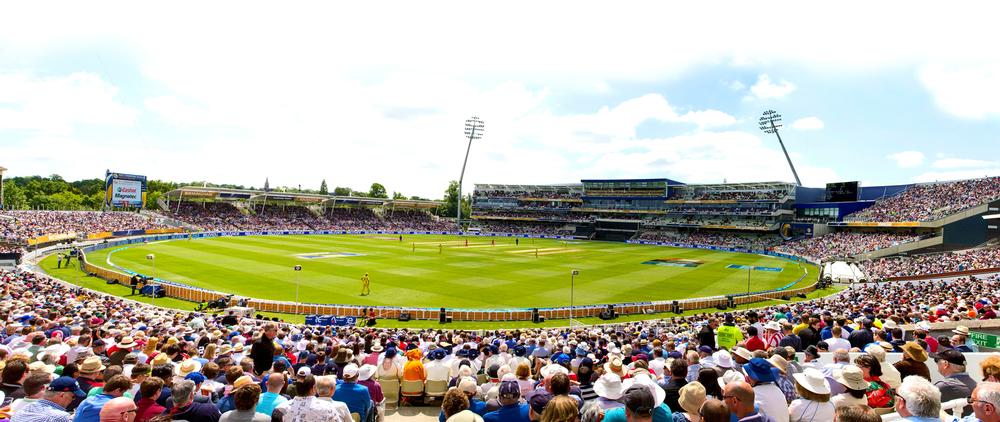
When the doors open at Edgbaston Cricket Ground on July 29 2015 for the third Investec Ashes between England and Australia, head groundsman Gary Barwell will be confident in the knowledge that he has done everything in his power to produce the best possible playing surface. Being responsible for the pitch at one of the country’s busiest cricket venues, however, means that he has his work cut out. Each season Warwickshire CCC plays eight four-day English County Championship games and 12 or more one-day fixtures at Edgbaston, and there are also a number of one-day Internationals. In addition, the ground is used for daily practice sessions.
Preparation is everything Barwell’s role at the five-hectare site is to prepare all international and domestic pitches plus two international-standard net facilities, and to oversee the preparation of the pitches at Warwickshire CCC’s outgrounds. He manages budgets in conjunction with the club’s director of finance and is responsible for an ongoing pitch plan which is submitted to the England and Wales Cricket Board (ECB) and Sky TV for televised games.
With the modern cricket seasons now extending from April through to September (though work in the nets usually starts in mid-March), Barwell and his six-man grounds team will be kept busy.
An Ashes game was last staged at the Birmingham ground in 2009, but the stadium facilities have seen a number of improvements since. Barwell will be relying on some of those improvements to assist him in the lead up, especially when it comes to the weather dictating what he and his team can do.
“Heavy rain is certainly the scourge of the game of cricket,” says Barwell, who was crowned the 2013 Institute of Groundsmanship (IOG) Professional Cricket Groundsman of the Year.
“To counteract it, we decided to invest £600,000 in a remodelled outfield in 2010. The pitch is so much better now, and it’s getting better every year, with the turf sitting on four inches of sand. The pitch is surrounded by land drains and the outfield drains at 33mm per hour. That said, when you have a month’s rain in a week – like we did last year – it really doesn’t matter what drainage you have.”
The disruption caused by the rain can limit Barwell’s options, but when it comes to the type of pitch he wants to produce at Edgbaston, his aim is clear – consistency in speed and bounce. “Heavy rain prevents us from getting onto the square to do what we need to do. Sometimes we get just three days to get the pitch ready. When that happens, we roll the pitch on days one and two and take the grass off on the third.
“But whatever the conditions, my objective is to keep some level of pace in the wicket. Pace results from a mixture of moisture, grass coverage/density and heat – all have to combine in the right way.”
Ashes to ashes According to Barwell, the pitch preparation for the forthcoming Ashes will follow a a strict regime to ensure there is adequate pace. The build-up to the Ashes Test will also involve a number of meetings with Edgbaston’s cricket operations team, concerning their use of the nets and practice sessions, while there will be the usual high level of communication and liaison with the various contractors involved in staging the event, including broadcasters and other media. Any specific requests from ECB for Barwell to produce a certain type of pitch will, of course, be a closely guarded secret. “I work directly with all of the game’s key stakeholders – governing bodies, broadcasters and sponsors – to ensure everyone benefits from their involvement at Edgbaston,” he says. “There will not be that much difference for the Ashes game; apart from an increased level of security checks and, of course, heightened media scrutiny of every ball and, naturally, of the pitch itself.”
Barwell has been at Edgbaston since 2011, after a two-year spell as assistant head groundsman at Trent Bridge, the home to Nottinghamshire CCC. At Trent Bridge, he primarily looked after the World 20/20 nursery ground. Before Nottingham, he had established himself as part of the team at Leicestershire CCC, where he completed his work experience while studying for NVQ Levels 1, 2 and 3 in greenkeeping and turf management.
He credits his recent IOG award to his hard-working team – and to the very particular type of passion that any successful groundsman “must possess”.
“My guys do a great job, often working very long and unsociable hours around – or because of – the weather,” Barwell says. “I do ask a lot of them and I appreciate their support. Every groundsman faces the same challenge: a battle to get the pitch right. But the standard of playing surfaces in this country is outstanding when you consider our weather. It is clear that groundsmen put their heart and soul into the job.”
Edgbaston Fact File Established: 1886 Capacity: 25,000 First Test: 1902 Edgbaston’s first Test Match was the opening game of the Ashes series in 1902, for which the club erected a permanent stand, two temporary stands and facilities for 90 members of the press. Since then, 47 Tests have been held at the venue.
The record attendance at a County Championship match at Edgbaston is 28,000 against Lancashire in the championship-winning season of 1951, and the record for a single day of a Test Match is 32,000 against the West Indies in 1957.
Of all England’s Test grounds Edgbaston is the least disrupted by rain – losing an average of fewer than 90 minutes of play per match between 1979 and 1988, compared to more than eight hours per match at other grounds.
Edgbaston Cricket Ground in 1895
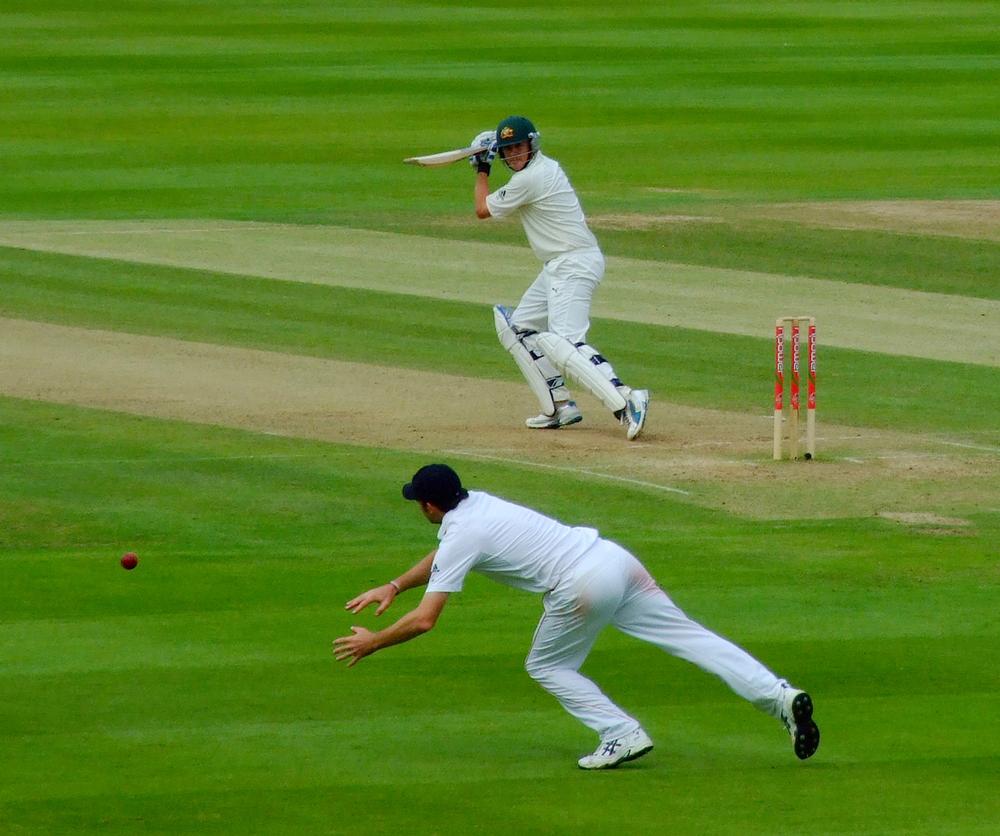
Edgbaston will host an Ashes Test for the first time since the drawn match in 2009 – a game which was badly affected by rain, allowing only 275 overs to be bowled over the five days
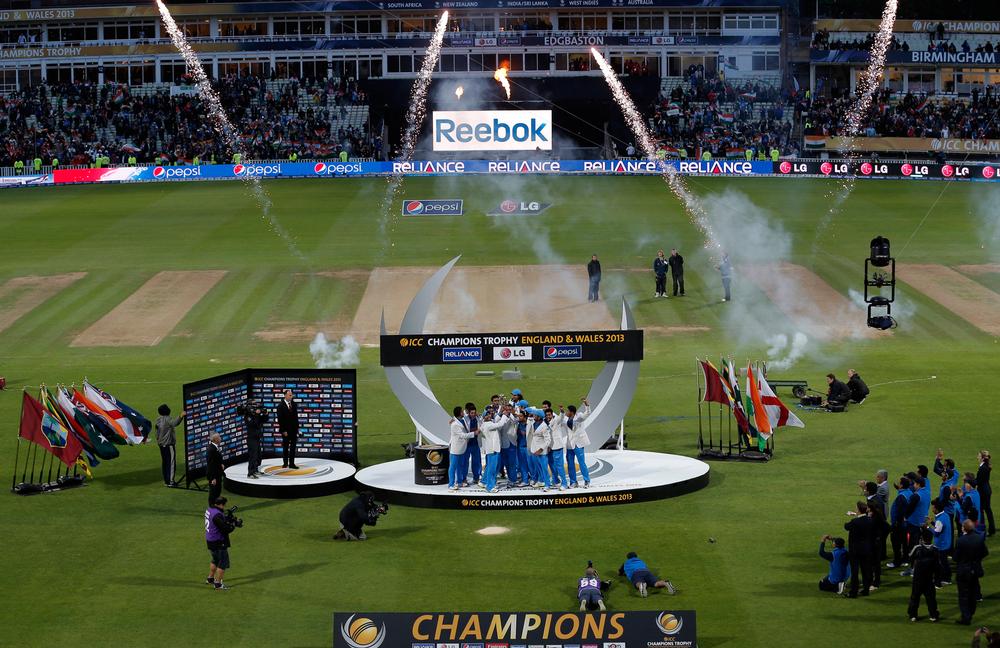
Edgbaston has a rich history and has staged a host of memorable games –such as the 2013 Champions Trophy final between India and England
COMPANY PROFILES
Holovis
Holovis is a privately owned company
established in 2004 by CEO Stuart
Hetherington. [more...]
Painting With Light
By combining lighting, video, scenic and architectural elements, sound and special effects we tell s [more...]
RMA Ltd
RMA Ltd is a one-stop global company
that can design, build and produce from a
greenfield site upw [more...]
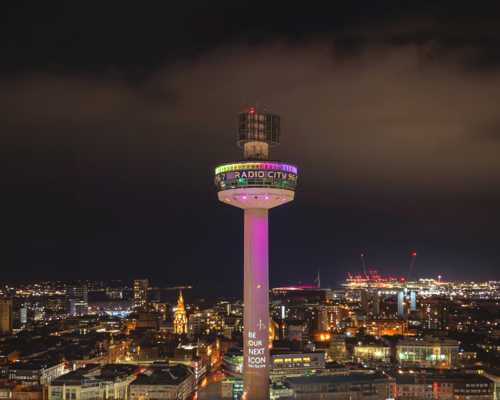
An opportunity to reimagine one of the UK’s most recognisable towers has been formally
opened by Rivington Hark, as St Johns Beacon invites operators and partners to shape its
next phase. [more...]
When the doors open at Edgbaston Cricket Ground on July 29 2015 for the third Investec Ashes between England and Australia, head groundsman Gary Barwell will be confident in the knowledge that he has done everything in his power to produce the best possible playing surface. Being responsible for the pitch at one of the country’s busiest cricket venues, however, means that he has his work cut out. Each season Warwickshire CCC plays eight four-day English County Championship games and 12 or more one-day fixtures at Edgbaston, and there are also a number of one-day Internationals. In addition, the ground is used for daily practice sessions.
Preparation is everything Barwell’s role at the five-hectare site is to prepare all international and domestic pitches plus two international-standard net facilities, and to oversee the preparation of the pitches at Warwickshire CCC’s outgrounds. He manages budgets in conjunction with the club’s director of finance and is responsible for an ongoing pitch plan which is submitted to the England and Wales Cricket Board (ECB) and Sky TV for televised games.
With the modern cricket seasons now extending from April through to September (though work in the nets usually starts in mid-March), Barwell and his six-man grounds team will be kept busy.
An Ashes game was last staged at the Birmingham ground in 2009, but the stadium facilities have seen a number of improvements since. Barwell will be relying on some of those improvements to assist him in the lead up, especially when it comes to the weather dictating what he and his team can do.
“Heavy rain is certainly the scourge of the game of cricket,” says Barwell, who was crowned the 2013 Institute of Groundsmanship (IOG) Professional Cricket Groundsman of the Year.
“To counteract it, we decided to invest £600,000 in a remodelled outfield in 2010. The pitch is so much better now, and it’s getting better every year, with the turf sitting on four inches of sand. The pitch is surrounded by land drains and the outfield drains at 33mm per hour. That said, when you have a month’s rain in a week – like we did last year – it really doesn’t matter what drainage you have.”
The disruption caused by the rain can limit Barwell’s options, but when it comes to the type of pitch he wants to produce at Edgbaston, his aim is clear – consistency in speed and bounce. “Heavy rain prevents us from getting onto the square to do what we need to do. Sometimes we get just three days to get the pitch ready. When that happens, we roll the pitch on days one and two and take the grass off on the third.
“But whatever the conditions, my objective is to keep some level of pace in the wicket. Pace results from a mixture of moisture, grass coverage/density and heat – all have to combine in the right way.”
Ashes to ashes According to Barwell, the pitch preparation for the forthcoming Ashes will follow a a strict regime to ensure there is adequate pace. The build-up to the Ashes Test will also involve a number of meetings with Edgbaston’s cricket operations team, concerning their use of the nets and practice sessions, while there will be the usual high level of communication and liaison with the various contractors involved in staging the event, including broadcasters and other media. Any specific requests from ECB for Barwell to produce a certain type of pitch will, of course, be a closely guarded secret. “I work directly with all of the game’s key stakeholders – governing bodies, broadcasters and sponsors – to ensure everyone benefits from their involvement at Edgbaston,” he says. “There will not be that much difference for the Ashes game; apart from an increased level of security checks and, of course, heightened media scrutiny of every ball and, naturally, of the pitch itself.”
Barwell has been at Edgbaston since 2011, after a two-year spell as assistant head groundsman at Trent Bridge, the home to Nottinghamshire CCC. At Trent Bridge, he primarily looked after the World 20/20 nursery ground. Before Nottingham, he had established himself as part of the team at Leicestershire CCC, where he completed his work experience while studying for NVQ Levels 1, 2 and 3 in greenkeeping and turf management.
He credits his recent IOG award to his hard-working team – and to the very particular type of passion that any successful groundsman “must possess”.
“My guys do a great job, often working very long and unsociable hours around – or because of – the weather,” Barwell says. “I do ask a lot of them and I appreciate their support. Every groundsman faces the same challenge: a battle to get the pitch right. But the standard of playing surfaces in this country is outstanding when you consider our weather. It is clear that groundsmen put their heart and soul into the job.”
Edgbaston Fact File Established: 1886 Capacity: 25,000 First Test: 1902 Edgbaston’s first Test Match was the opening game of the Ashes series in 1902, for which the club erected a permanent stand, two temporary stands and facilities for 90 members of the press. Since then, 47 Tests have been held at the venue.
The record attendance at a County Championship match at Edgbaston is 28,000 against Lancashire in the championship-winning season of 1951, and the record for a single day of a Test Match is 32,000 against the West Indies in 1957.
Of all England’s Test grounds Edgbaston is the least disrupted by rain – losing an average of fewer than 90 minutes of play per match between 1979 and 1988, compared to more than eight hours per match at other grounds.
Edgbaston Cricket Ground in 1895
Edgbaston will host an Ashes Test for the first time since the drawn match in 2009 – a game which was badly affected by rain, allowing only 275 overs to be bowled over the five days
Edgbaston has a rich history and has staged a host of memorable games –such as the 2013 Champions Trophy final between India and England
The Toverland theme park in the Netherlands has announced a €98m expansion programme
that will add a resort, new attractions and staff facilities as it pursues plans to become a multi-
day destination.
Hotel de France, located on the British Isle of Jersey, has created a wellness retreat package
that includes a hot yoga session that will take place in Jersey Zoo’s butterfly sanctuary.
A new immersive attraction designed to transport visitors into the final hours of ancient Pompeii
is preparing to open near the world-famous archaeological site in southern Italy.
Experience design company, BRC Imagination Arts, has completed a transition that sees founder
Bob Rogers pass ownership of the business to four long-serving senior executives, while
remaining actively involved with the company.
Movie Park Germany has opened a new Paramount Pictures-themed attraction as part of its 30th
anniversary celebrations, using immersive storytelling and adaptive reuse to reinforce the park’s
longstanding “Hollywood in Germany” positioning.
Therme Manchester’s 28-acre development, which will include interconnected glass pavilions
that measure 65,000sq m, will be the largest bathing and wellbeing attraction in the world once
complete, according to prof David Russell, CEO of Therme UK.
Efteling has opened Hooghmoed, a new family drop tower designed to broaden the appeal of its
recently launched Sirene Island themed area and introduce younger visitors to thrill attractions.
A proposed Puy du Fou development near Bicester and Universal Destinations and Experiences’
planned resort in Bedford are emerging as part of a wider transformation of the Oxford–
Cambridge Growth Corridor into a major centre for UK leisure and tourism inv
Shedd Aquarium has opened the Immersion Theater developed in partnership with SimEx-
Iwerks, as part of a wider strategy to enhance the guest experience and create additional
revenue opportunities.
The UK government has announced a temporary reduction in VAT on visitor attractions and
children’s meals as part of a summer cost-of-living support package designed to stimulate the
visitor economy and encourage family days out.
+ More news
COMPANY PROFILES
Holovis Holovis is a privately owned company
established in 2004 by CEO Stuart
Hetherington. [more...]
Painting With Light By combining lighting, video, scenic and architectural elements, sound and special effects we tell s [more...]
RMA Ltd RMA Ltd is a one-stop global company
that can design, build and produce from a
greenfield site upw [more...]
An opportunity to reimagine one of the UK’s most recognisable towers has been formally
opened by Rivington Hark, as St Johns Beacon invites operators and partners to shape its
next phase. [more...]