Tell us about the Jorvik Viking Centre. A five-year excavation from 1976 to 1981 by the York Archaeological Trust [YAT] unearthed the 1,000-year-old remains of the Viking city of York in the UK. In 1984, 30 years ago, we at YAT built the Jorvik Viking Centre on the exact site where that excavation took place. The remains of the timber-framed and wattle houses, workshops and backyards of the Viking city of Jorvik are beneath the visitors’ feet and can be seen through the glass floor on arrival and then up close as they travel around on a motorised car ride.
What’s the content? We’re an interactive experience rather than an exhibition, with staff who will happily talk all day to visitors. A car ride takes visitors past the reconstructed Viking city, following the street patterns we found as we excavated.
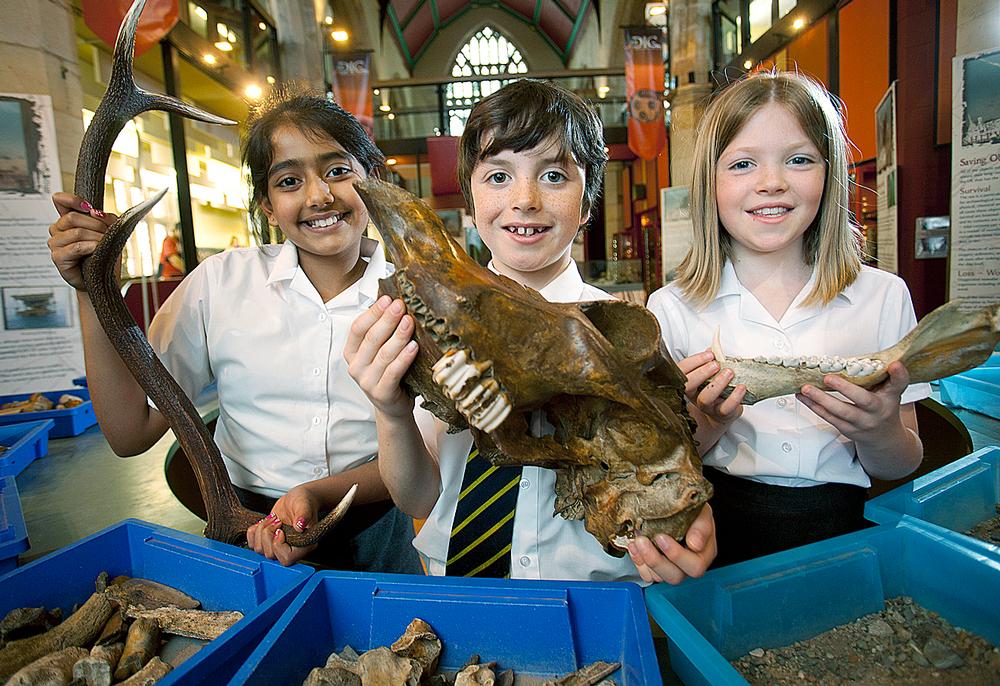
After the ride, there are a series of galleries where visitors can handle some of the objects and learn about the research we’ve done over the past three decades. Among the objects are skeletons of the Viking-age, and we discuss how they lived and died.
The final section is dedicated to the end of the Viking period and we show how the Normans came into England in 1066, how it affected York and what happened after the invasion.
What is its aim? We want to make archaeology accessible to as many people as possible.
What makes Jorvik special? We’re different to other attractions because we’re authentic. Visitors are standing on the site of the excavation. It’s not like a museum in a building. Visitors stand on the exact spot where the Vikings lived and worked.
What’s the most unusual artefact? Viking poo. Or Viking coprolite, to give it its proper name. From this we can tell what that Viking ate and that he had worms in his stomach. It brings Vikings to life that little bit more.
What are the 30th anniversary celebrations? We started on our actual birthday with a street party in April. Through the year we have a series of archaeological talks based on the material that we’ve found. That will culminate in April 2015 with a publicly accessible conference on the theme of the Vikings.
How has the centre evolved since 1984? We’ve had three looks to the centre. In 1984 we had a ride and various galleries, which, at the time, was a new way of doing things compared to traditional museums. In 2000, we stripped everything out and rebuilt the whole thing. We put a suspended ride in and new animatronics. In 2010, we took the story back to the archaeology, as the notion that everything you see comes from this excavation had been lost a bit. We put the glass floor in the first gallery, which visitors can walk over.
How will the centre develop? Technology’s changing all the time and we’re trying to keep on top of that. The mobile technology we’re introducing this year will keep advancing and we’ll bring more 3D elements in.
Archaeologically, we’re always responding to the new research that comes through. We’re constantly researching the objects and excavation we did 30 years ago and finding out new things from the material as science progresses. For example, we can tell more about the skeletons – where that person came from, what they ate, what diseases they suffered from, how old they were when they died. That kind of research changes things for us and will continue to do so.
This article first appeared in Attractions Management Q3 2014
Tell us about the Jorvik Viking Centre. A five-year excavation from 1976 to 1981 by the York Archaeological Trust [YAT] unearthed the 1,000-year-old remains of the Viking city of York in the UK. In 1984, 30 years ago, we at YAT built the Jorvik Viking Centre on the exact site where that excavation took place. The remains of the timber-framed and wattle houses, workshops and backyards of the Viking city of Jorvik are beneath the visitors’ feet and can be seen through the glass floor on arrival and then up close as they travel around on a motorised car ride.
What’s the content? We’re an interactive experience rather than an exhibition, with staff who will happily talk all day to visitors. A car ride takes visitors past the reconstructed Viking city, following the street patterns we found as we excavated.
After the ride, there are a series of galleries where visitors can handle some of the objects and learn about the research we’ve done over the past three decades. Among the objects are skeletons of the Viking-age, and we discuss how they lived and died.
The final section is dedicated to the end of the Viking period and we show how the Normans came into England in 1066, how it affected York and what happened after the invasion.
What is its aim? We want to make archaeology accessible to as many people as possible.
What makes Jorvik special? We’re different to other attractions because we’re authentic. Visitors are standing on the site of the excavation. It’s not like a museum in a building. Visitors stand on the exact spot where the Vikings lived and worked.
What’s the most unusual artefact? Viking poo. Or Viking coprolite, to give it its proper name. From this we can tell what that Viking ate and that he had worms in his stomach. It brings Vikings to life that little bit more.
What are the 30th anniversary celebrations? We started on our actual birthday with a street party in April. Through the year we have a series of archaeological talks based on the material that we’ve found. That will culminate in April 2015 with a publicly accessible conference on the theme of the Vikings.
How has the centre evolved since 1984? We’ve had three looks to the centre. In 1984 we had a ride and various galleries, which, at the time, was a new way of doing things compared to traditional museums. In 2000, we stripped everything out and rebuilt the whole thing. We put a suspended ride in and new animatronics. In 2010, we took the story back to the archaeology, as the notion that everything you see comes from this excavation had been lost a bit. We put the glass floor in the first gallery, which visitors can walk over.
How will the centre develop? Technology’s changing all the time and we’re trying to keep on top of that. The mobile technology we’re introducing this year will keep advancing and we’ll bring more 3D elements in.
Archaeologically, we’re always responding to the new research that comes through. We’re constantly researching the objects and excavation we did 30 years ago and finding out new things from the material as science progresses. For example, we can tell more about the skeletons – where that person came from, what they ate, what diseases they suffered from, how old they were when they died. That kind of research changes things for us and will continue to do so.
This article first appeared in Attractions Management Q3 2014
Abu Dhabi-based investment firm Mubadala Capital has made a binding, fully financed
€1 billion
offer to acquire Pierre and Vacances SA, the European holiday resort operator behind the
continental European Center Parcs business.
Expo 2030 Riyadh is being planned as a permanent visitor destination, with organisers
confirming the six-million-square-metre site will become a Global Village after the event closes.
The owner of one of Australia's best-known waterparks has acquired a major competitor,
creating a new attractions business spanning two of the country's largest visitor destinations.
The Toverland theme park in the Netherlands has announced a €98m expansion programme
that will add a resort, new attractions and staff facilities as it pursues plans to become a multi-
day destination.
Hotel de France, located on the British Isle of Jersey, has created a wellness retreat package
that includes a hot yoga session that will take place in Jersey Zoo’s butterfly sanctuary.
A new immersive attraction designed to transport visitors into the final hours of ancient Pompeii
is preparing to open near the world-famous archaeological site in southern Italy.
Experience design company, BRC Imagination Arts, has completed a transition that sees founder
Bob Rogers pass ownership of the business to four long-serving senior executives, while
remaining actively involved with the company.
Movie Park Germany has opened a new Paramount Pictures-themed attraction as part of its 30th
anniversary celebrations, using immersive storytelling and adaptive reuse to reinforce the park’s
longstanding “Hollywood in Germany” positioning.
Therme Manchester’s 28-acre development, which will include interconnected glass pavilions
that measure 65,000sq m, will be the largest bathing and wellbeing attraction in the world once
complete, according to prof David Russell, CEO of Therme UK.
Efteling has opened Hooghmoed, a new family drop tower designed to broaden the appeal of its
recently launched Sirene Island themed area and introduce younger visitors to thrill attractions.
+ More news
COMPANY PROFILES
Painting With Light By combining lighting, video, scenic and architectural elements, sound and special effects we tell s [more...]
IDEATTACK IDEATTACK is a full-service planning and
design company with headquarters in
Los Angeles. [more...]
Sally Corporation Our services include: Dark ride design & build; Redevelopment of existing attractions; High-quality [more...]
Alterface Alterface’s Creative Division team is
seasoned in concept and ride development,
as well as storyte [more...]