Christian Lachel discusses the emotional pathway of storytelling and the importance of becoming fully immersed in great narratives to best enjoy memorable experiences
By Christian Lachel | Published in Attractions Handbook 2014 issue 1
Stories are the way we understand the world. Everyone – you, your customers, your competitors, your family – depends on ever-evolving subjective personal and cultural narratives to make sense of so-called ‘objective reality’. Storytellers have always known this. Now neuroscientists are proving it. You are programmed to love and respond to stories. Your brain produces ‘pleasure chemicals’ and your body – heart rate and skin temperature – changes with your shifting emotional state.
The Story First, let me tell you a story. A famous story, filled with the elements – drama, empathy, heartache – that make a story memorable. Perhaps you’ve never heard it. If you haven’t, I guarantee that you’ll be able to repeat it word-for-word after hearing it once. There’s even a mystery behind this story that adds to its ‘stickiness’. Ready? Here’s the story, in its entirety: “For sale. Baby shoes. Never worn.”
Six simple words. Can you help but fill in what’s missing? The grieving mother? The thunderstruck father? The freshly painted, empty nursery? The mystery behind this story is, “who wrote it?” Legend has it that in the 1920s Ernest Hemingway bet a lunch table full of writer friends that he could write a complete, satisfying short story on a bar napkin. He wrote this, and won the bet. The problem is that ‘proof’ for this claim wasn’t published until 1991, 30 years after Hemingway’s death, and several (slightly longer) versions of the story pre-date Hemingway’s career as a writer. What’s interesting about this mystery is that Hemingway’s authorship persists in the face of convincing evidence to the contrary. Famous for the brevity and conciseness of his prose, this story perfectly aligns with his ‘legend’. It all fits. Hemingway, in a bar (he was a famous drinker) betting he could do the impossible (he was a famous braggart), and then doing it (he was a great writer) – and so creating a real, memorable short story with a beginning, a middle and an end; hitting the bulls-eye of universal empathy.
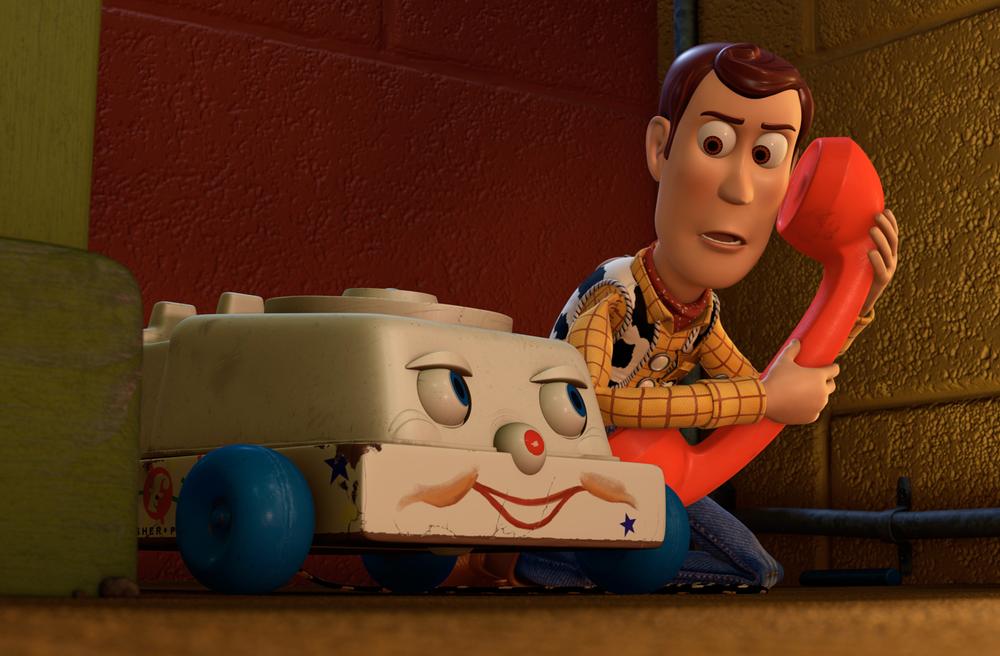
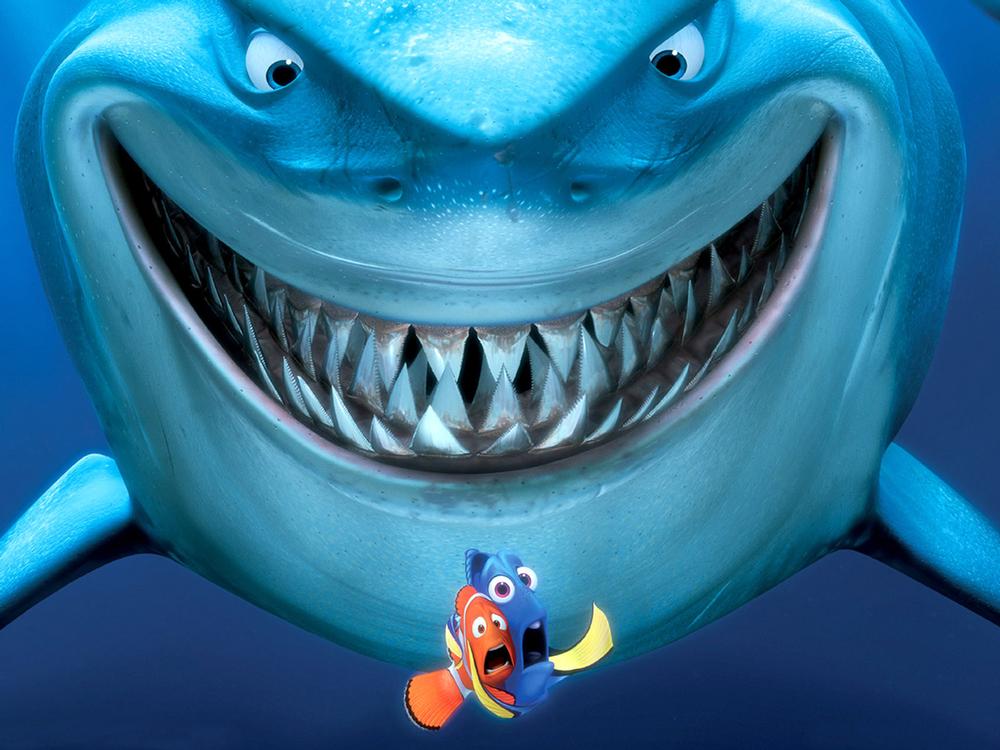
The Golden Rules What makes this story work? First, let’s measure this story against Andrew Stanton’s five ‘Golden Rules’ for telling a great story. Then we’ll get to the science – what happened in your body when you read the story. Stanton is a Pixar legend – director of Finding Nemo and WALL-E, and writer of the Toy Story movies. He’s a master storyteller, known to work with his colleagues for years to ‘nail’ a story before the first image is created. Stanton gave a famous talk at TED (www.ted.com/talks/andrew_stanton_the_clues_to_a_great_story.html) revealing Pixar’s ‘secrets’ to a great story:
1) MAKE ME CARE: Baby Shoes makes you care. The character’s suffered the greatest tragedy to befall a parent. Everyone can empathise with this life-changing plight.
2) TAKE ME WITH YOU: Stanton describes the pleasure of going on a journey with a character – Luke Skywalker’s adventure destroying the Death Star, Frodo’s quest for the ring. Baby Shoes continues to resonate with us because it takes us on a journey. Who is writing this classified ad? Someone (the mother?) whose life has changed. Someone about to embark on a dark journey where profound questions must be asked: Why is there suffering? Does this terrible event have meaning?
3) BE INTENTIONAL: Protagonists have a great mission, and they go after it with fervour. The goal is both worthy and demanding. Is our hero ‘intentional’ in this sense? The beauty of Baby Shoes is that we’re eager to speculate on this. To fit this into Joseph Campell’s “Hero’s Journey” template (a renowned basic story pattern that proponents argue is found in many narratives worldwide), we must speculate that what has happened forces our hero (the mother) to hit despair, to then find meaning from the tragedy, and to then return and share what’s been learned about suffering, fortitude and compassion.
4) LET ME LIKE YOU: Stanton says, “The audience also must relate to and appreciate your characters to make them worthy of attention”. In Baby Shoes we can empathise with the author (the mother) living a nightmare. She has our sympathy. We can imagine her weeping as she writes this in the nursery that will never hold her baby.
5) DELIGHT ME: Is Baby Shoes ‘delightful’? Not in the conventional sense. Stanton means ‘delight’ in the sense of an emotional ‘release’ at the end of story. When Skywalker destroys the Death Star, the audience experiences real catharsis. For Baby Shoes to be delightful, we must use the narrative tools of our own imaginative ‘story minds’ and envisage our hero, many years on, coming upon a young woman who’s undergone a similar tragedy. Our hero takes her hand and says, “I know you think you can’t get through this. That no-one has ever experienced such heartbreak. Well, let me tell you a story”. So, our hero finds meaning from her own tragedy by facilitating the healing journey of another.
Emotional Transportation Now, let’s consider the actual science of storytelling. Neuroeconomist Paul Zak carried out a study in which paid research subjects read a tragic story about a father whose son had a terminal illness. After reading the story, the subjects had the opportunity to give money to a charity helping sick children. Zak took blood samples before and after they read the story. He discovered that the story produced a spike of oxcytocin (the ‘empathy’ hormone). The higher the oxcytocin levels, the more money they donated. As Zak tweaked his study, he discovered that the information on the sick child only worked if embedded in the ‘emotive template’ of a classic story. No story, no oxcytocin, no donation. The ‘emotional transportation’ of storytelling was key to the release of the hormone.
Push the Button Another study by Zak revealed the power of storytelling for brands – that brands can have a stronger emotional pull than peers. He measured emotional responses with wireless monitors to record data like heartrate nerve twitches. He discovered that when a subject’s relationship with a product or brand was tied to a compelling story, the subject ‘loved’ the product or brand more than he loved his peers. Men loved their favorite National Football League (NFL) team more than their children. Why? Because the story swept them up in an emotional ‘reason’ to love the product or brand. Zak makes a vital distinction when he summarises his research this way: “We’ve known for a long time that there is no ‘buy’ button in the brain. But these results show there’s a ‘story’ button”. And, of course, the story button connects to the ‘buy’ button.
Stories tell a story Now let’s move beyond the brain to the whole body. Finnish researchers have published a study in Proceedings of the National Academies of Sciences that shows how stories produce emotions that can influence our bodies in consistent ways: 701 participants in five separate experiments read short stories and watched movies. They were shown a blank, computerised figurine and asked to colour in how their bodies were responding to the stories. The researchers discovered that stories affected subjects from different cultures similarly, with visceral changes (‘physical twinges’) throughout the entire body. Striking research has also been compiled in a book by American literary scholar Jonathon Gottschall called The Storytelling Animal. Gottschall cites vital research into ‘mirror neurons’ and the role they play in our enjoyment of stories. “Many scientists now believe we have neural networks that activate when we perform an action or experience an emotion, and also when we observe someone else performing an action or experiencing an emotion.”
Gottschall quotes Marco Lacoboni, a pioneer of mirror neuron research: “Movies feel authentic to us because mirror neurons in our brains re-create for us the distress we see on the screen. We have empathy for the fictional characters because we literally experience the same feelings ourselves. And when we watch the movie stars kiss on screen? Some of the cells firing in our brain are the same ones that fire when we kiss our lover. ‘Vicarious’ is not a strong enough word to describe the effect of these mirror neurons.”
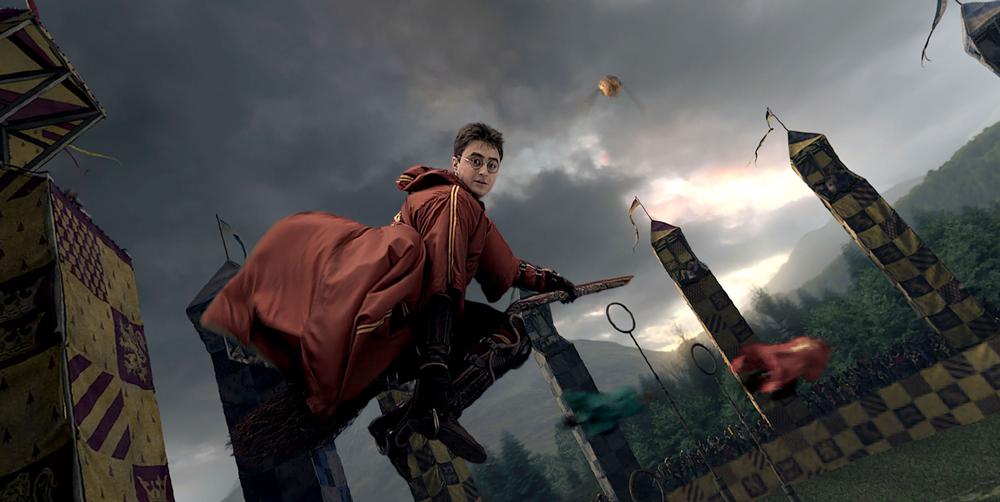
What happened when you read Baby Shoes? Why did you care? Your mirror neurons fired in empathy with the hero – you felt what the mother felt as she sat writing the heartbreaking classified ad. This is why we seek out great stories, because of the pleasure of feeling what great heroes (Harry Potter, Indiana Jones, Scout Finch) feel as we join them on their fraught journeys. And ‘join’ is just the right word. Our brains are engaged. When they fight, we fight with them. Thanks to our mirror neurons, we’re participating in the story.
And Gottschall goes deeper with the research.“We’re addicted to story. Even when the body goes to sleep, the mind stays up all night, telling itself stories.”
And when does this process start? At birth. Children are 24-hour story machines. They are literally hard-wired to ‘do story’. What are the stories about? You might be surprised. Here’s Gottschall:
“What do the (children’s) stories have in common? They are short and choppy. They are all plot. They are marked by a zany creativity: flying choo-choos and talking ducks. And they are bound together by a fat rope of trouble: a father and son plummet from the clouds; baby Batman can’t find his mother; a girl is menaced by a crocodile; a little dog wanders in the woods; a man is bludgeoned and bloodied.”
This is the stuff of fairy tales, which is why they’re so plotty, ferocious and memorable. An evil stepmother convinces a poor woodcutter to let her leave his children in a dark forest populated by a cannibalistic fiend in a gingerbread house. A beloved fairy tale told 202 years ago by the Brothers Grimm. Straight out of a child’s dream.
Storytelling truths Gottschall’s book is filled with universal truths about storytelling. Stories aren’t something we do when we’re in the mood, they are ‘what we are’, the foundation of our very being, the context from which we make sense of the world, the software program our body runs 24 hours a day. Further Gottschall insights include:
• Scientists have ‘mapped’ stories across cultures. Great stories are owned by everyone, around the world.
• One reason we tell ourselves stories is to prove to ourselves that the world makes sense. Virtue is rewarded, justice is done, heroes thrive. Unfortunately, psychopaths, serial killers and murderous dictators hijack these storytelling tropes and twist them to justify their insane actions.
• Our memories are an unreliable databank. We don’t remember what happened, we remember our story of what happened.
So what’s the future of story? Here’s Gottschall again: “These are undeniably nervous times for people who make a living through story. The publishing, film and television businesses are going through a period of painful change. But the essence of story is not changing. The technology of storytelling has evolved from oral tales to clay tablets to hand-lettered manuscripts to printed books to movies, television, Kindles and iPhones. This wreaks havoc with business models, but it doesn’t fundamentally change story. Fiction is as it was and ever will be: Character + Predicament + Attempted Extrication.”
Memorable stories Science can measure the effect of storytelling, but it will never create great, memorable stories. Storytelling will aways be an art that flows from a great truth: “What comes from the heart goes to the heart.”
If stories could be quantified, crunched and ‘solved’ by science, then every book would be a bestseller and every film would be a billion-dollar blockbuster. Although nobody knows what story will grab people, and what story won’t, we do know something about stories and storytelling. We know that we’re all ‘hard-wired’ for stories, immersed in our own stories 24 hours a day. We know that we crave new and fascinating stories that complement, challenge and deepen our on-going narratives and cause us to transcend our personal ‘consciousness silos’ so that we can share our emotions. That’s why television didn’t kill the movies, and movies didn’t kill theatre. We know that everything old is new again. Take Frozen. What’s this story about? The same elements used by storytellers of old – a misunderstanding between sisters, the betrayal of a lover, and personal redemption through courageous sacrifice. So why is Frozen a billion-dollar hit? Because the filmmakers shaped these emotionally powerful elements in an innovative and delightful way (specifically, Disney subverting its classic ‘love at first sight’ trope).
Future Narratives Read The Storytelling Animal. Rejoice in the science that confirms the good news – we crave great, emotional stories that bring us together in a celebration of our common humanity. Our job is to create the next wave of great narratives, and to provide our visitors with the opportunity to experience them, love them, and most importantly, LIVE them.
Christian Lachel of BRC Imagination Arts has won nine Thea Awards. One of the industry’s most influential creative leaders, he combines incredible imagination with design expertise, business acumen and strategic thinking.
An opportunity to reimagine one of the UK’s most recognisable towers has been formally
opened by Rivington Hark, as St Johns Beacon invites operators and partners to shape its
next phase. [more...]
Christian Lachel discusses the emotional pathway of storytelling and the importance of becoming fully immersed in great narratives to best enjoy memorable experiences
By Christian Lachel | Published in Attractions Handbook 2014 issue 1
Stories are the way we understand the world. Everyone – you, your customers, your competitors, your family – depends on ever-evolving subjective personal and cultural narratives to make sense of so-called ‘objective reality’. Storytellers have always known this. Now neuroscientists are proving it. You are programmed to love and respond to stories. Your brain produces ‘pleasure chemicals’ and your body – heart rate and skin temperature – changes with your shifting emotional state.
The Story First, let me tell you a story. A famous story, filled with the elements – drama, empathy, heartache – that make a story memorable. Perhaps you’ve never heard it. If you haven’t, I guarantee that you’ll be able to repeat it word-for-word after hearing it once. There’s even a mystery behind this story that adds to its ‘stickiness’. Ready? Here’s the story, in its entirety: “For sale. Baby shoes. Never worn.”
Six simple words. Can you help but fill in what’s missing? The grieving mother? The thunderstruck father? The freshly painted, empty nursery? The mystery behind this story is, “who wrote it?” Legend has it that in the 1920s Ernest Hemingway bet a lunch table full of writer friends that he could write a complete, satisfying short story on a bar napkin. He wrote this, and won the bet. The problem is that ‘proof’ for this claim wasn’t published until 1991, 30 years after Hemingway’s death, and several (slightly longer) versions of the story pre-date Hemingway’s career as a writer. What’s interesting about this mystery is that Hemingway’s authorship persists in the face of convincing evidence to the contrary. Famous for the brevity and conciseness of his prose, this story perfectly aligns with his ‘legend’. It all fits. Hemingway, in a bar (he was a famous drinker) betting he could do the impossible (he was a famous braggart), and then doing it (he was a great writer) – and so creating a real, memorable short story with a beginning, a middle and an end; hitting the bulls-eye of universal empathy.
The Golden Rules What makes this story work? First, let’s measure this story against Andrew Stanton’s five ‘Golden Rules’ for telling a great story. Then we’ll get to the science – what happened in your body when you read the story. Stanton is a Pixar legend – director of Finding Nemo and WALL-E, and writer of the Toy Story movies. He’s a master storyteller, known to work with his colleagues for years to ‘nail’ a story before the first image is created. Stanton gave a famous talk at TED (www.ted.com/talks/andrew_stanton_the_clues_to_a_great_story.html) revealing Pixar’s ‘secrets’ to a great story:
1) MAKE ME CARE: Baby Shoes makes you care. The character’s suffered the greatest tragedy to befall a parent. Everyone can empathise with this life-changing plight.
2) TAKE ME WITH YOU: Stanton describes the pleasure of going on a journey with a character – Luke Skywalker’s adventure destroying the Death Star, Frodo’s quest for the ring. Baby Shoes continues to resonate with us because it takes us on a journey. Who is writing this classified ad? Someone (the mother?) whose life has changed. Someone about to embark on a dark journey where profound questions must be asked: Why is there suffering? Does this terrible event have meaning?
3) BE INTENTIONAL: Protagonists have a great mission, and they go after it with fervour. The goal is both worthy and demanding. Is our hero ‘intentional’ in this sense? The beauty of Baby Shoes is that we’re eager to speculate on this. To fit this into Joseph Campell’s “Hero’s Journey” template (a renowned basic story pattern that proponents argue is found in many narratives worldwide), we must speculate that what has happened forces our hero (the mother) to hit despair, to then find meaning from the tragedy, and to then return and share what’s been learned about suffering, fortitude and compassion.
4) LET ME LIKE YOU: Stanton says, “The audience also must relate to and appreciate your characters to make them worthy of attention”. In Baby Shoes we can empathise with the author (the mother) living a nightmare. She has our sympathy. We can imagine her weeping as she writes this in the nursery that will never hold her baby.
5) DELIGHT ME: Is Baby Shoes ‘delightful’? Not in the conventional sense. Stanton means ‘delight’ in the sense of an emotional ‘release’ at the end of story. When Skywalker destroys the Death Star, the audience experiences real catharsis. For Baby Shoes to be delightful, we must use the narrative tools of our own imaginative ‘story minds’ and envisage our hero, many years on, coming upon a young woman who’s undergone a similar tragedy. Our hero takes her hand and says, “I know you think you can’t get through this. That no-one has ever experienced such heartbreak. Well, let me tell you a story”. So, our hero finds meaning from her own tragedy by facilitating the healing journey of another.
Emotional Transportation Now, let’s consider the actual science of storytelling. Neuroeconomist Paul Zak carried out a study in which paid research subjects read a tragic story about a father whose son had a terminal illness. After reading the story, the subjects had the opportunity to give money to a charity helping sick children. Zak took blood samples before and after they read the story. He discovered that the story produced a spike of oxcytocin (the ‘empathy’ hormone). The higher the oxcytocin levels, the more money they donated. As Zak tweaked his study, he discovered that the information on the sick child only worked if embedded in the ‘emotive template’ of a classic story. No story, no oxcytocin, no donation. The ‘emotional transportation’ of storytelling was key to the release of the hormone.
Push the Button Another study by Zak revealed the power of storytelling for brands – that brands can have a stronger emotional pull than peers. He measured emotional responses with wireless monitors to record data like heartrate nerve twitches. He discovered that when a subject’s relationship with a product or brand was tied to a compelling story, the subject ‘loved’ the product or brand more than he loved his peers. Men loved their favorite National Football League (NFL) team more than their children. Why? Because the story swept them up in an emotional ‘reason’ to love the product or brand. Zak makes a vital distinction when he summarises his research this way: “We’ve known for a long time that there is no ‘buy’ button in the brain. But these results show there’s a ‘story’ button”. And, of course, the story button connects to the ‘buy’ button.
Stories tell a story Now let’s move beyond the brain to the whole body. Finnish researchers have published a study in Proceedings of the National Academies of Sciences that shows how stories produce emotions that can influence our bodies in consistent ways: 701 participants in five separate experiments read short stories and watched movies. They were shown a blank, computerised figurine and asked to colour in how their bodies were responding to the stories. The researchers discovered that stories affected subjects from different cultures similarly, with visceral changes (‘physical twinges’) throughout the entire body. Striking research has also been compiled in a book by American literary scholar Jonathon Gottschall called The Storytelling Animal. Gottschall cites vital research into ‘mirror neurons’ and the role they play in our enjoyment of stories. “Many scientists now believe we have neural networks that activate when we perform an action or experience an emotion, and also when we observe someone else performing an action or experiencing an emotion.”
Gottschall quotes Marco Lacoboni, a pioneer of mirror neuron research: “Movies feel authentic to us because mirror neurons in our brains re-create for us the distress we see on the screen. We have empathy for the fictional characters because we literally experience the same feelings ourselves. And when we watch the movie stars kiss on screen? Some of the cells firing in our brain are the same ones that fire when we kiss our lover. ‘Vicarious’ is not a strong enough word to describe the effect of these mirror neurons.”
What happened when you read Baby Shoes? Why did you care? Your mirror neurons fired in empathy with the hero – you felt what the mother felt as she sat writing the heartbreaking classified ad. This is why we seek out great stories, because of the pleasure of feeling what great heroes (Harry Potter, Indiana Jones, Scout Finch) feel as we join them on their fraught journeys. And ‘join’ is just the right word. Our brains are engaged. When they fight, we fight with them. Thanks to our mirror neurons, we’re participating in the story.
And Gottschall goes deeper with the research.“We’re addicted to story. Even when the body goes to sleep, the mind stays up all night, telling itself stories.”
And when does this process start? At birth. Children are 24-hour story machines. They are literally hard-wired to ‘do story’. What are the stories about? You might be surprised. Here’s Gottschall:
“What do the (children’s) stories have in common? They are short and choppy. They are all plot. They are marked by a zany creativity: flying choo-choos and talking ducks. And they are bound together by a fat rope of trouble: a father and son plummet from the clouds; baby Batman can’t find his mother; a girl is menaced by a crocodile; a little dog wanders in the woods; a man is bludgeoned and bloodied.”
This is the stuff of fairy tales, which is why they’re so plotty, ferocious and memorable. An evil stepmother convinces a poor woodcutter to let her leave his children in a dark forest populated by a cannibalistic fiend in a gingerbread house. A beloved fairy tale told 202 years ago by the Brothers Grimm. Straight out of a child’s dream.
Storytelling truths Gottschall’s book is filled with universal truths about storytelling. Stories aren’t something we do when we’re in the mood, they are ‘what we are’, the foundation of our very being, the context from which we make sense of the world, the software program our body runs 24 hours a day. Further Gottschall insights include:
• Scientists have ‘mapped’ stories across cultures. Great stories are owned by everyone, around the world.
• One reason we tell ourselves stories is to prove to ourselves that the world makes sense. Virtue is rewarded, justice is done, heroes thrive. Unfortunately, psychopaths, serial killers and murderous dictators hijack these storytelling tropes and twist them to justify their insane actions.
• Our memories are an unreliable databank. We don’t remember what happened, we remember our story of what happened.
So what’s the future of story? Here’s Gottschall again: “These are undeniably nervous times for people who make a living through story. The publishing, film and television businesses are going through a period of painful change. But the essence of story is not changing. The technology of storytelling has evolved from oral tales to clay tablets to hand-lettered manuscripts to printed books to movies, television, Kindles and iPhones. This wreaks havoc with business models, but it doesn’t fundamentally change story. Fiction is as it was and ever will be: Character + Predicament + Attempted Extrication.”
Memorable stories Science can measure the effect of storytelling, but it will never create great, memorable stories. Storytelling will aways be an art that flows from a great truth: “What comes from the heart goes to the heart.”
If stories could be quantified, crunched and ‘solved’ by science, then every book would be a bestseller and every film would be a billion-dollar blockbuster. Although nobody knows what story will grab people, and what story won’t, we do know something about stories and storytelling. We know that we’re all ‘hard-wired’ for stories, immersed in our own stories 24 hours a day. We know that we crave new and fascinating stories that complement, challenge and deepen our on-going narratives and cause us to transcend our personal ‘consciousness silos’ so that we can share our emotions. That’s why television didn’t kill the movies, and movies didn’t kill theatre. We know that everything old is new again. Take Frozen. What’s this story about? The same elements used by storytellers of old – a misunderstanding between sisters, the betrayal of a lover, and personal redemption through courageous sacrifice. So why is Frozen a billion-dollar hit? Because the filmmakers shaped these emotionally powerful elements in an innovative and delightful way (specifically, Disney subverting its classic ‘love at first sight’ trope).
Future Narratives Read The Storytelling Animal. Rejoice in the science that confirms the good news – we crave great, emotional stories that bring us together in a celebration of our common humanity. Our job is to create the next wave of great narratives, and to provide our visitors with the opportunity to experience them, love them, and most importantly, LIVE them.
Christian Lachel of BRC Imagination Arts has won nine Thea Awards. One of the industry’s most influential creative leaders, he combines incredible imagination with design expertise, business acumen and strategic thinking.
Hotel de France, located on the British Isle of Jersey, has created a wellness retreat package
that includes a hot yoga session that will take place in Jersey Zoo’s butterfly sanctuary.
A new immersive attraction designed to transport visitors into the final hours of ancient Pompeii
is preparing to open near the world-famous archaeological site in southern Italy.
Experience design company, BRC Imagination Arts, has completed a transition that sees founder
Bob Rogers pass ownership of the business to four long-serving senior executives, while
remaining actively involved with the company.
Movie Park Germany has opened a new Paramount Pictures-themed attraction as part of its 30th
anniversary celebrations, using immersive storytelling and adaptive reuse to reinforce the park’s
longstanding “Hollywood in Germany” positioning.
Therme Manchester’s 28-acre development, which will include interconnected glass pavilions
that measure 65,000sq m, will be the largest bathing and wellbeing attraction in the world once
complete, according to prof David Russell, CEO of Therme UK.
Efteling has opened Hooghmoed, a new family drop tower designed to broaden the appeal of its
recently launched Sirene Island themed area and introduce younger visitors to thrill attractions.
A proposed Puy du Fou development near Bicester and Universal Destinations and Experiences’
planned resort in Bedford are emerging as part of a wider transformation of the Oxford–
Cambridge Growth Corridor into a major centre for UK leisure and tourism inv
Shedd Aquarium has opened the Immersion Theater developed in partnership with SimEx-
Iwerks, as part of a wider strategy to enhance the guest experience and create additional
revenue opportunities.
The UK government has announced a temporary reduction in VAT on visitor attractions and
children’s meals as part of a summer cost-of-living support package designed to stimulate the
visitor economy and encourage family days out.
As designer Yinka Ilori prepares for his first solo gallery show in London, he speaks exclusively
to CLADmag about his mission to spread joy, the power of play, and his bold approach to using
colour (including the colours you won’t see in his work).
The government of Thailand is exploring plans for a THB300bn (£6.3bn, US$8.3bn)
entertainment complex in the country’s Eastern Economic Corridor (EEC), with officials
proposing a large-scale theme park and sports destination as part of a broader tourism and
economic development strategy.
+ More news
COMPANY PROFILES
Alterface Alterface’s Creative Division team is
seasoned in concept and ride development,
as well as storyte [more...]
Polin Waterparks Polin was founded in Istanbul in 1976. Polin
has since grown into a leading company in
the waterpa [more...]
IDEATTACK IDEATTACK is a full-service planning and
design company with headquarters in
Los Angeles. [more...]
QubicaAMF UK QubicaAMF is the largest and most
innovative bowling equipment provider with
600 employees worldwi [more...]
An opportunity to reimagine one of the UK’s most recognisable towers has been formally
opened by Rivington Hark, as St Johns Beacon invites operators and partners to shape its
next phase. [more...]