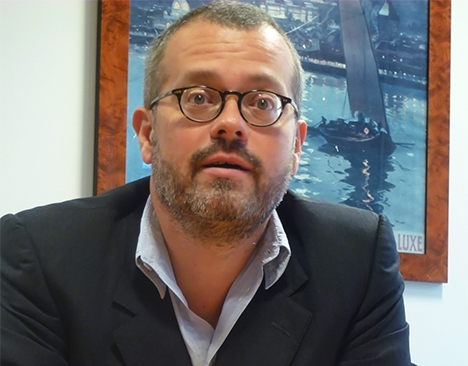
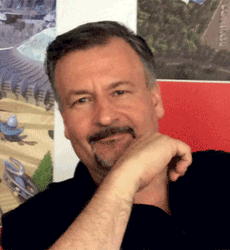
Marketing and business development specialist Laurent Houel joined evian®, the iconic water company, in 2009 with the task of expanding the brand into new arenas. Spa was an obvious avenue and four years on an exciting new spa brand backed by a globally recognised group has arrived on the scene. The licenced evianSpa concept debuted at Palace Hotel Tokyo in 2012 as part of a US$1.2bn refurbishment and is now poised for a strategic global rollout.
What’s your background? I’ve spent most of my career working in marketing and business development for FMCG and luxury companies. I started in Proctor & Gamble and then moved to fragrance and cosmetics company Coty – that owns Rimmel and operates licenced brands such as the Calvin Klein and Chloé scents. In the luxury sector, I was VP of marketing for YSL on the cosmetics side and prior to evian was at LVMH.
Evian, which belongs to Danone, has a fantastic history and coming from the luxury business, where the heritage dimension is key, this richness really struck a chord. It was first discovered to have health benefits in 1789 and this spurred on the growth of the spa and thermal water traditions that the French Alpine town of Évian-les-Bains has built a whole industry around. When you come from the luxury sector having a rich heritage like this is extremely important.
How much did you know about spas beforehand? Some of the luxury brands I worked for had spas and I was interested in the wellbeing sector, but I’m not an industry expert which is why I decided to team up with Patrick Saussay. Patrick used to be a business consultant for global companies like BearingPoint, but also had the knowledge of the spa industry as he’d been the managing director at After the Rain: a Swiss skincare and spa company. He set up his own consultancy, Global Project and Spa Advisory, a year ago and we started our collaboration then.
What was your first impression of the spa industry? Initially, I was surprised by its diversity. There are traditional segments like day, urban, destination, medical and hotel spas but the consumer experience can vary tremendously – even if it’s part of a chain – as there’s a diverse interpretation of wellbeing that’s shaped by the personality of the local spa owners.
There’s a fantastic richness, but at the same time, it can be very confusing for the guests to know what to expect. Many of them hesitate at having to spend a significant amount of money on something they don’t understand.
On the positive side, I’ve seen many passionate people in this industry, who feel they have a real mission in developing the wellbeing sector. This is very invigorating.
What could the spa industry learn from the luxury sector? First, that there is a need for absolute consistency in the spa offer. Everything counts from the product to the retail environment and the communication – everything needs to sync perfectly to create the same brand experience overall.
Second, is innovation. You must surprise your customers because if you stick to a recipe you lose the edge. Innovation, however, should stem from the original creation with solid marketing behind it.
Is the pampering spa image a damaging one? The spa industry is very fragmented but I think there’s room for the ‘me time’ approach as well as the harder health approach. But it’s important that the industry starts to clarify these different segments for consumers.
How do you see consumers’ needs changing? There’s a shift in wealth globally. New affluent travellers from emerging markets are joining the ranks. They’re fond of brands and I think we’ll see more branded offers in the upscale spa market. Luckily, this is a real plus for the evianSpa proposal as evian is already positioned as a well-respected and well-known premium product in these markets.
What are the opportunities for growth? In the more developed spa markets, such as in the US and Europe, there’s a gap for mid-market facilities targeting local consumers and focused on volume. A typical customer would be an office worker craving a break from the daily rush at lunch time for an affordable price, with a packaged experience in a branded chain. Or the mid-level executive longing for ‘me time’ at the weekend, who’s yet to find a brand they can trust. Such businesses do already exist but there’s room for more.
What are the biggest threats? There’s a lack of classification in spas. While the hospitality industry’s star classification isn’t fully aligned worldwide at least it exists. Not having any kind of trusted and shared rating for spas can really discourage guests. It’s really difficult for newcomers to figure out where to go – how many times have you been asked by a relative for advice on what spa is best? Discipline and clarity is needed. There are efforts being made by companies like the Leading Hotels of the World and SpaFinder® Wellness – but when moving from the sheer luxury spa world it becomes quite a jungle.
What’s the difference between a good spa and a great spa? A good spa will at least provide a good treatment which is at the core of what the guest wants. But leaving aside the other aspects of the consumer journey will make the spa fall short of entering the ‘great spa’ category.
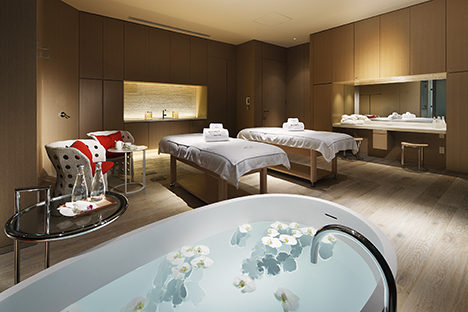
A great spa will offer an excellent integrated consumer experience including outstanding service and execution from the first moment. It will have the famous ‘whaooow’ effect triggered by the look, feel, treatment, service and other elements. A great spa will make the guest remember vividly at least one thing they will be able to tell and spread among their relatives. Word of mouth is key in this industry.
What’s your goal for 2013? To become a player in the field recognised for its distinctive offer and seriousness. We want to sign a handful of new licences for projects that will see the light by 2015. Asia is a key market for us, particularly China, South Korea, Singapore, Thailand, and Japan (beyond Tokyo). The Middle East and Russia are also interesting.
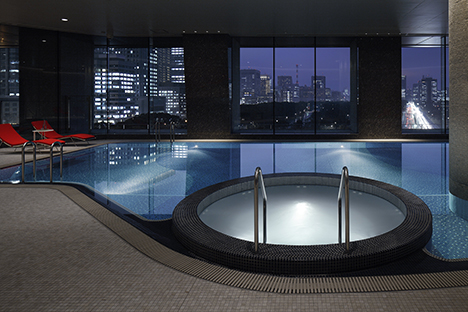
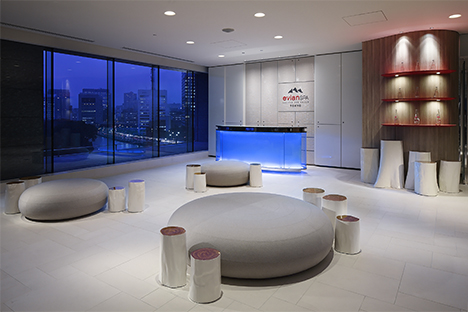
What are your longer-term ambitions? To establish one spa flagship per key market targeted, in the right location and with the right partner. This can take some time as we really want something special. Clearly we’ve done this in Tokyo – how many opportunities do you have to go to a spa with a stunning view on the Imperial Palace gardens, a true contact with nature in the middle of a megacity?
Next will be in France where the priority is to implement our concept in the renovation of the Hôtel Royal – one of two properties we own in Évian-les-Bains, which is resort where evian spring water was first discovered.
Is your life on track? Definitely yes. And I like the way you ask the question ‘do I have a direction, a way forward?’ It’s not about being just satisfied now, it’s about feeling a movement, that leads you to a personal accomplishment. I am lucky enough to feel that, thanks to a very stimulating professional career at Danone, and a really happy personal life.
How would you describe yourself? My take on myself: passionate, curious, forward-looking, business-minded, focused, an art lover and a reasonable cook! I also think I have real sense of entrepreneurship, the will to build, change, organise, and lead with a focus on people and team development. My critics would say: impatient, too demanding, at first cold and distant, sometimes too ironic.
If you weren’t doing this, what would you be doing? I’d be a chef, or if I couldn’t for lack of talent, I’d be the closest partner to a great chef.
Marketing and business development specialist Laurent Houel joined evian®, the iconic water company, in 2009 with the task of expanding the brand into new arenas. Spa was an obvious avenue and four years on an exciting new spa brand backed by a globally recognised group has arrived on the scene. The licenced evianSpa concept debuted at Palace Hotel Tokyo in 2012 as part of a US$1.2bn refurbishment and is now poised for a strategic global rollout.
What’s your background? I’ve spent most of my career working in marketing and business development for FMCG and luxury companies. I started in Proctor & Gamble and then moved to fragrance and cosmetics company Coty – that owns Rimmel and operates licenced brands such as the Calvin Klein and Chloé scents. In the luxury sector, I was VP of marketing for YSL on the cosmetics side and prior to evian was at LVMH.
Evian, which belongs to Danone, has a fantastic history and coming from the luxury business, where the heritage dimension is key, this richness really struck a chord. It was first discovered to have health benefits in 1789 and this spurred on the growth of the spa and thermal water traditions that the French Alpine town of Évian-les-Bains has built a whole industry around. When you come from the luxury sector having a rich heritage like this is extremely important.
How much did you know about spas beforehand? Some of the luxury brands I worked for had spas and I was interested in the wellbeing sector, but I’m not an industry expert which is why I decided to team up with Patrick Saussay. Patrick used to be a business consultant for global companies like BearingPoint, but also had the knowledge of the spa industry as he’d been the managing director at After the Rain: a Swiss skincare and spa company. He set up his own consultancy, Global Project and Spa Advisory, a year ago and we started our collaboration then.
What was your first impression of the spa industry? Initially, I was surprised by its diversity. There are traditional segments like day, urban, destination, medical and hotel spas but the consumer experience can vary tremendously – even if it’s part of a chain – as there’s a diverse interpretation of wellbeing that’s shaped by the personality of the local spa owners.
There’s a fantastic richness, but at the same time, it can be very confusing for the guests to know what to expect. Many of them hesitate at having to spend a significant amount of money on something they don’t understand.
On the positive side, I’ve seen many passionate people in this industry, who feel they have a real mission in developing the wellbeing sector. This is very invigorating.
What could the spa industry learn from the luxury sector? First, that there is a need for absolute consistency in the spa offer. Everything counts from the product to the retail environment and the communication – everything needs to sync perfectly to create the same brand experience overall.
Second, is innovation. You must surprise your customers because if you stick to a recipe you lose the edge. Innovation, however, should stem from the original creation with solid marketing behind it.
Is the pampering spa image a damaging one? The spa industry is very fragmented but I think there’s room for the ‘me time’ approach as well as the harder health approach. But it’s important that the industry starts to clarify these different segments for consumers.
How do you see consumers’ needs changing? There’s a shift in wealth globally. New affluent travellers from emerging markets are joining the ranks. They’re fond of brands and I think we’ll see more branded offers in the upscale spa market. Luckily, this is a real plus for the evianSpa proposal as evian is already positioned as a well-respected and well-known premium product in these markets.
What are the opportunities for growth? In the more developed spa markets, such as in the US and Europe, there’s a gap for mid-market facilities targeting local consumers and focused on volume. A typical customer would be an office worker craving a break from the daily rush at lunch time for an affordable price, with a packaged experience in a branded chain. Or the mid-level executive longing for ‘me time’ at the weekend, who’s yet to find a brand they can trust. Such businesses do already exist but there’s room for more.
What are the biggest threats? There’s a lack of classification in spas. While the hospitality industry’s star classification isn’t fully aligned worldwide at least it exists. Not having any kind of trusted and shared rating for spas can really discourage guests. It’s really difficult for newcomers to figure out where to go – how many times have you been asked by a relative for advice on what spa is best? Discipline and clarity is needed. There are efforts being made by companies like the Leading Hotels of the World and SpaFinder® Wellness – but when moving from the sheer luxury spa world it becomes quite a jungle.
What’s the difference between a good spa and a great spa? A good spa will at least provide a good treatment which is at the core of what the guest wants. But leaving aside the other aspects of the consumer journey will make the spa fall short of entering the ‘great spa’ category.
A great spa will offer an excellent integrated consumer experience including outstanding service and execution from the first moment. It will have the famous ‘whaooow’ effect triggered by the look, feel, treatment, service and other elements. A great spa will make the guest remember vividly at least one thing they will be able to tell and spread among their relatives. Word of mouth is key in this industry.
What’s your goal for 2013? To become a player in the field recognised for its distinctive offer and seriousness. We want to sign a handful of new licences for projects that will see the light by 2015. Asia is a key market for us, particularly China, South Korea, Singapore, Thailand, and Japan (beyond Tokyo). The Middle East and Russia are also interesting.
What are your longer-term ambitions? To establish one spa flagship per key market targeted, in the right location and with the right partner. This can take some time as we really want something special. Clearly we’ve done this in Tokyo – how many opportunities do you have to go to a spa with a stunning view on the Imperial Palace gardens, a true contact with nature in the middle of a megacity?
Next will be in France where the priority is to implement our concept in the renovation of the Hôtel Royal – one of two properties we own in Évian-les-Bains, which is resort where evian spring water was first discovered.
Is your life on track? Definitely yes. And I like the way you ask the question ‘do I have a direction, a way forward?’ It’s not about being just satisfied now, it’s about feeling a movement, that leads you to a personal accomplishment. I am lucky enough to feel that, thanks to a very stimulating professional career at Danone, and a really happy personal life.
How would you describe yourself? My take on myself: passionate, curious, forward-looking, business-minded, focused, an art lover and a reasonable cook! I also think I have real sense of entrepreneurship, the will to build, change, organise, and lead with a focus on people and team development. My critics would say: impatient, too demanding, at first cold and distant, sometimes too ironic.
If you weren’t doing this, what would you be doing? I’d be a chef, or if I couldn’t for lack of talent, I’d be the closest partner to a great chef.
OMA has completed a major transformation of New York's New Museum, creating a larger
cultural campus that combines expanded exhibition spaces with learning, performance,
hospitality and public programming.
A US$50 million (£44.2 million, €51.2 million) transformation of Chicago's historic McCormick
Mansion has created a new destination that combines live magic, immersive theatre, dining and
private membership under one roof.
The Montana Historical Society has officially celebrated the opening of its new Montana
Heritage
Center, a US$107 million (£79 million, €92 million) destination that combines immersive
storytelling with cutting-edge audiovisual technology to bring the sta
San Antonio Zoo has reported a US$283 million economic impact for 2025, following a decade-
long transformation programme that has seen almost US$200 million invested into the Texas
attraction.
Plans for the AU$180 million redevelopment of Reef HQ Aquarium in Townsville, Australia, are
progressing, with the project set to transform the attraction into a global centre for reef
education and conservation.
Abu Dhabi-based investment firm Mubadala Capital has made a binding, fully financed
€1 billion
offer to acquire Pierre and Vacances SA, the European holiday resort operator behind the
continental European Center Parcs business.
Disney has reaffirmed its commitment to investing US$30 billion in its US parks and cruise
business by 2033, using new America250 celebrations to underline the role its attractions play
in supporting jobs, tourism and economic growth.
Expo 2030 Riyadh is being planned as a permanent visitor destination, with organisers
confirming the six-million-square-metre site will become a Global Village after the event closes.
The owner of one of Australia's best-known waterparks has acquired a major competitor,
creating a new attractions business spanning two of the country's largest visitor destinations.
The Toverland theme park in the Netherlands has announced a €98m expansion programme
that will add a resort, new attractions and staff facilities as it pursues plans to become a multi-
day destination.
+ More news
COMPANY PROFILES
IDEATTACK IDEATTACK is a full-service planning and
design company with headquarters in
Los Angeles. [more...]
IAAPA EMEA IAAPA Expo Europe was established in 2006 and has grown to the largest international conference and [more...]
RMA Ltd RMA Ltd is a one-stop global company
that can design, build and produce from a
greenfield site upw [more...]
QubicaAMF UK QubicaAMF is the largest and most
innovative bowling equipment provider with
600 employees worldwi [more...]