The pandemic has influenced how spa, wellness and wellbeing impact hotel revenues and profits. Laura Dutrieux, managing director EMEA, RLA Global, shares key findings from the Wellness Real Estate Report...
Covid restrictions led to a rise in revenue per occupied room / GingerKitten/shutterstock
Investors and developers have often faced challenges in assessing the tangible value of spa, wellness and wellbeing offerings on the financial performance of hotels and resorts, even before Covid. With the overall disruption the pandemic caused in the industry, it became much more difficult to see how these features impact the bottom line of the entire asset.
As the easing of travel restrictions fuel hopes for a timely recovery in key markets, benchmarking the competitive set of hotels and resorts with wellbeing and wellness offerings could be more useful than ever to stakeholders.
The Wellness Real Estate Report uses data from P&L benchmarking firm HotStats on the performance of 3,200 properties globally to provide insights on how wellness and wellbeing contribute to revenue and profit.
The 2021 edition of the report found the pandemic had a twofold impact on property with a wellness and wellbeing proposition. It cut revenue and profit in 2020, but created a stronger customer focus on health, translating into an increased demand for wellbeing and wellness offerings. Such features helped some properties fare better than others during the crisis, which potentially indicates certain post-lockdown trends as well.
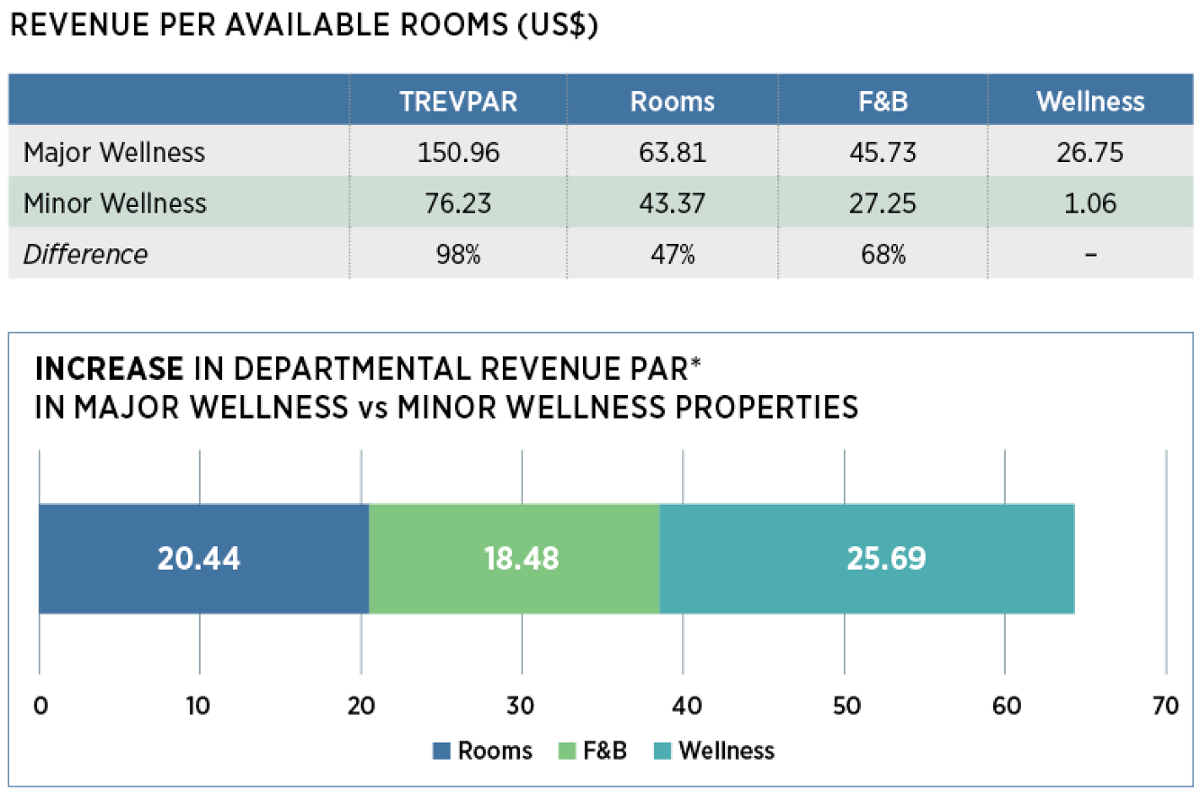
Revenue generation gaps In 2020, the total revenue of properties with major wellness operations outpaced that of hotels with relatively minor wellness features or services. It can be argued that the difference came from higher average daily rates (ADR) at major wellness hotels which typically offer luxury services, leading to higher room revenue.
But 25 per cent of the increased daily total revenue per available room (TRevPAR) derived from an increase in food & beverage (F&B) revenue and 34 per cent from leisure revenue.
Running a major wellness operation generally helps drive additional income per available room - whether it is occupied or not - by boosting both F&B and leisure revenue. On the revenue level, offering extensive wellness features and services is more advantageous than having limited wellness when occupancy is low, either because of seasonality or due to a major crisis such as the pandemic.
All properties covered in this year’s Wellness Real Estate Report saw their revenue, per occupied room, rise in 2020, mainly due to the drop in the number of rooms sold. Properties were able to drive additional income from non-room products, with guests spending more in the hotel due to Covid-related restrictions applying to outside restaurants, wellness and retail shops.
Major wellness properties could rely on extensive non-room services and products to justify an increase in pricing, which led to a 9.5 per cent rise in ADR. Minor wellness properties did not have the same flexibility and could not benefit from such an increase in ADR.
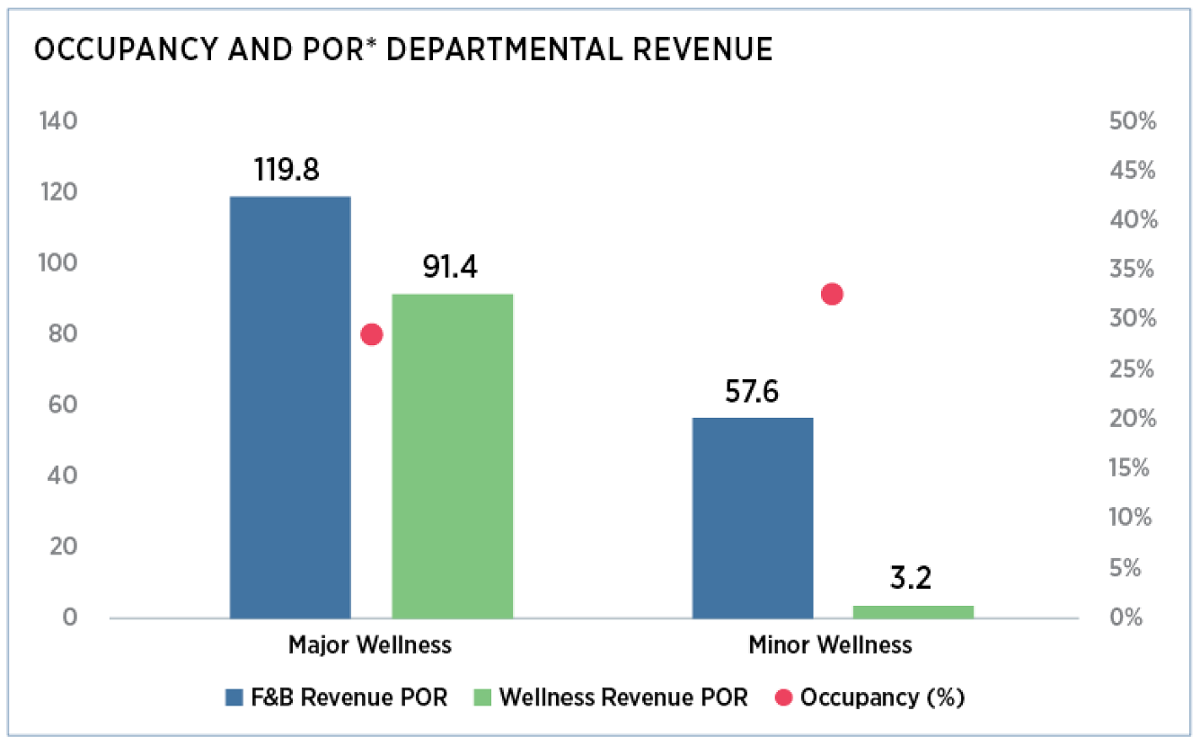
Departmental performance Digging deeper into departmental data revealed that overall F&B revenue at major wellness properties was only 16 per cent higher than in minor wellness hotels. But F&B revenue per occupied room (POR) showed that major wellness hotels drove 103 per cent more income from their outlets, including restaurants and bars, than their peers with minor wellness. Resorts and hotels with extensive wellness are typically associated with gourmet and niche F&B concepts which allow for a premium price.
The revenue gap between bigger and smaller wellness properties was even more pronounced last year when we looked at leisure departments. Major wellness hotels drove almost three times more leisure income than minor wellness properties in 2020, despite the fact occupancy was 29.3 per cent against 32.8 per. This difference reflects higher prices and a greater range of paid activities which allow major properties to make their room more income-valuable.
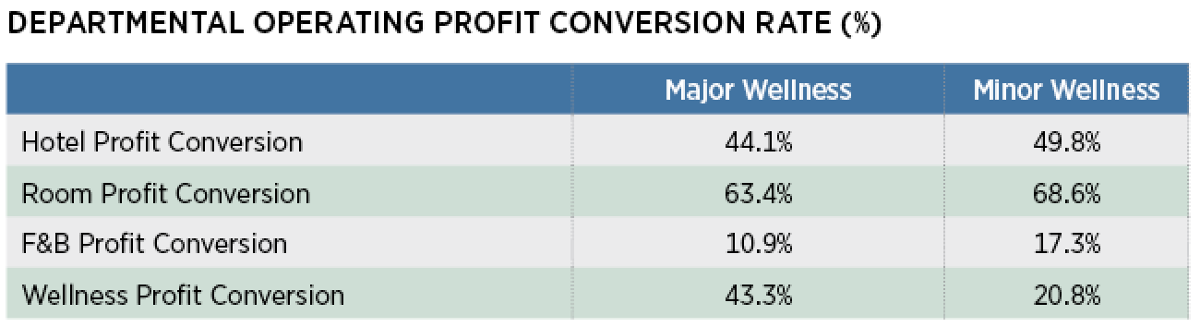
Impacts on profitability Major wellness properties are clearly winning when it comes to driving the income-value of their rooms, but extensive wellness features and services incur higher operating and payroll costs, which may dent departmental profit margins. This explains why rooms and F&B departments at minor wellness properties drove higher profits in 2020, at 69 per cent and 17 per cent of revenue, respectively.
Data on the profitability of leisure departments paints an entirely different picture. Leisure profit conversion at major wellness properties was 43 per cent last year, which compared with only 21 per cent at hotels with minor wellness offerings or features. This contrast was probably driven by the large difference in leisure income that offset the extra-cost incurred by the operations of extensive leisure services.
All types of hotels covered in the report saw their profits fall in 2020, mostly as a result of a massive loss of revenue due to the pandemic. Major wellness properties were the least impacted with a decrease in gross operating profit (GOP) of 19 points, while minor wellness and no wellness units saw their GOP line decline by 24 points and 34 points, respectively.
Minor wellness hotels fared better in terms of gross operating profit per available room (GOPPAR) with a drop of 57 points, compared to a 69-point fall at major wellness properties. Minor wellness hotels were able to cut their cost per available room to limit the decrease in GOPPAR. Major wellness properties, on the other hand, could not afford to reduce operational costs and the increase in ADR did not offset the excess operational costs per available room.
Assessing tangible effects Real estate investors, developers and operators obviously need to assess a number of factors when evaluating investment opportunities. Overall profit must be considered as it is the primary source of cash inflow that will justify the investment needed to build a property. The trends which the pandemic has accelerated in the wellness industry are now expected to become major considerations when developing real estate assets.
However, stakeholders must measure the effects of wellness investments in advance, with the focus on managing expectations of future profit. l
For further data and analysis on how wellness and wellbeing impact hotel profitability and the other industry trends influencing wellness in real estate, download RLA Global’s last edition of the Wellness Real Estate Report at www.wellnessrealestatereport.com
About the author:
Laura Dutrieux is managing director EMEA of RLA Global and has worked across Europe, the Middle East and Africa, representing owners, developers and investors.
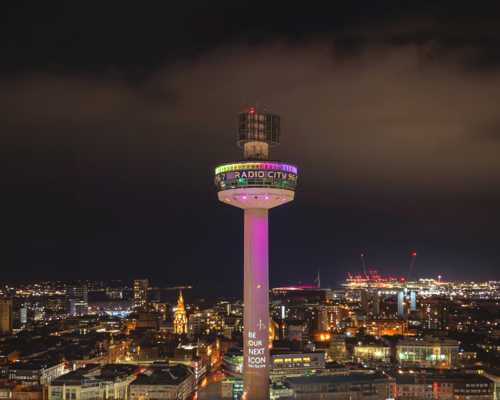
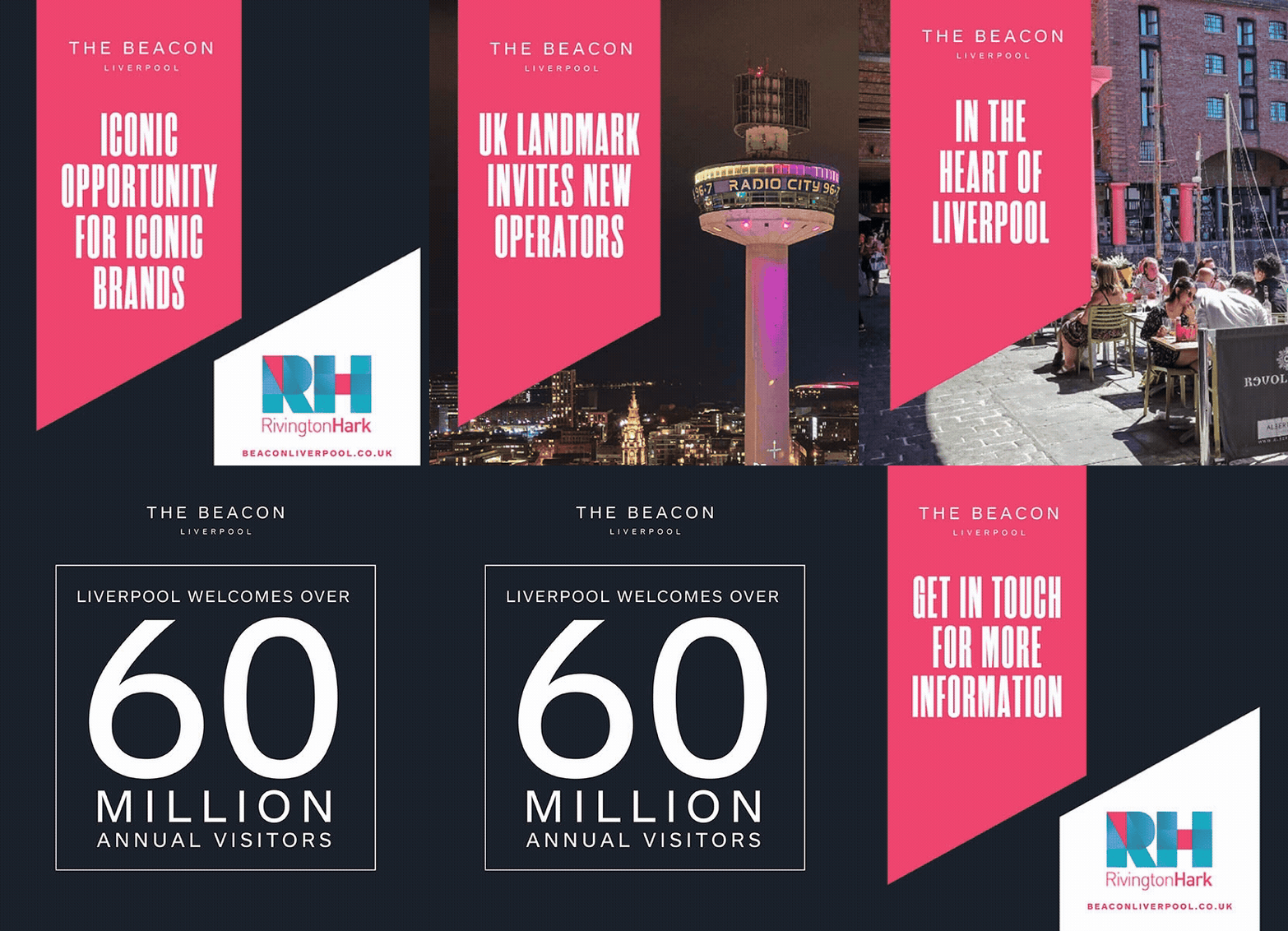
An opportunity to reimagine one of the UK’s most recognisable towers has been formally
opened by Rivington Hark, as St Johns Beacon invites operators and partners to shape its
next phase. [more...]
The pandemic has influenced how spa, wellness and wellbeing impact hotel revenues and profits. Laura Dutrieux, managing director EMEA, RLA Global, shares key findings from the Wellness Real Estate Report...
Covid restrictions led to a rise in revenue per occupied room / GingerKitten/shutterstock
Investors and developers have often faced challenges in assessing the tangible value of spa, wellness and wellbeing offerings on the financial performance of hotels and resorts, even before Covid. With the overall disruption the pandemic caused in the industry, it became much more difficult to see how these features impact the bottom line of the entire asset.
As the easing of travel restrictions fuel hopes for a timely recovery in key markets, benchmarking the competitive set of hotels and resorts with wellbeing and wellness offerings could be more useful than ever to stakeholders.
The Wellness Real Estate Report uses data from P&L benchmarking firm HotStats on the performance of 3,200 properties globally to provide insights on how wellness and wellbeing contribute to revenue and profit.
The 2021 edition of the report found the pandemic had a twofold impact on property with a wellness and wellbeing proposition. It cut revenue and profit in 2020, but created a stronger customer focus on health, translating into an increased demand for wellbeing and wellness offerings. Such features helped some properties fare better than others during the crisis, which potentially indicates certain post-lockdown trends as well.
Revenue generation gaps In 2020, the total revenue of properties with major wellness operations outpaced that of hotels with relatively minor wellness features or services. It can be argued that the difference came from higher average daily rates (ADR) at major wellness hotels which typically offer luxury services, leading to higher room revenue.
But 25 per cent of the increased daily total revenue per available room (TRevPAR) derived from an increase in food & beverage (F&B) revenue and 34 per cent from leisure revenue.
Running a major wellness operation generally helps drive additional income per available room - whether it is occupied or not - by boosting both F&B and leisure revenue. On the revenue level, offering extensive wellness features and services is more advantageous than having limited wellness when occupancy is low, either because of seasonality or due to a major crisis such as the pandemic.
All properties covered in this year’s Wellness Real Estate Report saw their revenue, per occupied room, rise in 2020, mainly due to the drop in the number of rooms sold. Properties were able to drive additional income from non-room products, with guests spending more in the hotel due to Covid-related restrictions applying to outside restaurants, wellness and retail shops.
Major wellness properties could rely on extensive non-room services and products to justify an increase in pricing, which led to a 9.5 per cent rise in ADR. Minor wellness properties did not have the same flexibility and could not benefit from such an increase in ADR.
Departmental performance Digging deeper into departmental data revealed that overall F&B revenue at major wellness properties was only 16 per cent higher than in minor wellness hotels. But F&B revenue per occupied room (POR) showed that major wellness hotels drove 103 per cent more income from their outlets, including restaurants and bars, than their peers with minor wellness. Resorts and hotels with extensive wellness are typically associated with gourmet and niche F&B concepts which allow for a premium price.
The revenue gap between bigger and smaller wellness properties was even more pronounced last year when we looked at leisure departments. Major wellness hotels drove almost three times more leisure income than minor wellness properties in 2020, despite the fact occupancy was 29.3 per cent against 32.8 per. This difference reflects higher prices and a greater range of paid activities which allow major properties to make their room more income-valuable.
Impacts on profitability Major wellness properties are clearly winning when it comes to driving the income-value of their rooms, but extensive wellness features and services incur higher operating and payroll costs, which may dent departmental profit margins. This explains why rooms and F&B departments at minor wellness properties drove higher profits in 2020, at 69 per cent and 17 per cent of revenue, respectively.
Data on the profitability of leisure departments paints an entirely different picture. Leisure profit conversion at major wellness properties was 43 per cent last year, which compared with only 21 per cent at hotels with minor wellness offerings or features. This contrast was probably driven by the large difference in leisure income that offset the extra-cost incurred by the operations of extensive leisure services.
All types of hotels covered in the report saw their profits fall in 2020, mostly as a result of a massive loss of revenue due to the pandemic. Major wellness properties were the least impacted with a decrease in gross operating profit (GOP) of 19 points, while minor wellness and no wellness units saw their GOP line decline by 24 points and 34 points, respectively.
Minor wellness hotels fared better in terms of gross operating profit per available room (GOPPAR) with a drop of 57 points, compared to a 69-point fall at major wellness properties. Minor wellness hotels were able to cut their cost per available room to limit the decrease in GOPPAR. Major wellness properties, on the other hand, could not afford to reduce operational costs and the increase in ADR did not offset the excess operational costs per available room.
Assessing tangible effects Real estate investors, developers and operators obviously need to assess a number of factors when evaluating investment opportunities. Overall profit must be considered as it is the primary source of cash inflow that will justify the investment needed to build a property. The trends which the pandemic has accelerated in the wellness industry are now expected to become major considerations when developing real estate assets.
However, stakeholders must measure the effects of wellness investments in advance, with the focus on managing expectations of future profit. l
For further data and analysis on how wellness and wellbeing impact hotel profitability and the other industry trends influencing wellness in real estate, download RLA Global’s last edition of the Wellness Real Estate Report at www.wellnessrealestatereport.com
About the author:
Laura Dutrieux is managing director EMEA of RLA Global and has worked across Europe, the Middle East and Africa, representing owners, developers and investors.
Hotel de France, located on the British Isle of Jersey, has created a wellness retreat package
that includes a hot yoga session that will take place in Jersey Zoo’s butterfly sanctuary.
A new immersive attraction designed to transport visitors into the final hours of ancient Pompeii
is preparing to open near the world-famous archaeological site in southern Italy.
Experience design company, BRC Imagination Arts, has completed a transition that sees founder
Bob Rogers pass ownership of the business to four long-serving senior executives, while
remaining actively involved with the company.
Movie Park Germany has opened a new Paramount Pictures-themed attraction as part of its 30th
anniversary celebrations, using immersive storytelling and adaptive reuse to reinforce the park’s
longstanding “Hollywood in Germany” positioning.
Therme Manchester’s 28-acre development, which will include interconnected glass pavilions
that measure 65,000sq m, will be the largest bathing and wellbeing attraction in the world once
complete, according to prof David Russell, CEO of Therme UK.
Efteling has opened Hooghmoed, a new family drop tower designed to broaden the appeal of its
recently launched Sirene Island themed area and introduce younger visitors to thrill attractions.
A proposed Puy du Fou development near Bicester and Universal Destinations and Experiences’
planned resort in Bedford are emerging as part of a wider transformation of the Oxford–
Cambridge Growth Corridor into a major centre for UK leisure and tourism inv
Shedd Aquarium has opened the Immersion Theater developed in partnership with SimEx-
Iwerks, as part of a wider strategy to enhance the guest experience and create additional
revenue opportunities.
The UK government has announced a temporary reduction in VAT on visitor attractions and
children’s meals as part of a summer cost-of-living support package designed to stimulate the
visitor economy and encourage family days out.
As designer Yinka Ilori prepares for his first solo gallery show in London, he speaks exclusively
to CLADmag about his mission to spread joy, the power of play, and his bold approach to using
colour (including the colours you won’t see in his work).
The government of Thailand is exploring plans for a THB300bn (£6.3bn, US$8.3bn)
entertainment complex in the country’s Eastern Economic Corridor (EEC), with officials
proposing a large-scale theme park and sports destination as part of a broader tourism and
economic development strategy.
+ More news
COMPANY PROFILES
Painting With Light By combining lighting, video, scenic and architectural elements, sound and special effects we tell s [more...]
RMA Ltd RMA Ltd is a one-stop global company
that can design, build and produce from a
greenfield site upw [more...]
Simworx Ltd The company was initially established
in 1997. Terry Monkton and Andrew
Roberts are the key stakeh [more...]
TechnoAlpin Indoor TechnoAlpin is the world leader for snowmaking systems. With the Indoor snow division, TechnoAlpin c [more...]
An opportunity to reimagine one of the UK’s most recognisable towers has been formally
opened by Rivington Hark, as St Johns Beacon invites operators and partners to shape its
next phase. [more...]