In the last issue of HCM, we checked with big box operators in the UK to see how
trading has been going since restrictions were lifted. This month we turn our attention
to boutiques and urban studios to find out how they’re faring. Kath Hudson reports
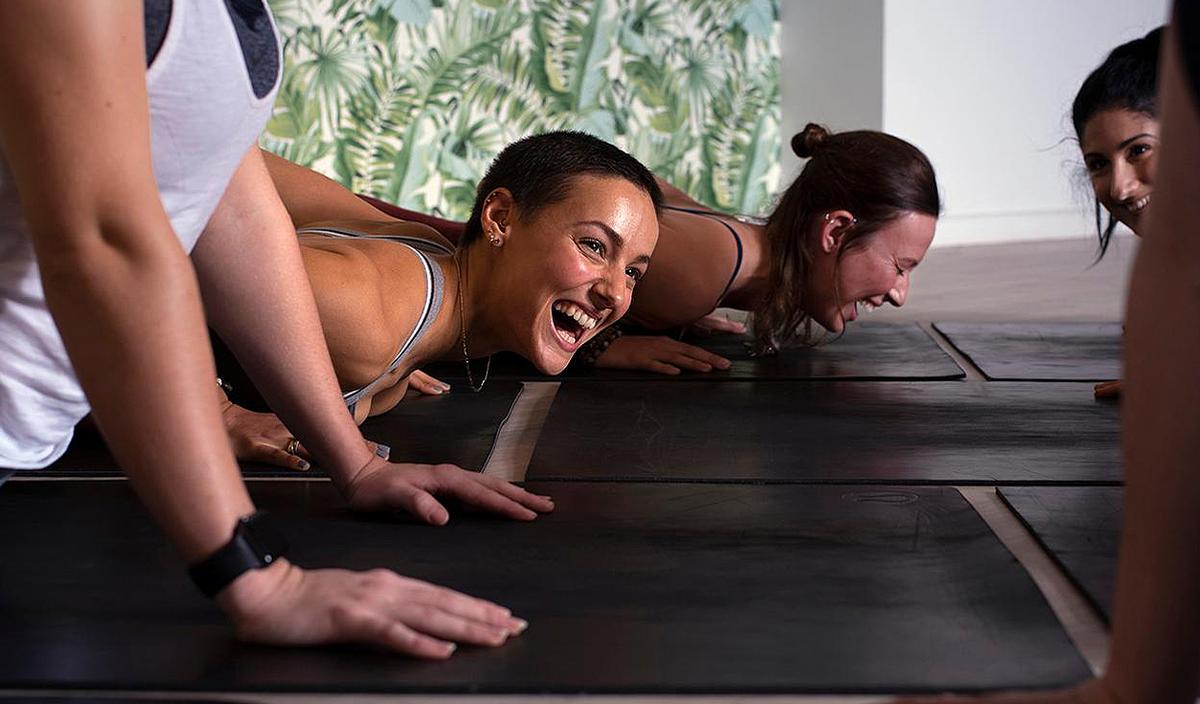
At Frame in London, sales have been on the increase since summer / photo: Frame
London has been quiet since the pandemic hit – some days in September 2021 it was estimated office occupancy was as low as 11 per cent.
This lack of footfall has had an impact on attendance at studios – as well as bars, restaurants, takeaways and theatres. The summer holidays exacerbated the problem, with many London workers choosing to decamp and work elsewhere.
However, now we’re into Q4, holidays are over and people are returning to their offices. The first Monday of September was the busiest morning rush hour since the pandemic hit. Tube traffic before 9am jumped by 19 per cent compared to the previous week and bus travel by 43 per cent. Hopefully this is a sign we’re moving back towards the old normal.
So how are urban and city-based operators faring through this difficult time? We ask our panel.
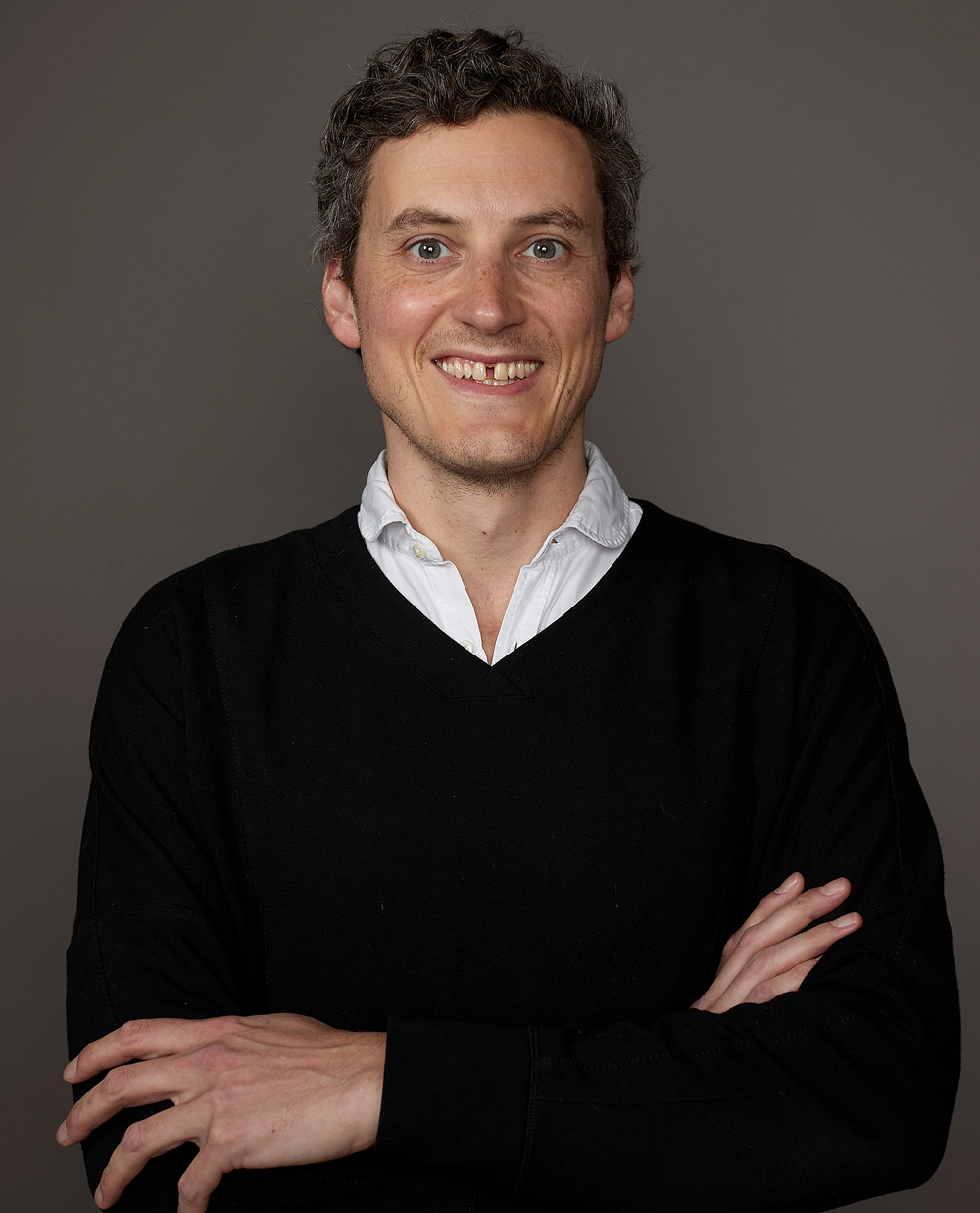
Joan Murphy
Frame
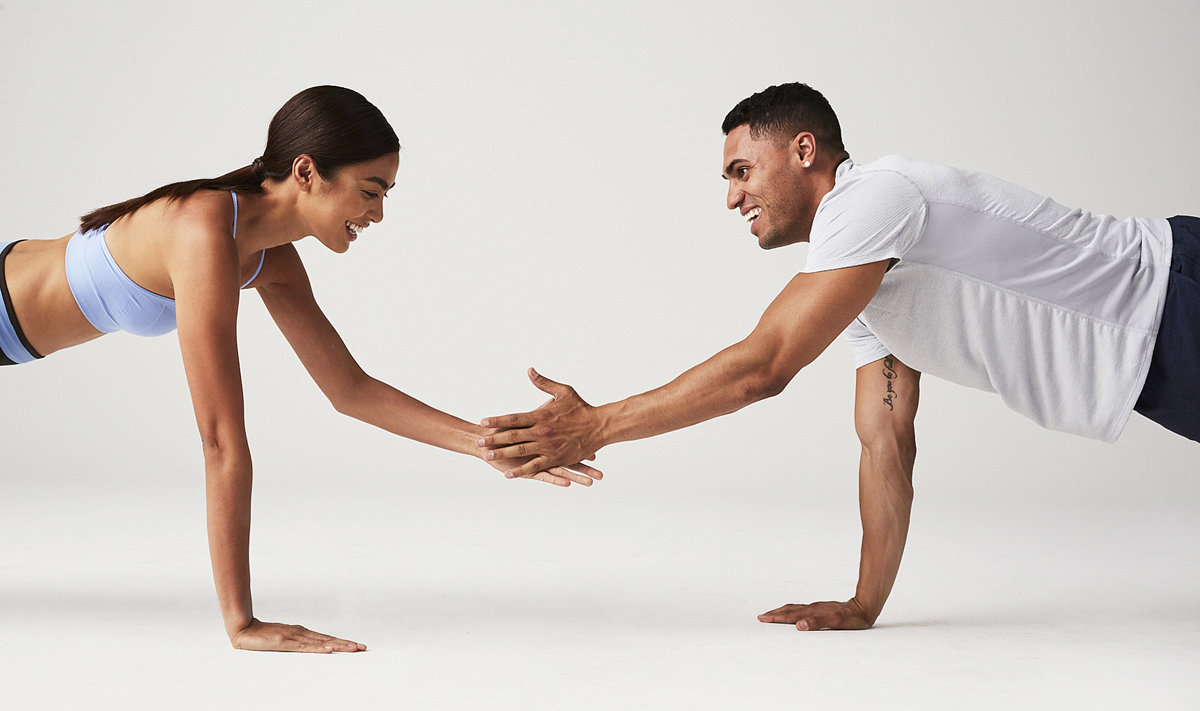
Murphy says the trend has broadened beyond HIIT to include more fun workouts / photo: frame
At the beginning of the pandemic, like most fitness operators we quickly pivoted online with both on-demand and live stream content. We call this Frame Studio 8. This studio has supported both new revenue during the pandemic but also retention of current Framers and supporting the community with charitable campaigns. Frame Online has been key to delivering on our brand vision of getting more people moving for mental and physical wellbeing.
Studio sales this summer were up on the same period last year and we’re now driving sales into Q4.
Pre-pandemic we were exceeding budgets and we expect to be back to that level during 2021. For now, we’re focusing on rebuilding the communities at each of the studios.
Our physical locations are all central London-based, so it’s hard to see what consumer behaviour will be like once offices return in the longer-term. In the short-term, we’ve seen people blending online and in-studio, with online our best performing ‘site’ at present.
We’ve seen a trend away from HIIT and more intense classes towards the more fun and lower tempo classes. There could be a lot of reasons for this, but pandemic fatigue is definitely a contributor.
We haven’t seen a change in profile, however we’re seeing a lot of new acquisition from people who haven’t exercised in a long time. We have a long way to go to build back from the pandemic, but the more we as an industry can break barriers to using our facilities the more society will benefit.
Pre-pandemic we were exceeding budgets and we expect to be back to that level during 2021
Zach Apter
ClassPass
photo: classpass
We’ve seen some shifts away from central business district usage as commute patterns have changed – more people are working from home, and therefore more likely to work out in suburban residential areas.
However, we’ve observed that both usage and reservations are trending upwards, regardless of geographical location.
In both suburbs and cities, people are eager to return to their pre-COVID fitness routines and among users who have returned to class, average usage is 10 per cent higher than it was before the pandemic, and that number is consistent across suburban and urban areas.
During a recent survey, two-thirds of respondents told us that equipment is one of the driving forces for heading back to studios.
In fact, four of the top five fitness genres with the highest recent reservation volumes use equipment that’s typically not found in home gyms and even less likely to be found in city apartments. However, even those in suburbs who may have been able to invest in equipment during the pandemic are eager to get back to studios, with 81 per cent of people saying they push themselves harder in a group setting than they do on their own. We imagine bookings will continue to grow as vaccinations continue and more people feel comfortable heading back to class.
We’re also seeing a growing trend of vaccine-required classes, especially in cities such as New York and San Francisco, where vaccines are now required for all indoor fitness studios.
In a recent survey, we found 69 per cent of fitness fans strongly prefer returning to classes that require a vaccine, and 18 per cent plan to only return to studios with vaccination requirements. We believe these vaccine-required classes will be an important step to get people back to studios who may have been on the fence about group workout classes.
We found 69 per cent of fitness fans strongly prefer returning to classes that require a vaccine
Average ClassPass usage is 10 per cent higher than pre-pandemic / photo: classpass
Jason De Savary
Jason De Savary
Core Collective
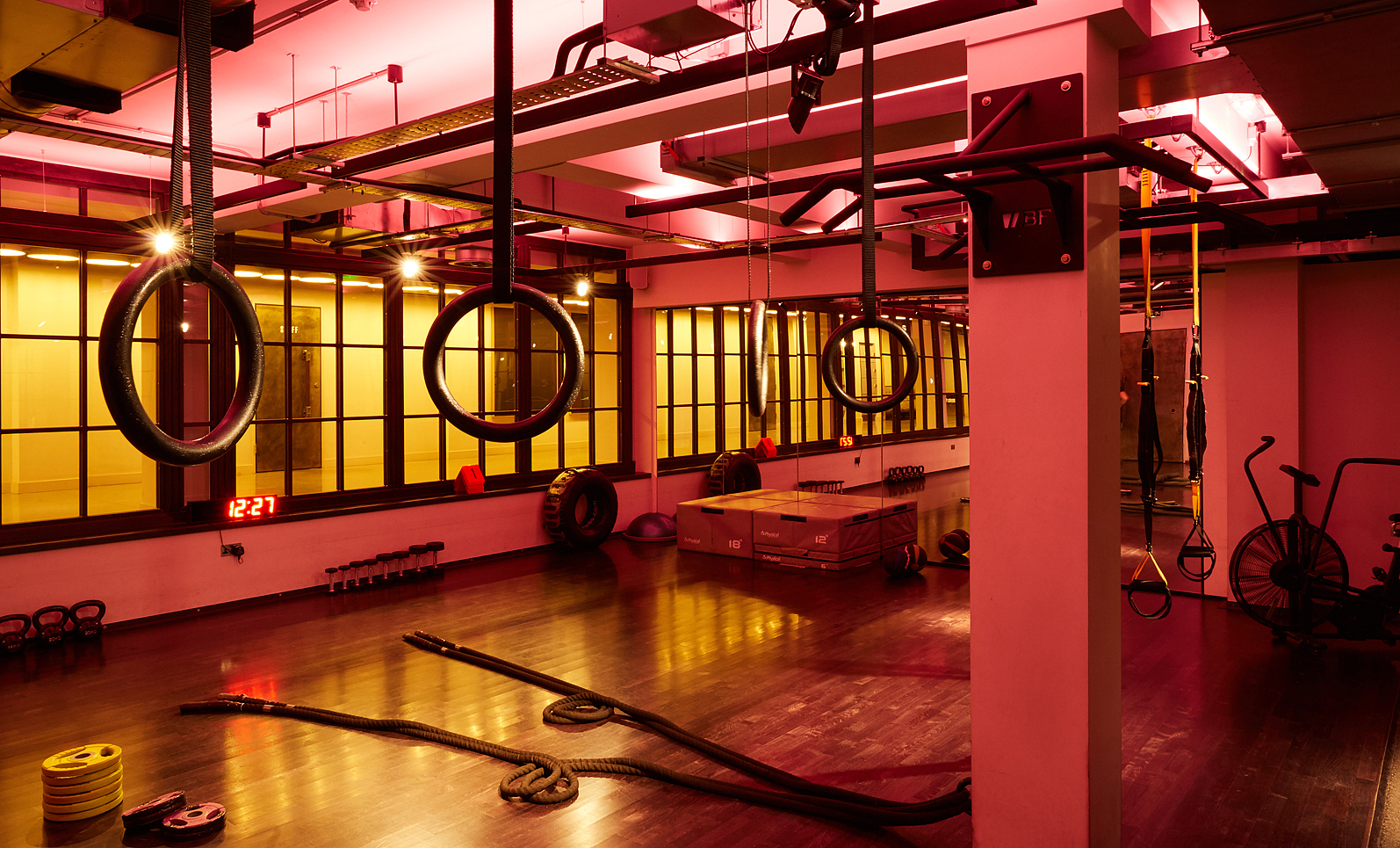
photo: core collective
We’re at about 60 per cent of pre-pandemic revenues, which is a problem. It’s below expectation and something we expect to continue for at least the next seven months.
The damage caused by the UK government’s response to COVID-19 will be long lasting and could even be structural. Freedom Day turned out to be freedom from the hell that England has become and our customers fled to sunnier climes. The challenges associated with travel also mean some people now go away for three weeks to three months to optimise their trip or work from home overseas, so London is much quieter than usual.
We only have residential locations and these have been better used at certain times of day – we’ve noticed that middle-of-the-morning classes and normal off-peak sessions have picked up, which potentially bodes well for the future.
Those who are coming back to the studios are coming more often and are more engaged and, thanks to the vaccine, people are less scared of COVID-19, so government willing, we could go back to normal very quickly.
However, London still seems to be suffering from a malaise and unlike 2020, there’s no push from the government to get people back to their old routines, or back to the office. The closures in March 2020 triggered the most unprecedented government financial response because a three-week closure would be a monumental shock to businesses like ours.
However, here we are in month 19, having been closed for 308 days in the past 500-odd, and it’s a miracle anyone is still here. Another six months of this and London will look like Kosovo in the 1990s.
Another six months of this and London will look like Kosovo in the 1990s
Clients are returning, but there’s still a ‘malaise’ in London / photo: core collective
Robert Rowland
United Fitness Brands
photo: united fitness brands
Since we’ve been allowed to open up, trading has been largely in line with expectations, which is encouraging, though of course we’re all hoping to be able to return to some form of normality/pre-pandemic trading levels across the estate as a whole sooner rather than later.
We’ve seen there’s a strong demand for fitness facilities, and with the easing of self-isolation rules and the ongoing facts that fitness facilities are safe places to be, we feel the future is still bright.
Pre-COVID the whole sector had been on such an upwards trajectory, we’re hoping to return to those days, especially as exercise plays such a key role in physical and mental health.
With office occupancy in major cities estimated to have gone as low as 11 per cent at some points, our suburban sites are performing the best.
However, we’re hearing from our many corporate clients that office attendance is likely to increase during Q4.
Our customer demographic remains the same as pre-pandemic and we’ve seen a good uptick in new customers coming through who had perhaps not been too into fitness before COVID-19 and have since realised how vital it is.
Although our suburban studios remain an important part of our footprint, we’re looking forward to seeing all studios in our sector come back to life with increased office occupancy. With excellent ventilation and thorough cleaning we know studios are very safe places to work out, so we’re looking forward to delivering more classes for more people and creating safe community spaces for people to feel part of something again.
We’ve seen a good uptick in new customers who had not been into fitness before COVID-19
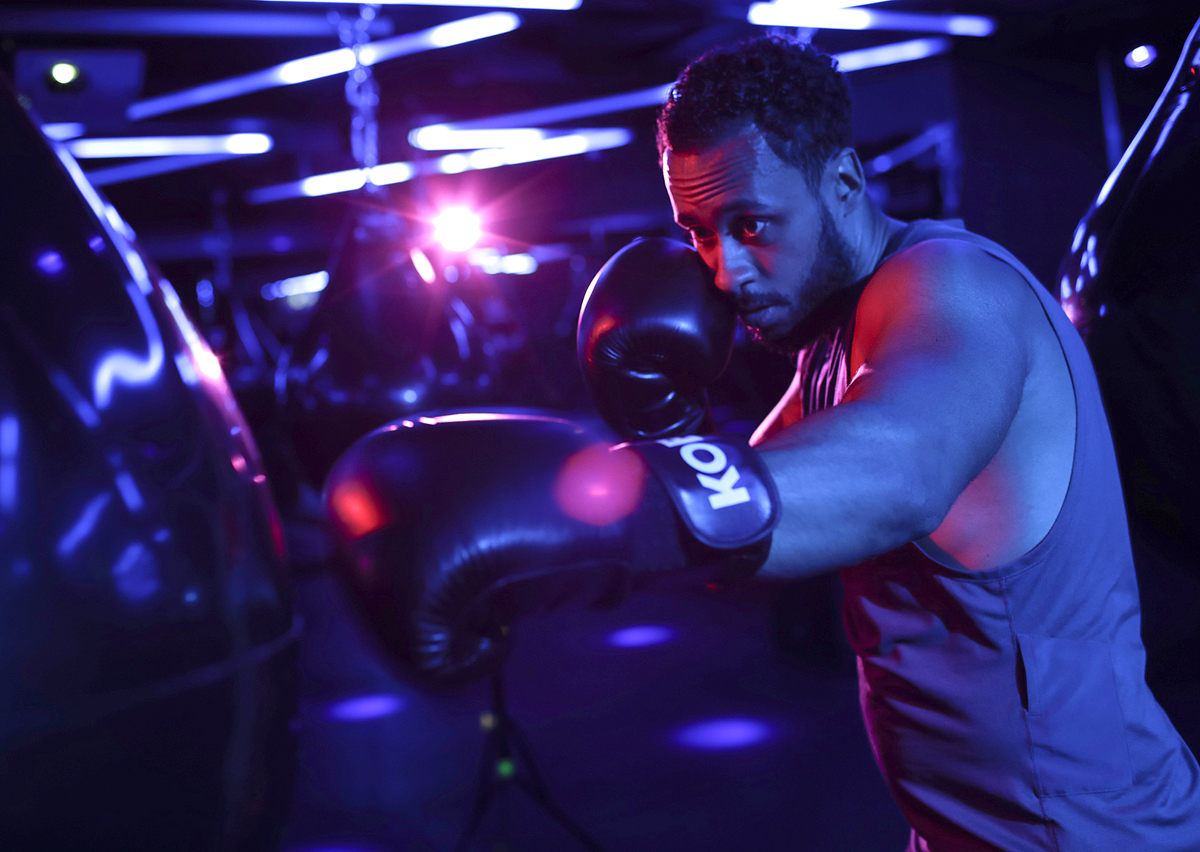
With good ventilation and cleaning, studios are safe places to be / photo: united fitness brands/connor kobox
An opportunity to reimagine one of the UK’s most recognisable towers has been formally
opened by Rivington Hark, as St Johns Beacon invites operators and partners to shape its
next phase. [more...]
In the last issue of HCM, we checked with big box operators in the UK to see how
trading has been going since restrictions were lifted. This month we turn our attention
to boutiques and urban studios to find out how they’re faring. Kath Hudson reports
At Frame in London, sales have been on the increase since summer / photo: Frame
London has been quiet since the pandemic hit – some days in September 2021 it was estimated office occupancy was as low as 11 per cent.
This lack of footfall has had an impact on attendance at studios – as well as bars, restaurants, takeaways and theatres. The summer holidays exacerbated the problem, with many London workers choosing to decamp and work elsewhere.
However, now we’re into Q4, holidays are over and people are returning to their offices. The first Monday of September was the busiest morning rush hour since the pandemic hit. Tube traffic before 9am jumped by 19 per cent compared to the previous week and bus travel by 43 per cent. Hopefully this is a sign we’re moving back towards the old normal.
So how are urban and city-based operators faring through this difficult time? We ask our panel.
Joan Murphy
Frame
Murphy says the trend has broadened beyond HIIT to include more fun workouts / photo: frame
At the beginning of the pandemic, like most fitness operators we quickly pivoted online with both on-demand and live stream content. We call this Frame Studio 8. This studio has supported both new revenue during the pandemic but also retention of current Framers and supporting the community with charitable campaigns. Frame Online has been key to delivering on our brand vision of getting more people moving for mental and physical wellbeing.
Studio sales this summer were up on the same period last year and we’re now driving sales into Q4.
Pre-pandemic we were exceeding budgets and we expect to be back to that level during 2021. For now, we’re focusing on rebuilding the communities at each of the studios.
Our physical locations are all central London-based, so it’s hard to see what consumer behaviour will be like once offices return in the longer-term. In the short-term, we’ve seen people blending online and in-studio, with online our best performing ‘site’ at present.
We’ve seen a trend away from HIIT and more intense classes towards the more fun and lower tempo classes. There could be a lot of reasons for this, but pandemic fatigue is definitely a contributor.
We haven’t seen a change in profile, however we’re seeing a lot of new acquisition from people who haven’t exercised in a long time. We have a long way to go to build back from the pandemic, but the more we as an industry can break barriers to using our facilities the more society will benefit.
Pre-pandemic we were exceeding budgets and we expect to be back to that level during 2021
Zach Apter
ClassPass
photo: classpass
We’ve seen some shifts away from central business district usage as commute patterns have changed – more people are working from home, and therefore more likely to work out in suburban residential areas.
However, we’ve observed that both usage and reservations are trending upwards, regardless of geographical location.
In both suburbs and cities, people are eager to return to their pre-COVID fitness routines and among users who have returned to class, average usage is 10 per cent higher than it was before the pandemic, and that number is consistent across suburban and urban areas.
During a recent survey, two-thirds of respondents told us that equipment is one of the driving forces for heading back to studios.
In fact, four of the top five fitness genres with the highest recent reservation volumes use equipment that’s typically not found in home gyms and even less likely to be found in city apartments. However, even those in suburbs who may have been able to invest in equipment during the pandemic are eager to get back to studios, with 81 per cent of people saying they push themselves harder in a group setting than they do on their own. We imagine bookings will continue to grow as vaccinations continue and more people feel comfortable heading back to class.
We’re also seeing a growing trend of vaccine-required classes, especially in cities such as New York and San Francisco, where vaccines are now required for all indoor fitness studios.
In a recent survey, we found 69 per cent of fitness fans strongly prefer returning to classes that require a vaccine, and 18 per cent plan to only return to studios with vaccination requirements. We believe these vaccine-required classes will be an important step to get people back to studios who may have been on the fence about group workout classes.
We found 69 per cent of fitness fans strongly prefer returning to classes that require a vaccine
Average ClassPass usage is 10 per cent higher than pre-pandemic / photo: classpass
Jason De Savary
Jason De Savary
Core Collective
photo: core collective
We’re at about 60 per cent of pre-pandemic revenues, which is a problem. It’s below expectation and something we expect to continue for at least the next seven months.
The damage caused by the UK government’s response to COVID-19 will be long lasting and could even be structural. Freedom Day turned out to be freedom from the hell that England has become and our customers fled to sunnier climes. The challenges associated with travel also mean some people now go away for three weeks to three months to optimise their trip or work from home overseas, so London is much quieter than usual.
We only have residential locations and these have been better used at certain times of day – we’ve noticed that middle-of-the-morning classes and normal off-peak sessions have picked up, which potentially bodes well for the future.
Those who are coming back to the studios are coming more often and are more engaged and, thanks to the vaccine, people are less scared of COVID-19, so government willing, we could go back to normal very quickly.
However, London still seems to be suffering from a malaise and unlike 2020, there’s no push from the government to get people back to their old routines, or back to the office. The closures in March 2020 triggered the most unprecedented government financial response because a three-week closure would be a monumental shock to businesses like ours.
However, here we are in month 19, having been closed for 308 days in the past 500-odd, and it’s a miracle anyone is still here. Another six months of this and London will look like Kosovo in the 1990s.
Another six months of this and London will look like Kosovo in the 1990s
Clients are returning, but there’s still a ‘malaise’ in London / photo: core collective
Robert Rowland
United Fitness Brands
photo: united fitness brands
Since we’ve been allowed to open up, trading has been largely in line with expectations, which is encouraging, though of course we’re all hoping to be able to return to some form of normality/pre-pandemic trading levels across the estate as a whole sooner rather than later.
We’ve seen there’s a strong demand for fitness facilities, and with the easing of self-isolation rules and the ongoing facts that fitness facilities are safe places to be, we feel the future is still bright.
Pre-COVID the whole sector had been on such an upwards trajectory, we’re hoping to return to those days, especially as exercise plays such a key role in physical and mental health.
With office occupancy in major cities estimated to have gone as low as 11 per cent at some points, our suburban sites are performing the best.
However, we’re hearing from our many corporate clients that office attendance is likely to increase during Q4.
Our customer demographic remains the same as pre-pandemic and we’ve seen a good uptick in new customers coming through who had perhaps not been too into fitness before COVID-19 and have since realised how vital it is.
Although our suburban studios remain an important part of our footprint, we’re looking forward to seeing all studios in our sector come back to life with increased office occupancy. With excellent ventilation and thorough cleaning we know studios are very safe places to work out, so we’re looking forward to delivering more classes for more people and creating safe community spaces for people to feel part of something again.
We’ve seen a good uptick in new customers who had not been into fitness before COVID-19
With good ventilation and cleaning, studios are safe places to be / photo: united fitness brands/connor kobox
Hotel de France, located on the British Isle of Jersey, has created a wellness retreat package
that includes a hot yoga session that will take place in Jersey Zoo’s butterfly sanctuary.
A new immersive attraction designed to transport visitors into the final hours of ancient Pompeii
is preparing to open near the world-famous archaeological site in southern Italy.
Experience design company, BRC Imagination Arts, has completed a transition that sees founder
Bob Rogers pass ownership of the business to four long-serving senior executives, while
remaining actively involved with the company.
Movie Park Germany has opened a new Paramount Pictures-themed attraction as part of its 30th
anniversary celebrations, using immersive storytelling and adaptive reuse to reinforce the park’s
longstanding “Hollywood in Germany” positioning.
Therme Manchester’s 28-acre development, which will include interconnected glass pavilions
that measure 65,000sq m, will be the largest bathing and wellbeing attraction in the world once
complete, according to prof David Russell, CEO of Therme UK.
Efteling has opened Hooghmoed, a new family drop tower designed to broaden the appeal of its
recently launched Sirene Island themed area and introduce younger visitors to thrill attractions.
A proposed Puy du Fou development near Bicester and Universal Destinations and Experiences’
planned resort in Bedford are emerging as part of a wider transformation of the Oxford–
Cambridge Growth Corridor into a major centre for UK leisure and tourism inv
Shedd Aquarium has opened the Immersion Theater developed in partnership with SimEx-
Iwerks, as part of a wider strategy to enhance the guest experience and create additional
revenue opportunities.
The UK government has announced a temporary reduction in VAT on visitor attractions and
children’s meals as part of a summer cost-of-living support package designed to stimulate the
visitor economy and encourage family days out.
As designer Yinka Ilori prepares for his first solo gallery show in London, he speaks exclusively
to CLADmag about his mission to spread joy, the power of play, and his bold approach to using
colour (including the colours you won’t see in his work).
The government of Thailand is exploring plans for a THB300bn (£6.3bn, US$8.3bn)
entertainment complex in the country’s Eastern Economic Corridor (EEC), with officials
proposing a large-scale theme park and sports destination as part of a broader tourism and
economic development strategy.
+ More news
COMPANY PROFILES
TechnoAlpin Indoor TechnoAlpin is the world leader for snowmaking systems. With the Indoor snow division, TechnoAlpin c [more...]
Polin Waterparks Polin was founded in Istanbul in 1976. Polin
has since grown into a leading company in
the waterpa [more...]
An opportunity to reimagine one of the UK’s most recognisable towers has been formally
opened by Rivington Hark, as St Johns Beacon invites operators and partners to shape its
next phase. [more...]