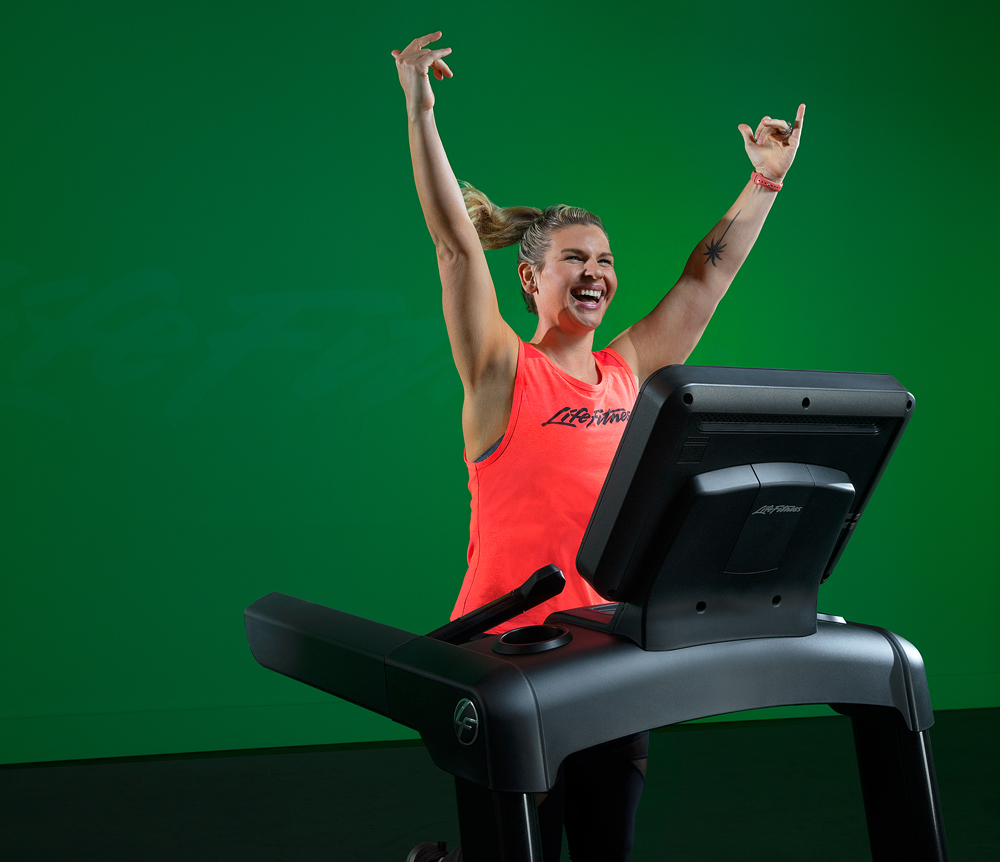
The days of a home workout being a video in the living room are long gone. The coronavirus pandemic is driving a massive pivot to digital, which is transforming the sector. Kath Hudson reports
The coronavirus pandemic has seen the home workout sector experiencing exponential growth in every direction, with some on-demand providers reporting 800 per cent increases in take-up.
This comes off the back of a record year for at-home digital in 2019, which saw an explosion of new and repackaged entrants to the space, including Echelon, MYXfitness, iFit via NordicTrack, Tonal, Mirror and Openfit via Beachbody co-founder John Congdon.
According to 2019 research from L.E.K. Insights, digital fitness content market growth in the US alone was expected to translate to 14 million new subscribers and a US$3.3 billion market opportunity this year – and that was before the pandemic.
Research also shows that 85 per cent of club members also exercise outside clubs.
The pandemic has prompted the majority of operators to launch a digital offering – some in partnership with existing fit tech companies, some creating customised solutions, and some simply jumping on Zoom.
Whatever follows, 2020 will be remembered as the point where fitness went digital, but will this ultimately create competition for clubs or will it grow the market? We ask the experts.
Rasmus Ingerslev
Director of REPEAT, Barry’s Nordic, Lenus, Wexer and Playbook
Rasmus Ingerslev
For those who want to get fit, but don’t join a gym, the same three reasons are consistently given: intimidation of the gym environment, price sensitivity and lack of time. Working out at home addresses all of these points: no one is watching, it is typically cheaper and there is no commuting time. Plus home workout apps are very good at building habits and holding people accountable – often much better than operators.
In gyms we cater best to those with a mid- to high-level of gym confidence. Those with less confidence are best catered for at home, so if gyms offered a digital extension to their physical offering they could expand the reach of their appeal.
"It would be crazy for fitness operators not to include digital in their member journeys and pure digital memberships in their offering"
Gym memberships tend to be made up of 20 per cent of people who are going to leave regardless of what you do, 20 per cent that you couldn’t force to leave and 60 per cent who could swing either way. For those in the middle 60 per cent, a digital offering could continue to engage them and make the gym value proposition more sticky and valuable.
I think it would be crazy for the industry not to include digital in their member journeys and pure digital memberships in their offering. There is significantly more growth in the digital space and the industry is well placed to make use of this opportunity because of the huge database of members and lapsed members.
A major brand tracking why members were leaving found a double digit response for those going for digital services. We could support members much better by incorporating digital fitness services to help them reach their goals. There has been a significant change in consumer behaviour and we need to change accordingly. This could be a way to reduce churn. When a member leaves it’s not because they’ve achieved their goals, it’s because they’ve lost motivation and stopped working out.
Wexer served up more than 10 million virtual classes in 2019
Nigel Bland
Deloitte: corporate finance advisory leisure team lead
Nigel Bland
Virtually every form of physical activity has grown in the past 15 years and, even though the rate of growth is slowing, the industry is still growing. There doesn’t appear to be any slowdown in people becoming more health conscious, so the untapped market still offers great potential. The more product offered, the more revenue it can capture.
Therefore, although the home fitness market could present a challenge to the bricks and mortar side of the sector, I think it is more likely to be additive than disruptive. There is evidence that fitness is important to an increasing number of people and they are prepared to fragment their spend: for example with a budget gym membership, as well as paying for boutique classes. Real enthusiasts might be prepared to buy an expensive piece of kit to use at home and still pay for classes or to use a gym.
"If you fear that home fitness offerings may disrupt your business, you need to get into it and disrupt yourself"
However, if you fear that it may disrupt your business, then you need to get into it and disrupt yourself. Digital fitness is a less capitally intensive business than physical clubs and if you get the product right then you can have unlimited people doing a class. Digital interaction with your membership represents another way of keeping engagement levels up, so that attrition levels stay manageable.
There will be some people who would never join a gym, but would do online training and there will be people who switch between digital options and club membership, in both directions, but more products will engage more people and make the pie bigger.
Digital offerings mean gyms can have unlimited people doing a class
Chris Webb
Life Fitness: UK consumer and dealer sales manager
Chris Webb
We’ve seen a boom in the home fitness market. The Peloton buzz, in particular, has driven some traction for the consumer market, and heightened demand for other home products, particularly with the zero per cent finance and flexibility of purchasing which is available for these products.
Currently growth is focused on the premium end of the market – time poor urbanites – who would otherwise have trouble fitting a workout into their busy lives and want to get the maximum benefit in the shortest possible time. But while time and convenience is high on the list for home exercisers, there are a number of people who just prefer to work out at home: they might be intimidated by the gym environment, or just prefer to be alone and choose their own music.
"A downside of
home exercise is that without expert help to hand, people may see less progression"
One down side of home exercise is that the infrastructure is more limited than in a commercial environment, so as products and solutions change it can be harder to stay on trend. Without expert help to hand, people can also get into a comfort zone, just doing the same and not seeing any progression. On the up side, this could then encourage them to join a gym.
Digitisation offers the opportunity to create home exercise communities. It also has the opportunity to engage new audiences, particularly tech-savvy people who might be drawn by the digital element.
Gyms are going to have to adapt to this trend and understand that the member journey is not just what happens inside their club. If members are offered the chance to do an instructor-led workout at home, it adds value to the membership and a full circle experience.
Life Fitness has launched on-demand workouts through its Digital Coach platform
Jean-Michel Fournier Les Mills Media: CEO
Jean-Michel Fournier
The two largest generations of fitness users – millennials and gen Z – make up 80 per cent of the fitness market and are carnivorous consumers of 24/7 digital streaming, including exercise content.
Despite this demand for streaming and downloadable fitness content, it had only been adopted by 5 per cent of operators prior to the pandemic.
According to the Club Intel 2019 International Fitness Industry Trend Report, European club operators were clear leaders, with an adoption level of 14 per cent. Levels in other regions of the world ranged from 4 to 7 per cent.
"Since the COVID-19 outbreak started, we’ve seen an 806 per cent increase in sign-ups to Les Mills on Demand, as we’ve worked with our club partners"
Mobile apps – which are used by more than 80 per cent of people to connect with businesses – had only been adopted by 20 per cent of the fitness industry. So it’s clear there’s a lot of untapped upside in the digital home fitness space, particularly with much of the world currently in lockdown.
Les Mills on Demand (LMOD), which allows users to stream Les Mills programmes from any digital device, has seen significant growth in recent years, but since the COVID-19 outbreak, we’ve seen an 806 per cent increase in sign-ups as we’ve worked with club partners to help them support members through the use of LMOD.
Clubs offering a co-branded LMOD subscription to members are able to boost member loyalty and keep them in the exercise habit at times like this, when they can’t make it to the gym.
As fitness moves from bricks and mortar to digital, operators who pursue tech assertively will be the ones who thrive in the next chapter of the industry.
Les Mills On Demand allows users to access 800 workouts at home
An opportunity to reimagine one of the UK’s most recognisable towers has been formally
opened by Rivington Hark, as St Johns Beacon invites operators and partners to shape its
next phase. [more...]
The days of a home workout being a video in the living room are long gone. The coronavirus pandemic is driving a massive pivot to digital, which is transforming the sector. Kath Hudson reports
The coronavirus pandemic has seen the home workout sector experiencing exponential growth in every direction, with some on-demand providers reporting 800 per cent increases in take-up.
This comes off the back of a record year for at-home digital in 2019, which saw an explosion of new and repackaged entrants to the space, including Echelon, MYXfitness, iFit via NordicTrack, Tonal, Mirror and Openfit via Beachbody co-founder John Congdon.
According to 2019 research from L.E.K. Insights, digital fitness content market growth in the US alone was expected to translate to 14 million new subscribers and a US$3.3 billion market opportunity this year – and that was before the pandemic.
Research also shows that 85 per cent of club members also exercise outside clubs.
The pandemic has prompted the majority of operators to launch a digital offering – some in partnership with existing fit tech companies, some creating customised solutions, and some simply jumping on Zoom.
Whatever follows, 2020 will be remembered as the point where fitness went digital, but will this ultimately create competition for clubs or will it grow the market? We ask the experts.
Rasmus Ingerslev
Director of REPEAT, Barry’s Nordic, Lenus, Wexer and Playbook
Rasmus Ingerslev
For those who want to get fit, but don’t join a gym, the same three reasons are consistently given: intimidation of the gym environment, price sensitivity and lack of time. Working out at home addresses all of these points: no one is watching, it is typically cheaper and there is no commuting time. Plus home workout apps are very good at building habits and holding people accountable – often much better than operators.
In gyms we cater best to those with a mid- to high-level of gym confidence. Those with less confidence are best catered for at home, so if gyms offered a digital extension to their physical offering they could expand the reach of their appeal.
"It would be crazy for fitness operators not to include digital in their member journeys and pure digital memberships in their offering"
Gym memberships tend to be made up of 20 per cent of people who are going to leave regardless of what you do, 20 per cent that you couldn’t force to leave and 60 per cent who could swing either way. For those in the middle 60 per cent, a digital offering could continue to engage them and make the gym value proposition more sticky and valuable.
I think it would be crazy for the industry not to include digital in their member journeys and pure digital memberships in their offering. There is significantly more growth in the digital space and the industry is well placed to make use of this opportunity because of the huge database of members and lapsed members.
A major brand tracking why members were leaving found a double digit response for those going for digital services. We could support members much better by incorporating digital fitness services to help them reach their goals. There has been a significant change in consumer behaviour and we need to change accordingly. This could be a way to reduce churn. When a member leaves it’s not because they’ve achieved their goals, it’s because they’ve lost motivation and stopped working out.
Wexer served up more than 10 million virtual classes in 2019
Nigel Bland
Deloitte: corporate finance advisory leisure team lead
Nigel Bland
Virtually every form of physical activity has grown in the past 15 years and, even though the rate of growth is slowing, the industry is still growing. There doesn’t appear to be any slowdown in people becoming more health conscious, so the untapped market still offers great potential. The more product offered, the more revenue it can capture.
Therefore, although the home fitness market could present a challenge to the bricks and mortar side of the sector, I think it is more likely to be additive than disruptive. There is evidence that fitness is important to an increasing number of people and they are prepared to fragment their spend: for example with a budget gym membership, as well as paying for boutique classes. Real enthusiasts might be prepared to buy an expensive piece of kit to use at home and still pay for classes or to use a gym.
"If you fear that home fitness offerings may disrupt your business, you need to get into it and disrupt yourself"
However, if you fear that it may disrupt your business, then you need to get into it and disrupt yourself. Digital fitness is a less capitally intensive business than physical clubs and if you get the product right then you can have unlimited people doing a class. Digital interaction with your membership represents another way of keeping engagement levels up, so that attrition levels stay manageable.
There will be some people who would never join a gym, but would do online training and there will be people who switch between digital options and club membership, in both directions, but more products will engage more people and make the pie bigger.
Digital offerings mean gyms can have unlimited people doing a class
Chris Webb
Life Fitness: UK consumer and dealer sales manager
Chris Webb
We’ve seen a boom in the home fitness market. The Peloton buzz, in particular, has driven some traction for the consumer market, and heightened demand for other home products, particularly with the zero per cent finance and flexibility of purchasing which is available for these products.
Currently growth is focused on the premium end of the market – time poor urbanites – who would otherwise have trouble fitting a workout into their busy lives and want to get the maximum benefit in the shortest possible time. But while time and convenience is high on the list for home exercisers, there are a number of people who just prefer to work out at home: they might be intimidated by the gym environment, or just prefer to be alone and choose their own music.
"A downside of
home exercise is that without expert help to hand, people may see less progression"
One down side of home exercise is that the infrastructure is more limited than in a commercial environment, so as products and solutions change it can be harder to stay on trend. Without expert help to hand, people can also get into a comfort zone, just doing the same and not seeing any progression. On the up side, this could then encourage them to join a gym.
Digitisation offers the opportunity to create home exercise communities. It also has the opportunity to engage new audiences, particularly tech-savvy people who might be drawn by the digital element.
Gyms are going to have to adapt to this trend and understand that the member journey is not just what happens inside their club. If members are offered the chance to do an instructor-led workout at home, it adds value to the membership and a full circle experience.
Life Fitness has launched on-demand workouts through its Digital Coach platform
Jean-Michel Fournier Les Mills Media: CEO
Jean-Michel Fournier
The two largest generations of fitness users – millennials and gen Z – make up 80 per cent of the fitness market and are carnivorous consumers of 24/7 digital streaming, including exercise content.
Despite this demand for streaming and downloadable fitness content, it had only been adopted by 5 per cent of operators prior to the pandemic.
According to the Club Intel 2019 International Fitness Industry Trend Report, European club operators were clear leaders, with an adoption level of 14 per cent. Levels in other regions of the world ranged from 4 to 7 per cent.
"Since the COVID-19 outbreak started, we’ve seen an 806 per cent increase in sign-ups to Les Mills on Demand, as we’ve worked with our club partners"
Mobile apps – which are used by more than 80 per cent of people to connect with businesses – had only been adopted by 20 per cent of the fitness industry. So it’s clear there’s a lot of untapped upside in the digital home fitness space, particularly with much of the world currently in lockdown.
Les Mills on Demand (LMOD), which allows users to stream Les Mills programmes from any digital device, has seen significant growth in recent years, but since the COVID-19 outbreak, we’ve seen an 806 per cent increase in sign-ups as we’ve worked with club partners to help them support members through the use of LMOD.
Clubs offering a co-branded LMOD subscription to members are able to boost member loyalty and keep them in the exercise habit at times like this, when they can’t make it to the gym.
As fitness moves from bricks and mortar to digital, operators who pursue tech assertively will be the ones who thrive in the next chapter of the industry.
Les Mills On Demand allows users to access 800 workouts at home
Hotel de France, located on the British Isle of Jersey, has created a wellness retreat package
that includes a hot yoga session that will take place in Jersey Zoo’s butterfly sanctuary.
A new immersive attraction designed to transport visitors into the final hours of ancient Pompeii
is preparing to open near the world-famous archaeological site in southern Italy.
Experience design company, BRC Imagination Arts, has completed a transition that sees founder
Bob Rogers pass ownership of the business to four long-serving senior executives, while
remaining actively involved with the company.
Movie Park Germany has opened a new Paramount Pictures-themed attraction as part of its 30th
anniversary celebrations, using immersive storytelling and adaptive reuse to reinforce the park’s
longstanding “Hollywood in Germany” positioning.
Therme Manchester’s 28-acre development, which will include interconnected glass pavilions
that measure 65,000sq m, will be the largest bathing and wellbeing attraction in the world once
complete, according to prof David Russell, CEO of Therme UK.
Efteling has opened Hooghmoed, a new family drop tower designed to broaden the appeal of its
recently launched Sirene Island themed area and introduce younger visitors to thrill attractions.
A proposed Puy du Fou development near Bicester and Universal Destinations and Experiences’
planned resort in Bedford are emerging as part of a wider transformation of the Oxford–
Cambridge Growth Corridor into a major centre for UK leisure and tourism inv
Shedd Aquarium has opened the Immersion Theater developed in partnership with SimEx-
Iwerks, as part of a wider strategy to enhance the guest experience and create additional
revenue opportunities.
The UK government has announced a temporary reduction in VAT on visitor attractions and
children’s meals as part of a summer cost-of-living support package designed to stimulate the
visitor economy and encourage family days out.
As designer Yinka Ilori prepares for his first solo gallery show in London, he speaks exclusively
to CLADmag about his mission to spread joy, the power of play, and his bold approach to using
colour (including the colours you won’t see in his work).
The government of Thailand is exploring plans for a THB300bn (£6.3bn, US$8.3bn)
entertainment complex in the country’s Eastern Economic Corridor (EEC), with officials
proposing a large-scale theme park and sports destination as part of a broader tourism and
economic development strategy.
+ More news
COMPANY PROFILES
DJW David & Lynn Willrich started the Company
over thirty years ago, from the Audio Visual
Department [more...]
Holovis Holovis is a privately owned company
established in 2004 by CEO Stuart
Hetherington. [more...]
An opportunity to reimagine one of the UK’s most recognisable towers has been formally
opened by Rivington Hark, as St Johns Beacon invites operators and partners to shape its
next phase. [more...]