Why are people with disabilities still being let down by poorly designed spaces? Ensuring spaces are accessible for all shouldn’t be an afterthought, it should be part of the creative design process, says Magali Robathan
By Magali Robathan | Published in CLADmag 2020 issue 1
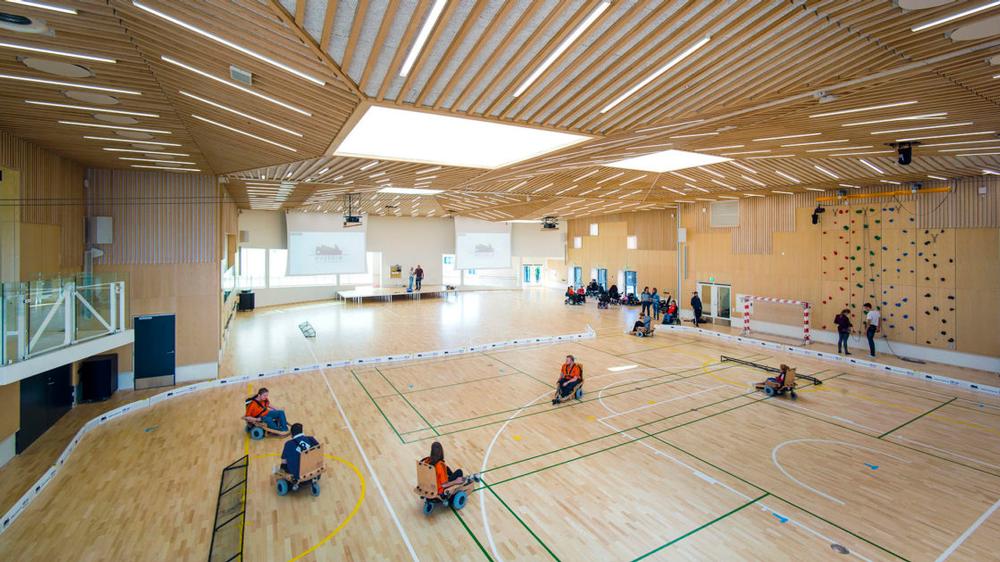
AART’s Musholm holiday sports and conference centre in Denmark
In 2017, artist Christopher Samuels was made technically homeless and forced to accept emergency accommodation in an inaccessible hotel room. “I couldn’t navigate around the bed in my wheelchair,” he told CLAD (see page 76). “I couldn’t get into the bed, I couldn’t use the dressing table. I couldn’t shut the bathroom door, or use the toilet or shower.”
This experience stayed with Samuels, and when art commissioning programme Unlimited put out a call for submissions to design a guestroom for an innovative arts-led hotel in Blackpool, UK, he knew what he wanted to do.
Art Bnb features 19 guestrooms-come-art installations, designed by different artists to get guests thinking.
Samuels’ room has been designed to be deliberately frustrating to use – the bed is surrounded by a high ‘lip’ that guests have to climb over, the bathroom door doesn’t shut, the television can only be viewed in the mirror and the shower gel dispenser is upside down.
“I wanted to make people experience the reality of what it’s like to be disabled: the frustrations of having to navigate a space which isn’t designed for them,” explains Samuels.
Unfortunately, Samuels’ experience is far from unusual. Twenty years on from the introduction of the Americans with Disabilities Act in the US and 15 years on from the introduction of the Disability Discrimination Act in the UK, poorly designed spaces are still a reality for many.
Recently, a lawsuit was filed against the new Stephen Holl-designed Hunters Point Library in New York, with disability rights advocates arguing that the building was “designed and built with a total disregard for adults and children with mobility disabilities”.
Heatherwick’s Vessel also attracted protests and a complaint by the United States Department for Justice alleging that much of the structure was not compliant with the Americans with Disabilities Act. Accessibility has now been improved at Vessel, and changes have been made to Hunters Point Library, but the question remains – why aren’t all users being considered at the design stage?
The Musholm holiday sports and conference centre in Korsor, Denmark, has won a host of awards for the 2015 redesign of the original site. The AART-designed venue features 24 fully accessible hotel rooms, a climbing wall suitable for wheelchair users, a relaxation room for people with difficulty concentrating, and a 100m athletics and wheelchair racing track leading up to a sky lounge.
Making spaces accessible shouldn’t be an add-on or an afterthought; it should be an integral part of the design process. It’s about the relationship between people and space; about engaging with how different bodies will use a space. Most of all, it’s about creativity, and that, after all, is what designers and architects are good at.
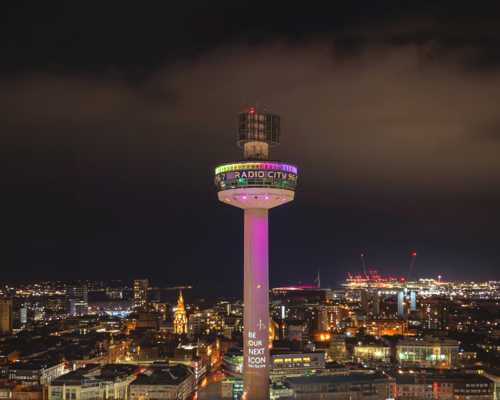
An opportunity to reimagine one of the UK’s most recognisable towers has been formally
opened by Rivington Hark, as St Johns Beacon invites operators and partners to shape its
next phase. [more...]
Why are people with disabilities still being let down by poorly designed spaces? Ensuring spaces are accessible for all shouldn’t be an afterthought, it should be part of the creative design process, says Magali Robathan
By Magali Robathan | Published in CLADmag 2020 issue 1
AART’s Musholm holiday sports and conference centre in Denmark
In 2017, artist Christopher Samuels was made technically homeless and forced to accept emergency accommodation in an inaccessible hotel room. “I couldn’t navigate around the bed in my wheelchair,” he told CLAD (see page 76). “I couldn’t get into the bed, I couldn’t use the dressing table. I couldn’t shut the bathroom door, or use the toilet or shower.”
This experience stayed with Samuels, and when art commissioning programme Unlimited put out a call for submissions to design a guestroom for an innovative arts-led hotel in Blackpool, UK, he knew what he wanted to do.
Art Bnb features 19 guestrooms-come-art installations, designed by different artists to get guests thinking.
Samuels’ room has been designed to be deliberately frustrating to use – the bed is surrounded by a high ‘lip’ that guests have to climb over, the bathroom door doesn’t shut, the television can only be viewed in the mirror and the shower gel dispenser is upside down.
“I wanted to make people experience the reality of what it’s like to be disabled: the frustrations of having to navigate a space which isn’t designed for them,” explains Samuels.
Unfortunately, Samuels’ experience is far from unusual. Twenty years on from the introduction of the Americans with Disabilities Act in the US and 15 years on from the introduction of the Disability Discrimination Act in the UK, poorly designed spaces are still a reality for many.
Recently, a lawsuit was filed against the new Stephen Holl-designed Hunters Point Library in New York, with disability rights advocates arguing that the building was “designed and built with a total disregard for adults and children with mobility disabilities”.
Heatherwick’s Vessel also attracted protests and a complaint by the United States Department for Justice alleging that much of the structure was not compliant with the Americans with Disabilities Act. Accessibility has now been improved at Vessel, and changes have been made to Hunters Point Library, but the question remains – why aren’t all users being considered at the design stage?
The Musholm holiday sports and conference centre in Korsor, Denmark, has won a host of awards for the 2015 redesign of the original site. The AART-designed venue features 24 fully accessible hotel rooms, a climbing wall suitable for wheelchair users, a relaxation room for people with difficulty concentrating, and a 100m athletics and wheelchair racing track leading up to a sky lounge.
Making spaces accessible shouldn’t be an add-on or an afterthought; it should be an integral part of the design process. It’s about the relationship between people and space; about engaging with how different bodies will use a space. Most of all, it’s about creativity, and that, after all, is what designers and architects are good at.
Experience design company, BRC Imagination Arts, has completed a transition that sees founder
Bob Rogers pass ownership of the business to four long-serving senior executives, while
remaining actively involved with the company.
Movie Park Germany has opened a new Paramount Pictures-themed attraction as part of its 30th
anniversary celebrations, using immersive storytelling and adaptive reuse to reinforce the park’s
longstanding “Hollywood in Germany” positioning.
Therme Manchester’s 28-acre development, which will include interconnected glass pavilions
that measure 65,000sq m, will be the largest bathing and wellbeing attraction in the world once
complete, according to prof David Russell, CEO of Therme UK.
Efteling has opened Hooghmoed, a new family drop tower designed to broaden the appeal of its
recently launched Sirene Island themed area and introduce younger visitors to thrill attractions.
A proposed Puy du Fou development near Bicester and Universal Destinations and Experiences’
planned resort in Bedford are emerging as part of a wider transformation of the Oxford–
Cambridge Growth Corridor into a major centre for UK leisure and tourism inv
Shedd Aquarium has opened the Immersion Theater developed in partnership with SimEx-
Iwerks, as part of a wider strategy to enhance the guest experience and create additional
revenue opportunities.
The UK government has announced a temporary reduction in VAT on visitor attractions and
children’s meals as part of a summer cost-of-living support package designed to stimulate the
visitor economy and encourage family days out.
As designer Yinka Ilori prepares for his first solo gallery show in London, he speaks exclusively
to CLADmag about his mission to spread joy, the power of play, and his bold approach to using
colour (including the colours you won’t see in his work).
The government of Thailand is exploring plans for a THB300bn (£6.3bn, US$8.3bn)
entertainment complex in the country’s Eastern Economic Corridor (EEC), with officials
proposing a large-scale theme park and sports destination as part of a broader tourism and
economic development strategy.
Royal Caribbean has revealed its Hero of the Seas cruise ship, home to the most pools at sea
(nine), and a record-breaking 28 dining venues, as well as attractions including a waterpark
with two new family raft slides.
+ More news
COMPANY PROFILES
IAAPA EMEA IAAPA Expo Europe was established in 2006 and has grown to the largest international conference and [more...]
An opportunity to reimagine one of the UK’s most recognisable towers has been formally
opened by Rivington Hark, as St Johns Beacon invites operators and partners to shape its
next phase. [more...]