Wellness travel now accounts for 17 per cent of all
global tourism revenues, but it’s difficult to decipher
what wellness travellers really want. Compare Retreats
founder Dervla Louli Musgrave turns to her global
community of clients and readers to find out
Retreats are commonly viewed as an investment in your body and mind
As a US$639bn industry, wellness tourism has become a point of global interest as it continues to be the fastest-growing tourism sector. The industry is far from reaching saturation-point, but with more wellness retreats on offer than ever before, what is it that wellness travellers really want?
That’s the question Compare Retreats, the booking portal, travel agency and media company for the world’s leading wellness retreats, asked more than 500 wellness travellers between the ages of 18-76 from locations around the globe, including Hong Kong, Singapore, the US, the UK and Australia in Q4 of 2018.
From most-desired destinations, to how wellness travellers research retreats, and mental health becoming the top reason to book a retreat, the survey results uncovered what makes wellness travellers today tick.
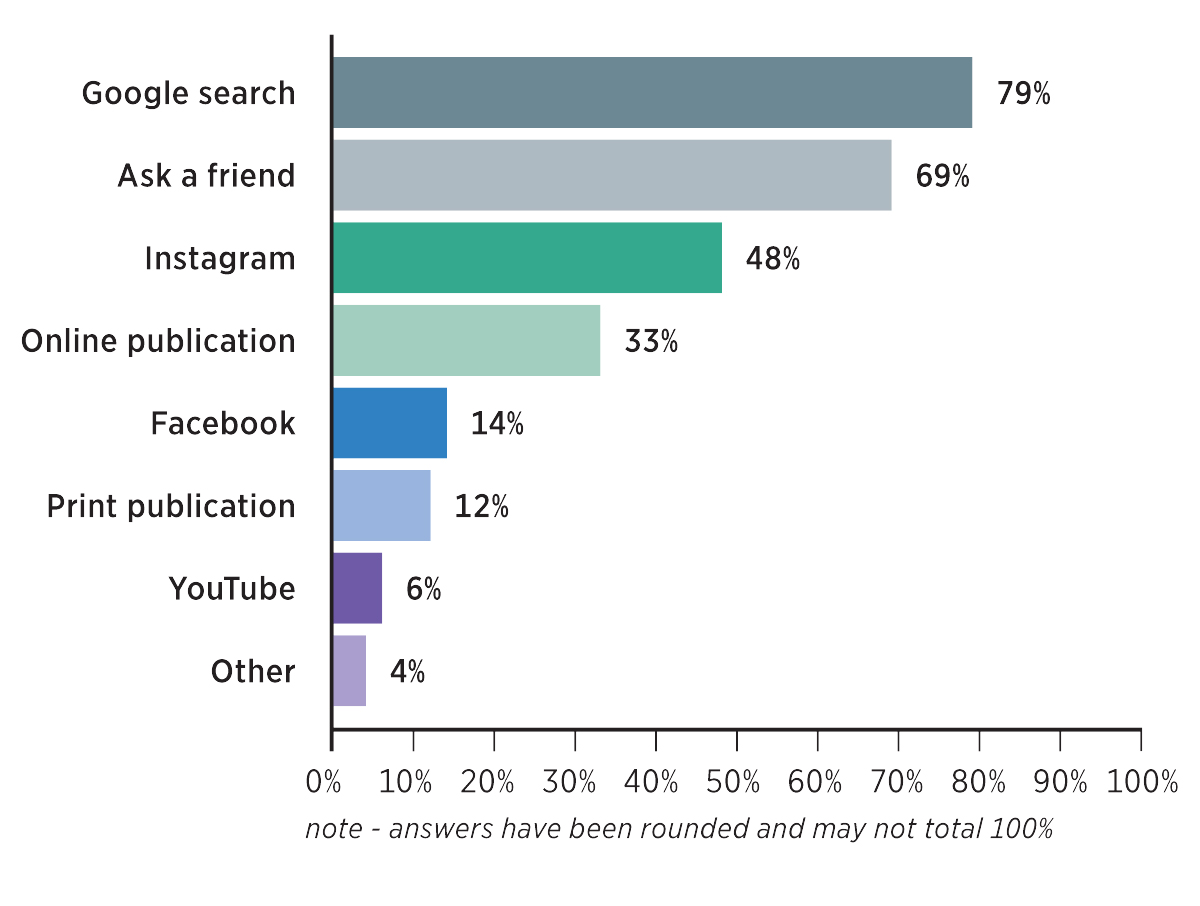
Google search, Instagram, and friend referrals are key search channels The top three ways that the wellness travellers surveyed research and found retreats were via Google search (80.5 per cent), friend referrals (65.6 per cent), and Instagram (45.7 per cent). Online publications are important among the 50+ demographic, where they ranked third in place of Instagram. With good SEO practices, online publications can see themselves having extra influence if they fall into the top pages of a Google search.
Print publications are important for third-party validation of wellness retreat businesses, but only 10.7 per cent of users said they refer to print when searching for a retreat. This indicates that advertisers and retreats would be wiser investing money in online publications and well-crafted Instagram marketing plans, as well as referral programmes, to reach across audiences of all ages and genders.
Mental health is the new wellness priority Physical fitness has long dominated the wellness industry, but today’s wellness travellers are showing a significant shift towards mental health as their main focus on retreats.
Survey respondents were asked to rank mental, physical and spiritual health in order of importance: 62.9 per cent selected mental health as number one.
Millennials ranked mental health far higher than other demographics, with 67.2 per cent ranking it as first, compared to 57.7 per cent of Gen X and only 52.5 per cent of the 50+ group.
Overall, physical health was ranked first by 24.4 per cent of respondents, and second by 57.9 per cent, showing it continues to be important to many wellness travellers. Spiritual health ranked last, with 75.8 per cent respondents selecting it as their lowest priority.
Plastic-free policies influence wellness travellers’ decisions The anti-plastic movement is growing momentum fast, and 89.5 per cent of wellness travellers surveyed want wellness retreats to have a plastic-free policy.
Women were more concerned with environmental issues: with 90.7 per cent of female respondents favouring plastic-free policies to 82.3 per cent of men. The huge push towards plastic-free demonstrates the need for wellness retreats to update their sustainability policies to remain competitive.
The Maldives, Bali and Thailand come out on top Tropical destinations continue to dominate the wellness travel destination bucket list, although surprisingly, Bali is no longer the number one choice for wellness travellers.
The three most desired wellness travel destination was the Maldives (45.4 per cent), followed by Bali (42.9 per cent) and Thailand (34.5 per cent).
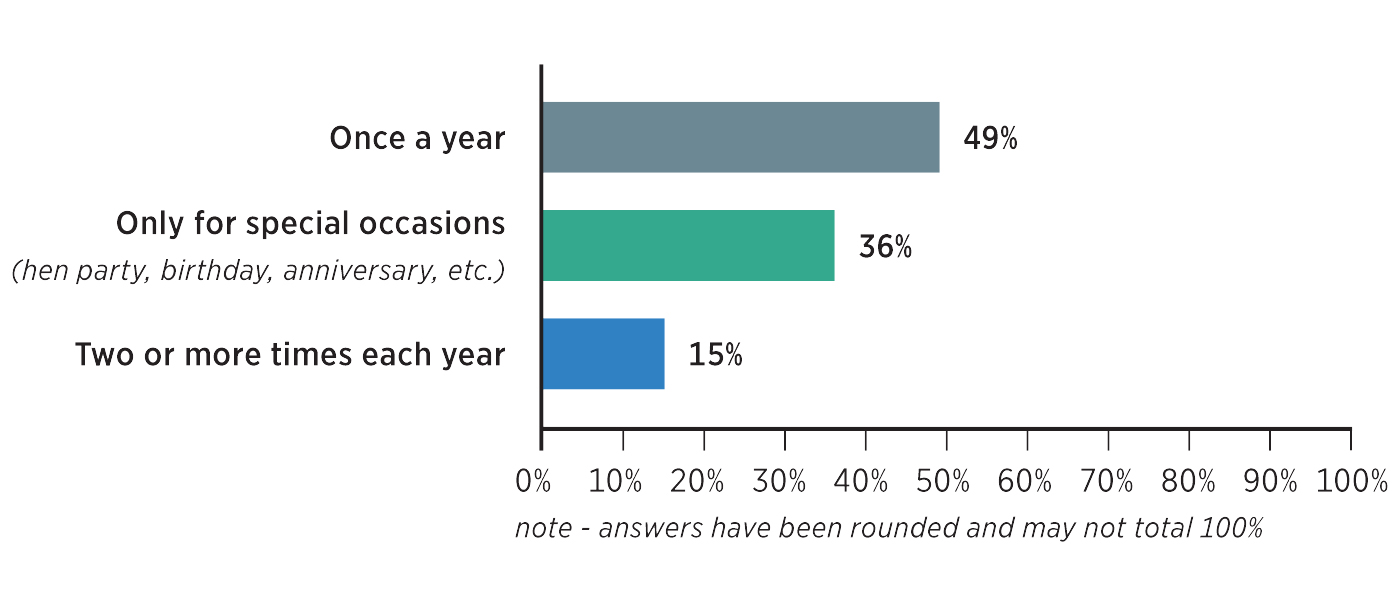
Retreats are for prevention instead of a cure Wellness retreats are commonly viewed as an annual investment in your body and mind. The majority of retreat-going wellness travellers surveyed (45 per cent) attend a retreat once a year, while 36.6 per cent save wellness retreats for special occasions, and 18.4 per cent go two or more times per year.
Furthermore, only 0.2 per cent of wellness travellers showed interest in medical health retreats, and having doctors onsite ranked the lowest of the desired features (2.8 per cent).
All-inclusive packages are preferential Seventy-eight per cent of wellness travellers want all-inclusive packages and set programmes that include accommodation, meal plans and activities/therapies. Modern-day living requires people to make an increasing number of decisions every day, so when checking into a retreat they want to be able to switch off.
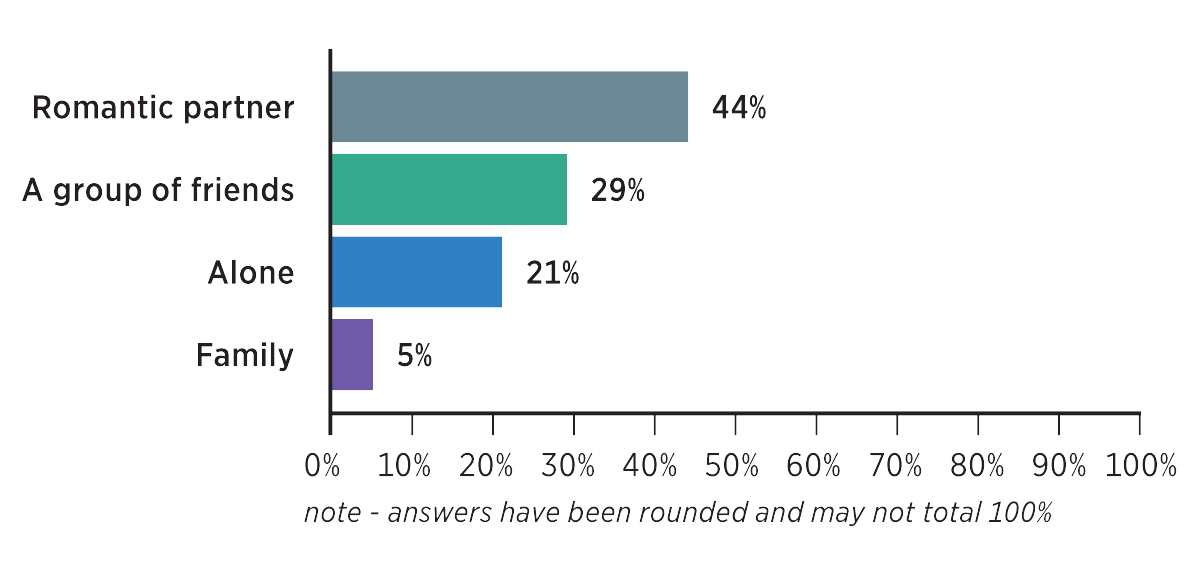
Romance isn’t dead but corporate retreats might be When asked who they would like to attend a retreat with the majority of participants (46 per cent) opted to bring their romantic partner along.
Men were the demographic most in favour of this: 60.8 per cent of men would rather travel with a romantic partner, compared to 43 per cent of women. Additionally, when it came to favoured retreat types, men ranked romantic marriage and couples’ retreats fourth (after fitness, yoga and spa).
And while a corporate retreat might sound like a good idea, only 0.4 per cent of respondents were interested in going on a retreat with their colleagues.
Yoga, fitness and spa outrate weight-loss Yoga (17.8 per cent), fitness (17.1 per cent), and spa retreats (16.5 per cent) were the most popular retreat types overall, followed by anti-stress (9.7 per cent) and detox retreats (8.1 per cent) in fourth and fifth place. Only 2.8 per cent of respondents were interested in weight-loss retreats. The popularity of yoga, fitness and spa retreats as well as adventure sports reflects the wellness travellers’ changing focus towards fitness and overall health.
How often do you go on retreats?
Where do you research retreats?
Who would you go on a retreat with?
About the author
Dervla Louli Musgrave
Dervla Louli Musgrave is the founder and CEO of Compare Retreats, a booking portal, travel agency and media company focusing on travel to some of the world’s leading luxury wellness retreats.
An opportunity to reimagine one of the UK’s most recognisable towers has been formally
opened by Rivington Hark, as St Johns Beacon invites operators and partners to shape its
next phase. [more...]
Wellness travel now accounts for 17 per cent of all
global tourism revenues, but it’s difficult to decipher
what wellness travellers really want. Compare Retreats
founder Dervla Louli Musgrave turns to her global
community of clients and readers to find out
Retreats are commonly viewed as an investment in your body and mind
As a US$639bn industry, wellness tourism has become a point of global interest as it continues to be the fastest-growing tourism sector. The industry is far from reaching saturation-point, but with more wellness retreats on offer than ever before, what is it that wellness travellers really want?
That’s the question Compare Retreats, the booking portal, travel agency and media company for the world’s leading wellness retreats, asked more than 500 wellness travellers between the ages of 18-76 from locations around the globe, including Hong Kong, Singapore, the US, the UK and Australia in Q4 of 2018.
From most-desired destinations, to how wellness travellers research retreats, and mental health becoming the top reason to book a retreat, the survey results uncovered what makes wellness travellers today tick.
Google search, Instagram, and friend referrals are key search channels The top three ways that the wellness travellers surveyed research and found retreats were via Google search (80.5 per cent), friend referrals (65.6 per cent), and Instagram (45.7 per cent). Online publications are important among the 50+ demographic, where they ranked third in place of Instagram. With good SEO practices, online publications can see themselves having extra influence if they fall into the top pages of a Google search.
Print publications are important for third-party validation of wellness retreat businesses, but only 10.7 per cent of users said they refer to print when searching for a retreat. This indicates that advertisers and retreats would be wiser investing money in online publications and well-crafted Instagram marketing plans, as well as referral programmes, to reach across audiences of all ages and genders.
Mental health is the new wellness priority Physical fitness has long dominated the wellness industry, but today’s wellness travellers are showing a significant shift towards mental health as their main focus on retreats.
Survey respondents were asked to rank mental, physical and spiritual health in order of importance: 62.9 per cent selected mental health as number one.
Millennials ranked mental health far higher than other demographics, with 67.2 per cent ranking it as first, compared to 57.7 per cent of Gen X and only 52.5 per cent of the 50+ group.
Overall, physical health was ranked first by 24.4 per cent of respondents, and second by 57.9 per cent, showing it continues to be important to many wellness travellers. Spiritual health ranked last, with 75.8 per cent respondents selecting it as their lowest priority.
Plastic-free policies influence wellness travellers’ decisions The anti-plastic movement is growing momentum fast, and 89.5 per cent of wellness travellers surveyed want wellness retreats to have a plastic-free policy.
Women were more concerned with environmental issues: with 90.7 per cent of female respondents favouring plastic-free policies to 82.3 per cent of men. The huge push towards plastic-free demonstrates the need for wellness retreats to update their sustainability policies to remain competitive.
The Maldives, Bali and Thailand come out on top Tropical destinations continue to dominate the wellness travel destination bucket list, although surprisingly, Bali is no longer the number one choice for wellness travellers.
The three most desired wellness travel destination was the Maldives (45.4 per cent), followed by Bali (42.9 per cent) and Thailand (34.5 per cent).
Retreats are for prevention instead of a cure Wellness retreats are commonly viewed as an annual investment in your body and mind. The majority of retreat-going wellness travellers surveyed (45 per cent) attend a retreat once a year, while 36.6 per cent save wellness retreats for special occasions, and 18.4 per cent go two or more times per year.
Furthermore, only 0.2 per cent of wellness travellers showed interest in medical health retreats, and having doctors onsite ranked the lowest of the desired features (2.8 per cent).
All-inclusive packages are preferential Seventy-eight per cent of wellness travellers want all-inclusive packages and set programmes that include accommodation, meal plans and activities/therapies. Modern-day living requires people to make an increasing number of decisions every day, so when checking into a retreat they want to be able to switch off.
Romance isn’t dead but corporate retreats might be When asked who they would like to attend a retreat with the majority of participants (46 per cent) opted to bring their romantic partner along.
Men were the demographic most in favour of this: 60.8 per cent of men would rather travel with a romantic partner, compared to 43 per cent of women. Additionally, when it came to favoured retreat types, men ranked romantic marriage and couples’ retreats fourth (after fitness, yoga and spa).
And while a corporate retreat might sound like a good idea, only 0.4 per cent of respondents were interested in going on a retreat with their colleagues.
Yoga, fitness and spa outrate weight-loss Yoga (17.8 per cent), fitness (17.1 per cent), and spa retreats (16.5 per cent) were the most popular retreat types overall, followed by anti-stress (9.7 per cent) and detox retreats (8.1 per cent) in fourth and fifth place. Only 2.8 per cent of respondents were interested in weight-loss retreats. The popularity of yoga, fitness and spa retreats as well as adventure sports reflects the wellness travellers’ changing focus towards fitness and overall health.
How often do you go on retreats?
Where do you research retreats?
Who would you go on a retreat with?
About the author
Dervla Louli Musgrave
Dervla Louli Musgrave is the founder and CEO of Compare Retreats, a booking portal, travel agency and media company focusing on travel to some of the world’s leading luxury wellness retreats.
Hotel de France, located on the British Isle of Jersey, has created a wellness retreat package
that includes a hot yoga session that will take place in Jersey Zoo’s butterfly sanctuary.
A new immersive attraction designed to transport visitors into the final hours of ancient Pompeii
is preparing to open near the world-famous archaeological site in southern Italy.
Experience design company, BRC Imagination Arts, has completed a transition that sees founder
Bob Rogers pass ownership of the business to four long-serving senior executives, while
remaining actively involved with the company.
Movie Park Germany has opened a new Paramount Pictures-themed attraction as part of its 30th
anniversary celebrations, using immersive storytelling and adaptive reuse to reinforce the park’s
longstanding “Hollywood in Germany” positioning.
Therme Manchester’s 28-acre development, which will include interconnected glass pavilions
that measure 65,000sq m, will be the largest bathing and wellbeing attraction in the world once
complete, according to prof David Russell, CEO of Therme UK.
Efteling has opened Hooghmoed, a new family drop tower designed to broaden the appeal of its
recently launched Sirene Island themed area and introduce younger visitors to thrill attractions.
A proposed Puy du Fou development near Bicester and Universal Destinations and Experiences’
planned resort in Bedford are emerging as part of a wider transformation of the Oxford–
Cambridge Growth Corridor into a major centre for UK leisure and tourism inv
Shedd Aquarium has opened the Immersion Theater developed in partnership with SimEx-
Iwerks, as part of a wider strategy to enhance the guest experience and create additional
revenue opportunities.
The UK government has announced a temporary reduction in VAT on visitor attractions and
children’s meals as part of a summer cost-of-living support package designed to stimulate the
visitor economy and encourage family days out.
As designer Yinka Ilori prepares for his first solo gallery show in London, he speaks exclusively
to CLADmag about his mission to spread joy, the power of play, and his bold approach to using
colour (including the colours you won’t see in his work).
The government of Thailand is exploring plans for a THB300bn (£6.3bn, US$8.3bn)
entertainment complex in the country’s Eastern Economic Corridor (EEC), with officials
proposing a large-scale theme park and sports destination as part of a broader tourism and
economic development strategy.
+ More news
COMPANY PROFILES
Polin Waterparks Polin was founded in Istanbul in 1976. Polin
has since grown into a leading company in
the waterpa [more...]
DJW David & Lynn Willrich started the Company
over thirty years ago, from the Audio Visual
Department [more...]
An opportunity to reimagine one of the UK’s most recognisable towers has been formally
opened by Rivington Hark, as St Johns Beacon invites operators and partners to shape its
next phase. [more...]