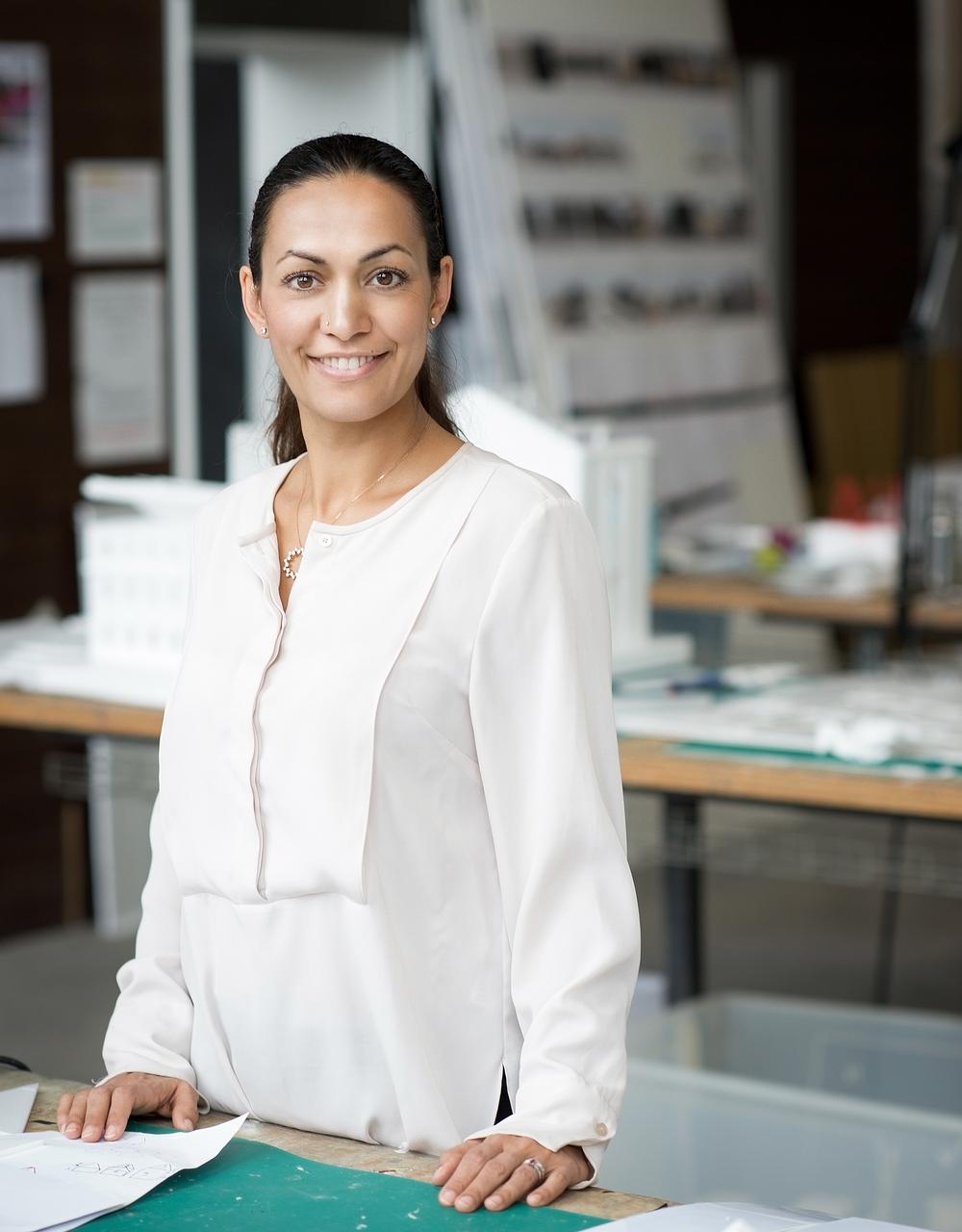
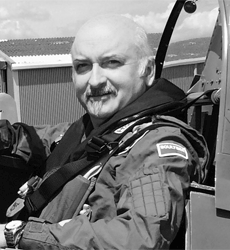
Sheela Maini Søgaard joined BIG in 2008 and was made chief executive in 2009 / Photo: Flemming Leitorp
Sheela Maini Søgaard first met Bjarke Ingels in 2008 while on maternity leave from a previous job. BIG was making a name for itself, but was struggling financially, and having a difficult time with clients not paying bills.
With a strong business background and a pragmatic, no nonsense attitude, Søgaard knew she could help. During their meeting, she passed on some business tips to Ingels, who later contacted her to say her tips were working, and to offer her the job of chief financial officer. Søgaard set herself the task of dealing with the firm’s finances so that the architects could concentrate on what they did best.
“It freed up Bjarke to focus on the projects,” she says. “I couldn’t contribute to the architecture side of things, but I could be the person who calls the clients and says, if you don’t pay, I’m passing this to the lawyer.”
Getting the clients to pay up was just part of the story though. Since she joined, BIG has grown from 45 employees to more than 450 across offices in London, Copenhagen and New York City, and Søgaard has been a driving force in its evolution into a professionally-run, global organisation. Here she talks about the challenges of her role and of BIG’s rapid growth.
What’s your background? I grew up in Dubai and Saudi Arabia, with intermittent periods in Denmark (my father is Indian and my mother is Danish). I have a masters degree in Business Administration from Copenhagen School of Business, and started my career with Procter and Gamble. I worked for the American consulting firm McKinsey for two and a half years, and later worked for celebrity chef Claus Meyer (the Danish equivalent of Jamie Oliver). While I was on maternity leave, in early 2008, I had an interview with Bjarke Ingels, and I joined BIG in August 2008 as chief financial officer.
Why did you want to work for Bjarke Ingels? I didn’t know I did, to be honest. I’d never heard of him at that point, even though he was already quite well known within architecture and urban development.
When I met him though, it was apparent that he was unlike any other entrepreneur that I’d known. First of all, he was young – close to my age – and I also saw that he was quick to make decisions. That was appealing to me after having worked for corporate firms where decision-making was very slow. I also liked the fact that he seemed to give the people that worked with him a lot of trust and responsibility.
What shape was the practice in when you joined? It was at the point when they had to start thinking about a financial model. There were about 50 people working for BIG at the time, including interns, and there were no partners – Bjarke was the sole owner.
I was given the task by Bjarke and his advisory board of turning it into a sustainable, healthy platform, and also of turning it into a partnership.
How did you approach the task? It was pretty basic; it was just getting a handle on the pluses and minuses, looking through the projects we were working on and finding out whether clients had paid their bills. It was a small firm then, so it was quite easy to work out where we were losing money.
I contacted all the clients who owed us money, and engaged a no cure no pay collections firm to deal with those who wouldn’t pay.
At the time it was completely incomprehensible to me why we’d work for people who hadn’t agreed to the terms and conditions; why we’d hand over our intellectual property before we’d received payment. I understand it now, but at the time I was quite insensitive to the passion of being a very young firm excited about clients wanting to work with you.
How much of a challenge was the task of getting BIG’s finances on track? Early on, when I’d only been there for a few weeks, one of our clients wrote to Bjarke Ingels. This client owed us a lot of money – I’d been in correspondence with them saying if they didn’t pay, we’d stop working with them and we’d pass the case over to a lawyer.
The client wrote Bjarke an angry letter saying, ‘I don’t even know this person. You’ve got to put a stop to this’. Bjarke passed the letter to me and asked me what to do. He was concerned because he had a relationship with the client and he wasn’t sure how to respond.
I told him he had to say that he was happy to talk to them regarding the architecture, but otherwise they needed to deal with me.
That was a real shift; not just for our clients but also for Bjarke. It took a lot of strength to let go and let me take care of that side of the business.
What are the biggest challenges for BIG today? There isn’t always a direct correlation between the projects with a lot of prestige and impact, that you really want to engage with, and reasonable fees.
We’re constantly weighing up how much we want to do a project with the financial reward.
It’s a challenge for the industry as a whole, the fact that for the really impactful projects – the cultural, educational projects that will really contribute to the community and will make a difference in the long term – it can be difficult to raise the money for fees and for the construction budget. I find that problematic.
How would you describe the culture at BIG? One of the key things that differentiates BIG from other firms I’ve worked for, is the insistence on being playful and having fun.
None of us has our own office, so we all sit together, we’re loud – very sort of Viking – we swear, we’re inappropriate sometimes. This approach really eases the mood a lot.
It’s really a juxtaposition, because we take ourselves so seriously in terms of what we do and in terms of our contractual negotiations, but then we take ourselves so un-seriously in the celebrating we do and the mood in the office.
Were you surprised by the reaction to the photo Bjarke Ingels posted recently, which highlighted the fact that you’re the only woman at partner level? I was surprised by the reaction, but only because I hadn’t properly considered how we plug into the overall gender debate. I have started to think about it differently, and to realise that this is something that warrants more attention.
I’m actually really glad that the media continues to confront us with this issue, because the truth is that when you look at the numbers of women in positions of power in business and architecture, we’ve got a long way to go. As a female CEO, I have an obligation to help find a way to address this issue that makes sense for us, where we don’t feel that we’re compromising values and promoting people just because of their gender, but really helping the talent to move up. I feel very confident that the path is there, and that we’ve begun this process.
When I look at the BIG landscape, more than half of our directors and managers are women. That in my mind shows that BIG actually is a place that offers people with talent and ambition a platform to rise regardless of gender or ethnicity.
What are your thoughts on the issue of the lack of ethnic diversity within architecture? I think at BIG that’s probably an area where we’re actually ahead of the curve, having more than 40 different nationalities represented within the practice.
It’s true that there are some nationalities that aren’t represented well yet, and it’s not getting easier with the visa tightening in the Americas and with Brexit, but I do think that diversity on that front is something that’s very much part of our DNA, especially given our Scandinavian roots.
BIG has expanded quickly over the past few years. What are the challenges of this growth? We’ve grown almost tenfold in the time I’ve been working for BIG. That means our way of working, our DNA, is spread across a larger population.
One of the really large focus areas for us is making sure that we permeate our new members with our way of thinking and working, both so that we maintain our culture and so that we continue to develop the kind of architecture that we want to deliver.
Open plan offices help to create a flat hierarchy within the practice, says Søgaard
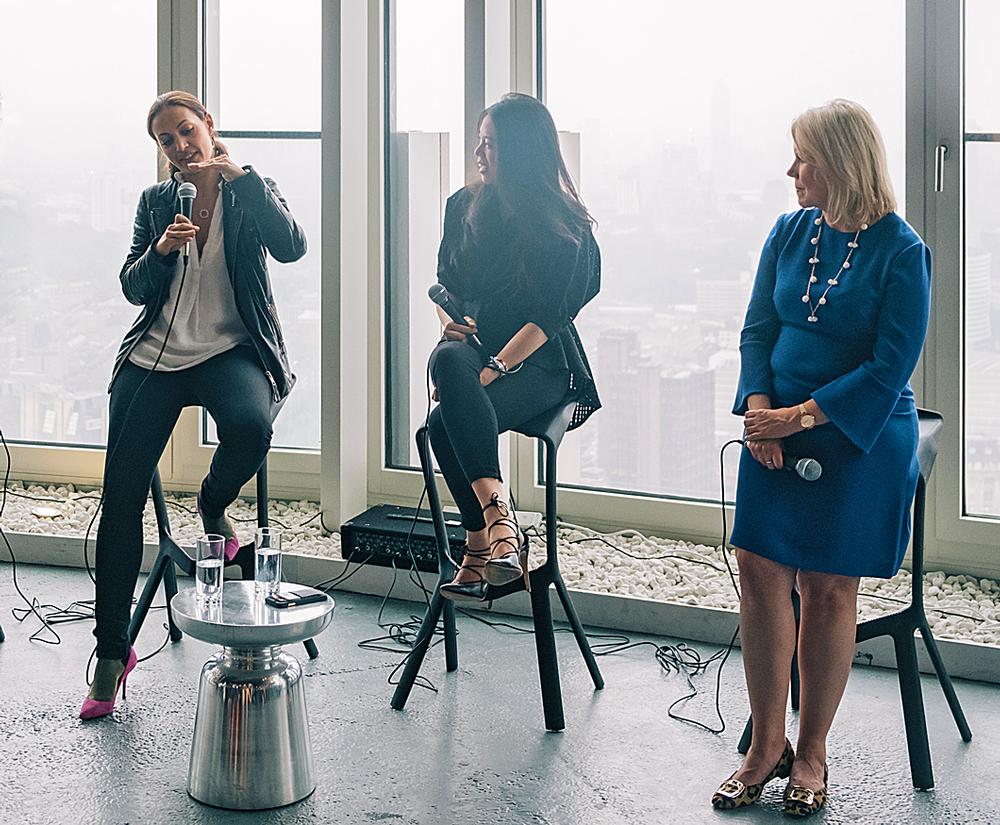
Søgaard recently took part in a business talk in London offering advice to architects, along with Design Haus Liberty founder Dara Huang (centre) and Caroline Roberts, global head of people and talent at Zaha Hadid Architects (right)
COMPANY PROFILES
Simworx Ltd
The company was initially established
in 1997. Terry Monkton and Andrew
Roberts are the key stakeh [more...]
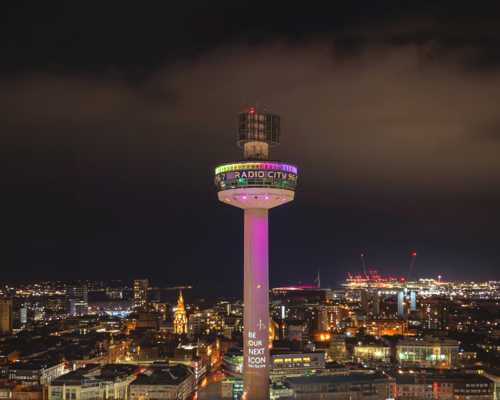
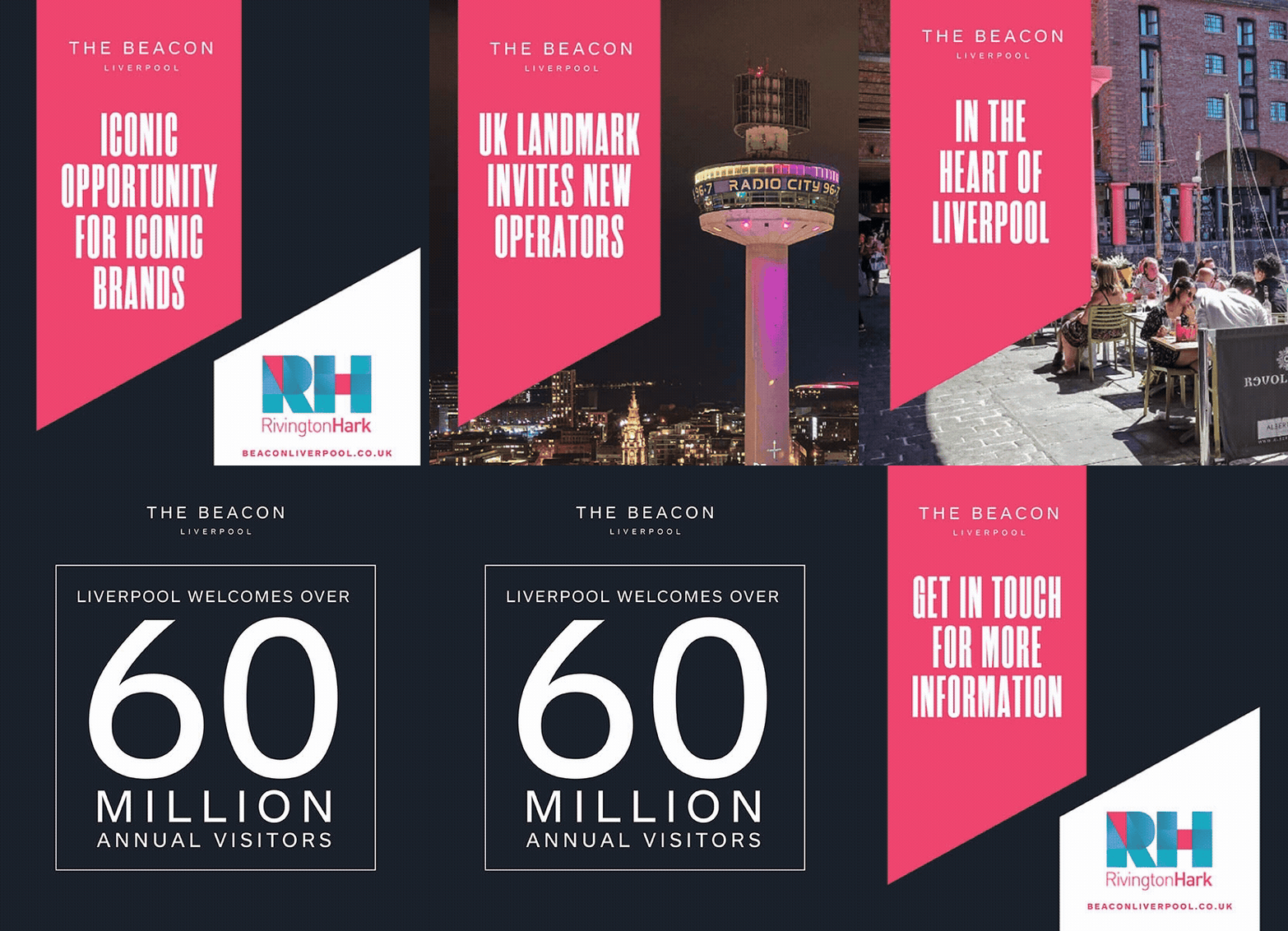
An opportunity to reimagine one of the UK’s most recognisable towers has been formally
opened by Rivington Hark, as St Johns Beacon invites operators and partners to shape its
next phase. [more...]
Sheela Maini Søgaard joined BIG in 2008 and was made chief executive in 2009 / Photo: Flemming Leitorp
Sheela Maini Søgaard first met Bjarke Ingels in 2008 while on maternity leave from a previous job. BIG was making a name for itself, but was struggling financially, and having a difficult time with clients not paying bills.
With a strong business background and a pragmatic, no nonsense attitude, Søgaard knew she could help. During their meeting, she passed on some business tips to Ingels, who later contacted her to say her tips were working, and to offer her the job of chief financial officer. Søgaard set herself the task of dealing with the firm’s finances so that the architects could concentrate on what they did best.
“It freed up Bjarke to focus on the projects,” she says. “I couldn’t contribute to the architecture side of things, but I could be the person who calls the clients and says, if you don’t pay, I’m passing this to the lawyer.”
Getting the clients to pay up was just part of the story though. Since she joined, BIG has grown from 45 employees to more than 450 across offices in London, Copenhagen and New York City, and Søgaard has been a driving force in its evolution into a professionally-run, global organisation. Here she talks about the challenges of her role and of BIG’s rapid growth.
What’s your background? I grew up in Dubai and Saudi Arabia, with intermittent periods in Denmark (my father is Indian and my mother is Danish). I have a masters degree in Business Administration from Copenhagen School of Business, and started my career with Procter and Gamble. I worked for the American consulting firm McKinsey for two and a half years, and later worked for celebrity chef Claus Meyer (the Danish equivalent of Jamie Oliver). While I was on maternity leave, in early 2008, I had an interview with Bjarke Ingels, and I joined BIG in August 2008 as chief financial officer.
Why did you want to work for Bjarke Ingels? I didn’t know I did, to be honest. I’d never heard of him at that point, even though he was already quite well known within architecture and urban development.
When I met him though, it was apparent that he was unlike any other entrepreneur that I’d known. First of all, he was young – close to my age – and I also saw that he was quick to make decisions. That was appealing to me after having worked for corporate firms where decision-making was very slow. I also liked the fact that he seemed to give the people that worked with him a lot of trust and responsibility.
What shape was the practice in when you joined? It was at the point when they had to start thinking about a financial model. There were about 50 people working for BIG at the time, including interns, and there were no partners – Bjarke was the sole owner.
I was given the task by Bjarke and his advisory board of turning it into a sustainable, healthy platform, and also of turning it into a partnership.
How did you approach the task? It was pretty basic; it was just getting a handle on the pluses and minuses, looking through the projects we were working on and finding out whether clients had paid their bills. It was a small firm then, so it was quite easy to work out where we were losing money.
I contacted all the clients who owed us money, and engaged a no cure no pay collections firm to deal with those who wouldn’t pay.
At the time it was completely incomprehensible to me why we’d work for people who hadn’t agreed to the terms and conditions; why we’d hand over our intellectual property before we’d received payment. I understand it now, but at the time I was quite insensitive to the passion of being a very young firm excited about clients wanting to work with you.
How much of a challenge was the task of getting BIG’s finances on track? Early on, when I’d only been there for a few weeks, one of our clients wrote to Bjarke Ingels. This client owed us a lot of money – I’d been in correspondence with them saying if they didn’t pay, we’d stop working with them and we’d pass the case over to a lawyer.
The client wrote Bjarke an angry letter saying, ‘I don’t even know this person. You’ve got to put a stop to this’. Bjarke passed the letter to me and asked me what to do. He was concerned because he had a relationship with the client and he wasn’t sure how to respond.
I told him he had to say that he was happy to talk to them regarding the architecture, but otherwise they needed to deal with me.
That was a real shift; not just for our clients but also for Bjarke. It took a lot of strength to let go and let me take care of that side of the business.
What are the biggest challenges for BIG today? There isn’t always a direct correlation between the projects with a lot of prestige and impact, that you really want to engage with, and reasonable fees.
We’re constantly weighing up how much we want to do a project with the financial reward.
It’s a challenge for the industry as a whole, the fact that for the really impactful projects – the cultural, educational projects that will really contribute to the community and will make a difference in the long term – it can be difficult to raise the money for fees and for the construction budget. I find that problematic.
How would you describe the culture at BIG? One of the key things that differentiates BIG from other firms I’ve worked for, is the insistence on being playful and having fun.
None of us has our own office, so we all sit together, we’re loud – very sort of Viking – we swear, we’re inappropriate sometimes. This approach really eases the mood a lot.
It’s really a juxtaposition, because we take ourselves so seriously in terms of what we do and in terms of our contractual negotiations, but then we take ourselves so un-seriously in the celebrating we do and the mood in the office.
Were you surprised by the reaction to the photo Bjarke Ingels posted recently, which highlighted the fact that you’re the only woman at partner level? I was surprised by the reaction, but only because I hadn’t properly considered how we plug into the overall gender debate. I have started to think about it differently, and to realise that this is something that warrants more attention.
I’m actually really glad that the media continues to confront us with this issue, because the truth is that when you look at the numbers of women in positions of power in business and architecture, we’ve got a long way to go. As a female CEO, I have an obligation to help find a way to address this issue that makes sense for us, where we don’t feel that we’re compromising values and promoting people just because of their gender, but really helping the talent to move up. I feel very confident that the path is there, and that we’ve begun this process.
When I look at the BIG landscape, more than half of our directors and managers are women. That in my mind shows that BIG actually is a place that offers people with talent and ambition a platform to rise regardless of gender or ethnicity.
What are your thoughts on the issue of the lack of ethnic diversity within architecture? I think at BIG that’s probably an area where we’re actually ahead of the curve, having more than 40 different nationalities represented within the practice.
It’s true that there are some nationalities that aren’t represented well yet, and it’s not getting easier with the visa tightening in the Americas and with Brexit, but I do think that diversity on that front is something that’s very much part of our DNA, especially given our Scandinavian roots.
BIG has expanded quickly over the past few years. What are the challenges of this growth? We’ve grown almost tenfold in the time I’ve been working for BIG. That means our way of working, our DNA, is spread across a larger population.
One of the really large focus areas for us is making sure that we permeate our new members with our way of thinking and working, both so that we maintain our culture and so that we continue to develop the kind of architecture that we want to deliver.
Open plan offices help to create a flat hierarchy within the practice, says Søgaard
Søgaard recently took part in a business talk in London offering advice to architects, along with Design Haus Liberty founder Dara Huang (centre) and Caroline Roberts, global head of people and talent at Zaha Hadid Architects (right)
A new immersive attraction designed to transport visitors into the final hours of ancient Pompeii
is preparing to open near the world-famous archaeological site in southern Italy.
Experience design company, BRC Imagination Arts, has completed a transition that sees founder
Bob Rogers pass ownership of the business to four long-serving senior executives, while
remaining actively involved with the company.
Movie Park Germany has opened a new Paramount Pictures-themed attraction as part of its 30th
anniversary celebrations, using immersive storytelling and adaptive reuse to reinforce the park’s
longstanding “Hollywood in Germany” positioning.
Therme Manchester’s 28-acre development, which will include interconnected glass pavilions
that measure 65,000sq m, will be the largest bathing and wellbeing attraction in the world once
complete, according to prof David Russell, CEO of Therme UK.
Efteling has opened Hooghmoed, a new family drop tower designed to broaden the appeal of its
recently launched Sirene Island themed area and introduce younger visitors to thrill attractions.
A proposed Puy du Fou development near Bicester and Universal Destinations and Experiences’
planned resort in Bedford are emerging as part of a wider transformation of the Oxford–
Cambridge Growth Corridor into a major centre for UK leisure and tourism inv
Shedd Aquarium has opened the Immersion Theater developed in partnership with SimEx-
Iwerks, as part of a wider strategy to enhance the guest experience and create additional
revenue opportunities.
The UK government has announced a temporary reduction in VAT on visitor attractions and
children’s meals as part of a summer cost-of-living support package designed to stimulate the
visitor economy and encourage family days out.
As designer Yinka Ilori prepares for his first solo gallery show in London, he speaks exclusively
to CLADmag about his mission to spread joy, the power of play, and his bold approach to using
colour (including the colours you won’t see in his work).
The government of Thailand is exploring plans for a THB300bn (£6.3bn, US$8.3bn)
entertainment complex in the country’s Eastern Economic Corridor (EEC), with officials
proposing a large-scale theme park and sports destination as part of a broader tourism and
economic development strategy.
An opportunity to reimagine one of the UK’s most recognisable towers has been formally
opened by Rivington Hark, as St Johns Beacon invites operators and partners to shape its
next phase. [more...]