Providing excellent opportunities for visually impaired people to get active, new CEO Mark Winder describes Goalball UK’s plans for attracting more players and setting up clubs across the country
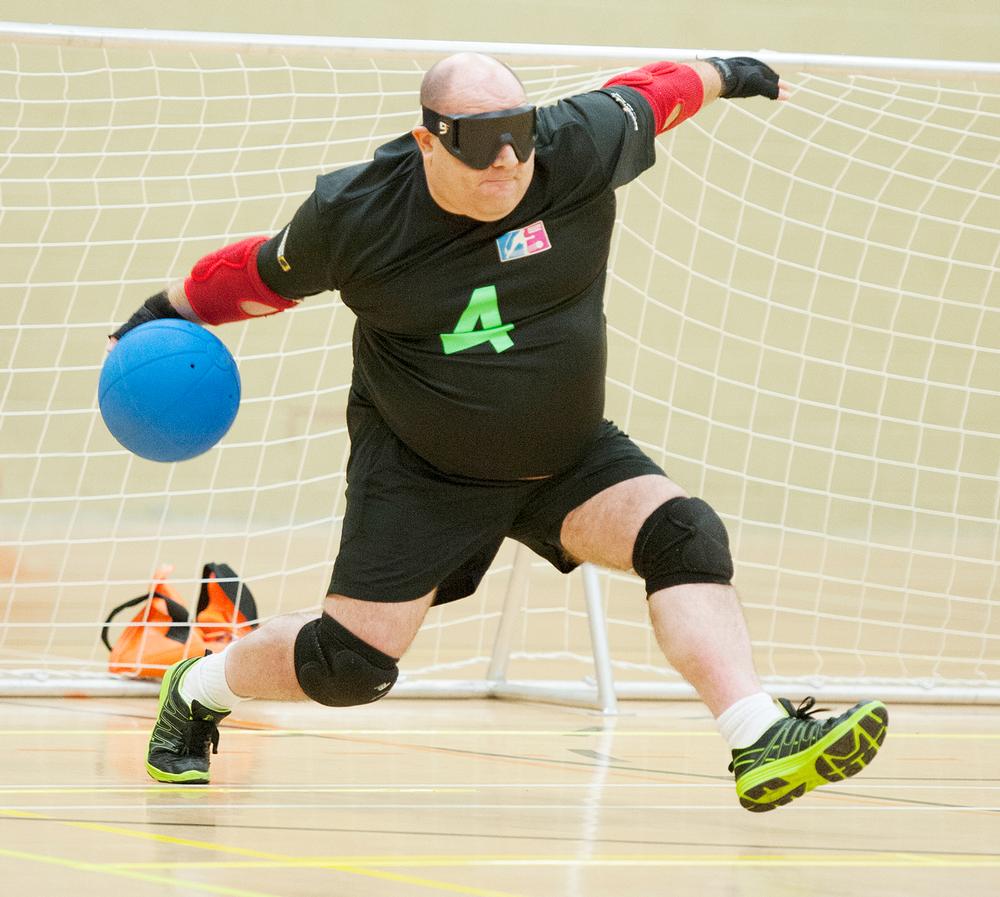
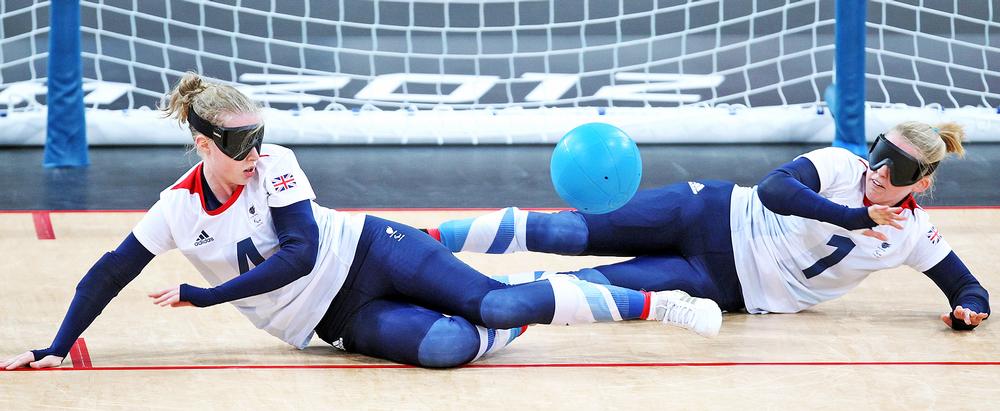
Goalball was originally created to rehabilitate soldiers after WWII and is the only sport designed specifically for the blind and visually impaired (VI). Played with blindfolds and a ball with bells inside it, it’s open to all levels of visual impairment at elite competitions, and absolutely anyone can play at a club level.
As the new CEO, I’m fortunate enough to be joining the sport at an incredibly exciting time for the grassroots game. Participation has increased by 425 per cent over the last funding cycle, meeting Sport England targets two years early. With over 30 clubs across the country – double the number active in 2012 – more people than ever are experiencing this fantastic sport.
Though we didn’t have teams at Rio, we’re still capitalising on the boost that London 2012 gave us. Several of our current Team GB players point to the London Games as a watershed moment for them. Unlike many other sports, which have struggled to keep up participation, our growth has been remarkable.
Team effort This success has its roots in our vibrant regional clubs and the dedication of the volunteers who run them. We only have a handful of paid staff, making our small army of referees and coaches vital to the grassroots game. We often say that when you take up Goalball, you’re joining a community rather than a sport.
By hosting regular coaching courses around the country we’re able to renew our reserves of qualified volunteers as well as giving the friends and family of players the chance to be more actively involved. A volunteer shortage is the most significant barrier to our expansion and their recruitment is just as vital as attracting new players. Consequently, a lot of our campaign activity is focused on promoting individual clubs in order to raise their profile regionally.
The activity goal Centrally, we’re very much aware of the thousands of VI people who could benefit from Goalball. Only one per cent of VI people currently have access to Goalball facilities and training, meaning tens of thousands of people are missing out on the very tangible health, social and economic benefits through participation in sport – and society as a whole is missing out on the contribution they could make. Our goal is to reach as many of them as possible.
The south west of the country, for example, currently has no regularly active clubs, and the remarkable response we’ve seen to the new London Elephants club makes it clear that more are needed in the capital to meet demand.
New funding from Sport England will be vital to this much needed expansion. The Towards an Active Nation strategy, launched last year, aligned perfectly with Goalball UK’s values, and the subsequent £1.4m from Sport England will help us to meet our ambitions and those of the Government.
Educating new players The level of inactivity among VI people means that we reach many players through organisations and services that are unrelated to sport. Schools, charities and local councils are all routes to reach potential new players. Higher-education providers, in particular, have been incredibly active centres for the sport. As well at the Royal National College for the Blind (RNC), universities such as Cambridge University boast incredibly strong teams that have inspired others to get involved. We’ll continue to strengthen these relationships with a particular emphasis on school outreach and junior programmes, in order to reach younger players.
In Goalball, blackout goggles are worn, ensuring all players have the same level of blindness. This allows anyone to get involved. By holding more sessions in schools, VI kids will be able to get active with their sighted friends, simultaneously destigmatising visual impairment and introducing new players to the game.
Branching out We also hope to build on previous successes in engaging traditionally inactive groups. The additional £200,000 from Sport England has been explicitly earmarked with this in mind. With it, we’ll be able to run more of our incredibly popular ‘This Girl Can’ sessions and support new clubs with the cost of hiring venues. This will make it possible to branch out into lower socio-economic locations and to reach VI people who have previously not had access to sport.
Growth will often be driven by the players themselves. Due to our exceptional retention rate, many of those who are involved with the sport progress to a point where they want to branch out into coaching or running a club. Laura Perry and Dan Roper, Team GB players, are good examples. After training at the RNC, they moved to Cambridgeshire and founded the Fen Tigers.
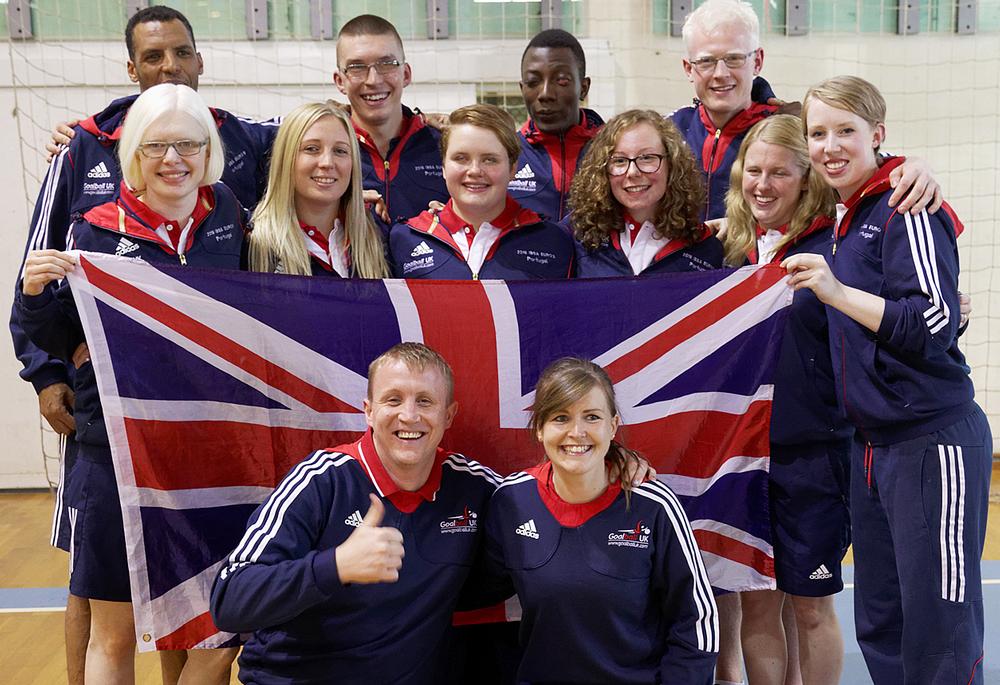
Elite inspiration To us, grassroots and elite play are intrinsically linked. As our GB players aim for Tokyo 2020, they’re inspiring a new generation of players.
Goalball truly transforms lives and our aim is to ensure every VI person in the UK has the opportunity to discover the sport for themselves.
An opportunity to reimagine one of the UK’s most recognisable towers has been formally
opened by Rivington Hark, as St Johns Beacon invites operators and partners to shape its
next phase. [more...]
Providing excellent opportunities for visually impaired people to get active, new CEO Mark Winder describes Goalball UK’s plans for attracting more players and setting up clubs across the country
Goalball was originally created to rehabilitate soldiers after WWII and is the only sport designed specifically for the blind and visually impaired (VI). Played with blindfolds and a ball with bells inside it, it’s open to all levels of visual impairment at elite competitions, and absolutely anyone can play at a club level.
As the new CEO, I’m fortunate enough to be joining the sport at an incredibly exciting time for the grassroots game. Participation has increased by 425 per cent over the last funding cycle, meeting Sport England targets two years early. With over 30 clubs across the country – double the number active in 2012 – more people than ever are experiencing this fantastic sport.
Though we didn’t have teams at Rio, we’re still capitalising on the boost that London 2012 gave us. Several of our current Team GB players point to the London Games as a watershed moment for them. Unlike many other sports, which have struggled to keep up participation, our growth has been remarkable.
Team effort This success has its roots in our vibrant regional clubs and the dedication of the volunteers who run them. We only have a handful of paid staff, making our small army of referees and coaches vital to the grassroots game. We often say that when you take up Goalball, you’re joining a community rather than a sport.
By hosting regular coaching courses around the country we’re able to renew our reserves of qualified volunteers as well as giving the friends and family of players the chance to be more actively involved. A volunteer shortage is the most significant barrier to our expansion and their recruitment is just as vital as attracting new players. Consequently, a lot of our campaign activity is focused on promoting individual clubs in order to raise their profile regionally.
The activity goal Centrally, we’re very much aware of the thousands of VI people who could benefit from Goalball. Only one per cent of VI people currently have access to Goalball facilities and training, meaning tens of thousands of people are missing out on the very tangible health, social and economic benefits through participation in sport – and society as a whole is missing out on the contribution they could make. Our goal is to reach as many of them as possible.
The south west of the country, for example, currently has no regularly active clubs, and the remarkable response we’ve seen to the new London Elephants club makes it clear that more are needed in the capital to meet demand.
New funding from Sport England will be vital to this much needed expansion. The Towards an Active Nation strategy, launched last year, aligned perfectly with Goalball UK’s values, and the subsequent £1.4m from Sport England will help us to meet our ambitions and those of the Government.
Educating new players The level of inactivity among VI people means that we reach many players through organisations and services that are unrelated to sport. Schools, charities and local councils are all routes to reach potential new players. Higher-education providers, in particular, have been incredibly active centres for the sport. As well at the Royal National College for the Blind (RNC), universities such as Cambridge University boast incredibly strong teams that have inspired others to get involved. We’ll continue to strengthen these relationships with a particular emphasis on school outreach and junior programmes, in order to reach younger players.
In Goalball, blackout goggles are worn, ensuring all players have the same level of blindness. This allows anyone to get involved. By holding more sessions in schools, VI kids will be able to get active with their sighted friends, simultaneously destigmatising visual impairment and introducing new players to the game.
Branching out We also hope to build on previous successes in engaging traditionally inactive groups. The additional £200,000 from Sport England has been explicitly earmarked with this in mind. With it, we’ll be able to run more of our incredibly popular ‘This Girl Can’ sessions and support new clubs with the cost of hiring venues. This will make it possible to branch out into lower socio-economic locations and to reach VI people who have previously not had access to sport.
Growth will often be driven by the players themselves. Due to our exceptional retention rate, many of those who are involved with the sport progress to a point where they want to branch out into coaching or running a club. Laura Perry and Dan Roper, Team GB players, are good examples. After training at the RNC, they moved to Cambridgeshire and founded the Fen Tigers.
Elite inspiration To us, grassroots and elite play are intrinsically linked. As our GB players aim for Tokyo 2020, they’re inspiring a new generation of players.
Goalball truly transforms lives and our aim is to ensure every VI person in the UK has the opportunity to discover the sport for themselves.
A new immersive attraction designed to transport visitors into the final hours of ancient Pompeii
is preparing to open near the world-famous archaeological site in southern Italy.
Experience design company, BRC Imagination Arts, has completed a transition that sees founder
Bob Rogers pass ownership of the business to four long-serving senior executives, while
remaining actively involved with the company.
Movie Park Germany has opened a new Paramount Pictures-themed attraction as part of its 30th
anniversary celebrations, using immersive storytelling and adaptive reuse to reinforce the park’s
longstanding “Hollywood in Germany” positioning.
Therme Manchester’s 28-acre development, which will include interconnected glass pavilions
that measure 65,000sq m, will be the largest bathing and wellbeing attraction in the world once
complete, according to prof David Russell, CEO of Therme UK.
Efteling has opened Hooghmoed, a new family drop tower designed to broaden the appeal of its
recently launched Sirene Island themed area and introduce younger visitors to thrill attractions.
A proposed Puy du Fou development near Bicester and Universal Destinations and Experiences’
planned resort in Bedford are emerging as part of a wider transformation of the Oxford–
Cambridge Growth Corridor into a major centre for UK leisure and tourism inv
Shedd Aquarium has opened the Immersion Theater developed in partnership with SimEx-
Iwerks, as part of a wider strategy to enhance the guest experience and create additional
revenue opportunities.
The UK government has announced a temporary reduction in VAT on visitor attractions and
children’s meals as part of a summer cost-of-living support package designed to stimulate the
visitor economy and encourage family days out.
As designer Yinka Ilori prepares for his first solo gallery show in London, he speaks exclusively
to CLADmag about his mission to spread joy, the power of play, and his bold approach to using
colour (including the colours you won’t see in his work).
The government of Thailand is exploring plans for a THB300bn (£6.3bn, US$8.3bn)
entertainment complex in the country’s Eastern Economic Corridor (EEC), with officials
proposing a large-scale theme park and sports destination as part of a broader tourism and
economic development strategy.
An opportunity to reimagine one of the UK’s most recognisable towers has been formally
opened by Rivington Hark, as St Johns Beacon invites operators and partners to shape its
next phase. [more...]