Schools and universities have always prioritised core subjects over physical activity, but are they overlooking the positive impact that physical activity may have on academic results? Kath Hudson asks the experts
By Kath Hudson | Published in Health Club Management 2017 issue 9
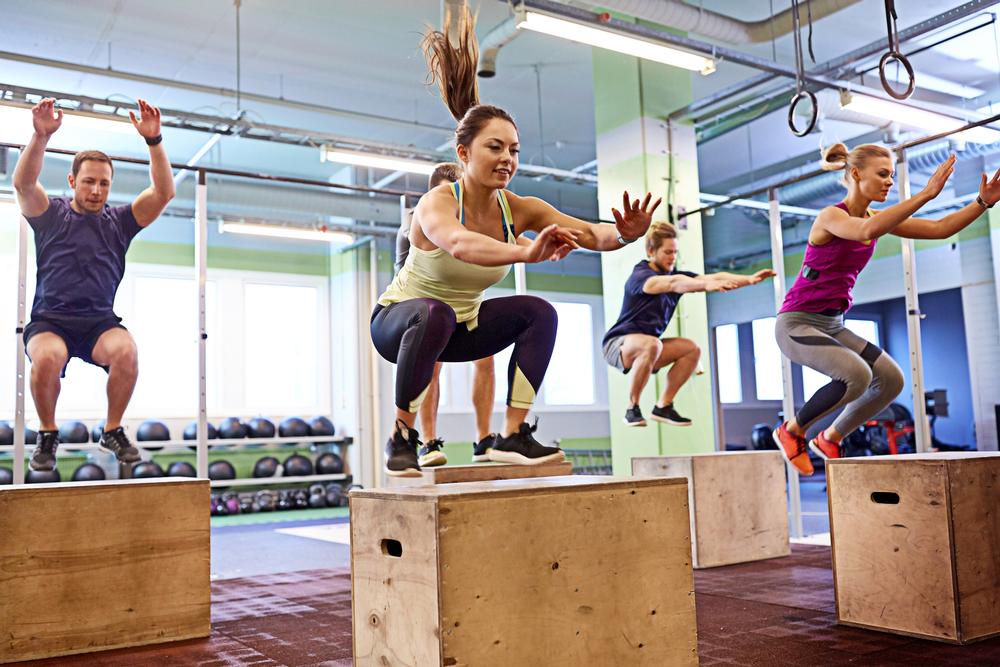
Being physically active is known to increase brain power / Photo: shutterstock
There is now a large body of evidence to support the idea that physical activity improves cognitive function in everyone, from young children to the elderly. Research also suggests that exercise has a positive effect on academic results.
According to Dr Josie Booth from the University of Edinburgh, brain scan images have shown that a 20-minute walk can improve children’s concentration levels, and the same is true for adults.
Not only does being physically active boost brain power, findings from the ukactive Research Institute indicate that it improves a number of other aspects crucial for student life, including belief in employability, personal and mental wellbeing, and social inclusion.
How can this message be relayed to the decision-makers in education? What part can the industry play in making sure that physical activity remains an important part of the learning journey, not only in schoolchildren but through to graduates?
Dr Josie BoothLecturer in Developmental PsychologyThe University of Edinburgh
Dr Josie Booth
Research by myself and collaborators has identified a positive relationship between physical activity and academic attainment. This is the case even when other background factors, such as parents' education, birth weight, socio-economic status, earlier education and intelligence are taken into consideration.
We completed a large scale study, assessing the physical activity levels of more than 5,000 11-year-olds and then looked at how they did in their GCSEs and A levels. The children who were more active at 11 were doing better at school five years later, even when background factors were taken into account. We can’t say that the activity definitely caused the attainment, but it’s strongly associated.
Although we know there are good associations, we still don’t know exactly why, but there are a number of plausible reasons backed up by research. Exercise increases blood flow and oxygen to the brain, which helps it to work better and leads to an increase in brain-derived neurotrophic factor, which helps with brain development.
There are also psycho-social factors, such as people who are active tend to be happier, have higher self esteem and have a lower risk of depression and anxiety. Also, exercise leads to better general health, so children are less likely to be absent from school or have problems associated with obesity and poor health. All these factors have been scientifically supported as being important for school attainment.
"Exercise increases blood flow and oxygen to the brain, which helps it to work better… and helps with brain development"
Dr Richard BaileySenior Researcher Physical Activity and HealthInternational Council of Sports Science and Physical Education
Dr Richard Bailey
Research shows that a fit person performs better in cognitive tests than an unhealthy person, and fit children do better in numeracy and literacy assessments than unfit children. But we're at the start of this journey: we know there's a link but we need to look at the causes.
I was recently part of an international group that reviewed the available evidence. We found that there are lots of individual positive pieces of research, but not enough understanding of the overall mechanisms.
Going forward, we need to establish the most effective activities – team games, aerobics or a mix? We also need to identify how much exercise is needed to get a certain result? Once we know this we can make recommendations about how schools can bring more physical activity into the curriculum, such as exercise breaks in lessons.
A school designed around child development would involve movement and activity. We teach children sedentary behaviour and passivity, which is unnatural. Forest schools in Germany and outdoor schools in the US are bucking this trend, and children there don’t get worse grades.
We need more teachers and more parents to believe in the benefits of physical activity to learning, and for the fitness industry to help get the message across.
"At school we currently teach children sedentary behaviour and passivity, which is unnatural"
Photo: Sport england
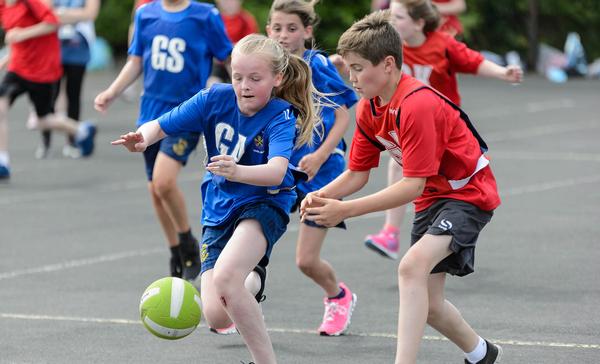
Physical activity is thought to improve academic outcomes
Dr Steven MannResearch Directorukactive
Dr Steven Mann
It's important for vice chancellors and directors of sport at universities to see that sport can help undergraduates settle into life away from home for the first time. They could promote sport and physical activity as a tool to integrate students, help them to make friends and develop a positive outlook towards their university experience, as well as developing skills that employers value, such as communication and teamwork.
University is a difficult time, as young people move to a different environment and have to adapt to a new way of life. Active students may immediately immerse themselves in a sport they have grown up with, but it’s easy for all others to become completely inactive, unless universities try to engage with them and promote the benefits of an active lifestyle.
There is a responsibility for universities to keep expanding the offer beyond traditional sports.
A study by the Research Institute identified a big group of students who weren’t completely inactive, but who weren’t meeting recommended activity levels either. As such, offerings must be diverse in order to engage these students. We have seen an increase in fun sports like quidditch and frisbee, which are more focused on play rather than competition.
The wider health and fitness sector also needs to respond to student needs. For example offering flexible memberships, being able to freeze memberships during holiday times and offering programmes which will appeal to different students at different times of the day.
"A study by the Research Institute identified a big group of students who weren’t completely inactive, but who weren’t meeting recommended activity levels either"
Photo: Sport england
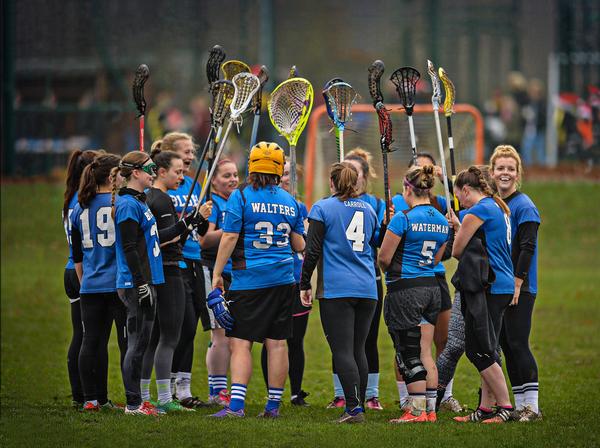
Sport could be used to help new students integrate
Dawn Podulka CoeAssociate Professor Kinesiology, Recreation and Sport StudiesThe University of Tennessee, Knoxville
Dawn Podulka Coe
There are a wide range of studies that show physical activity can improve academic performance, both in terms of grades and standardised tests. Physical activity increases blood flow to the brain, delivering more oxygen. Active, fit kids are shown to be more focused, less prone to boredom and have better concentration. My research has found that the improvement is best after higher intensity physical activity. Research has shown benefits from both chronic (habitual) exercise and acute.
Despite this compelling evidence, there is the issue that teachers are evaluated by test results and therefore want to focus on the academic time. We need more evidence to show that decreasing academic time and increasing physical activity won’t impact on test results. We also need compelling case studies to get more schools on board.
I would like to see better use of recess: kids get less recess as they get older, but also use it less for physical activity, partly because of lack of facilities and partly because they have grown out of playing on climbing frames. More semi-structured activity at break time could boost their physical activity levels and concentration.
For younger children, playtime activities like galloping and hopping are enough to bring about benefits and improve their motor skills. Research shows that if they don’t develop their motor skills, they are less likely to be active when they’re older.
"There is the issue that teachers are evaluated by test results and therefore want to focus on the academic time"
Photo: SHUTTERSTOCK.COM
Fit and active youngsters are shown to be more focused
Scottish Student Sport and ukactive Research Institute study
• A total of 5,000 students at Scottish universities were asked about their expected grades, perceived employability, personal wellbeing, mental wellbeing and social inclusion.
• 46 per cent met chief medical office (CMO) physical activity recommendations
• 19 per cent were completely inactive
• 49 per cent were a member of a sport club and a gym
• 93 per cent of active participants expected a 1st or 2:1 compared to 81 per cent of inactive students
• 7 per cent of active students expected a 2:2 or 3rd compared to 19 per cent of inactive students
• 47 per cent of active students thought participating in sport made them more employable
• Mental health was assessed using the Short Warwick-Edinburgh Mental Wellbeing Scale. The active group scored higher (average score of 24.7) than the inactive (average score of 22.6)
The study will be followed up this November, when ukactive will see if students’ achievements tallied with their expectations
COMPANY PROFILES
Simworx Ltd
The company was initially established
in 1997. Terry Monkton and Andrew
Roberts are the key stakeh [more...]
Holovis
Holovis is a privately owned company
established in 2004 by CEO Stuart
Hetherington. [more...]
IAAPA EMEA
IAAPA Expo Europe was established in 2006 and has grown to the largest international conference and [more...]
RMA Ltd
RMA Ltd is a one-stop global company
that can design, build and produce from a
greenfield site upw [more...]
An opportunity to reimagine one of the UK’s most recognisable towers has been formally
opened by Rivington Hark, as St Johns Beacon invites operators and partners to shape its
next phase. [more...]
Schools and universities have always prioritised core subjects over physical activity, but are they overlooking the positive impact that physical activity may have on academic results? Kath Hudson asks the experts
By Kath Hudson | Published in Health Club Management 2017 issue 9
Being physically active is known to increase brain power / Photo: shutterstock
There is now a large body of evidence to support the idea that physical activity improves cognitive function in everyone, from young children to the elderly. Research also suggests that exercise has a positive effect on academic results.
According to Dr Josie Booth from the University of Edinburgh, brain scan images have shown that a 20-minute walk can improve children’s concentration levels, and the same is true for adults.
Not only does being physically active boost brain power, findings from the ukactive Research Institute indicate that it improves a number of other aspects crucial for student life, including belief in employability, personal and mental wellbeing, and social inclusion.
How can this message be relayed to the decision-makers in education? What part can the industry play in making sure that physical activity remains an important part of the learning journey, not only in schoolchildren but through to graduates?
Dr Josie BoothLecturer in Developmental PsychologyThe University of Edinburgh
Dr Josie Booth
Research by myself and collaborators has identified a positive relationship between physical activity and academic attainment. This is the case even when other background factors, such as parents' education, birth weight, socio-economic status, earlier education and intelligence are taken into consideration.
We completed a large scale study, assessing the physical activity levels of more than 5,000 11-year-olds and then looked at how they did in their GCSEs and A levels. The children who were more active at 11 were doing better at school five years later, even when background factors were taken into account. We can’t say that the activity definitely caused the attainment, but it’s strongly associated.
Although we know there are good associations, we still don’t know exactly why, but there are a number of plausible reasons backed up by research. Exercise increases blood flow and oxygen to the brain, which helps it to work better and leads to an increase in brain-derived neurotrophic factor, which helps with brain development.
There are also psycho-social factors, such as people who are active tend to be happier, have higher self esteem and have a lower risk of depression and anxiety. Also, exercise leads to better general health, so children are less likely to be absent from school or have problems associated with obesity and poor health. All these factors have been scientifically supported as being important for school attainment.
"Exercise increases blood flow and oxygen to the brain, which helps it to work better… and helps with brain development"
Dr Richard BaileySenior Researcher Physical Activity and HealthInternational Council of Sports Science and Physical Education
Dr Richard Bailey
Research shows that a fit person performs better in cognitive tests than an unhealthy person, and fit children do better in numeracy and literacy assessments than unfit children. But we're at the start of this journey: we know there's a link but we need to look at the causes.
I was recently part of an international group that reviewed the available evidence. We found that there are lots of individual positive pieces of research, but not enough understanding of the overall mechanisms.
Going forward, we need to establish the most effective activities – team games, aerobics or a mix? We also need to identify how much exercise is needed to get a certain result? Once we know this we can make recommendations about how schools can bring more physical activity into the curriculum, such as exercise breaks in lessons.
A school designed around child development would involve movement and activity. We teach children sedentary behaviour and passivity, which is unnatural. Forest schools in Germany and outdoor schools in the US are bucking this trend, and children there don’t get worse grades.
We need more teachers and more parents to believe in the benefits of physical activity to learning, and for the fitness industry to help get the message across.
"At school we currently teach children sedentary behaviour and passivity, which is unnatural"
Photo: Sport england
Physical activity is thought to improve academic outcomes
Dr Steven MannResearch Directorukactive
Dr Steven Mann
It's important for vice chancellors and directors of sport at universities to see that sport can help undergraduates settle into life away from home for the first time. They could promote sport and physical activity as a tool to integrate students, help them to make friends and develop a positive outlook towards their university experience, as well as developing skills that employers value, such as communication and teamwork.
University is a difficult time, as young people move to a different environment and have to adapt to a new way of life. Active students may immediately immerse themselves in a sport they have grown up with, but it’s easy for all others to become completely inactive, unless universities try to engage with them and promote the benefits of an active lifestyle.
There is a responsibility for universities to keep expanding the offer beyond traditional sports.
A study by the Research Institute identified a big group of students who weren’t completely inactive, but who weren’t meeting recommended activity levels either. As such, offerings must be diverse in order to engage these students. We have seen an increase in fun sports like quidditch and frisbee, which are more focused on play rather than competition.
The wider health and fitness sector also needs to respond to student needs. For example offering flexible memberships, being able to freeze memberships during holiday times and offering programmes which will appeal to different students at different times of the day.
"A study by the Research Institute identified a big group of students who weren’t completely inactive, but who weren’t meeting recommended activity levels either"
Photo: Sport england
Sport could be used to help new students integrate
Dawn Podulka CoeAssociate Professor Kinesiology, Recreation and Sport StudiesThe University of Tennessee, Knoxville
Dawn Podulka Coe
There are a wide range of studies that show physical activity can improve academic performance, both in terms of grades and standardised tests. Physical activity increases blood flow to the brain, delivering more oxygen. Active, fit kids are shown to be more focused, less prone to boredom and have better concentration. My research has found that the improvement is best after higher intensity physical activity. Research has shown benefits from both chronic (habitual) exercise and acute.
Despite this compelling evidence, there is the issue that teachers are evaluated by test results and therefore want to focus on the academic time. We need more evidence to show that decreasing academic time and increasing physical activity won’t impact on test results. We also need compelling case studies to get more schools on board.
I would like to see better use of recess: kids get less recess as they get older, but also use it less for physical activity, partly because of lack of facilities and partly because they have grown out of playing on climbing frames. More semi-structured activity at break time could boost their physical activity levels and concentration.
For younger children, playtime activities like galloping and hopping are enough to bring about benefits and improve their motor skills. Research shows that if they don’t develop their motor skills, they are less likely to be active when they’re older.
"There is the issue that teachers are evaluated by test results and therefore want to focus on the academic time"
Photo: SHUTTERSTOCK.COM
Fit and active youngsters are shown to be more focused
Scottish Student Sport and ukactive Research Institute study
• A total of 5,000 students at Scottish universities were asked about their expected grades, perceived employability, personal wellbeing, mental wellbeing and social inclusion.
• 46 per cent met chief medical office (CMO) physical activity recommendations
• 19 per cent were completely inactive
• 49 per cent were a member of a sport club and a gym
• 93 per cent of active participants expected a 1st or 2:1 compared to 81 per cent of inactive students
• 7 per cent of active students expected a 2:2 or 3rd compared to 19 per cent of inactive students
• 47 per cent of active students thought participating in sport made them more employable
• Mental health was assessed using the Short Warwick-Edinburgh Mental Wellbeing Scale. The active group scored higher (average score of 24.7) than the inactive (average score of 22.6)
The study will be followed up this November, when ukactive will see if students’ achievements tallied with their expectations
Hotel de France, located on the British Isle of Jersey, has created a wellness retreat package
that includes a hot yoga session that will take place in Jersey Zoo’s butterfly sanctuary.
A new immersive attraction designed to transport visitors into the final hours of ancient Pompeii
is preparing to open near the world-famous archaeological site in southern Italy.
Experience design company, BRC Imagination Arts, has completed a transition that sees founder
Bob Rogers pass ownership of the business to four long-serving senior executives, while
remaining actively involved with the company.
Movie Park Germany has opened a new Paramount Pictures-themed attraction as part of its 30th
anniversary celebrations, using immersive storytelling and adaptive reuse to reinforce the park’s
longstanding “Hollywood in Germany” positioning.
Therme Manchester’s 28-acre development, which will include interconnected glass pavilions
that measure 65,000sq m, will be the largest bathing and wellbeing attraction in the world once
complete, according to prof David Russell, CEO of Therme UK.
Efteling has opened Hooghmoed, a new family drop tower designed to broaden the appeal of its
recently launched Sirene Island themed area and introduce younger visitors to thrill attractions.
A proposed Puy du Fou development near Bicester and Universal Destinations and Experiences’
planned resort in Bedford are emerging as part of a wider transformation of the Oxford–
Cambridge Growth Corridor into a major centre for UK leisure and tourism inv
Shedd Aquarium has opened the Immersion Theater developed in partnership with SimEx-
Iwerks, as part of a wider strategy to enhance the guest experience and create additional
revenue opportunities.
The UK government has announced a temporary reduction in VAT on visitor attractions and
children’s meals as part of a summer cost-of-living support package designed to stimulate the
visitor economy and encourage family days out.
As designer Yinka Ilori prepares for his first solo gallery show in London, he speaks exclusively
to CLADmag about his mission to spread joy, the power of play, and his bold approach to using
colour (including the colours you won’t see in his work).
The government of Thailand is exploring plans for a THB300bn (£6.3bn, US$8.3bn)
entertainment complex in the country’s Eastern Economic Corridor (EEC), with officials
proposing a large-scale theme park and sports destination as part of a broader tourism and
economic development strategy.
+ More news
COMPANY PROFILES
Simworx Ltd The company was initially established
in 1997. Terry Monkton and Andrew
Roberts are the key stakeh [more...]
Holovis Holovis is a privately owned company
established in 2004 by CEO Stuart
Hetherington. [more...]
IAAPA EMEA IAAPA Expo Europe was established in 2006 and has grown to the largest international conference and [more...]
RMA Ltd RMA Ltd is a one-stop global company
that can design, build and produce from a
greenfield site upw [more...]
An opportunity to reimagine one of the UK’s most recognisable towers has been formally
opened by Rivington Hark, as St Johns Beacon invites operators and partners to shape its
next phase. [more...]