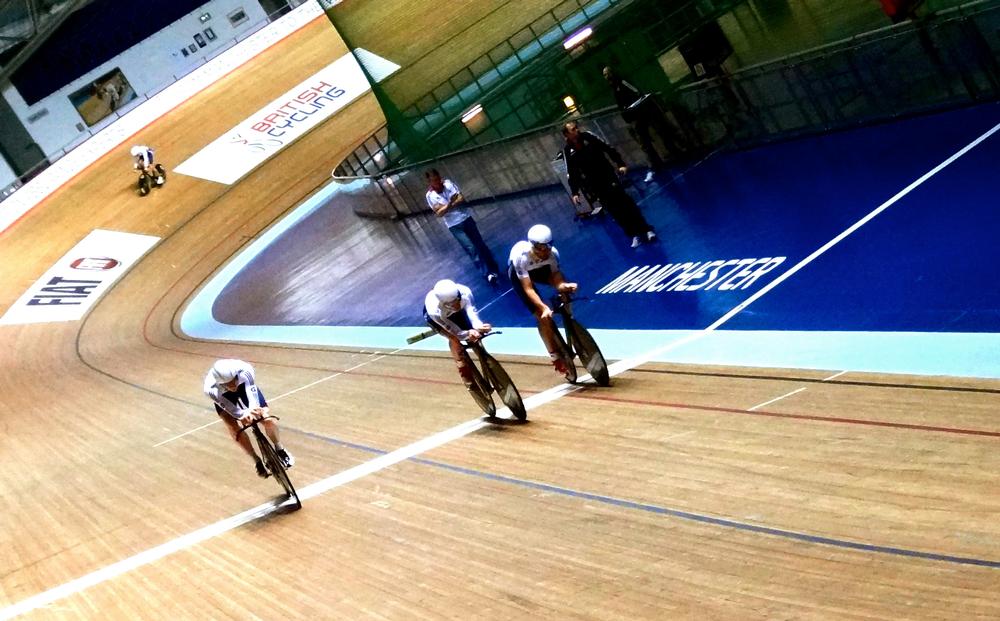
The successful National Cycling Centre has been dubbed the ‘medal factory’
The performance of our GB Olympians and Paralympians in Rio was nothing short of astounding. Clearly much has to be attributed to the commitment and determination of the athletes and the essential support and funding from UK Sport throughout the Olympic cycle, but how important has the role of facilities been in this success?
I take pride in the fact that almost half the medalling Olympians based their training at facilities designed by FaulknerBrowns. These include EIS Sheffield, Lee Valley White Water Centre, Weymouth & Portland National Sailing Academy and The National Cycling Centre, Manchester.
The medal factory The latter has even been dubbed the ‘medal factory’, such is the facility’s success year-on-year in producing winning athletes. The analogy used here is an interesting one to explore. Typically, when we think of the term ‘factory’ we imagine a building that receives raw materials and applies a controlled sequence of processes to create an end product. Experts in white coats analyse the process to search for incremental improvements and innovations that provide further efficiencies.
Specialist expertise If we substitute the term ‘raw materials’ for ‘talented medal prospects’, and apply a dedicated four year training process, then the end products we achieve are medal winners. As with the industrial analogy, the role of specialist expertise in the search for incremental improvement has proven key to the success of Britain’s athletes.
This is evident in the design of our ‘medal factories’. The sawtooth roof at EIS Sheffield, which nods to the industrial aesthetic of the Don Valley, may give it the appearance of a factory; however, it’s the innovation inside that makes the difference. This facility, and others like it, were built with attention paid to the needs of athletes, the fields of play and supporting areas such as sports science.
Inherent in these designs is the flexibility to accommodate technological advances and changes in training approach, as our understanding evolves.
It’s easy to get carried away when we talk about sports factories and the success of our athletes, but it’s also important to consider how this fits with the Sporting Futures strategy and a more holistic view of community sport and wellbeing.
Community use The reality is that even the hardest working factories for sport have significant amounts of community usage. The secret lies in formulating an approach which allows for the needs of both to be met, with the flexibility to allow different skill bases to coexist in the same building.
While this formula is forever being refined, we have two major facilities opening soon which embody this synergy – the National Indoor Arena in Dublin and Sportcampus Zuiderpark in The Hague. Both are a major base for performance sport and it will be interesting to see if the Dutch and Irish enjoy similar success.
Just like a factory owner, as an industry we must challenge our understanding of the product we produce, to develop innovations that can bring tangible benefits.
Mike Hall is a partner at architecture practice FaulknerBrowns.
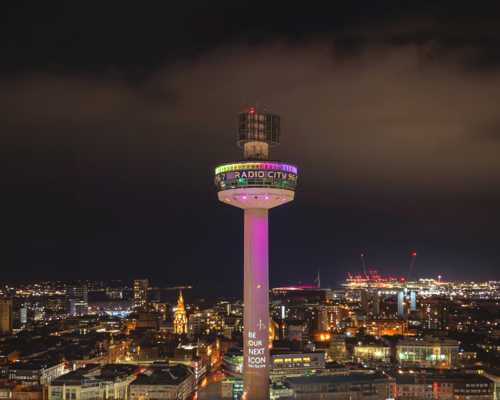
An opportunity to reimagine one of the UK’s most recognisable towers has been formally
opened by Rivington Hark, as St Johns Beacon invites operators and partners to shape its
next phase. [more...]
The successful National Cycling Centre has been dubbed the ‘medal factory’
The performance of our GB Olympians and Paralympians in Rio was nothing short of astounding. Clearly much has to be attributed to the commitment and determination of the athletes and the essential support and funding from UK Sport throughout the Olympic cycle, but how important has the role of facilities been in this success?
I take pride in the fact that almost half the medalling Olympians based their training at facilities designed by FaulknerBrowns. These include EIS Sheffield, Lee Valley White Water Centre, Weymouth & Portland National Sailing Academy and The National Cycling Centre, Manchester.
The medal factory The latter has even been dubbed the ‘medal factory’, such is the facility’s success year-on-year in producing winning athletes. The analogy used here is an interesting one to explore. Typically, when we think of the term ‘factory’ we imagine a building that receives raw materials and applies a controlled sequence of processes to create an end product. Experts in white coats analyse the process to search for incremental improvements and innovations that provide further efficiencies.
Specialist expertise If we substitute the term ‘raw materials’ for ‘talented medal prospects’, and apply a dedicated four year training process, then the end products we achieve are medal winners. As with the industrial analogy, the role of specialist expertise in the search for incremental improvement has proven key to the success of Britain’s athletes.
This is evident in the design of our ‘medal factories’. The sawtooth roof at EIS Sheffield, which nods to the industrial aesthetic of the Don Valley, may give it the appearance of a factory; however, it’s the innovation inside that makes the difference. This facility, and others like it, were built with attention paid to the needs of athletes, the fields of play and supporting areas such as sports science.
Inherent in these designs is the flexibility to accommodate technological advances and changes in training approach, as our understanding evolves.
It’s easy to get carried away when we talk about sports factories and the success of our athletes, but it’s also important to consider how this fits with the Sporting Futures strategy and a more holistic view of community sport and wellbeing.
Community use The reality is that even the hardest working factories for sport have significant amounts of community usage. The secret lies in formulating an approach which allows for the needs of both to be met, with the flexibility to allow different skill bases to coexist in the same building.
While this formula is forever being refined, we have two major facilities opening soon which embody this synergy – the National Indoor Arena in Dublin and Sportcampus Zuiderpark in The Hague. Both are a major base for performance sport and it will be interesting to see if the Dutch and Irish enjoy similar success.
Just like a factory owner, as an industry we must challenge our understanding of the product we produce, to develop innovations that can bring tangible benefits.
Mike Hall is a partner at architecture practice FaulknerBrowns.
A new immersive attraction designed to transport visitors into the final hours of ancient Pompeii
is preparing to open near the world-famous archaeological site in southern Italy.
Experience design company, BRC Imagination Arts, has completed a transition that sees founder
Bob Rogers pass ownership of the business to four long-serving senior executives, while
remaining actively involved with the company.
Movie Park Germany has opened a new Paramount Pictures-themed attraction as part of its 30th
anniversary celebrations, using immersive storytelling and adaptive reuse to reinforce the park’s
longstanding “Hollywood in Germany” positioning.
Therme Manchester’s 28-acre development, which will include interconnected glass pavilions
that measure 65,000sq m, will be the largest bathing and wellbeing attraction in the world once
complete, according to prof David Russell, CEO of Therme UK.
Efteling has opened Hooghmoed, a new family drop tower designed to broaden the appeal of its
recently launched Sirene Island themed area and introduce younger visitors to thrill attractions.
A proposed Puy du Fou development near Bicester and Universal Destinations and Experiences’
planned resort in Bedford are emerging as part of a wider transformation of the Oxford–
Cambridge Growth Corridor into a major centre for UK leisure and tourism inv
Shedd Aquarium has opened the Immersion Theater developed in partnership with SimEx-
Iwerks, as part of a wider strategy to enhance the guest experience and create additional
revenue opportunities.
The UK government has announced a temporary reduction in VAT on visitor attractions and
children’s meals as part of a summer cost-of-living support package designed to stimulate the
visitor economy and encourage family days out.
As designer Yinka Ilori prepares for his first solo gallery show in London, he speaks exclusively
to CLADmag about his mission to spread joy, the power of play, and his bold approach to using
colour (including the colours you won’t see in his work).
The government of Thailand is exploring plans for a THB300bn (£6.3bn, US$8.3bn)
entertainment complex in the country’s Eastern Economic Corridor (EEC), with officials
proposing a large-scale theme park and sports destination as part of a broader tourism and
economic development strategy.
An opportunity to reimagine one of the UK’s most recognisable towers has been formally
opened by Rivington Hark, as St Johns Beacon invites operators and partners to shape its
next phase. [more...]