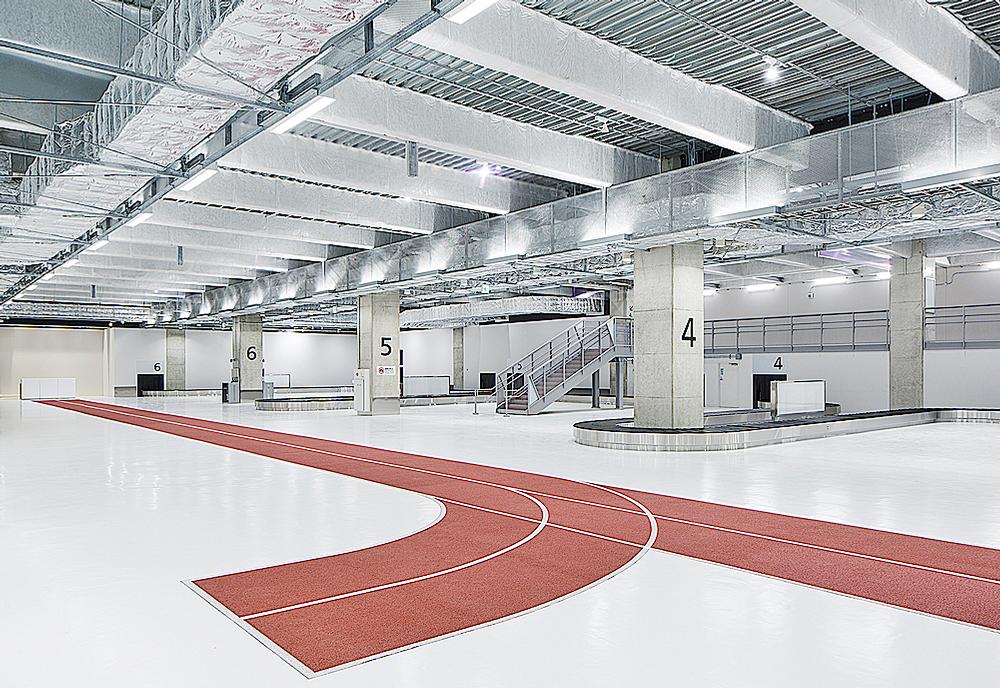
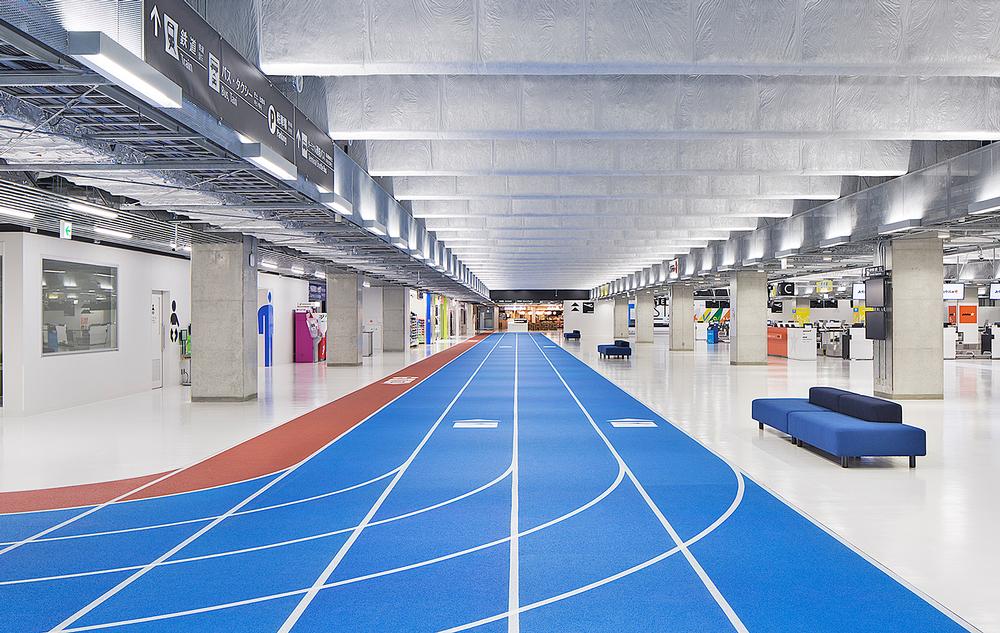
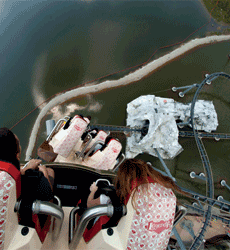
Japanese creative lab Party are behind the innovative design of Narita Airport’s Terminal 3, which features a running track designed to help passengers find their way through the airport.
A tight budget meant the architects couldn’t install moving walkways into the Japanese airport. The solution turns this into a positive, using colour-coded running lanes to promote activity ahead of the 2020 Tokyo Olympics.
“I was on the track team in elementary school and I thought that it would be interesting if we could capture the positive feeling that occurs in the moment of running,” Party chief creative officer Naoki Ito says.
“To offer an exciting walking experience that is easy on the feet, we implemented running tracks used for track and field, which also serve as clear signage for user-friendly guidance.”
The Narita Airport project was three years in the making; the lack of expensive walkways and illuminated signage used in the terminal kept costs very low. Ito said the airport’s preparations for the Olympics and the fact that Terminal 3 will be exclusively used by low-cost airlines meant that ‘physical activity meets economy’ was a perfect theme for the project.
“For me, the key to great architecture and design is fitting two into one,” added Ito. “ We always seek to consolidate two or more functionalities into one in pursuit of economic reasonability. In short, we as an agency treasure innovative designs which provide an affordable twist on the norm.”
The running lanes aim to promote physical activity
The terminal is expected to welcome low-cost airlines during the Olympics
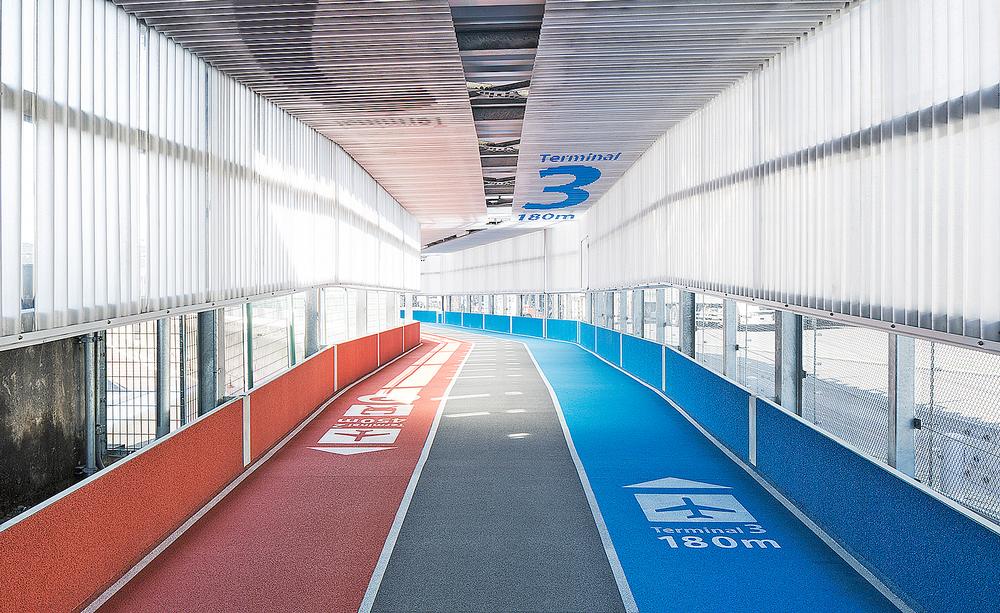
The terminal is expected to welcome low-cost airlines during the Olympics
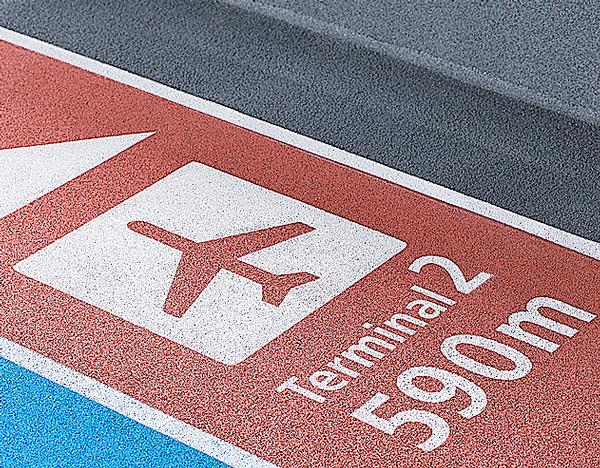
The running tracks in the airport are colour coded: red for arrivals and blue for departures. White stenciled symbols direct passengers to the correct part of the building
COMPANY PROFILES
DJW
David & Lynn Willrich started the Company
over thirty years ago, from the Audio Visual
Department [more...]
IAAPA EMEA
IAAPA Expo Europe was established in 2006 and has grown to the largest international conference and [more...]
Holovis
Holovis is a privately owned company
established in 2004 by CEO Stuart
Hetherington. [more...]
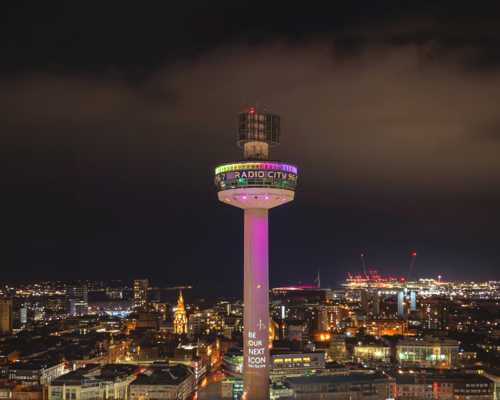
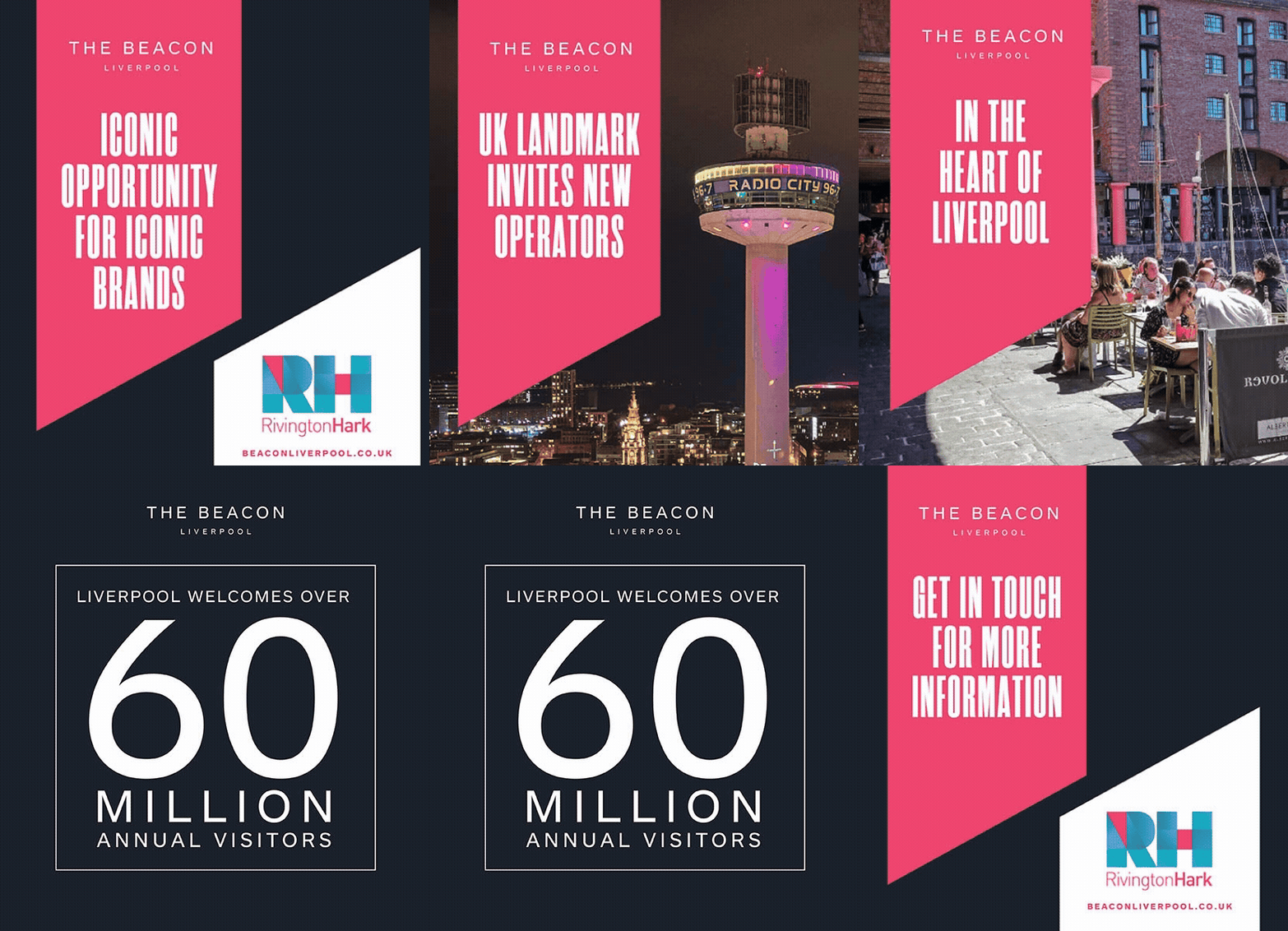
An opportunity to reimagine one of the UK’s most recognisable towers has been formally
opened by Rivington Hark, as St Johns Beacon invites operators and partners to shape its
next phase. [more...]
Japanese creative lab Party are behind the innovative design of Narita Airport’s Terminal 3, which features a running track designed to help passengers find their way through the airport.
A tight budget meant the architects couldn’t install moving walkways into the Japanese airport. The solution turns this into a positive, using colour-coded running lanes to promote activity ahead of the 2020 Tokyo Olympics.
“I was on the track team in elementary school and I thought that it would be interesting if we could capture the positive feeling that occurs in the moment of running,” Party chief creative officer Naoki Ito says.
“To offer an exciting walking experience that is easy on the feet, we implemented running tracks used for track and field, which also serve as clear signage for user-friendly guidance.”
The Narita Airport project was three years in the making; the lack of expensive walkways and illuminated signage used in the terminal kept costs very low. Ito said the airport’s preparations for the Olympics and the fact that Terminal 3 will be exclusively used by low-cost airlines meant that ‘physical activity meets economy’ was a perfect theme for the project.
“For me, the key to great architecture and design is fitting two into one,” added Ito. “ We always seek to consolidate two or more functionalities into one in pursuit of economic reasonability. In short, we as an agency treasure innovative designs which provide an affordable twist on the norm.”
The running lanes aim to promote physical activity
The terminal is expected to welcome low-cost airlines during the Olympics
The terminal is expected to welcome low-cost airlines during the Olympics
The running tracks in the airport are colour coded: red for arrivals and blue for departures. White stenciled symbols direct passengers to the correct part of the building
A new immersive attraction designed to transport visitors into the final hours of ancient Pompeii
is preparing to open near the world-famous archaeological site in southern Italy.
Experience design company, BRC Imagination Arts, has completed a transition that sees founder
Bob Rogers pass ownership of the business to four long-serving senior executives, while
remaining actively involved with the company.
Movie Park Germany has opened a new Paramount Pictures-themed attraction as part of its 30th
anniversary celebrations, using immersive storytelling and adaptive reuse to reinforce the park’s
longstanding “Hollywood in Germany” positioning.
Therme Manchester’s 28-acre development, which will include interconnected glass pavilions
that measure 65,000sq m, will be the largest bathing and wellbeing attraction in the world once
complete, according to prof David Russell, CEO of Therme UK.
Efteling has opened Hooghmoed, a new family drop tower designed to broaden the appeal of its
recently launched Sirene Island themed area and introduce younger visitors to thrill attractions.
A proposed Puy du Fou development near Bicester and Universal Destinations and Experiences’
planned resort in Bedford are emerging as part of a wider transformation of the Oxford–
Cambridge Growth Corridor into a major centre for UK leisure and tourism inv
Shedd Aquarium has opened the Immersion Theater developed in partnership with SimEx-
Iwerks, as part of a wider strategy to enhance the guest experience and create additional
revenue opportunities.
The UK government has announced a temporary reduction in VAT on visitor attractions and
children’s meals as part of a summer cost-of-living support package designed to stimulate the
visitor economy and encourage family days out.
As designer Yinka Ilori prepares for his first solo gallery show in London, he speaks exclusively
to CLADmag about his mission to spread joy, the power of play, and his bold approach to using
colour (including the colours you won’t see in his work).
The government of Thailand is exploring plans for a THB300bn (£6.3bn, US$8.3bn)
entertainment complex in the country’s Eastern Economic Corridor (EEC), with officials
proposing a large-scale theme park and sports destination as part of a broader tourism and
economic development strategy.
An opportunity to reimagine one of the UK’s most recognisable towers has been formally
opened by Rivington Hark, as St Johns Beacon invites operators and partners to shape its
next phase. [more...]