Ahead of the long-awaited opening of the National Museum of African American History and Culture in Washington, architect David Adjaye tells Magali Robathan what the project means to him
By Magali Robathan | Published in CLADmag 2016 issue 2
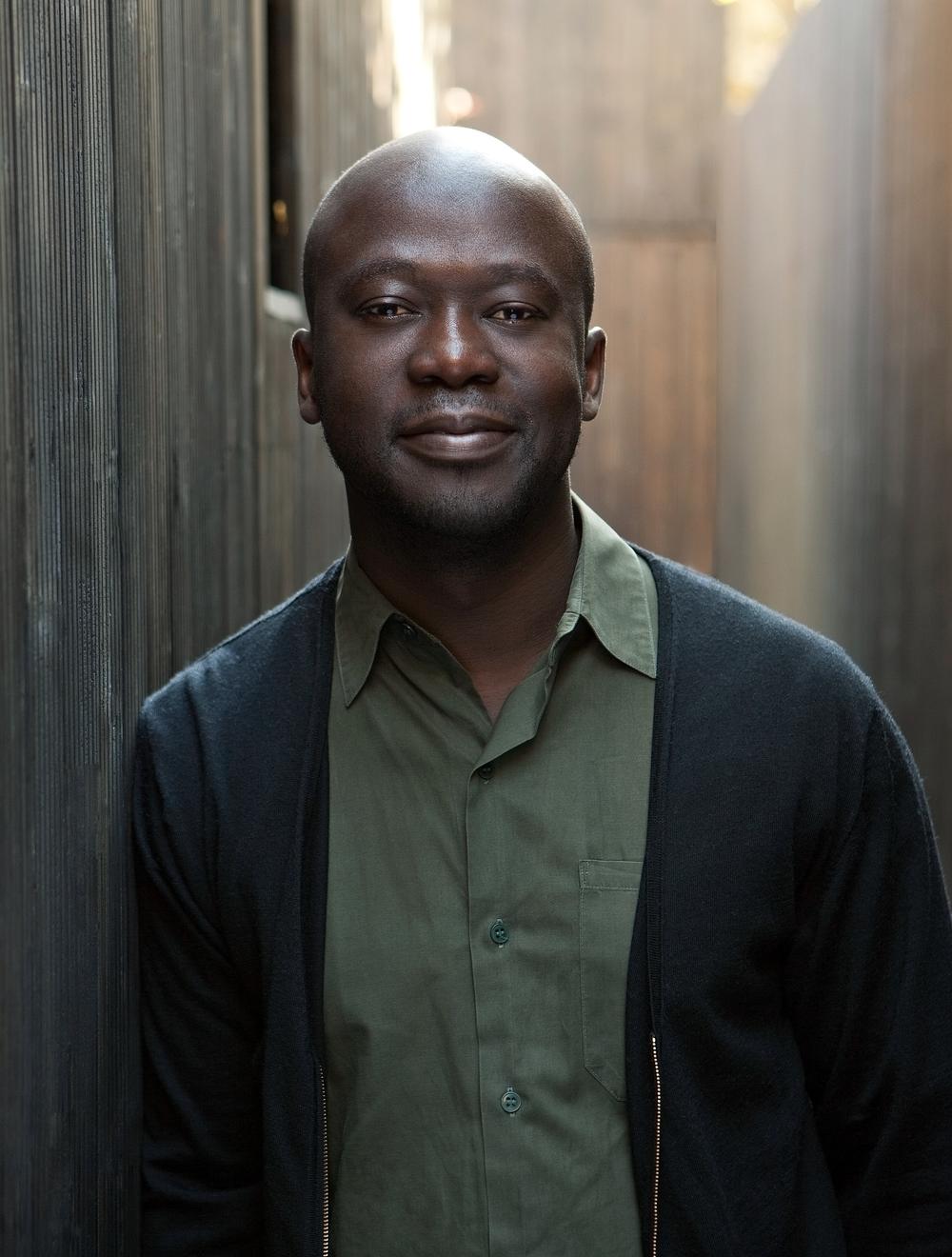
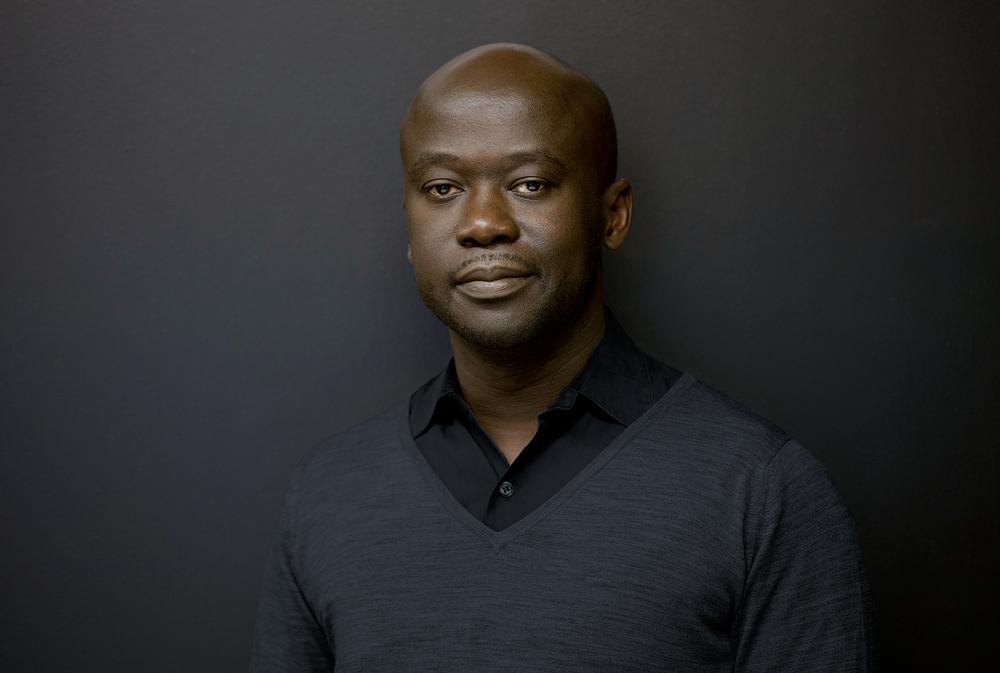
David Adjaye was born in Tanzania to Ghanaian parents and moved to the UK aged nine. He was awarded an OBE in 2007 / All photos: Adjaye Associates
The idea of opening a museum dedicated to African American history and culture is more than a hundred years old. What do you think it means for the US to finally see this museum open?
The museum is about rethinking the connection between Africa and America; about recognising that African American history is American history.
It stands with and against the other institutions on the Mall with exactly this purpose: to say that this too is American history; this too is America.
What does this project mean to you personally? This is a monumental project and one of the defining projects of my career to date. I have always understood this project to be about people of one culture understanding the experience of people from a different culture. It is a specific story with a universal application.
It’s about African American history within the context of the American and global narrative. It’s an important story for everyone – this has always been central to the design concept for the building.
African American history is so wide and so varied – how did you decide which elements to celebrate with the design?
It’s a building with many narratives – relating to the context, the history and the programme. It’s certainly a marriage of form with content. This narrative is articulated immediately by the silhouette – borrowing from the form of a Yoruba sculpture – while also resonating with the angle of the Washington Monument. Several other things absolutely came to mind in thinking through what this building should be and how it should work with the programme that we were given. How do you add to such a fantastic masterplan, one of the most significant masterplans in the world – this incredible monumental core to the capital city of the most powerful country in the world? How do you understand its intrinsic nature, which is the idea of the pastoral and the ordered landscape? How do you make an end to the ordered landscape and begin the pastoral, which is the National Mall proper, and then open onto the Washington Monument grounds?
In a way, I always conceived of this building as a kind of turning point – a knuckle, a joint – which articulates the two things, neither one nor the other, but bridging between the two. This can be understood as a metaphor for the less tangible bridge between cultures – ensuring that the African American story becomes a universal story. So from the sensitivity of the masterplan to the cultural discourse, I wanted to ensure that the building ends the mall properly and begins the monument.
How did you arrive at the idea of the Corona and what does it represent? Architecturally, this project continues the modernist discourse of Gordon Bunshaft’s Hirshhorn Museum and I. M. Pei’s East Building but, in its superstructure, the National Museum of African American History and Culture refers to a sculpture by the 20th century Yoruba sculptor Olowe of Ise.
The crown-like form of the corona ascends in three stages, consisting of three inverted pyramids, giving a sense of uplift. It is a column capitol, it has a pyramid reference, and despite the passage of time, it represents the aesthetic world of the Africans brought to America as slaves.
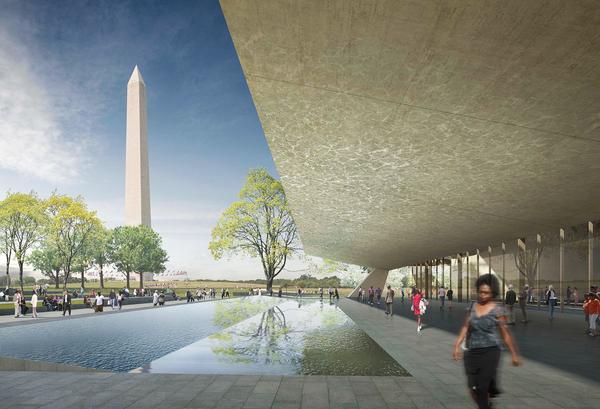
Can you tell us about the bronze mesh. What was the inspiration behind this part of the design? The cladding of the corona is derived from the architectural ironwork made by African American artisans in southern cities. It is variable in density, to control the amount of sunlight reaching the inner wall. During the daytime, the outer skin can be opaque at oblique angles, while allowing glimpses through to the interior at certain moments. The overall effect – while constantly shifting and dependant on the angle and the light – is of a glimmering skin that offers a sense of the monumental. It takes the form of the inverted ziggurat, while hinting at the life and the narrative of the building and its programme.
You’ve said that you wanted to capture the idea of ‘praise’ in the design of the museum. How much do you feel the form of a building can convey an emotion or idea to the average person? Narrative is essential to my design process, and exploring the meaning of ‘African American’ was the central narrative guide for this project. I intentionally layered different access points – materials that mirror the iconic Washington Monument, a form derived from Yoruban art – to make a very specific point about how the migration of a group of people fundamentally changed a nation. It is a representation of African American heritage in a global context, as one that is in fact about the beginning of modernism and about global cultural engagement. Architecture is an inherently social endeavour; ultimately it is the users who determine the success and failure of a project.
I have certainly been very intentional about layering narratives in this project: I have been intentional about the various meanings that the form and materiality of the building will have for different groups. They were selected to offer a new lens and to spark new dialogues about blackness, about Americanness, about America’s history and its future.
Do you have a personal favourite part of the museum? Inside, there are ‘lens moments’, where visitors enjoy clear, unobstructed windows onto specific views of the city and the Washington Memorial grounds. The internal glazed skin is mostly fritted with a 20 per cent density for the purpose of night-time luminosity, yet at these moments where one encounters the façade, the frit is removed completely to provide an immediate, powerful and tactile experience of the corona skin. For example, as one rises up the building via the escalators to the west, the fritting disappears to reveal the corona. This effect is repeated on the east in the education spaces and the café on the south-west corner.
What will be going through your head at the opening of the building? A project isn’t finished and nothing is achieved until it’s used. I can’t wait to see the museum once it has opened, to see how people respond to the space and use it in ways I hadn’t anticipated. That’s when the project is finished for me; only then can I begin to comment on whether any of my goals have been realised.
Can you sum up your philosophy when it comes to architecture. What unites all of your projects? All my projects are different because they are responsive – they emerge from the unique qualities of place that stem from specific geographies, histories and cultures. The Museum of Contemporary Art Denver is about the city’s unique relationship to light given its altitude. My work in Moscow [Moscow School of Management] was a specific take on Russian Modernism and a reinterpretation of a college campus for a space that’s blanketed in snow for half the year.
So each of my public buildings are drawing from their contexts, to continue narratives there. For me, there is no starting point for the project outside of its specific context and goals. There is no definitive stylistic or authorial mark I wish to place on all of my work. There is no nucleus, other than the firm belief that public buildings must be empowering, that I bring to each project.
I could never remake the NMAAHC, or repeat it, because it’s so bound up in the particulars of its location, of its goals and of its place in history.
You’ve said that you believe in architecture as a force for good. How important is that when considering what projects to take on? My ideal is to be able to explore new typologies, experiment with different materials and establish a meaningful connection to contemporary culture while exploring a social discourse. The simple act of building forces engagement – you can’t ignore it. Things always happen from that and the question is how we celebrate it or deny it. It is important not to be hampered or intimidated by the idea of difference – but rather to seek to be open and even speculative about the possibilities it offers.
Why do you think it’s important that our cultural and leisure spaces are well designed? As civic buildings, the role of cultural and leisure spaces is to provide access to a collective consciousness while offering the chance for dialogue between different generations and social groupings. These kinds of buildings offer an opportunity for re-invention.
Thinking about what an institution should look like, and how, for example, a museum should work with its audience, is something that’s still playing out. Good design has a critical role to play in this challenge.
THE NATIONAL MUSEUM OF AFRICAN AMERICAN HISTORY The National Museum of African American History is due to be opened by US President Barack Obama on the 24 September 2016. The opening ceremony will mark the start of a week-long celebration, which will include a festival showcasing dance, popular music, films and other attractions.
The Smithsonian Institution museum was established in 2003, in legislation signed by George W Bush, although efforts to create a national museum dedicated to African American history can be traced back to the early twentieth century. Architectural design was awarded to Freelon Adjaye Bond/SmithGroupJJR in 2009 – a team made up of the Freelon Group, Adjaye Associates, Davis Brody Bond, and SmithGroup, with David Adjaye acting as lead designer.
The 400,000sq ft (37,000sq m) museum is located on a five-acre site on Constitution Avenue. A series of openings throughout the exhibition spaces frame views of the Washington Monument and the White House.
The nine storey building – five storeys are above ground, and the other four below ground – will house exhibition galleries, an education centre, a 350-seat theatre, a café and a store. Key spaces include the Contemplative Court, a memorial area for reflection; the Central Hall, the primary public space in the museum; and a reflecting pool at the south entrance.
According to Adjaye Associates, the design of the museum rests on three 'cornerstones' – the corona shape and form of the building, which draws on imagery from both African and American history; the extension of the building out into the landscape (the 'porch', which acts as a bridge between the interior and exterior); and the bronze filigree façade. Exhibitions already in place include a wood cabin used during the period of slavery at Point of Pines Plantation in South Carolina, a log cabin of free slaves and a segregation-era railway carriage.
In total, the museum will have a collection of 34,000 artefacts. It will open with 11 inaugural exhibitions.
Speaking in February, the museum’s founding director Lonnie Bunch said: “Visitors will walk through the doors of the museum and see that it is a place for all people. We are prepared to offer exhibitions and programmes to unite and capture the attention of millions worldwide.
“It will be a place for healing and reconciliation, a place where everyone can explore the story of America through the lens of the African American experience.”
“It will be a place for healing and reconciliation, a place where everyone can explore the story of America through the lens of the African American experience”
OTHER DAVID ADJAYE PROJECTS
Nobel Peace Center
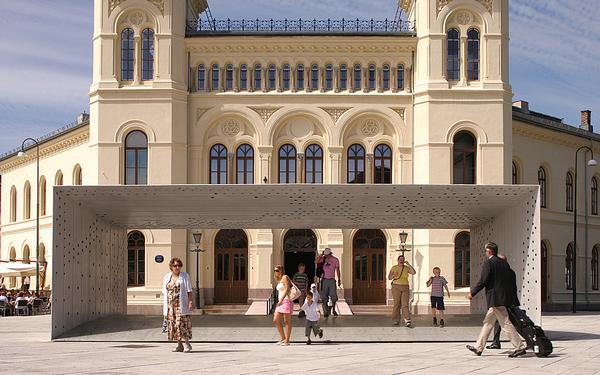
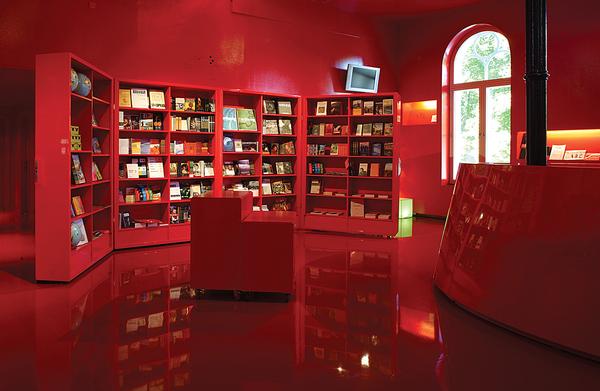
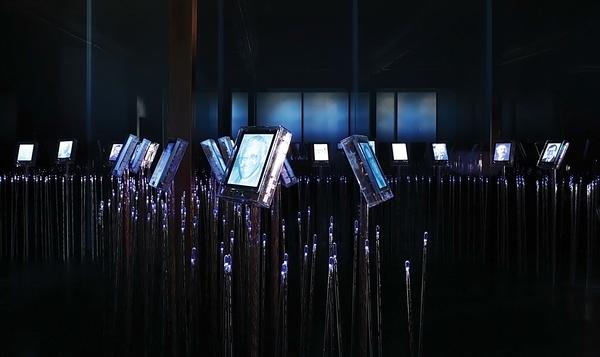
The Nobel Peace Center, in Oslo, Norway, opened in 2005 with Nelson Mandela as special guest. Highlights include the entrance canopy and a range of interactive exhibits
The Nobel Peace Center, in Oslo, Norway, entrance canopy
The Nobel Peace Center, in Oslo, Norway, a range of interactive exhibits
The Nobel Peace Center, in Oslo, Norway, a range of interactive exhibits
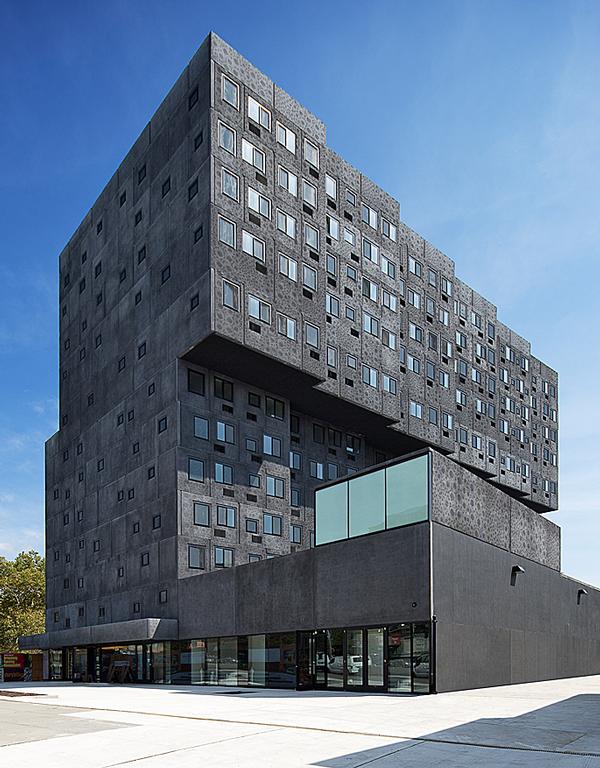
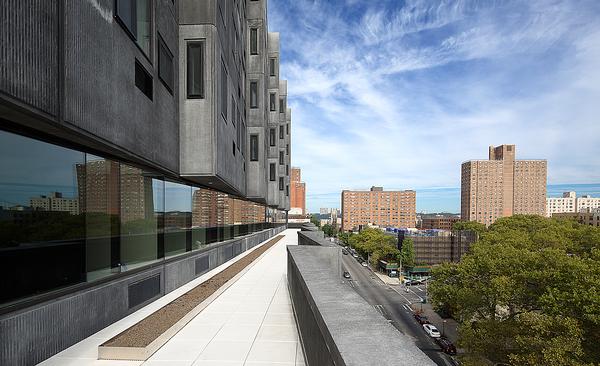
OTHER DAVID ADJAYE PROJECTS Sugar Hill The Sugar Hill mixed use development in Sugar Hill, Manhattan, features affordable housing, educational faciliites and a children’s museum. It opened in 2015
Sugar Hill, Manhattan, features affordable housing, educational faciliites and a children’s museum
Sugar Hill, Manhattan, features affordable housing, educational faciliites and a children’s museum
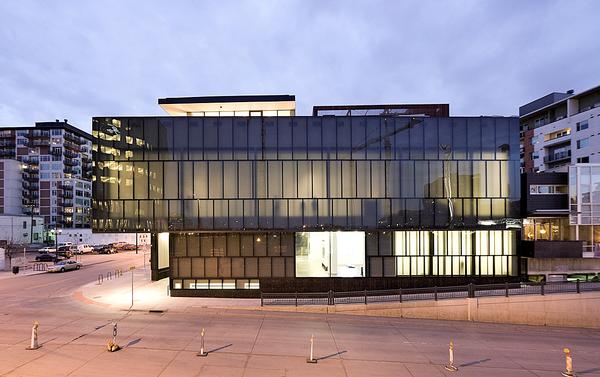
OTHER DAVID ADJAYE PROJECTS Museum of Contemporary Arts Denver Opened in 2007, this project was Adjaye Associate’s first public commission in the US. It features 20,000sq ft of exhibition, education and lecture spaces
Museum of Contemporary Arts Denver
The museum’s below ground memorial space features light diffused by water and offers a place for contemplation
David Adjaye set up Adjaye Associates in 2000. The practice has offices in London, New York and Accra
COMPANY PROFILES
DJW
David & Lynn Willrich started the Company
over thirty years ago, from the Audio Visual
Department [more...]
IDEATTACK
IDEATTACK is a full-service planning and
design company with headquarters in
Los Angeles. [more...]
Simworx Ltd
The company was initially established
in 1997. Terry Monkton and Andrew
Roberts are the key stakeh [more...]
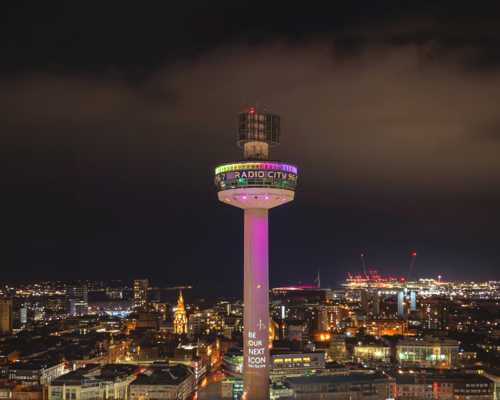
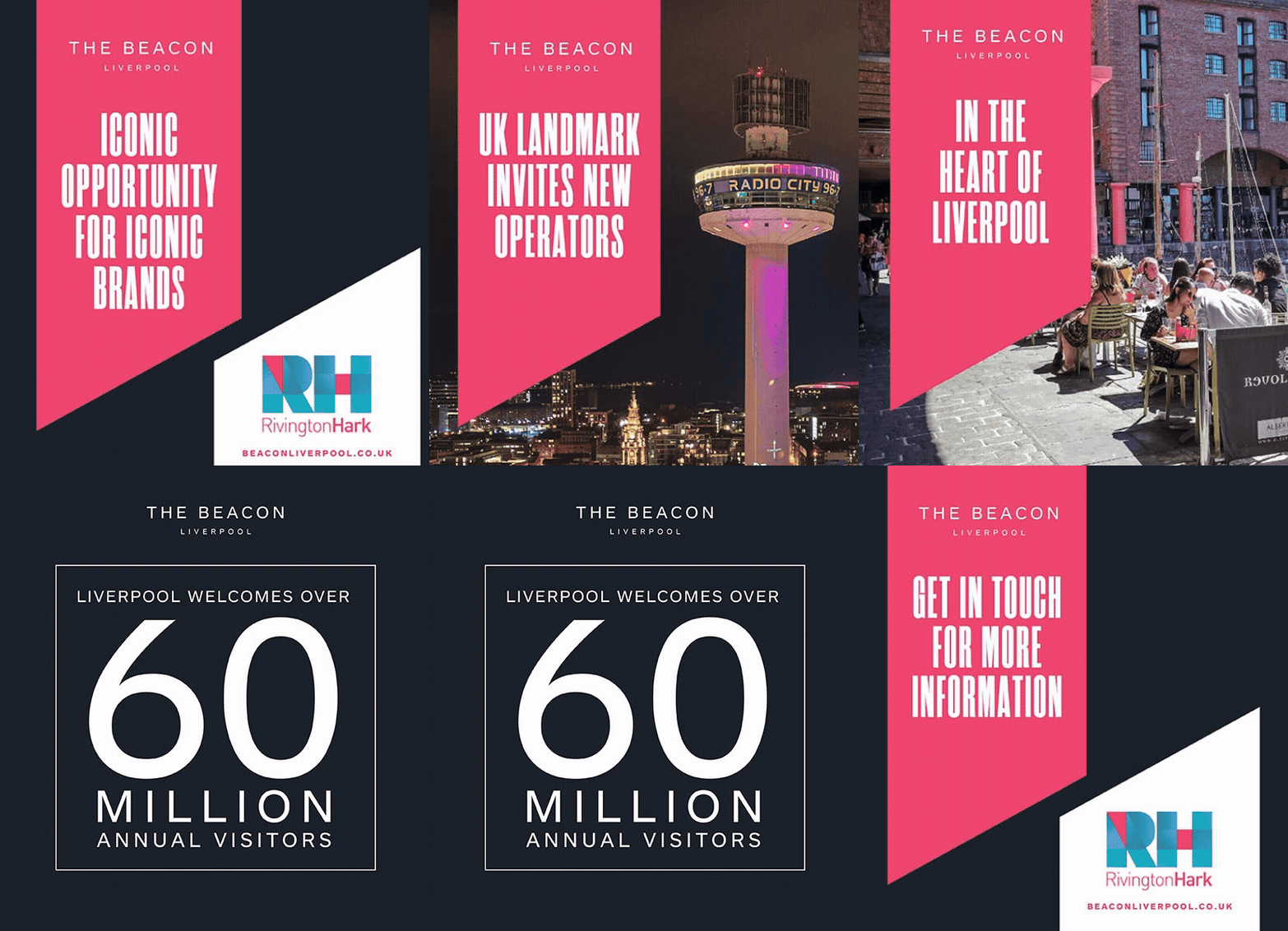
An opportunity to reimagine one of the UK’s most recognisable towers has been formally
opened by Rivington Hark, as St Johns Beacon invites operators and partners to shape its
next phase. [more...]
Ahead of the long-awaited opening of the National Museum of African American History and Culture in Washington, architect David Adjaye tells Magali Robathan what the project means to him
By Magali Robathan | Published in CLADmag 2016 issue 2
David Adjaye was born in Tanzania to Ghanaian parents and moved to the UK aged nine. He was awarded an OBE in 2007 / All photos: Adjaye Associates
The idea of opening a museum dedicated to African American history and culture is more than a hundred years old. What do you think it means for the US to finally see this museum open?
The museum is about rethinking the connection between Africa and America; about recognising that African American history is American history.
It stands with and against the other institutions on the Mall with exactly this purpose: to say that this too is American history; this too is America.
What does this project mean to you personally? This is a monumental project and one of the defining projects of my career to date. I have always understood this project to be about people of one culture understanding the experience of people from a different culture. It is a specific story with a universal application.
It’s about African American history within the context of the American and global narrative. It’s an important story for everyone – this has always been central to the design concept for the building.
African American history is so wide and so varied – how did you decide which elements to celebrate with the design?
It’s a building with many narratives – relating to the context, the history and the programme. It’s certainly a marriage of form with content. This narrative is articulated immediately by the silhouette – borrowing from the form of a Yoruba sculpture – while also resonating with the angle of the Washington Monument. Several other things absolutely came to mind in thinking through what this building should be and how it should work with the programme that we were given. How do you add to such a fantastic masterplan, one of the most significant masterplans in the world – this incredible monumental core to the capital city of the most powerful country in the world? How do you understand its intrinsic nature, which is the idea of the pastoral and the ordered landscape? How do you make an end to the ordered landscape and begin the pastoral, which is the National Mall proper, and then open onto the Washington Monument grounds?
In a way, I always conceived of this building as a kind of turning point – a knuckle, a joint – which articulates the two things, neither one nor the other, but bridging between the two. This can be understood as a metaphor for the less tangible bridge between cultures – ensuring that the African American story becomes a universal story. So from the sensitivity of the masterplan to the cultural discourse, I wanted to ensure that the building ends the mall properly and begins the monument.
How did you arrive at the idea of the Corona and what does it represent? Architecturally, this project continues the modernist discourse of Gordon Bunshaft’s Hirshhorn Museum and I. M. Pei’s East Building but, in its superstructure, the National Museum of African American History and Culture refers to a sculpture by the 20th century Yoruba sculptor Olowe of Ise.
The crown-like form of the corona ascends in three stages, consisting of three inverted pyramids, giving a sense of uplift. It is a column capitol, it has a pyramid reference, and despite the passage of time, it represents the aesthetic world of the Africans brought to America as slaves.
Can you tell us about the bronze mesh. What was the inspiration behind this part of the design? The cladding of the corona is derived from the architectural ironwork made by African American artisans in southern cities. It is variable in density, to control the amount of sunlight reaching the inner wall. During the daytime, the outer skin can be opaque at oblique angles, while allowing glimpses through to the interior at certain moments. The overall effect – while constantly shifting and dependant on the angle and the light – is of a glimmering skin that offers a sense of the monumental. It takes the form of the inverted ziggurat, while hinting at the life and the narrative of the building and its programme.
You’ve said that you wanted to capture the idea of ‘praise’ in the design of the museum. How much do you feel the form of a building can convey an emotion or idea to the average person? Narrative is essential to my design process, and exploring the meaning of ‘African American’ was the central narrative guide for this project. I intentionally layered different access points – materials that mirror the iconic Washington Monument, a form derived from Yoruban art – to make a very specific point about how the migration of a group of people fundamentally changed a nation. It is a representation of African American heritage in a global context, as one that is in fact about the beginning of modernism and about global cultural engagement. Architecture is an inherently social endeavour; ultimately it is the users who determine the success and failure of a project.
I have certainly been very intentional about layering narratives in this project: I have been intentional about the various meanings that the form and materiality of the building will have for different groups. They were selected to offer a new lens and to spark new dialogues about blackness, about Americanness, about America’s history and its future.
Do you have a personal favourite part of the museum? Inside, there are ‘lens moments’, where visitors enjoy clear, unobstructed windows onto specific views of the city and the Washington Memorial grounds. The internal glazed skin is mostly fritted with a 20 per cent density for the purpose of night-time luminosity, yet at these moments where one encounters the façade, the frit is removed completely to provide an immediate, powerful and tactile experience of the corona skin. For example, as one rises up the building via the escalators to the west, the fritting disappears to reveal the corona. This effect is repeated on the east in the education spaces and the café on the south-west corner.
What will be going through your head at the opening of the building? A project isn’t finished and nothing is achieved until it’s used. I can’t wait to see the museum once it has opened, to see how people respond to the space and use it in ways I hadn’t anticipated. That’s when the project is finished for me; only then can I begin to comment on whether any of my goals have been realised.
Can you sum up your philosophy when it comes to architecture. What unites all of your projects? All my projects are different because they are responsive – they emerge from the unique qualities of place that stem from specific geographies, histories and cultures. The Museum of Contemporary Art Denver is about the city’s unique relationship to light given its altitude. My work in Moscow [Moscow School of Management] was a specific take on Russian Modernism and a reinterpretation of a college campus for a space that’s blanketed in snow for half the year.
So each of my public buildings are drawing from their contexts, to continue narratives there. For me, there is no starting point for the project outside of its specific context and goals. There is no definitive stylistic or authorial mark I wish to place on all of my work. There is no nucleus, other than the firm belief that public buildings must be empowering, that I bring to each project.
I could never remake the NMAAHC, or repeat it, because it’s so bound up in the particulars of its location, of its goals and of its place in history.
You’ve said that you believe in architecture as a force for good. How important is that when considering what projects to take on? My ideal is to be able to explore new typologies, experiment with different materials and establish a meaningful connection to contemporary culture while exploring a social discourse. The simple act of building forces engagement – you can’t ignore it. Things always happen from that and the question is how we celebrate it or deny it. It is important not to be hampered or intimidated by the idea of difference – but rather to seek to be open and even speculative about the possibilities it offers.
Why do you think it’s important that our cultural and leisure spaces are well designed? As civic buildings, the role of cultural and leisure spaces is to provide access to a collective consciousness while offering the chance for dialogue between different generations and social groupings. These kinds of buildings offer an opportunity for re-invention.
Thinking about what an institution should look like, and how, for example, a museum should work with its audience, is something that’s still playing out. Good design has a critical role to play in this challenge.
THE NATIONAL MUSEUM OF AFRICAN AMERICAN HISTORY The National Museum of African American History is due to be opened by US President Barack Obama on the 24 September 2016. The opening ceremony will mark the start of a week-long celebration, which will include a festival showcasing dance, popular music, films and other attractions.
The Smithsonian Institution museum was established in 2003, in legislation signed by George W Bush, although efforts to create a national museum dedicated to African American history can be traced back to the early twentieth century. Architectural design was awarded to Freelon Adjaye Bond/SmithGroupJJR in 2009 – a team made up of the Freelon Group, Adjaye Associates, Davis Brody Bond, and SmithGroup, with David Adjaye acting as lead designer.
The 400,000sq ft (37,000sq m) museum is located on a five-acre site on Constitution Avenue. A series of openings throughout the exhibition spaces frame views of the Washington Monument and the White House.
The nine storey building – five storeys are above ground, and the other four below ground – will house exhibition galleries, an education centre, a 350-seat theatre, a café and a store. Key spaces include the Contemplative Court, a memorial area for reflection; the Central Hall, the primary public space in the museum; and a reflecting pool at the south entrance.
According to Adjaye Associates, the design of the museum rests on three 'cornerstones' – the corona shape and form of the building, which draws on imagery from both African and American history; the extension of the building out into the landscape (the 'porch', which acts as a bridge between the interior and exterior); and the bronze filigree façade. Exhibitions already in place include a wood cabin used during the period of slavery at Point of Pines Plantation in South Carolina, a log cabin of free slaves and a segregation-era railway carriage.
In total, the museum will have a collection of 34,000 artefacts. It will open with 11 inaugural exhibitions.
Speaking in February, the museum’s founding director Lonnie Bunch said: “Visitors will walk through the doors of the museum and see that it is a place for all people. We are prepared to offer exhibitions and programmes to unite and capture the attention of millions worldwide.
“It will be a place for healing and reconciliation, a place where everyone can explore the story of America through the lens of the African American experience.”
“It will be a place for healing and reconciliation, a place where everyone can explore the story of America through the lens of the African American experience”
OTHER DAVID ADJAYE PROJECTS
Nobel Peace Center
The Nobel Peace Center, in Oslo, Norway, opened in 2005 with Nelson Mandela as special guest. Highlights include the entrance canopy and a range of interactive exhibits
The Nobel Peace Center, in Oslo, Norway, entrance canopy
The Nobel Peace Center, in Oslo, Norway, a range of interactive exhibits
The Nobel Peace Center, in Oslo, Norway, a range of interactive exhibits
OTHER DAVID ADJAYE PROJECTS Sugar Hill The Sugar Hill mixed use development in Sugar Hill, Manhattan, features affordable housing, educational faciliites and a children’s museum. It opened in 2015
Sugar Hill, Manhattan, features affordable housing, educational faciliites and a children’s museum
Sugar Hill, Manhattan, features affordable housing, educational faciliites and a children’s museum
OTHER DAVID ADJAYE PROJECTS Museum of Contemporary Arts Denver Opened in 2007, this project was Adjaye Associate’s first public commission in the US. It features 20,000sq ft of exhibition, education and lecture spaces
Museum of Contemporary Arts Denver
The museum’s below ground memorial space features light diffused by water and offers a place for contemplation
David Adjaye set up Adjaye Associates in 2000. The practice has offices in London, New York and Accra
A new immersive attraction designed to transport visitors into the final hours of ancient Pompeii
is preparing to open near the world-famous archaeological site in southern Italy.
Experience design company, BRC Imagination Arts, has completed a transition that sees founder
Bob Rogers pass ownership of the business to four long-serving senior executives, while
remaining actively involved with the company.
Movie Park Germany has opened a new Paramount Pictures-themed attraction as part of its 30th
anniversary celebrations, using immersive storytelling and adaptive reuse to reinforce the park’s
longstanding “Hollywood in Germany” positioning.
Therme Manchester’s 28-acre development, which will include interconnected glass pavilions
that measure 65,000sq m, will be the largest bathing and wellbeing attraction in the world once
complete, according to prof David Russell, CEO of Therme UK.
Efteling has opened Hooghmoed, a new family drop tower designed to broaden the appeal of its
recently launched Sirene Island themed area and introduce younger visitors to thrill attractions.
A proposed Puy du Fou development near Bicester and Universal Destinations and Experiences’
planned resort in Bedford are emerging as part of a wider transformation of the Oxford–
Cambridge Growth Corridor into a major centre for UK leisure and tourism inv
Shedd Aquarium has opened the Immersion Theater developed in partnership with SimEx-
Iwerks, as part of a wider strategy to enhance the guest experience and create additional
revenue opportunities.
The UK government has announced a temporary reduction in VAT on visitor attractions and
children’s meals as part of a summer cost-of-living support package designed to stimulate the
visitor economy and encourage family days out.
As designer Yinka Ilori prepares for his first solo gallery show in London, he speaks exclusively
to CLADmag about his mission to spread joy, the power of play, and his bold approach to using
colour (including the colours you won’t see in his work).
The government of Thailand is exploring plans for a THB300bn (£6.3bn, US$8.3bn)
entertainment complex in the country’s Eastern Economic Corridor (EEC), with officials
proposing a large-scale theme park and sports destination as part of a broader tourism and
economic development strategy.
An opportunity to reimagine one of the UK’s most recognisable towers has been formally
opened by Rivington Hark, as St Johns Beacon invites operators and partners to shape its
next phase. [more...]