We know society is ageing. We know exercise offers the potential of a healthier – as well as a longer – life. The problem is, by classifying anyone over the age of 50 as ‘old, the fitness industry is missing a trick.
Because the decades after 50 can constitute half of a person’s life, and encompass everything from full mental and physical fitness through to muscle loss and dementia. So where are the clubs that cater for the truly old and frail? The answer: they’re few and far between, and even where they do exist, the focus is often on the physical – mainly falls prevention – and the social, offering companionship and community.
But what about the direct mental impact of exercise? One topic that’s getting a lot of attention among the scientific community is dementia, and the positive impact exercise can have on this devastating condition – we review some of the latest research on page 124.
But as yet, few fitness facilities have focused on this wonderful benefit of exercise. Step forward UK-based community interest company LiveWire, which has just had plans approved for a £16m neighbourhood leisure, culture, health and wellbeing hub in Warrington. Set to open in Q3 2016, it will be LiveWire’s first dementia-friendly facility.
Locklynne Hall, LiveWire’s innovation and leadership manager, explains what that means: “The person with dementia has difficulty remembering things, so you can’t rely on them building up a familiarity with where things are – you need appropriate signage. Their more recent memories are lost first, so if your toilet signs are a variation on the stick man that became common in the 60s, it might be meaningless to someone whose memory stops before then.
“You need appropriate fittings too, because the person with dementia also has difficulty working things out. They may not understand how to use clinical-style taps and mixer faucets in toilets. Unfamiliar plumbing will cause delays and confusion that could lead to incontinence and distress.
“You also need a well thought-out colour and décor scheme. If someone has developed problems with depth perception and visual processing, a pattern on the floor may appear to be a trip hazard: this momentary confusion can cause them to stumble and fall.”
Equally importantly, LiveWire trains its staff – and members of the local community – to understand the condition. It’s piloting a number of programmes too: early onset dementia groups, for example, offering healthy walking classes and tai chi. “We’re also developing a ‘lessen your chances’ programme of activities,” adds Hall.
There are lessons to learn from other sectors too, with evidence to suggest that environments which stimulate longer-term memories can be beneficial. For example, the Jamtli museum in Sweden has created the environment of a 1970s house, designed to jog dementia sufferers’ memories of happy, younger years. Engagement levels are reportedly high, and the individuals are also calmer and more content in this familiar environment.
As the population gets older, the need to be dementia-friendly will be inescapable. “The big message,” concludes Hall, “is that we’re at the point of no return. We have to act today, because tomorrow’s challenge is already upon us.”
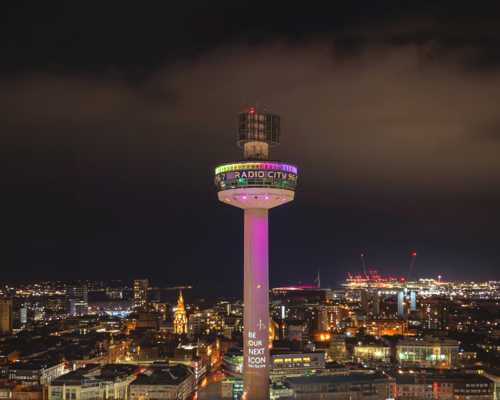
An opportunity to reimagine one of the UK’s most recognisable towers has been formally
opened by Rivington Hark, as St Johns Beacon invites operators and partners to shape its
next phase. [more...]
We know society is ageing. We know exercise offers the potential of a healthier – as well as a longer – life. The problem is, by classifying anyone over the age of 50 as ‘old, the fitness industry is missing a trick.
Because the decades after 50 can constitute half of a person’s life, and encompass everything from full mental and physical fitness through to muscle loss and dementia. So where are the clubs that cater for the truly old and frail? The answer: they’re few and far between, and even where they do exist, the focus is often on the physical – mainly falls prevention – and the social, offering companionship and community.
But what about the direct mental impact of exercise? One topic that’s getting a lot of attention among the scientific community is dementia, and the positive impact exercise can have on this devastating condition – we review some of the latest research on page 124.
But as yet, few fitness facilities have focused on this wonderful benefit of exercise. Step forward UK-based community interest company LiveWire, which has just had plans approved for a £16m neighbourhood leisure, culture, health and wellbeing hub in Warrington. Set to open in Q3 2016, it will be LiveWire’s first dementia-friendly facility.
Locklynne Hall, LiveWire’s innovation and leadership manager, explains what that means: “The person with dementia has difficulty remembering things, so you can’t rely on them building up a familiarity with where things are – you need appropriate signage. Their more recent memories are lost first, so if your toilet signs are a variation on the stick man that became common in the 60s, it might be meaningless to someone whose memory stops before then.
“You need appropriate fittings too, because the person with dementia also has difficulty working things out. They may not understand how to use clinical-style taps and mixer faucets in toilets. Unfamiliar plumbing will cause delays and confusion that could lead to incontinence and distress.
“You also need a well thought-out colour and décor scheme. If someone has developed problems with depth perception and visual processing, a pattern on the floor may appear to be a trip hazard: this momentary confusion can cause them to stumble and fall.”
Equally importantly, LiveWire trains its staff – and members of the local community – to understand the condition. It’s piloting a number of programmes too: early onset dementia groups, for example, offering healthy walking classes and tai chi. “We’re also developing a ‘lessen your chances’ programme of activities,” adds Hall.
There are lessons to learn from other sectors too, with evidence to suggest that environments which stimulate longer-term memories can be beneficial. For example, the Jamtli museum in Sweden has created the environment of a 1970s house, designed to jog dementia sufferers’ memories of happy, younger years. Engagement levels are reportedly high, and the individuals are also calmer and more content in this familiar environment.
As the population gets older, the need to be dementia-friendly will be inescapable. “The big message,” concludes Hall, “is that we’re at the point of no return. We have to act today, because tomorrow’s challenge is already upon us.”
Hotel de France, located on the British Isle of Jersey, has created a wellness retreat package
that includes a hot yoga session that will take place in Jersey Zoo’s butterfly sanctuary.
A new immersive attraction designed to transport visitors into the final hours of ancient Pompeii
is preparing to open near the world-famous archaeological site in southern Italy.
Experience design company, BRC Imagination Arts, has completed a transition that sees founder
Bob Rogers pass ownership of the business to four long-serving senior executives, while
remaining actively involved with the company.
Movie Park Germany has opened a new Paramount Pictures-themed attraction as part of its 30th
anniversary celebrations, using immersive storytelling and adaptive reuse to reinforce the park’s
longstanding “Hollywood in Germany” positioning.
Therme Manchester’s 28-acre development, which will include interconnected glass pavilions
that measure 65,000sq m, will be the largest bathing and wellbeing attraction in the world once
complete, according to prof David Russell, CEO of Therme UK.
Efteling has opened Hooghmoed, a new family drop tower designed to broaden the appeal of its
recently launched Sirene Island themed area and introduce younger visitors to thrill attractions.
A proposed Puy du Fou development near Bicester and Universal Destinations and Experiences’
planned resort in Bedford are emerging as part of a wider transformation of the Oxford–
Cambridge Growth Corridor into a major centre for UK leisure and tourism inv
Shedd Aquarium has opened the Immersion Theater developed in partnership with SimEx-
Iwerks, as part of a wider strategy to enhance the guest experience and create additional
revenue opportunities.
The UK government has announced a temporary reduction in VAT on visitor attractions and
children’s meals as part of a summer cost-of-living support package designed to stimulate the
visitor economy and encourage family days out.
As designer Yinka Ilori prepares for his first solo gallery show in London, he speaks exclusively
to CLADmag about his mission to spread joy, the power of play, and his bold approach to using
colour (including the colours you won’t see in his work).
The government of Thailand is exploring plans for a THB300bn (£6.3bn, US$8.3bn)
entertainment complex in the country’s Eastern Economic Corridor (EEC), with officials
proposing a large-scale theme park and sports destination as part of a broader tourism and
economic development strategy.
+ More news
COMPANY PROFILES
RMA Ltd RMA Ltd is a one-stop global company
that can design, build and produce from a
greenfield site upw [more...]
Polin Waterparks Polin was founded in Istanbul in 1976. Polin
has since grown into a leading company in
the waterpa [more...]
Holovis Holovis is a privately owned company
established in 2004 by CEO Stuart
Hetherington. [more...]
Alterface Alterface’s Creative Division team is
seasoned in concept and ride development,
as well as storyte [more...]
An opportunity to reimagine one of the UK’s most recognisable towers has been formally
opened by Rivington Hark, as St Johns Beacon invites operators and partners to shape its
next phase. [more...]