IKEA and Marriott have teamed up to
create a new European hotel brand for the
emerging millennial traveller. Moxy Hotels’
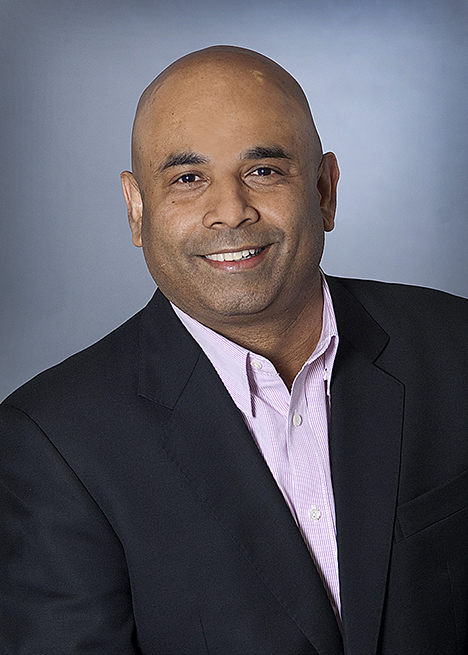
vice president, Ramesh Jackson, tells us
why he’s so confident it will be a success
By Magali Robathan | Published in Leisure Management 2013 issue 3
Never mind Baby Boomers or Gen X, it’s all about the millennial generation, according to many travel professionals.
Recent research by the Boston Consultant Group (BCG) claims that the millennial generation (16 to 34-year olds) will be the core customers of airlines, hotels and travel companies in the next five to 10 years, making up almost 50 per cent of the total spending on business flights by 2020. Their leisure travel activity will have a major impact on the tourism industry, according to BCG, and travel companies need to be ready.
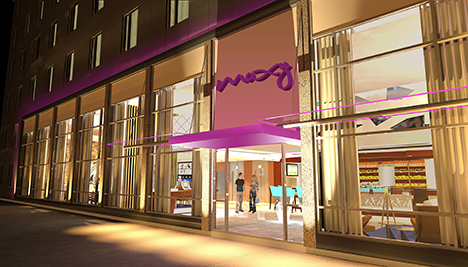
Hotel giant Marriott and furniture manufacturer Ikea certainly agree. They’ve teamed up to create Moxy Hotels, a new three star economy brand aimed at millennials (as well as a few Gen Xs), and they’re so confident about their target audience that they plan to open 150 of these hotels across Europe over the next 10 years.
“Millennial travellers are crying out for this,” says Ramesh Jackson, vice president of Moxy Hotels. “We’ve done very extensive research – we’ve surveyed consumers all over Europe to find out what their priorities are.”
The first Moxy hotel is due to open in Milan’s Malpensa Airport in the first quarter of 2014, with hotels following in the same year in Frankfurt, Berlin, Oslo and Munich, as well as a hotel in the UK in either 2014 or 2015. Hotels will have between 150 and 300 rooms; prices will start from E60 per night. They will be located near airports, train stations and in office developments, rather than city centres – presumably to keep costs down as well as take advantage of the large footfall. The plan is to open 50 in the next five years and 150 in the next 10. So, what did the research highlight? What do millennial travellers want?
“These are the kids who were born during the technology age,” says Jackson. “They want technology, but they don’t necessarily want to use someone else’s technology. It’s not that they want an iPad in their room – they’ll bring their own – but they want a tv that will interface with their iPad.
“They don’t expect the full service that the Gen X expected. They are totally comfortable helping themselves – in fact it’s their preferred approach. Price is also very important to them. They want the style, they want the technology, but they don’t want to pay the price of full service hotel charges.”
HOW THE IDEA WAS BORN The idea for Moxy Hotels originally came from Nordic Hospitality, who approached Marriott and asked if the company was interested in getting into the economy sector. “We jumped at the chance,” said Jackson. “In Europe, of about 1.7m rooms in the economy sector, only 28 per cent are branded. We felt there was a huge opportunity, and we found great partners in Inter Hospitality and Nordic Hospitality.”
Inter Hospitality, which will be the developer and owner of the hotel buildings, is part of the Property Division of the Inter Ikea Group, and was established in January 2012 to invest in and develop hotels across Europe. Nordic Hospitality will operate Moxy Hotels, and Marriott will own the brand.
Jackson, who’s worked for Marriott for almost 25 years, came on board in January 2013. When he got the call asking if he wanted to help launch the new brand, he was managing two hotels in Hydrobad, India.
“I said, okay, let me just phone my wife and ask if she’s happy to move to Germany,” he says. “The decision was that quick. The idea of building a new brand from the ground up was really very interesting to me.”
Marriott’s involvement will instantly professionalise the brand, says Jackson. “We will bring our reservations systems, our marketing ability and the global sales force we have, as well as the Marriott Reward scheme.”
THE ROOMS One of the main selling points of the new hotels will be their price, and the partners have come up with a formula to help keep costs low.
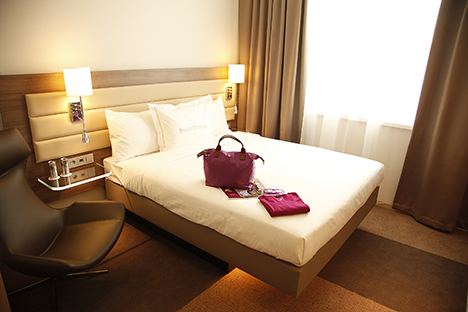
Firstly, the hotel rooms will be small. All of the rooms will be 17 square metres, but crucially Jackson says that they will feel a lot bigger.
“We have designed prototype rooms, which we showcased at the International Hotel Investment Forum in Berlin in March. One thing was clear from the feedback – the rooms don’t feel 17 square metres, and nothing in the room feels budget, because of the quality of the product and the way it has been laid out.”
The spacious feel has been achieved in several ways, says Jackson. “As part of our research, we asked our target audience what was important to them and what wasn’t. One thing they said they didn’t need was a closet – the average stay in our hotels will be 1.5 days, and people don’t tend to unpack in that time. So we’ve got rid of the closet and put in hooks with hangers, with a feature wall behind them, which immediately gives us a lot of space.”
The beds rest on a solid piece of wood, making them appear to be floating. “This means that you can put your suitcase underneath the bed, and it also gives you a lot of leg room and a sense of space,” says Jackson.
They have also dispensed with traditional desks, choosing instead to build a glass work counter into the wall, and the bedside tables are also glass counters. “Everything is off the ground, which makes the room feel spacious,” says Jackson. As for the design of the rooms, it will be “Scandinavian, very sexy, very modern.” They will all feature 43 inch tvs.
SELF SERVICE Another way that costs are being reduced is by keeping staffing to a minimum. Food and drink will be available to guests 24 hours a day, but it will all be self-service.
“We’ll offer a continental breakfast, a range of options for lunch and dinner including soups, salads, meat courses and deserts,” says Jackson. “You pick the food you want, go to the ‘fix it station’ with a set of microwaves to heat your food, help yourself to tea and coffee or alcoholic drinks.”
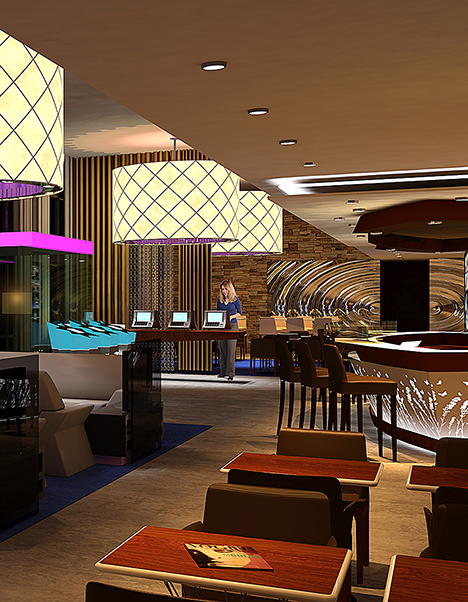
THE LOBBY The lobby will be a key space in the hotels. “From our research, we learned that millennial travellers are wildly self-sufficient, but still want a chance to connect with each other in inviting social spaces, in person or digitally. We want people to hang out in our lobbies – a 170 room hotel will feature around 120 seats in the lobby. It will have different spaces, including one with a fire where you can lounge.”
The lobby will also feature a digital wall made up of six to nine screens, all showing different content. Guests will be able to listen to what’s happening on a particular screen via Bluetooth on their mobile phones.
Jackson is convinced that Moxy will give millennials exactly what they’re looking for. "We're extremely confident about this brand,” he concludes.
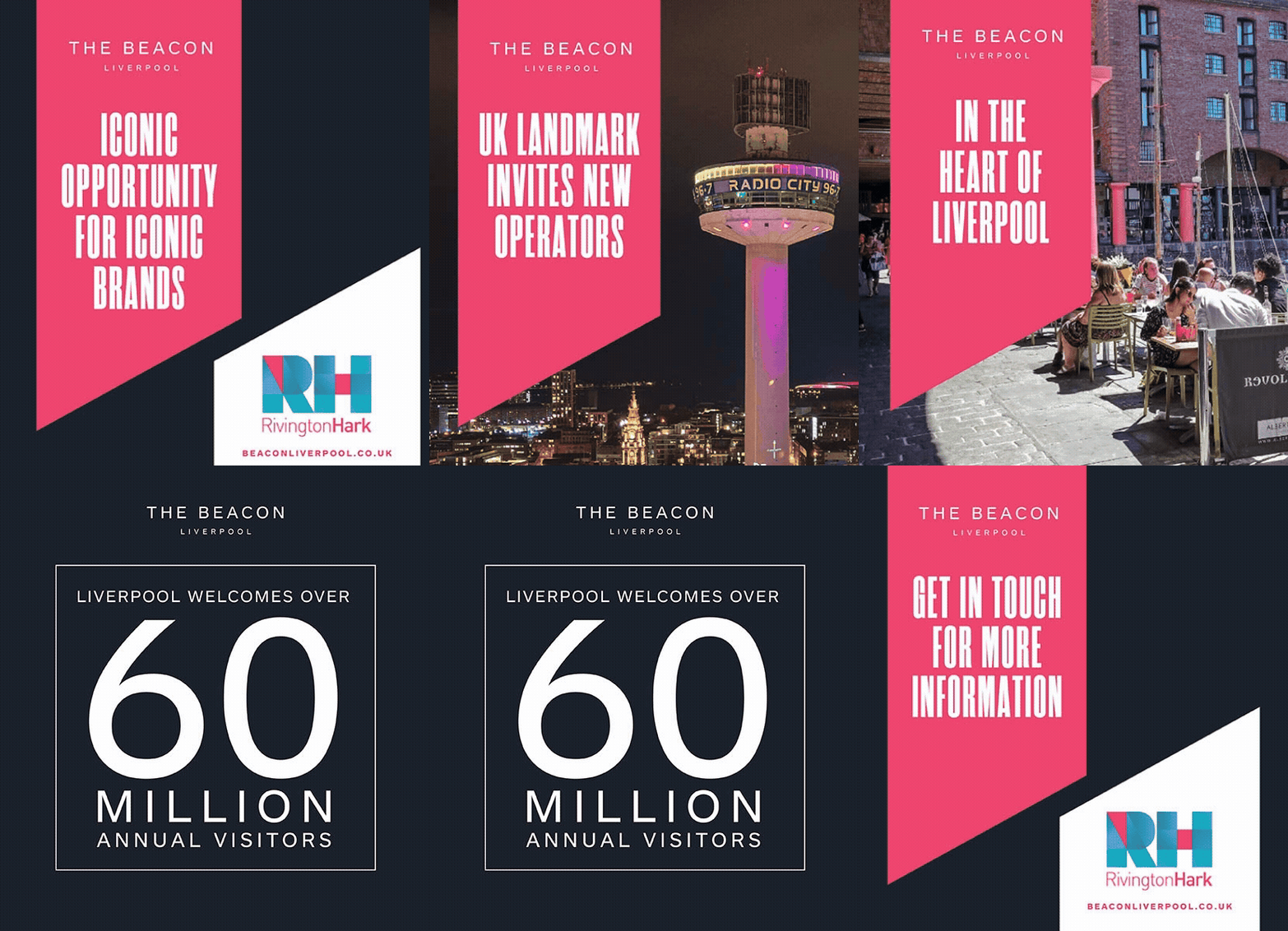
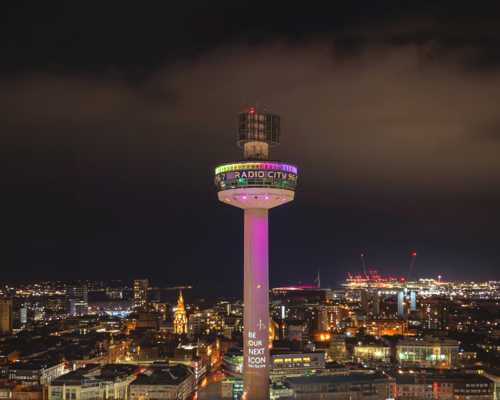
An opportunity to reimagine one of the UK’s most recognisable towers has been formally
opened by Rivington Hark, as St Johns Beacon invites operators and partners to shape its
next phase. [more...]
IKEA and Marriott have teamed up to
create a new European hotel brand for the
emerging millennial traveller. Moxy Hotels’
vice president, Ramesh Jackson, tells us
why he’s so confident it will be a success
By Magali Robathan | Published in Leisure Management 2013 issue 3
Never mind Baby Boomers or Gen X, it’s all about the millennial generation, according to many travel professionals.
Recent research by the Boston Consultant Group (BCG) claims that the millennial generation (16 to 34-year olds) will be the core customers of airlines, hotels and travel companies in the next five to 10 years, making up almost 50 per cent of the total spending on business flights by 2020. Their leisure travel activity will have a major impact on the tourism industry, according to BCG, and travel companies need to be ready.
Hotel giant Marriott and furniture manufacturer Ikea certainly agree. They’ve teamed up to create Moxy Hotels, a new three star economy brand aimed at millennials (as well as a few Gen Xs), and they’re so confident about their target audience that they plan to open 150 of these hotels across Europe over the next 10 years.
“Millennial travellers are crying out for this,” says Ramesh Jackson, vice president of Moxy Hotels. “We’ve done very extensive research – we’ve surveyed consumers all over Europe to find out what their priorities are.”
The first Moxy hotel is due to open in Milan’s Malpensa Airport in the first quarter of 2014, with hotels following in the same year in Frankfurt, Berlin, Oslo and Munich, as well as a hotel in the UK in either 2014 or 2015. Hotels will have between 150 and 300 rooms; prices will start from E60 per night. They will be located near airports, train stations and in office developments, rather than city centres – presumably to keep costs down as well as take advantage of the large footfall. The plan is to open 50 in the next five years and 150 in the next 10. So, what did the research highlight? What do millennial travellers want?
“These are the kids who were born during the technology age,” says Jackson. “They want technology, but they don’t necessarily want to use someone else’s technology. It’s not that they want an iPad in their room – they’ll bring their own – but they want a tv that will interface with their iPad.
“They don’t expect the full service that the Gen X expected. They are totally comfortable helping themselves – in fact it’s their preferred approach. Price is also very important to them. They want the style, they want the technology, but they don’t want to pay the price of full service hotel charges.”
HOW THE IDEA WAS BORN The idea for Moxy Hotels originally came from Nordic Hospitality, who approached Marriott and asked if the company was interested in getting into the economy sector. “We jumped at the chance,” said Jackson. “In Europe, of about 1.7m rooms in the economy sector, only 28 per cent are branded. We felt there was a huge opportunity, and we found great partners in Inter Hospitality and Nordic Hospitality.”
Inter Hospitality, which will be the developer and owner of the hotel buildings, is part of the Property Division of the Inter Ikea Group, and was established in January 2012 to invest in and develop hotels across Europe. Nordic Hospitality will operate Moxy Hotels, and Marriott will own the brand.
Jackson, who’s worked for Marriott for almost 25 years, came on board in January 2013. When he got the call asking if he wanted to help launch the new brand, he was managing two hotels in Hydrobad, India.
“I said, okay, let me just phone my wife and ask if she’s happy to move to Germany,” he says. “The decision was that quick. The idea of building a new brand from the ground up was really very interesting to me.”
Marriott’s involvement will instantly professionalise the brand, says Jackson. “We will bring our reservations systems, our marketing ability and the global sales force we have, as well as the Marriott Reward scheme.”
THE ROOMS One of the main selling points of the new hotels will be their price, and the partners have come up with a formula to help keep costs low.
Firstly, the hotel rooms will be small. All of the rooms will be 17 square metres, but crucially Jackson says that they will feel a lot bigger.
“We have designed prototype rooms, which we showcased at the International Hotel Investment Forum in Berlin in March. One thing was clear from the feedback – the rooms don’t feel 17 square metres, and nothing in the room feels budget, because of the quality of the product and the way it has been laid out.”
The spacious feel has been achieved in several ways, says Jackson. “As part of our research, we asked our target audience what was important to them and what wasn’t. One thing they said they didn’t need was a closet – the average stay in our hotels will be 1.5 days, and people don’t tend to unpack in that time. So we’ve got rid of the closet and put in hooks with hangers, with a feature wall behind them, which immediately gives us a lot of space.”
The beds rest on a solid piece of wood, making them appear to be floating. “This means that you can put your suitcase underneath the bed, and it also gives you a lot of leg room and a sense of space,” says Jackson.
They have also dispensed with traditional desks, choosing instead to build a glass work counter into the wall, and the bedside tables are also glass counters. “Everything is off the ground, which makes the room feel spacious,” says Jackson. As for the design of the rooms, it will be “Scandinavian, very sexy, very modern.” They will all feature 43 inch tvs.
SELF SERVICE Another way that costs are being reduced is by keeping staffing to a minimum. Food and drink will be available to guests 24 hours a day, but it will all be self-service.
“We’ll offer a continental breakfast, a range of options for lunch and dinner including soups, salads, meat courses and deserts,” says Jackson. “You pick the food you want, go to the ‘fix it station’ with a set of microwaves to heat your food, help yourself to tea and coffee or alcoholic drinks.”
THE LOBBY The lobby will be a key space in the hotels. “From our research, we learned that millennial travellers are wildly self-sufficient, but still want a chance to connect with each other in inviting social spaces, in person or digitally. We want people to hang out in our lobbies – a 170 room hotel will feature around 120 seats in the lobby. It will have different spaces, including one with a fire where you can lounge.”
The lobby will also feature a digital wall made up of six to nine screens, all showing different content. Guests will be able to listen to what’s happening on a particular screen via Bluetooth on their mobile phones.
Jackson is convinced that Moxy will give millennials exactly what they’re looking for. "We're extremely confident about this brand,” he concludes.
A new immersive attraction designed to transport visitors into the final hours of ancient Pompeii
is preparing to open near the world-famous archaeological site in southern Italy.
Experience design company, BRC Imagination Arts, has completed a transition that sees founder
Bob Rogers pass ownership of the business to four long-serving senior executives, while
remaining actively involved with the company.
Movie Park Germany has opened a new Paramount Pictures-themed attraction as part of its 30th
anniversary celebrations, using immersive storytelling and adaptive reuse to reinforce the park’s
longstanding “Hollywood in Germany” positioning.
Therme Manchester’s 28-acre development, which will include interconnected glass pavilions
that measure 65,000sq m, will be the largest bathing and wellbeing attraction in the world once
complete, according to prof David Russell, CEO of Therme UK.
Efteling has opened Hooghmoed, a new family drop tower designed to broaden the appeal of its
recently launched Sirene Island themed area and introduce younger visitors to thrill attractions.
A proposed Puy du Fou development near Bicester and Universal Destinations and Experiences’
planned resort in Bedford are emerging as part of a wider transformation of the Oxford–
Cambridge Growth Corridor into a major centre for UK leisure and tourism inv
Shedd Aquarium has opened the Immersion Theater developed in partnership with SimEx-
Iwerks, as part of a wider strategy to enhance the guest experience and create additional
revenue opportunities.
The UK government has announced a temporary reduction in VAT on visitor attractions and
children’s meals as part of a summer cost-of-living support package designed to stimulate the
visitor economy and encourage family days out.
As designer Yinka Ilori prepares for his first solo gallery show in London, he speaks exclusively
to CLADmag about his mission to spread joy, the power of play, and his bold approach to using
colour (including the colours you won’t see in his work).
The government of Thailand is exploring plans for a THB300bn (£6.3bn, US$8.3bn)
entertainment complex in the country’s Eastern Economic Corridor (EEC), with officials
proposing a large-scale theme park and sports destination as part of a broader tourism and
economic development strategy.
An opportunity to reimagine one of the UK’s most recognisable towers has been formally
opened by Rivington Hark, as St Johns Beacon invites operators and partners to shape its
next phase. [more...]