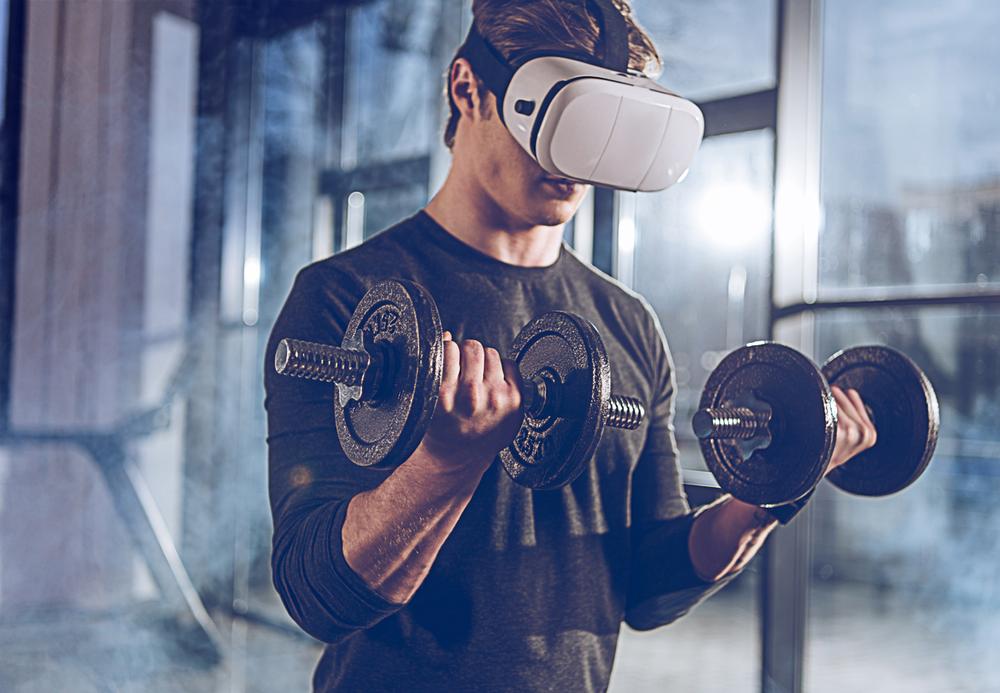
Immersive’ is the buzzword in fitness at the moment, as gyms and suppliers strive to find new ways to make people forget they’re exercising. Now, healthtech entrepreneur Dr Isabel Van De Keere is applying the same principle to the area of rehabilitation.
Last year the former medical technology consultant founded Immersive Rehab – a startup that creates virtual reality (VR) games designed to increase the effectiveness of physical rehabilitation after injury.
“Traditional physiotherapy is quite boring for the patient,” says Dr Van De Keere. “People get demotivated and frustrated.”
On the gym floor This is particularly true for injured gym-goers. Many are non-compliant with the physiotherapist-prescribed exercises they need to do to get back into action – further delaying their recovery. But Dr Van De Keere believes that the introduction of VR machines in gyms could change this.
“When physios give patients an exercise to do at home, most people don’t do it. But if there was a physio clinic in the gym, with VR equipment, people might be more motivated to do their prescribed exercises there. That way they can still go to the gym, so they don’t lose their routine. They won’t be doing their normal programme, but they’ll be getting rehabilitated in a fun and engaging way.”
Dr Van De Keere explains that with virtual reality games, patients become motivated to challenge themselves further than they would in a normal physio session.
“You can really mix up the way exercises are delivered,” she says. “And because patients are inside the virtual environment, they feel empowered. It takes them out of the white-walled, clinical environment and puts them somewhere new and interesting. It also gives them a sense of control over their surroundings.”
VR in the future While Dr Van De Keere’s software is currently aimed at helping patients who have suffered from neurological trauma, such as stroke, traumatic brain injury and spinal cord injury, she has also worked with athletes including Paralympic rower David Smith, and says the potential for treating sports and exercise injuries is high.
“For athletes who are injured and can’t be out there playing their sport, it can be depressing. In VR they can be on a virtual football pitch, for example, doing their rehab exercises with a virtual ball. It strengthens their mental state and is more motivating than doing those exercises within the four white walls of a physio clinic.”
Unsurprisingly, Dr Van De Keere is also a big believer in VR as a tool to get people more active.
“The headsets will become more comfortable and will be more like normal glasses at some point. It will take some time but it’ll happen,” she says.
“Then we’ll be able to have people on the exercise bike or the treadmill who are immersed in an environment, like the mountains. Looking at a TV screen that’s showing a forest won’t make you feel like you’re there. But VR can.”
Immersive’ is the buzzword in fitness at the moment, as gyms and suppliers strive to find new ways to make people forget they’re exercising. Now, healthtech entrepreneur Dr Isabel Van De Keere is applying the same principle to the area of rehabilitation.
Last year the former medical technology consultant founded Immersive Rehab – a startup that creates virtual reality (VR) games designed to increase the effectiveness of physical rehabilitation after injury.
“Traditional physiotherapy is quite boring for the patient,” says Dr Van De Keere. “People get demotivated and frustrated.”
On the gym floor This is particularly true for injured gym-goers. Many are non-compliant with the physiotherapist-prescribed exercises they need to do to get back into action – further delaying their recovery. But Dr Van De Keere believes that the introduction of VR machines in gyms could change this.
“When physios give patients an exercise to do at home, most people don’t do it. But if there was a physio clinic in the gym, with VR equipment, people might be more motivated to do their prescribed exercises there. That way they can still go to the gym, so they don’t lose their routine. They won’t be doing their normal programme, but they’ll be getting rehabilitated in a fun and engaging way.”
Dr Van De Keere explains that with virtual reality games, patients become motivated to challenge themselves further than they would in a normal physio session.
“You can really mix up the way exercises are delivered,” she says. “And because patients are inside the virtual environment, they feel empowered. It takes them out of the white-walled, clinical environment and puts them somewhere new and interesting. It also gives them a sense of control over their surroundings.”
VR in the future While Dr Van De Keere’s software is currently aimed at helping patients who have suffered from neurological trauma, such as stroke, traumatic brain injury and spinal cord injury, she has also worked with athletes including Paralympic rower David Smith, and says the potential for treating sports and exercise injuries is high.
“For athletes who are injured and can’t be out there playing their sport, it can be depressing. In VR they can be on a virtual football pitch, for example, doing their rehab exercises with a virtual ball. It strengthens their mental state and is more motivating than doing those exercises within the four white walls of a physio clinic.”
Unsurprisingly, Dr Van De Keere is also a big believer in VR as a tool to get people more active.
“The headsets will become more comfortable and will be more like normal glasses at some point. It will take some time but it’ll happen,” she says.
“Then we’ll be able to have people on the exercise bike or the treadmill who are immersed in an environment, like the mountains. Looking at a TV screen that’s showing a forest won’t make you feel like you’re there. But VR can.”
OMA has completed a major transformation of New York's New Museum, creating a larger
cultural campus that combines expanded exhibition spaces with learning, performance,
hospitality and public programming.
A US$50 million (£44.2 million, €51.2 million) transformation of Chicago's historic McCormick
Mansion has created a new destination that combines live magic, immersive theatre, dining and
private membership under one roof.
The Montana Historical Society has officially celebrated the opening of its new Montana
Heritage
Center, a US$107 million (£79 million, €92 million) destination that combines immersive
storytelling with cutting-edge audiovisual technology to bring the sta
San Antonio Zoo has reported a US$283 million economic impact for 2025, following a decade-
long transformation programme that has seen almost US$200 million invested into the Texas
attraction.
Plans for the AU$180 million redevelopment of Reef HQ Aquarium in Townsville, Australia, are
progressing, with the project set to transform the attraction into a global centre for reef
education and conservation.
Abu Dhabi-based investment firm Mubadala Capital has made a binding, fully financed
€1 billion
offer to acquire Pierre and Vacances SA, the European holiday resort operator behind the
continental European Center Parcs business.
Disney has reaffirmed its commitment to investing US$30 billion in its US parks and cruise
business by 2033, using new America250 celebrations to underline the role its attractions play
in supporting jobs, tourism and economic growth.
Expo 2030 Riyadh is being planned as a permanent visitor destination, with organisers
confirming the six-million-square-metre site will become a Global Village after the event closes.
The owner of one of Australia's best-known waterparks has acquired a major competitor,
creating a new attractions business spanning two of the country's largest visitor destinations.
The Toverland theme park in the Netherlands has announced a €98m expansion programme
that will add a resort, new attractions and staff facilities as it pursues plans to become a multi-
day destination.
+ More news
COMPANY PROFILES
TechnoAlpin Indoor TechnoAlpin is the world leader for snowmaking systems. With the Indoor snow division, TechnoAlpin c [more...]
Polin Waterparks Polin was founded in Istanbul in 1976. Polin
has since grown into a leading company in
the waterpa [more...]
QubicaAMF UK QubicaAMF is the largest and most
innovative bowling equipment provider with
600 employees worldwi [more...]
DJW David & Lynn Willrich started the Company
over thirty years ago, from the Audio Visual
Department [more...]