Half of 11-year-olds in the UK cannot swim 25 metres – the minimum distance set by government. A major contributor to this is an acute lack of teachers
By Tom Walker | Published in Sports Management 30 May 2016 issue 121
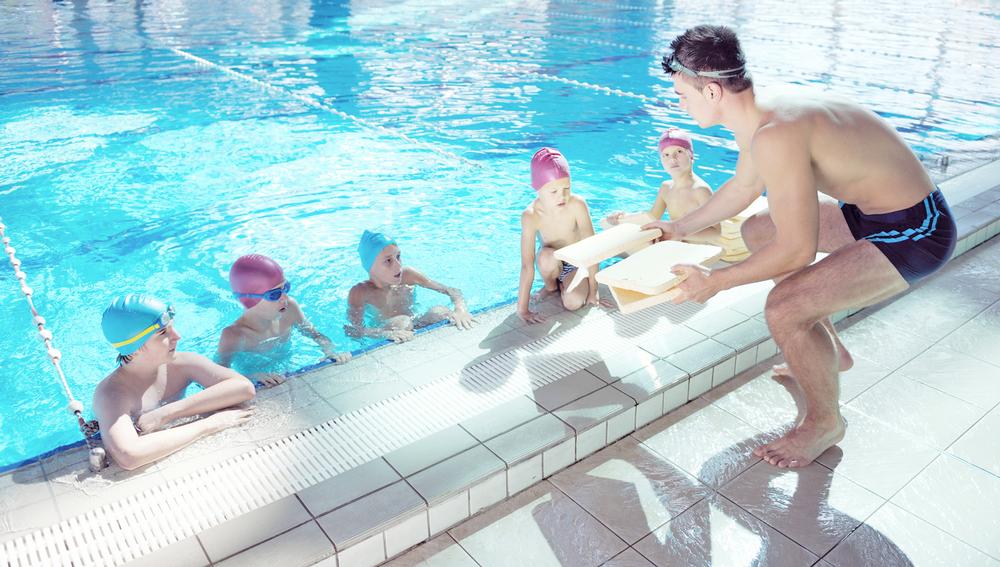
More than 81 per cent of swim schools could not find appropriately qualified staff / dotshock / shutterstock
The 2015 Industry Swimming Teachers Recruitment Survey by the Swimming Teachers’ Association (STA) found that 72 per cent of swim schools in the UK have a waiting list for lesson spaces. Worryingly, however, more than 81 per cent of the 229 swim schools surveyed said they could not find appropriately qualified swimming teaching staff to meet this demand.
In five regions – London, North East, East Anglia, Wales and the North of England – every single swim school operator responding to the survey said it could not find the right recruits, while 71 per cent said the difficulty in finding appropriate staff was affecting their business growth plans.
The survey quantifies a problem for which there is plenty of anecdotal evidence – a desperate shortage of qualified swimming teachers in the UK. At best, it’s an issue which is hitting the bottom lines of pool operators and swim schools hoping to grow their businesses. At worst, it is putting lives at risk.
When asked to provide comments to the STA survey, one respondent offered a chilling view: “I’ve been teaching for 40 years and this is the worst I have seen it when it comes to children’s ability to swim.”
Multiple Issues “There are a number of factors that have impacted on the recruitment of swimming teachers over the years,” says Steve Franks, managing director of Water Babies – a nationwide, franchise-based swim school for infants and toddlers. “For example, the continued confusion that exists across the sports and leisure industry sector on the relative merits of broadly similar swimming teaching qualifications being awarded by the various vocational awarding bodies – mainly the ASA and STA.
“This is then further compounded by employers setting internal policy preferences on which vocational swimming teaching qualification they are prepared to accept. This can have a huge impact on the individual who has funded their own swimming teaching training, only to find that their preferred local employer will not recognise their qualification.”
STA chief executive Dave Candler recognises the confusion around the compatibility of qualifications. “Some operators are making recruiting harder for themselves by specifying in job adverts that they want a Level 2 teacher from a specific awarding body,” Candler says.
“The big misconception here is that some operators believe they have to specify an awarding body by name, because they use their learn to swim programme – this is not true. Choosing a Level 2 qualification from one of the awarding bodies does not mean you can’t teach another’s learn to swim programme and it does not impact on ongoing training. If we can educate operators on this key fact, they will find recruiting qualified Level 2 teachers easier.”
For Candler, the potential confusion over accredited qualifications isn’t the only reason for the shortage. “The problems around swimming teacher recruitment are made worse by the fact that many swim schools find it difficult to cope with the increased demand for lessons due to poor pool time availability and a limited number of pools,” he says.
“People’s changing lifestyles have contributed too. Generally speaking, swimming teaching was always a great profession for stay-at-home mums and dads as they could work the unsociable hours – such as evenings weekends – around their family life. This simply isn’t the case anymore.”
Qualifications The reasons behind the shortage might be complex, but the issues it causes are easily identified – pool operators and swim schools are finding it hard to satisfy the demand for classes. Everyone Active, which operates a number of leisure centres on behalf of local authorities across the UK, currently teaches 125,000 students per week at it sites.
“All sites would declare that they have a shortage of swimming teachers,” says Jacqui Tillman, Everyone Active’s group swim manager. “We have challenges to recruit adequate numbers in certain localities.”
Tillman identifies a further obstacle for young people to take up swimming teaching: “Cost is usually cited as a concern when it comes to qualifications,” she says. “We require all teachers to be Level 2 qualified, which forces individuals to have completed the pre-requisite of a Level 1 qualification before going on to complete a Level 2.”
Another swimming provider which has identified the cost of training as an issue is Coventry Sports Foundation (CSF). CSF manages three venues across the city and teaches more than 6,000 children to swim each week. “The average costs of gaining aquatics qualifications - around £300 - can for many act as a barrier and certainly seem a daunting expense for students, who are a target market for us,” says Wendy Jackson, CSF’s community development manager.
To help youngsters with the cost and to make them consider a career in leisure, CSF has introduced a programme targeting young school leavers. “We’ve launched a volunteer academy for 14-16 year-olds, which gives them the opportunity to support and shadow roles including swimming teachers,” Jackson says.
“In return, we offer them the chance to gain accredited qualifications for free on the job, which in turn enables us to grow our own team. Not only this, but we are also making entry into the industry more accessible by programming three courses throughout the next few months where new employees will access free training opportunities in return for paid work within the Foundation.”
Limiting confusion Schemes such as the one introduced by CSF can help with the cost of training, but doesn’t remove the potential confusion over which accredited course a student should choose in order to meet the requirements of a potential employer. For that, Water Babies’ Franks has a suggestion.
“There is a simple solution to solve the problem of accrediting swimming teachers, which would meet the needs of both employers and individuals,” he says. “It is the creation of a ‘single qualification structure’ for swimming teaching and all its associated specialisms – main stream, baby and toddler, special needs – and for the qualifications being awarded by the various vocational awarding bodies – mainly the ASA and STA.
“This route would ensure that employers are not confused by the skills and competencies that they are seeking in a competent swimming teacher – irrespective of who the awarding body was. Secondly, an individual who became qualified through this route would not be risking what could be quite a high expense for a course and be in a much better position to secure employment as a teacher as employer preference would no longer exist.”
For Candler, the key is industry-wide collaboration. “As an industry we need to be working more closely together to identify a positive and practical solution,” he says, and adds that the effects of the shortage could potentially be disastrous.
“When you consider that half of 11-year-olds cannot swim 25 metres – the minimum requirement set by government – and that we have long waiting lists, not enough qualified swim teachers and too few pools is a potential recipe for disaster.”
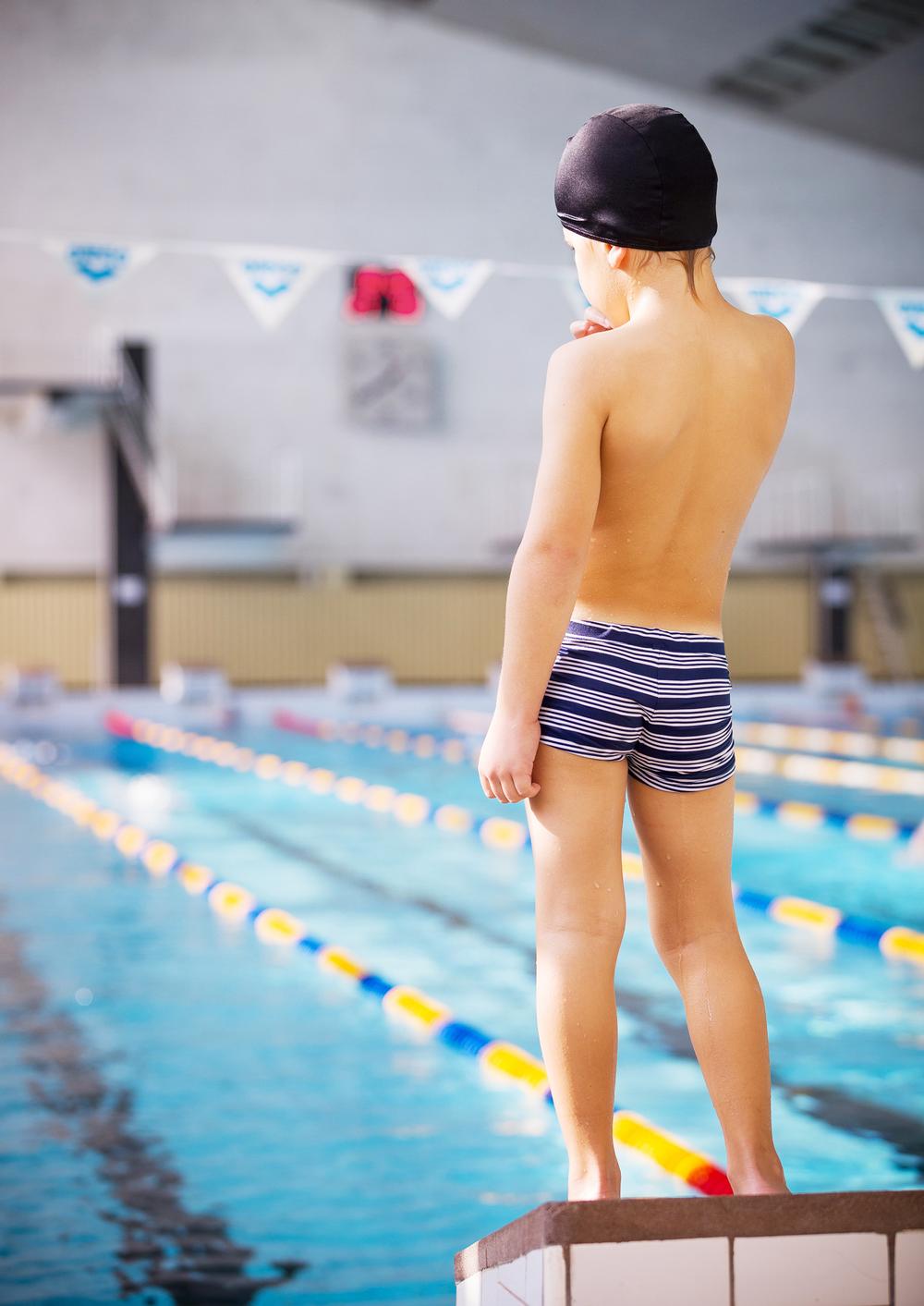
Half of 11-year-olds in the UK cannot swim 25 metres / goodmoments / shutterstock
STA chief Dave Candler said the limited number of pools isn’t helping the situation
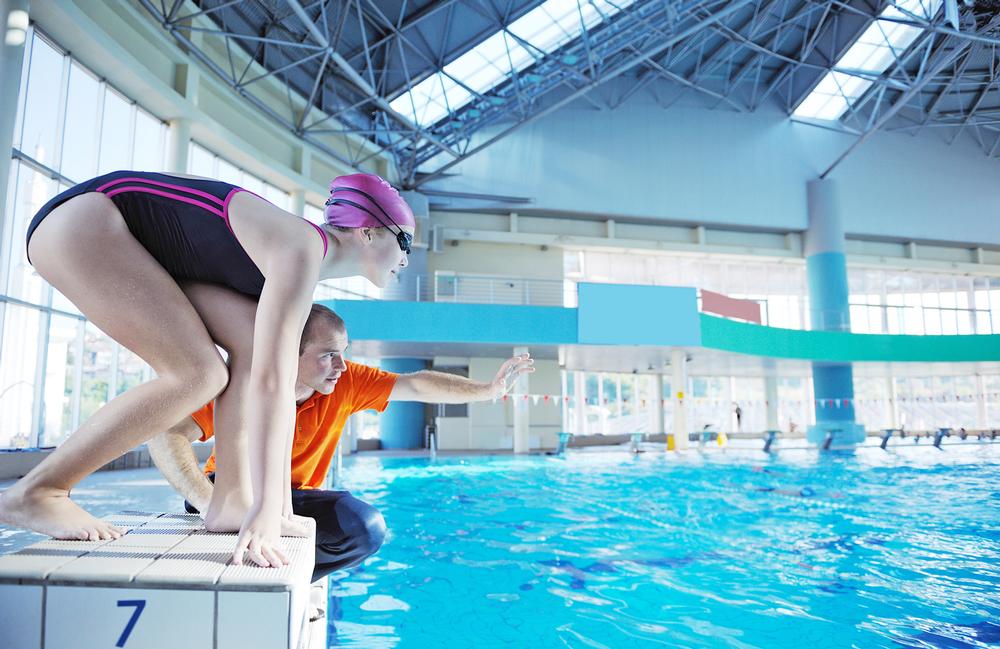
The price of training – with Level Two courses costing around £300 – has been highlighted as a significant barrier to teaching / dotshock / shutterstock
COMPANY PROFILES
Simworx Ltd
The company was initially established
in 1997. Terry Monkton and Andrew
Roberts are the key stakeh [more...]
Painting With Light
By combining lighting, video, scenic and architectural elements, sound and special effects we tell s [more...]
Clip 'n Climb
Clip ‘n Climb currently offers facility owners and
investors more than 40 colourful and unique
Cha [more...]
Polin Waterparks
Polin was founded in Istanbul in 1976. Polin
has since grown into a leading company in
the waterpa [more...]
Half of 11-year-olds in the UK cannot swim 25 metres – the minimum distance set by government. A major contributor to this is an acute lack of teachers
By Tom Walker | Published in Sports Management 30 May 2016 issue 121
More than 81 per cent of swim schools could not find appropriately qualified staff / dotshock / shutterstock
The 2015 Industry Swimming Teachers Recruitment Survey by the Swimming Teachers’ Association (STA) found that 72 per cent of swim schools in the UK have a waiting list for lesson spaces. Worryingly, however, more than 81 per cent of the 229 swim schools surveyed said they could not find appropriately qualified swimming teaching staff to meet this demand.
In five regions – London, North East, East Anglia, Wales and the North of England – every single swim school operator responding to the survey said it could not find the right recruits, while 71 per cent said the difficulty in finding appropriate staff was affecting their business growth plans.
The survey quantifies a problem for which there is plenty of anecdotal evidence – a desperate shortage of qualified swimming teachers in the UK. At best, it’s an issue which is hitting the bottom lines of pool operators and swim schools hoping to grow their businesses. At worst, it is putting lives at risk.
When asked to provide comments to the STA survey, one respondent offered a chilling view: “I’ve been teaching for 40 years and this is the worst I have seen it when it comes to children’s ability to swim.”
Multiple Issues “There are a number of factors that have impacted on the recruitment of swimming teachers over the years,” says Steve Franks, managing director of Water Babies – a nationwide, franchise-based swim school for infants and toddlers. “For example, the continued confusion that exists across the sports and leisure industry sector on the relative merits of broadly similar swimming teaching qualifications being awarded by the various vocational awarding bodies – mainly the ASA and STA.
“This is then further compounded by employers setting internal policy preferences on which vocational swimming teaching qualification they are prepared to accept. This can have a huge impact on the individual who has funded their own swimming teaching training, only to find that their preferred local employer will not recognise their qualification.”
STA chief executive Dave Candler recognises the confusion around the compatibility of qualifications. “Some operators are making recruiting harder for themselves by specifying in job adverts that they want a Level 2 teacher from a specific awarding body,” Candler says.
“The big misconception here is that some operators believe they have to specify an awarding body by name, because they use their learn to swim programme – this is not true. Choosing a Level 2 qualification from one of the awarding bodies does not mean you can’t teach another’s learn to swim programme and it does not impact on ongoing training. If we can educate operators on this key fact, they will find recruiting qualified Level 2 teachers easier.”
For Candler, the potential confusion over accredited qualifications isn’t the only reason for the shortage. “The problems around swimming teacher recruitment are made worse by the fact that many swim schools find it difficult to cope with the increased demand for lessons due to poor pool time availability and a limited number of pools,” he says.
“People’s changing lifestyles have contributed too. Generally speaking, swimming teaching was always a great profession for stay-at-home mums and dads as they could work the unsociable hours – such as evenings weekends – around their family life. This simply isn’t the case anymore.”
Qualifications The reasons behind the shortage might be complex, but the issues it causes are easily identified – pool operators and swim schools are finding it hard to satisfy the demand for classes. Everyone Active, which operates a number of leisure centres on behalf of local authorities across the UK, currently teaches 125,000 students per week at it sites.
“All sites would declare that they have a shortage of swimming teachers,” says Jacqui Tillman, Everyone Active’s group swim manager. “We have challenges to recruit adequate numbers in certain localities.”
Tillman identifies a further obstacle for young people to take up swimming teaching: “Cost is usually cited as a concern when it comes to qualifications,” she says. “We require all teachers to be Level 2 qualified, which forces individuals to have completed the pre-requisite of a Level 1 qualification before going on to complete a Level 2.”
Another swimming provider which has identified the cost of training as an issue is Coventry Sports Foundation (CSF). CSF manages three venues across the city and teaches more than 6,000 children to swim each week. “The average costs of gaining aquatics qualifications - around £300 - can for many act as a barrier and certainly seem a daunting expense for students, who are a target market for us,” says Wendy Jackson, CSF’s community development manager.
To help youngsters with the cost and to make them consider a career in leisure, CSF has introduced a programme targeting young school leavers. “We’ve launched a volunteer academy for 14-16 year-olds, which gives them the opportunity to support and shadow roles including swimming teachers,” Jackson says.
“In return, we offer them the chance to gain accredited qualifications for free on the job, which in turn enables us to grow our own team. Not only this, but we are also making entry into the industry more accessible by programming three courses throughout the next few months where new employees will access free training opportunities in return for paid work within the Foundation.”
Limiting confusion Schemes such as the one introduced by CSF can help with the cost of training, but doesn’t remove the potential confusion over which accredited course a student should choose in order to meet the requirements of a potential employer. For that, Water Babies’ Franks has a suggestion.
“There is a simple solution to solve the problem of accrediting swimming teachers, which would meet the needs of both employers and individuals,” he says. “It is the creation of a ‘single qualification structure’ for swimming teaching and all its associated specialisms – main stream, baby and toddler, special needs – and for the qualifications being awarded by the various vocational awarding bodies – mainly the ASA and STA.
“This route would ensure that employers are not confused by the skills and competencies that they are seeking in a competent swimming teacher – irrespective of who the awarding body was. Secondly, an individual who became qualified through this route would not be risking what could be quite a high expense for a course and be in a much better position to secure employment as a teacher as employer preference would no longer exist.”
For Candler, the key is industry-wide collaboration. “As an industry we need to be working more closely together to identify a positive and practical solution,” he says, and adds that the effects of the shortage could potentially be disastrous.
“When you consider that half of 11-year-olds cannot swim 25 metres – the minimum requirement set by government – and that we have long waiting lists, not enough qualified swim teachers and too few pools is a potential recipe for disaster.”
Half of 11-year-olds in the UK cannot swim 25 metres / goodmoments / shutterstock
STA chief Dave Candler said the limited number of pools isn’t helping the situation
The price of training – with Level Two courses costing around £300 – has been highlighted as a significant barrier to teaching / dotshock / shutterstock
The Montana Historical Society has officially celebrated the opening of its new Montana
Heritage
Center, a US$107 million (£79 million, €92 million) destination that combines immersive
storytelling with cutting-edge audiovisual technology to bring the sta
San Antonio Zoo has reported a US$283 million economic impact for 2025, following a decade-
long transformation programme that has seen almost US$200 million invested into the Texas
attraction.
Plans for the AU$180 million redevelopment of Reef HQ Aquarium in Townsville, Australia, are
progressing, with the project set to transform the attraction into a global centre for reef
education and conservation.
Abu Dhabi-based investment firm Mubadala Capital has made a binding, fully financed
€1 billion
offer to acquire Pierre and Vacances SA, the European holiday resort operator behind the
continental European Center Parcs business.
Disney has reaffirmed its commitment to investing US$30 billion in its US parks and cruise
business by 2033, using new America250 celebrations to underline the role its attractions play
in supporting jobs, tourism and economic growth.
Expo 2030 Riyadh is being planned as a permanent visitor destination, with organisers
confirming the six-million-square-metre site will become a Global Village after the event closes.
The owner of one of Australia's best-known waterparks has acquired a major competitor,
creating a new attractions business spanning two of the country's largest visitor destinations.
The Toverland theme park in the Netherlands has announced a €98m expansion programme
that will add a resort, new attractions and staff facilities as it pursues plans to become a multi-
day destination.
Hotel de France, located on the British Isle of Jersey, has created a wellness retreat package
that includes a hot yoga session that will take place in Jersey Zoo’s butterfly sanctuary.
A new immersive attraction designed to transport visitors into the final hours of ancient Pompeii
is preparing to open near the world-famous archaeological site in southern Italy.
+ More news
COMPANY PROFILES
Simworx Ltd The company was initially established
in 1997. Terry Monkton and Andrew
Roberts are the key stakeh [more...]
Painting With Light By combining lighting, video, scenic and architectural elements, sound and special effects we tell s [more...]
Clip 'n Climb Clip ‘n Climb currently offers facility owners and
investors more than 40 colourful and unique
Cha [more...]
Polin Waterparks Polin was founded in Istanbul in 1976. Polin
has since grown into a leading company in
the waterpa [more...]