Steve Gullans says gene doping could transform sport
“In as little as 20 years we could see another set of Olympic Games emerge – the altered Olympics – where all the athletes have undergone gene therapy,” says Steve Gullans, author, scientist and biotech investor at Excel Venture Management.
Gene therapy, or gene doping, is already a hot topic in sport and for a number of years World Anti-Doping Authority (WADA) scientists have been working on ways to detect whether or not athletes have altered their genetic make up.
PICKING OUT WINNERS A number of genes have been identified as being extremely desirable for athletic performance. For example, almost every male Olympic sprinter and power athlete ever tested carries the 577R allele, and endurance athletes have been shown to have the EPO gene – Lance Armstrong’s drug of choice - which improves oxygen-carrying capacity.
Introducing genes to the body is such a simple procedure, that Gullans says it could be carried out in a sophisticated kitchen. This suggests that once gene therapy is proven to be safe and affordable, it is likely to become widespread – making it difficult for anti-doping authorities to root out those who use it.
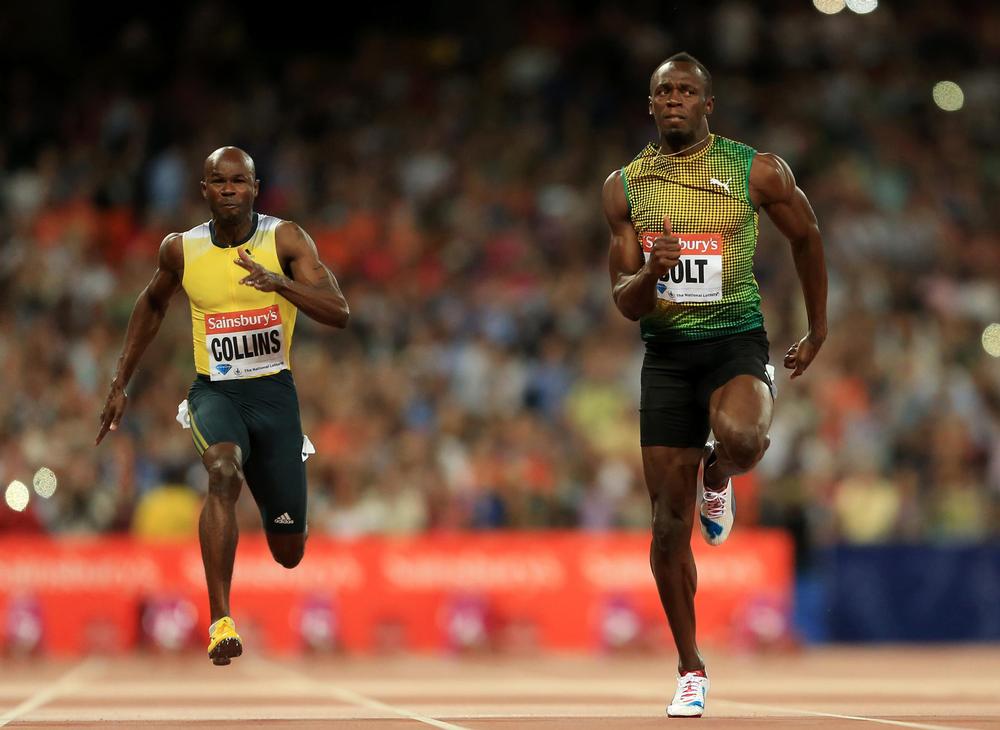
Gullans isn’t exactly pro gene therapy in sport, however, he is a realist and believes that once it is proven to be safe, athletes – both recreational and elite – will want to use it, because that is human nature. Given the choice, many people might find the temptation to have the same gene mix as Usain Bolt too hard to resist.
“Botox sales were expected to be US$25m globally for a rare muscle disorder, but it sells billions and billions for beauty,” he says. “I think it is inevitable that when gene therapy is proven to be safe and affordable that people will want to use it to enhance their performance, because humanity has always lent that way.”
MEDICAL BENEFITS At present, gene therapy is only in use for medical applications, but Gullans predicts this will soon change: “In hospital settings, we can expect to see one success after another within 10-15 years,” he says. “The natural consequence of any new health-related technology is to move from rare, or tragic, disorders to other fields almost as fast as you can prove they are safe. One field is performance enhancement, the other is beauty and ageing.”
So Gullans believes elite athletes will use gene therapy first – within 10 years - and then it will move to recreational use: “If you’re a weekend mountain climber, would it be a big problem to give yourself more red blood cells to enjoy climbing mountains?”
The two biggest barriers to gene therapy – safety and accessibility – could be overcome fairly soon. There have been over 2,000 human gene trials, and molecules are being made in India and China, which will sort the supply issue and make the genes more affordable.
The International Olympic Committee follows the WADA Code, and WADA believes gene doping threatens the integrity of sport. It banned the practise in 2003, stipulating that gene therapy is prohibited if it enhances performance.
A WADA spokesperson said that the organisation is on it: “WADA has no evidence to suggest gene doping is being used by athletes, however, developing and validating technologies in order to detect it have been one of our priorities since 2004, when the first WADA expert group on gene doping was established.”
FASTER, HIGHER, STRONGER Currently it is very difficult to determine if someone has used gene therapy, but Gullans says scientists will quickly figure it out: “As DNA sequencing gets faster and cheaper, you will be able to identify changes in a person’s DNA because you see three copies of a gene (two normal, and one altered), or you find some DNA from a viral vector that carried the DNA into your tissues. Basically, if you know what you’re looking for you can find it.”
Gene therapy researcher, Professor Lee Sweeney, has discovered that inserting the IGF-1 gene into the muscles of mice promoted muscle growth and slowed the ageing process. Sweeney is on the WADA board and currently believes gene therapy shouldn’t be used by athletes, as it has not yet been proven safe. However, once it has proven to be safe, he believes the ethics are less clear cut.
Sweeney said: “I think it’s unethical to withhold from someone something that would actually allow their muscles to be much healthier now and in the future. As long as there’s no safety risk, I don’t see why athletes should be punished by having these treatments withheld because they’re athletes. So, I’m on the other side of the fence from WADA on this one, even though we’re on the same team right now.”
Would watching Usain Bolt sprint be as exciting if we knew that he had built his genes to do so? Maybe not. Unless WADA can stay one step ahead, we might have to change our perception of sport.
Steve Gullans says gene doping could transform sport
“In as little as 20 years we could see another set of Olympic Games emerge – the altered Olympics – where all the athletes have undergone gene therapy,” says Steve Gullans, author, scientist and biotech investor at Excel Venture Management.
Gene therapy, or gene doping, is already a hot topic in sport and for a number of years World Anti-Doping Authority (WADA) scientists have been working on ways to detect whether or not athletes have altered their genetic make up.
PICKING OUT WINNERS A number of genes have been identified as being extremely desirable for athletic performance. For example, almost every male Olympic sprinter and power athlete ever tested carries the 577R allele, and endurance athletes have been shown to have the EPO gene – Lance Armstrong’s drug of choice - which improves oxygen-carrying capacity.
Introducing genes to the body is such a simple procedure, that Gullans says it could be carried out in a sophisticated kitchen. This suggests that once gene therapy is proven to be safe and affordable, it is likely to become widespread – making it difficult for anti-doping authorities to root out those who use it.
Gullans isn’t exactly pro gene therapy in sport, however, he is a realist and believes that once it is proven to be safe, athletes – both recreational and elite – will want to use it, because that is human nature. Given the choice, many people might find the temptation to have the same gene mix as Usain Bolt too hard to resist.
“Botox sales were expected to be US$25m globally for a rare muscle disorder, but it sells billions and billions for beauty,” he says. “I think it is inevitable that when gene therapy is proven to be safe and affordable that people will want to use it to enhance their performance, because humanity has always lent that way.”
MEDICAL BENEFITS At present, gene therapy is only in use for medical applications, but Gullans predicts this will soon change: “In hospital settings, we can expect to see one success after another within 10-15 years,” he says. “The natural consequence of any new health-related technology is to move from rare, or tragic, disorders to other fields almost as fast as you can prove they are safe. One field is performance enhancement, the other is beauty and ageing.”
So Gullans believes elite athletes will use gene therapy first – within 10 years - and then it will move to recreational use: “If you’re a weekend mountain climber, would it be a big problem to give yourself more red blood cells to enjoy climbing mountains?”
The two biggest barriers to gene therapy – safety and accessibility – could be overcome fairly soon. There have been over 2,000 human gene trials, and molecules are being made in India and China, which will sort the supply issue and make the genes more affordable.
The International Olympic Committee follows the WADA Code, and WADA believes gene doping threatens the integrity of sport. It banned the practise in 2003, stipulating that gene therapy is prohibited if it enhances performance.
A WADA spokesperson said that the organisation is on it: “WADA has no evidence to suggest gene doping is being used by athletes, however, developing and validating technologies in order to detect it have been one of our priorities since 2004, when the first WADA expert group on gene doping was established.”
FASTER, HIGHER, STRONGER Currently it is very difficult to determine if someone has used gene therapy, but Gullans says scientists will quickly figure it out: “As DNA sequencing gets faster and cheaper, you will be able to identify changes in a person’s DNA because you see three copies of a gene (two normal, and one altered), or you find some DNA from a viral vector that carried the DNA into your tissues. Basically, if you know what you’re looking for you can find it.”
Gene therapy researcher, Professor Lee Sweeney, has discovered that inserting the IGF-1 gene into the muscles of mice promoted muscle growth and slowed the ageing process. Sweeney is on the WADA board and currently believes gene therapy shouldn’t be used by athletes, as it has not yet been proven safe. However, once it has proven to be safe, he believes the ethics are less clear cut.
Sweeney said: “I think it’s unethical to withhold from someone something that would actually allow their muscles to be much healthier now and in the future. As long as there’s no safety risk, I don’t see why athletes should be punished by having these treatments withheld because they’re athletes. So, I’m on the other side of the fence from WADA on this one, even though we’re on the same team right now.”
Would watching Usain Bolt sprint be as exciting if we knew that he had built his genes to do so? Maybe not. Unless WADA can stay one step ahead, we might have to change our perception of sport.
OMA has completed a major transformation of New York's New Museum, creating a larger
cultural campus that combines expanded exhibition spaces with learning, performance,
hospitality and public programming.
A US$50 million (£44.2 million, €51.2 million) transformation of Chicago's historic McCormick
Mansion has created a new destination that combines live magic, immersive theatre, dining and
private membership under one roof.
The Montana Historical Society has officially celebrated the opening of its new Montana
Heritage
Center, a US$107 million (£79 million, €92 million) destination that combines immersive
storytelling with cutting-edge audiovisual technology to bring the sta
San Antonio Zoo has reported a US$283 million economic impact for 2025, following a decade-
long transformation programme that has seen almost US$200 million invested into the Texas
attraction.
Plans for the AU$180 million redevelopment of Reef HQ Aquarium in Townsville, Australia, are
progressing, with the project set to transform the attraction into a global centre for reef
education and conservation.
Abu Dhabi-based investment firm Mubadala Capital has made a binding, fully financed
€1 billion
offer to acquire Pierre and Vacances SA, the European holiday resort operator behind the
continental European Center Parcs business.
Disney has reaffirmed its commitment to investing US$30 billion in its US parks and cruise
business by 2033, using new America250 celebrations to underline the role its attractions play
in supporting jobs, tourism and economic growth.
Expo 2030 Riyadh is being planned as a permanent visitor destination, with organisers
confirming the six-million-square-metre site will become a Global Village after the event closes.
The owner of one of Australia's best-known waterparks has acquired a major competitor,
creating a new attractions business spanning two of the country's largest visitor destinations.
The Toverland theme park in the Netherlands has announced a €98m expansion programme
that will add a resort, new attractions and staff facilities as it pursues plans to become a multi-
day destination.
+ More news
COMPANY PROFILES
instantprint We’re a Yorkshire-based online printer, founded
in 2009 by Adam Carnell and James Kinsella. [more...]
IDEATTACK IDEATTACK is a full-service planning and
design company with headquarters in
Los Angeles. [more...]
DJW David & Lynn Willrich started the Company
over thirty years ago, from the Audio Visual
Department [more...]
Taylor Made Designs Founded in 1993, Taylor Made
Designs supply corporate clothing
and brand-enhancing merchandise
to [more...]