Successes of German football are underpinned by a holistic approach to sustainability, which encompasses economics, the environment and social responsibility says Tom Walker
By Tom Walker | Published in Sports Management 22 feb 2016 issue 114
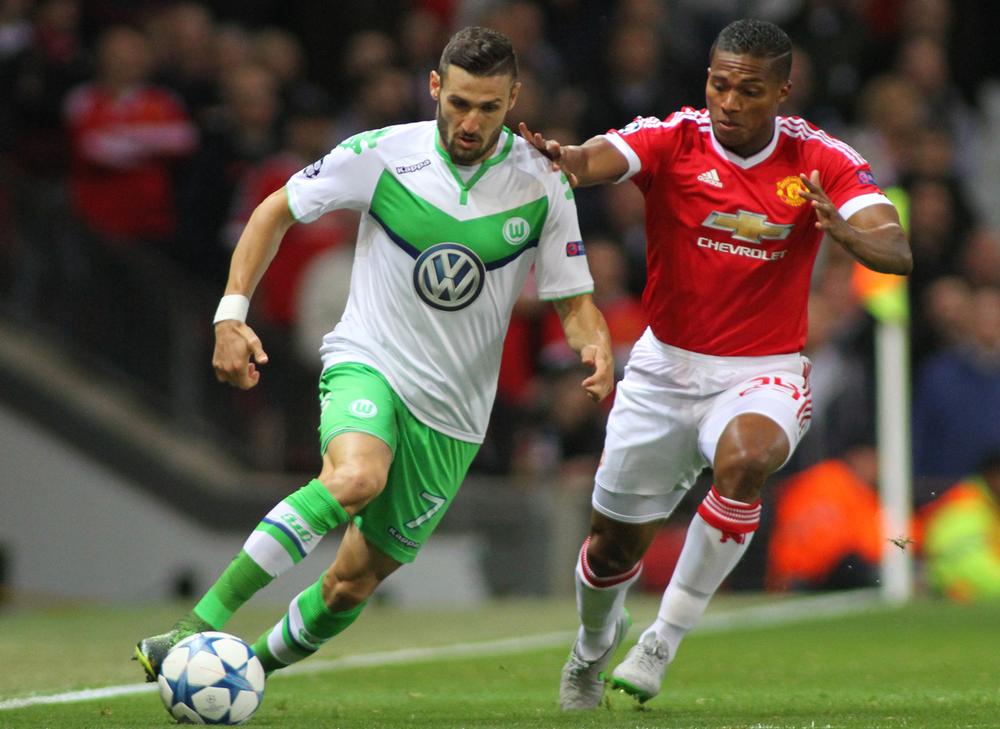
VfL Wolfsburg eliminated Manchester United from the 2015-16 Champions League / shutterstock
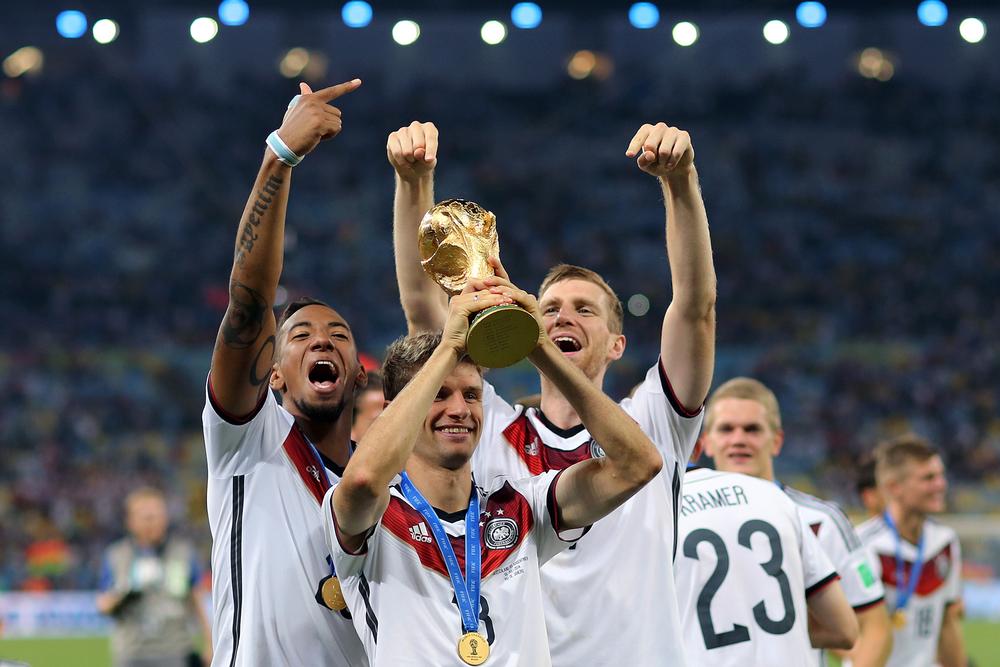
It’s a great time to be a German football fan. The national team swept all before it to win the 2014 World Cup and the country’s clubs have dominated European football in recent years. There’s also a seemingly endless supply of talented players emerging from German football academies, guaranteeing success for the years ahead.
What makes the German success story all the more impressive is that it’s underpinned by a dedication to economic sustainability. German clubs aren’t owned by glory-chasing millionaires who invest breathtaking amounts of money in players – and get clubs into debt in the process. Instead, 17 of the 18 clubs in the German top flight Bundesliga are owned by fans, entirely debt-free and operating at a profit. This is largely thanks to the fact that clubs spend just 39 per cent of their income on players’ wages.
Compare this to the English Premier League, where clubs spend more than 70 per cent of their revenues on players and all but three of the member clubs have accrued eye-watering levels of debt.
In Germany, affordable ticket prices are the norm, while in England fans organise regular protests at the high prices they are forced to pay to attend games.
It seems that German football is not only winning on the pitch, but that it also has its finances in order.
SOCIAL APPROACH But it’s not just economic sustainability at which the German clubs excel. Corporate social responsibility (CSR) schemes and environmentally friendly operations are often at the heart of club operations. Whether it’s the capital city’s largest club, Hertha Berlin, playing in shirts made out of recycled plastic bottles, or its Rhineland-based rival Mainz 05 being declared the world’s first carbon neutral club, the teams take great pride in leading the way in sustainable innovation in all aspects of their work.
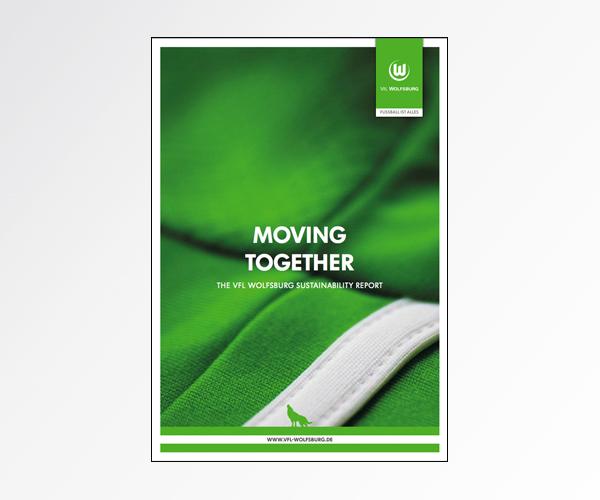
The best example of this all-embracing approach to sustainability is VfL Wolfsburg, the first ever football club to publish a Global Reporting Initiative (GRI)-certified sustainability report. The 72-page tome, entitled Gemeinsam Bewegen (Moving Together) and downloadable online, outlines a club-wide strategy based on a long-term commitment to both social responsibility and environmentally friendly practices.
Among the club’s successful initiatives is its involvement in the global physical activity initiative Muuvit – a campaign promoting playful learning, team spirit and the enjoyment of exercise. Through its Muuvit operations, Wolfsburg has reached out to more than 35,000 schoolchildren and the club has now expanded the exercise programme to encompass the whole of Germany.
“Sustainability has long been a central element in our DNA,” says Nico Briskorn, the club’s director of CSR. “The Moving Together initiative gives us a framework and is also a vehicle for making sustainability understandable in all of its dimensions, so there’s a higher level of awareness of our activities.
“We want Moving Together to set benchmarks off the field. Football shouldn’t be confined to merely 90 minutes on the pitch and in the future we want to include our fans and employees in things even more.
“Environmental issues, which we’ve been involved in for some time now, are increasingly in the spotlight, as awareness of issues such as climate change increases.”
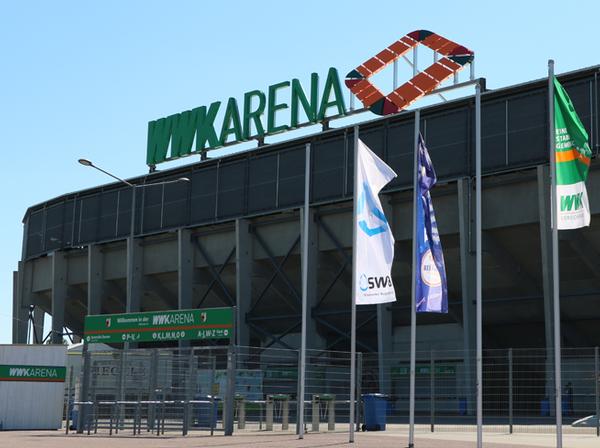
GREEN GOALS When it comes to the environment, German club FC Augsburg’s WWK Arena is heralded as one of the most sustainable in the world. The 31,000-capacity venue was the world’s first carbon-neutral football stadium and features a number of solutions which have brought down operational costs and curbed energy usage.
To heat and cool the building, the stadium uses only renewable energy and/or bioenergy from renewable raw materials. The club has also installed two groundwater heat pumps under the pitch, which have eliminated the need for oil when heating the pitch during cold winter months. All water in the stadium is also sourced from two purpose-built, sustainable wells outside the stadium.
In total, the venue’s green energy solutions – developed in cooperation with local suppliers Lechwerke AG – save more than 750 tons of CO2 a year.
Both VfL Wolfsburg’s and Augsburg’s pioneering sustainability work has been mirrored by success on the pitch. While Wolfsburg is a regular entrant in the prestigious UEFA Champions League, Augsburg’s qualification for this season’s UEFA Europa League was one of the stories of the 2014-15 Bundesliga season.
Augsburg’s first foray into European competition has gone well – the club entertained five-time European champions Liverpool FC last week (18 February). While there, Liverpool officials could have done worse than ask for some pointers about sustainability.
Tom Walker is managing editor of Sports Management
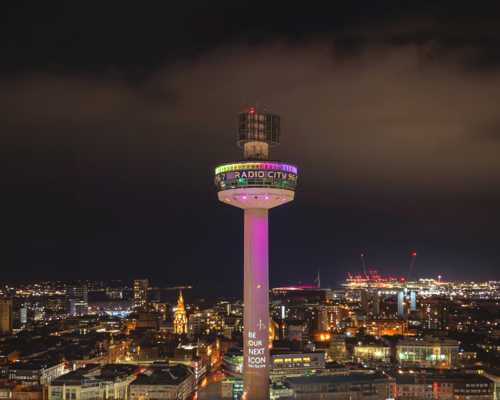
An opportunity to reimagine one of the UK’s most recognisable towers has been formally
opened by Rivington Hark, as St Johns Beacon invites operators and partners to shape its
next phase. [more...]
Successes of German football are underpinned by a holistic approach to sustainability, which encompasses economics, the environment and social responsibility says Tom Walker
By Tom Walker | Published in Sports Management 22 feb 2016 issue 114
VfL Wolfsburg eliminated Manchester United from the 2015-16 Champions League / shutterstock
It’s a great time to be a German football fan. The national team swept all before it to win the 2014 World Cup and the country’s clubs have dominated European football in recent years. There’s also a seemingly endless supply of talented players emerging from German football academies, guaranteeing success for the years ahead.
What makes the German success story all the more impressive is that it’s underpinned by a dedication to economic sustainability. German clubs aren’t owned by glory-chasing millionaires who invest breathtaking amounts of money in players – and get clubs into debt in the process. Instead, 17 of the 18 clubs in the German top flight Bundesliga are owned by fans, entirely debt-free and operating at a profit. This is largely thanks to the fact that clubs spend just 39 per cent of their income on players’ wages.
Compare this to the English Premier League, where clubs spend more than 70 per cent of their revenues on players and all but three of the member clubs have accrued eye-watering levels of debt.
In Germany, affordable ticket prices are the norm, while in England fans organise regular protests at the high prices they are forced to pay to attend games.
It seems that German football is not only winning on the pitch, but that it also has its finances in order.
SOCIAL APPROACH But it’s not just economic sustainability at which the German clubs excel. Corporate social responsibility (CSR) schemes and environmentally friendly operations are often at the heart of club operations. Whether it’s the capital city’s largest club, Hertha Berlin, playing in shirts made out of recycled plastic bottles, or its Rhineland-based rival Mainz 05 being declared the world’s first carbon neutral club, the teams take great pride in leading the way in sustainable innovation in all aspects of their work.
The best example of this all-embracing approach to sustainability is VfL Wolfsburg, the first ever football club to publish a Global Reporting Initiative (GRI)-certified sustainability report. The 72-page tome, entitled Gemeinsam Bewegen (Moving Together) and downloadable online, outlines a club-wide strategy based on a long-term commitment to both social responsibility and environmentally friendly practices.
Among the club’s successful initiatives is its involvement in the global physical activity initiative Muuvit – a campaign promoting playful learning, team spirit and the enjoyment of exercise. Through its Muuvit operations, Wolfsburg has reached out to more than 35,000 schoolchildren and the club has now expanded the exercise programme to encompass the whole of Germany.
“Sustainability has long been a central element in our DNA,” says Nico Briskorn, the club’s director of CSR. “The Moving Together initiative gives us a framework and is also a vehicle for making sustainability understandable in all of its dimensions, so there’s a higher level of awareness of our activities.
“We want Moving Together to set benchmarks off the field. Football shouldn’t be confined to merely 90 minutes on the pitch and in the future we want to include our fans and employees in things even more.
“Environmental issues, which we’ve been involved in for some time now, are increasingly in the spotlight, as awareness of issues such as climate change increases.”
GREEN GOALS When it comes to the environment, German club FC Augsburg’s WWK Arena is heralded as one of the most sustainable in the world. The 31,000-capacity venue was the world’s first carbon-neutral football stadium and features a number of solutions which have brought down operational costs and curbed energy usage.
To heat and cool the building, the stadium uses only renewable energy and/or bioenergy from renewable raw materials. The club has also installed two groundwater heat pumps under the pitch, which have eliminated the need for oil when heating the pitch during cold winter months. All water in the stadium is also sourced from two purpose-built, sustainable wells outside the stadium.
In total, the venue’s green energy solutions – developed in cooperation with local suppliers Lechwerke AG – save more than 750 tons of CO2 a year.
Both VfL Wolfsburg’s and Augsburg’s pioneering sustainability work has been mirrored by success on the pitch. While Wolfsburg is a regular entrant in the prestigious UEFA Champions League, Augsburg’s qualification for this season’s UEFA Europa League was one of the stories of the 2014-15 Bundesliga season.
Augsburg’s first foray into European competition has gone well – the club entertained five-time European champions Liverpool FC last week (18 February). While there, Liverpool officials could have done worse than ask for some pointers about sustainability.
Tom Walker is managing editor of Sports Management
Hotel de France, located on the British Isle of Jersey, has created a wellness retreat package
that includes a hot yoga session that will take place in Jersey Zoo’s butterfly sanctuary.
A new immersive attraction designed to transport visitors into the final hours of ancient Pompeii
is preparing to open near the world-famous archaeological site in southern Italy.
Experience design company, BRC Imagination Arts, has completed a transition that sees founder
Bob Rogers pass ownership of the business to four long-serving senior executives, while
remaining actively involved with the company.
Movie Park Germany has opened a new Paramount Pictures-themed attraction as part of its 30th
anniversary celebrations, using immersive storytelling and adaptive reuse to reinforce the park’s
longstanding “Hollywood in Germany” positioning.
Therme Manchester’s 28-acre development, which will include interconnected glass pavilions
that measure 65,000sq m, will be the largest bathing and wellbeing attraction in the world once
complete, according to prof David Russell, CEO of Therme UK.
Efteling has opened Hooghmoed, a new family drop tower designed to broaden the appeal of its
recently launched Sirene Island themed area and introduce younger visitors to thrill attractions.
A proposed Puy du Fou development near Bicester and Universal Destinations and Experiences’
planned resort in Bedford are emerging as part of a wider transformation of the Oxford–
Cambridge Growth Corridor into a major centre for UK leisure and tourism inv
Shedd Aquarium has opened the Immersion Theater developed in partnership with SimEx-
Iwerks, as part of a wider strategy to enhance the guest experience and create additional
revenue opportunities.
The UK government has announced a temporary reduction in VAT on visitor attractions and
children’s meals as part of a summer cost-of-living support package designed to stimulate the
visitor economy and encourage family days out.
As designer Yinka Ilori prepares for his first solo gallery show in London, he speaks exclusively
to CLADmag about his mission to spread joy, the power of play, and his bold approach to using
colour (including the colours you won’t see in his work).
The government of Thailand is exploring plans for a THB300bn (£6.3bn, US$8.3bn)
entertainment complex in the country’s Eastern Economic Corridor (EEC), with officials
proposing a large-scale theme park and sports destination as part of a broader tourism and
economic development strategy.
+ More news
COMPANY PROFILES
RMA Ltd RMA Ltd is a one-stop global company
that can design, build and produce from a
greenfield site upw [more...]
Clip 'n Climb Clip ‘n Climb currently offers facility owners and
investors more than 40 colourful and unique
Cha [more...]
Alterface Alterface’s Creative Division team is
seasoned in concept and ride development,
as well as storyte [more...]
An opportunity to reimagine one of the UK’s most recognisable towers has been formally
opened by Rivington Hark, as St Johns Beacon invites operators and partners to shape its
next phase. [more...]