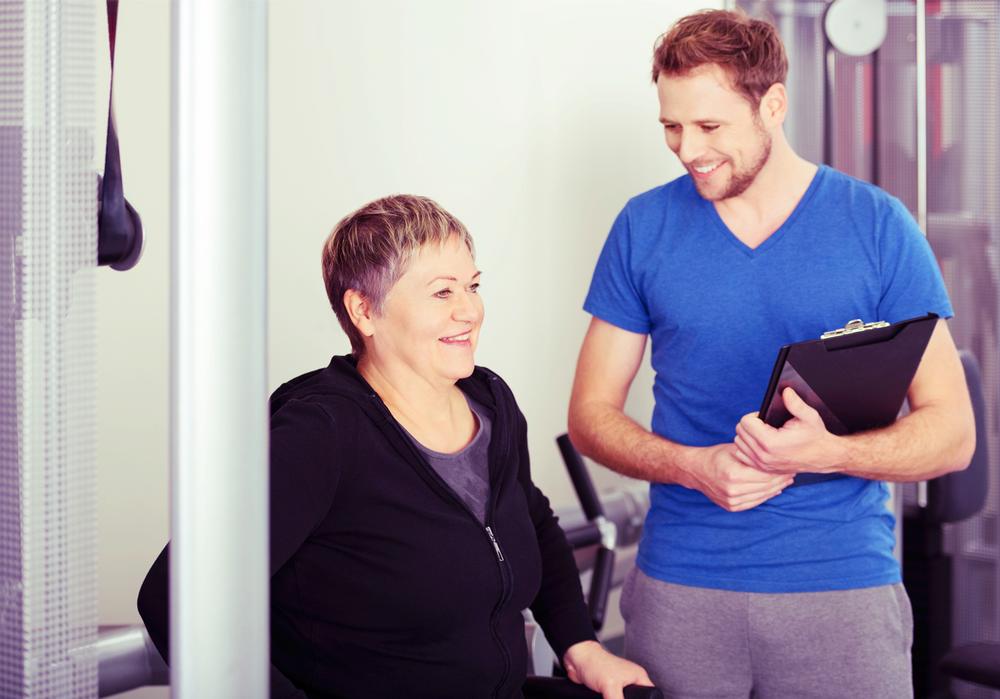
Instructors can use exercise data to hold members accountable for their health and fitness journey / WWW.SHUTTERSTOCK.COM/ RACORN
The world of exercise referral can be a confusing place for fitness operators. The basic principle was established in the early 90s, and since then a raft of qualifications and competencies have been developed to ensure safe and effective programming for clients with a range of medical conditions.
But setting up an effective exercise referral scheme is a complex, detailed task. So what are the key points operators need to consider before embarking on such a scheme?
Establish a relationship Stuart Stokes, commercial director at Refer-all – which specialises in software solutions for exercise referral – comments: “It’s crucial to maintain contact with key organisations all year round. Councillors are increasingly important in terms of influencing funding.
“From October until the beginning of January, local authorities will be thinking about their main budgets. If you’re contemplating setting up a scheme, you need to have your evidence in place so you can ‘battle’ for funding.
“There are two crucial documents: PH54, the public health guidance; and the Standard Evaluation Framework for Physical Activity Interventions, downloadable from www.nice.org.uk.”
Assess local provision You also need to know what’s already in place. Existing local schemes can be identified via the public health team at the local authority. If there’s already an exercise referral scheme in the area, it’s important to ascertain the level of provision, as other facilities can often be added to enhance the local offering to patients. If no scheme is in place, it’s essential to review the Joint Strategic Needs Assessment (JSNA) for the local authority – a report that highlights the council’s priorities. Once you’ve researched this, contact the public health team to discuss your proposed scheme.
“Where NHS funding is involved, the service has to be free at the point of service,” says Stokes. “Also, make it clear that there’s a commitment to sharing information and data with them, as this is crucial for evaluation and monitoring.”
Data is king Stokes continues: “Data collection is paramount. Why would you run a programme where it isn’t possible to evidence what you’re doing? It’s vital to make patients aware that data is required prior to the start of the schemes, otherwise it can’t be adequately evaluated: to perpetuate schemes and help them thrive, patients need to provide data before, during and after their participation.
“Data from exercise referral schemes is changing constantly: it needs to be current and readily available so it can be used for frequent reporting. This must include the ability to show increases in activity levels, changes in behaviour and also, although not essential, any improvements in wellbeing.
“Standardised and validated questionnaires are key for this. The Standard Evaluation Framework for Physical Activity Interventions gives examples of questionnaires and means to monitor activity levels.
“This data must be made available to the commissioner, but it’s also important it’s made available to fitness instructors, so they can reinforce improvements with patients, empowering them and enhancing patient retention.”
And this is increasingly possible thanks to the networked technology that’s incorporated into gym equipment from a number of leading manufacturers. This allows instructors to keep track of a member’s progress and provide them with goals to achieve – all of which means the member can be held accountable for their health and fitness journey, and helps ensure they’re invested in their own improvement or recovery.
Invest in your staff Nigel Wallace, client services director at Lifetime Training, says: “Within the fitness industry, our technical qualifications are relatively good – but these are less relevant when supporting individuals who have not exercised previously. It’s not about telling them what to do in a prescriptive sense. We need to help steer them to rationalise their decisions – a very different process which, if performed well, has a massive impact on a client’s motivation to buy into exercise.
“It’s a completely different style of conversation from the industry’s standard approach. However, the good news is that these skills are very trainable, and have the potential to be the game-changer we’ve all been looking for.
“This is why we developed our Certificate in Physical Activity Coaching, which is currently in pilot phase, to equip health and fitness professionals with the skills to engage less active people in person-centred motivating and supportive conversations about becoming and staying more active.
“Crucially, it’s underpinned by robust scientific theories such as self-determination and self-efficacy, and is informed by the latest research findings from behaviour change and proven physical activity interventions.
“This approach will create the opportunity to become more aligned with the way the healthcare sector operates, and this will really raise the bar – not only in terms of the fitness sector’s credibility, but crucially the number of people we support to be long-term active.”
Accessing funding Stokes concludes: “The face of leisure is changing, with health playing more of a role than ever before. To truly secure the future of exercise referral, I believe we need to standardise programme delivery and data collection across the UK, so the same things are being measured, collected and reported on. This could enable us to bring down mainstream funding in a similar way to smoking cessation and weight management programmes.”
David Stalker, the outgoing CEO of ukactive, concurs: “As an industry, we must continue to build the evidence base that proves the benefits to patients.
“It’s crucial to collate clear and quantitative evidence that proves exercise referral delivers the promised results and leads to health improvements. This will lead to increased funding and a stronger validity for our profession.”
In a bid to demystify the exercise referral process, ukactive and fitness equipment manufacturer Precor recently collaborated on a comprehensive Five step guide to public health commissioning guide. The booklet identifies key authorities and organisations, offers practical guidance on the commissioning of services, and provides insight into local commissioners’ priorities.
Jonathan Griffiths, marketing manager for Precor UK, explains the rationale for developing the guide: “With two-thirds of the population not meeting recommended levels of activity, exercise referrals are increasing. Operators can seize the opportunity to grow membership while playing a significant role in encouraging more people to be active. Precor’s aim is to help operators understand how they can become a referral scheme provider, and the involvement required.”
The guide can be downloaded in full at www2.precor.com/public-health-report-2014
THE COMPLEXITIES OF DATA Over the last five years, Camden Sport & Physical Activity Service (CSPAS) has received nearly 6,000 referrals into its exercise referral scheme. Phillip Gill, exercise on referral lead at CSPAS, says: “Our programme is funded by Camden and Islington Public Health and has been set up to meet local health needs. This includes the broad aim of managing and preventing health conditions. Increasingly, we work in conjunction with other lifestyle services to offer a broader provision, including weight management, cardiac rehab, smoking cessation or substance abuse services.”
Data collection Gill adds: “Camden and Islington Public Health prescribes the data we need to collect, alongside the NICE guidelines on data collection. This includes everything from conditions our patients present to their weight, height, BMI and blood pressure. We evaluate the success of the scheme in terms of how many patients complete it, how many leave early and how many were unable to start.
“Patients’ levels of physical activity are assessed at the start and the end. An exit strategy is also included to assess what physical activity they will continue after concluding the scheme, as well as a 12-month follow up to see if they are continuing to meet their targets.
“Other data includes postcodes – which may illustrate if they live in a deprived area – age, employment status and ethnicity. This allows our funders to see if we’re meeting the priorities of the scheme, whether that’s to offer it broadly or to particular hard-to-reach groups.
“The amount of data we need to collect is a challenge, particularly in relation to our patients who often perceive they have to provide a lot of personal information. It’s crucial they understand that we need this data to evaluate what impact we have and to continue to secure funding.”
Changing behaviour Using Refer-all’s online exercise referral management system, the team has been able to share performance information with senior management and public health. This includes the number of referrals received, how quickly patients are contacted, how many start the programme, when they begin exercising, how long it takes them to complete the programme and whether they are being contacted if they aren’t attending. Follow-up is also completed to see how many patients are continuing to exercise, and how often, after completing the programme.
Gill says: “Our purpose is to help people who live with long-term medical conditions to increase their levels of physical activity. If, once the intervention has ended, we haven’t changed their behaviour, we won’t have met our goal. So a key element is to help patients understand how exercise can be beneficial for them.
“It’s not just about going to the gym. We look holistically at our patients to increase their levels of physical activity generally. We also look to correct any misapprehensions they might have around this and to build their confidence. By engaging in physical activity, our patients improve their health, both physically and mentally, but we need to support them to meet their wide range of needs.”
Exercise referral offers operators a great opportunity to grow membership and at the same time get more people active / WWW.SHUTTERSTOCK.COM
Lifetime’s certificate teaches skills to engage the less active / WWW.SHUTTERSTOCK.COM
Instructors can use exercise data to hold members accountable for their health and fitness journey / WWW.SHUTTERSTOCK.COM/ RACORN
The world of exercise referral can be a confusing place for fitness operators. The basic principle was established in the early 90s, and since then a raft of qualifications and competencies have been developed to ensure safe and effective programming for clients with a range of medical conditions.
But setting up an effective exercise referral scheme is a complex, detailed task. So what are the key points operators need to consider before embarking on such a scheme?
Establish a relationship Stuart Stokes, commercial director at Refer-all – which specialises in software solutions for exercise referral – comments: “It’s crucial to maintain contact with key organisations all year round. Councillors are increasingly important in terms of influencing funding.
“From October until the beginning of January, local authorities will be thinking about their main budgets. If you’re contemplating setting up a scheme, you need to have your evidence in place so you can ‘battle’ for funding.
“There are two crucial documents: PH54, the public health guidance; and the Standard Evaluation Framework for Physical Activity Interventions, downloadable from www.nice.org.uk.”
Assess local provision You also need to know what’s already in place. Existing local schemes can be identified via the public health team at the local authority. If there’s already an exercise referral scheme in the area, it’s important to ascertain the level of provision, as other facilities can often be added to enhance the local offering to patients. If no scheme is in place, it’s essential to review the Joint Strategic Needs Assessment (JSNA) for the local authority – a report that highlights the council’s priorities. Once you’ve researched this, contact the public health team to discuss your proposed scheme.
“Where NHS funding is involved, the service has to be free at the point of service,” says Stokes. “Also, make it clear that there’s a commitment to sharing information and data with them, as this is crucial for evaluation and monitoring.”
Data is king Stokes continues: “Data collection is paramount. Why would you run a programme where it isn’t possible to evidence what you’re doing? It’s vital to make patients aware that data is required prior to the start of the schemes, otherwise it can’t be adequately evaluated: to perpetuate schemes and help them thrive, patients need to provide data before, during and after their participation.
“Data from exercise referral schemes is changing constantly: it needs to be current and readily available so it can be used for frequent reporting. This must include the ability to show increases in activity levels, changes in behaviour and also, although not essential, any improvements in wellbeing.
“Standardised and validated questionnaires are key for this. The Standard Evaluation Framework for Physical Activity Interventions gives examples of questionnaires and means to monitor activity levels.
“This data must be made available to the commissioner, but it’s also important it’s made available to fitness instructors, so they can reinforce improvements with patients, empowering them and enhancing patient retention.”
And this is increasingly possible thanks to the networked technology that’s incorporated into gym equipment from a number of leading manufacturers. This allows instructors to keep track of a member’s progress and provide them with goals to achieve – all of which means the member can be held accountable for their health and fitness journey, and helps ensure they’re invested in their own improvement or recovery.
Invest in your staff Nigel Wallace, client services director at Lifetime Training, says: “Within the fitness industry, our technical qualifications are relatively good – but these are less relevant when supporting individuals who have not exercised previously. It’s not about telling them what to do in a prescriptive sense. We need to help steer them to rationalise their decisions – a very different process which, if performed well, has a massive impact on a client’s motivation to buy into exercise.
“It’s a completely different style of conversation from the industry’s standard approach. However, the good news is that these skills are very trainable, and have the potential to be the game-changer we’ve all been looking for.
“This is why we developed our Certificate in Physical Activity Coaching, which is currently in pilot phase, to equip health and fitness professionals with the skills to engage less active people in person-centred motivating and supportive conversations about becoming and staying more active.
“Crucially, it’s underpinned by robust scientific theories such as self-determination and self-efficacy, and is informed by the latest research findings from behaviour change and proven physical activity interventions.
“This approach will create the opportunity to become more aligned with the way the healthcare sector operates, and this will really raise the bar – not only in terms of the fitness sector’s credibility, but crucially the number of people we support to be long-term active.”
Accessing funding Stokes concludes: “The face of leisure is changing, with health playing more of a role than ever before. To truly secure the future of exercise referral, I believe we need to standardise programme delivery and data collection across the UK, so the same things are being measured, collected and reported on. This could enable us to bring down mainstream funding in a similar way to smoking cessation and weight management programmes.”
David Stalker, the outgoing CEO of ukactive, concurs: “As an industry, we must continue to build the evidence base that proves the benefits to patients.
“It’s crucial to collate clear and quantitative evidence that proves exercise referral delivers the promised results and leads to health improvements. This will lead to increased funding and a stronger validity for our profession.”
In a bid to demystify the exercise referral process, ukactive and fitness equipment manufacturer Precor recently collaborated on a comprehensive Five step guide to public health commissioning guide. The booklet identifies key authorities and organisations, offers practical guidance on the commissioning of services, and provides insight into local commissioners’ priorities.
Jonathan Griffiths, marketing manager for Precor UK, explains the rationale for developing the guide: “With two-thirds of the population not meeting recommended levels of activity, exercise referrals are increasing. Operators can seize the opportunity to grow membership while playing a significant role in encouraging more people to be active. Precor’s aim is to help operators understand how they can become a referral scheme provider, and the involvement required.”
The guide can be downloaded in full at www2.precor.com/public-health-report-2014
THE COMPLEXITIES OF DATA Over the last five years, Camden Sport & Physical Activity Service (CSPAS) has received nearly 6,000 referrals into its exercise referral scheme. Phillip Gill, exercise on referral lead at CSPAS, says: “Our programme is funded by Camden and Islington Public Health and has been set up to meet local health needs. This includes the broad aim of managing and preventing health conditions. Increasingly, we work in conjunction with other lifestyle services to offer a broader provision, including weight management, cardiac rehab, smoking cessation or substance abuse services.”
Data collection Gill adds: “Camden and Islington Public Health prescribes the data we need to collect, alongside the NICE guidelines on data collection. This includes everything from conditions our patients present to their weight, height, BMI and blood pressure. We evaluate the success of the scheme in terms of how many patients complete it, how many leave early and how many were unable to start.
“Patients’ levels of physical activity are assessed at the start and the end. An exit strategy is also included to assess what physical activity they will continue after concluding the scheme, as well as a 12-month follow up to see if they are continuing to meet their targets.
“Other data includes postcodes – which may illustrate if they live in a deprived area – age, employment status and ethnicity. This allows our funders to see if we’re meeting the priorities of the scheme, whether that’s to offer it broadly or to particular hard-to-reach groups.
“The amount of data we need to collect is a challenge, particularly in relation to our patients who often perceive they have to provide a lot of personal information. It’s crucial they understand that we need this data to evaluate what impact we have and to continue to secure funding.”
Changing behaviour Using Refer-all’s online exercise referral management system, the team has been able to share performance information with senior management and public health. This includes the number of referrals received, how quickly patients are contacted, how many start the programme, when they begin exercising, how long it takes them to complete the programme and whether they are being contacted if they aren’t attending. Follow-up is also completed to see how many patients are continuing to exercise, and how often, after completing the programme.
Gill says: “Our purpose is to help people who live with long-term medical conditions to increase their levels of physical activity. If, once the intervention has ended, we haven’t changed their behaviour, we won’t have met our goal. So a key element is to help patients understand how exercise can be beneficial for them.
“It’s not just about going to the gym. We look holistically at our patients to increase their levels of physical activity generally. We also look to correct any misapprehensions they might have around this and to build their confidence. By engaging in physical activity, our patients improve their health, both physically and mentally, but we need to support them to meet their wide range of needs.”
Exercise referral offers operators a great opportunity to grow membership and at the same time get more people active / WWW.SHUTTERSTOCK.COM
Lifetime’s certificate teaches skills to engage the less active / WWW.SHUTTERSTOCK.COM
London Museum will open four new food and drink destinations when it launches its new home
at Smithfield on 28 November, making hospitality a central part of the visitor experience at one
of the capital's biggest cultural openings of the year.
OMA has completed a major transformation of New York's New Museum, creating a larger
cultural campus that combines expanded exhibition spaces with learning, performance,
hospitality and public programming.
A US$50 million (£44.2 million, €51.2 million) transformation of Chicago's historic McCormick
Mansion has created a new destination that combines live magic, immersive theatre, dining and
private membership under one roof.
The Montana Historical Society has officially celebrated the opening of its new Montana
Heritage
Center, a US$107 million (£79 million, €92 million) destination that combines immersive
storytelling with cutting-edge audiovisual technology to bring the sta
San Antonio Zoo has reported a US$283 million economic impact for 2025, following a decade-
long transformation programme that has seen almost US$200 million invested into the Texas
attraction.
Plans for the AU$180 million redevelopment of Reef HQ Aquarium in Townsville, Australia, are
progressing, with the project set to transform the attraction into a global centre for reef
education and conservation.
Abu Dhabi-based investment firm Mubadala Capital has made a binding, fully financed
€1 billion
offer to acquire Pierre and Vacances SA, the European holiday resort operator behind the
continental European Center Parcs business.
Disney has reaffirmed its commitment to investing US$30 billion in its US parks and cruise
business by 2033, using new America250 celebrations to underline the role its attractions play
in supporting jobs, tourism and economic growth.
Expo 2030 Riyadh is being planned as a permanent visitor destination, with organisers
confirming the six-million-square-metre site will become a Global Village after the event closes.
The owner of one of Australia's best-known waterparks has acquired a major competitor,
creating a new attractions business spanning two of the country's largest visitor destinations.