Question everything, learn by doing, and show, don’t tell is the philosophy at
The Exploratorium, which reopened in April at a new site, three times its original size
By Linda Dackman | Published in Attractions Management 2013 issue 2
Visitors can take centre stage within a kaleidoscope in the Tinkering Studio, which encourages people to think with their hands
What is the Exploratorium? The Exploratorium is an internationally celebrated museum based in San Francisco, USA. It’s considered the prototype for participatory museums around the world.
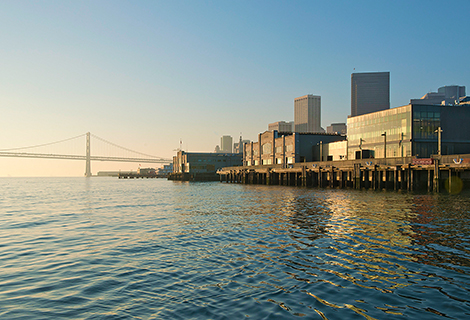
Its original home, the Palace of Fine Arts, closed in January 2013. Work began on its new home on Pier 15 on San Francisco’s Embarcadero in October 2010 and it opened on April 17, 2013.
What was the inspiration? The Exploratorium was originally founded in 1969 by physicist and educator Frank Oppenheimer. He was a gifted experimental physicist and Renaissance man, who worked on the Manhattan project [an American research and development project that produced the first atomic bombs during World War II] with his brother J Robert Oppenheimer, known as the father of the atom bomb.
Oppenheimer was convinced that museums of science and technology were vitally needed, both for the general public and as a supplement for science teaching curricula at all levels. He was invited to do the initial planning for a new branch of the Smithsonian, but turned it down to work on what he called his “San Francisco project”. In 1969, with no publicity or fanfare, the Exploratorium opened its doors with the aim of showing that museums are educational centres.
From teacher professional development, to exhibit development, to the notion of informal science learning outside of schools, the Exploratorium first disseminated its ideas through open source sharing. Oppenheimer’s ideas continue to resonate in the museum and science education fields even now, 27 years after his death.
What is its aim? At the Exploratorium, the goal is to change the way the world learns.
By combining science, art and perception, we’ve created active, personal explorations of our natural, social and digital worlds.
The Exploratorium’s philosophy is inquiry-based and experiential: Question everything. Learn by doing. Show, don’t tell. And the best answer is often another question. By sharing this philosophy and our knowledge and programmes with museums and schools the world over, it has produced some of the world’s most innovative exhibits, as well as generations of critical thinkers, with more still to come.
Why was a new site opened? Principally, we ran out of space to do our work. The new location places the Exploratorium at the heart of the San Francisco waterfront, at the gateway to the City and at the nexus of public transit, radically improving educational access to all. Previously, two out of three teachers had to be turned away from the Exploratorium’s nationally recognised Teacher Institute – considered one of the premier professional training opportunities for K-12 science and maths teachers in the Bay Area and beyond. The new site at Pier 15 is triple the size of its predecessor, meaning there’s room for three times the number of teachers who come to learn. The Learning Commons, Learning Studio and Forum provide additional places for the general community and educational professionals to gather and learn.
How does it differ to the original? The original site was housed in an aeroplane hanger-type hall, which was one long, continuous space. Largely without walls and with no windows to the outside, visitors wandered in a vast, loosely organised collection of exhibits – some likened it to a scientific penny arcade.
The new space, which retains the laboratory feel of the Exploratorium, houses six separate galleries.
For the first time, exhibits are featured outdoors, taking advantage of the city and bay to encourage visitors to observe and engage in their environments like never before.
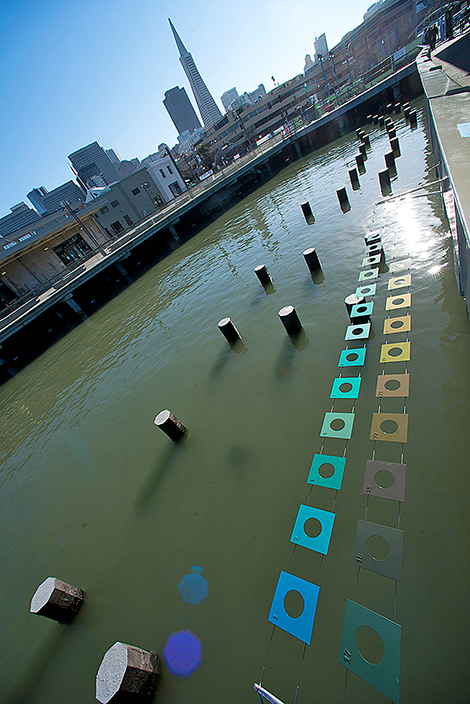
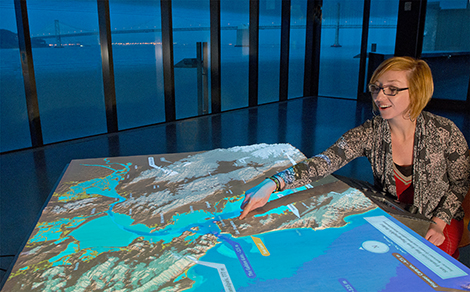
The new site has the Bay Observatory, designed to allow visitors to explore the science of the bay, the landscape and the human impacts that have shaped the Bay Area. The new Exploratorium also offers an Outdoor Gallery that includes 1.5 acres of free, public, open space for visitors to enjoy the views and play with participatory exhibits tied to the surrounding environment.
What’s the new design? Designed by San Francisco-based EHDD Architecture, a leader in sustainable design, the new Exploratorium is green inside and out. Taking advantage of the piers’ location on the bay, the museum offsets as much energy as possible with a 1.3 megawatt photovoltaic array on the roof, an innovative bay water heating and cooling system and other components that contribute to the Exploratorium’s goal of being a LEED Gold, net-zero energy facility – probably the largest net-zero energy museum in the USA, or even the world.
Refurbishing and seismically upgrading a historic pier that spans the length of almost three football fields over the water is a major engineering feat. For the rehabilitation of Pier 15, the asphalt parking lot between Piers 15 and 17 was removed. This provides a civic space on the Embarcadero, with the newly exposed bay taking centre stage down the middle between the two piers – open water traversed by two pedestrian bridges. Piles underneath the bay had to be driven to a depth of 160ft (49m) to replace, or repair and seismically upgrade, hundreds of dilapidated pilings and the substructure, which date back to the early 20th century.
At the same time, upgrades to the interior of Pier 15, preserving its truss structure, which covers the 820ft (250m)-length of the pier. The interior of the museum has large exhibit galleries, separated by buildings within the main building that are set in from the walls to take advantage of natural light, reducing the energy needed to power the facility during the day. In addition, recycled and low-emitting materials were used, along with certified wood and high-performance glass to reduce heat gain. As a historic preservation, the building was always conceived as a backdrop for the exhibits, not as competition for them.
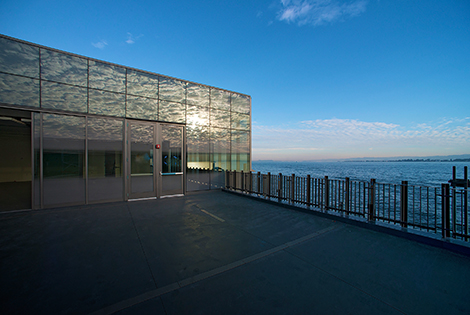
The Observatory Building is the only completely new construction on the piers. It stands at the San Francisco Bay end of Pier 15 and is a mostly glass structure – conceived like an aperture – through which spectacular views of both the city and the bay are incorporated into the exhibits.
All aspects of the museum’s design and construction contribute to the net-zero energy goal. True to the spirit of the Exploratorium, and the nature of net-zero, achieving such an ambitious degree of energy-efficiency will require monitoring and tinkering over the next couple of years. The entire undertaking will be a real-time educational exhibit, with live energy use and photovoltaic production on public display.
Where’s the content sourced? The Exploratorium creates all its own exhibits and also exports them through Exploratorium Global Studios.
This is an entrepreneurial endeavour that vastly expands the museum’s impact, advancing its mission to change the way the world learns. It shares creative capital, expertise, programmes and exhibits in innovative ways tailored to the specific needs of a project, organisation or government. It works on a wide array of collaborations around the world through partnerships with foreign governments, universities, cultural institutions, businesses, and municipalities.
Does the content differ to the original? As always, exhibits will retain the familiar homemade authentic quality for which the Exploratorium is famous, but the additional space allows it to venture into new content areas.
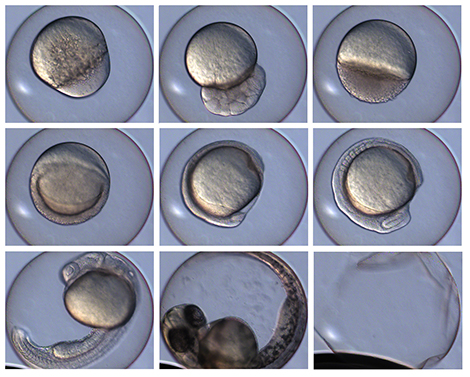
These include: human behaviour and the science of sharing; the beauty and complexity of life through interactive investigations of living organisms, fertilisation, zebrafish embryo development or cutting stem cell research; the opportunity for visitors to build, make, hack, create and invent their own exhibits; and the Bay Observatory.
What are the key pieces? With more than 150 new exhibits and 600 in total, everyone has their favourite. Visitors can taste the salinity of San Francisco Bay; watch an upside-down world in the Camera Obscura; and interact in real-time with invisible life – teeny-tiny plankton that produce almost half the oxygen we breathe.
What’s in the outdoor gallery? Visitors can investigate exhibits about water, fog, wind, rain, daily cycles of the sun, the relationships of humans to the Embarcadero landscape and more.
Large-scale artworks interact with the environment, as well as human scale exhibits, such as Bay Windows.
What are the future plans? We have control of Pier 17 next door, so can expand in the future.
Read more from this issue of Attractions Management magazine
View contents of Attractions Management 2013 issue 2
Editor's letter : Dealing with protests
The industry attracts protesters for the
same reason it attracts sponsors – it's
high profile and extremely engaged with
its audience
Profile: Tim Fisher
The CEO of Village Roadshow Theme
Parks reveals how the company's
defied the double-dip global recession
with record attendances to its existing
parks and three more due to open
Museum: The big idea
San Francisco's Exploratorium reopened
in April in a venue three times its original
size. The museum's Linda Dackman
shows how the new space is being used
Aquarium: Den Blå Planet
The CEO and designer describe
Denmark's new aquarium, which is
shaped like a whirlpool and has 20,000
animals and up to 8,000 visitors a day
New opening: Thinking inside the box
The Perot Museum is shaped like a cube
and described as the next generation
of nature and science museums. CEO
Nicole Small explains how and why
Restoration: Home improvement
The Historic Dyess Colony: Boyhood
Home of Johnny Cash project is
restoring the famous singer's house,
educating visitors about the New
Deal era and revitalising the area
Planetarium: The sky at night
Two dome theatres are among the
highlights of Canada's new Rio Tinto
Alcan Planetarium, which shows what's
going on in the universe as it happens
Social media: Smart moves
Find out how to use digital opportunities
beyond your website in a new series
by social media expert Kelly Wheeler
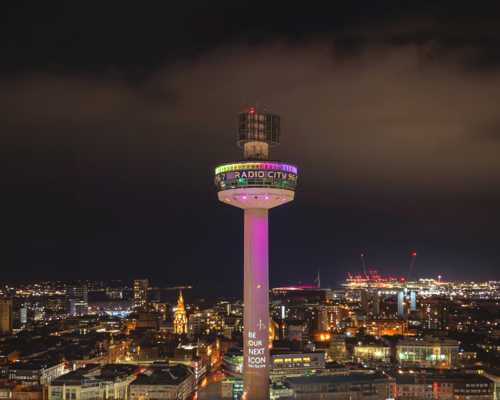
An opportunity to reimagine one of the UK’s most recognisable towers has been formally
opened by Rivington Hark, as St Johns Beacon invites operators and partners to shape its
next phase. [more...]
Question everything, learn by doing, and show, don’t tell is the philosophy at
The Exploratorium, which reopened in April at a new site, three times its original size
By Linda Dackman | Published in Attractions Management 2013 issue 2
Visitors can take centre stage within a kaleidoscope in the Tinkering Studio, which encourages people to think with their hands
What is the Exploratorium? The Exploratorium is an internationally celebrated museum based in San Francisco, USA. It’s considered the prototype for participatory museums around the world.
Its original home, the Palace of Fine Arts, closed in January 2013. Work began on its new home on Pier 15 on San Francisco’s Embarcadero in October 2010 and it opened on April 17, 2013.
What was the inspiration? The Exploratorium was originally founded in 1969 by physicist and educator Frank Oppenheimer. He was a gifted experimental physicist and Renaissance man, who worked on the Manhattan project [an American research and development project that produced the first atomic bombs during World War II] with his brother J Robert Oppenheimer, known as the father of the atom bomb.
Oppenheimer was convinced that museums of science and technology were vitally needed, both for the general public and as a supplement for science teaching curricula at all levels. He was invited to do the initial planning for a new branch of the Smithsonian, but turned it down to work on what he called his “San Francisco project”. In 1969, with no publicity or fanfare, the Exploratorium opened its doors with the aim of showing that museums are educational centres.
From teacher professional development, to exhibit development, to the notion of informal science learning outside of schools, the Exploratorium first disseminated its ideas through open source sharing. Oppenheimer’s ideas continue to resonate in the museum and science education fields even now, 27 years after his death.
What is its aim? At the Exploratorium, the goal is to change the way the world learns.
By combining science, art and perception, we’ve created active, personal explorations of our natural, social and digital worlds.
The Exploratorium’s philosophy is inquiry-based and experiential: Question everything. Learn by doing. Show, don’t tell. And the best answer is often another question. By sharing this philosophy and our knowledge and programmes with museums and schools the world over, it has produced some of the world’s most innovative exhibits, as well as generations of critical thinkers, with more still to come.
Why was a new site opened? Principally, we ran out of space to do our work. The new location places the Exploratorium at the heart of the San Francisco waterfront, at the gateway to the City and at the nexus of public transit, radically improving educational access to all. Previously, two out of three teachers had to be turned away from the Exploratorium’s nationally recognised Teacher Institute – considered one of the premier professional training opportunities for K-12 science and maths teachers in the Bay Area and beyond. The new site at Pier 15 is triple the size of its predecessor, meaning there’s room for three times the number of teachers who come to learn. The Learning Commons, Learning Studio and Forum provide additional places for the general community and educational professionals to gather and learn.
How does it differ to the original? The original site was housed in an aeroplane hanger-type hall, which was one long, continuous space. Largely without walls and with no windows to the outside, visitors wandered in a vast, loosely organised collection of exhibits – some likened it to a scientific penny arcade.
The new space, which retains the laboratory feel of the Exploratorium, houses six separate galleries.
For the first time, exhibits are featured outdoors, taking advantage of the city and bay to encourage visitors to observe and engage in their environments like never before.
The new site has the Bay Observatory, designed to allow visitors to explore the science of the bay, the landscape and the human impacts that have shaped the Bay Area. The new Exploratorium also offers an Outdoor Gallery that includes 1.5 acres of free, public, open space for visitors to enjoy the views and play with participatory exhibits tied to the surrounding environment.
What’s the new design? Designed by San Francisco-based EHDD Architecture, a leader in sustainable design, the new Exploratorium is green inside and out. Taking advantage of the piers’ location on the bay, the museum offsets as much energy as possible with a 1.3 megawatt photovoltaic array on the roof, an innovative bay water heating and cooling system and other components that contribute to the Exploratorium’s goal of being a LEED Gold, net-zero energy facility – probably the largest net-zero energy museum in the USA, or even the world.
Refurbishing and seismically upgrading a historic pier that spans the length of almost three football fields over the water is a major engineering feat. For the rehabilitation of Pier 15, the asphalt parking lot between Piers 15 and 17 was removed. This provides a civic space on the Embarcadero, with the newly exposed bay taking centre stage down the middle between the two piers – open water traversed by two pedestrian bridges. Piles underneath the bay had to be driven to a depth of 160ft (49m) to replace, or repair and seismically upgrade, hundreds of dilapidated pilings and the substructure, which date back to the early 20th century.
At the same time, upgrades to the interior of Pier 15, preserving its truss structure, which covers the 820ft (250m)-length of the pier. The interior of the museum has large exhibit galleries, separated by buildings within the main building that are set in from the walls to take advantage of natural light, reducing the energy needed to power the facility during the day. In addition, recycled and low-emitting materials were used, along with certified wood and high-performance glass to reduce heat gain. As a historic preservation, the building was always conceived as a backdrop for the exhibits, not as competition for them.
The Observatory Building is the only completely new construction on the piers. It stands at the San Francisco Bay end of Pier 15 and is a mostly glass structure – conceived like an aperture – through which spectacular views of both the city and the bay are incorporated into the exhibits.
All aspects of the museum’s design and construction contribute to the net-zero energy goal. True to the spirit of the Exploratorium, and the nature of net-zero, achieving such an ambitious degree of energy-efficiency will require monitoring and tinkering over the next couple of years. The entire undertaking will be a real-time educational exhibit, with live energy use and photovoltaic production on public display.
Where’s the content sourced? The Exploratorium creates all its own exhibits and also exports them through Exploratorium Global Studios.
This is an entrepreneurial endeavour that vastly expands the museum’s impact, advancing its mission to change the way the world learns. It shares creative capital, expertise, programmes and exhibits in innovative ways tailored to the specific needs of a project, organisation or government. It works on a wide array of collaborations around the world through partnerships with foreign governments, universities, cultural institutions, businesses, and municipalities.
Does the content differ to the original? As always, exhibits will retain the familiar homemade authentic quality for which the Exploratorium is famous, but the additional space allows it to venture into new content areas.
These include: human behaviour and the science of sharing; the beauty and complexity of life through interactive investigations of living organisms, fertilisation, zebrafish embryo development or cutting stem cell research; the opportunity for visitors to build, make, hack, create and invent their own exhibits; and the Bay Observatory.
What are the key pieces? With more than 150 new exhibits and 600 in total, everyone has their favourite. Visitors can taste the salinity of San Francisco Bay; watch an upside-down world in the Camera Obscura; and interact in real-time with invisible life – teeny-tiny plankton that produce almost half the oxygen we breathe.
What’s in the outdoor gallery? Visitors can investigate exhibits about water, fog, wind, rain, daily cycles of the sun, the relationships of humans to the Embarcadero landscape and more.
Large-scale artworks interact with the environment, as well as human scale exhibits, such as Bay Windows.
What are the future plans? We have control of Pier 17 next door, so can expand in the future.
Read more from this issue of Attractions Management magazine
View contents of Attractions Management 2013 issue 2
Editor's letter : Dealing with protests
The industry attracts protesters for the
same reason it attracts sponsors – it's
high profile and extremely engaged with
its audience
Profile: Tim Fisher
The CEO of Village Roadshow Theme
Parks reveals how the company's
defied the double-dip global recession
with record attendances to its existing
parks and three more due to open
Museum: The big idea
San Francisco's Exploratorium reopened
in April in a venue three times its original
size. The museum's Linda Dackman
shows how the new space is being used
Aquarium: Den Blå Planet
The CEO and designer describe
Denmark's new aquarium, which is
shaped like a whirlpool and has 20,000
animals and up to 8,000 visitors a day
New opening: Thinking inside the box
The Perot Museum is shaped like a cube
and described as the next generation
of nature and science museums. CEO
Nicole Small explains how and why
Restoration: Home improvement
The Historic Dyess Colony: Boyhood
Home of Johnny Cash project is
restoring the famous singer's house,
educating visitors about the New
Deal era and revitalising the area
Planetarium: The sky at night
Two dome theatres are among the
highlights of Canada's new Rio Tinto
Alcan Planetarium, which shows what's
going on in the universe as it happens
Social media: Smart moves
Find out how to use digital opportunities
beyond your website in a new series
by social media expert Kelly Wheeler
Movie Park Germany has opened a new Paramount Pictures-themed attraction as part of its 30th
anniversary celebrations, using immersive storytelling and adaptive reuse to reinforce the park’s
longstanding “Hollywood in Germany” positioning.
Therme Manchester’s 28-acre development, which will include interconnected glass pavilions
that measure 65,000sq m, will be the largest bathing and wellbeing attraction in the world once
complete, according to prof David Russell, CEO of Therme UK.
Efteling has opened Hooghmoed, a new family drop tower designed to broaden the appeal of its
recently launched Sirene Island themed area and introduce younger visitors to thrill attractions.
A proposed Puy du Fou development near Bicester and Universal Destinations and Experiences’
planned resort in Bedford are emerging as part of a wider transformation of the Oxford–
Cambridge Growth Corridor into a major centre for UK leisure and tourism inv
Shedd Aquarium has opened the Immersion Theater developed in partnership with SimEx-
Iwerks, as part of a wider strategy to enhance the guest experience and create additional
revenue opportunities.
The UK government has announced a temporary reduction in VAT on visitor attractions and
children’s meals as part of a summer cost-of-living support package designed to stimulate the
visitor economy and encourage family days out.
As designer Yinka Ilori prepares for his first solo gallery show in London, he speaks exclusively
to CLADmag about his mission to spread joy, the power of play, and his bold approach to using
colour (including the colours you won’t see in his work).
The government of Thailand is exploring plans for a THB300bn (£6.3bn, US$8.3bn)
entertainment complex in the country’s Eastern Economic Corridor (EEC), with officials
proposing a large-scale theme park and sports destination as part of a broader tourism and
economic development strategy.
Royal Caribbean has revealed its Hero of the Seas cruise ship, home to the most pools at sea
(nine), and a record-breaking 28 dining venues, as well as attractions including a waterpark
with two new family raft slides.
An opportunity to reimagine one of the UK’s most recognisable towers has been formally
opened by Rivington Hark, as St Johns Beacon invites operators and partners to shape its
next phase. [more...]