Microsoft HoloLens will have 'major implications' for heritage and architecture
POSTED 22 Oct 2015 . BY Jak Phillips
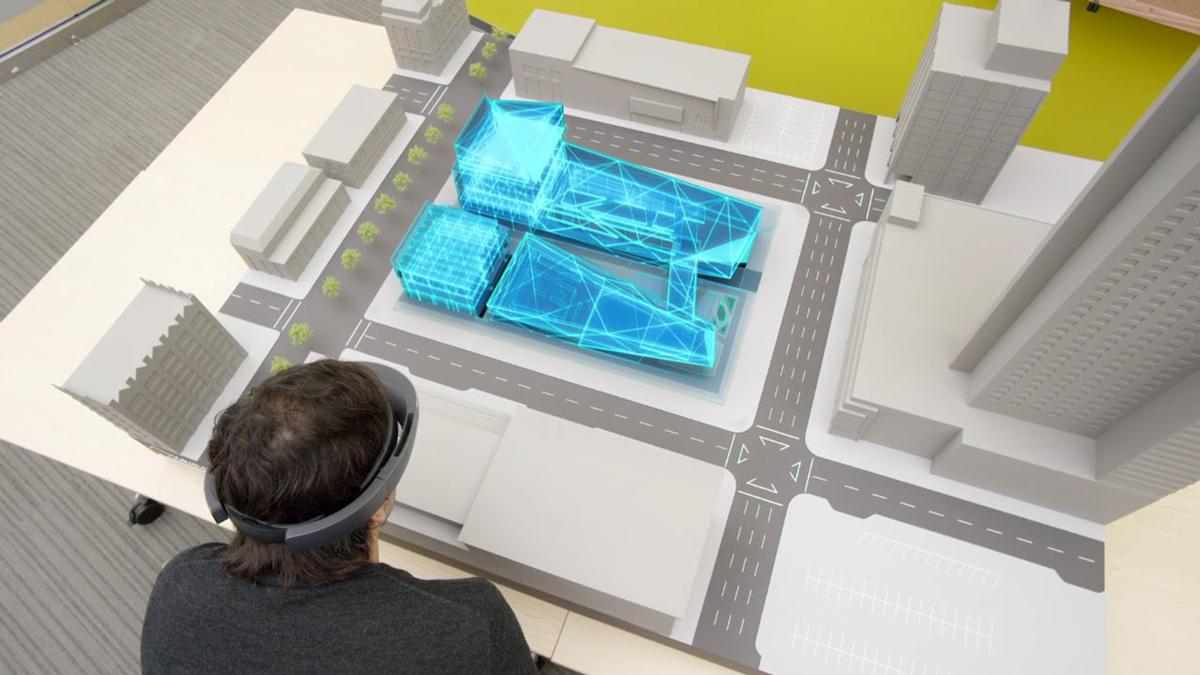
The HoloLens device can extend interaction with 3D models beyond the confines of a 2D computer screen
An expert in the field of architecture and heritage has said that Microsoft’s HoloLens will play a huge part in the sector in the not-too-distant future.
Speaking at CyArk’s annual summit, Adrian Ferrier – who heads up product development in visual intelligence solutions for California-based mapping company Trimble Navigation – envisioned an exciting future.
He said when applied to the world of architecture, engineering and construction, the HoloLens device can extend interaction with 3D models beyond the confines of a 2D computer screen, creating new ways for both those trying to save heritage and those looking at its history to consume, interact and communicate with spatial data.
“It’s a transformational device that can communicate space, which is very important when you consider heritage and preservation,” said Ferrier. “You’re wearing this device and it has an understanding of the world around you, putting your information into the real world.
“It is also important for context. So there might be a missing column for example, which the HoloLens will then fill in, giving the user an understanding of what something used to look like, even if it has been partially or even completely destroyed.”
The benefits of the device don’t stop there. According to Trimble, the HoloLens technology is so advanced that eventually people will be able to virtually tour areas they could otherwise not, offering an exciting development of visitors and heritage professionals alike.With somebody wearing a HoloLens headset on a site, the data picked up by the device can then transmit to remote devices, essentially creating a virtual version of the person’s surroundings.
“Not only can it project onto the real world but it can also collect, meaning there are applications for data collection,” said Ferrier. “HoloLens will even offer remote location so a person off site will be able to join someone remotely using this augmented technology.”
Trimble has been working in collaboration with Microsoft on HoloLens since its announcement to the heritage sector.
“The collaboration allows us to explore ways to augment today’s technology with solutions that allow individuals to more effectively interpret and interact with physical and digital information and their spatial relationships, transforming how architects, engineers, contractors and owners work, said Ferrier. “In five years we’ll all be interactive in the world with this technology.”
OMA has completed a major transformation of New York's New Museum, creating a larger
cultural campus that combines expanded exhibition spaces with learning, performance,
hospitality and public programming.
A US$50 million (£44.2 million, €51.2 million) transformation of Chicago's historic McCormick
Mansion has created a new destination that combines live magic, immersive theatre, dining and
private membership under one roof.
The Montana Historical Society has officially celebrated the opening of its new Montana
Heritage
Center, a US$107 million (£79 million, €92 million) destination that combines immersive
storytelling with cutting-edge audiovisual technology to bring the sta
Microsoft HoloLens will have 'major implications' for heritage and architecture
POSTED 22 Oct 2015 . BY Jak Phillips
The HoloLens device can extend interaction with 3D models beyond the confines of a 2D computer screen
An expert in the field of architecture and heritage has said that Microsoft’s HoloLens will play a huge part in the sector in the not-too-distant future.
Speaking at CyArk’s annual summit, Adrian Ferrier – who heads up product development in visual intelligence solutions for California-based mapping company Trimble Navigation – envisioned an exciting future.
He said when applied to the world of architecture, engineering and construction, the HoloLens device can extend interaction with 3D models beyond the confines of a 2D computer screen, creating new ways for both those trying to save heritage and those looking at its history to consume, interact and communicate with spatial data.
“It’s a transformational device that can communicate space, which is very important when you consider heritage and preservation,” said Ferrier. “You’re wearing this device and it has an understanding of the world around you, putting your information into the real world.
“It is also important for context. So there might be a missing column for example, which the HoloLens will then fill in, giving the user an understanding of what something used to look like, even if it has been partially or even completely destroyed.”
The benefits of the device don’t stop there. According to Trimble, the HoloLens technology is so advanced that eventually people will be able to virtually tour areas they could otherwise not, offering an exciting development of visitors and heritage professionals alike.With somebody wearing a HoloLens headset on a site, the data picked up by the device can then transmit to remote devices, essentially creating a virtual version of the person’s surroundings.
“Not only can it project onto the real world but it can also collect, meaning there are applications for data collection,” said Ferrier. “HoloLens will even offer remote location so a person off site will be able to join someone remotely using this augmented technology.”
Trimble has been working in collaboration with Microsoft on HoloLens since its announcement to the heritage sector.
“The collaboration allows us to explore ways to augment today’s technology with solutions that allow individuals to more effectively interpret and interact with physical and digital information and their spatial relationships, transforming how architects, engineers, contractors and owners work, said Ferrier. “In five years we’ll all be interactive in the world with this technology.”
OMA has completed a major transformation of New York's New Museum, creating a larger
cultural campus that combines expanded exhibition spaces with learning, performance,
hospitality and public programming.
A US$50 million (£44.2 million, €51.2 million) transformation of Chicago's historic McCormick
Mansion has created a new destination that combines live magic, immersive theatre, dining and
private membership under one roof.
The Montana Historical Society has officially celebrated the opening of its new Montana
Heritage
Center, a US$107 million (£79 million, €92 million) destination that combines immersive
storytelling with cutting-edge audiovisual technology to bring the sta
San Antonio Zoo has reported a US$283 million economic impact for 2025, following a decade-
long transformation programme that has seen almost US$200 million invested into the Texas
attraction.
Plans for the AU$180 million redevelopment of Reef HQ Aquarium in Townsville, Australia, are
progressing, with the project set to transform the attraction into a global centre for reef
education and conservation.
+ More news
COMPANY PROFILES
instantprint We’re a Yorkshire-based online printer, founded
in 2009 by Adam Carnell and James Kinsella. [more...]
QubicaAMF UK QubicaAMF is the largest and most
innovative bowling equipment provider with
600 employees worldwi [more...]
IDEATTACK IDEATTACK is a full-service planning and
design company with headquarters in
Los Angeles. [more...]
Clip 'n Climb Clip ‘n Climb currently offers facility owners and
investors more than 40 colourful and unique
Cha [more...]