Marks Barfield and Davis Brody Bond design 'iconic' cable car for Chicago
POSTED 06 May 2016 . BY Kim Megson
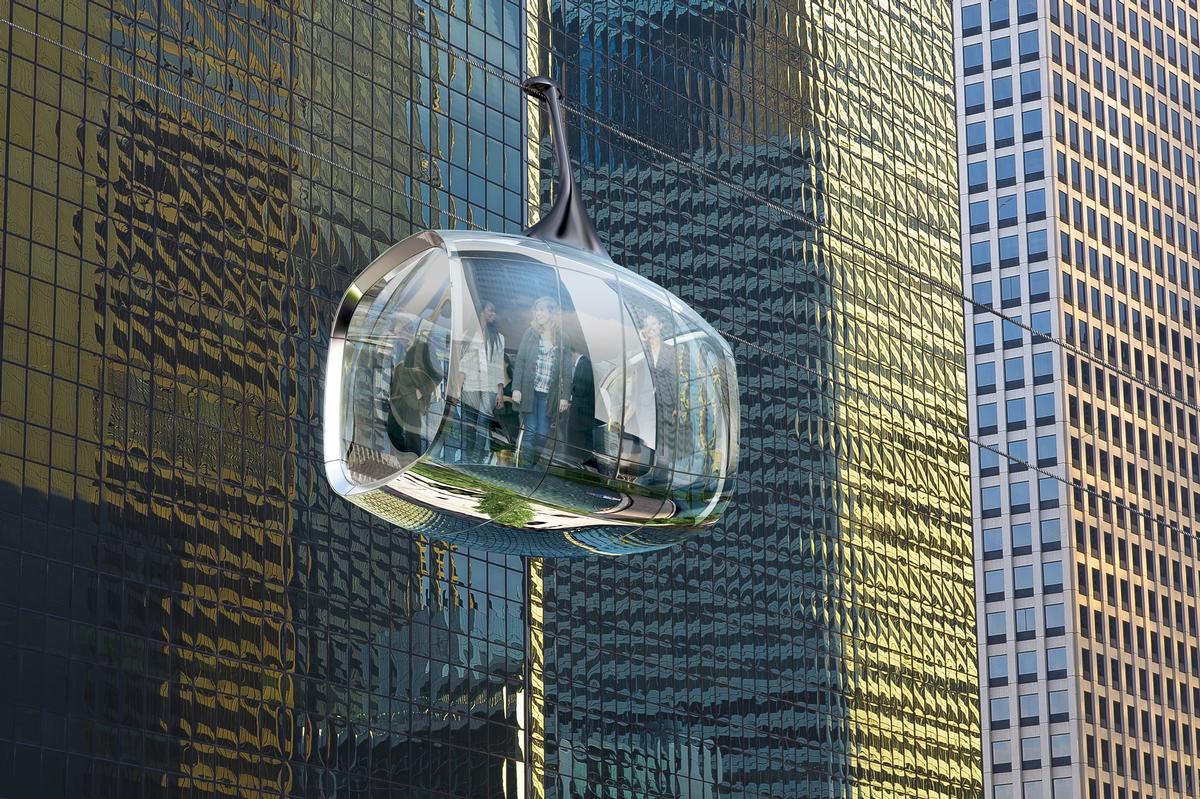
The cable car's pods are designed to be lightweight and elegant, like the jewels on a necklace Credit: F10 Studios
Marks Barfield Architects, the creators of the London Eye, have been tasked with designing a cable car across Chicago that will become an “iconic attraction” for the city.
Chicago-based theatre impresario Lou Raizin and real estate investor Laurence S. Geller are behind the ambitious scheme, called The Chicago SkyLine, which has been designed in collaboration with US architects Davis Brody Bond.
Speaking at a city event, Raizin and Geller outlined their vision for the project – over 800 aerial gondolas that “will soar above the river” between Millennium Park, the Chicago Lakefront and Navy Pier, transporting 3,000 people per hour and energising the city’s Riverwalk.
“The SkyLine is a prime example of how we can move Chicago from old guard to vanguard,” said Razin. “We kept coming back to the same question: what’s our unique feature? Where’s our Eiffel Tower? Where’s our Big Ben? These ideas are our attempt to answer this question and are intended to start a conversation in the city about what we would like our reputation to be in the future.”
Marks Barfield originally mooted the cable car idea as part of a 2011 competition to renovate Navy Pier, which they lost to James Corner Field Operations. However, the concept caught the imagination of Raizin, who admired how the London Eye had become a London icon and tourist attraction and wanted the same for Chicago.
The Chicago SkyLine’s lightweight, pearl-like cable cars are inspired by jewels in a necklace, and the cables will be linked to fabricated pylons made from weathering steel. The gondolas will rise 17-storeys high to clear the mouth of the river and let boats pass under.
“The whole piece is very delicate with a gentle character that quietly fits in with the scenery – it’s bold but not brash,” Marks Barfield managing director David Marks told CLAD. “There have been such advances in glass technology recently that we felt could be utilised imaginatively and elegantly in the design of the pods. They are bespoke and designed from the ground up to be state-of-the-art, efficient and comfortable, with high-quality glazing and seating.
“I think it could easily follow the model of the London Eye, with a similar impact in creating an attraction immediately identifiable with the city.”
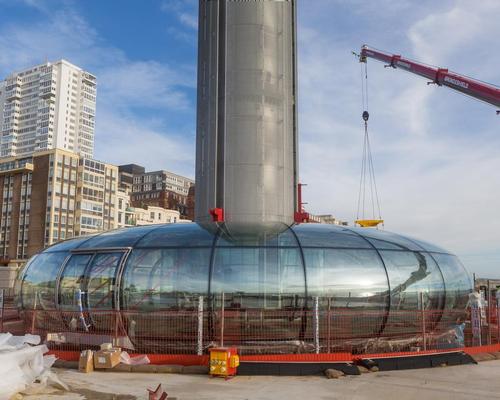
A feasibility study has been completed for the Skyline, plotting possible routes, station destinations, wind speeds and likely users. A number of firms, including glass pod firm Poma, have previously worked with the architects on the London Eye and the forthcoming Brighton i360 ‘vertical cable car.’
While the scheme has yet to receive planning permission, Geller said he was confident about his vision for Chicago’s future. “Dreamers we are,” he said, “naive we are not.”
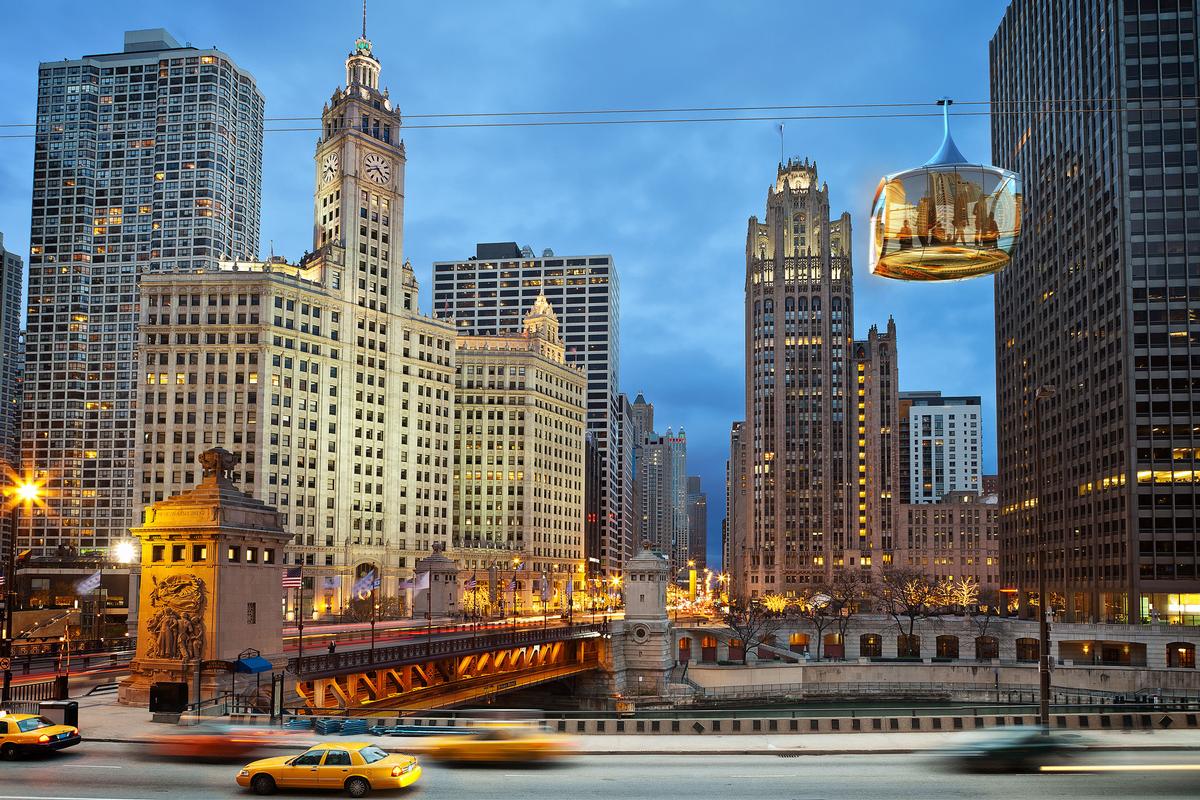
The cable car is designed to integrate neatly into the Chicago landscape Credit: F10 Studios
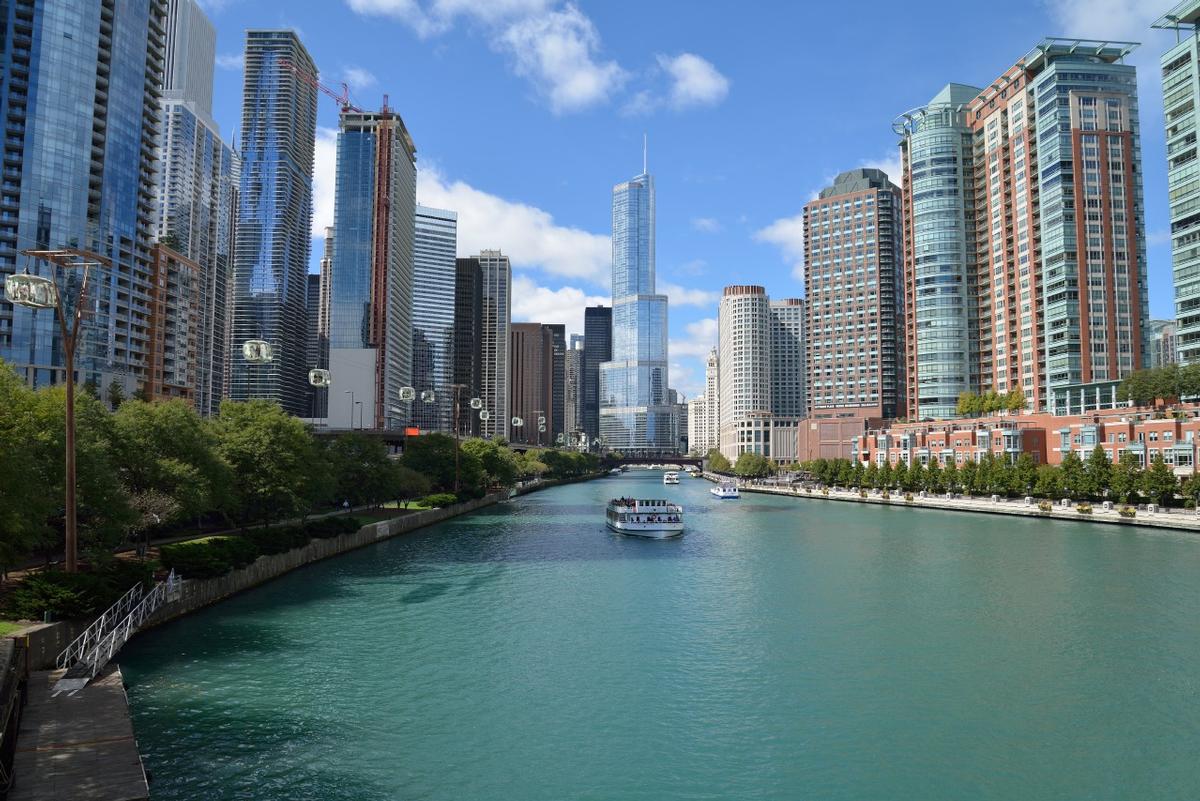
The cable car would soar above the river between Millennium Park, the Chicago Lakefront and Navy Pier Credit: F10 Studios
PROJECT PROFILE: Chicago Shakespeare Theatre expansion The Chicago Shakespeare Theatre is expanding its footprint on the city’s iconic Navy Pier,
with US$35m (€32.2m, £24.9m) being used to develop a flexible third stage capable of
being adapted based on the performance.
RELATED STORIES
Shakespeare theatre on Chicago's Navy Pier to undergo US$35m expansion POSTED 03 Mar 2016. BY Tom Anstey The Chicago Shakespeare Theater is expanding its footprint on the city’s iconic Navy Pier,
with US$35m (€32.2m, £24.9m) being used to develop a flexible third stage capable of
being adapted based on the performance.
Bleeding edge glass technology is transforming the future of our buildings POSTED 18 Feb 2016. BY Kim Megson A trio of high-profile architects have called on the design and construction industries to
embrace advancements in glass technology which are transforming the ways in which
buildings can be created.
OMA has completed a major transformation of New York's New Museum, creating a larger
cultural campus that combines expanded exhibition spaces with learning, performance,
hospitality and public programming.
A US$50 million (£44.2 million, €51.2 million) transformation of Chicago's historic McCormick
Mansion has created a new destination that combines live magic, immersive theatre, dining and
private membership under one roof.
The Montana Historical Society has officially celebrated the opening of its new Montana
Heritage
Center, a US$107 million (£79 million, €92 million) destination that combines immersive
storytelling with cutting-edge audiovisual technology to bring the sta
Marks Barfield and Davis Brody Bond design 'iconic' cable car for Chicago
POSTED 06 May 2016 . BY Kim Megson
The cable car's pods are designed to be lightweight and elegant, like the jewels on a necklace Credit: F10 Studios
Marks Barfield Architects, the creators of the London Eye, have been tasked with designing a cable car across Chicago that will become an “iconic attraction” for the city.
Chicago-based theatre impresario Lou Raizin and real estate investor Laurence S. Geller are behind the ambitious scheme, called The Chicago SkyLine, which has been designed in collaboration with US architects Davis Brody Bond.
Speaking at a city event, Raizin and Geller outlined their vision for the project – over 800 aerial gondolas that “will soar above the river” between Millennium Park, the Chicago Lakefront and Navy Pier, transporting 3,000 people per hour and energising the city’s Riverwalk.
“The SkyLine is a prime example of how we can move Chicago from old guard to vanguard,” said Razin. “We kept coming back to the same question: what’s our unique feature? Where’s our Eiffel Tower? Where’s our Big Ben? These ideas are our attempt to answer this question and are intended to start a conversation in the city about what we would like our reputation to be in the future.”
Marks Barfield originally mooted the cable car idea as part of a 2011 competition to renovate Navy Pier, which they lost to James Corner Field Operations. However, the concept caught the imagination of Raizin, who admired how the London Eye had become a London icon and tourist attraction and wanted the same for Chicago.
The Chicago SkyLine’s lightweight, pearl-like cable cars are inspired by jewels in a necklace, and the cables will be linked to fabricated pylons made from weathering steel. The gondolas will rise 17-storeys high to clear the mouth of the river and let boats pass under.
“The whole piece is very delicate with a gentle character that quietly fits in with the scenery – it’s bold but not brash,” Marks Barfield managing director David Marks told CLAD. “There have been such advances in glass technology recently that we felt could be utilised imaginatively and elegantly in the design of the pods. They are bespoke and designed from the ground up to be state-of-the-art, efficient and comfortable, with high-quality glazing and seating.
“I think it could easily follow the model of the London Eye, with a similar impact in creating an attraction immediately identifiable with the city.”
A feasibility study has been completed for the Skyline, plotting possible routes, station destinations, wind speeds and likely users. A number of firms, including glass pod firm Poma, have previously worked with the architects on the London Eye and the forthcoming Brighton i360 ‘vertical cable car.’
While the scheme has yet to receive planning permission, Geller said he was confident about his vision for Chicago’s future. “Dreamers we are,” he said, “naive we are not.”
The cable car is designed to integrate neatly into the Chicago landscape Credit: F10 Studios
The cable car would soar above the river between Millennium Park, the Chicago Lakefront and Navy Pier Credit: F10 Studios
RELATED STORIES
Shakespeare theatre on Chicago's Navy Pier to undergo US$35m expansion POSTED 03 Mar 2016. BY Tom Anstey The Chicago Shakespeare Theater is expanding its footprint on the city’s iconic Navy Pier,
with US$35m (€32.2m, £24.9m) being used to develop a flexible third stage capable of
being adapted based on the performance.
Bleeding edge glass technology is transforming the future of our buildings POSTED 18 Feb 2016. BY Kim Megson A trio of high-profile architects have called on the design and construction industries to
embrace advancements in glass technology which are transforming the ways in which
buildings can be created.
OMA has completed a major transformation of New York's New Museum, creating a larger
cultural campus that combines expanded exhibition spaces with learning, performance,
hospitality and public programming.
A US$50 million (£44.2 million, €51.2 million) transformation of Chicago's historic McCormick
Mansion has created a new destination that combines live magic, immersive theatre, dining and
private membership under one roof.
The Montana Historical Society has officially celebrated the opening of its new Montana
Heritage
Center, a US$107 million (£79 million, €92 million) destination that combines immersive
storytelling with cutting-edge audiovisual technology to bring the sta
San Antonio Zoo has reported a US$283 million economic impact for 2025, following a decade-
long transformation programme that has seen almost US$200 million invested into the Texas
attraction.
Plans for the AU$180 million redevelopment of Reef HQ Aquarium in Townsville, Australia, are
progressing, with the project set to transform the attraction into a global centre for reef
education and conservation.