Latest
issue
GET ATTRACTIONS MANAGEMENT
magazine
Yes! Send me the FREE digital edition of Attractions Management and the FREE weekly Attractions Management ezines and breaking news alerts!
Not right now, thanksclose this window I've already subscribed. I've already subscribed.
Get Attractions Management digital magazine FREE
Sign up here ▸
Jobs   News   Features   Products   Company profilesProfiles   Magazine   Handbook   Advertise    Subscribe  
NEWS
Have scientists cracked the brain's code for exercise motivation?
POSTED 28 Aug 2014 . BY Chris Dodd
The scientists believe the dorsal medial habenula is the area of the brain responsible for exercise motivation Credit: Shutterstock.com/Dirima
Scientists may have discovered the part of the brain responsible for exercise motivation, according to a study in the Journal of Neuroscience.

The research, conducted by scientists at both the Seattle Children’s Research Institute’s Centre for Integrative Brain Research and the University of Washington, has concluded that the dorsal medial habenula section of the brain controls the desire to exercise in mice.

The findings could prove particularly pertinent given that the structure of the habenula is similar in humans and rodents, potentially meaning that basic functions in mood regulation and motivation are likely to be the same across the two species.

As part of the research, the scientists genetically engineered a group of mice that had their signals blocked from the dorsal medial habenula.

The findings then showed that the group of mice became lethargic and ran far less than typical mice, while they also lost their preference for drinking sugary water.

In another group of mice, scientists were able to activate the dorsal medial habenula using optogenetics, with the specimens being given the choice to activate the habenula region by turning one of two wheels with their paws.

As the researchers observed the mice, it was shown that the specimens preferred to turn the wheel that stimulated the dorsal medial habenula, creating a link between rewards for specific behaviours and actions.

In the long run, if a link is found in the human brain too, gym-goers could potentially unlock the key to more motivation in the gym, helping to aid physical fitness, as well as the businesses providing health and fitness services.

In the short term, some scientists believe that the research could help to strengthen the development of more efficiently targeted treatments for depression.

Other pieces of research have also explored how people can improve their own levels of motivation when exercising, with one study suggesting that recalling former glories could help to inspire more positive workouts.

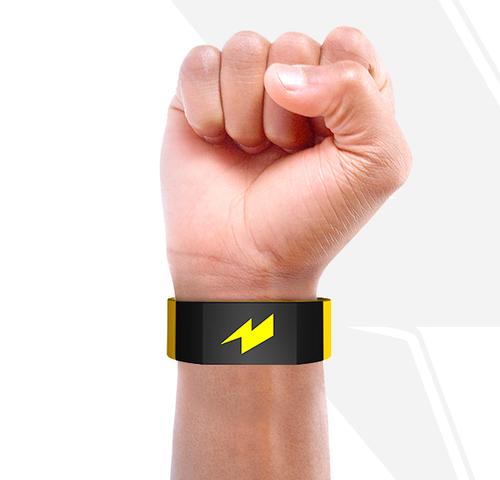
Some companies have looked to cash in on a public desire to improve motivation and kick bad behaviours. For example, the Pavlok tracking wristband has been designed to give away your money, shame you on social media, or even deliver a 340v static shot if you slip back into bad habits.

RELATED STORIES
  Scientists explore potential of the human body and paper-thin printable batteries to power wearables


Batteries may soon be a thing of the past for low-power wearable technology devices, with the potential for energy to be generated from body heat and movement, plus ambient energy from the environment.
  No pain no gain? Wristband provides electric shock to help banish bad habits


Be it sleeping in or skipping the gym, everyone wishes they could kick those bad habits that hurt productivity and prevent physical activity. Now, a new wearable is bidding to not just track activity, but use pain and shame to ensure users have no choice but to reach their goals.
  Could high intensity workouts be the answer to ageing population issues?


One of the first studies into the effects of high intensity interval training (HIIT) on elderly people has thrown up results suggesting six seconds bursts of exercise could have a significant impact on their health.
MORE NEWS
Rainer Maelzer joins Therme Group as chief entertainment officer
Rainer Maelzer, an experiential entertainment innovator, has been appointed chief entertainment officer by Therme Group.
Movie Park Germany reveals new Paramount attraction as part of its 30th anniversary celebrations
Movie Park Germany has opened a new Paramount Pictures-themed attraction as part of its 30th anniversary celebrations, using immersive storytelling and adaptive reuse to reinforce the park’s longstanding “Hollywood in Germany” positioning.
Therme Manchester reveals 90:90 strategy – 90 per cent of the UK population within a 90-minute drive of a Therme
Therme Manchester’s 28-acre development, which will include interconnected glass pavilions that measure 65,000sq m, will be the largest bathing and wellbeing attraction in the world once complete, according to prof David Russell, CEO of Therme UK. 
Efteling expands family offer with new Hooghmoed drop tower
Efteling has opened Hooghmoed, a new family drop tower designed to broaden the appeal of its recently launched Sirene Island themed area and introduce younger visitors to thrill attractions.
+ More news   

COMPANY PROFILES
Holovis

Holovis is a privately owned company established in 2004 by CEO Stuart Hetherington. [more...]
Clip 'n Climb

Clip ‘n Climb currently offers facility owners and investors more than 40 colourful and unique Cha [more...]
Sally Corporation

Our services include: Dark ride design & build; Redevelopment of existing attractions; High-quality [more...]
Polin Waterparks

Polin was founded in Istanbul in 1976. Polin has since grown into a leading company in the waterpa [more...]
+ More profiles  
FEATURED SUPPLIER

Iconic Liverpool attraction opens door to new operators
An opportunity to reimagine one of the UK’s most recognisable towers has been formally opened by Rivington Hark, as St Johns Beacon invites operators and partners to shape its next phase. [more...]
CATALOGUE GALLERY
 

+ More catalogues  
DIRECTORY
+ More directory  
DIARY


09-11 Jun 2026

World Sauna Forum 2026

Savutuvan Apaja, Haapaniemi, Finland
23-26 Aug 2026

Elevate Spa Riviera Maya Edition

The Riviera Maya Edition Kanai, Playa del Carmen, Mexico
+ More diary  
LATEST ISSUES
+ View Magazine Archive

Attractions Management

2026 issue 1


View issue contents
View on turning pages
Download PDF
FREE digital subscription
Print subscription

Attractions Management

2025 issue 2


View issue contents
View on turning pages
Download PDF
FREE digital subscription
Print subscription

Attractions Management

2025 issue 1


View issue contents
View on turning pages
Download PDF
FREE digital subscription
Print subscription

Attractions Management

2024 issue 4


View issue contents
View on turning pages
Download PDF
FREE digital subscription
Print subscription

Attractions Management News

06 Apr 2020 issue 153


View on turning pages
Download PDF
View archive
FREE digital subscription
Print subscription

Attractions Handbook

2019


View issue contents
View on turning pages
Download PDF
FREE digital subscription
Print subscription
 
ABOUT LEISURE MEDIA
LEISURE MEDIA MAGAZINES
LEISURE MEDIA HANDBOOKS
LEISURE MEDIA WEBSITES
LEISURE MEDIA PRODUCT SEARCH
 
ATTRACTIONS MANAGEMENT
ATTRACTIONS MANAGEMENT NEWS
ATTRACTIONS HANDBOOK
PRINT SUBSCRIPTIONS
FREE DIGITAL SUBSCRIPTIONS
ADVERTISE . CONTACT US

Leisure Media
Tel: +44 (0)1462 431385

©Cybertrek 2026
Get Attractions Management digital magazine FREE
Sign up here ▸
Jobs    News   Products   Magazine   Subscribe
NEWS
Have scientists cracked the brain's code for exercise motivation?
POSTED 28 Aug 2014 . BY Chris Dodd
The scientists believe the dorsal medial habenula is the area of the brain responsible for exercise motivation Credit: Shutterstock.com/Dirima
Scientists may have discovered the part of the brain responsible for exercise motivation, according to a study in the Journal of Neuroscience.

The research, conducted by scientists at both the Seattle Children’s Research Institute’s Centre for Integrative Brain Research and the University of Washington, has concluded that the dorsal medial habenula section of the brain controls the desire to exercise in mice.

The findings could prove particularly pertinent given that the structure of the habenula is similar in humans and rodents, potentially meaning that basic functions in mood regulation and motivation are likely to be the same across the two species.

As part of the research, the scientists genetically engineered a group of mice that had their signals blocked from the dorsal medial habenula.

The findings then showed that the group of mice became lethargic and ran far less than typical mice, while they also lost their preference for drinking sugary water.

In another group of mice, scientists were able to activate the dorsal medial habenula using optogenetics, with the specimens being given the choice to activate the habenula region by turning one of two wheels with their paws.

As the researchers observed the mice, it was shown that the specimens preferred to turn the wheel that stimulated the dorsal medial habenula, creating a link between rewards for specific behaviours and actions.

In the long run, if a link is found in the human brain too, gym-goers could potentially unlock the key to more motivation in the gym, helping to aid physical fitness, as well as the businesses providing health and fitness services.

In the short term, some scientists believe that the research could help to strengthen the development of more efficiently targeted treatments for depression.

Other pieces of research have also explored how people can improve their own levels of motivation when exercising, with one study suggesting that recalling former glories could help to inspire more positive workouts.

Some companies have looked to cash in on a public desire to improve motivation and kick bad behaviours. For example, the Pavlok tracking wristband has been designed to give away your money, shame you on social media, or even deliver a 340v static shot if you slip back into bad habits.

RELATED STORIES
Scientists explore potential of the human body and paper-thin printable batteries to power wearables


Batteries may soon be a thing of the past for low-power wearable technology devices, with the potential for energy to be generated from body heat and movement, plus ambient energy from the environment.
No pain no gain? Wristband provides electric shock to help banish bad habits


Be it sleeping in or skipping the gym, everyone wishes they could kick those bad habits that hurt productivity and prevent physical activity. Now, a new wearable is bidding to not just track activity, but use pain and shame to ensure users have no choice but to reach their goals.
Could high intensity workouts be the answer to ageing population issues?


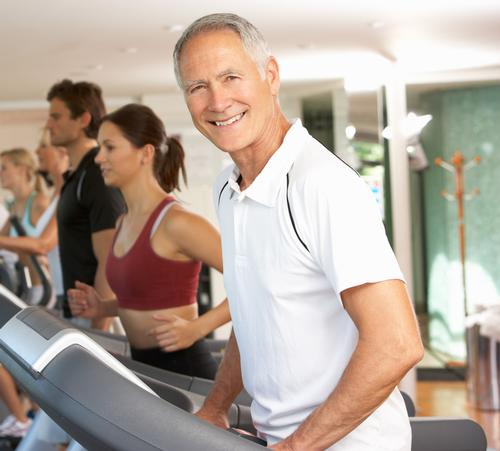
One of the first studies into the effects of high intensity interval training (HIIT) on elderly people has thrown up results suggesting six seconds bursts of exercise could have a significant impact on their health.
MORE NEWS
Rainer Maelzer joins Therme Group as chief entertainment officer
Rainer Maelzer, an experiential entertainment innovator, has been appointed chief entertainment officer by Therme Group.
Movie Park Germany reveals new Paramount attraction as part of its 30th anniversary celebrations
Movie Park Germany has opened a new Paramount Pictures-themed attraction as part of its 30th anniversary celebrations, using immersive storytelling and adaptive reuse to reinforce the park’s longstanding “Hollywood in Germany” positioning.
Therme Manchester reveals 90:90 strategy – 90 per cent of the UK population within a 90-minute drive of a Therme
Therme Manchester’s 28-acre development, which will include interconnected glass pavilions that measure 65,000sq m, will be the largest bathing and wellbeing attraction in the world once complete, according to prof David Russell, CEO of Therme UK. 
Efteling expands family offer with new Hooghmoed drop tower
Efteling has opened Hooghmoed, a new family drop tower designed to broaden the appeal of its recently launched Sirene Island themed area and introduce younger visitors to thrill attractions.
Universal and Puy du Fou projects point to rise of Oxford–Cambridge corridor
A proposed Puy du Fou development near Bicester and Universal Destinations and Experiences’ planned resort in Bedford are emerging as part of a wider transformation of the Oxford– Cambridge Growth Corridor into a major centre for UK leisure and tourism inv
Shedd Aquarium upgrades its visitor experience with new Immersion Theater
Shedd Aquarium has opened the Immersion Theater developed in partnership with SimEx- Iwerks, as part of a wider strategy to enhance the guest experience and create additional revenue opportunities.
+ More news   
 
COMPANY PROFILES
Holovis

Holovis is a privately owned company established in 2004 by CEO Stuart Hetherington. [more...]
Clip 'n Climb

Clip ‘n Climb currently offers facility owners and investors more than 40 colourful and unique Cha [more...]
Sally Corporation

Our services include: Dark ride design & build; Redevelopment of existing attractions; High-quality [more...]
Polin Waterparks

Polin was founded in Istanbul in 1976. Polin has since grown into a leading company in the waterpa [more...]
+ More profiles  
FEATURED SUPPLIER

Iconic Liverpool attraction opens door to new operators
An opportunity to reimagine one of the UK’s most recognisable towers has been formally opened by Rivington Hark, as St Johns Beacon invites operators and partners to shape its next phase. [more...]
CATALOGUE GALLERY
+ More catalogues  
DIRECTORY
+ More directory  
DIARY


09-11 Jun 2026

World Sauna Forum 2026

Savutuvan Apaja, Haapaniemi, Finland
23-26 Aug 2026

Elevate Spa Riviera Maya Edition

The Riviera Maya Edition Kanai, Playa del Carmen, Mexico
+ More diary  


ADVERTISE . CONTACT US

Leisure Media
Tel: +44 (0)1462 431385

©Cybertrek 2026

ABOUT LEISURE MEDIA
LEISURE MEDIA MAGAZINES
LEISURE MEDIA HANDBOOKS
LEISURE MEDIA WEBSITES
LEISURE MEDIA PRODUCT SEARCH
ATTRACTIONS MANAGEMENT NEWS
ATTRACTIONS HANDBOOK
PRINT SUBSCRIPTIONS
FREE DIGITAL SUBSCRIPTIONS