From Meow Wolf’s Omega Mart in
Las Vegas’ Area 15 to KidZania in
London’s Westfield shopping centre,
attractions are driving retail footfall,
but which experiences work best?
LDP partner Kathleen LaClair
summarises the trends
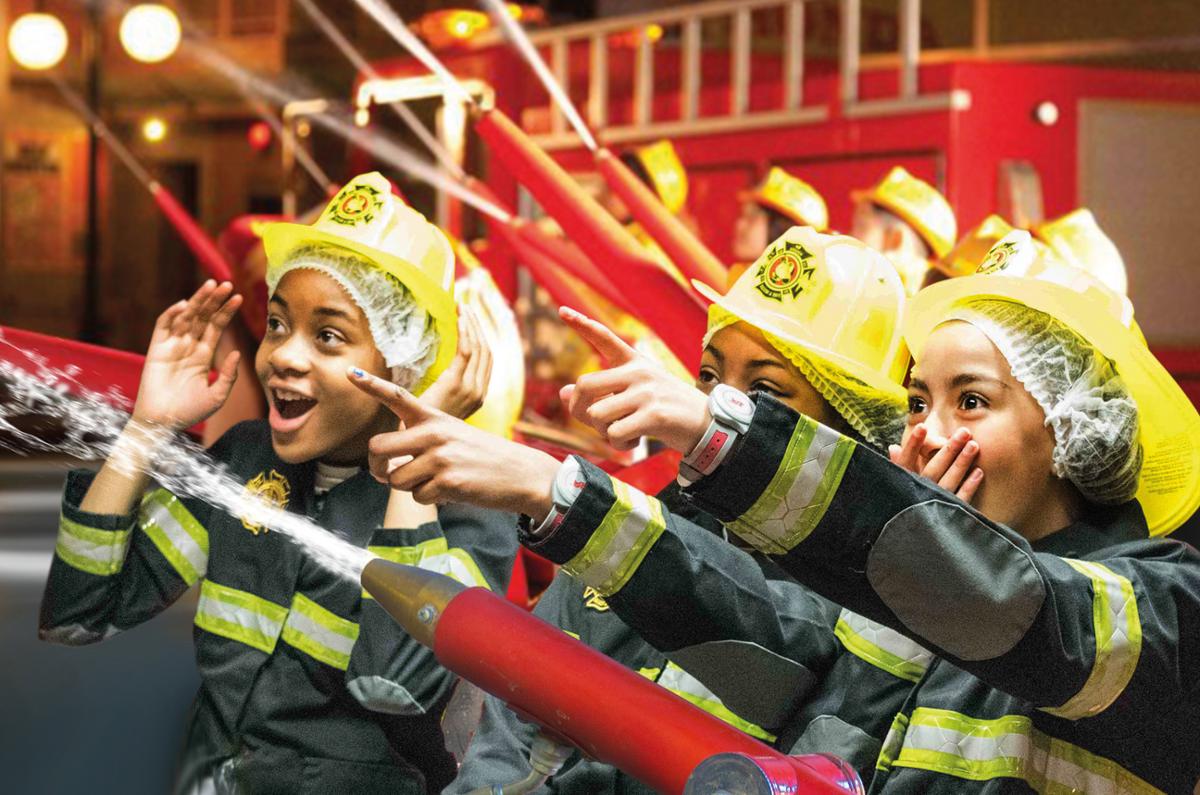
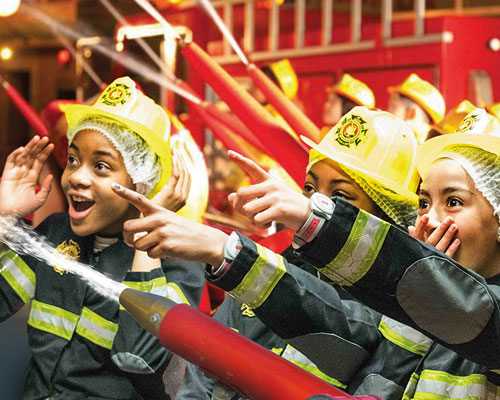
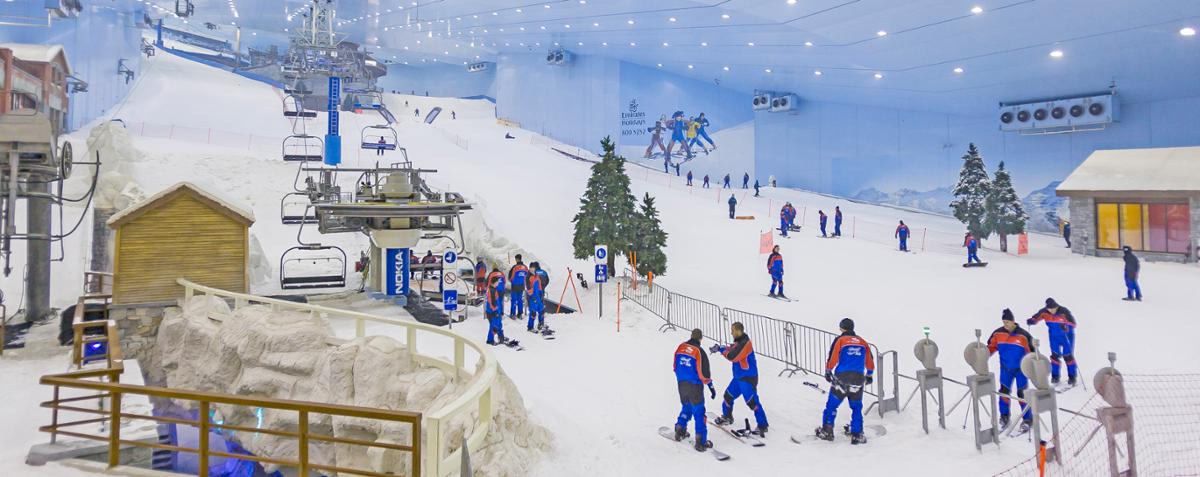
Role play experiences at KidZania drive footfall to Westfield shopping mall / Photo: Kidzania
Leading economic advisory firm Leisure Development Partners (LDP) authored a White Paper for MAPIC and the LeisurUP retail conference titled Established and Emerging Concepts in a Retail Setting.
Looking at which attractions work well in retail environments and help arrest the decline in footfall that’s plagued retailers pre and post the COVID-19 pandemic, LDP reviewed the different attraction types, their key characteristics and performance metrics. LDP also highlighted several case studies, and together with leading primary research company A Different View, carried out a UK survey to gather data on people’s past and anticipated consumer behaviour in relation to the different attraction types in retail centres.
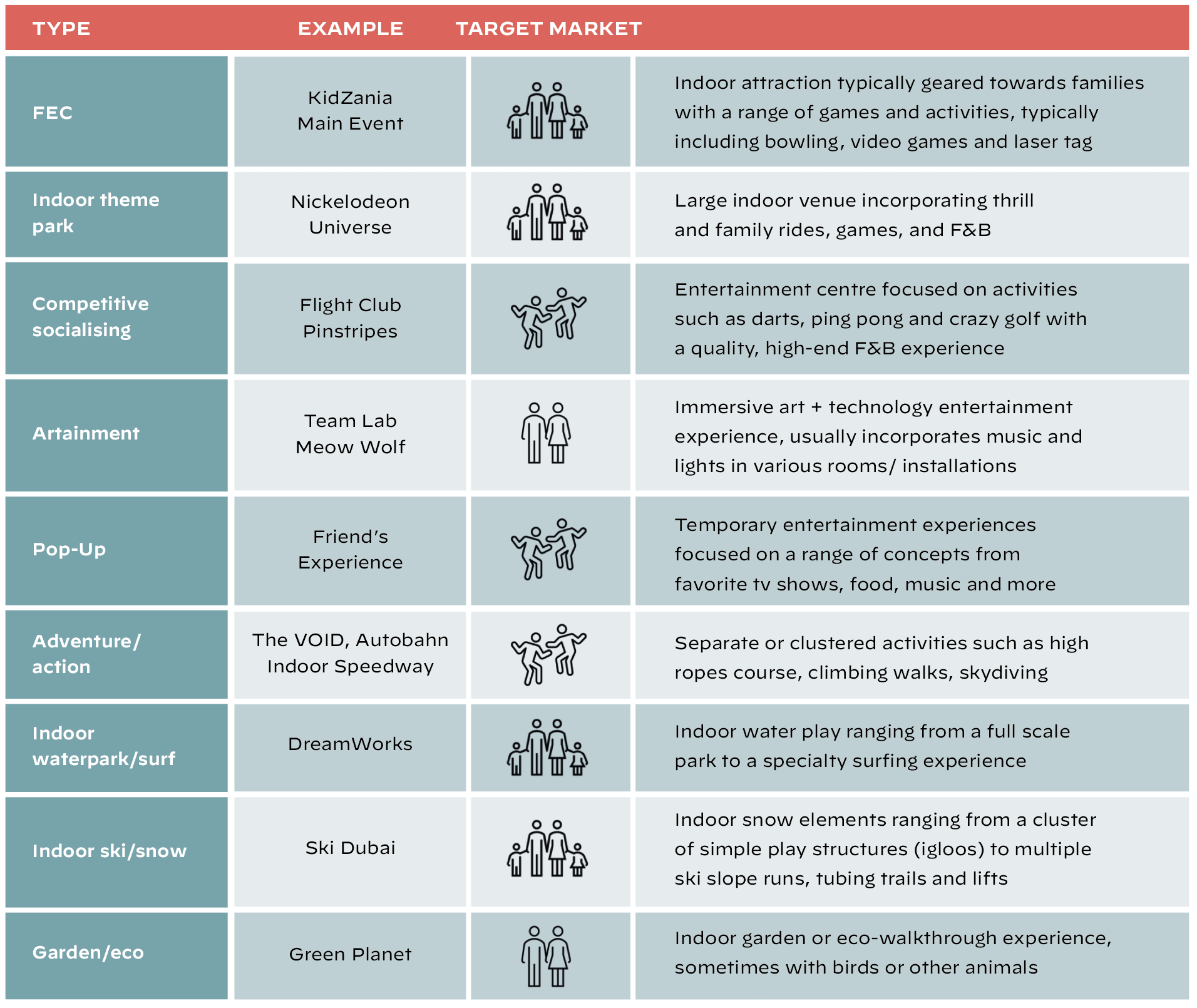
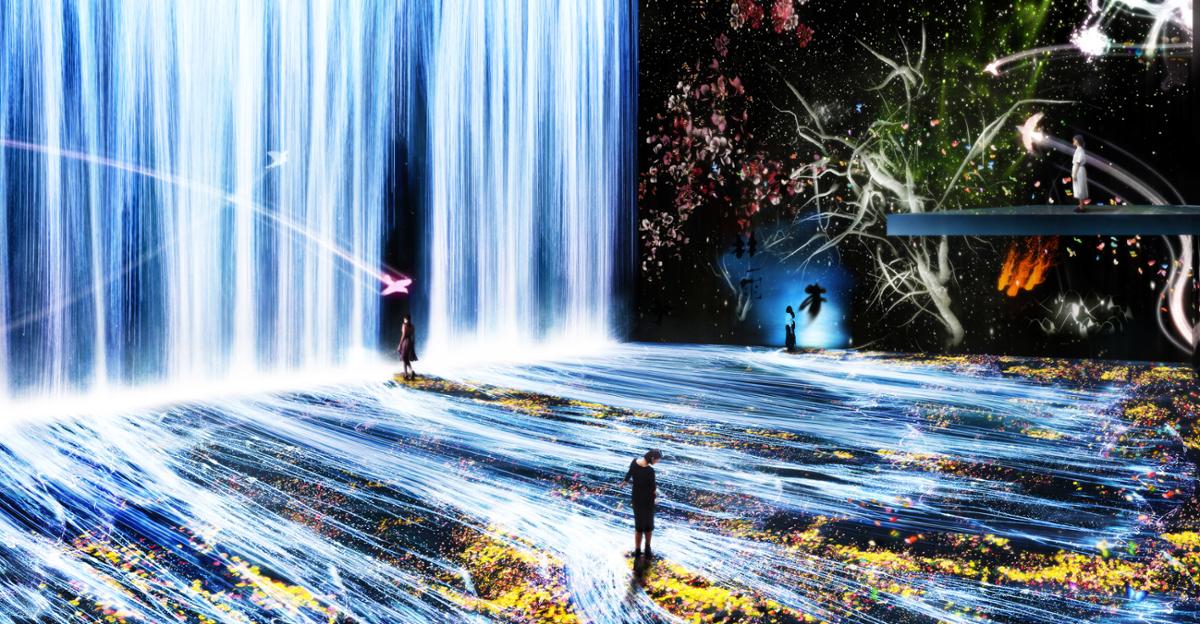
Existing and Emerging Concepts LDP reviewed key characteristics of various entertainment concepts including family entertainment centres, art-based attractions, indoor theme parks, ski and surf centres and pop up experiences (see table, below), which were also the focus of the survey questionnaire. Many of these concepts were popular prior to the pandemic but LDP found that their clients, developers, and operators have a renewed interest in knowing more about the experiences.
Catching up or getting out ahead? Various challenges facing retail owners and developers across the globe spurred the ‘retailtainment’ trend in traditional shopping centres. Anchor tenants and national brands were vacating large spaces due to downsizing of the portfolio during economic downturn and the ramp up of online shopping, which created less footfall in retail centres. The first wave of this trend tended to be reactive in nature, a response to these challenges. Developers figured out that adding entertainment tenants complemented and refreshed the existing offering, extended consumer stay, attracted new customers and brought previous shoppers back into the fold.
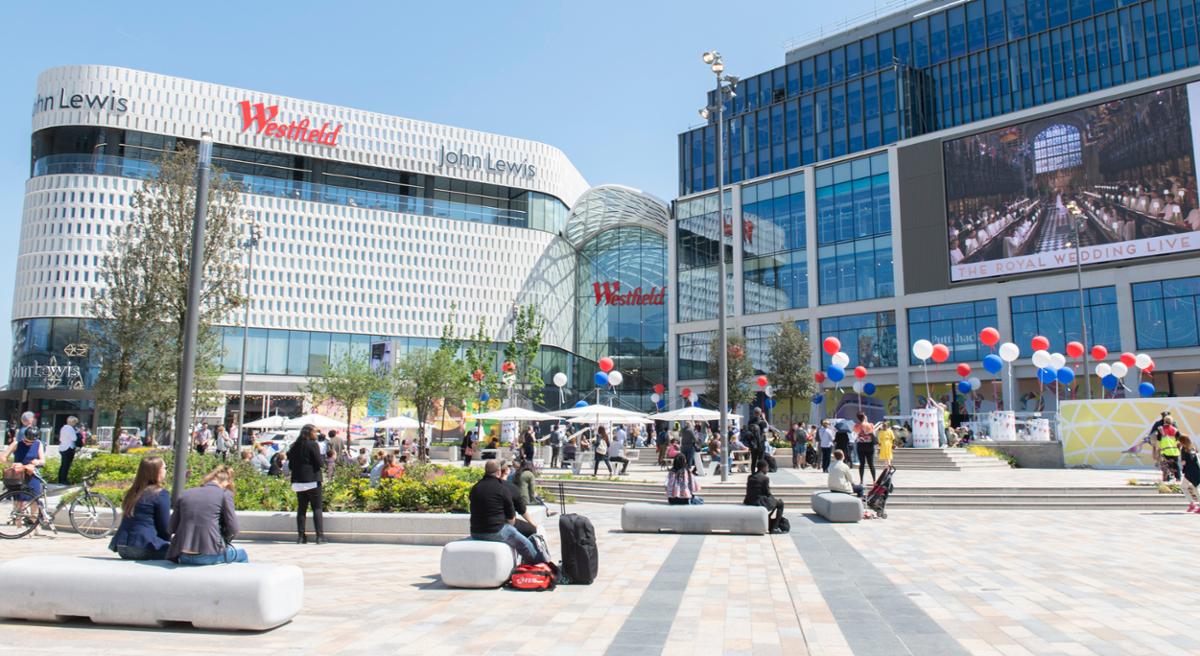
The Reactive Approach – Westfield, London Westfield London is a prime example of a traditionally planned retail centre adding entertainment tenants, in some instances into large spaces previously leased by major retailers, to increase footfall and spending.
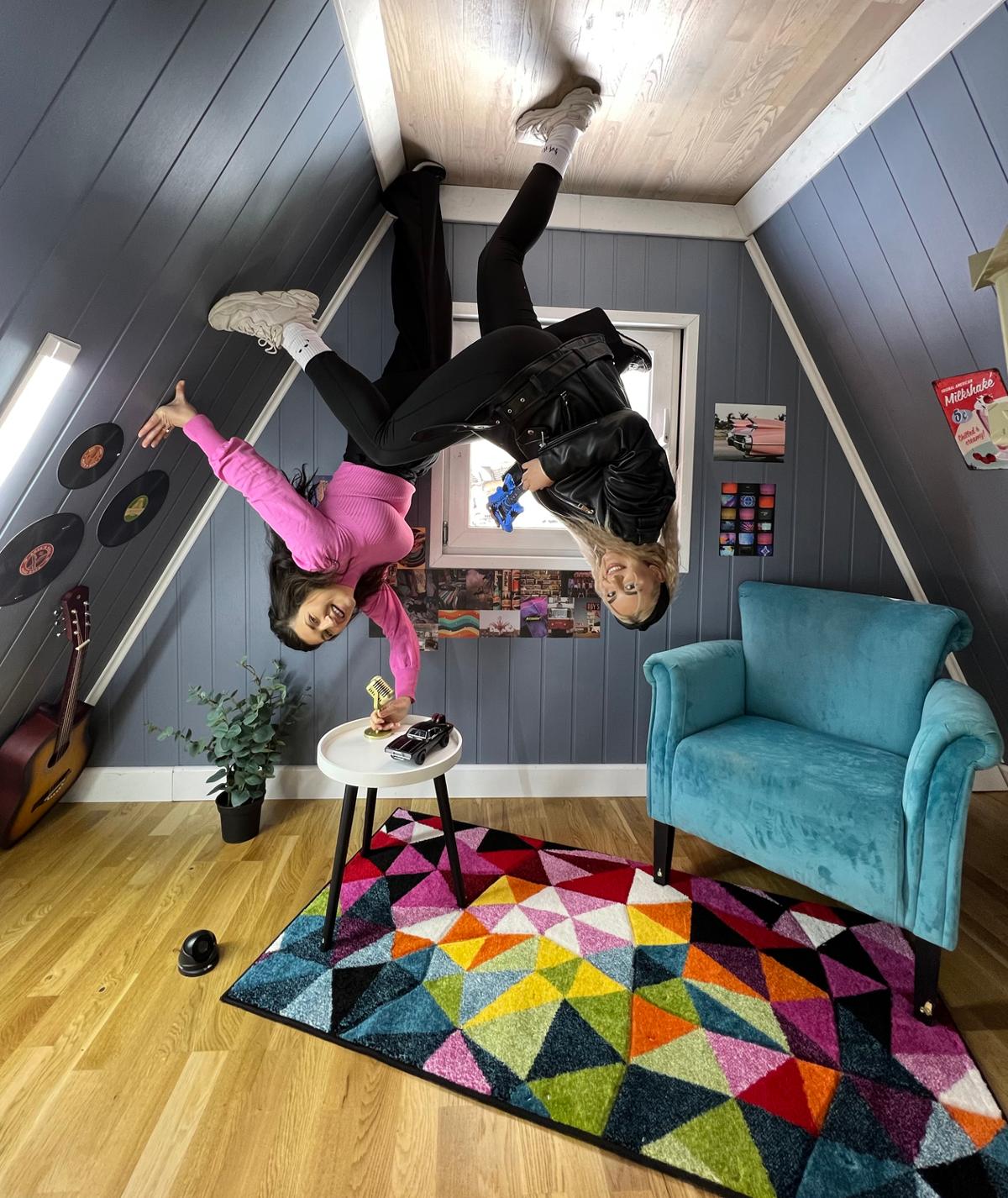
Westfield opened in 2008; the original development was a traditional mall with a mix of anchor and secondary tenants and purely focused on retail. Opening at the onset of the recession was a significant challenge and the shopping centre struggled for the first few years of operation. Developers began to plan the next chapter for the centre, and expansion plans developed in 2012. With retailtainment an established trend, developers added KidZania and other entertainment tenants including a 20-screen Vue Cinema, All Star Lanes, Puttshack, City Bouldering and Upside Down House, as well as a multitude of bars and restaurants.
The second trend of entertainment tenants in retail started a bit later – proactively thinking about new ways to incorporate entertainment into new retail destinations. These purpose-built developments are typically heavily focused on entertainment, with complementary food, beverage and more traditional retail offerings. Developers are rethinking traditional mixed-use or RDE (Retail, Dining, Entertainment) districts to be focused on the latter, as younger generations continue to look to the experiential activities as their chosen way to spend time and money.
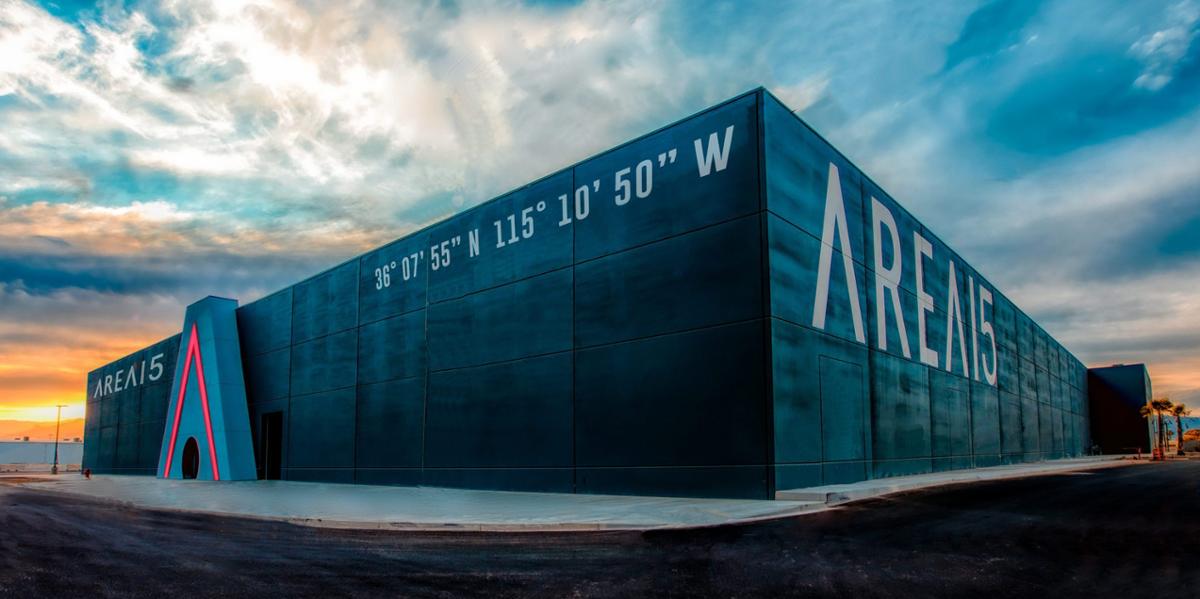
The Proactive Approach – Area15, Las Vegas Originally a Mercedes Benz dealership, the land that is now AREA15 was initially re-planned as a traditional mixed-use development that failed to come to fruition after the Great Recession. Developers Fisher Bros. and Beneville Studios saw an opportunity to build something that could compete with the entertainment giants along the Las Vegas Strip, and they proactively focused on experiential entertainment and science fiction.
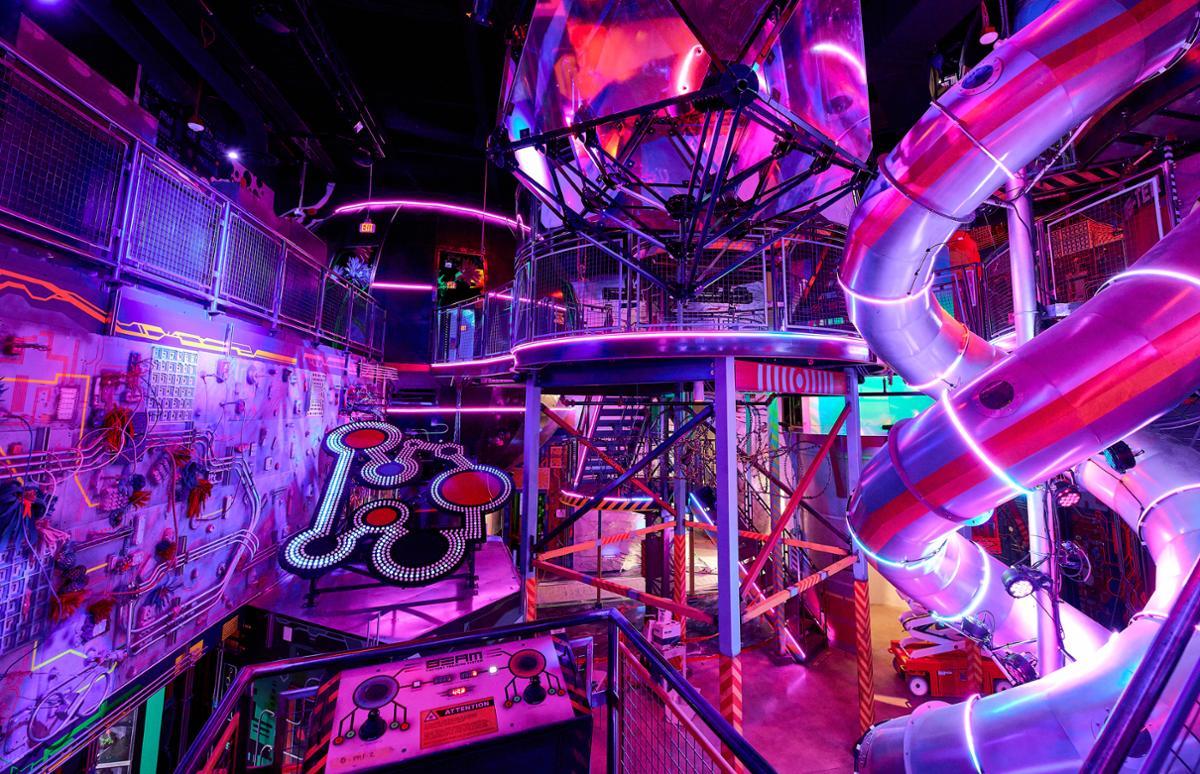
The first anchor was Omega Mart, an interactive art installation by Meow Wolf. Omega Mart is essentially an alternative reality game, where guests attempt to solve the plot using clues, both online and within the supermarket physical setting. The second major tenant, Lost Spirits, is an interactive, immersive show set within a working distillery. The size of an American football field, guests at the attraction wander around mazes, stages and lounges, interacting with cast members and becoming a part of the show.
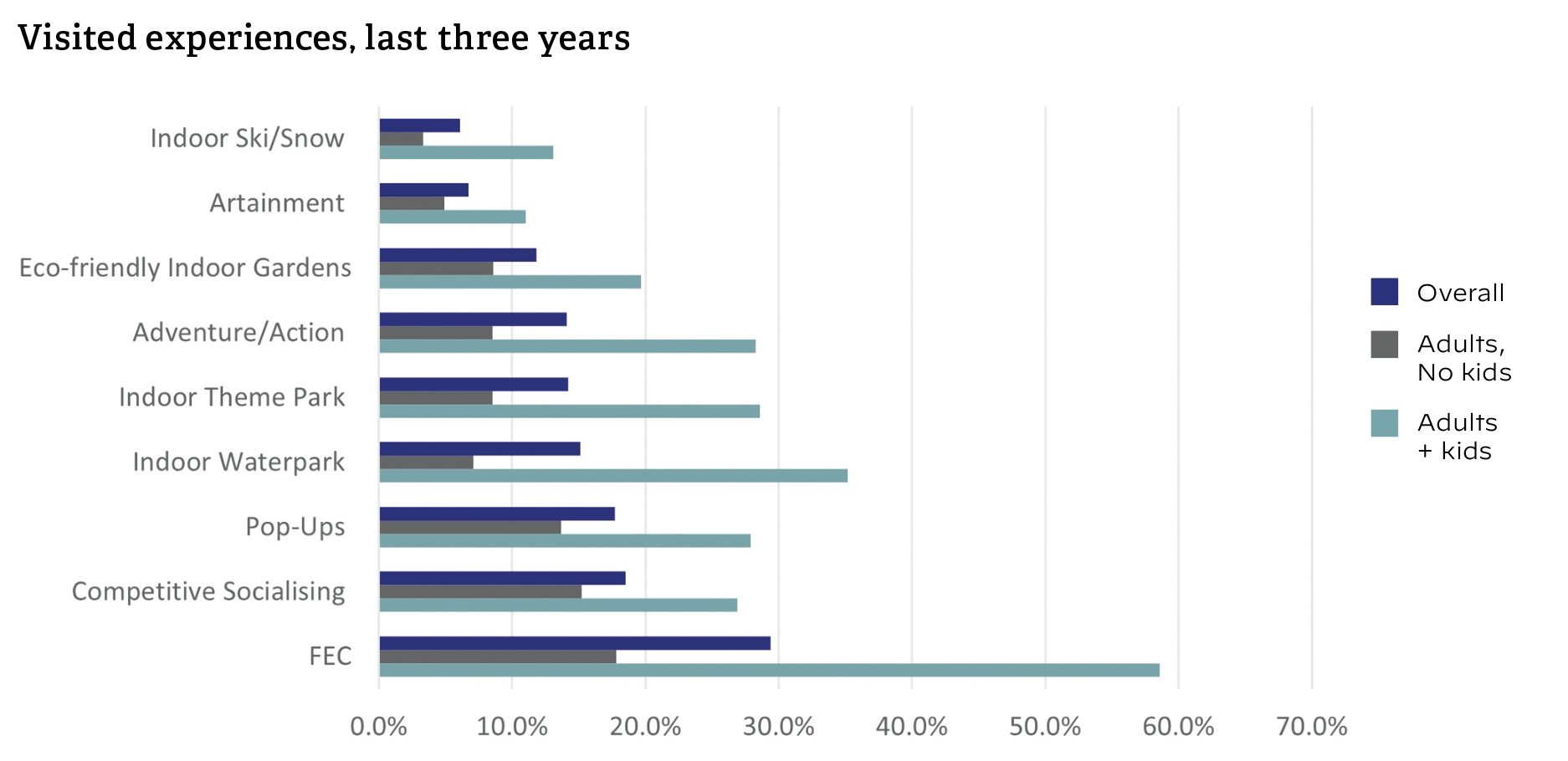
And the Survey Says… Among those surveyed, family entertainment centers (FECs) were the most visited in recent years among the different attraction types in retail centres. In looking at more detail, adults that have children out-visited all the attraction types including indoor gardens and artainment, when compared to those that do not have children, in the surveyed group.
The popularity of FECs can be attributed to the varied level of offering and wide appeal, ranging from a KidZania which is geared more towards families with young children to those like Dave and Busters which appeals to friend groups and couples and has elevated levels of food and beverages including alcohol. While not shown in the chart, men and women responded in general alignment, though with men reporting somewhat higher visits to competitive socialising and adventure/action experiences and women reporting higher visits to pop-up experiences and indoor garden attractions.
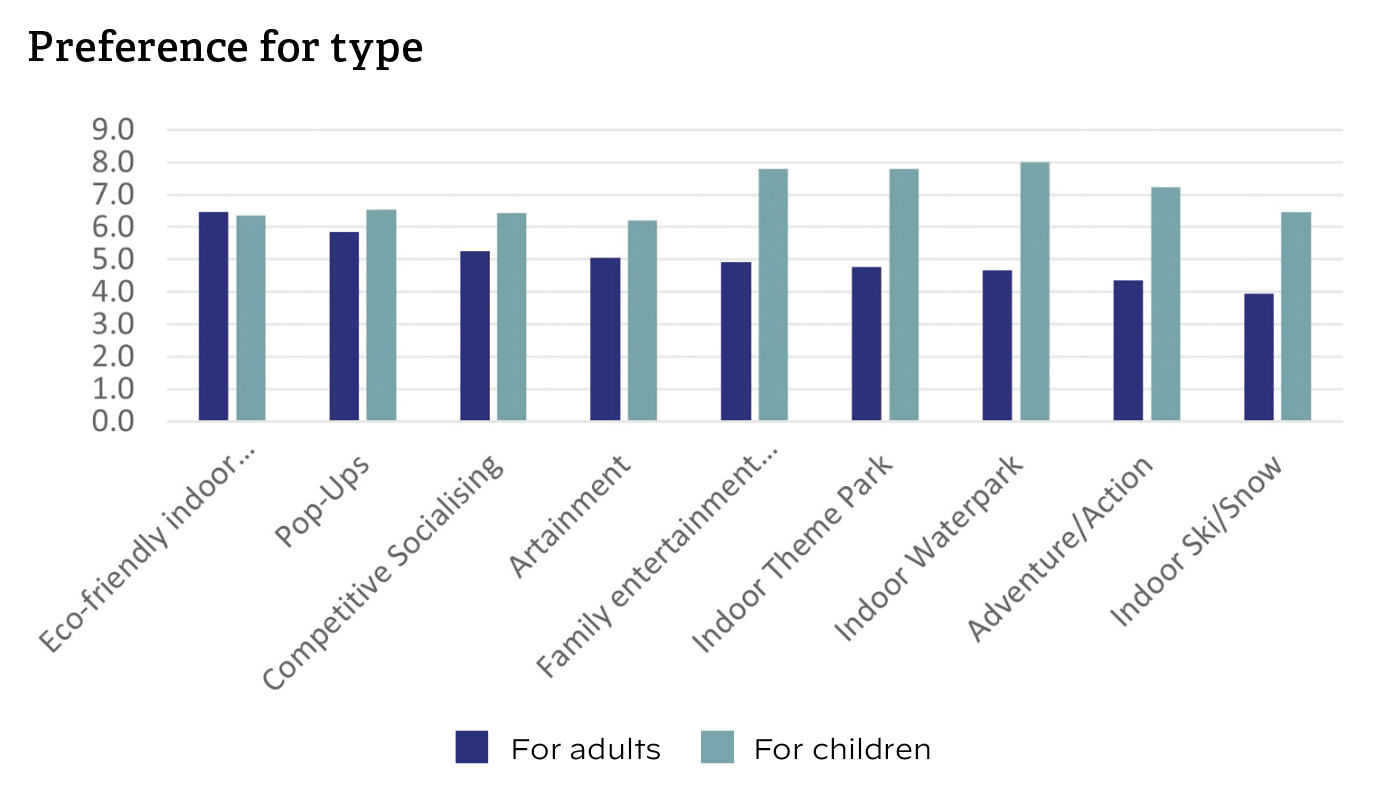
Survey respondents were asked to rate their preference for each attraction type on a 0 (no interest) to 10 (strong interest) scale, both for themselves and for their children (if applicable). Adults alone were most interested in visiting indoor gardens, pop-up experiences and competitive socialising – aligning to the responses on past visited attraction types. Those with children indicated that the more physical or adventurous activities were preferred, including indoor theme and water parks, and adventure/action experiences in addition to FECs.
In thinking of how long they would plan to stay at the different entertainment concepts, indoor theme or water parks and adventure/action concepts have the longest anticipated dwell times, between three and four hours. These are closely followed by FECs, indoor ski/snow and competitive socialising concepts, where survey respondents said they would plan to spend about three hours.
Arrival patterns vary by the type of concept and target market; those targeting families or kids (FEC, indoor theme or water park) tend to have higher percentages of people coming in the morning or early afternoon versus those geared to adults (competitive socialising), which see higher volumes arriving in late afternoon or evening. The survey responses on anticipated arrival times aligned with that established trend.
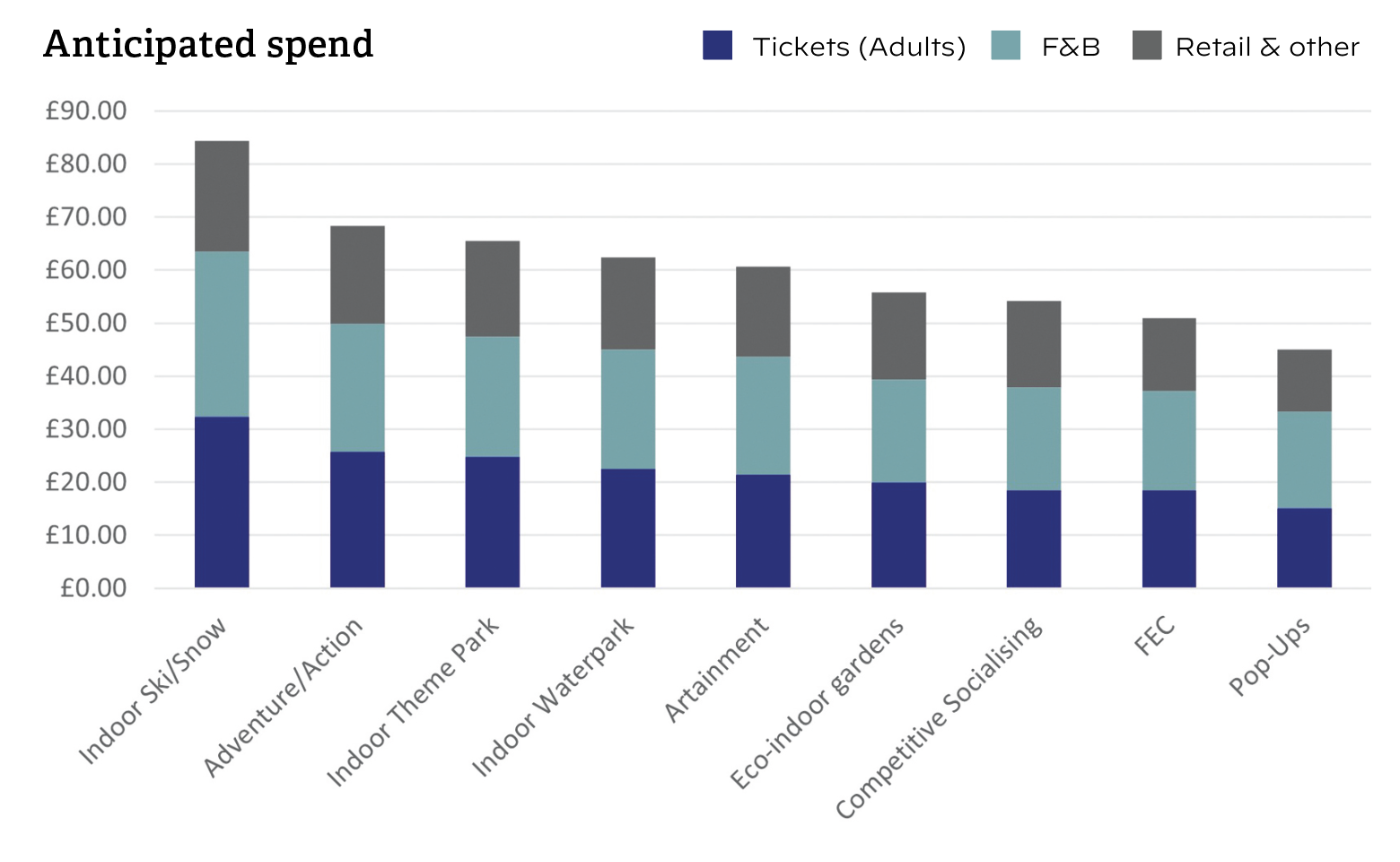
Entertainment concepts with longer dwell times, which typically offer more types of experiences or rides, dictate higher levels of admission ticket spending, at or higher than £25.00 per person for an adult, as reflected in the anticipated spending data (see chart on opposite page). Across all concepts, survey respondents indicated that they planned to spend an additional £40.00 to £60.00 per party on food and beverage, retail, and photos.
Wrap Up Based on the level of interest from industry clients and developers, tried-and-true and new entertainment concepts will continue to evolve and grow, representing a larger percentage of tenant types in a retail centre or destination in the coming years. LDP expects that well-established operators will rebound from challenges faced during the pandemic and expand into new locations. New concepts should be tested to find ideal markets and locations within existing and new retail destinations. Shopping centre operators will continue to seek out entertainment concepts to drive footfall and increase spending, especially as the online retail industry continues to evolve.
Read more from this issue of Attractions Management magazine
View contents of Attractions Management 2023 issue 3
Editor's letter: Learning to listen
Young people were involved in every stage of planning for the new Young V&A. Is this the start of a real shift in the way children’s museums are planned?
People: Karin Hindsbo
The head of Scandinavia’s largest museum is set to take over as Tate Modern’s new director. She shares her plans
People: Sean Decatur
It’s a big year for the American Museum of Natural History, as its new president takes over and it launches a major new centre
People: Håkon Lund
As Norway’s largest theme park embraces solar energy, Lund Gruppen’s owner tells us why the industry needs to be at the forefront of change
Interview: Andreas Andersen
As Gothenburg’s Liseberg theme park celebrates its 100th anniversary, its CEO talks celebrations, challenges and COVID-19 with Magali Robathan
Museums: And still we rise
Charleston’s long-awaited International African American Museum opens, reclaiming one of the US’s most painful and sacred spaces. IAAM president Dr Tonya Matthews speaks to Attractions Management about the long road to opening
Aquaria: A fresh start
The team behind New Orleans’ Audubon Aquarium and Insectarium used the COVID-19 pandemic to rethink their offer.
We check out the result, which brings both institutions under the same roof for the first time
Museums: Power of youth
Investing in creative confidence in our young has never been as important as it is now, argues Young V&A director Helen Charman
Science centres: Axel Hüttinger
From the creation of a new science centre in Angola to an indoor/outdoor children’s gallery in Barcelona, Huttinger Interactive Exhibitions is keeping busy
Research: Mixed blessings
Attractions have been helping revitalise shopping centres for many years, but how is this market changing?
Awards: Good lookers
Some of the world’s most beautiful and innovative new museums have been celebrated by Architizer’s A+ Awards. We take a look at the winners
Sponsored: Red Raion
Red Raion has emerged as an industry leader in the realm of digital
attractions, captivating audiences worldwide with its CGI movie
experiences.
From Meow Wolf’s Omega Mart in
Las Vegas’ Area 15 to KidZania in
London’s Westfield shopping centre,
attractions are driving retail footfall,
but which experiences work best?
LDP partner Kathleen LaClair
summarises the trends
Role play experiences at KidZania drive footfall to Westfield shopping mall / Photo: Kidzania
Leading economic advisory firm Leisure Development Partners (LDP) authored a White Paper for MAPIC and the LeisurUP retail conference titled Established and Emerging Concepts in a Retail Setting.
Looking at which attractions work well in retail environments and help arrest the decline in footfall that’s plagued retailers pre and post the COVID-19 pandemic, LDP reviewed the different attraction types, their key characteristics and performance metrics. LDP also highlighted several case studies, and together with leading primary research company A Different View, carried out a UK survey to gather data on people’s past and anticipated consumer behaviour in relation to the different attraction types in retail centres.
Existing and Emerging Concepts LDP reviewed key characteristics of various entertainment concepts including family entertainment centres, art-based attractions, indoor theme parks, ski and surf centres and pop up experiences (see table, below), which were also the focus of the survey questionnaire. Many of these concepts were popular prior to the pandemic but LDP found that their clients, developers, and operators have a renewed interest in knowing more about the experiences.
Catching up or getting out ahead? Various challenges facing retail owners and developers across the globe spurred the ‘retailtainment’ trend in traditional shopping centres. Anchor tenants and national brands were vacating large spaces due to downsizing of the portfolio during economic downturn and the ramp up of online shopping, which created less footfall in retail centres. The first wave of this trend tended to be reactive in nature, a response to these challenges. Developers figured out that adding entertainment tenants complemented and refreshed the existing offering, extended consumer stay, attracted new customers and brought previous shoppers back into the fold.
The Reactive Approach – Westfield, London Westfield London is a prime example of a traditionally planned retail centre adding entertainment tenants, in some instances into large spaces previously leased by major retailers, to increase footfall and spending.
Westfield opened in 2008; the original development was a traditional mall with a mix of anchor and secondary tenants and purely focused on retail. Opening at the onset of the recession was a significant challenge and the shopping centre struggled for the first few years of operation. Developers began to plan the next chapter for the centre, and expansion plans developed in 2012. With retailtainment an established trend, developers added KidZania and other entertainment tenants including a 20-screen Vue Cinema, All Star Lanes, Puttshack, City Bouldering and Upside Down House, as well as a multitude of bars and restaurants.
The second trend of entertainment tenants in retail started a bit later – proactively thinking about new ways to incorporate entertainment into new retail destinations. These purpose-built developments are typically heavily focused on entertainment, with complementary food, beverage and more traditional retail offerings. Developers are rethinking traditional mixed-use or RDE (Retail, Dining, Entertainment) districts to be focused on the latter, as younger generations continue to look to the experiential activities as their chosen way to spend time and money.
The Proactive Approach – Area15, Las Vegas Originally a Mercedes Benz dealership, the land that is now AREA15 was initially re-planned as a traditional mixed-use development that failed to come to fruition after the Great Recession. Developers Fisher Bros. and Beneville Studios saw an opportunity to build something that could compete with the entertainment giants along the Las Vegas Strip, and they proactively focused on experiential entertainment and science fiction.
The first anchor was Omega Mart, an interactive art installation by Meow Wolf. Omega Mart is essentially an alternative reality game, where guests attempt to solve the plot using clues, both online and within the supermarket physical setting. The second major tenant, Lost Spirits, is an interactive, immersive show set within a working distillery. The size of an American football field, guests at the attraction wander around mazes, stages and lounges, interacting with cast members and becoming a part of the show.
And the Survey Says… Among those surveyed, family entertainment centers (FECs) were the most visited in recent years among the different attraction types in retail centres. In looking at more detail, adults that have children out-visited all the attraction types including indoor gardens and artainment, when compared to those that do not have children, in the surveyed group.
The popularity of FECs can be attributed to the varied level of offering and wide appeal, ranging from a KidZania which is geared more towards families with young children to those like Dave and Busters which appeals to friend groups and couples and has elevated levels of food and beverages including alcohol. While not shown in the chart, men and women responded in general alignment, though with men reporting somewhat higher visits to competitive socialising and adventure/action experiences and women reporting higher visits to pop-up experiences and indoor garden attractions.
Survey respondents were asked to rate their preference for each attraction type on a 0 (no interest) to 10 (strong interest) scale, both for themselves and for their children (if applicable). Adults alone were most interested in visiting indoor gardens, pop-up experiences and competitive socialising – aligning to the responses on past visited attraction types. Those with children indicated that the more physical or adventurous activities were preferred, including indoor theme and water parks, and adventure/action experiences in addition to FECs.
In thinking of how long they would plan to stay at the different entertainment concepts, indoor theme or water parks and adventure/action concepts have the longest anticipated dwell times, between three and four hours. These are closely followed by FECs, indoor ski/snow and competitive socialising concepts, where survey respondents said they would plan to spend about three hours.
Arrival patterns vary by the type of concept and target market; those targeting families or kids (FEC, indoor theme or water park) tend to have higher percentages of people coming in the morning or early afternoon versus those geared to adults (competitive socialising), which see higher volumes arriving in late afternoon or evening. The survey responses on anticipated arrival times aligned with that established trend.
Entertainment concepts with longer dwell times, which typically offer more types of experiences or rides, dictate higher levels of admission ticket spending, at or higher than £25.00 per person for an adult, as reflected in the anticipated spending data (see chart on opposite page). Across all concepts, survey respondents indicated that they planned to spend an additional £40.00 to £60.00 per party on food and beverage, retail, and photos.
Wrap Up Based on the level of interest from industry clients and developers, tried-and-true and new entertainment concepts will continue to evolve and grow, representing a larger percentage of tenant types in a retail centre or destination in the coming years. LDP expects that well-established operators will rebound from challenges faced during the pandemic and expand into new locations. New concepts should be tested to find ideal markets and locations within existing and new retail destinations. Shopping centre operators will continue to seek out entertainment concepts to drive footfall and increase spending, especially as the online retail industry continues to evolve.
Read more from this issue of Attractions Management magazine
View contents of Attractions Management 2023 issue 3
Editor's letter: Learning to listen
Young people were involved in every stage of planning for the new Young V&A. Is this the start of a real shift in the way children’s museums are planned?
People: Karin Hindsbo
The head of Scandinavia’s largest museum is set to take over as Tate Modern’s new director. She shares her plans
People: Sean Decatur
It’s a big year for the American Museum of Natural History, as its new president takes over and it launches a major new centre
People: Håkon Lund
As Norway’s largest theme park embraces solar energy, Lund Gruppen’s owner tells us why the industry needs to be at the forefront of change
Interview: Andreas Andersen
As Gothenburg’s Liseberg theme park celebrates its 100th anniversary, its CEO talks celebrations, challenges and COVID-19 with Magali Robathan
Museums: And still we rise
Charleston’s long-awaited International African American Museum opens, reclaiming one of the US’s most painful and sacred spaces. IAAM president Dr Tonya Matthews speaks to Attractions Management about the long road to opening
Aquaria: A fresh start
The team behind New Orleans’ Audubon Aquarium and Insectarium used the COVID-19 pandemic to rethink their offer.
We check out the result, which brings both institutions under the same roof for the first time
Museums: Power of youth
Investing in creative confidence in our young has never been as important as it is now, argues Young V&A director Helen Charman
Science centres: Axel Hüttinger
From the creation of a new science centre in Angola to an indoor/outdoor children’s gallery in Barcelona, Huttinger Interactive Exhibitions is keeping busy
Research: Mixed blessings
Attractions have been helping revitalise shopping centres for many years, but how is this market changing?
Awards: Good lookers
Some of the world’s most beautiful and innovative new museums have been celebrated by Architizer’s A+ Awards. We take a look at the winners
Sponsored: Red Raion
Red Raion has emerged as an industry leader in the realm of digital
attractions, captivating audiences worldwide with its CGI movie
experiences.
OMA has completed a major transformation of New York's New Museum, creating a larger
cultural campus that combines expanded exhibition spaces with learning, performance,
hospitality and public programming.
A US$50 million (£44.2 million, €51.2 million) transformation of Chicago's historic McCormick
Mansion has created a new destination that combines live magic, immersive theatre, dining and
private membership under one roof.
The Montana Historical Society has officially celebrated the opening of its new Montana
Heritage
Center, a US$107 million (£79 million, €92 million) destination that combines immersive
storytelling with cutting-edge audiovisual technology to bring the sta
San Antonio Zoo has reported a US$283 million economic impact for 2025, following a decade-
long transformation programme that has seen almost US$200 million invested into the Texas
attraction.
Plans for the AU$180 million redevelopment of Reef HQ Aquarium in Townsville, Australia, are
progressing, with the project set to transform the attraction into a global centre for reef
education and conservation.
Abu Dhabi-based investment firm Mubadala Capital has made a binding, fully financed
€1 billion
offer to acquire Pierre and Vacances SA, the European holiday resort operator behind the
continental European Center Parcs business.
Disney has reaffirmed its commitment to investing US$30 billion in its US parks and cruise
business by 2033, using new America250 celebrations to underline the role its attractions play
in supporting jobs, tourism and economic growth.
Expo 2030 Riyadh is being planned as a permanent visitor destination, with organisers
confirming the six-million-square-metre site will become a Global Village after the event closes.
The owner of one of Australia's best-known waterparks has acquired a major competitor,
creating a new attractions business spanning two of the country's largest visitor destinations.
The Toverland theme park in the Netherlands has announced a €98m expansion programme
that will add a resort, new attractions and staff facilities as it pursues plans to become a multi-
day destination.
+ More news
COMPANY PROFILES
IAAPA EMEA IAAPA Expo Europe was established in 2006 and has grown to the largest international conference and [more...]
Polin Waterparks Polin was founded in Istanbul in 1976. Polin
has since grown into a leading company in
the waterpa [more...]
DJW David & Lynn Willrich started the Company
over thirty years ago, from the Audio Visual
Department [more...]
Holovis Holovis is a privately owned company
established in 2004 by CEO Stuart
Hetherington. [more...]