What challenges and choices will planetariums face in the coming decades, and what can they do now to shape a future that’s relevant and inspiring for the sector and its audience? Staffan Klashed of Sciss shares his thoughts
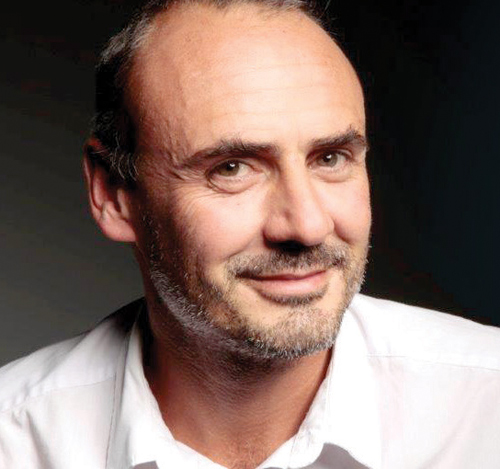
Planetariums have a value proposition as centres of excellence for astronomy and space exploration, says Staffan Klashed, CEO at Sciss / Photo: barabild.se
I’ve spent a lot of time this year analysing and researching the potential future of planetariums. My findings made me want to try to identify where the winds are blowing for the next 20 years. By understanding where we stand today and what the major tendencies are – tendencies that are bigger than any single innovation, company or institution – planetariums can shape a strategy to grow increasingly relevant. That means maintaining current, growing and recurring audiences, and providing them with meaningful and inspirational experiences.
I’d like to take this opportunity to share some of the trends that I identified as important in a recent white paper entitled The Next 20 Years: A Vision for Planetariums in the 21st Century.
The competition for talent Whether we like it or not, planetariums are just as involved as any other industry in the competition for talent. The International Data Corporation (IDC) estimated in 2014 that there were approximately 11 million professional software developers in the world, or 18.5 million if hobbyists are included. The best ones will choose a career in those industries that reward them best financially, creatively and socially. The best ones will create the audiovisual experiences – whether under the dome, online or in gaming, or in the VR headsets of the very near future – that everything else will be compared against.
A market study that Alan Caskey presented at the IMERSA Summit (Immersive Media Entertainment, Research, Science & Arts) in 2013 listed user interfaces and real-time system functionality as the two most important features of a planetarium (from a survey of 139 planetariums). The ability to encourage repeat visits and the availability of new content were the two top concerns. All of these points are directly related to advanced software and content development, work that will be carried out by some of those 18.5 million talents – and we’re competing with every other IT industry on the planet to get them.
Fortunately, the planetarium industry is increasingly successful in the competition for talent. As an industry, we are investing in research and the development of products that are technically stimulating, considered relevant by the majority of the public, and socially much “cooler” than the conventional planetarium technology.
Public perception of astronomy and planetariums People are just as interested in astronomy now as they have ever been. Data from the US General Social Survey from 2012 says that approximately two-thirds of the American public think government spending on space exploration is too small or just about right. European numbers are similar. Data from other parts of the world would be most welcome and help to paint a more complete picture.
To find out how the public feels about planetariums, we conducted our own survey by analysing reviews on the travel website TripAdvisor. Visitor satisfaction appears to come from four primary factors: things to do outside the dome (24%); good shows (23.5%); location, view and the building itself (16%); and good live presenters (15.5%). Disappointment appears to come primarily from worn down or poorly maintained facilities, alongside low quality programming (14%), technical issues (8.5%), lack of things to do outside the dome (6%) and cost of admission (3.5%).
So how are we doing? According to the annual Dome Theatre Compendium survey from Loch Ness Productions, approximately 107 million people visited a planetarium last year. That sounds like an amazing number – I think we can be proud of our industry. In comparison, the documentary giant screen industry attracts a total of 36 million people per year, and that includes their flat screens.
I don’t think our numbers are bad, but there is tremendous growth potential in our industry, especially considering that a lot of those 107 million visitors went with a school group and did not actually choose to go to a planetarium.
We have the chance to cater to the two-thirds of people who are actually interested in our topics and to give them meaningful experiences of science visualisation. We need the public to regard planetariums as a primary place to follow events in astronomy and space exploration – that will help us grow audiences and repeat visitations.
We don’t have to abandon our scientific integrity to be relevant and cool. In fact, the opposite appears to be true, as the public is quite invested in astronomy and space exploration. This means planetariums are interesting places for talented individuals to work, which increases the quality of our programming and, in the long run, also our audiovisual systems – in turn attracting more visitors. This virtuous circle has just begun, the next five years will accelerate it.
The next 5 years: Big data and the virtuous circle The next five years will inevitably be about big data – the vastly increased amount of meaningful data accessible to the public. Space exploration will produce a huge amount of data and private initiatives in air and satellite-based imaging, remote sensing and laser scanning will accelerate what the International Planetarium Society’s science and data visualisation task force calls the “data tsunami”.
Big data is relevant and interesting. It’s socially cool and attracts talent, and thus the virtuous circle can accelerate and turn planetariums into what they need to be: places people go to pursue their interest in astronomy and space exploration.
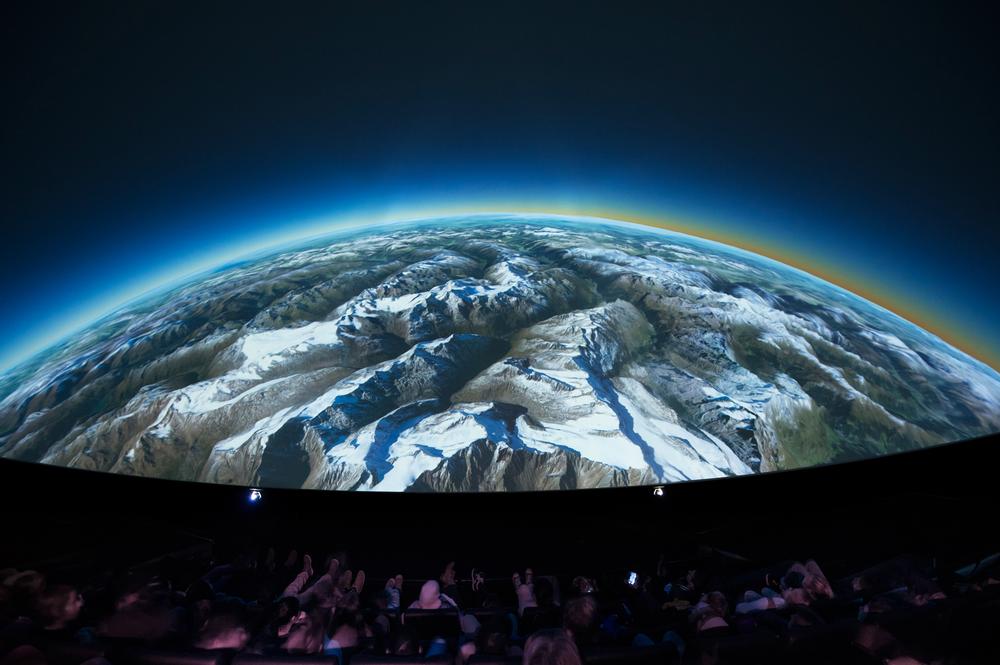
The next 10 years: New platforms The data visualisation explosion will happen foremost on other platforms than the dome. With this, the sense of identity in the industry will change. At the moment, most planetarians think of their planetarium as the building itself and everything under the dome, but increased visualisation capabilities online are already starting to change this. Soon, virtual and augmented reality glasses will change the perception and value of immersion. In 10 years’ time, to think of the planetarium as only the dome will be a conservative standpoint.
Supported by multi-platform software solutions, planetarians will gradually start to roll out programmes and extend their relationships with their visitors. This creates new business opportunities, thus injecting more resources and more talent into our industry. The planetarium becomes the magnet, the central point of gravity around which a vast number of satellite programmes are orbiting. Experiential hubs for astronomy and space exploration first, buildings second – and that’s an incredibly strong position to use to increase attendance to the building itself.
The next 20 years: Education redefined Two decades out, the very way we think about learning will be dramatically different. In a report called Building the Future of Education: Museums and Learning Ecosystems from the Center for the Future of Museums, Katherine Prince describes “vibrant learning grids”. These are communities where learning is not bound by a time and a place, but happens everywhere, all the time.
Our relationship with formal institutions will change so the place we refer to as “school” may be the classroom, the library, the internet or, indeed, the multi-platform planetarium, where learning is not motivated by authority, but by curiosity. This theme is everywhere already today, but it will take two decades to transform the world’s education systems. We are talking about redefining the purpose of education. Sugata Mitra, an educational researcher and TED Prize winner, has shown that in the absence of formal teaching, children can teach themselves and each other, if they are motivated by curiosity and peer interest. And with planetariums now having attracted a large pool of talent and expanded to multiple platforms, we will be the world’s primary source for inspirational and engaging experiences about astronomy and space exploration. As such, we have a given role in these vibrant learning grids.
Read more from this issue of Attractions Management magazine
View contents of Attractions Management 2015 issue 4
Attractions: Gone, Not Forgotten
We find out what people thought of
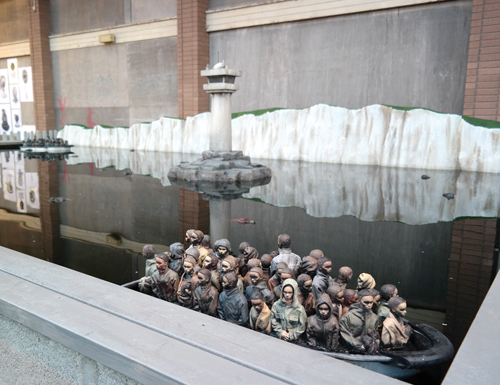
Dismaland, Banksy’s twisted theme park
and contemporary art attraction – and
talk to one of the Dismal Stewards
Promotional feature: IdeAttack
Mysteries of China’s rich culture are at the heart of IDEATTACK’s new mixed-used tourism destination
Zoos & Aquariums: Turn over a New Reef
The Florida Aquarium is teaming
up with the National Aquarium of
Cuba in a bid to save and restore
the region’s precious coral reefs
Planetariums need an increased focus on marketing, and understanding our identity and value proposition. Jim Sweitzer illustrated in his SPECTACLE model in 2004 the effects of the many factors at play during the early years of a new planetarium, and showed the long-term importance of having a balance between good marketing, innovation, high-quality programming and the ability to attract new markets.
Thanks to big data, marketing today is much more refined than it used to be. We can pinpoint target groups online and give them compelling reasons to go. The most successful planetariums are already refining their offerings and introducing special events such as planetarium after dark, science cafés and guest lectures. The key – besides spending on marketing – is to make sure that the overall content and marketing message aligns with the overall identity of planetariums.
Planetariums vs Giant Screen Cinemas:
An identity crisis? There’s an argument that digital planetarium technology is converging with giant screen cinema. While this might be true for the technology, there’s very little convergence in terms of purpose and use of the technology.
Planetariums have a value proposition as centres of excellence for astronomy and space exploration. This is a sustainable proposition and if planetariums don’t fill it, something else will. Formats vary – fulldome shows, live presenter-led discussions, audience-driven experiences – but don’t mistake format for value proposition.
Giant screen cinemas show, for example, documentaries about butterflies, artificial intelligence, dinosaurs and aviation. They have an amazing cinema format. People visit giant screen cinemas to pursue their interest in documentaries and film – that’s a completely different value proposition.
About the Author
Staffan Klashed
Staffan Klashed is the CEO and co-founder of fulldome theatre company Sciss. He has experience in the field of science visualisation and immersive digital spaces. Over a decade ago, Staffan introduced the visualisation software Uniview to the fulldome industry and today Sciss is one of the main fulldome system vendors with over 150 installations worldwide.
What challenges and choices will planetariums face in the coming decades, and what can they do now to shape a future that’s relevant and inspiring for the sector and its audience? Staffan Klashed of Sciss shares his thoughts
Planetariums have a value proposition as centres of excellence for astronomy and space exploration, says Staffan Klashed, CEO at Sciss / Photo: barabild.se
I’ve spent a lot of time this year analysing and researching the potential future of planetariums. My findings made me want to try to identify where the winds are blowing for the next 20 years. By understanding where we stand today and what the major tendencies are – tendencies that are bigger than any single innovation, company or institution – planetariums can shape a strategy to grow increasingly relevant. That means maintaining current, growing and recurring audiences, and providing them with meaningful and inspirational experiences.
I’d like to take this opportunity to share some of the trends that I identified as important in a recent white paper entitled The Next 20 Years: A Vision for Planetariums in the 21st Century.
The competition for talent Whether we like it or not, planetariums are just as involved as any other industry in the competition for talent. The International Data Corporation (IDC) estimated in 2014 that there were approximately 11 million professional software developers in the world, or 18.5 million if hobbyists are included. The best ones will choose a career in those industries that reward them best financially, creatively and socially. The best ones will create the audiovisual experiences – whether under the dome, online or in gaming, or in the VR headsets of the very near future – that everything else will be compared against.
A market study that Alan Caskey presented at the IMERSA Summit (Immersive Media Entertainment, Research, Science & Arts) in 2013 listed user interfaces and real-time system functionality as the two most important features of a planetarium (from a survey of 139 planetariums). The ability to encourage repeat visits and the availability of new content were the two top concerns. All of these points are directly related to advanced software and content development, work that will be carried out by some of those 18.5 million talents – and we’re competing with every other IT industry on the planet to get them.
Fortunately, the planetarium industry is increasingly successful in the competition for talent. As an industry, we are investing in research and the development of products that are technically stimulating, considered relevant by the majority of the public, and socially much “cooler” than the conventional planetarium technology.
Public perception of astronomy and planetariums People are just as interested in astronomy now as they have ever been. Data from the US General Social Survey from 2012 says that approximately two-thirds of the American public think government spending on space exploration is too small or just about right. European numbers are similar. Data from other parts of the world would be most welcome and help to paint a more complete picture.
To find out how the public feels about planetariums, we conducted our own survey by analysing reviews on the travel website TripAdvisor. Visitor satisfaction appears to come from four primary factors: things to do outside the dome (24%); good shows (23.5%); location, view and the building itself (16%); and good live presenters (15.5%). Disappointment appears to come primarily from worn down or poorly maintained facilities, alongside low quality programming (14%), technical issues (8.5%), lack of things to do outside the dome (6%) and cost of admission (3.5%).
So how are we doing? According to the annual Dome Theatre Compendium survey from Loch Ness Productions, approximately 107 million people visited a planetarium last year. That sounds like an amazing number – I think we can be proud of our industry. In comparison, the documentary giant screen industry attracts a total of 36 million people per year, and that includes their flat screens.
I don’t think our numbers are bad, but there is tremendous growth potential in our industry, especially considering that a lot of those 107 million visitors went with a school group and did not actually choose to go to a planetarium.
We have the chance to cater to the two-thirds of people who are actually interested in our topics and to give them meaningful experiences of science visualisation. We need the public to regard planetariums as a primary place to follow events in astronomy and space exploration – that will help us grow audiences and repeat visitations.
We don’t have to abandon our scientific integrity to be relevant and cool. In fact, the opposite appears to be true, as the public is quite invested in astronomy and space exploration. This means planetariums are interesting places for talented individuals to work, which increases the quality of our programming and, in the long run, also our audiovisual systems – in turn attracting more visitors. This virtuous circle has just begun, the next five years will accelerate it.
The next 5 years: Big data and the virtuous circle The next five years will inevitably be about big data – the vastly increased amount of meaningful data accessible to the public. Space exploration will produce a huge amount of data and private initiatives in air and satellite-based imaging, remote sensing and laser scanning will accelerate what the International Planetarium Society’s science and data visualisation task force calls the “data tsunami”.
Big data is relevant and interesting. It’s socially cool and attracts talent, and thus the virtuous circle can accelerate and turn planetariums into what they need to be: places people go to pursue their interest in astronomy and space exploration.
The next 10 years: New platforms The data visualisation explosion will happen foremost on other platforms than the dome. With this, the sense of identity in the industry will change. At the moment, most planetarians think of their planetarium as the building itself and everything under the dome, but increased visualisation capabilities online are already starting to change this. Soon, virtual and augmented reality glasses will change the perception and value of immersion. In 10 years’ time, to think of the planetarium as only the dome will be a conservative standpoint.
Supported by multi-platform software solutions, planetarians will gradually start to roll out programmes and extend their relationships with their visitors. This creates new business opportunities, thus injecting more resources and more talent into our industry. The planetarium becomes the magnet, the central point of gravity around which a vast number of satellite programmes are orbiting. Experiential hubs for astronomy and space exploration first, buildings second – and that’s an incredibly strong position to use to increase attendance to the building itself.
The next 20 years: Education redefined Two decades out, the very way we think about learning will be dramatically different. In a report called Building the Future of Education: Museums and Learning Ecosystems from the Center for the Future of Museums, Katherine Prince describes “vibrant learning grids”. These are communities where learning is not bound by a time and a place, but happens everywhere, all the time.
Our relationship with formal institutions will change so the place we refer to as “school” may be the classroom, the library, the internet or, indeed, the multi-platform planetarium, where learning is not motivated by authority, but by curiosity. This theme is everywhere already today, but it will take two decades to transform the world’s education systems. We are talking about redefining the purpose of education. Sugata Mitra, an educational researcher and TED Prize winner, has shown that in the absence of formal teaching, children can teach themselves and each other, if they are motivated by curiosity and peer interest. And with planetariums now having attracted a large pool of talent and expanded to multiple platforms, we will be the world’s primary source for inspirational and engaging experiences about astronomy and space exploration. As such, we have a given role in these vibrant learning grids.
Read more from this issue of Attractions Management magazine
View contents of Attractions Management 2015 issue 4
Attractions: Gone, Not Forgotten
We find out what people thought of
Dismaland, Banksy’s twisted theme park
and contemporary art attraction – and
talk to one of the Dismal Stewards
Promotional feature: IdeAttack
Mysteries of China’s rich culture are at the heart of IDEATTACK’s new mixed-used tourism destination
Zoos & Aquariums: Turn over a New Reef
The Florida Aquarium is teaming
up with the National Aquarium of
Cuba in a bid to save and restore
the region’s precious coral reefs
Planetariums need an increased focus on marketing, and understanding our identity and value proposition. Jim Sweitzer illustrated in his SPECTACLE model in 2004 the effects of the many factors at play during the early years of a new planetarium, and showed the long-term importance of having a balance between good marketing, innovation, high-quality programming and the ability to attract new markets.
Thanks to big data, marketing today is much more refined than it used to be. We can pinpoint target groups online and give them compelling reasons to go. The most successful planetariums are already refining their offerings and introducing special events such as planetarium after dark, science cafés and guest lectures. The key – besides spending on marketing – is to make sure that the overall content and marketing message aligns with the overall identity of planetariums.
Planetariums vs Giant Screen Cinemas:
An identity crisis? There’s an argument that digital planetarium technology is converging with giant screen cinema. While this might be true for the technology, there’s very little convergence in terms of purpose and use of the technology.
Planetariums have a value proposition as centres of excellence for astronomy and space exploration. This is a sustainable proposition and if planetariums don’t fill it, something else will. Formats vary – fulldome shows, live presenter-led discussions, audience-driven experiences – but don’t mistake format for value proposition.
Giant screen cinemas show, for example, documentaries about butterflies, artificial intelligence, dinosaurs and aviation. They have an amazing cinema format. People visit giant screen cinemas to pursue their interest in documentaries and film – that’s a completely different value proposition.
About the Author
Staffan Klashed
Staffan Klashed is the CEO and co-founder of fulldome theatre company Sciss. He has experience in the field of science visualisation and immersive digital spaces. Over a decade ago, Staffan introduced the visualisation software Uniview to the fulldome industry and today Sciss is one of the main fulldome system vendors with over 150 installations worldwide.
London Museum will open four new food and drink destinations when it launches its new home
at Smithfield on 28 November, making hospitality a central part of the visitor experience at one
of the capital's biggest cultural openings of the year.
OMA has completed a major transformation of New York's New Museum, creating a larger
cultural campus that combines expanded exhibition spaces with learning, performance,
hospitality and public programming.
A US$50 million (£44.2 million, €51.2 million) transformation of Chicago's historic McCormick
Mansion has created a new destination that combines live magic, immersive theatre, dining and
private membership under one roof.
The Montana Historical Society has officially celebrated the opening of its new Montana
Heritage
Center, a US$107 million (£79 million, €92 million) destination that combines immersive
storytelling with cutting-edge audiovisual technology to bring the sta
San Antonio Zoo has reported a US$283 million economic impact for 2025, following a decade-
long transformation programme that has seen almost US$200 million invested into the Texas
attraction.
Plans for the AU$180 million redevelopment of Reef HQ Aquarium in Townsville, Australia, are
progressing, with the project set to transform the attraction into a global centre for reef
education and conservation.
Abu Dhabi-based investment firm Mubadala Capital has made a binding, fully financed
€1 billion
offer to acquire Pierre and Vacances SA, the European holiday resort operator behind the
continental European Center Parcs business.
Disney has reaffirmed its commitment to investing US$30 billion in its US parks and cruise
business by 2033, using new America250 celebrations to underline the role its attractions play
in supporting jobs, tourism and economic growth.
Expo 2030 Riyadh is being planned as a permanent visitor destination, with organisers
confirming the six-million-square-metre site will become a Global Village after the event closes.
The owner of one of Australia's best-known waterparks has acquired a major competitor,
creating a new attractions business spanning two of the country's largest visitor destinations.